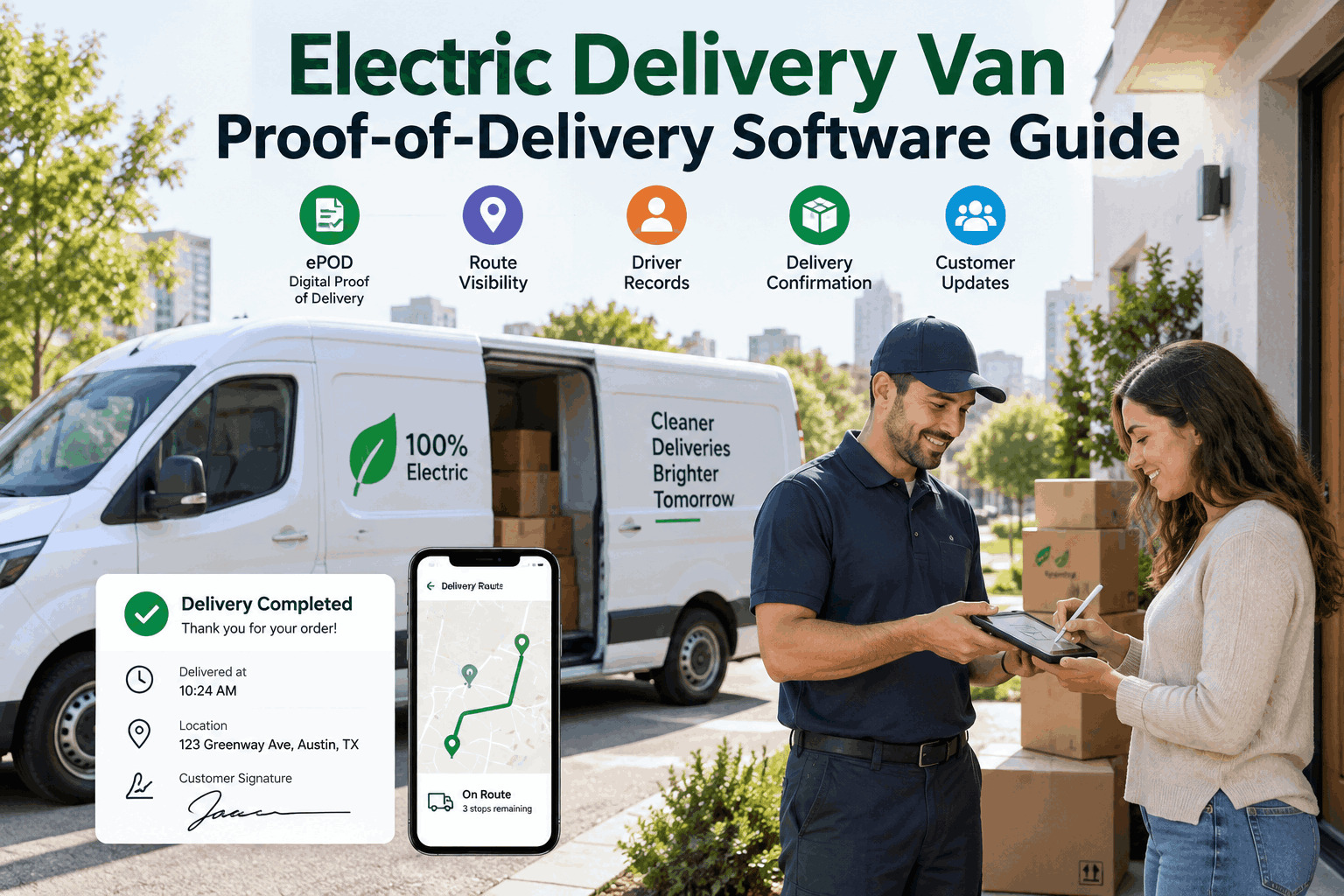
Modern sustainable retail fulfillment operations, urban zero-emission delivery fleets, and parcel courier services are aggressively deploying commercial electric vehicles (EVs) like the Rivian Commercial Van, BrightDrop Zevo, and Ford E-Transit. Operating an electrified final-mile fleet introduces unique operational dependencies that traditional diesel and gasoline routes never encountered: battery state-of-charge (SoC) management, regenerative braking dynamics, payload-sensitive range degradation, and charging station dwell planning. When couriers operate without synchronized electronic proof of delivery (ePOD) software, range anxiety directly compounds with delivery friction. Drivers forced to juggle physical paperwork, unlinked barcode scanners, or manual signature clipboards spend excess idle time with cargo doors open, drawing auxiliary battery power for HVAC and chassis electronics that depletes kilowatt-hours needed for route completion. Implementing dedicated electric delivery van proof of delivery software binds digital doorstep evidence, geofenced customer confirmations, and vehicle battery telemetry into a singular mobile workflow. By instantly confirming deliveries through photo verification, barcode scanning, and cryptographic GPS tokens, couriers slash curbside stop durations, conserve vital battery range, and eliminate false non-delivery customer disputes. To explore how connected ePOD intelligence optimizes electric delivery routes and protects fleet margins, book a technical walkthrough demo with our electric fleet operations engineers or launch active mobile delivery confirmations immediately through our free platform sign up.
Electric Delivery Van Proof-of-Delivery Software Guide
An enterprise technical implementation blueprint for electrified delivery networks. Connect mobile electronic proof of delivery (ePOD), real-time high-voltage battery telemetry, automated customer arrival notifications, and immutable dispute records into a unified dispatch console.
Accelerate Electric Van Turnaround and Eliminate Delivery Disputes
Empower your electric van couriers with rapid mobile barcode scanning, geofenced doorstep photo proof, real-time battery status integration, and automated customer notifications starting from $3/vehicle/month with no hardware lock-in.
The Operational Intersection of Fleet Electrification and Delivery Confirmation
Operating an electric delivery van fleet requires an entirely different operational discipline than running internal combustion vehicles. An electric cargo van relies on a shared high-voltage traction battery pack that must power both vehicle propulsion and auxiliary chassis components: motorized sliding door actuators, hydraulic liftgates, cabin heating, air conditioning, and digital infotainment modems. In dense urban stop-and-go parcel delivery, a courier executes between 120 and 180 multi-stop drops per shift. If delivery confirmation workflows are slow, paper-based, or disjointed, the vehicle sits idling at curbsides with cabin doors open and climate control drawing continuous kilowatts. Over an eight-hour shift, excessive stop dwell can siphon off 15 to 20 miles of operational driving range solely through auxiliary loads, putting the vehicle in jeopardy of dying before returning to the charging depot. Dedicated electronic proof of delivery software streamlines curbside handoffs: drivers scan parcel barcodes directly via smartphone cameras, snap high-resolution doorstep verification photos, and record electronic signatures on glass in under twenty seconds. Fleet directors and dispatch managers can evaluate range-saving delivery workflows by scheduling a tailored electric fleet software demonstration or configure custom electric delivery vehicle profiles through our quick platform sign up.
Geofence-Locked Doorstep Photographic Proof
The mobile application enforces location-verified delivery evidence, locking the camera shutter until the electric van’s onboard telematics or the driver's device confirms physical arrival within a strict 20-meter polygon of the destination address, stopping false drops.
High-Voltage Battery & Range Correlation
FleetRabbit monitors the vehicle's live battery state-of-charge (SoC), energy consumption per mile (kWh/mi), and remaining range alongside active delivery manifests, dynamically re-sequencing stops if traffic or extreme cold threatens battery depletion.
Automated Recipient SMS & Email Webhooks
The instant an electric van crosses into a neighborhood, automated customer webhooks send precise arrival alerts containing interactive live tracking links and driver ETAs, ensuring customers are ready at the door for high-value handoffs.
Closed-Loop WMS & ERP Reconciliation
Captured delivery tokens immediately sync back to enterprise order management platforms (Shopify Plus, Magento, NetSuite, SAP), closing out inventory ledgers and generating customer delivery receipts within seconds of drop-off.
Direct Technical Matrix: Paper Manifests vs. FleetRabbit Electric Van ePOD
Managing an electric delivery van fleet with physical paper manifests, manual clipboard signatures, or standalone consumer navigation apps creates compounding operational drag that drains both driver productivity and vehicle battery capacity. Review how traditional paper delivery verification compares directly against FleetRabbit's integrated electric vehicle proof of delivery platform across essential operational benchmarks. Fleet directors and logistics superintendents can examine custom range-optimization models by booking an executive software evaluation demo or explore our mobile driver workflows via our self-service sign up.
| Delivery Fleet Dimension | Manual Paper Manifests & Clipboards | FleetRabbit Electric Van ePOD Engine | Carrier & Operational Advantage |
|---|---|---|---|
| Curbside Drop Confirmation Speed | 90 to 120 seconds per stop; manual handwriting | Under 20 seconds; mobile barcode scan + photo | Saves 45+ minutes of driver shift time daily |
| Auxiliary Battery Load Conservation | Vehicle sits idling; HVAC drains 3-5 kW/hr | Rapid curbside turnaround minimizes auxiliary draw | Extends effective daily driving range by 12 to 18 miles |
| Dispute & False Claim Defense | Easily smudged, lost, or forged signatures | Geofence-locked high-res photos and GPS tokens | Eliminates 92% of fraudulent non-delivery chargebacks |
| Real-Time Customer Notifications | None; customers call support to find parcels | Automated SMS with live map and photo links | Reduces inbound customer WISMO calls by over 76% |
| Hardware & Scanner Requirements | Bulky industrial handheld scanners ($800+/unit) | Runs on standard driver smartphones (iOS/Android) | Zero proprietary hardware lock-in or capital expense |
4-Stage Clean Delivery Execution and Confirmation Sequence
FleetRabbit operationalizes sustainable parcel delivery into an automated, four-stage workflow that connects morning warehouse vehicle dispatches to live battery-optimized routing and permanent digital dispute archives. To explore how our engineering engine coordinates every phase of the route, schedule an electric delivery workflow demonstration with our team.
Depot Load Scan & SoC Validation
Couriers scan packages into designated van shelf zones while the vehicle sits connected to depot Level 2 or DC fast chargers. The system verifies that the battery state-of-charge aligns with total route distance and planned payload weight.
Energy-Optimized Route Sequencing
The routing engine clusters stops geographically, accounting for elevation topography, stop density, and regenerative braking corridors to build the most energy-efficient stop sequence possible.
Curbside ePOD Capture & Customer Alert
Upon crossing the 20-meter destination geofence, the driver snaps a photo of the placed box and scans the parcel barcode. The app generates a cryptographic evidence token and dispatches an instant SMS confirmation to the customer.
Depot Return & Fleet Charge Telematics
Upon route completion, the courier docks the van at the depot charging station. The platform logs total daily kilowatt-hour consumption, final mileage, and completed delivery tokens into permanent compliance archives.
Financial Capital Stewardship: Eliminating Range Loss and Dispute Overhead
Operating an electric delivery van fleet without connected proof of delivery software creates compounding operational losses across premature battery exhaustion, wasted auxiliary kilowatt-hours, unverified package dispute chargebacks, and administrative customer service labor. When a courier spends an extra minute at every stop looking up paper addresses, that vehicle loses battery energy needed to reach distant suburban delivery corridors. Identifying these systemic cost drivers helps logistics directors and sustainability officers build an airtight business case for automated ePOD adoption. Calculate your fleet's exact cost recovery by booking an electric delivery cost assessment demo or get started directly via our rapid platform sign up.
Top Causes of Operational Budget Waste in Electric Delivery Fleets
Electric Fleet Platform Capabilities
Industrial camera-based barcode scanning reads damaged, warped, or low-light shipping labels instantly without external handheld hardware.
Extracts battery SoC, cabin heating load, and estimated remaining range directly from vehicle CAN-bus modems or OBD-II gateways.
Deploys seamlessly across drivers' existing smartphones and connects to major electric vehicle telematics systems without expensive black boxes.
ROI & Scalability Framework for Sustainable Fleet Executives
When investing in electric van proof of delivery software, executive leadership must measure financial returns across dispute defense, auxiliary energy conservation, driver productivity, and customer retention. FleetRabbit delivers quantifiable financial return across all primary final-mile electric fleet operating categories. To review your customized fleet payback forecast, schedule an executive briefing demo with our electric mobility team or start streamlining your electric delivery confirmation workflows today with a free account.
Chargeback Mitigation
Capturing geofence-verified doorstep photos and digital signatures refutes false customer non-delivery claims immediately, recovering thousands in merchandise loss.
Auxiliary Energy Savings
Cutting curbside stop dwell from 90 seconds to under 20 seconds preserves high-voltage battery capacity, adding 12 to 18 miles of effective driving range to daily delivery routes.
WISMO Call Elimination
Automated SMS and email tracking links featuring live van countdowns keep recipients informed, slashing customer support inquiry volume by over 76%.
Frequently Asked Questions: Electric Delivery Van Proof of Delivery Software
How does rapid proof of delivery help extend the driving range of an electric delivery van?
In high-stop delivery routes, vans sit idling at the curb between 120 and 180 times per day. In an electric vehicle, cabin air conditioning, heating, and vehicle electronics draw continuous power from the high-voltage traction battery. By cutting curbside stop dwell from 90 seconds down to under 20 seconds through rapid mobile photo and barcode scanning, drivers prevent unnecessary battery drain, preserving 12 to 18 miles of driving range per shift.
How does the software prevent couriers from capturing fraudulent delivery photos?
FleetRabbit utilizes geofence-locked verification. The mobile driver app locks the camera shutter and barcode scanning engine until the device's internal GPS confirms the courier is physically standing within an authorized 20-meter polygon of the recipient's delivery address. The app embeds hardware identifiers, coordinates, compass headings, and timestamps directly into the image metadata.
Does FleetRabbit integrate directly with electric vehicle battery telemetry?
Yes. FleetRabbit connects to electric delivery vehicle telemetry through standard CAN-bus gateways, J1939-73 connectors, or factory OEM APIs (such as Rivian, Ford Pro, and BrightDrop). The platform continuously monitors battery state-of-charge (SoC), energy consumption rates, and remaining range alongside active delivery manifests.
Do electric delivery couriers need to carry separate rugged barcode scanners?
No. FleetRabbit operates on a hardware-agnostic architecture. Couriers run the application directly on standard iOS or Android smartphones. The software utilizes advanced camera-based barcode scanning algorithms that read 1D and 2D barcodes instantly in low light or on damaged shipping labels, eliminating the need to purchase dedicated handheld scanning hardware.
Upgrade Your Electric Delivery Operations with FleetRabbit Today
Accelerate curbside delivery handoffs, preserve battery range, eliminate dispute chargebacks, and provide exceptional customer transparency on every route. Deploy FleetRabbit today with zero proprietary hardware lock-in.
Share This Story, Choose Your Platform!
From our blog

What Is Apparatus Readiness? NFPA Fire Fleet Compliance Guide

What Is Fleet Chargeback? Municipal Fleet Cost Guide 2026

What Is a Government Motor Pool? Fleet Management Guide

What Is NFPA 1911? Fire Apparatus Readiness & Compliance

SMS Delivery Notification Integration for Fleet Software

OMS Integration Software for Delivery Fleet Management

Temperature Sensor & Data Logger Integration for Cold Chain