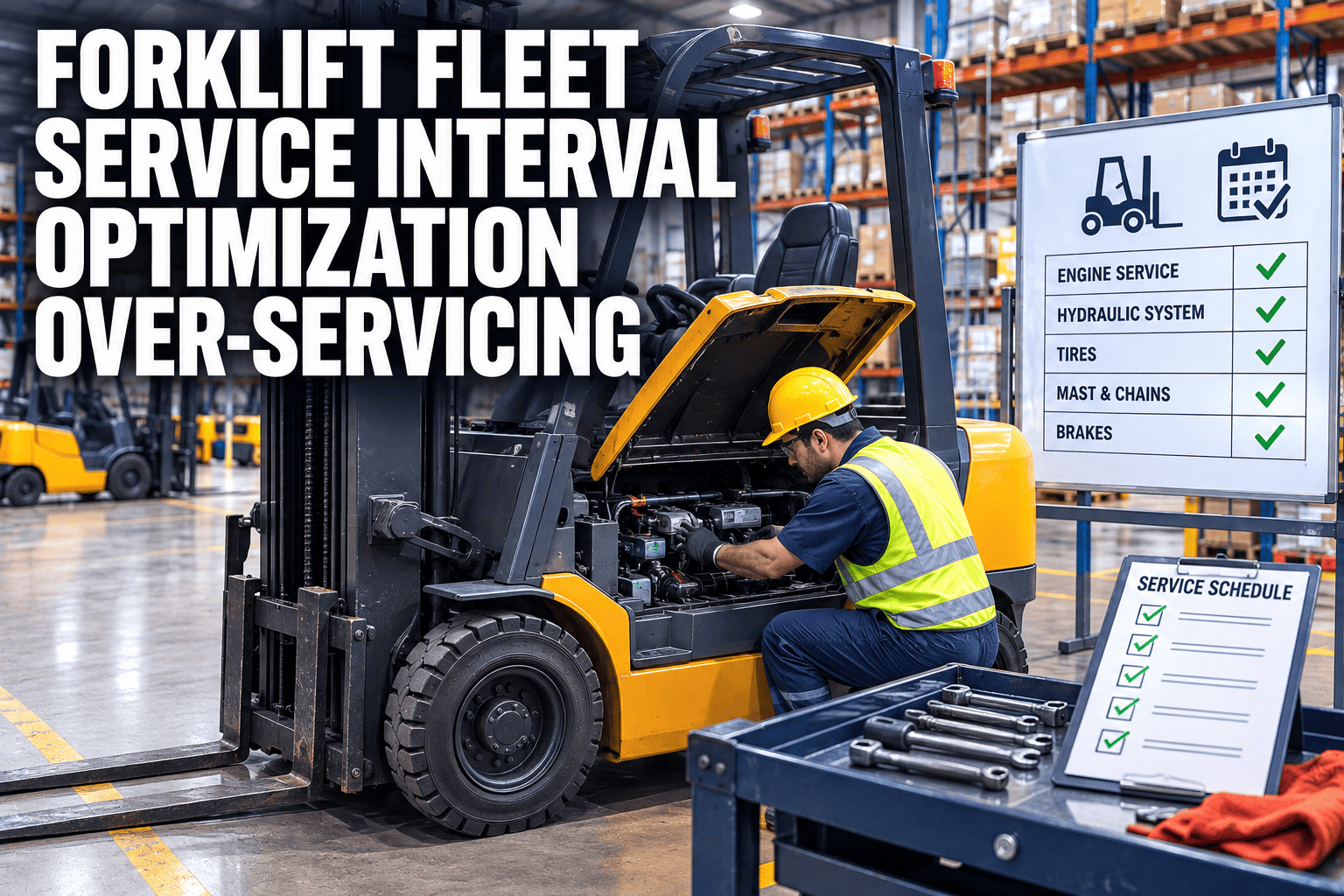
Walk any warehouse maintenance office and you'll find a wall calendar with service dates circled months in advance. It looks organized. It is also quietly wasting money. A forklift that sat idle two shifts a week still gets the same oil, filters, and labor bill as one that ran flat out, because the calendar doesn't know the difference. Over-servicing isn't a minor inefficiency: it's parts replaced before they're worn, technician hours spent on trucks that didn't need attention yet, and a maintenance budget that grows every year without actually reducing breakdowns.
Calendar-based forklift servicing typically over-services 20 to 35 percent of a fleet's PM visits, because low-usage trucks get serviced on the same schedule as high-usage ones. Switching to hour-based intervals tied to real run hours cuts unnecessary PM visits by 15 to 25 percent while catching wear-driven failures earlier on heavily used units. The fix isn't fewer services. It's matching each truck's interval to how hard it actually worked.
Why Calendar-Based Servicing Wastes Plant Budget
Most facilities inherit a service calendar because it's simple to manage: every truck goes in every 90 days, no exceptions, no hour meters to check. The problem is that a forklift's wear isn't driven by the passage of time. It's driven by the number of hours the hydraulics cycled, the mast lifted, and the drive motor ran under load. Two identical trucks purchased the same week can diverge wildly in real wear within a year, one running a single shift in a clean dry warehouse and the other running double shifts in a cold-storage dock.
The Over-Servicing Pattern
When both trucks hit the shop on the same calendar date, the lighter-use unit gets an oil change, filter swap, and full inspection it doesn't need yet. Multiply that across a 40-truck fleet and a plant can spend on 10 to 14 unnecessary PM visits a year, each running 300 to 700 dollars in labor and parts, purely because the schedule couldn't tell the difference between a busy truck and an idle one.
The Under-Servicing Risk
Meanwhile the heavily used truck can blow past its real service threshold weeks before its calendar date, operating with worn tires, degraded hydraulic fluid, or a stretched lift chain. This is where over-servicing and under-servicing become the same root problem: a schedule that isn't measuring the thing that actually matters, which is hours of work performed.
FleetRabbit tracks hour-meter and condition data on every truck in your fleet, so each unit gets serviced exactly when its own workload calls for it, not when the calendar says so. You can start a free trial and see your current over-servicing rate within days.
The Hour-Based Service Tier Structure
Manufacturers already build hour-based schedules into every forklift's service manual. The tiers below are the industry-standard framework most fleets use as a starting point before adjusting for duty class and environment.
| Service Tier | Typical Hour Interval | What Gets Checked | Common Over-Servicing Trigger |
|---|---|---|---|
| PM-A | Every 200 to 250 hours | Oil, filters, fluid levels, visual safety inspection | Monthly calendar visit on a truck that only logged 90 hours |
| PM-B | Every 500 to 600 hours | Hydraulic system service, brake adjustment, chain tension | Quarterly visit forced on a single-shift truck at half the wear |
| PM-C | Every 1,000 hours | Transmission and differential fluid, mast alignment, tires | Semi-annual date reached before the truck accumulates real hours |
| PM-D | Every 2,000 hours | Major component overhaul, cylinder seals, engine service | Annual overhaul scheduled on trucks well under the wear threshold |
Five Signs Your Fleet Is Being Over-Serviced
Most plants don't realize they're over-servicing until they compare service records against actual hour meters. A few patterns tend to show up consistently.
1. Parts replaced with visible life remaining
Technicians pulling filters, belts, or fluid that still tests within spec is the clearest sign the interval is shorter than the wear justifies.
2. Identical service dates across mixed-use trucks
If every truck in a zone hits the shop the same week regardless of how many hours each one logged, the schedule is running on the calendar, not on usage.
3. Rising maintenance spend without rising breakdown reduction
When the PM budget climbs year over year but unplanned failures stay flat, the extra spend is going into unneeded visits rather than into preventing real failures.
4. Low-hour trucks with high service counts
A backup or seasonal truck with a full year of PM visits despite running a fraction of the hours of your primary units is a direct budget leak.
5. No hour-meter data tied to service records
If your service history only shows dates and not hour readings at each visit, there's no way to know whether any given service was actually due.
How Condition Data Sharpens Interval Accuracy
Hour meters alone are a big improvement over the calendar, but they still treat every hour as equal wear. Condition data goes a step further by factoring in how those hours were spent.
Duty Class and Shift Load
A truck running continuous double shifts in a distribution center accumulates hydraulic cycles and drive-motor stress far faster than one making occasional moves in a light-assembly area, even at the same hour count.
Operating Environment
Cold storage, high-dust, or outdoor yard environments accelerate wear on seals, filters, and electrical connections, which is why the same hour-based tier often needs tightening for these trucks and can safely be extended for clean, climate-controlled floors.
Real-Time Fluid and Component Trends
Tracking hydraulic fluid condition, brake wear, and battery health over time reveals when a specific truck is trending toward a service need ahead of its scheduled interval, or confirms it can safely run past the standard tier without added risk.
FleetRabbit pulls hour-meter and condition data automatically and flags exactly which trucks are due, which can safely wait, and which are trending toward an early failure. You can book a demo to see how your fleet's intervals compare to what your trucks actually need.
Building A Right-Sized Interval Program
Moving from a calendar schedule to hour-based, condition-aware intervals doesn't require replacing your whole maintenance process. It requires four changes, applied consistently.
Step 1: Pull current hour-meter readings on every truck
Log each unit's total hours and compare that against its last service date to see how far calendar and usage have drifted apart.
Step 2: Group trucks by duty class and environment
Separate single-shift, clean-floor units from double-shift, harsh-environment units, since they warrant different interval tightening or extension.
Step 3: Set hour-based tiers per group
Apply the PM-A through PM-D structure to each group's actual wear rate rather than a single plant-wide calendar date.
Step 4: Track and adjust quarterly
Review service records against hour data every quarter and tighten or loosen intervals for any truck whose wear pattern doesn't match its group average.
Every calendar-driven PM visit on a lightly used truck is budget that could be preventing a real failure somewhere else in your fleet. FleetRabbit right-sizes every interval to actual run hours and condition data, so your maintenance spend goes where the wear actually is.