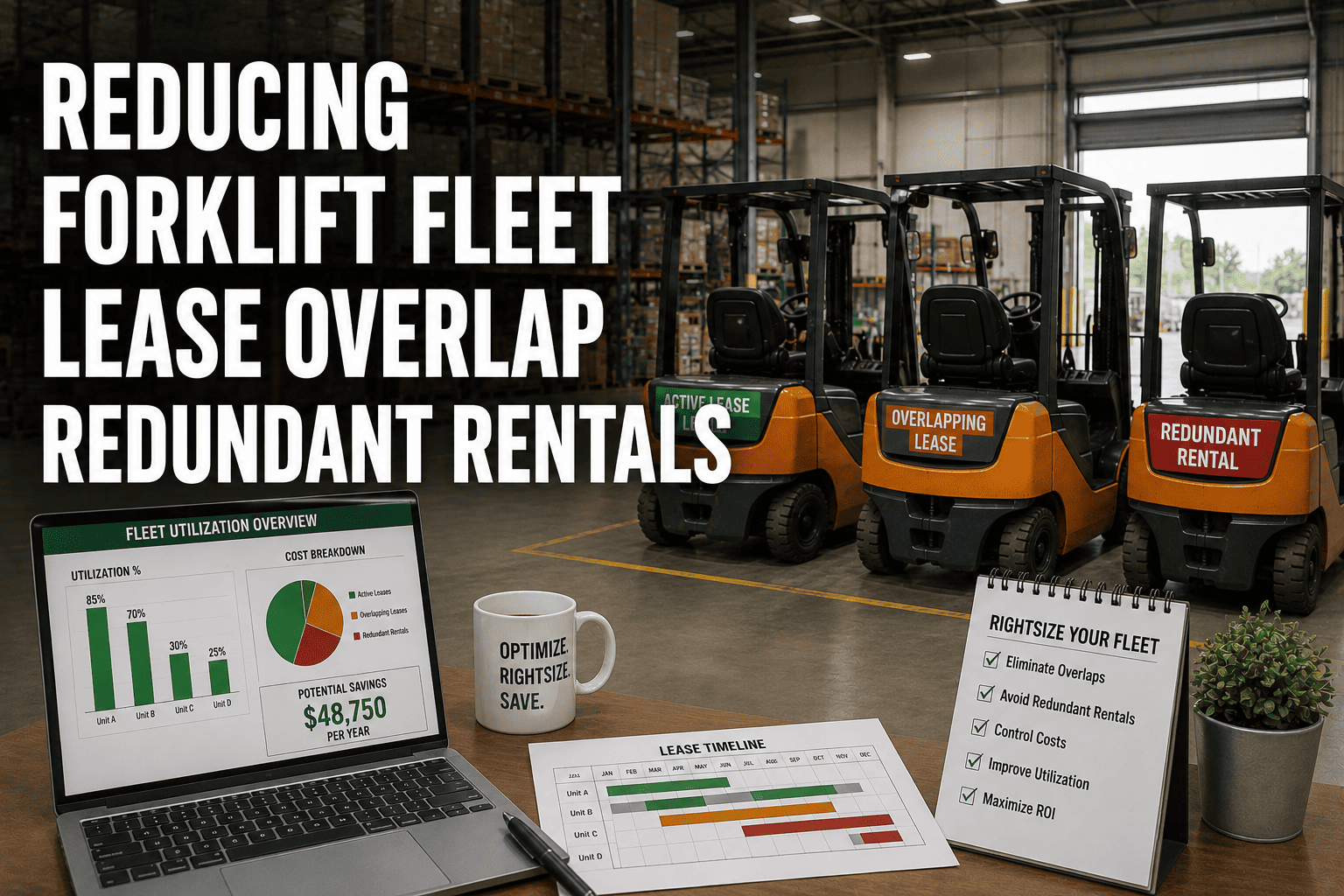
Somewhere on most multi-site operations, there is a rented forklift nobody quite remembers ordering, still sitting on a monthly invoice months after the peak season it was brought in for ended. Nobody is lying about needing it, exactly. It just never got returned, and a leased truck at another dock covers roughly the same work an hour away. Lease overlap and redundant rentals rarely happen through a single bad decision. They build up gradually, one seasonal rental extended out of caution, one lease renewed without checking whether the truck it replaced still exists.
A generally accepted benchmark for healthy forklift utilization is 60 to 80 percent of available shift hours. Trucks running consistently below that range, especially rented or leased units, are strong candidates for consolidation. Equipment rental teams openly describe a pattern of operators "hoarding" units on rent past the point they are needed, just in case, which keeps redundant trucks on the books long after the work that justified them has ended.
How Lease Overlap Quietly Builds Up Across A Fleet
Redundant rentals rarely start as waste. Each individual decision tends to make sense in isolation. The problem shows up only when those decisions are viewed together across sites and shifts.
Seasonal Rentals That Outlive The Season
A rental brought in for a peak volume period is easy to extend month over month rather than actively decide to keep, especially when nobody owns the task of reviewing it once the peak has passed. The rental quietly becomes a permanent line item for work that no longer exists.
Leases Renewed Without Checking The Fleet
Lease renewals often get processed on their own schedule, separate from any current look at whether the truck they cover is still needed at the same capacity, or whether another site's underused unit could cover the same work.
Rental Hoarding Across Sites
Site managers understandably want a buffer, so a rented unit gets kept "just in case" even after the workload that justified it eases off. Multiplied across several sites, that instinct turns into a meaningful amount of overlapping capacity nobody set out to create.
FleetRabbit tracks utilization across every truck, lease, and rental in your fleet, so overlap and underused units are visible before the next invoice, not after. Sign up to see your fleet's utilization mapped across sites, or book a demo to walk through a live consolidation example.
Reading What Your Utilization Numbers Are Telling You
A single utilization percentage rarely tells the whole story on its own. What matters is where each truck falls relative to the healthy range, and what action that position actually calls for.
| Utilization Level | What It Usually Means | Recommended Action |
|---|---|---|
| Above 90 Percent | The truck is overworked, accelerating wear and raising breakdown risk | Add capacity rather than push the existing truck harder |
| 60 To 80 Percent | Healthy, productive use that matches the workload well | Maintain current fleet size and monitor for seasonal shifts |
| 30 To 50 Percent | Meaningful idle time that is often written off as normal buffer | Review whether this truck's work could be absorbed elsewhere |
| Below 30 Percent | A strong signal of redundant capacity, especially on a rental or lease | Consolidate, return, or reassign the unit to a site that needs it |
Right-Sizing A Fleet Without Losing Peak Capacity
The goal of trimming overlap is not to run every truck at maximum utilization. Some capacity genuinely needs to sit in reserve for peak periods. The goal is making sure that reserve is a deliberate decision rather than an accumulation of forgotten rentals.
Compare Utilization Across Sites, Not Just Within One
A truck sitting idle at one site and a rental covering similar work at a nearby site are easy to miss when each location only reviews its own fleet. Comparing utilization across the whole operation is what surfaces overlap that a single-site view cannot see.
Tie Rental Reviews To A Fixed Schedule
Rather than letting a seasonal rental roll forward by default, a scheduled check-in at the point the original need was expected to end forces an active decision to keep it, return it, or reassign it.
A Simple Quarterly Fleet Review Checklist
Pull utilization by truck for the past quarter, flag anything consistently under 30 percent, check whether a rental or lease renewal is coming up on a flagged unit, and confirm whether another site's underused truck could cover the same work before approving the renewal. Sign up for a free trial to generate this review automatically, or book a demo to see a cross-site utilization comparison in action.
Frequently Asked Questions
Overlap builds up quietly, one extended rental and one unreviewed lease at a time. FleetRabbit gives every site's utilization a single, comparable view, so redundant capacity gets caught before the next renewal, not months after it.