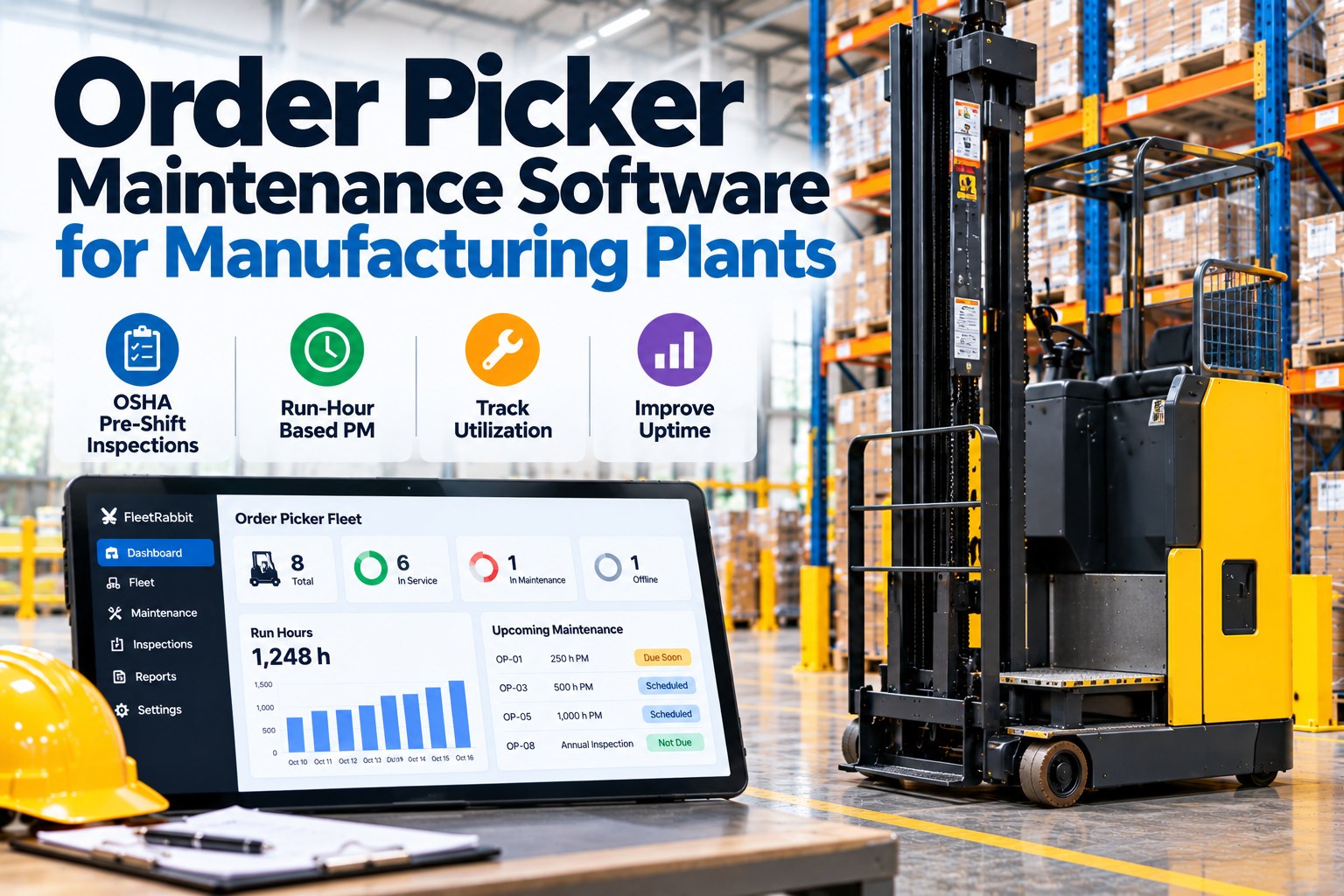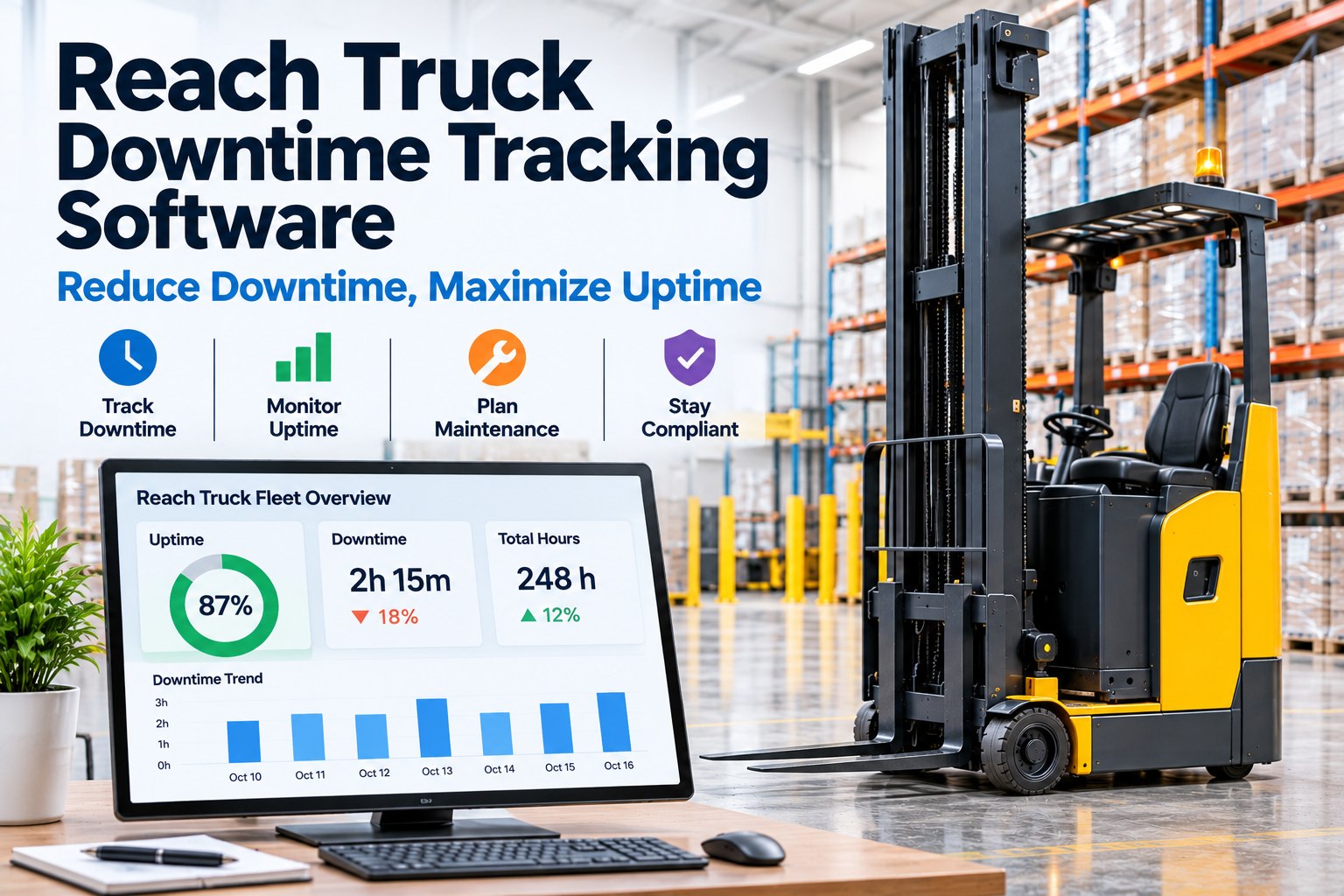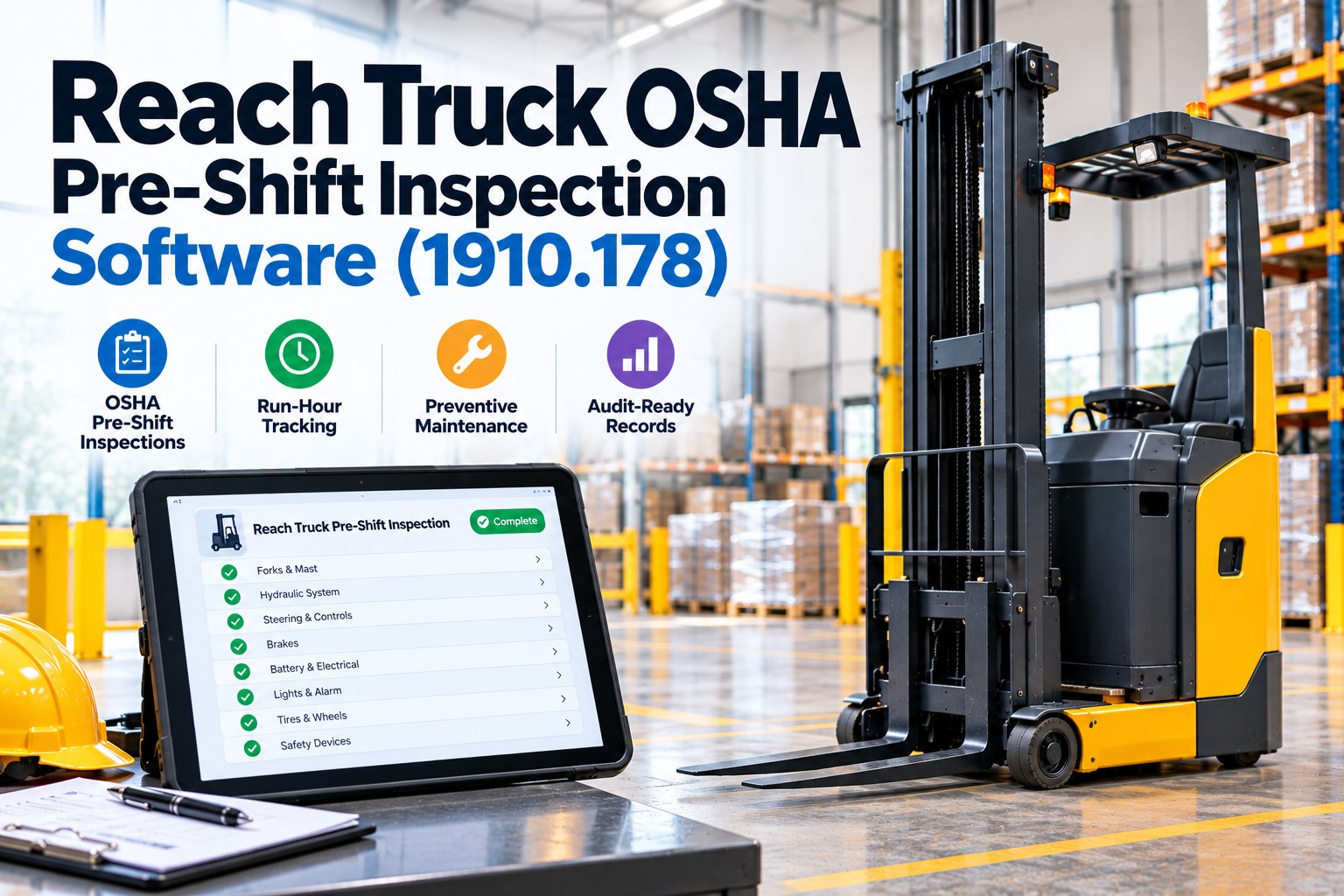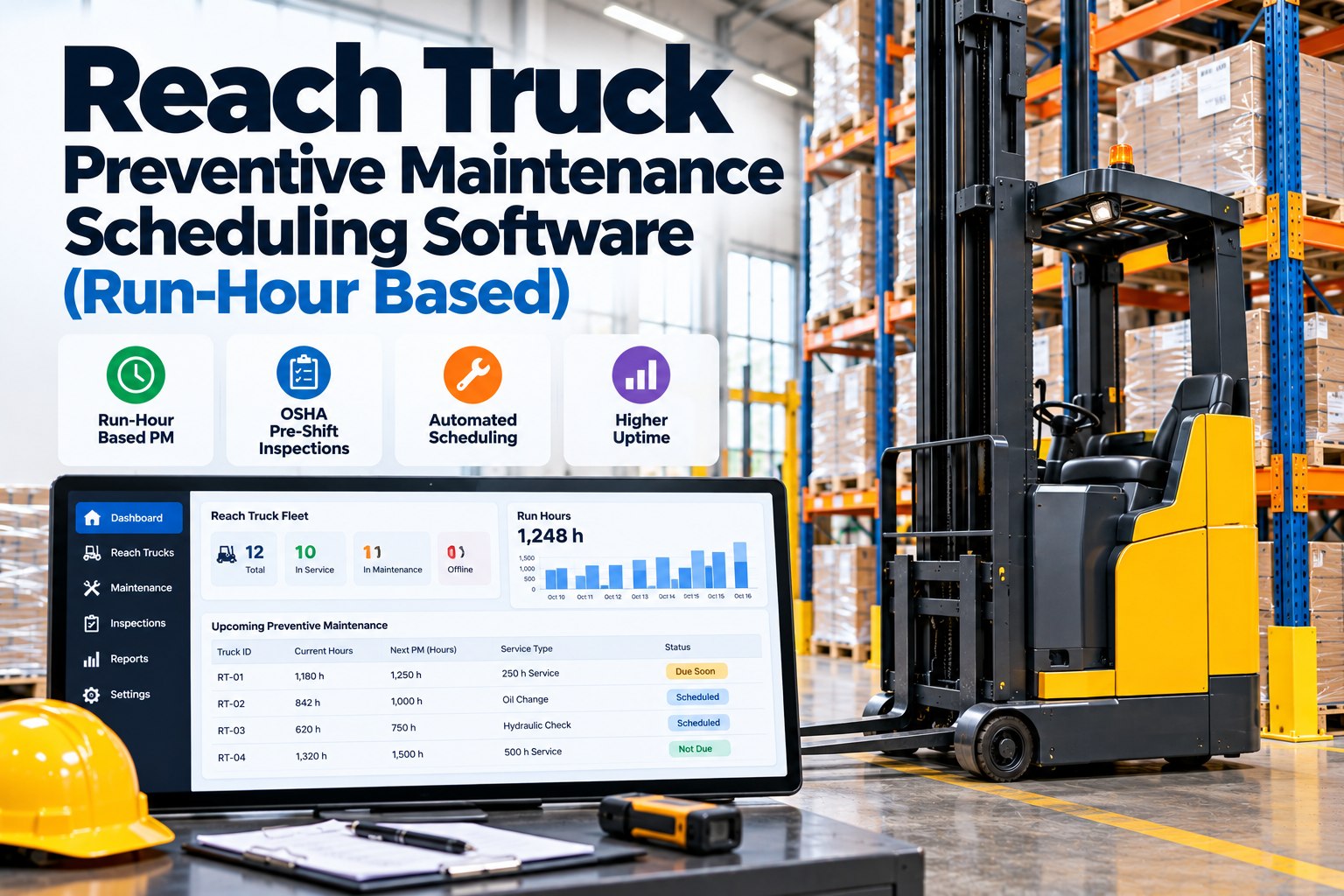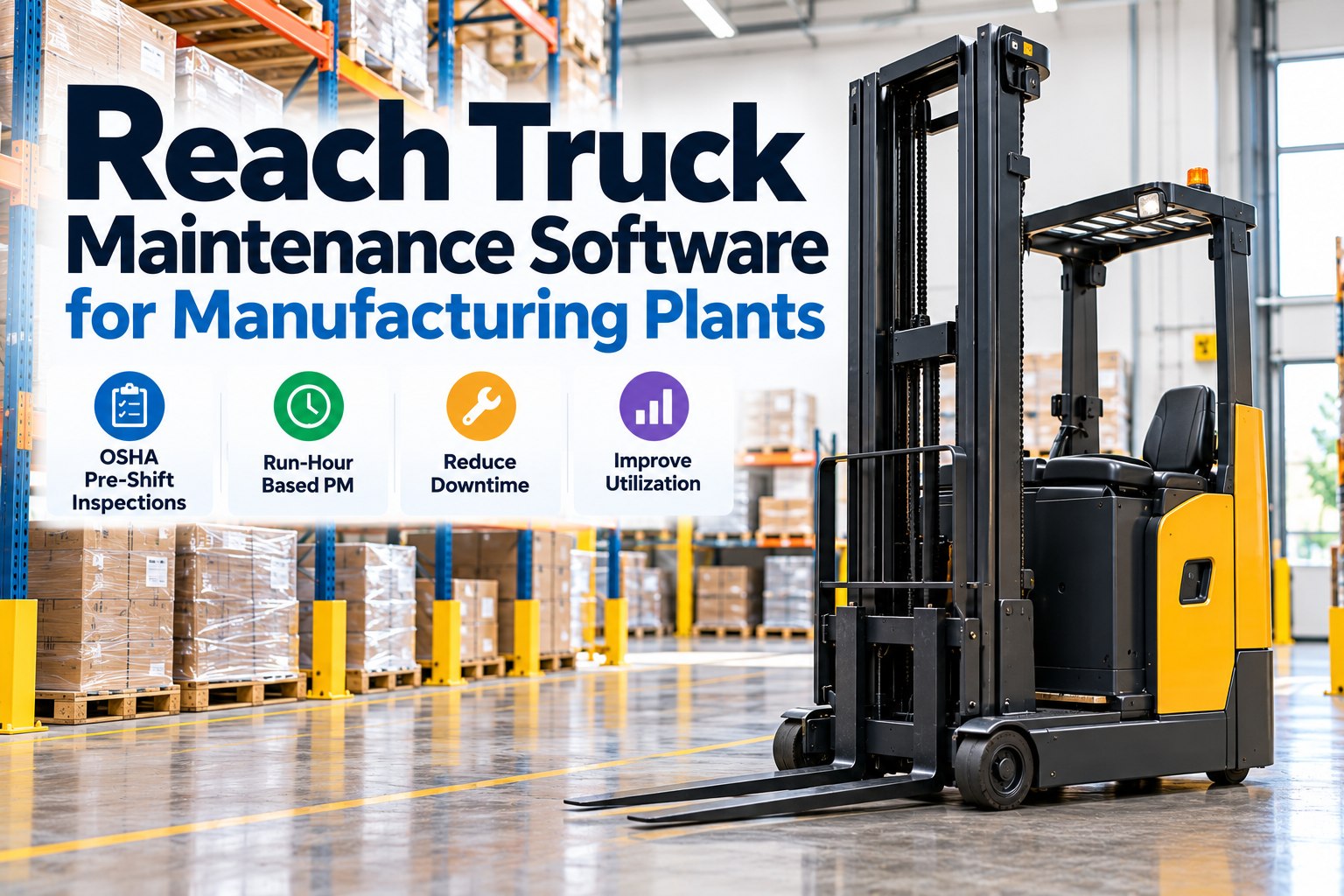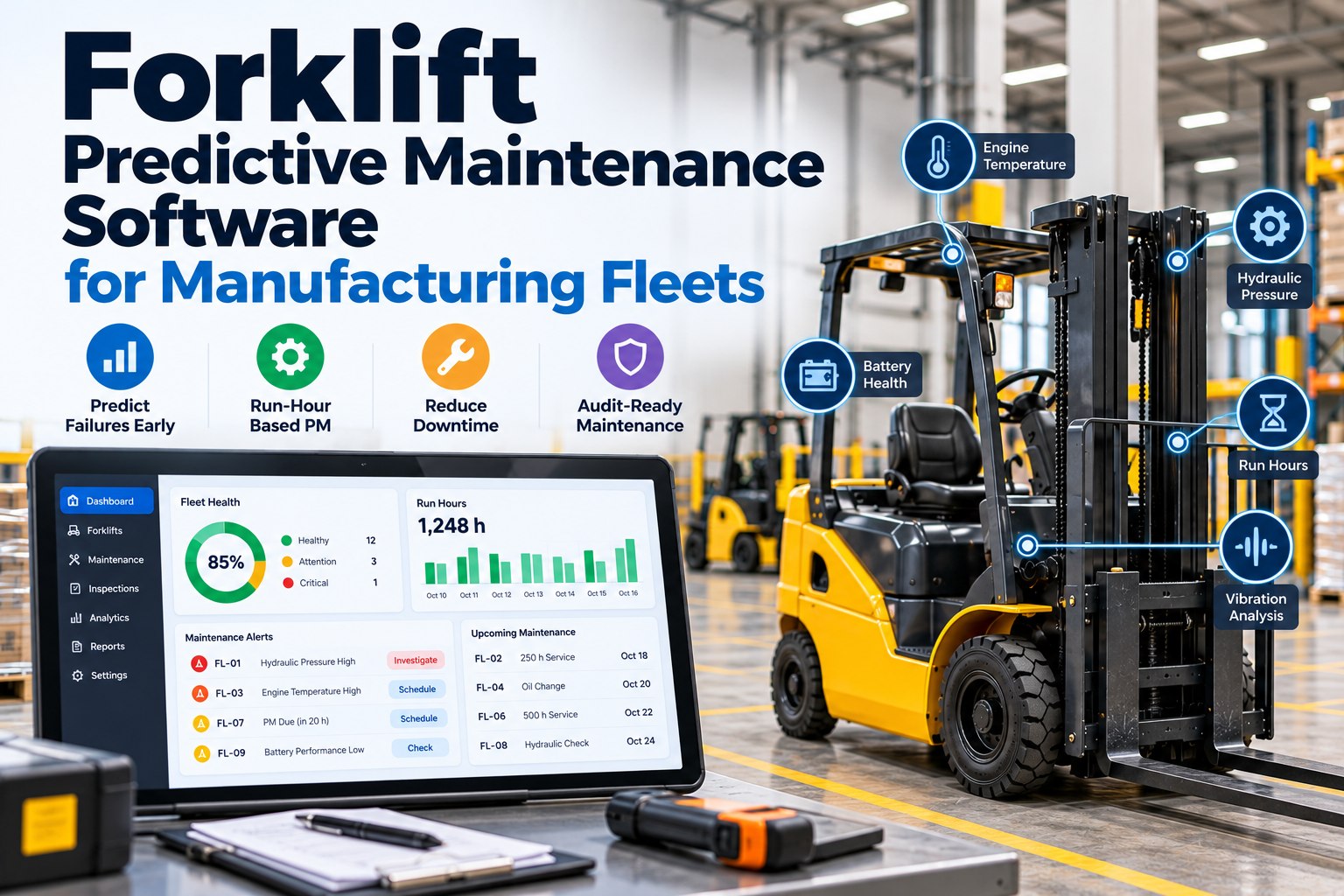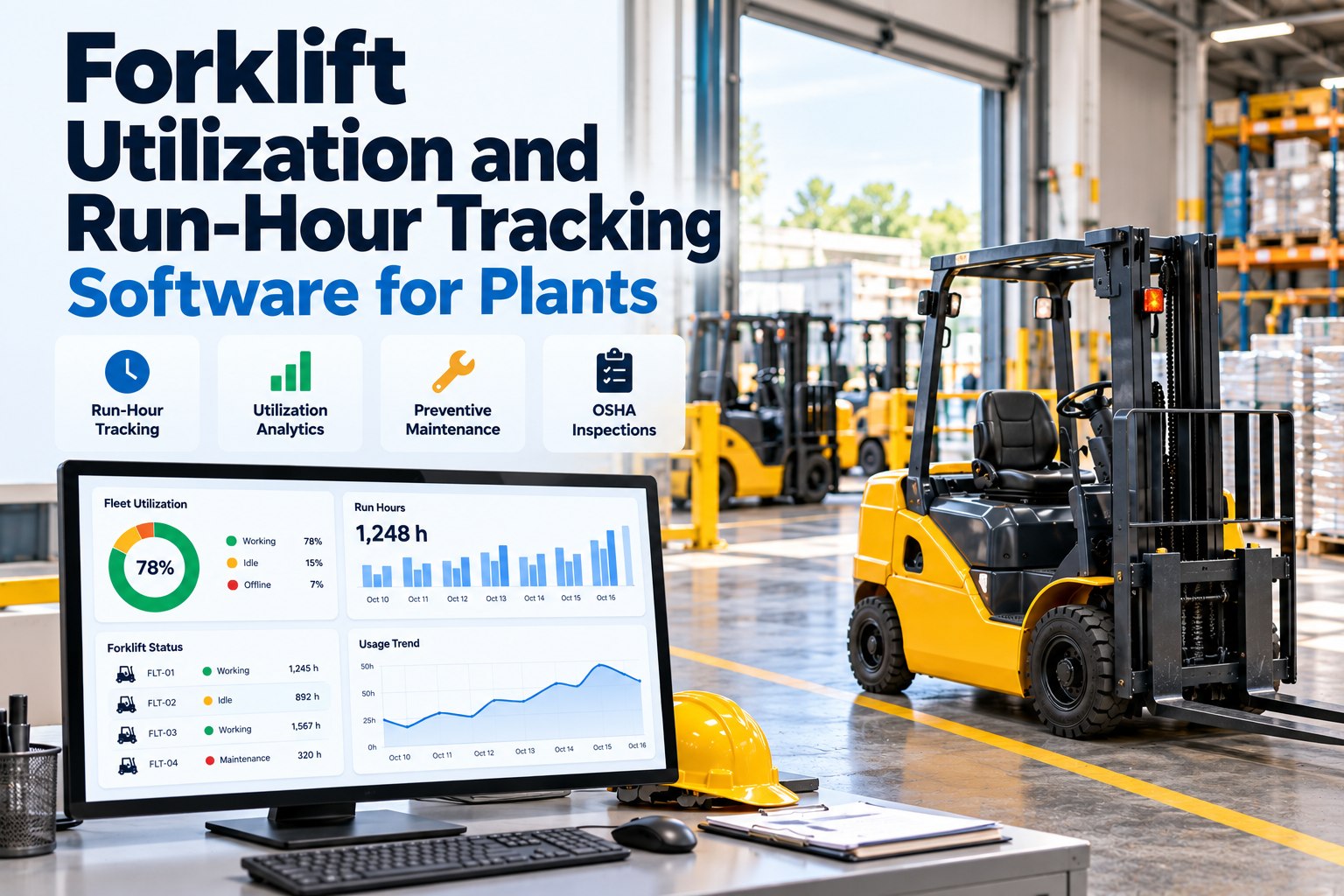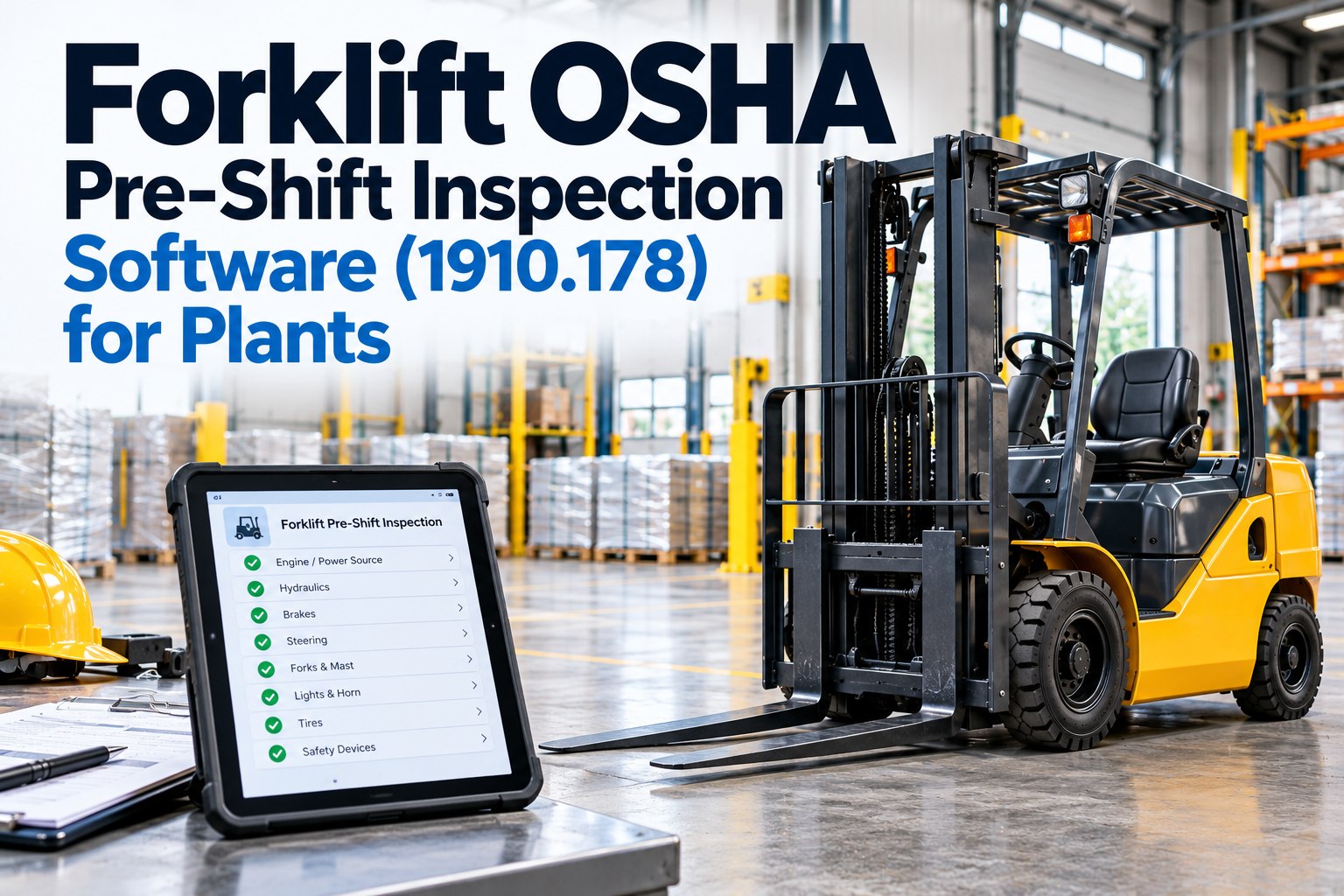
Forklift preventive maintenance software runs on one number: the hour meter. Get that reading right, every shift, for every truck, and run-hour PM schedules itself. Get it wrong, and LPG trucks miss services while electric trucks get serviced twice as often as they need. This guide covers which hours to count, how to capture them at the OSHA pre-shift check, and how to fit PM around production. Start free with FleetRabbit and put your first three forklifts on run-hour PM today.
Which Hours Count? FEM 4.101 Separates Key-On Time From the Time an Electric Forklift Actually Works
An hour meter isn't always measuring the same thing. The European Materials Handling Federation's guideline FEM 4.101 defines three readings a truck can display, so manufacturers, service teams and fleet owners mean the same thing when they say "hours."
On an electric truck that sits keyed-on between picks, availability time can run well ahead of service time. Pick one reading per truck, record which one it is, and set intervals against it. That single setting is what makes a preventive maintenance schedule trustworthy.
LPG Trucks Every 250 Hours, Electric Trucks Every 500: Why One Interval Can't Run a Mixed Plant Fleet
A Toyota forklift dealer's planned-maintenance guidance puts LPG trucks on a 250-hour PM and electric trucks on 500 hours, with more frequent service under harsh conditions. Over the same 2,000 hours, that's eight services on one truck and four on the other.
Setting one plant-wide interval either over-services the electric fleet or under-services the LPG trucks. Interval by power type, and by model where the manual differs, is the starting point. You can see per-model intervals set up in a short demo.
Capture the Hour Meter at the OSHA Pre-Shift Check, and Reject the Readings That Can't Be Right
OSHA already requires a forklift examination before each truck goes into service (29 CFR 1910.178(q)(7)). Adding one field for the hour meter turns that check into your PM data feed, with no extra walk to the truck. The catch is that typed readings need guardrails.
With the reading captured on a digital pre-shift inspection, every OSHA examination also moves the truck closer to its next PM, and you get a dated record of both. You can add the hour meter field to your checks free.
Forecast Forklift PM From Hours per Week, Then Book It Into the Plant's Planned Downtime
Once you know how many hours each truck runs a week, its next due date is arithmetic. That lets the planner place PM where production can spare the truck: a changeover, a weekend, a planned line stop. Pulling a service forward by a few hours is fine; letting it slide past the interval isn't.
Plants that track the run hours of a mixed forklift fleet can also spot the truck doing double duty and rotate it before its PMs start bunching up.
Harsh Plant Conditions Mean Shorter PM Intervals: Adjust the Hours, Not Just the Checklist
Dealers routinely advise more frequent PM for trucks working in harder conditions. The practical way to do that is to set a shorter interval on the affected trucks, not to hope technicians notice the dust.
Dealer PM or In-House Shop: Check Every Forklift Service Against the Hour Meter It Was Due At
Many plants contract PM to a forklift dealer. Either way, the record should show the hours each service was due at and the hours it was actually done at. That gap is your PM compliance, and it's what an auditor or insurer will ask about after an incident.
A late service like FL-16's is easy to miss on an invoice and obvious on a ledger. Set your own on-time window, review the late ones monthly, and keep the dealer's work orders on the same truck record as your own.
How FleetRabbit Runs Run-Hour PM for Every Forklift, From Pre-Shift Reading to Signed-Off Service
FleetRabbit connects the hour meter reading your operators already take to the PM schedule your planners need, and keeps the result audit-ready.