Every plant manager eventually has the same meeting. You know the forklift fleet is bleeding money through emergency repairs, idle assets, and paper inspections nobody trusts, but a finance director doesn't approve a gut feeling. They approve a number. Building a business case for forklift fleet software isn't about describing features, it's about turning what your current approach already costs into a figure nobody can argue with, then showing exactly how software closes that gap. Here's how to build that case, step by step, using your own fleet's numbers instead of a vendor's slide deck.
A business case that gets approved starts with twelve months of your own downtime, energy, lease, and OSHA-risk data, converts it into a cost-per-hour baseline, then shows a conservative projection of what software recovers against that baseline. Forklift software typically costs under 1.5 percent of total fleet operating spend while reducing the remaining 98.5 percent by 10 to 25 percent, which is the framing that moves a budget decision fastest. Sign up free to start collecting your baseline, or book a demo and we'll help build the model with you.
Start With What Doing Nothing Already Costs
The single biggest mistake in a forklift software business case is leading with the product. Finance doesn't want to hear about dashboards and alerts before they understand the size of the problem those dashboards are solving. Pull twelve months of maintenance invoices, downtime logs, energy or fuel spend, and any lease agreements currently in place. That data becomes the baseline every projected saving gets measured against, and it's what separates a credible case from a guess a committee will send back for more detail.
The Four Numbers Finance Actually Asks For
Across manufacturing plants, the same four cost categories show up in nearly every approved business case. Skip one and the model looks incomplete to whoever is signing off on the spend.
Don't Forget The Fourth: OSHA Risk
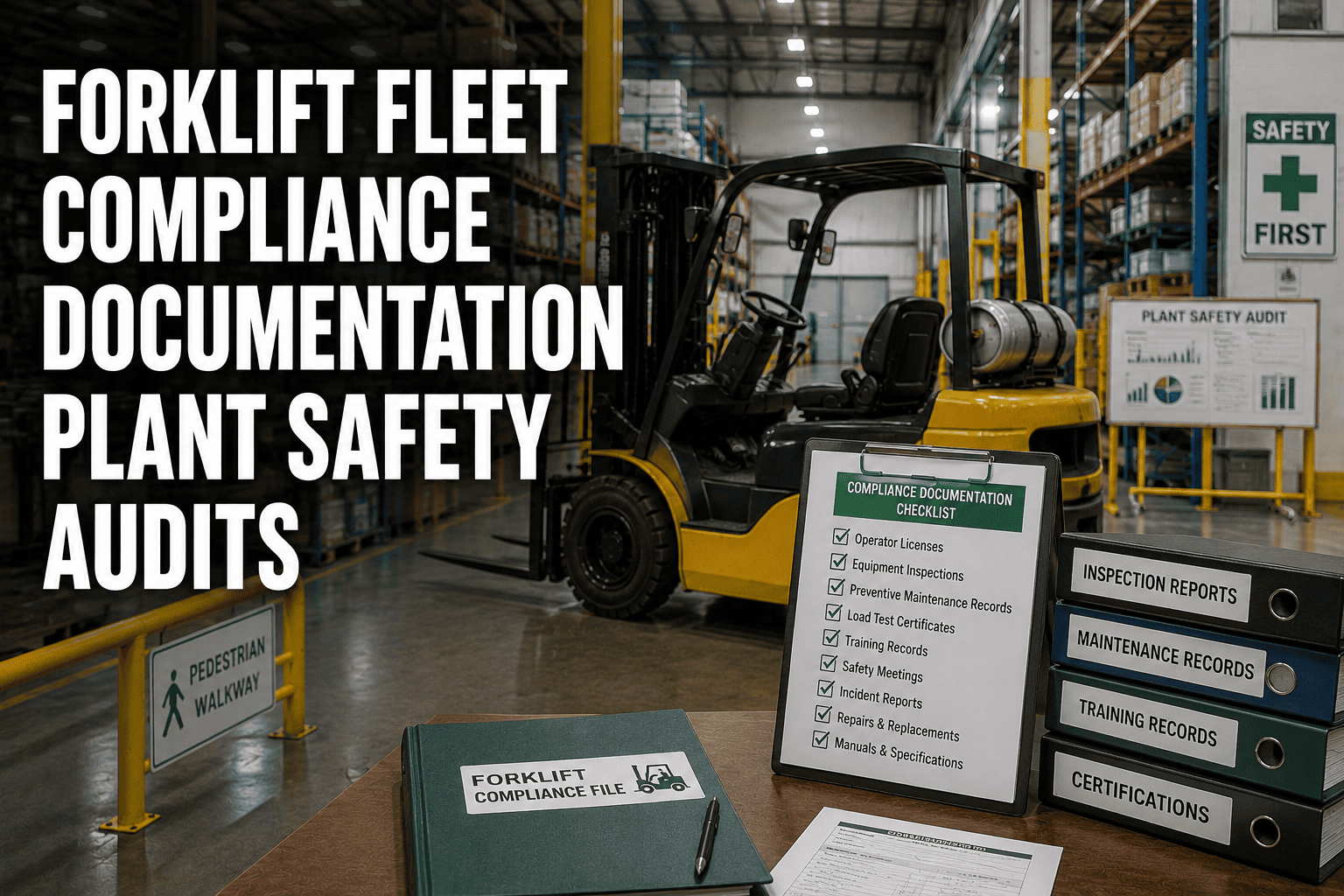
OSHA citations for powered industrial trucks are among the most common in manufacturing, and the average serious penalty runs well over 16,000 dollars per violation. That's before factoring in the cost of an incident itself, which can run into six figures once injury, equipment damage, and lost production are included. Compliance risk is harder to put a precise dollar figure on than downtime or energy, but it belongs in the case as a clearly labeled risk-reduction line, not folded into the hard savings number.
FleetRabbit pulls downtime, maintenance, and utilization data automatically, so you don't have to reconstruct twelve months of records by hand. Sign up and connect your fleet today, or book a demo to see a sample baseline report.
Turning A Baseline Into A Business Case
Once you have the raw numbers, the case takes shape in four sections, presented in a specific order. Skipping the order, or leading with the solution instead of the problem, is what usually gets a proposal sent back for more detail.
| Section | What It Shows | Why It Convinces Finance |
|---|---|---|
| Current Cost Baseline | Twelve months of downtime, energy, lease, and OSHA-risk spend | Grounds the case in your own data, not industry averages |
| Conservative Projection | A cautious estimate of savings against the baseline, not a best case | Signals credibility instead of a sales pitch |
| Payback Timeline | Software cost weighed against monthly projected savings | Answers the only question finance ultimately cares about |
| Soft Benefits | Compliance readiness, audit speed, operator retention | Kept separate so they don't weaken the hard financial number |
Why Conservative Numbers Win More Often Than Big Ones
It's tempting to lead with the best-case savings a vendor quotes, but finance stakeholders trust a modest, defensible projection over an aggressive one every time. Present the expected case clearly, note that upside exists beyond it, and let the pilot data prove the rest.
The Pilot: Turning A Forecast Into Evidence
A projection convinces a committee once. Real numbers convince them every year after. Requesting a short pilot on a single line or a subset of trucks converts the business case from a forecast into evidence, which removes most of the remaining approval risk before the full rollout decision is even made. A sixty-day pilot on ten to fifteen forklifts produces genuine before-and-after numbers from your own plant floor, not a case study from someone else's operation.
That data is also what makes the second conversation, the one for full-fleet rollout, considerably easier than the first. Comparing monthly results against the original baseline keeps the business case alive well past the initial approval, and gives you a defensible answer the next time someone asks what the software is actually delivering.
FleetRabbit's team can build an itemized model using your actual maintenance spend, energy data, and downtime history, no generic assumptions. Start a free trial on a subset of your fleet, or book a 30-minute demo and we'll walk through the numbers finance will actually approve.
FleetRabbit gives you the downtime, energy, lease, and utilization numbers your business case needs, pulled straight from your own fleet instead of an industry average.