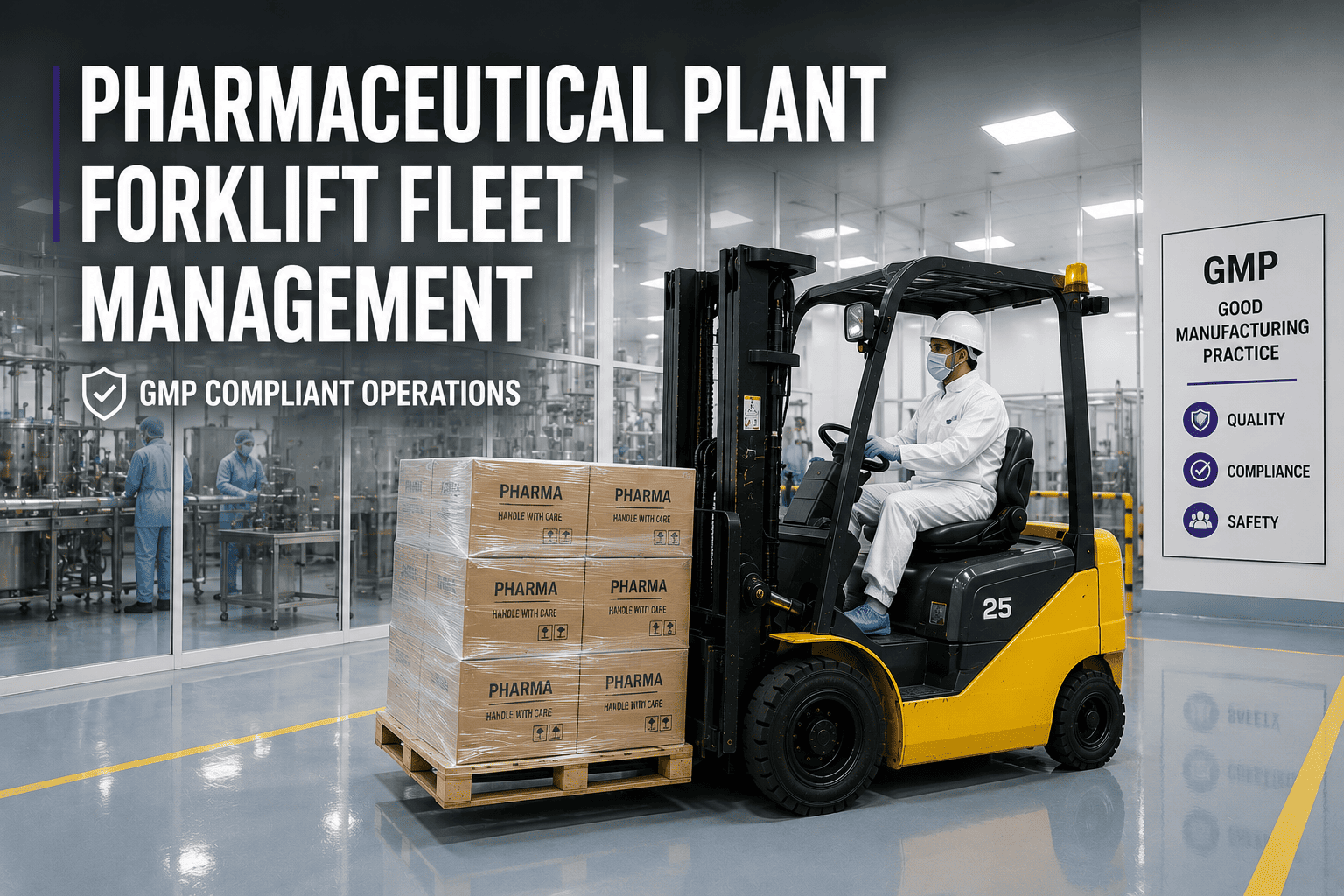
A forklift doesn't manufacture a single tablet or vial, yet in a pharmaceutical plant it can still end up in an FDA warning letter. Every truck that moves raw materials into a controlled storage area, stages components near a cleanroom airlock, or transports finished batches to shipping is part of the chain of custody that GMP inspectors care about. If the equipment isn't maintained, documented, and controlled the same way the production line is, it becomes the weak link auditors find first.
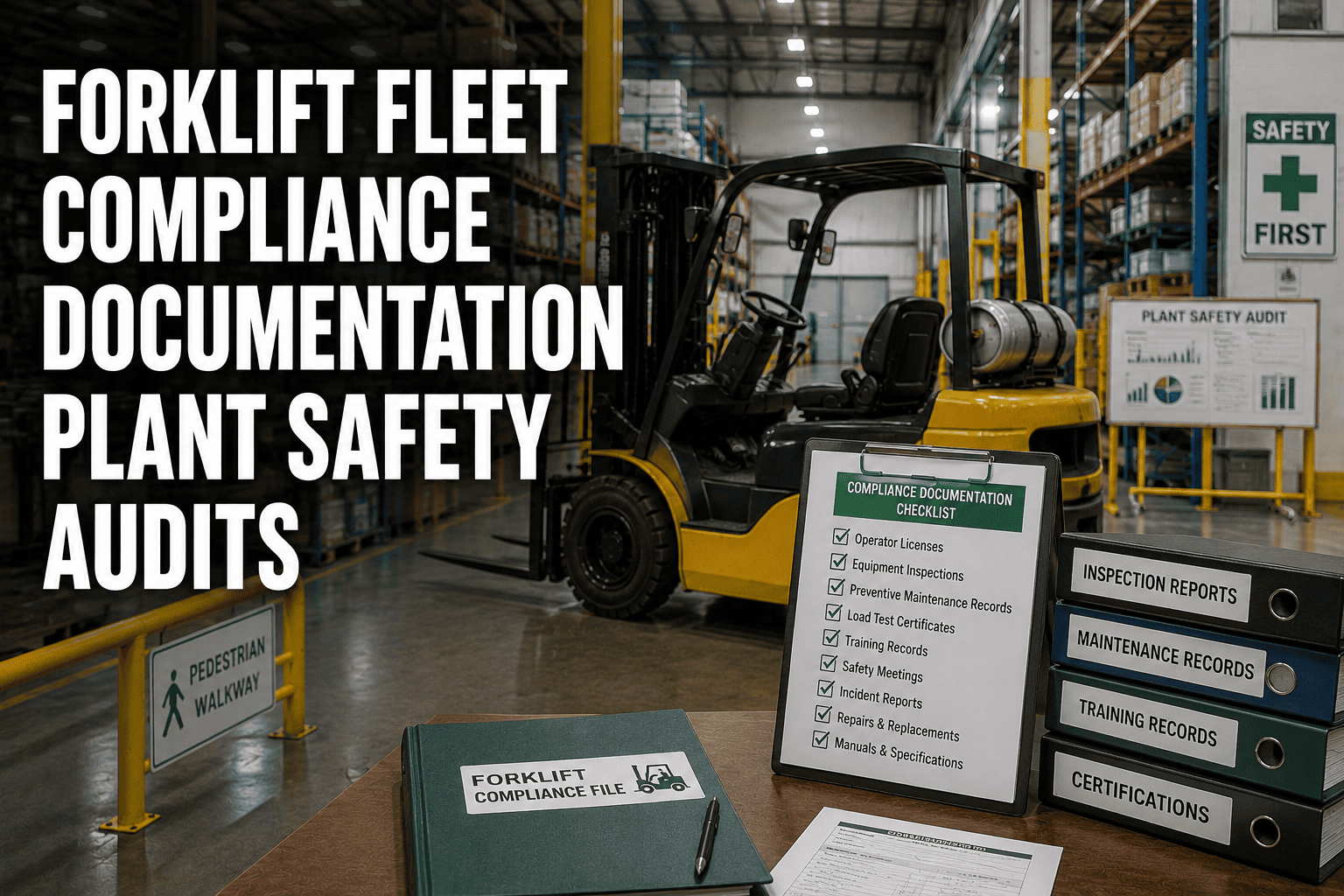
Under 21 CFR Parts 210 and 211, equipment used anywhere in the manufacturing and storage chain must be maintained and documented to prevent contamination and protect product quality, and that includes material handling equipment. Recent inspection trend analysis shows documentation and data integrity issues appear in roughly a quarter of GMP citations. Plants that manage forklift maintenance records digitally can produce a complete, traceable equipment history the moment an inspector asks for it.
Why GMP Reaches All the Way to the Forklift Fleet
GMP isn't only about what happens inside the production suite. It governs anything that could affect product quality, and material handling equipment touches raw materials, in-process goods, and finished batches at nearly every stage.
Where Forklifts Actually Create GMP Risk
Inspectors don't view a forklift in isolation. They trace it back to the batches it touched and the records that prove it was maintained and controlled the entire time.
Cross-Contamination Between Zones
A single truck servicing both a general receiving dock and a controlled storage area creates a contamination pathway if it isn't cleaned between transitions or if its tires and forks pick up residue from one zone into another.
What Inspectors Check
Look for a documented cleaning procedure specific to zone transitions, not a general cleaning schedule that treats every area of the plant the same way.
Equipment Changes Without Change Control
Replacing a part, adjusting a configuration, or even changing a tire type on a truck used near controlled storage can shift its risk profile. Without a change control record, that equipment falls out of its validated state.
What Inspectors Check
Auditors compare the physical equipment against its documented configuration, and any mismatch, however minor, becomes a finding worth investigating further.
Maintenance Records That Can't Be Produced Quickly
A paper log stored in a binder, missing entries, or inconsistent signatures signals a program that isn't truly controlled, even if the equipment itself is in good condition.
What Inspectors Check
Inspectors often ask for a specific truck's history on the spot. How quickly and completely that record appears says as much as the record itself.
FleetRabbit tracks maintenance history, cleaning cycles, and change control documentation for every forklift working near your controlled areas. Start your free trial or book a demo to see your equipment records built automatically.
Different Zones, Different Fleet Requirements
A pharma plant rarely has one uniform set of rules for every truck. Requirements shift depending on how close the equipment gets to controlled or cleanroom-adjacent space.
| Zone | Primary GMP Concern | Fleet Requirement |
|---|---|---|
| Cleanroom-Adjacent | Particulate and cross-contact risk near controlled manufacturing space | Dedicated, non-marking equipment with documented cleaning between every entry |
| Controlled Storage | Product identity, temperature excursion, and batch traceability | Trained operators, batch-linked movement logs, calibrated environmental checks |
| General Warehouse | Segregation between raw material, in-process, and finished goods | Clear zone markings, standard preventive maintenance, routine inspection |
| Shipping and Receiving | Chain-of-custody documentation and incoming material verification | Reliable uptime, documented handoff procedures, dock-level record keeping |
Building an Audit-Ready Forklift Maintenance Program
An audit-ready fleet isn't built the week before an inspection. It's the result of a maintenance program that treats documentation as seriously as the mechanical work itself.
Link Maintenance to Change Control
Every part replacement or configuration change on equipment used near controlled areas should route through the same change control process as production equipment, with impact assessment and approval before the work happens.
Practical Step
Tagging trucks that operate near cleanroom or controlled storage zones makes it easy to flag when a proposed change needs the extra review step.
Separate Cleaning Records From General Maintenance
Cleaning between zone transitions is a GMP control point on its own, not a subset of routine upkeep. Keeping a distinct, timestamped cleaning record for each truck makes that control visible to auditors.
Practical Step
Recording which zones a truck moved between each shift, alongside the cleaning performed, gives inspectors a direct link between movement and control.
Keep Digital, Signed, Retrievable Records
Paper logs slow down every audit and create room for missing entries. Digital records with electronic sign-off give both your quality team and outside inspectors immediate access to a complete history.
Practical Step
Setting up automatic reminders for overdue inspections closes the exact gap that inspection trend data shows up most often in citations.
Quick Benchmarks for Pharma Fleets
Frequently Asked Questions
GMP compliance depends on proving control over everything that touches your product, including the equipment that moves it. FleetRabbit gives pharmaceutical plants digital, signed maintenance and change control records for every forklift, so audits start with confidence instead of a scramble. Start your free trial with no credit card required, or book a demo to see it built around your controlled zones.