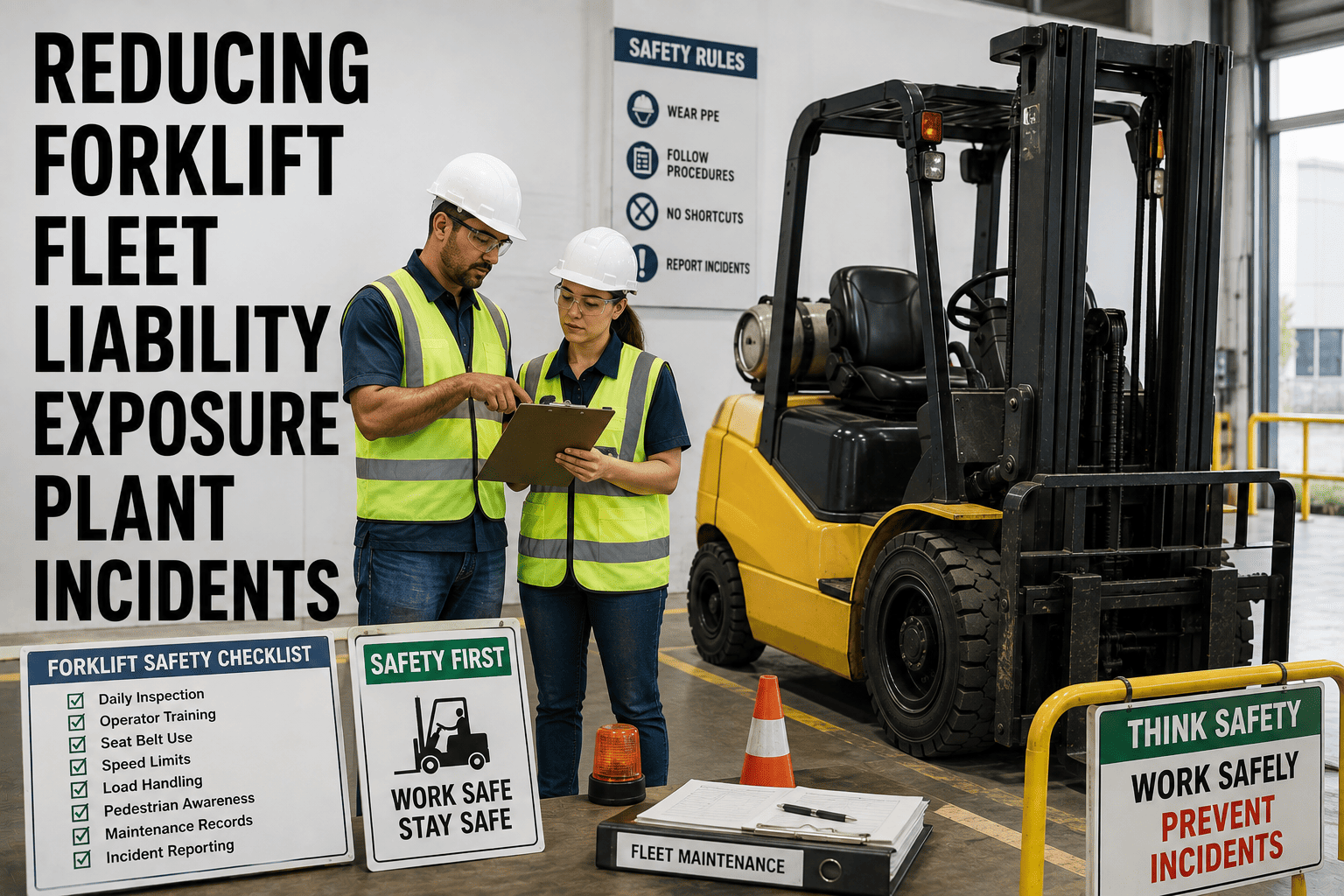
The forklift incident itself is rarely what decides a liability case. What decides it is the folder of records a plant can or can't produce in the days after. An investigator's first question after a forklift incident is almost never about the equipment. It's about whether the operator was certified, whether the truck was inspected that shift, and whether the last service was documented. Plants with complete records walk away from that conversation. Plants with gaps in the paper trail walk into a negligence claim they didn't need to have.
Missing or incomplete forklift records are treated as evidence of negligence in civil litigation, not just a paperwork gap. Federal OSHA penalties for a willful violation can reach into six figures per citation, and undocumented training or inspection history shifts liability squarely onto the employer once a claim is filed. Complete, timestamped records of certifications, pre-shift inspections, and service history are the single biggest factor in how a forklift incident resolves.
What Happens In The First 24 Hours After An Incident
The sequence after a forklift incident is predictable, and it moves fast. Regulators and legal teams both start in the same place: the records room, not the accident scene.
The Investigator's Standard Opening Question
Whether the response comes from OSHA, a workers' compensation adjuster, or opposing counsel in a civil claim, the opening question is almost always the same: was this operator trained and certified to run this specific class of equipment. An unclear or delayed answer changes the tone of everything that follows.
The Records That Get Pulled Next
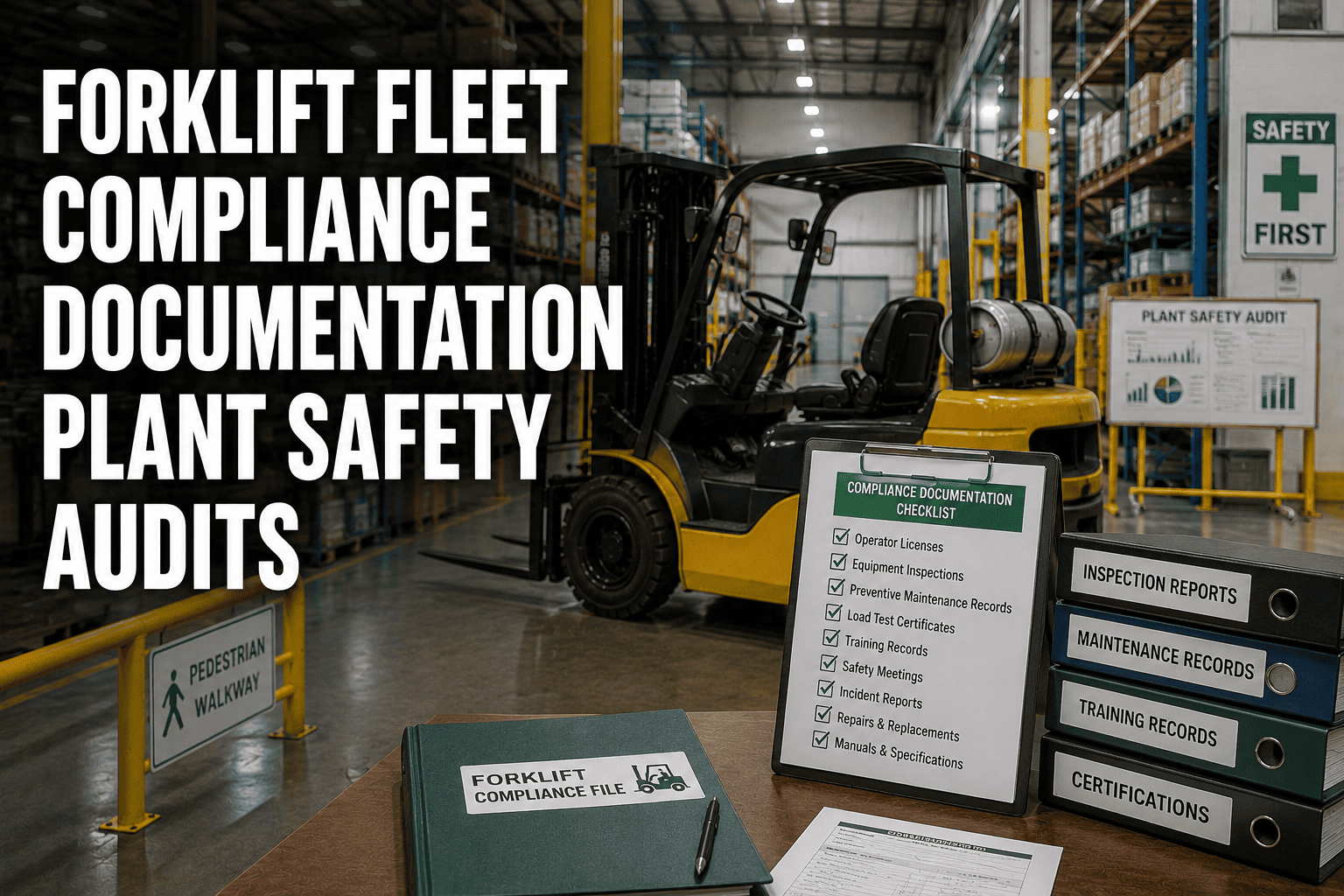
After certification, the next documents requested are pre-shift inspection logs for the truck involved, its maintenance and service history, and any prior incident or near-miss reports tied to that unit or that operator. Each gap in that set becomes a separate line of questioning.
FleetRabbit keeps certification, inspection, and service records tied to every truck and every operator in one searchable system. You can start a free trial and pull a complete record for any forklift in minutes.
The Four Records That Determine Liability Exposure
Every forklift liability case, whether it stays administrative or becomes a lawsuit, comes down to whether four specific records exist and are complete for the truck and operator involved.
| Record Type | What It Proves | Risk If Missing |
|---|---|---|
| Operator Certification | The operator was trained and evaluated on this class of truck | Treated as direct evidence of employer negligence in civil claims |
| Pre-Shift Inspections | The truck was checked and cleared before the shift it was used | Suggests equipment condition was unknown at the time of use |
| Maintenance History | The truck was serviced on schedule and known defects were resolved | Opens the door to a defective-equipment or failure-to-maintain claim |
| Prior Incident Reports | Any earlier near-misses or damage involving the truck or operator | A pattern with no paper trail invites a broader negligence finding |
How A Paperwork Gap Becomes A Liability Finding
Regulators and courts don't require proof that a missing record caused the incident. They only require that the absence of the record makes it harder for the employer to demonstrate reasonable care, which is often enough on its own.
Undocumented training shifts the burden
Without a signed, dated certification record, the employer carries the burden of proving the operator was qualified rather than the claimant having to prove they weren't.
A skipped inspection becomes a pattern
One missing pre-shift log looks like an oversight. A pattern of gaps across weeks or months looks like a systemic failure to maintain a safe operation, which is a very different legal argument.
Deferred maintenance becomes constructive knowledge
If a defect was logged but the repair was delayed past a reasonable window, that record can be used to show the employer knew about the hazard and didn't act on it.
Building A Defensible Record System
Reducing liability exposure isn't about avoiding incidents entirely, since no fleet can guarantee that. It's about making sure that when something does happen, the record set is complete, timestamped, and instantly retrievable.
Step 1: Centralize certifications by operator and truck class
Every operator's certification should be tied to the specific equipment class they're cleared for, not a single blanket training record.
Step 2: Digitize pre-shift inspections
Paper checklists get lost or filled out after the fact. A digital inspection tied to a timestamp and the operator's login removes that ambiguity entirely.
Step 3: Tie maintenance records to each truck's full history
Service records should be searchable by unit, not buried in a shop's paper logbook, so any truck's complete history can be pulled on demand.
Step 4: Log every near-miss, not just reportable incidents
A near-miss log shows a pattern of proactive safety management, which is one of the strongest factors in reducing a negligence finding.
FleetRabbit ties every operator certification, pre-shift inspection, and service record to the exact truck involved, timestamped and instantly retrievable. You can book a demo to see how it holds up against a real incident review.
What Complete Documentation Looks Like In Practice
A plant with strong documentation isn't one with more paperwork. It's one where any single truck's full story, from the operator's certification to the last inspection to the most recent repair, can be produced in minutes rather than reconstructed from memory and mismatched logbooks.
Every Record Tied To A Specific Truck And Operator
Generic, fleet-wide training rosters aren't enough. Investigators want the record for the operator and the truck that were actually involved, dated and signed.
A Searchable History, Not A Filing Cabinet
Records that exist somewhere in a filing cabinet but take days to locate provide little protection when the request comes within 24 hours of an incident.
A forklift incident is unpredictable. What your plant can prove afterward doesn't have to be. FleetRabbit keeps every certification, inspection, and service record tied to the exact truck and operator involved, so your documentation is ready the moment it's requested.