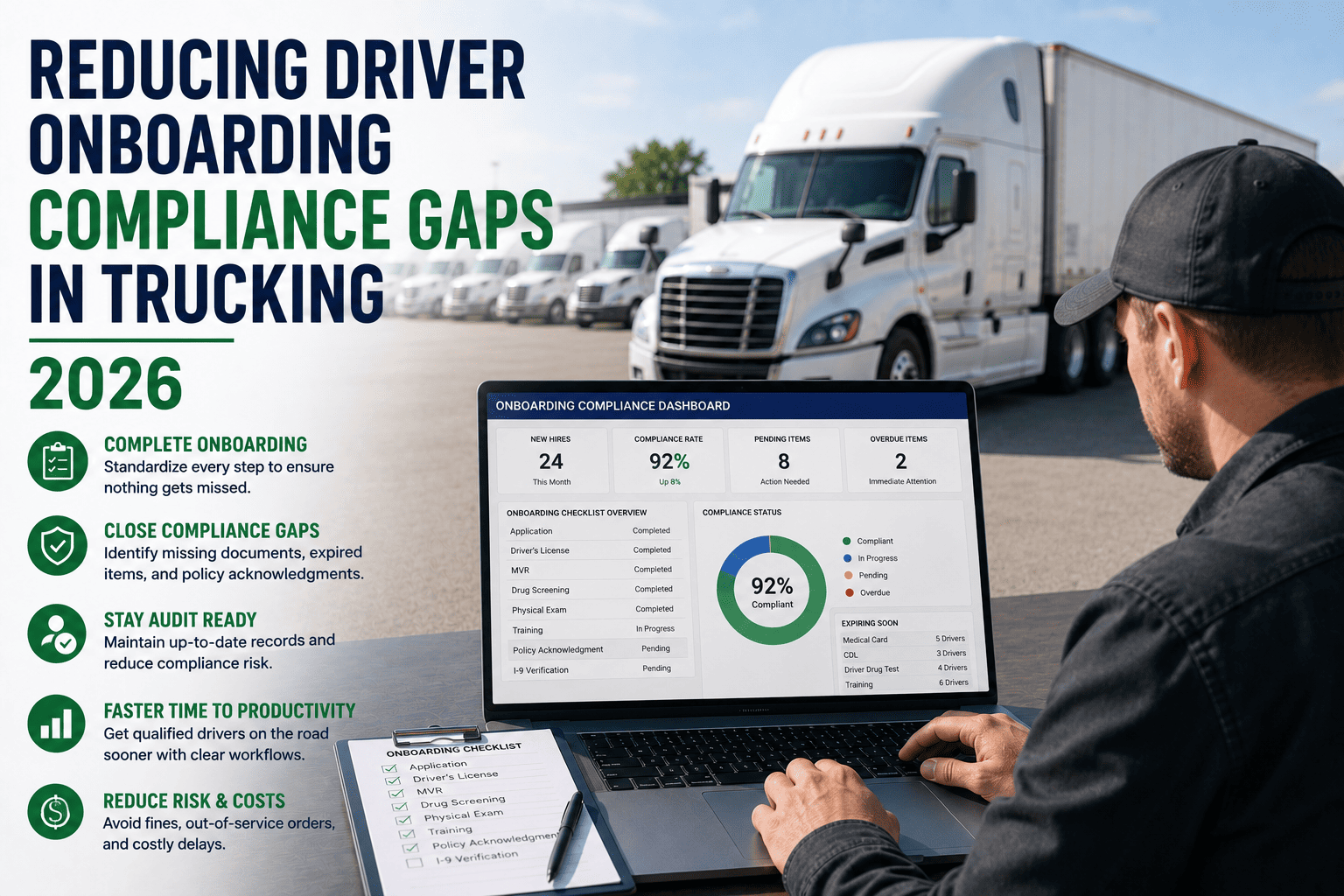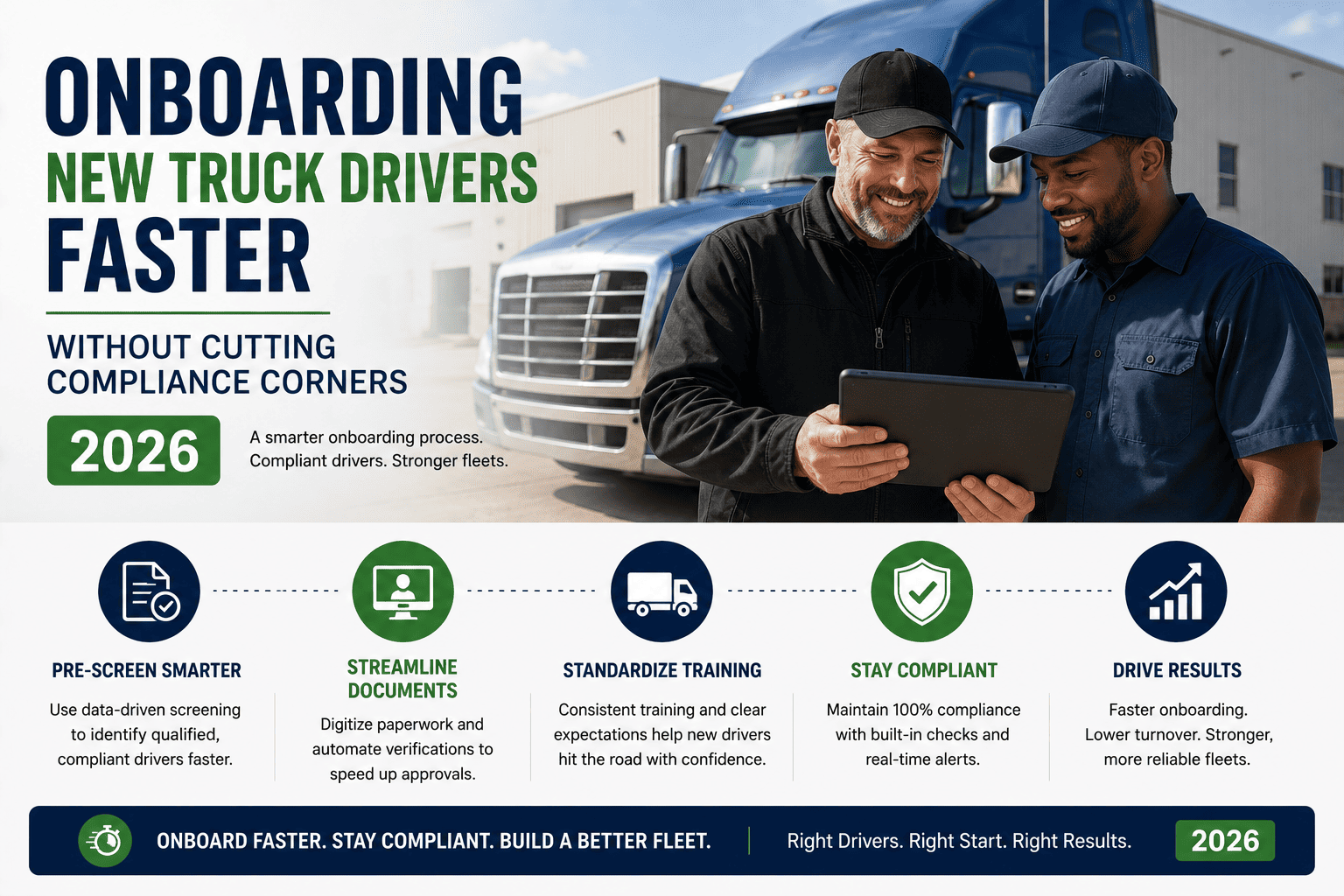
A qualified driver accepts your offer on Monday. By Thursday, he's accepted a different offer instead, because the other carrier had him road-ready in three days while your paperwork was still sitting in someone's inbox. This is the trap most fleets fall into: either onboarding moves fast and compliance gets sloppy, or compliance is airtight and onboarding takes so long that good drivers walk before their first day. The fleets winning in 2026 have figured out how to do both at once.
Rushing past document verification to get a driver on the road faster invites missing signatures, unverified employment history, and expired certifications, exactly what a DOT auditor looks for first.
Treating every form as a manual, sequential task stretches onboarding into weeks, during which a fully qualified driver is sitting idle or accepting a faster offer elsewhere.
The goal isn't choosing one over the other. It's removing the friction between them with a structured, digital process.
Why This Trade-Off Is More Dangerous Than Ever in 2026
Driver qualification file violations now account for roughly 17 percent of all FMCSA violations, and a single missing document can trigger fines ranging from $1,000 to well over $16,000 depending on severity. At the same time, the labor market has never punished slow hiring more harshly. A driver who feels stuck in onboarding limbo doesn't wait around wondering if the job is worth it. They take the next offer that moves faster.
That tension is exactly why structured, digital onboarding has become a competitive advantage rather than a nice-to-have. Fleets that build a documented, repeatable process see measurably better outcomes on both sides of the trade-off: fewer compliance gaps and faster time to a road-ready driver. You can put that same structure in place when you sign up for FleetRabbit and start tracking every document, deadline, and verification step in one place.
The Five Checkpoints Every Compliant Onboarding Must Hit
Speed only matters if it's speed toward a complete, audit-ready file. These five checkpoints, drawn directly from FMCSA driver qualification requirements, are non-negotiable no matter how fast the rest of the process moves.
Employment History Verification
A written investigation into the driver's prior DOT-regulated employment for the past three years, with documented responses or good-faith attempts, completed within 30 days of the start date.
Motor Vehicle Record Pull
A current MVR from every state the driver held a license in over the past three years, ordered no more than 90 days before the hire date.
Medical Certification Confirmation
A valid medical examiner certificate confirmed through the FMCSA National Registry, with CDL holders verified through MVR rather than paper copies under current rules.
Clearinghouse Query
A mandatory annual Clearinghouse limited query for every CDL driver, completed and documented with no exceptions.
Road Test or Skills Verification
A documented road test on FMCSA Form 391.3, or a valid skills performance evaluation certificate, before the driver operates a commercial vehicle unsupervised.
FleetRabbit tracks every required document, deadline, and verification step automatically, so nothing slips through the cracks while your new drivers move through onboarding in days instead of weeks. Book a demo and see the full workflow in action.
What Digital Onboarding Actually Changes
The difference between a fleet drowning in filing cabinets and one running a tight onboarding process usually isn't effort. It's whether the workflow is digital, centralized, and automated where it can be.
Document Collection Happens Once, Not Five Times
Instead of a driver mailing in paperwork, faxing a medical certificate, and re-uploading the same document to three different systems, a digital intake form captures everything once and routes it automatically to the right file.
Expiration Tracking Replaces the Spreadsheet
Medical certificates, Clearinghouse queries, and annual MVR reviews all carry renewal deadlines. Automated alerts flag those deadlines well before they lapse, instead of a compliance officer discovering an expired document during an audit.
Status Visibility Keeps Drivers Engaged
A driver who can see exactly where their onboarding stands, what's done and what's pending, feels respected and informed instead of left wondering if anyone's working on their file.
Manual Onboarding vs. Structured Digital Onboarding
Side by side, the operational difference is stark, and it shows up in both the speed of hiring and the strength of the resulting compliance file.
- Documents collected piecemeal across calls, faxes, and emails
- Expiration dates tracked on spreadsheets, easy to miss
- Files split across personnel and compliance folders
- Onboarding often stretches two to four weeks or longer
- Audit prep means digging through filing cabinets under pressure
- Documents uploaded once through a guided digital intake
- Automated alerts before certificates or queries expire
- Driver qualification files kept separate, complete, and centralized
- Road-ready status reached in days, not weeks
- Audit-ready records available in minutes, not hours
Fleets with structured onboarding programs report meaningfully lower turnover in a new driver's first year and significantly fewer preventable accidents during that vulnerable early window. That isn't a coincidence. A driver who experiences a smooth, professional onboarding forms a different first impression of the company than one who spends two weeks chasing missing paperwork.
Building Speed Into the Process Without Cutting Corners
The fastest, safest onboarding programs follow a consistent sequence rather than improvising case by case.
Running these steps in parallel instead of waiting for one to finish before starting the next is often the single biggest difference between a two-week onboarding process and a five-day one, without skipping a single requirement. Fleets ready to build that kind of process can sign up for FleetRabbit and start onboarding new drivers with every checkpoint automated from day one.
Frequently Asked Questions
The Bottom Line
Onboarding faster and staying compliant were never actually opposing goals. They just looked that way as long as fleets were running the process manually, one form at a time. A structured, digital workflow collapses that trade-off by collecting documents once, tracking deadlines automatically, and running verification steps in parallel instead of in sequence. The result is a driver who's road-ready in days, a file that's audit-ready at any moment, and a first impression that tells a new hire exactly the kind of company they just joined.
FleetRabbit turns driver qualification files, document tracking, and onboarding workflows into one automated system, so your next hire is road-ready fast and fully compliant. Get started with no credit card required.