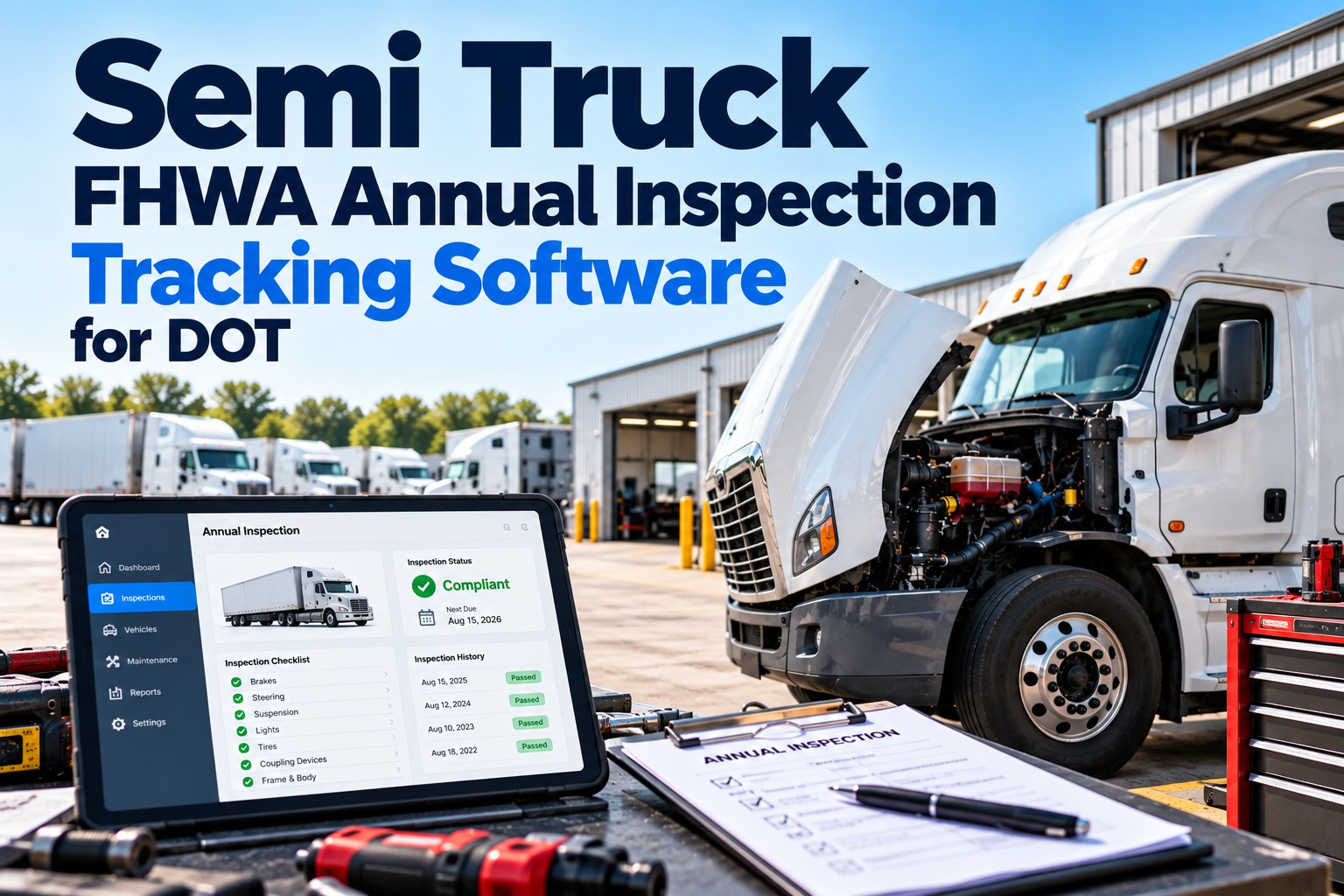
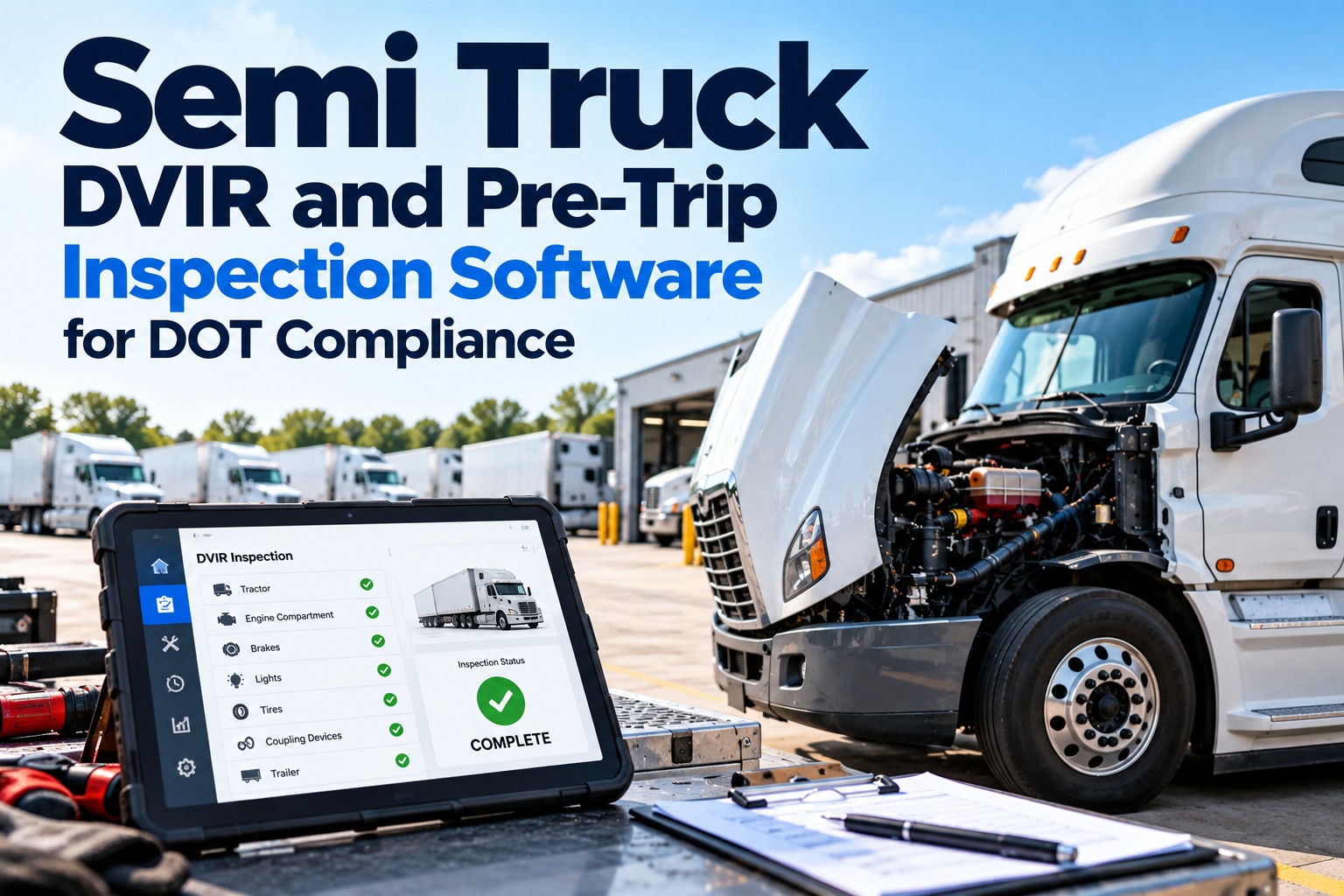
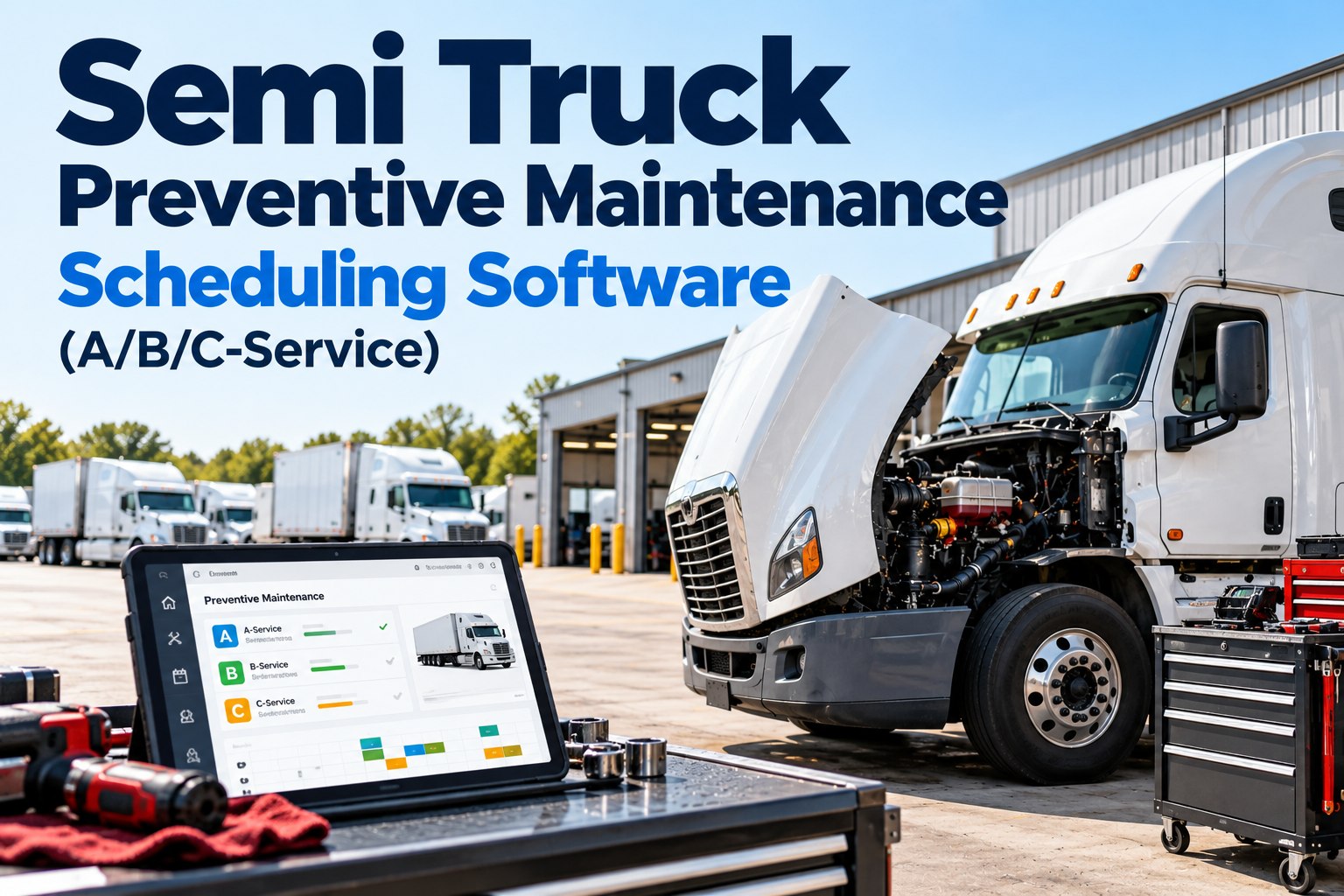
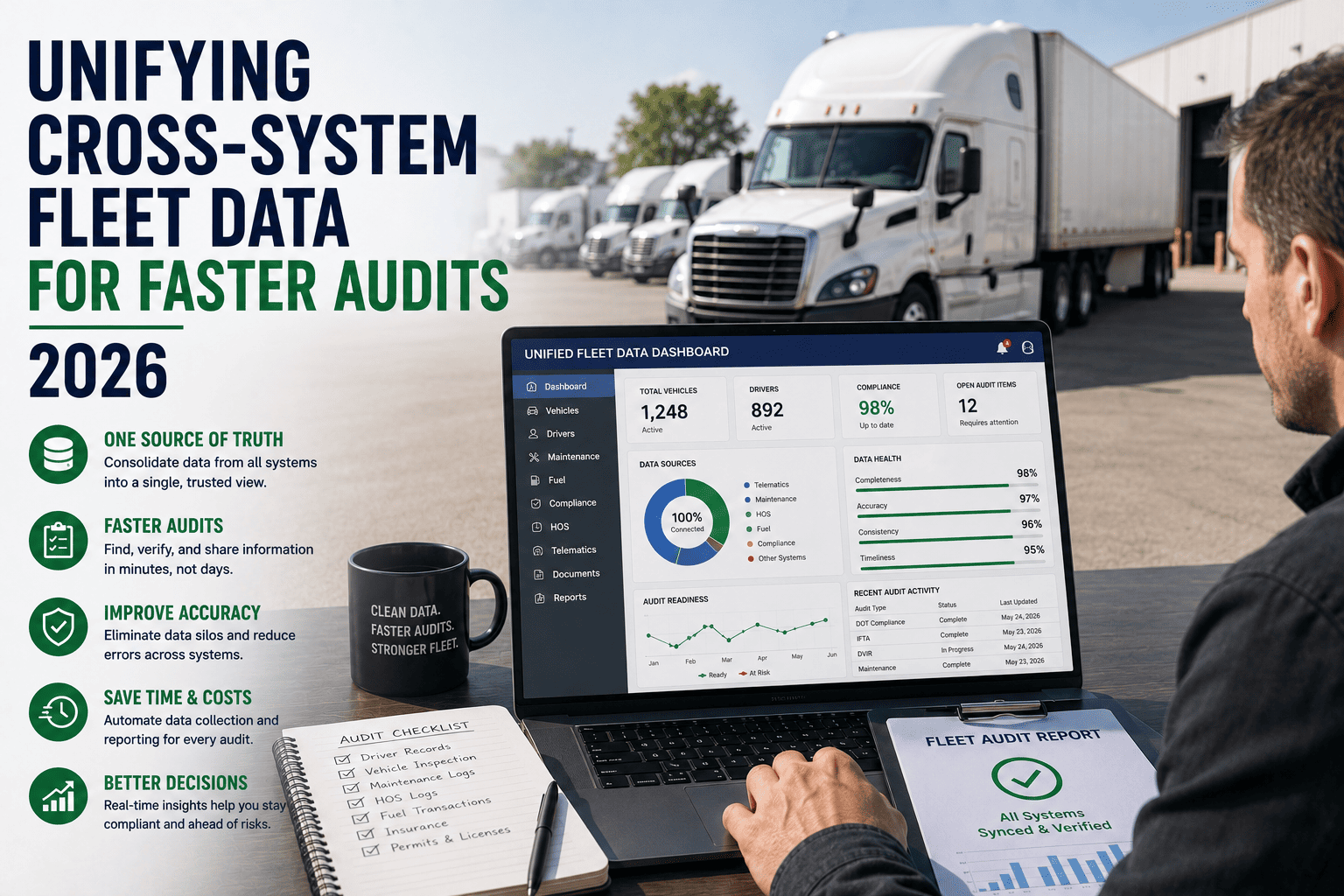
A Department of Transportation audit can occur with minimal notice. When an FMCSA compliance investigator arrives at your terminal or requests documentation for review, fleet managers have limited time to produce records that demonstrate regulatory compliance. The difference between a successful audit with minor findings and a failed audit with out-of-service orders, fines, or safety rating downgrade often comes down to preparation — specifically, whether the fleet maintains organized, complete, and immediately accessible compliance documentation. This checklist provides fleet managers with a structured framework for DOT audit preparation, covering the documentation categories investigators examine most frequently and the common compliance gaps that trigger expanded audit scope or enforcement action.
Fleet Compliance
DOT Audit
High Priority
12 min read
Complete Audit Preparation System
This guide provides a comprehensive DOT audit preparation checklist organized by documentation category, plus a readiness assessment framework, common violation patterns, and a 30-day pre-audit preparation timeline. FleetRabbit's compliance module maintains DOT-required records in audit-ready format, reducing preparation time from days to minutes when investigators request documentation.
30%
of DOT audits result in proposed safety rating downgrade based on documentation deficiencies alone
45%
of audit findings relate to driver qualification files and hours of service records
90
days is the standard retention period for inspection records in most compliance frameworks
$16,000
average fine per violation category for serious DOT compliance deficiencies
Understanding the DOT Audit Process
DOT audits conducted by the Federal Motor Carrier Safety Administration fall into several categories, each with different triggers, scope, and documentation requirements. Understanding which audit type your fleet faces determines preparation priorities.
Audit Type
Comprehensive Safety Audit
Typically triggered for new carriers within the first twelve months of operation or following significant safety events. Examines all compliance categories including driver qualification, hours of service, vehicle maintenance, accident register, and drug and alcohol testing programs. Documentation requirements span the preceding twelve months for most categories. Failure to produce complete documentation often results in proposed unfit rating and cessation of operations.
Audit Type
Compliance Investigation
Triggered by safety data violations, crash indicators, or pattern complaints. Scope is narrower than comprehensive audit but more focused on specific compliance areas identified as problematic. FMCSA typically provides notice of investigation scope, allowing targeted preparation. Investigators may request records from the preceding six to twelve months depending on violation patterns.
Audit Type
Off-Site Records Review
Remote audit conducted via records submission rather than onsite investigator visit. Carrier receives documentation request list and specified submission deadline, typically ten to thirty days. Off-site reviews are increasingly common for initial compliance reviews and follow-up investigations. This format places premium on organized, searchable documentation systems since investigators cannot clarify requests in person.
Audit Type
Roadside Inspection and Follow-Up
Driver roadside inspection identifies violations that trigger carrier-level investigation. Vehicle out-of-service orders, driver out-of-service orders, or patterns of identified violations result in expanded documentation request. Carriers with CSA scores above intervention thresholds in any Behavior Analysis Safety Improvement Category face increased audit probability.
Documentation Categories in the Audit Checklist
The following documentation categories represent the primary areas of DOT audit examination. Fleet managers should verify completeness, currency, and accessibility for each category before any audit notice arrives.
01
Driver Qualification Files
Each driver operating commercial vehicles must maintain a complete qualification file. Required documents include drivers license copy with proper class and endorsements, medical examiners certificate and any variances, employment application, previous employment verification for preceding three years, annual review of driving record, road test certificate or equivalent, and annual list of violations. Missing any required document creates audit finding regardless of driver safety performance.
02
Hours of Service Records
HOS records must document all driver duty status changes for each driver for the preceding six months. Electronic logging device data must be retained and accessible. Key audit points include unassigned driving time, falsification patterns, incomplete records, and compliance with 14-hour and 11-hour rules. Investigators examine patterns of log edits, annotating practices, and consistency between logs and supporting documents such as fuel receipts and toll transactions.
03
Vehicle Maintenance Records
Each vehicle requires documentation of periodic inspections, annual DOT inspections, and all repairs addressing safety-related defects. Required records include inspection reports with driver signatures, repair documentation for defects identified, annual inspection certificates, and preventive maintenance schedules. Investigators examine patterns of recurring defects and whether identified violations were properly repaired before vehicle return to service.
04
Accident Register and Records
Carriers must maintain accident register for preceding three years documenting all accidents meeting DOT recording criteria. Each accident record requires date, location, driver identification, number of injuries and fatalities, and copies of accident reports. Investigators cross-reference accident register with driver qualification files and drug and alcohol testing records to verify post-accident testing compliance.
05
Drug and Alcohol Testing Program
Documentation requirements include drug and alcohol testing policy, written agreement with testing consortium or Medical Review Officer, random testing selection records and participation logs, pre-employment testing verification, post-accident testing records, return-to-duty testing documentation, and annual management information system summary reports. Absence of any required component constitutes program deficiency.
06
Insurance and Financial Records
Carriers must maintain proof of required insurance filings including primary liability, cargo, and any specialized coverage. FMCSA requires Form MCS-90 endorsement for most for-hire carriers. Investigators verify insurance continuity without lapses and confirm that coverage amounts meet regulatory minimums based on cargo and passenger capacity.
Maintain Audit-Ready Compliance Documentation with FleetRabbit
FleetRabbit's compliance module maintains driver qualification files, vehicle inspection records, and maintenance documentation in organized, immediately accessible format for DOT audit response.
Hours of Service Compliance Audit Checklist
Hours of service records represent the most frequently cited violation category in DOT audits. Investigators examine not only basic compliance with driving time limits but also recordkeeping integrity, falsification indicators, and supporting document consistency.
ELD Records Integrity
Electronic logging device records must be complete and unaltered. Investigators examine ELD data for unassigned driving time, editing patterns, and data transfer records. Carriers must maintain ELD data for preceding six months and demonstrate ability to produce records on demand. Common violations include drivers operating without proper ELD certification, editing logs without proper annotations, and carriers failing to transfer ELD data during device replacement.
14-Hour and 11-Hour Rule Compliance
Investigators verify that no driver exceeds 14 hours on duty following initial start of duty period and that no driver exceeds 11 hours driving time within that window. Exception application must be properly documented including adverse driving conditions and short-haul exemptions. Violations of basic duty limits constitute serious findings regardless of mitigating circumstances claimed during audit.
Supporting Document Consistency
Investigators cross-reference HOS logs against supporting documents including fuel receipts, toll transactions, delivery records, and onboard camera footage. Inconsistencies between logs and supporting documents trigger investigation of records falsification. Carriers must maintain supporting documents for each driver for same six-month retention period as HOS records.
Sleeper Berth Compliance
Drivers using sleeper berth exception must document split sleep periods correctly. Investigators examine whether berth time meets minimum duration requirements and whether drivers properly annotated sleeper berth periods in logs. Improper sleeper berth documentation results in violation of basic duty limits regardless of actual rest time.
Vehicle Maintenance and Inspection Records Audit Checklist
Vehicle maintenance documentation demonstrates the carrier's systematic approach to equipment safety. Investigators examine both completeness of records and patterns of recurring violations that suggest inadequate maintenance program effectiveness.
Maintenance Record Category
Daily Driver Vehicle Inspection Reports
Each vehicle requires DVIR for each operating day. Reports must document inspection completion, any defects identified, and certification that defects were repaired or vehicle properly removed from service. Investigators examine patterns of drivers reporting no defects while roadside inspections identify violations — a strong indicator of inadequate inspection procedures.
Maintenance Record Category
Annual DOT Inspections
Each vehicle must undergo comprehensive annual inspection with documentation on required form. Inspection must be completed by qualified inspector with documentation of inspector certification. Investigators verify inspection interval compliance and examine inspection reports for improperly passed items that later caused roadside violations.
Maintenance Record Category
Repair Documentation
All repairs addressing safety-related defects must be documented with repair description, parts replaced, and certifying technician. Investigators verify that vehicles with identified defects were not operated before proper repair completion. Carriers operating vehicles listed as having critical defects on any inspection face immediate out-of-service orders.
Maintenance Record Category
Preventive Maintenance Schedule Compliance
Carriers must maintain documented PM schedule for each vehicle and demonstrate compliance. Investigators examine whether PM intervals match manufacturer recommendations and whether actual PM completion aligns with schedule. Systematic PM non-compliance indicates inadequate maintenance program regardless of individual vehicle condition.
Maintenance Record Category
Tire and Brake Inspection Records
Tires and brakes are the most common vehicle violation categories during roadside inspections. Carriers must document tire tread depth measurements, inflation checks, and brake adjustment measurements at required intervals. Investigators examine patterns of recurring tire and brake violations across fleet as indicator of maintenance program effectiveness.
Maintenance Record Category
Hazardous Materials Documentation
Carriers transporting hazardous materials require additional documentation including shipping papers, emergency response information, and vehicle placarding verification. Investigators examine driver hazmat endorsement, carrier hazmat registration, and proper classification documentation for each shipment. Hazmat violations carry significantly higher penalty structures than standard compliance violations.
Complete Your DOT Audit Checklist with FleetRabbit
FleetRabbit's compliance reporting module maintains driver qualification files, vehicle inspection records, and maintenance documentation in audit-ready format. Book a demo to see how the platform organizes compliance documentation for instant retrieval.
30-Day Pre-Audit Preparation Timeline
When audit notice arrives — or when fleet managers proactively prepare — systematic preparation improves outcomes significantly. The following timeline guides preparation efforts beginning thirty days before expected audit or documentation submission.
30 Days Before Audit
Conduct preliminary documentation inventory across all compliance categories. Identify missing or incomplete documents and begin remediation. Assign audit preparation lead with authority to access all records systems and allocate staff resources. Contact external vendors including testing consortium and MVR vendors to confirm record availability and request any missing documentation.
21 Days Before Audit
Complete driver qualification file reviews for all drivers active in preceding twelve months. Obtain missing medical certificates, MVRs, and employment verifications. Conduct mock driver file audit to identify patterns of missing documentation. Begin hours of service records review focusing on unassigned driving time and inconsistency patterns.
14 Days Before Audit
Complete vehicle maintenance record review. Verify annual DOT inspection dates for each vehicle. Identify and repair any vehicles with unresolved defects. Review previous twelve months of roadside inspection data to identify recurring violation patterns that may attract investigator attention.
7 Days Before Audit
Conduct full mock audit using former compliance investigator or qualified third party. Organize documentation by category in format matching investigator request patterns. Brief all personnel who may interact with investigator on appropriate response protocols and document request procedures.
1 Day Before Audit
Final documentation verification. Ensure requested document set is complete and organized. Confirm availability of key personnel including safety director, fleet manager, and records custodians. Prepare private meeting space for investigator with access to power, internet, and document storage.
Audit Day Response
Provide investigator requested documentation promptly. Do not delay document production. Assign single point of contact for all investigator requests. Take contemporaneous notes of all requests and responses. Do not offer additional documentation beyond what investigator requests. Do not speculate or provide undocumented responses to investigator questions.
Common DOT Audit Violations and Patterns
Understanding patterns of audit findings helps fleet managers prioritize preparation efforts. The following violations appear most frequently in DOT audit reports and represent the highest risk areas for unprepared carriers.
Driver Qualification File Violations
Missing annual MVR reviews represent the most frequent driver file violation. Investigators routinely identify files with MVRs missing entirely or annual review documentation incomplete. Second most common violation is missing employment verifications for previous three years, particularly for drivers with multiple previous employers. Medical certificate expiration or missing variance documentation ranks third.
Hours of Service Violations
Unalerted HOS violations including 14-hour limit exceedance and insufficient 10-hour rest periods appear consistently in audit findings. ELD data transfer failures and unassigned driving time represent growing violation categories as investigators become more sophisticated in electronic record examination. False log allegations arise from inconsistencies between ELD data and supporting documents.
Vehicle Maintenance Violations
Annual inspection missing or expired is the most common vehicle record violation. Carriers operating vehicles with expired annual inspections face immediate penalties. Second common violation is missing DVIR documentation or drivers reporting no defects on vehicles with identified roadside violations. Brake and tire deficiency patterns attract additional investigator scrutiny of overall maintenance program.
Drug and Alcohol Program Violations
Random testing selection documentation deficiencies appear in most drug and alcohol program findings. Carriers unable to demonstrate proper random selection process or testing participation records face automatic program deficiency findings. Post-accident testing documentation and return-to-duty testing records represent secondary violation categories.
Audit Response and Corrective Action Planning
When auditors identify violations, the carrier's response influences the severity of enforcement action and the timeline for corrective action completion. Proper response to audit findings can prevent safety rating downgrade even with identified deficiencies.
Finding Type
Required Response
Time Frame
Documentation Deficiency
Obtain missing documentation, complete incomplete records, or submit written explanation if documentation cannot be obtained
14 to 30 days
Procedural Violation
Submit revised written policies, implement corrective procedures, and document training completion for affected personnel
30 to 60 days
Pattern of Recurring Violations
Comprehensive program review, third-party audit, and corrective action plan with specific verifiable measures
60 to 90 days
Safety Rating Downgrade Proposal
Formal challenge with supporting evidence, corrective action documentation, and request for downgrade reconsideration
30 days for response
What Safety Directors Say About DOT Audit Preparation
Our first DOT audit after I took over as safety director nearly failed because our driver qualification files were incomplete. We had medical certificates missing, MVR reviews not documented, and employment verifications incomplete for three drivers. The investigator gave us fifteen days to correct the deficiencies. We implemented FleetRabbit's compliance module and now every driver file has automated expiration alerts and missing document flags. Our follow-up audit passed with zero findings.
Safety Director
Regional LTL Carrier, 120 drivers
The most valuable preparation we did was running our own mock audit using the FMCSA investigation checklist. We found documentation gaps we did not know existed — annual inspection certificates that were not filed properly, DVIR records that were not retained for the full ninety days, and drug and alcohol testing records that were not organized by driver. Fixing those gaps before the actual audit saved us from what would have been multiple serious findings.
Compliance Manager
Construction Fleet, 85 vehicles
Frequently Asked Questions
What triggers a DOT audit for a motor carrier?
DOT audits can be triggered by multiple factors including new carrier registration requiring safety audit within first twelve months, safety measurement system scores exceeding intervention thresholds in any BASIC category, crash indicators showing above-average accident rates, complaint investigations initiated by driver reports or public complaints, pattern of roadside inspection violations identified through CSA data, and random selection as part of FMCSA audit targeting program. New carriers face near-certain audit within first year. Established carriers with clean safety records may never face comprehensive audit but remain subject to random selection and complaint-driven investigations.
How long must carriers retain DOT compliance documentation?
Retention requirements vary by documentation type. Driver qualification files must be retained for three years after driver separation from employment. Hours of service records including ELD data must be retained for six months. Vehicle inspection reports must be retained for three months. Annual DOT inspection records must be retained for fourteen months or until next annual inspection whichever is longer. Accident records must be retained for three years. Drug and alcohol testing records have varying retention periods with some records retained for five years. FleetRabbit's compliance module enforces retention schedules automatically, preventing premature deletion while avoiding unnecessary long-term storage of expired records.
Book a demo to discuss retention schedule configuration for your fleet.
Can a fleet pass a DOT audit with electronic records only?
Yes. FMCSA accepts electronic records as equivalent to paper records when the electronic system meets record retention, integrity, and accessibility requirements. Electronic records must be tamper-proof with audit trail, must be accessible for investigator review during onsite audit, and must be printable upon request. Many investigators now prefer electronic records because they review more efficiently than paper files. Fleets using electronic compliance systems typically respond to document requests faster and with fewer missing records than fleets maintaining paper files. FleetRabbit's compliance module meets FMCSA electronic record requirements and produces audit-ready documentation in investigator-preferred formats.
Book a demo to see how electronic compliance records appear to investigators.
What happens if a carrier fails a DOT audit?
Audit failure severity varies based on violation nature and scope. Minor documentation deficiencies typically result in corrective action plan with thirty to sixty day remediation period. Serious violations including falsified records, systemic HOS non-compliance, or operating vehicles with known safety defects may result in proposed safety rating downgrade from Satisfactory to Conditional or Unsatisfactory. Unsatisfactory rating triggers cessation of interstate operations until corrective action completed and re-audit passes. Civil penalties typically range from $1,000 to $16,000 per violation category with higher penalties for hazmat or fatality-related violations. Carriers receiving Unsatisfactory rating face insurance cancellation and customer contract termination in addition to FMCSA enforcement.
How does FleetRabbit help with DOT audit preparation and response?
FleetRabbit's compliance module maintains all DOT-required documentation in organized, searchable format with automated expiration alerts for medical certificates, license renewals, annual inspections, and other time-sensitive compliance items. The module generates investigator-ready reports for driver qualification files, vehicle inspection records, and maintenance documentation within seconds of document request. Audit trail features document when records were created, modified, and reviewed — satisfying investigator requirements for electronic record integrity. Fleet managers using FleetRabbit reduce audit preparation time from days to hours and virtually eliminate document-not-found audit findings.
Book a demo to see the compliance reporting module in action.
Stay DOT Audit Ready with FleetRabbit Compliance Tools
FleetRabbit's compliance module maintains driver qualification files, vehicle inspection records, and maintenance documentation in audit-ready format with automated expiration alerts and investigator-friendly reporting.
DOT Audit Checklist
Driver Qualification Files
HOS Compliance
Vehicle Inspections
Compliance Reporting
Audit Trail
April 29, 2026
By Jason Smith
All Posts