.png)
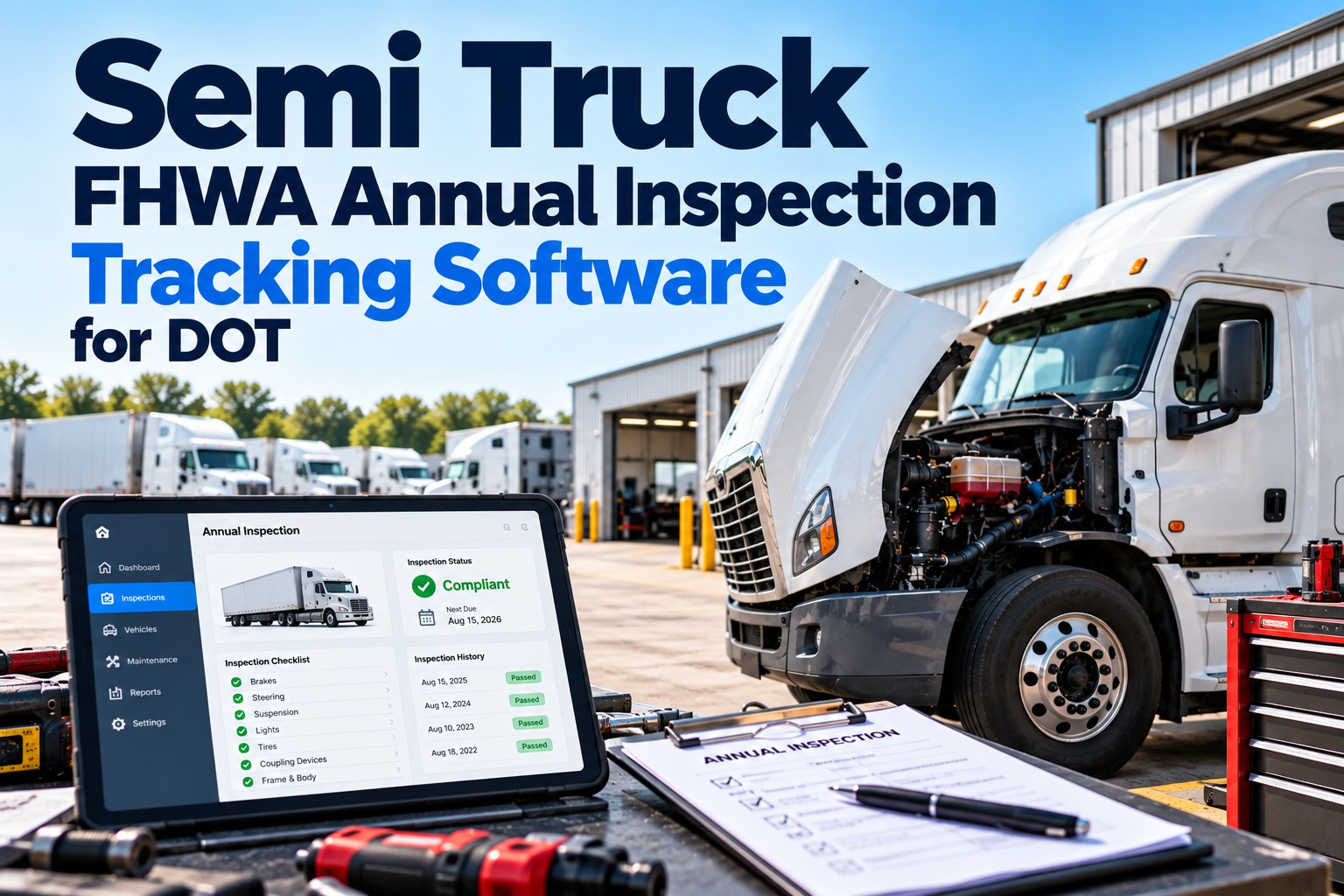
Annual vehicle inspections represent a non-negotiable regulatory requirement and a critical operational safeguard for commercial fleet operators. The Federal Motor Carrier Safety Administration (FMCSA) mandates comprehensive annual inspections for all commercial vehicles, with specific component coverage that directly impacts vehicle safety, regulatory compliance, and liability protection. This annual vehicle inspection checklist for commercial trucks provides fleet managers, maintenance technicians, and safety directors with a complete framework covering all FMCSA-required components, systematic inspection methodology, documentation requirements, and remediation procedures that maintain compliance while extending vehicle service life. FleetRabbit's digital inspection platform automates annual inspection workflows, generates FMCSA-compliant documentation, tracks defect remediation from identification through completion, and produces compliance reports that satisfy audit requirements while eliminating manual inspection tracking.
Annual Vehicle Inspection Checklist 2026
Complete FMCSA-Compliant Framework for Commercial Truck Safety
Why Annual Inspections Prevent Roadside Violations and Safety Failures
Commercial trucks operating without documented annual inspections face FMCSA penalties ranging from $500 to $5,000 per violation, plus potential out-of-service orders that halt revenue generation. Beyond regulatory exposure, comprehensive annual inspections reduce brake-related failures by approximately 40 percent, eliminate tire blowouts through proactive tread and sidewall assessment, and identify electrical and lighting defects before they cause accident liability. Fleet operators who conduct structured annual inspections report 30 percent fewer roadside inspection failures, faster defect remediation cycles, and improved driver confidence in vehicle reliability. This checklist organizes the complete annual inspection process across 10 critical component categories with specific assessment criteria, required documentation, and remediation decision logic that transforms inspection from a compliance checkbox into a strategic safety program.
Annual Inspection by Component Category: Complete FMCSA Coverage
Annual vehicle inspections must systematically evaluate all major components affecting vehicle safety, operation, and compliance. The framework below organizes required inspections by component category with specific assessment criteria that fleet technicians can apply consistently across the fleet.
Critical Annual Inspection Rules for FMCSA Compliance
FMCSA regulations and fleet safety best practices establish specific requirements that fleet operators must follow to maintain compliance while protecting vehicles and drivers. The rules below represent regulatory mandates and proven operational practices that reduce violations and downtime.
FMCSA regulations require annual inspections for all commercial motor vehicles with gross vehicle weight rating above 10,000 pounds. Inspections must be completed every 12 months calendar period regardless of mileage. Vehicles used intermittently cannot extend inspection intervals and must be inspected before returning to active service if more than 12 months have elapsed since the previous inspection. Documentation showing inspection completion date is required in vehicle maintenance records for regulatory defense.
FMCSA defines specific out-of-service conditions that require vehicle removal from revenue service until remediation is completed. Brake pad thickness below 1/8 inch on any axle, tire tread below 2/32 inch, steering wheel play exceeding manufacturer specification, and lighting failures on required visibility positions mandate immediate out-of-service removal. Vehicles placed out-of-service must remain off the road until repair verification confirms component replacement or repair meets specification. No vehicle may operate with out-of-service defects regardless of operational pressure or distance to destination.
Annual inspections must be performed by technicians with documented training and competency in commercial vehicle systems. FMCSA does not specify technician certification requirements but enforcement actions indicate that self-inspection without documented training creates compliance risk. Fleet best practice maintains training records showing inspector qualifications, equipment calibration documentation for torque wrenches and pressure gauges, and annual refresher training covering updated FMCSA regulations. Third-party inspection services should provide technician credentials and liability insurance covering inspection accuracy and missed defects.
Defects identified during annual inspection must be repaired within reasonable timeframes based on severity. Out-of-service defects must be corrected before vehicle returns to revenue service. Repeat defects from previous inspections create regulatory concern and must be resolved with root cause analysis and corrective action documentation. Fleets unable to repair identified defects should establish written policies addressing work prioritization, temporary repairs when permanent repair is delayed, and vehicle reassignment during repair periods. Defect repair completion documentation must be retained with original inspection records.
Annual inspection records must include vehicle VIN, inspection date, technician identification, component assessment results, and defect descriptions with severity classification. FMCSA does not mandate specific record format but requires information sufficient to prove compliance inspection occurred and specific components were assessed. Digital inspection records provide better audit trail and remediation tracking compared to paper forms. Records must be retained for at least 12 months and made available during roadside inspections or compliance audits. Missing inspection documentation creates presumption of non-compliance for regulatory purposes.
Fleet operators must maintain inspection status visibility across all commercial vehicles with alert systems flagging overdue inspections before the 12-month anniversary date. Vehicles approaching inspection due dates should be scheduled proactively to avoid missed inspection deadlines that create compliance exposure. Fleet management systems should generate overdue inspection reports monthly and hold management accountable for 100 percent inspection completion. Vehicles with chronic defect patterns should trigger equipment evaluation and potentially higher inspection frequency for safety and compliance assurance.
FMCSA Out-of-Service Criteria and Remediation Response
FMCSA establishes specific component thresholds that mandate out-of-service removal until repairs are completed. The table below identifies critical out-of-service defects with minimum standards that must be met before vehicle operation is permitted.
| Component | Out-of-Service Threshold | Inspection Method | Required Documentation |
|---|---|---|---|
| Brake Pads | Below 1/8 inch thickness on any axle | Caliper or ruler measurement on all wheels | Measurement photos and repair receipt |
| Tire Tread | Below 2/32 inch in any position | Penny depth gauge or tread depth scanner | Tread measurement and tire replacement invoice |
| Steering Wheel Play | Exceeds OEM specification limit | On-center measurement with steering wheel locked | Play measurement and steering repair documentation |
| Lighting Defects | Any required light inoperative | Visual verification and meter confirmation | Light function test results and bulb replacement receipt |
| Air Brake Pressure | Fails 8-minute air retention test | Gauge reading with 8-minute park hold test | Pressure retention test documentation and repair work order |
| Frame Cracks | Any crack in main structural member | Visual inspection with photo documentation | Crack photos and structural repair certification |
| Coupling Security | Fifth wheel or kingpin loose or cracked | Movement test and visual crack inspection | Coupling inspection and replacement documentation |
| Tire Sidewall | Cuts, bulges exposing cords, or separations | Visual sidewall examination all sides | Sidewall defect photos and tire replacement receipt |
Scroll horizontally on mobile to view all columns. Vehicles with out-of-service defects must not operate until repairs are completed and verified.
Automate Annual Inspections with FleetRabbit
FleetRabbit's digital inspection platform generates FMCSA-compliant annual inspection workflows, tracks defect remediation from identification through completion verification, produces compliance documentation automatically, and provides inspection status visibility across your entire fleet. Annual inspection scheduling, photo-verified defect documentation, and automated out-of-service alerts transform inspection from a compliance checkbox into a strategic safety and maintenance program that reduces violations and extends vehicle service life.
Frequently Asked Questions About Annual Vehicle Inspections
1. What is the FMCSA requirement for annual vehicle inspections?
FMCSA requires annual inspections for all commercial vehicles with gross vehicle weight rating above 10,000 pounds. The regulation mandates inspections every 12 months regardless of mileage accumulation. Inspections must be documented with vehicle identification and technician information retained for 12 months.
2. What components must be included in an annual inspection?
FMCSA-compliant annual inspections must cover brake systems, tires and wheels, lighting systems, engine components, suspension and steering, vehicle frame integrity, cab safety equipment, coupling systems, emission control equipment, and compliance systems. Each component category contains specific assessment criteria defined in FMCSA regulations and safety standards.
3. What are out-of-service defects and how are they handled?
Out-of-service defects are component failures that make vehicles unsafe for operation including brake pad thickness below 1/8 inch, tire tread below 2/32 inch, steering wheel play exceeding specification, and inoperative required lighting. Vehicles with out-of-service defects must be removed from service immediately and cannot operate until repairs are completed and verified.
3. How long can defects found during annual inspection remain unrepaired?
Out-of-service defects must be repaired before vehicle operation resumes. Minor defects should be scheduled for repair within 30 days. Fleets unable to complete repairs within reasonable timeframes should document repair plans and vehicle reassignment decisions. Documented repair delay justification provides regulatory defense during compliance audits.
5. Can annual inspections be performed in-house or must they be contracted out?
FMCSA permits in-house annual inspections performed by fleet maintenance technicians with documented training and competency. No formal certification is required but technicians should have equipment calibration documentation, training records, and competency validation. Third-party inspection services should provide technician credentials and inspection liability coverage.
6. What happens during roadside inspections if annual inspection documentation is missing?
Missing or invalid annual inspection documentation creates presumption of non-compliance and results in FMCSA violation citations with penalties. Roadside inspectors will conduct detailed vehicle inspections and assess violation severity. Fleet documentation of inspection completion date and technician information is your primary regulatory defense during roadside stops.
7. How can FleetRabbit help with annual inspection compliance?
Sign up for FleetRabbit free trial to automate annual inspection workflows, track defect remediation status, generate FMCSA-compliant documentation, and maintain inspection status visibility. Book a demo to see how digital inspections eliminate manual tracking and create compliance proof automatically for audit defense.
Simplify Annual Inspection Compliance Today
FleetRabbit eliminates manual inspection tracking, automates defect documentation with timestamped photos, generates regulatory-compliant records automatically, and provides fleet-wide inspection status visibility. Your fleet's safety and compliance starts with systematic annual inspections that FleetRabbit automates and verifies.