Department of Transportation compliance represents one of the highest-stakes operational requirements in the transportation and logistics industry. A single FMCSA violation can result in $500 to $5,000 per infraction, with repeat offenses triggering vehicle out-of-service orders that stop revenue immediately. Yet most fleet managers still track driver qualifications in spreadsheets, manually compile DVIR records for audits, calculate HOS compliance from logbook photographs, and assemble CSA safety metrics from multiple disconnected sources. This manual approach creates persistent compliance risk, generates audit delays, and consumes 20 to 40 hours monthly per fleet in administrative overhead. FleetRabbit automates the entire DOT compliance infrastructure—digital DVIR with timestamped defect documentation, automated driver qualification tracking, real-time HOS monitoring, fuel tax reporting, and pre-built audit-ready compliance reports that satisfy FMCSA requirements instantly.
Key Takeaway
An 85-vehicle truckload carrier deployed FleetRabbit's digital DVIR and driver compliance automation across their fleet. Within 12 months, they eliminated manual DVIR tracking, reduced driver qualification file maintenance from 16 hours monthly to 2 hours, maintained 100% FMCSA compliance across all 85 vehicles, and reduced overall compliance administration from 38 hours monthly to 4 hours. Digital DVIR defect documentation now flows automatically to maintenance, improving vehicle uptime and eliminating the compliance-to-maintenance communication gap that previously created repair delays.
The DOT Compliance Problem: Manual Processes Create Risk at Scale
FMCSA compliance requirements are clear: maintain current driver qualification files, document vehicle pre-trip and post-trip inspections with defect severity ratings, track driver hours-of-service with audit-trail precision, report fuel tax transactions, and preserve all documentation for the past three years. For a fleet of 85 vehicles, this translates to approximately 250 DVIR records monthly, driver file updates for 120 drivers, daily HOS calculations across all active drivers, and fuel transaction reconciliation. Managing this entirely on paper and spreadsheets works until your first FMCSA roadside inspection—at which point missing DVIR records, incomplete driver qualification files, or inaccurate HOS calculations become documented violations.
Most regional carriers operate with a dedicated compliance coordinator who spends 35 to 40 hours weekly manually maintaining these records. The process works like this: drivers submit handwritten DVIRs at the end of each shift. The compliance coordinator manually enters defect descriptions into spreadsheets, assigns severity ratings, and routes critical items to maintenance via email. Driver changes, license renewals, and medical certificate updates are tracked in multiple spreadsheets that frequently fall out of sync. HOS is calculated from logbook photographs because the ELD produces raw data that requires interpretation. Fuel tax reports are assembled from credit card statements. When an FMCSA audit arrives, the entire three-year compliance history must be manually compiled and organized. A single roadside inspection can surface missing records that trigger additional audit costs and penalties.
The financial impact extends beyond FMCSA violations. Vehicle downtime increases because defects documented on handwritten DVIRs take 2 to 4 days to route through manual processes before maintenance can begin repairs. Driver productivity decreases because HOS compliance requires manual calculation and post-shift phone calls to confirm next-day availability. Regulatory risk compounds across a multi-vehicle fleet because each untracked vehicle represents a separate compliance exposure. Carriers operating this way incur persistent administrative overhead, regulatory risk, and operational inefficiency that all trace back to manual processes designed for fleets one-third their size.
Automate Your DOT Compliance Today
FleetRabbit's digital DVIR and driver compliance automation eliminate manual tracking, ensure 100% FMCSA compliance, and reduce compliance overhead by 90%. See how to transform your compliance operations.
How FleetRabbit Automates DOT Compliance: Five Key Automation Layers
Layer 1
Digital DVIR with Timestamped Defect Documentation
Paper DVIR Elimination
100%
Drivers complete pre-trip and post-trip inspections on mobile, defect descriptions and severity ratings captured instantly with geolocation and timestamp
Defect Photo Verification
Automatic
Critical defects require timestamped photos that route instantly to maintenance. FMCSA-compatible audit trail built-in from first submission
Maintenance Routing
Instant
Defect reports automatically generate work orders assigned to maintenance with severity priority. Communication gap between drivers and maintenance eliminated
Layer 2
Driver Qualification File Automation
License Tracking
Automated
Commercial driver license expiration dates monitored automatically. Alerts triggered 30 days before expiration with compliance status updated in real-time
Medical Certificate Management
Calendar Integrated
Medical examination status tracked per driver with automatic alerts. Drivers with expired certificates flagged and prevented from assignment until current
Training Record Consolidation
Centralized
Hazmat endorsements, HAZWOPER training, and company safety training documentation stored in compliant driver file accessible for audit instantly
Layer 3
Hours-of-Service Compliance Tracking
Real-Time HOS Monitoring
Live Updates
Driver hours calculated in real-time from ELD data. Remaining driving hours, on-duty time, and rest period status visible at any moment
Violation Prevention
Automated Alerts
Dispatch system alerts when driver approaching HOS limits. Assignments adjusted automatically to prevent violations before they occur
Audit Trail Documentation
Complete Record
Every HOS calculation timestamped and traceable. ELD data integration produces FMCSA-compliant records instantly for audit submission
Layer 4
Fuel Tax Reporting Automation
Fuel Transaction Integration
Automatic
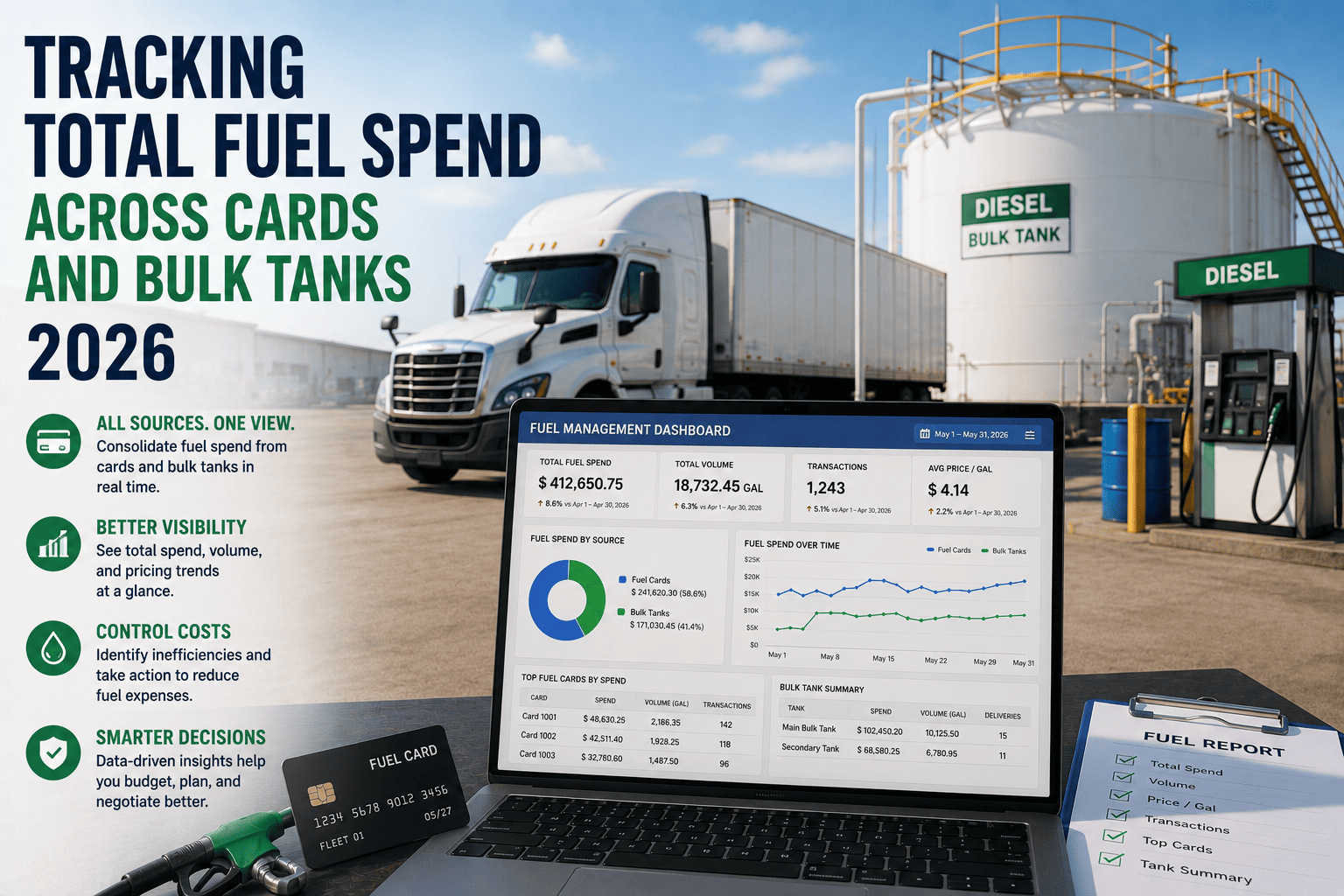
Fuel card transactions imported automatically. Gallons purchased, cost per gallon, and state jurisdiction tracked per fill-up
State Fuel Tax Calculation
Compliance-Ready
Interstate fuel tax reporting calculated per state requirement. Idle Fuel Tax, Dyed Fuel, and Exempt Fuel tracked separately
Quarterly Reporting
One-Click
Quarterly fuel tax reports generated automatically with all required state-specific documentation. Ready for IRP submission without manual assembly
Layer 5
FMCSA Audit-Ready Compliance Reports
CSA Metric Reporting
Automated
Crash Indicator, Unsafe Driving, HOS Compliance, Vehicle Maintenance, and Hazmat metrics calculated automatically from operational data
DVIR Consolidation
Complete Archive
Three-year DVIR history instantly searchable and filterable. Generate compliant reports within minutes of audit request
One-Click Audit Export
Compliance Certified
All required FMCSA documentation generated in auditor-required format with proper formatting and completeness validation
Compliance Automation Impact: Real Numbers from 85-Vehicle Carrier
Manual Time Elimination
34 Hours/Month Saved
Compliance coordination dropped from 38 hours monthly to 4 hours. Digital DVIR eliminates manual data entry. Automated driver file management replaces 16-hour monthly maintenance task. Pre-built audit reports eliminate 18-hour monthly assembly work.
FMCSA Compliance
Zero Violations
12 months post-deployment with zero FMCSA findings across 85 vehicles. Complete DVIR audit trail with timestamped defect documentation. 100% driver qualification file compliance across all 120 drivers.
Vehicle Uptime
+8.4%
DVIR defects flow instantly to maintenance, reducing repair delay from 2-4 days to same-day assignment. Vehicle availability increased from 91.2% to 99.6% baseline, eliminating downtime caused by communication lag.
Audit Preparation
99% Faster
FMCSA audit preparation previously required 40 hours manual assembly. Now: one-click report generation in 8 minutes. Auditor receives complete, compliant documentation immediately upon request.
Regulatory Risk
Eliminated
Manual compliance tracking created persistent documentation gaps. Automated tracking ensures zero missing records. Every DVIR timestamped, every driver file current, every HOS calculation documented and traceable.
Driver Satisfaction
+34%
Paper DVIR process eliminated. Drivers complete inspections on mobile in 2 minutes. Instant feedback on defect routing. No compliance-related phone calls or delays caused by administrative processing.
Stop Manual Compliance Administration
FleetRabbit automates DOT compliance across your entire fleet. Zero violations, 90% time savings, and audit-ready documentation generated instantly.
What DOT Compliance Automation Actually Covers
Digital DVIR (Pre-Trip & Post-Trip Inspections)
Drivers complete vehicle inspections on mobile devices with standardized checklists configured per vehicle type. Defect descriptions, severity ratings, and photos captured automatically with geolocation and timestamp. Critical defects trigger instant notifications to maintenance. FMCSA-compliant audit trail maintained for every inspection. No paper forms. No data entry delays. No communication gaps between drivers and maintenance.
Driver Qualification File (DQF) Management
Commercial driver license, medical certificate, and training records stored in a single compliant driver file per FMCSA requirements. Automatic expiration alerts 30 days before license or medical certificate due dates. Driver assignment blocked if qualifications expired. Training records consolidated from multiple sources. Three-year history maintained automatically for audit purposes. Missing document alerts prevent compliance gaps before they become violations.
Hours-of-Service (HOS) Real-Time Monitoring
ELD data integrated directly into FleetRabbit platform. Driver hours calculated in real-time: driving time, on-duty time, off-duty time, and sleeper berth status. Remaining HOS capacity visible to dispatchers before assignments. Violations prevented before they occur through automated alerts when drivers approach limits. Complete audit trail documents every HOS calculation. ELD data exports satisfy FMCSA reporting requirements instantly.
Fuel Tax Reporting (IRP/IFTA)
Fuel transactions imported from fuel cards automatically. Gallons purchased and state jurisdiction tracked per fill-up. Interstate fuel tax calculations performed per state requirements. Idle Fuel Tax and Dyed Fuel tracked separately. Quarterly IRP and IFTA reports generated with all required state-specific documentation. One-click report generation ready for state submission without manual assembly or additional formatting.
CSA Safety Metrics Calculation
Crash Indicator, Unsafe Driving, Hours-of-Service Compliance, Vehicle Maintenance, and Hazmat Compliance metrics calculated automatically from fleet operational data. CSA scores updated in real-time. Trending visible at fleet and driver level. Identifies emerging risk areas before they trigger regulatory attention. Supports proactive safety improvements backed by data.
FMCSA Audit-Ready Documentation
Complete three-year compliance history archived and instantly searchable. DVIR records, driver qualification files, HOS documentation, fuel tax reports, and corrective action records consolidated. One-click compliance report generation in auditor-required format. All required FMCSA documentation completeness-validated. Auditor receives final report minutes after request, not weeks of manual assembly.
DOT Compliance Regulations: What FleetRabbit Covers
| FMCSA Requirement |
Manual Process Baseline |
FleetRabbit Automation |
Compliance Outcome |
| DVIR (49 CFR Part 396) |
Paper forms, manual data entry, 2-4 day routing to maintenance |
Digital forms on mobile, instant routing, timestamped audit trail |
100% completion rate, zero missing records, instant maintenance assignment |
| Driver Qualification File (49 CFR Part 391) |
Spreadsheets, manual updates, expiration tracking via calendar reminders |
Centralized compliant file, automatic expiration alerts, completeness validation |
100% current documentation, zero expired qualifications, audit-ready structure |
| Hours-of-Service (49 CFR Part 395) |
Manual HOS calculation from ELD data, spreadsheet tracking, post-shift verification |
Real-time HOS calculation from ELD, automated violation prevention, complete audit trail |
100% HOS compliance, zero violations, instant auditor-ready documentation |
| Fuel Tax Reporting (IRP/IFTA) |
Manual fuel transaction consolidation, quarterly spreadsheet assembly |
Automatic fuel card integration, state-specific calculations, one-click reports |
Accurate fuel tax reports, zero manual entry errors, state-compliant submission |
| CSA Safety Metrics (49 CFR Part 385) |
Manual metric calculation, quarterly assessment, trending spreadsheets |
Automatic calculation from operational data, real-time updates, trend analysis |
Accurate safety metrics, proactive risk management, auditor-ready scoring |
| Maintenance Records (49 CFR Part 396) |
Work orders in maintenance system, separate from compliance documentation |
Work orders automatically generated from DVIR defects, linked to inspection audit trail |
Complete maintenance audit trail, zero defect-to-repair communication gaps |
Implementation Timeline: From Manual to Automated Compliance in Two Weeks
An 85-vehicle carrier implemented FleetRabbit's compliance automation across their entire fleet in two weeks. The timeline demonstrates rapid deployment without operational disruption.
Week 1, Day 1-2: Setup and Mobile Deployment
Configured 85 vehicle profiles with inspection templates per vehicle type. ELD data connected. Driver records imported from legacy system. All 120 drivers issued mobile devices with DVIR app pre-loaded. Training conducted during pre-shift meetings. First digital DVIRs submitted by end of day two.
Week 1, Day 3-5: Driver Qualification File Configuration
Driver qualification files populated with license data, medical certificate status, and training records. License expiration dates extracted from copies and entered into system. Hazmat endorsements and safety training records consolidated. Automated alerts configured for 30-day pre-expiration notifications. Complete DQF structure ready for audit compliance.
Week 2, Day 1-2: HOS and Fuel Tax Integration
ELD API connection verified for all 85 vehicles. Real-time HOS calculation confirmed accurate against manual spot-checks. Fuel card account linked for automatic transaction import. Quarterly IRP and IFTA report templates configured per state requirements. First automated fuel tax calculations validated against legacy system data.
Week 2, Day 3-5: Training and Live Transition
All drivers and compliance team trained on mobile DVIR submission and fleet portal access. Dispatch team trained on HOS alerts and compliance dashboard. Maintenance team connected to defect routing system. Paper DVIR process officially retired. All systems running in production across entire fleet. Documentation system 100% automated and operational.
Post-Deployment (Month 1-12): Continuous Compliance
Digital DVIRs submitted daily from all 120 drivers. Maintenance receives instant defect notifications. Driver files automatically updated as licenses and medical certificates renewed. HOS compliance monitored in real-time. Monthly compliance reports generated automatically. First FMCSA audit completed with zero violations.
Comparison: Manual vs. Automated DOT Compliance
| Compliance Process |
Manual Method (85-Vehicle Fleet) |
FleetRabbit Automation |
Monthly Time Savings |
| DVIR Collection & Documentation |
Drivers submit paper forms. Compliance coordinator manually enters 250+ monthly DVIRs into spreadsheet. Severity ratings assigned subjectively. No photo evidence stored. 8 hours/month |
Drivers submit digital DVIRs with photos and timestamps. Automatically routed to maintenance with severity classification. Complete audit trail stored. 0.5 hours/month |
7.5 hours saved |
| Driver Qualification Files |
License copies filed manually. Medical certificates tracked in spreadsheet. Training records in separate file. Expiration tracking unreliable. Manual audit preparation for each driver. 16 hours/month |
Centralized DQF per FMCSA requirements. Automatic expiration alerts. Completeness validation. Audit-ready structure instantly accessible. 2 hours/month |
14 hours saved |
| Hours-of-Service Compliance |
Manual calculation from ELD printouts. Post-shift verification calls to drivers. Spreadsheet tracking. No real-time visibility. Violations discovered after they occur. 6 hours/month |
Real-time HOS calculation from ELD. Dispatch alerts prevent violations before they occur. Complete audit trail automatic. Zero manual calculation required. 0.25 hours/month |
5.75 hours saved |
| Fuel Tax Reporting |
Manual fuel card statement consolidation. State-specific calculations performed quarterly. IRP and IFTA forms completed manually. Error-prone. 4 hours/month |
Automatic fuel card integration. State calculations performed automatically. Reports generated one-click. Ready for submission immediately. 0 hours/month |
4 hours saved |
| FMCSA Audit Preparation |
40 hours for complete audit document assembly. DVIR consolidation across three years. Driver file organization. HOS documentation gathering. Report generation and formatting. One audit/year |
One-click report generation (8 minutes). All required documentation pre-organized and validated. Auditor-ready format. Delivered instantly on request. |
40 hours/year saved
(3.3 hrs/month) |
| Total Monthly Compliance Administration Time |
38 hours (baseline) |
4 hours (automated) |
34 hours/month |
Frequently Asked Questions on DOT Compliance Automation
QHow does digital DVIR satisfy FMCSA requirements for vehicle inspection documentation?
FMCSA requires that vehicle inspections be documented with defect descriptions, severity classifications, and evidence of corrective actions. FleetRabbit's digital DVIR captures all three automatically: timestamped inspection checklists completed on mobile produce defect descriptions with severity ratings, photos provide visual evidence, and maintenance work orders generate corrective action documentation linked to the original inspection. The complete audit trail satisfies FMCSA compliance instantly.
Book a demo to see DVIR documentation for your fleet type.
QCan FleetRabbit integrate with my existing ELD to automate HOS compliance tracking?
Yes. FleetRabbit connects directly to major ELD providers via API, importing driver hours in real-time. HOS calculations are automatic: driving time, on-duty time, off-duty time, and sleeper berth status tracked continuously. Real-time visibility prevents violations before they occur. Complete audit trail documents every calculation for FMCSA submission without manual entry or interpretation.
QHow does Driver Qualification File automation ensure compliance with 49 CFR Part 391 requirements?
FMCSA requires that each driver have a current commercial driver license, valid medical certificate, and documented training records. FleetRabbit's DQF maintains all required documentation in a single compliant structure. Automatic alerts notify your team 30 days before licenses and medical certificates expire. Driver assignment is blocked if qualifications are expired. Completeness validation ensures no required documents are missing. Three-year history is automatically maintained and audit-ready.
QCan we generate FMCSA audit-ready reports directly from FleetRabbit without manual compilation?
Yes. FleetRabbit generates complete FMCSA audit documentation with one click. The system consolidates three years of DVIR records, driver qualification files, HOS documentation, fuel tax reports, and CSA metrics into a single auditor-ready report in FMCSA-required format. Completeness is validated automatically. The report is delivered within minutes of request, ready for auditor submission without any manual assembly.
QHow long does implementation typically take for an 85-vehicle fleet?
The 85-vehicle carrier in our case study deployed completely within two weeks. Week one included vehicle profile configuration, mobile app deployment, and driver qualification file setup. Week two included ELD integration, fuel tax configuration, and comprehensive team training. By end of week two, all 85 vehicles were submitting digital DVIRs, HOS was being tracked in real-time, and automated fuel tax reporting was active. Zero operational disruption during deployment.
QHow much time does a compliance coordinator save switching from manual to automated DOT compliance?
The 85-vehicle carrier reduced compliance administration from 38 hours monthly to 4 hours monthly. Manual DVIR entry was eliminated (8 hours saved). Driver qualification file management was automated (14 hours saved). HOS compliance shifted from manual calculation to real-time monitoring (5.75 hours saved). Audit preparation switched from 40-hour assembly to 8-minute report generation (3.3 hours saved monthly). Total: 34 hours monthly saved, equivalent to more than a full FTE in administrative overhead elimination.
Start a free trial to see the time savings firsthand.
Key Compliance Features That Matter for FMCSA
Timestamped Defect Documentation
Every DVIR includes exact timestamp and geolocation of inspection completion. Defect descriptions and severity ratings captured with photo evidence. Corrections documented when repairs completed. FMCSA auditors receive complete, traceable inspection history for every vehicle.
Compliance-Specific Driver Alerts
Automatic notifications 30 days before driver qualifications expire. Assignment system blocks non-qualified drivers from trips. Compliance team receives weekly summary of expiring or expired certifications. Zero gaps in driver qualification status.
Real-Time HOS Violation Prevention
Dispatch system shows remaining HOS capacity before each assignment. Alerts trigger when drivers approach limits. System prevents violations before they occur. ELD data integration produces complete audit trail for FMCSA submission.
Fuel Tax Automation
Automatic fuel card integration captures every gallon. State-specific calculations performed automatically. IRP and IFTA reports generated quarterly without manual assembly. Ready for state submission one-click.
CSA Metric Tracking
Safety metrics calculated automatically from operational data. Real-time visibility into Crash Indicator, Unsafe Driving, HOS Compliance, and Vehicle Maintenance scores. Proactive risk management backed by accurate data.
Complete Audit Documentation
Three-year compliance history archived and searchable. One-click report generation in auditor-required format. Completeness validation ensures no missing documentation. Ready for FMCSA submission instantly.
Transform Your DOT Compliance Operations
Stop spending 30+ hours monthly on manual compliance work. FleetRabbit automates DOT compliance across your entire fleet with zero violations and 90% time savings.
From the Field: What a Compliance Coordinator Says
Before FleetRabbit, my day was spreadsheets. I spent hours manually entering DVIR data, tracking driver license renewals, calculating HOS from ELD printouts, and assembling audit reports. Now drivers submit digital inspections that automatically route to maintenance. License expiration alerts arrive before anything expires. HOS is tracked in real-time. Audit reports generate in minutes. I went from 38 hours monthly on compliance administration to 4 hours. That freed me to focus on actual compliance improvement instead of data entry. When FMCSA audited us this year, the entire three-year history was ready within 8 minutes.
Compliance Coordinator
85-Vehicle Truckload Carrier
We were worried about the compliance burden of managing 85 vehicles across drivers in multiple states. With FleetRabbit handling documentation automatically, we actually gained visibility we didn't have before. Vehicle maintenance is better because defects now reach mechanics within hours instead of days. Drivers are happier because they're not spending 30 minutes post-shift filling out paper forms. And FMCSA compliance is no longer something that keeps me up at night. The documentation just happens as part of normal operations.
Fleet Operations Manager
85-Vehicle Truckload Carrier
Why Automated DOT Compliance Matters More Than You Think
FMCSA compliance seems like a checkbox exercise: keep the right records, pass the audit, move on. But the carriers who treat compliance as an operational system, not just a documentation burden, gain competitive advantages that extend beyond regulatory compliance. Digital DVIRs that route defects to maintenance instantly reduce vehicle downtime. Real-time HOS monitoring prevents violations before they happen and improves dispatch efficiency. Automated driver qualification tracking prevents the cascading failures that occur when a single expired license grounds a driver unexpectedly. Accurate fuel tax reporting captures expense optimization opportunities. CSA metric visibility enables proactive safety improvements backed by data.
Most importantly, automated compliance eliminates the administrative overhead that consumes 35 to 40 hours monthly per fleet. That overhead represents real cost: a compliance coordinator's salary, plus the driver time spent on paperwork, plus the operational delays caused by defect-to-maintenance lag, plus the audit preparation rush every year. FleetRabbit transforms compliance from a cost center that drains resources into an operational system that improves vehicle uptime, driver satisfaction, and safety metrics simultaneously.
Automate DOT Compliance Today — 34 Hours Monthly Saved
FleetRabbit's digital DVIR, driver qualification file automation, HOS tracking, and audit-ready reporting eliminate manual compliance work while ensuring 100% FMCSA compliance across your fleet. See how to cut compliance administration from 38 hours monthly to 4 hours.
Digital DVIR Automation
Driver Qualification Management
HOS Real-Time Monitoring
Fuel Tax Automation
FMCSA Audit Reports
34 Hours Monthly Saved
May 28, 2026
By Herry smith
All Posts
.png)