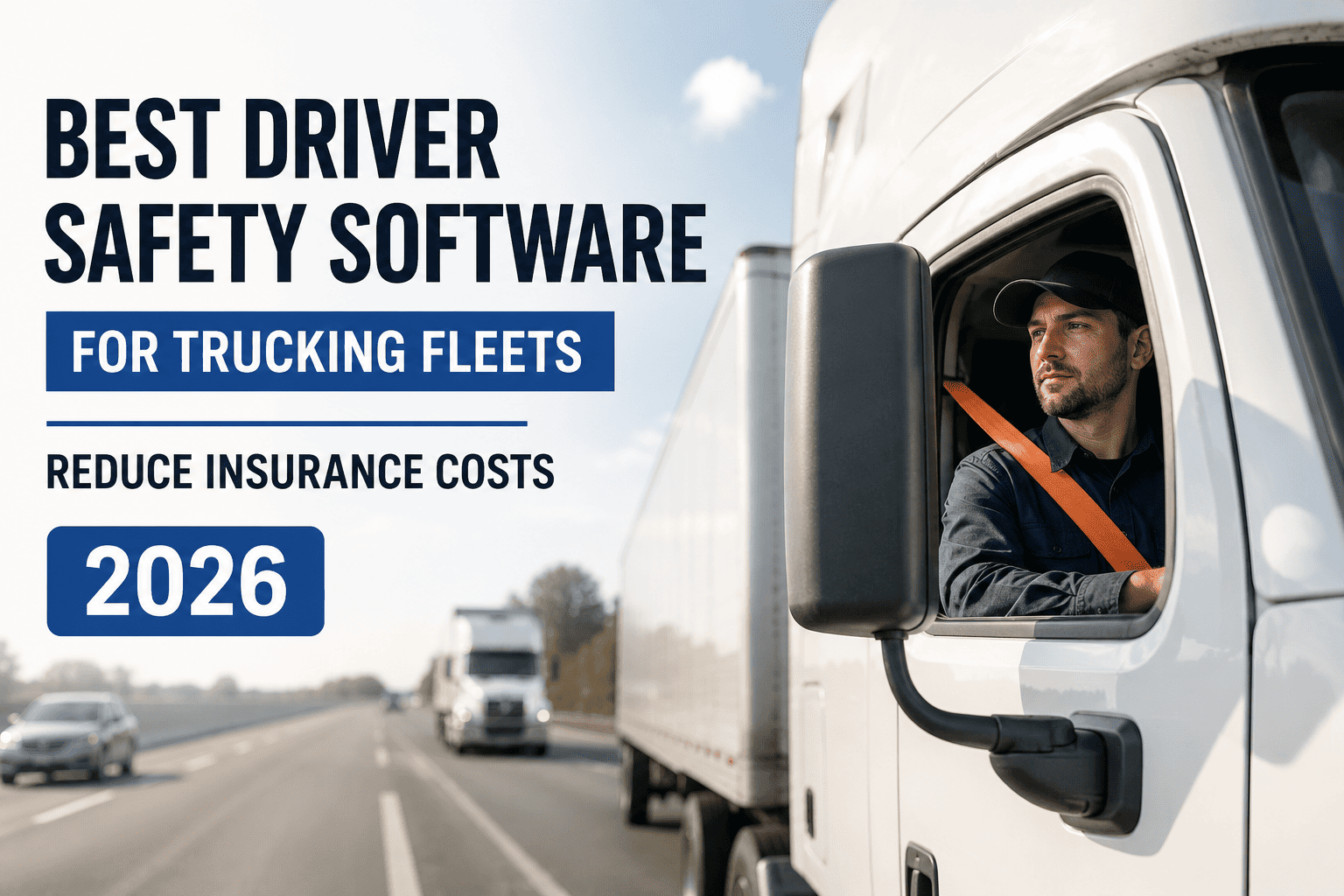
Best Driver Safety Software for Trucking Fleets to Reduce Insurance Costs

best-driver-safety-software-trucking-fleets-reduce-insurance-costs-2026

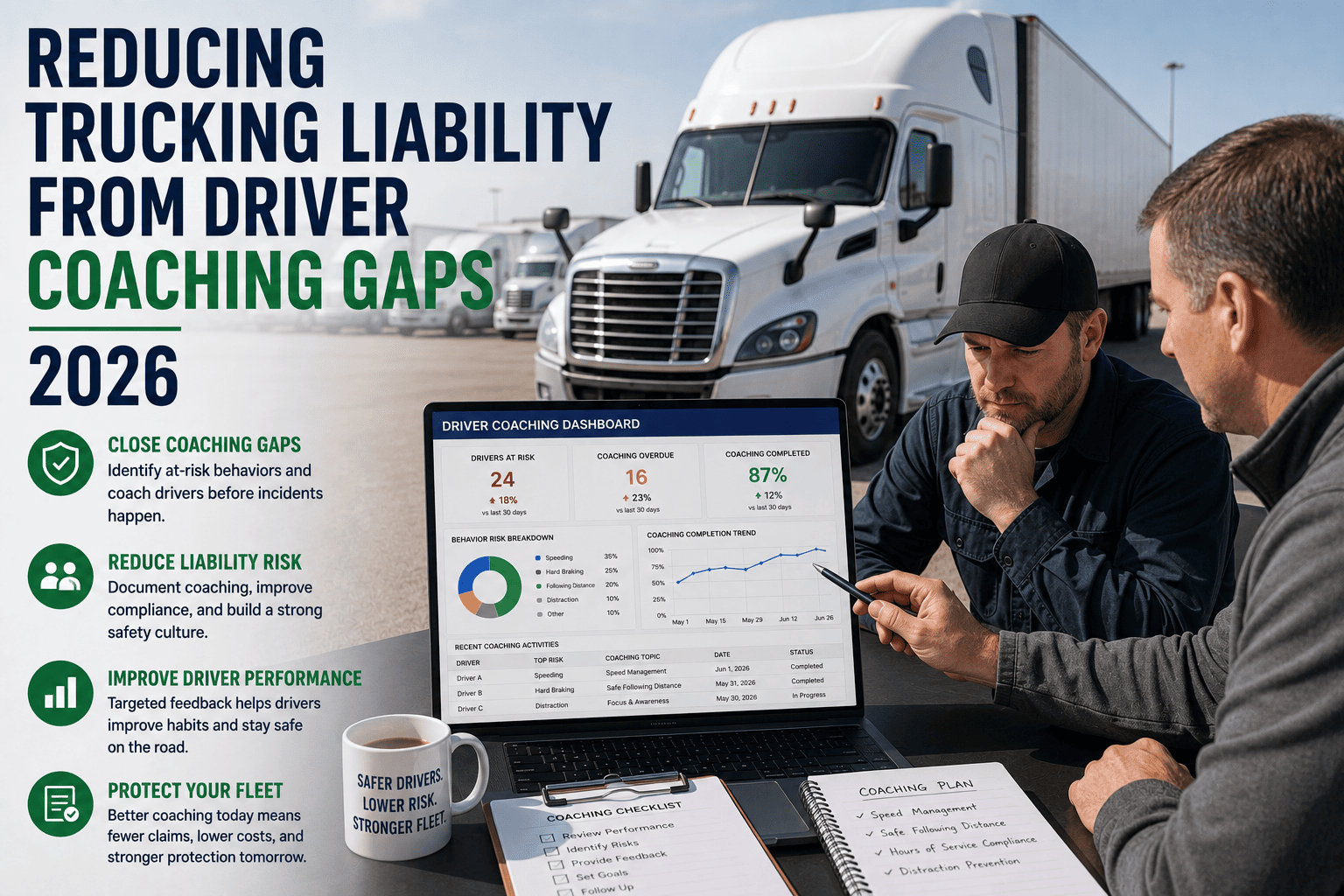
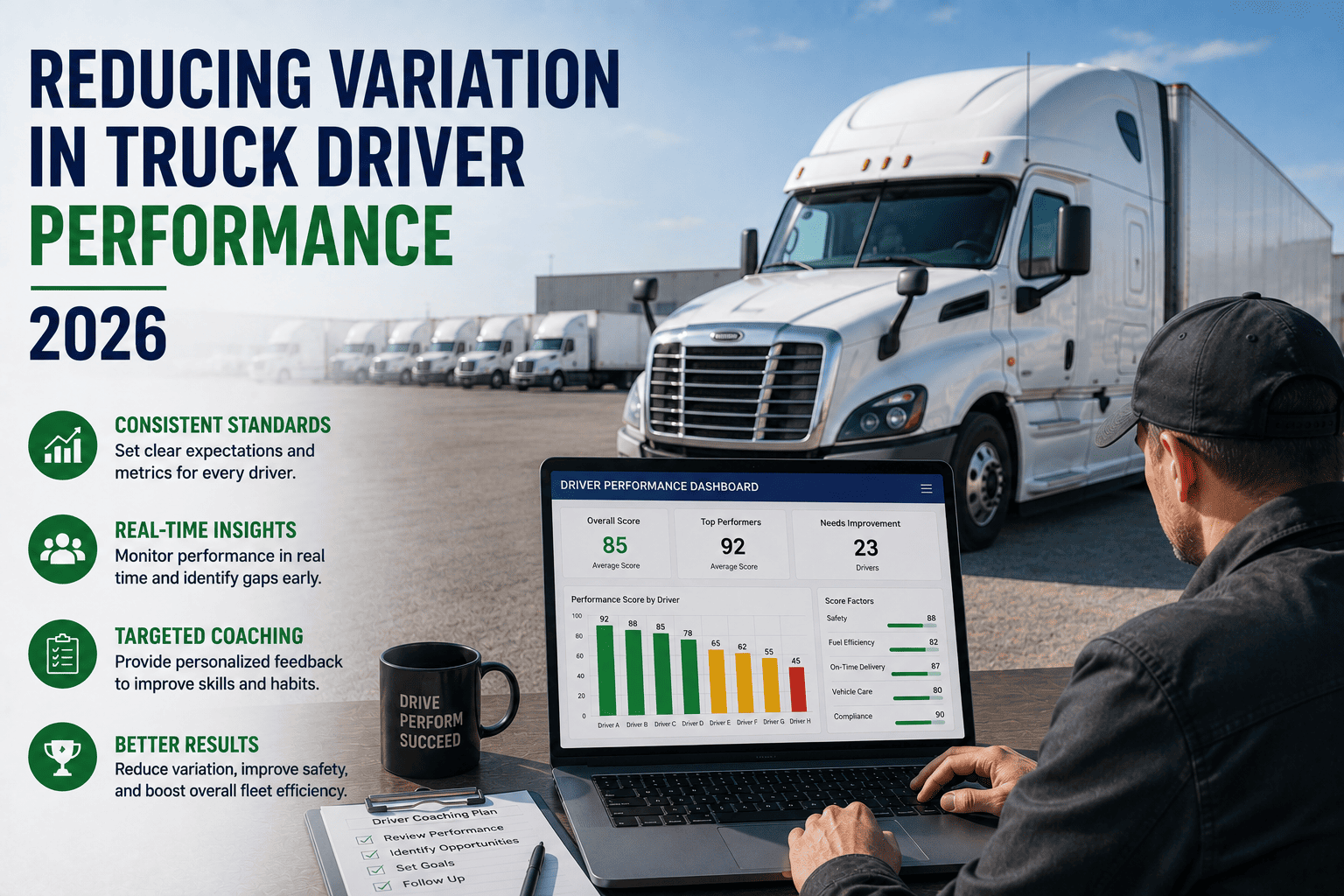
Driver safety software helps trucking fleets improve driver performance, reduce accidents, and lower insurance costs through real-time monitoring and AI-powered insights. In 2026, the best platforms offer features such as driver behavior tracking, safety scorecards, compliance management, and coaching tools. These solutions identify risky driving patterns like speeding, harsh braking, and distracted driving, enabling fleet managers to take proactive corrective actions. By improving safety scores and minimizing incidents, fleets can reduce operational risks, enhance regulatory compliance, and achieve significant savings on insurance premiums.

2026 Buyer's Guide

Best Driver Safety Software for Trucking Fleets to Reduce Insurance Costs

Commercial trucking insurance premiums climbed over 8.8% in 2025 alone — and nuclear verdicts against carriers hit $4.1 billion across just 15 cases. The right driver safety software doesn't just protect your drivers. It cuts your insurance bill by 15–30% and keeps your fleet off the plaintiff's radar.

15–30%
Insurance Premium Reduction
73%
Crash Rate Drop with AI Dashcams
28%
Fewer Preventable Accidents
60%
Reduction in Manager-led Coaching
Quick Answer

FleetRabbit is the top-rated driver safety software for trucking fleets in 2026 — combining AI behavior monitoring, automated driver scorecards, in-cab coaching alerts, and DVIR compliance into one platform starting at $3/vehicle/month with a free tier for up to 3 vehicles. Fleets using structured safety programs report 15–30% insurance premium reductions, 28% fewer accidents, and documented CSA score improvements that keep underwriters competitive at renewal. This guide covers exactly how safety software reduces your insurance costs — and which features matter most.

Why Driver Safety Software Is No Longer Optional in 2026

The insurance landscape for commercial trucking has fundamentally shifted. Traditional underwriting based on driver age and historical claims has given way to real-time, data-driven risk modeling. Insurers now reward fleets that can prove safe behavior with telematics data — and they penalize those who can't with double-digit premium increases.

The Costs of Doing Nothing

$4.1B
Nuclear verdicts in 2024 across just 15 trucking cases
8.8%
Commercial auto insurance premium increase in Q2 2025 alone
29%
Of fatal vehicle crashes involve speeding — the #1 coachable behavior
20%
Of all road crashes involve driver fatigue — the hardest risk to manage manually

Fleets that implement documented, data-driven safety programs shift from "standard risk" to "preferred risk" in the eyes of underwriters — triggering immediate premium reductions of 15–25%. Those that don't are increasingly finding fewer insurers willing to write their coverage at any price. If you want to see where your fleet stands today, book a free safety review with FleetRabbit and we'll benchmark your current risk profile.

How Driver Safety Software Directly Lowers Your Insurance Bill

Insurance carriers don't just want to hear that your fleet is safe — they want documented proof. Modern driver safety software generates exactly that automatically. Here's the precise mechanism by which software converts into premium savings.

1

Capture Real-Time Behavior Data

Every speed violation, harsh brake, sharp corner, and distraction event is recorded continuously via telematics and AI dashcams — building an objective, timestamped safety record per driver.

2

Auto-Generate Driver Scorecards

Each driver receives a composite safety score — updated daily — based on speed compliance, braking smoothness, acceleration patterns, HOS adherence, and inspection completion. No manual entry required.

3

Coach Drivers Before Incidents Happen

AI-powered in-cab alerts notify drivers the moment unsafe behavior is detected — reducing the need for manager intervention by 60% while producing faster behavior improvement than post-incident coaching.

4

Package Documentation for Insurers

At renewal, FleetRabbit auto-generates the exact documentation underwriters request: 12-month scorecard history, fleet-wide behavior trends, coaching completion logs, and incident correlation reports.

5

Negotiate 13–30% Lower Premiums

Underwriters actively price documented safe fleets lower. Munich Re specifically documents 15% rebates for telematics-coached fleets. Fleets with strong data demonstrate lower risk — and get priced accordingly.

No Hardware. No Contracts. Free up to 3 Vehicles.

Start Building Your Safety Record Today

FleetRabbit captures driver behavior, builds scorecards, coaches drivers in real-time, and generates the insurance documentation package your underwriter asks for — automatically. Sign up free and have your first driver scorecard live within 48 hours.

15–30%Avg. Insurance Reduction
73%Crash Rate Reduction (AI Dashcam)
$3/moPer Vehicle Starting Price

5 Driving Behaviors That Cost Fleets the Most — and How Software Fixes Each One

Fleet accident data consistently points to the same five behavior categories. These aren't edge cases — they're the systematic patterns that produce the incidents your fleet will face in the next 12 months unless they're measured and coached. Start your free trial to see how FleetRabbit monitors all five in real time.

Unsafe Behavior Accident Risk Insurance Impact How Software Fixes It
Speeding Triples stopping distance per 10 mph over limit. Involved in 29% of fatal crashes. Single speeding-related incident raises premiums 18–35% at renewal. Real-time in-cab alert + automatic scorecard deduction + manager notification triggered instantly.
Harsh Braking #1 indicator of distracted driving and following too close. Directly correlates with rear-end collisions. Drivers with high braking scores file 2.4x more insurance claims on average. AI dashcam identifies pattern vs. emergency stop. Coaching module triggers targeted training for habitual offenders.
Aggressive Acceleration Signals impatient or distracted driving. Increases tire and brake wear, raising accident probability. High acceleration events correlate with 19% higher claim frequency in commercial auto data. Telematics captures every event. Scorecard shows trend over 30/60/90 days. Coaching message delivered to driver app.
Driver Fatigue Contributes to 20% of all road crashes. Impairment matches alcohol at 0.05% BAC after 18 hours awake. Fatigue-related accidents average $91,000 per claim — 3x the non-fatigue average. AI Driver Monitoring System (DMS) detects eye closure, head drop, and microsleeps. In-cab audio alert triggers immediately.
Phone Use / Distraction Increases crash risk by 23x. Banned by FMCSA for CMV drivers yet remains a leading cause of incidents. Distraction-related claims carry highest nuclear verdict exposure. Plaintiff attorneys actively seek phone records. Inward-facing AI camera detects phone use, eating, and drowsiness. Immediate alert + video clip saved as evidence.

Key Features to Look for in Driver Safety Software

Not all safety platforms are built equal. The difference between a system that genuinely reduces your insurance costs and one that just collects data is whether it closes the loop from detection to coaching to documentation. Here's what separates genuinely effective platforms from data collectors that gather dust.

Real-Time Behavior Monitoring

Continuous capture of speeding, braking, acceleration, cornering, and idle events via telematics — not just end-of-day reports. Real-time data enables real-time intervention before behavior becomes a habit.

Critical for insurance documentation

Automated Driver Scorecards

A weighted composite score per driver updated daily — combining speed, braking, HOS compliance, and inspection records. Scorecards make coaching conversations objective and defensible in litigation.

Used directly in insurance negotiations

In-Cab AI Coaching Alerts

Instant voice or visual alerts delivered to drivers the moment unsafe behavior is detected — allowing self-correction before it becomes an incident. Reduces manager coaching burden by 60%.

Prevents incidents in real time

AI Dashcam Integration

Dual-facing cameras analyze both road conditions and driver state — detecting fatigue, phone use, and distraction. Video clips are retained as exculpatory evidence in accident investigations and litigation.

Cuts crash rates by up to 73%

CSA Score Management

Tracks FMCSA Compliance, Safety, Accountability (CSA) scores by category — Hours of Service, Driver Fitness, Vehicle Maintenance — with alerts before violations accumulate to dangerous intervention thresholds.

Directly tracked by insurers at renewal

Insurance Documentation Package

Auto-generates the exact reports underwriters request at renewal: per-driver 12-month scorecard history, fleet-wide trend data, coaching session logs, and incident correlation reports — turning renewal negotiations into data-backed conversations.

Triggers 13–30% premium reductions

FleetRabbit Driver Safety: What You Get

FleetRabbit is built for trucking fleets that want measurable safety outcomes — not just dashboards full of data. Every feature is connected: behavior monitoring feeds scorecards, scorecards trigger coaching, coaching logs feed your insurance documentation. Book a demo to see the full workflow live.

The FleetRabbit Safety Stack

Layer 1 — Capture
Telematics behavior tracking AI dashcam integration Driver fatigue detection HOS & ELD data sync Digital DVIR inspections
Layer 2 — Score
Per-driver composite safety score Fleet-wide benchmark comparison 30/60/90-day trend analysis High-risk driver flagging Behavior category breakdown
Layer 3 — Coach
In-cab real-time voice alerts Automated coaching assignment Manager coaching workflow Completion tracking Video clip review
Layer 4 — Prove
Auto-generated insurer report pack CSA score history export Accident liability defense package DOT audit documentation 12-month scorecard archive

Pricing That Makes Sense for Every Fleet Size

Free Forever
$0
Up to 3 vehicles. All core safety features. No credit card. No expiry.
Get Started Free
Growth
$3/vehicle/mo
All features included. No minimums. Cancel anytime. No hardware required.
Start Trial
Enterprise
Custom
100+ vehicles. Dedicated support. Custom integrations. API access.
Book a Demo

What Insurers Actually Look At — And How to Score Well

Understanding exactly what underwriters evaluate at renewal gives you a clear roadmap for where safety software has the highest ROI. Fleets that sign up for FleetRabbit get automated reporting across every category below.

What Insurers Evaluate
Weight in Risk Scoring
How FleetRabbit Addresses It
Per-driver scorecard history (12 months)

Very High
Auto-generated daily. Exportable PDF at renewal.
Fleet-wide behavior trend (improving vs. worsening)

Very High
30/60/90-day trend dashboard. Automatic benchmark comparison.
Coaching session completion logs

High
Every coaching assignment tracked and logged with timestamps.
CSA scores by category (HOS, Driver Fitness, Vehicle)

High
Integrated CSA tracking with category-level alerts before threshold breaches.
Incident correlation reports

High
Links behavior events to maintenance history and incident records automatically.
DVIR inspection compliance rate

Moderate-High
Digital DVIR completion tracked per driver. Fleet compliance rate reported in real time.
Join Safety-First Fleets Cutting Insurance Costs

Your Safety Score Is Your Insurance Rate

FleetRabbit builds the documented safety record that moves your fleet from standard-risk to preferred-risk — the difference between paying top-of-market premiums and getting rewarded for data you're already generating. Book a demo and we'll show you exactly what your renewal documentation would look like.

No HardwareRequired to Get Started
48 hrsFirst Scorecard Live
FreeUp to 3 Vehicles, Always

Frequently Asked Questions

Everything fleet managers ask before choosing driver safety software — answered straight.
QDoes driver safety software actually lower insurance premiums?
Yes — but only when you use software that generates the specific documentation insurers request. Fleets with strong telematics scores and documented coaching programs receive 15–30% premium reductions from major carriers. Munich Re specifically documents 15% rebates for telematics-coached fleets. The key is producing a 12-month scorecard history, fleet-wide behavior trend data, and coaching session logs — all of which FleetRabbit generates automatically.
QWhat is a driver safety scorecard and how is it calculated?
A driver scorecard is a weighted composite score that aggregates multiple performance metrics — speeding frequency and severity, harsh braking events, acceleration patterns, cornering, HOS compliance, and inspection completion — into a single number per driver. It's updated daily using telematics data and allows fleet managers to identify high-risk drivers objectively rather than relying on gut feel or incident history. FleetRabbit scores are calculated continuously and include 30/60/90-day trend views so you can show improvement over time.
QHow quickly can I get driver scorecards up and running?
With FleetRabbit, your first driver scorecards are live within 48 hours of setup — no hardware installation, no IT team required. The platform works with existing smartphones and ELD devices. Start your free trial at ai.fleetrabbit.com and your first scorecard report will be ready before your next coaching session.
QWhat behaviors does driver safety software monitor?
The leading platforms monitor speeding (by road type and severity), harsh braking, rapid acceleration, sharp cornering, excessive idle time, HOS violations, distracted driving (phone use, eating, drowsiness), driver fatigue via DMS camera analysis, and DVIR inspection completion rates. FleetRabbit monitors all of these and weights each behavior in the driver scorecard based on its relative risk contribution to accidents and insurance claims.
QCan safety software help defend against nuclear verdicts?
Significantly, yes. Nuclear verdicts — those exceeding $10 million — typically rely on plaintiff attorneys demonstrating negligent hiring, negligent training, or negligent supervision. A documented safety program with scorecard history, coaching logs, and video evidence directly counters all three theories. Dashcam footage showing the driver followed safe protocols before an incident can transform a $10M verdict risk into a settled claim. Fleets with documented safety cultures are materially harder to successfully litigate against.
QWhat is a CSA score and how does software help manage it?
A CSA (Compliance, Safety, Accountability) score is FMCSA's system for tracking carrier safety performance across seven categories — Unsafe Driving, Hours of Service, Driver Fitness, Controlled Substances, Vehicle Maintenance, Hazardous Materials, and Crash Indicator. Scores above certain thresholds trigger FMCSA interventions and cause insurers to increase premiums or refuse coverage entirely. FleetRabbit tracks your CSA category scores in real time and alerts you before violations accumulate to dangerous levels.
QDoes FleetRabbit require special hardware to monitor driver behavior?
No. FleetRabbit works with existing smartphones and ELD devices — no proprietary hardware purchase required. For fleets that want AI dashcam features, FleetRabbit integrates with major dashcam providers. This means you can get your first safety scorecard live in 48 hours with zero hardware investment. Book a demo to see what's possible with your current setup.
QHow do I use safety data to negotiate lower insurance at renewal?
Bring three things to your renewal negotiation: a 12-month per-driver scorecard history showing trend improvement, fleet-wide behavior data demonstrating a documented downward trajectory in harsh events and speeding, and coaching session completion logs showing active driver management. FleetRabbit generates all three automatically in a single exportable package formatted for underwriter review. Fleets demonstrating a documented safety culture consistently qualify for preferred-risk pricing — typically 13–30% below fleet-average premiums.

June 18, 2026 By John
All Posts

Best Driver Safety Software for Trucking Fleets to Reduce Insurance Costs

best-driver-safety-software-trucking-fleets-reduce-insurance-costs-2026

Driver safety software helps trucking fleets improve driver performance, reduce accidents, and lower insurance costs through real-time monitoring and AI-powered insights. In 2026, the best platforms offer features such as driver behavior tracking, safety scorecards, compliance management, and coaching tools. These solutions identify risky driving patterns like speeding, harsh braking, and distracted driving, enabling fleet managers to take proactive corrective actions. By improving safety scores and minimizing incidents, fleets can reduce operational risks, enhance regulatory compliance, and achieve significant savings on insurance premiums.

2026 Buyer's Guide

Best Driver Safety Software for Trucking Fleets to Reduce Insurance Costs

Commercial trucking insurance premiums climbed over 8.8% in 2025 alone — and nuclear verdicts against carriers hit $4.1 billion across just 15 cases. The right driver safety software doesn't just protect your drivers. It cuts your insurance bill by 15–30% and keeps your fleet off the plaintiff's radar.

15–30%
Insurance Premium Reduction
73%
Crash Rate Drop with AI Dashcams
28%
Fewer Preventable Accidents
60%
Reduction in Manager-led Coaching
Quick Answer

FleetRabbit is the top-rated driver safety software for trucking fleets in 2026 — combining AI behavior monitoring, automated driver scorecards, in-cab coaching alerts, and DVIR compliance into one platform starting at $3/vehicle/month with a free tier for up to 3 vehicles. Fleets using structured safety programs report 15–30% insurance premium reductions, 28% fewer accidents, and documented CSA score improvements that keep underwriters competitive at renewal. This guide covers exactly how safety software reduces your insurance costs — and which features matter most.

Why Driver Safety Software Is No Longer Optional in 2026

The insurance landscape for commercial trucking has fundamentally shifted. Traditional underwriting based on driver age and historical claims has given way to real-time, data-driven risk modeling. Insurers now reward fleets that can prove safe behavior with telematics data — and they penalize those who can't with double-digit premium increases.

The Costs of Doing Nothing

$4.1B
Nuclear verdicts in 2024 across just 15 trucking cases
8.8%
Commercial auto insurance premium increase in Q2 2025 alone
29%
Of fatal vehicle crashes involve speeding — the #1 coachable behavior
20%
Of all road crashes involve driver fatigue — the hardest risk to manage manually

Fleets that implement documented, data-driven safety programs shift from "standard risk" to "preferred risk" in the eyes of underwriters — triggering immediate premium reductions of 15–25%. Those that don't are increasingly finding fewer insurers willing to write their coverage at any price. If you want to see where your fleet stands today, book a free safety review with FleetRabbit and we'll benchmark your current risk profile.

How Driver Safety Software Directly Lowers Your Insurance Bill

Insurance carriers don't just want to hear that your fleet is safe — they want documented proof. Modern driver safety software generates exactly that automatically. Here's the precise mechanism by which software converts into premium savings.

1

Capture Real-Time Behavior Data

Every speed violation, harsh brake, sharp corner, and distraction event is recorded continuously via telematics and AI dashcams — building an objective, timestamped safety record per driver.

2

Auto-Generate Driver Scorecards

Each driver receives a composite safety score — updated daily — based on speed compliance, braking smoothness, acceleration patterns, HOS adherence, and inspection completion. No manual entry required.

3

Coach Drivers Before Incidents Happen

AI-powered in-cab alerts notify drivers the moment unsafe behavior is detected — reducing the need for manager intervention by 60% while producing faster behavior improvement than post-incident coaching.

4

Package Documentation for Insurers

At renewal, FleetRabbit auto-generates the exact documentation underwriters request: 12-month scorecard history, fleet-wide behavior trends, coaching completion logs, and incident correlation reports.

5

Negotiate 13–30% Lower Premiums

Underwriters actively price documented safe fleets lower. Munich Re specifically documents 15% rebates for telematics-coached fleets. Fleets with strong data demonstrate lower risk — and get priced accordingly.

No Hardware. No Contracts. Free up to 3 Vehicles.

Start Building Your Safety Record Today

FleetRabbit captures driver behavior, builds scorecards, coaches drivers in real-time, and generates the insurance documentation package your underwriter asks for — automatically. Sign up free and have your first driver scorecard live within 48 hours.

15–30%Avg. Insurance Reduction
73%Crash Rate Reduction (AI Dashcam)
$3/moPer Vehicle Starting Price

5 Driving Behaviors That Cost Fleets the Most — and How Software Fixes Each One

Fleet accident data consistently points to the same five behavior categories. These aren't edge cases — they're the systematic patterns that produce the incidents your fleet will face in the next 12 months unless they're measured and coached. Start your free trial to see how FleetRabbit monitors all five in real time.

Unsafe Behavior Accident Risk Insurance Impact How Software Fixes It
Speeding Triples stopping distance per 10 mph over limit. Involved in 29% of fatal crashes. Single speeding-related incident raises premiums 18–35% at renewal. Real-time in-cab alert + automatic scorecard deduction + manager notification triggered instantly.
Harsh Braking #1 indicator of distracted driving and following too close. Directly correlates with rear-end collisions. Drivers with high braking scores file 2.4x more insurance claims on average. AI dashcam identifies pattern vs. emergency stop. Coaching module triggers targeted training for habitual offenders.
Aggressive Acceleration Signals impatient or distracted driving. Increases tire and brake wear, raising accident probability. High acceleration events correlate with 19% higher claim frequency in commercial auto data. Telematics captures every event. Scorecard shows trend over 30/60/90 days. Coaching message delivered to driver app.
Driver Fatigue Contributes to 20% of all road crashes. Impairment matches alcohol at 0.05% BAC after 18 hours awake. Fatigue-related accidents average $91,000 per claim — 3x the non-fatigue average. AI Driver Monitoring System (DMS) detects eye closure, head drop, and microsleeps. In-cab audio alert triggers immediately.
Phone Use / Distraction Increases crash risk by 23x. Banned by FMCSA for CMV drivers yet remains a leading cause of incidents. Distraction-related claims carry highest nuclear verdict exposure. Plaintiff attorneys actively seek phone records. Inward-facing AI camera detects phone use, eating, and drowsiness. Immediate alert + video clip saved as evidence.

Key Features to Look for in Driver Safety Software

Not all safety platforms are built equal. The difference between a system that genuinely reduces your insurance costs and one that just collects data is whether it closes the loop from detection to coaching to documentation. Here's what separates genuinely effective platforms from data collectors that gather dust.

Real-Time Behavior Monitoring

Continuous capture of speeding, braking, acceleration, cornering, and idle events via telematics — not just end-of-day reports. Real-time data enables real-time intervention before behavior becomes a habit.

Critical for insurance documentation

Automated Driver Scorecards

A weighted composite score per driver updated daily — combining speed, braking, HOS compliance, and inspection records. Scorecards make coaching conversations objective and defensible in litigation.

Used directly in insurance negotiations

In-Cab AI Coaching Alerts

Instant voice or visual alerts delivered to drivers the moment unsafe behavior is detected — allowing self-correction before it becomes an incident. Reduces manager coaching burden by 60%.

Prevents incidents in real time

AI Dashcam Integration

Dual-facing cameras analyze both road conditions and driver state — detecting fatigue, phone use, and distraction. Video clips are retained as exculpatory evidence in accident investigations and litigation.

Cuts crash rates by up to 73%

CSA Score Management

Tracks FMCSA Compliance, Safety, Accountability (CSA) scores by category — Hours of Service, Driver Fitness, Vehicle Maintenance — with alerts before violations accumulate to dangerous intervention thresholds.

Directly tracked by insurers at renewal

Insurance Documentation Package

Auto-generates the exact reports underwriters request at renewal: per-driver 12-month scorecard history, fleet-wide trend data, coaching session logs, and incident correlation reports — turning renewal negotiations into data-backed conversations.

Triggers 13–30% premium reductions

FleetRabbit Driver Safety: What You Get

FleetRabbit is built for trucking fleets that want measurable safety outcomes — not just dashboards full of data. Every feature is connected: behavior monitoring feeds scorecards, scorecards trigger coaching, coaching logs feed your insurance documentation. Book a demo to see the full workflow live.

The FleetRabbit Safety Stack

Layer 1 — Capture
Telematics behavior tracking AI dashcam integration Driver fatigue detection HOS & ELD data sync Digital DVIR inspections
Layer 2 — Score
Per-driver composite safety score Fleet-wide benchmark comparison 30/60/90-day trend analysis High-risk driver flagging Behavior category breakdown
Layer 3 — Coach
In-cab real-time voice alerts Automated coaching assignment Manager coaching workflow Completion tracking Video clip review
Layer 4 — Prove
Auto-generated insurer report pack CSA score history export Accident liability defense package DOT audit documentation 12-month scorecard archive

Pricing That Makes Sense for Every Fleet Size

Free Forever
$0
Up to 3 vehicles. All core safety features. No credit card. No expiry.
Get Started Free
Growth
$3/vehicle/mo
All features included. No minimums. Cancel anytime. No hardware required.
Start Trial
Enterprise
Custom
100+ vehicles. Dedicated support. Custom integrations. API access.
Book a Demo

What Insurers Actually Look At — And How to Score Well

Understanding exactly what underwriters evaluate at renewal gives you a clear roadmap for where safety software has the highest ROI. Fleets that sign up for FleetRabbit get automated reporting across every category below.

What Insurers Evaluate
Weight in Risk Scoring
How FleetRabbit Addresses It
Per-driver scorecard history (12 months)

Very High
Auto-generated daily. Exportable PDF at renewal.
Fleet-wide behavior trend (improving vs. worsening)

Very High
30/60/90-day trend dashboard. Automatic benchmark comparison.
Coaching session completion logs

High
Every coaching assignment tracked and logged with timestamps.
CSA scores by category (HOS, Driver Fitness, Vehicle)

High
Integrated CSA tracking with category-level alerts before threshold breaches.
Incident correlation reports

High
Links behavior events to maintenance history and incident records automatically.
DVIR inspection compliance rate

Moderate-High
Digital DVIR completion tracked per driver. Fleet compliance rate reported in real time.
Join Safety-First Fleets Cutting Insurance Costs

Your Safety Score Is Your Insurance Rate

FleetRabbit builds the documented safety record that moves your fleet from standard-risk to preferred-risk — the difference between paying top-of-market premiums and getting rewarded for data you're already generating. Book a demo and we'll show you exactly what your renewal documentation would look like.

No HardwareRequired to Get Started
48 hrsFirst Scorecard Live
FreeUp to 3 Vehicles, Always

Frequently Asked Questions

Everything fleet managers ask before choosing driver safety software — answered straight.
QDoes driver safety software actually lower insurance premiums?
Yes — but only when you use software that generates the specific documentation insurers request. Fleets with strong telematics scores and documented coaching programs receive 15–30% premium reductions from major carriers. Munich Re specifically documents 15% rebates for telematics-coached fleets. The key is producing a 12-month scorecard history, fleet-wide behavior trend data, and coaching session logs — all of which FleetRabbit generates automatically.
QWhat is a driver safety scorecard and how is it calculated?
A driver scorecard is a weighted composite score that aggregates multiple performance metrics — speeding frequency and severity, harsh braking events, acceleration patterns, cornering, HOS compliance, and inspection completion — into a single number per driver. It's updated daily using telematics data and allows fleet managers to identify high-risk drivers objectively rather than relying on gut feel or incident history. FleetRabbit scores are calculated continuously and include 30/60/90-day trend views so you can show improvement over time.
QHow quickly can I get driver scorecards up and running?
With FleetRabbit, your first driver scorecards are live within 48 hours of setup — no hardware installation, no IT team required. The platform works with existing smartphones and ELD devices. Start your free trial at ai.fleetrabbit.com and your first scorecard report will be ready before your next coaching session.
QWhat behaviors does driver safety software monitor?
The leading platforms monitor speeding (by road type and severity), harsh braking, rapid acceleration, sharp cornering, excessive idle time, HOS violations, distracted driving (phone use, eating, drowsiness), driver fatigue via DMS camera analysis, and DVIR inspection completion rates. FleetRabbit monitors all of these and weights each behavior in the driver scorecard based on its relative risk contribution to accidents and insurance claims.
QCan safety software help defend against nuclear verdicts?
Significantly, yes. Nuclear verdicts — those exceeding $10 million — typically rely on plaintiff attorneys demonstrating negligent hiring, negligent training, or negligent supervision. A documented safety program with scorecard history, coaching logs, and video evidence directly counters all three theories. Dashcam footage showing the driver followed safe protocols before an incident can transform a $10M verdict risk into a settled claim. Fleets with documented safety cultures are materially harder to successfully litigate against.
QWhat is a CSA score and how does software help manage it?
A CSA (Compliance, Safety, Accountability) score is FMCSA's system for tracking carrier safety performance across seven categories — Unsafe Driving, Hours of Service, Driver Fitness, Controlled Substances, Vehicle Maintenance, Hazardous Materials, and Crash Indicator. Scores above certain thresholds trigger FMCSA interventions and cause insurers to increase premiums or refuse coverage entirely. FleetRabbit tracks your CSA category scores in real time and alerts you before violations accumulate to dangerous levels.
QDoes FleetRabbit require special hardware to monitor driver behavior?
No. FleetRabbit works with existing smartphones and ELD devices — no proprietary hardware purchase required. For fleets that want AI dashcam features, FleetRabbit integrates with major dashcam providers. This means you can get your first safety scorecard live in 48 hours with zero hardware investment. Book a demo to see what's possible with your current setup.
QHow do I use safety data to negotiate lower insurance at renewal?
Bring three things to your renewal negotiation: a 12-month per-driver scorecard history showing trend improvement, fleet-wide behavior data demonstrating a documented downward trajectory in harsh events and speeding, and coaching session completion logs showing active driver management. FleetRabbit generates all three automatically in a single exportable package formatted for underwriter review. Fleets demonstrating a documented safety culture consistently qualify for preferred-risk pricing — typically 13–30% below fleet-average premiums.

June 19, 2026 By John
All Posts

Share This Story, Choose Your Platform!

Latest Posts

Scroll