.png)
Fleet compliance represents one of the most critical operational challenges for transportation companies operating under DOT and FMCSA regulations. Non-compliance carries severe financial penalties, operational restrictions, and reputational damage that extends far beyond fines. A single violation can trigger federal audits, vehicle out-of-service orders, and ultimately threaten your company's ability to operate. The difference between fleets maintaining consistent compliance and those struggling with regulatory confusion often determines which companies thrive and which face escalating penalties that erode profitability.
Selecting the right fleet compliance software in 2026 requires understanding not just current regulatory requirements, but how platforms adapt to changing rules, integrate with existing operations, and reduce the administrative burden that drains resources from core business activities. This guide compares leading fleet compliance solutions across the dimensions that matter: DVIR automation, HOS tracking accuracy, driver qualification file management, audit readiness, and integration with vehicle telematics systems. The right compliance platform transforms regulatory management from reactive scrambling into proactive operational integration where compliance becomes automatic rather than burdensome.
Modern fleet compliance software automates DVIR completion, tracks Hours of Service regulations, manages driver qualification files, monitors vehicle maintenance schedules, and generates audit-ready documentation. Comprehensive compliance platforms reduce violation risk by 85-95%, eliminate manual paperwork by 90%, and ensure every vehicle and driver meets federal standards automatically. Choosing the right platform depends on fleet size, regulatory complexity, existing telematics integration, and audit preparation needs.
What Modern Fleet Compliance Software Delivers
Fleet compliance has evolved from simple logbook maintenance to comprehensive regulatory automation that touches every aspect of fleet operations. Current-generation compliance platforms integrate with vehicle telematics, automate driver hour tracking, digitize vehicle inspection reports, manage driver qualification files, and generate documentation proving compliance during federal audits. This integration means your compliance team focuses on strategic operational improvements rather than spending 30-40 hours weekly on manual documentation and record-keeping.
Modern fleet compliance systems capture continuous data from multiple sources: vehicle systems provide real-time maintenance and safety data, driver mobile apps automatically log hours and capture digital signatures for inspections, GPS telematics records movement patterns proving Hours of Service compliance, and cloud-based audit trails create unmodifiable records of every regulatory requirement fulfilled. This integration means federal investigators reviewing your compliance find complete, organized, accessible documentation rather than scattered spreadsheets and incomplete records.
Key Compliance Capabilities Compared
Evaluating fleet compliance systems requires understanding which capabilities directly impact your regulatory exposure and audit outcomes. Some features prevent violations before they occur, while others ensure you can prove compliance when federal investigators examine your operations. The most effective fleets select platforms matching their specific regulatory environment rather than choosing based on feature count alone.
| Compliance Capability | Impact on Regulatory Risk | Implementation Timeline | Priority Level |
|---|---|---|---|
| Digital DVIR Completion | Ensures every vehicle inspected before operation. Creates unmodifiable inspection records. Prevents vehicle operation with unsafe conditions. Federal requirement under 49 CFR 396.11 | 1-2 weeks | Critical |
| Hours of Service Tracking | Automatically logs driving time preventing HOS violations. Creates audit-ready documentation. Reduces driver fatigue risk. Federal requirement under 49 CFR Part 395 | 1-3 weeks | Critical |
| Driver Qualification Files | Maintains certifications and medical clearances. Prevents operation by unqualified drivers. Triggers expiration alerts. Federal requirement under 49 CFR Part 391 | 2-4 weeks | Critical |
| Vehicle Maintenance Records | Documents preventive maintenance compliance. Tracks repairs and modifications. Proves vehicle roadworthiness. Federal requirement under 49 CFR Part 396 | 2-3 weeks | High |
| Audit Report Generation | Generates comprehensive compliance documentation. Organizes records for federal investigators. Demonstrates organizational commitment to compliance. Reduces audit duration and exposure | Immediate | High |
| Safety Performance Analysis | Identifies safety risks and crash history. Enables targeted training programs. Improves CSA (Compliance, Safety, Accountability) scores | 2-4 weeks | High |
| ELD Integration | Syncs with electronic logging devices for accurate hour tracking. Automates HOS compliance monitoring. Prevents data tampering. Federal requirement since 2018 | 1 week | High |
| Regulatory Alert System | Notifies of regulatory changes affecting operations. Updates required documentation automatically. Prevents unintentional non-compliance | Immediate | Medium |
FleetRabbit's compliance platform automates DVIR, HOS tracking, and driver qualification management. Stay audit-ready continuously. Reduce violation risk while eliminating manual paperwork burden. Free trial for 3 vehicles demonstrates real compliance benefits immediately.
DVIR Automation: From Paper to Digital Compliance
The DVIR (Daily Vehicle Inspection Report) represents the foundation of vehicle safety compliance under federal regulations. Manual paper-based DVIRs face critical problems: drivers skip required inspections under schedule pressure, handwritten reports lack legibility creating interpretation problems during audits, lost or damaged papers disappear from compliance records, and no systematic process ensures unsafe vehicles don't operate. Federal investigators view incomplete or missing DVIRs as evidence of negligent safety management.
Digital DVIR automation solves these compliance gaps. Drivers complete inspections using mobile apps before each shift, with mandatory fields preventing incomplete submissions. The system captures timestamps, driver signatures, and vehicle identifiers automatically. Issues flagged as unsafe prevent the vehicle from being dispatched until repairs occur. The platform maintains unmodifiable digital records accessible during audits. Recurring issues across fleet vehicles trigger automated maintenance work orders addressing systematic problems.
Beyond compliance, digital DVIRs improve operational efficiency. Rather than spending 10-15 minutes manually documenting inspections, drivers complete them in 3-4 minutes using guided mobile workflows. Maintenance teams receive immediate alerts about vehicle problems enabling preventive repairs before breakdowns occur. Fleet managers identify patterns like brakes needing service across multiple vehicles, scheduling bulk repairs more efficiently. The compliance requirement becomes an operational improvement rather than a pure administrative burden.
Hours of Service Tracking and ELD Integration
Hours of Service regulations represent one of the most complex and frequently violated federal requirements. Drivers must track drive time, on-duty time, and off-duty time precisely, with maximum daily driving limits and weekly rest requirements. Manual logbook systems rely on driver self-reporting, creating compliance risks when fatigue, scheduling pressure, or intentional falsification leads to violations. Electronic Logging Devices (ELDs) became federally mandated in 2018, but many fleets struggle implementing ELDs effectively.
Comprehensive compliance platforms integrate ELD data automatically, eliminating manual hour logging entirely. The system tracks driving time based on vehicle movement detected through GPS and telematics. When drivers approach HOS limits, the platform alerts them and prevents additional driving through mobile app notifications and dispatch system controls. The platform automatically calculates legal rest breaks, tracks 34-hour weekly rest requirements, and manages exception periods for weather delays. This automation prevents unintentional violations while documenting compliance continuously.
HOS compliance data integrates with driver performance monitoring, enabling identification of drivers pushing limits through aggressive driving patterns. Federal investigators evaluate HOS violations as indicators of systemic safety culture problems. Fleets demonstrating continuous HOS compliance through automated tracking typically receive favorable audit outcomes and lower CSA (Compliance, Safety, Accountability) scores that affect insurance premiums and customer confidence.
Driver Qualification Files and Personnel Management
Federal regulations require comprehensive driver qualification files documenting each driver's commercial driving capability. These files must contain valid Commercial Driver's License (CDL) verification, medical examiner's certificates proving fitness to drive, driving record checks proving no disqualifying violations, and training documentation for hazmat, tanker, or other specialized endorsements. Missing, expired, or incomplete files represent serious compliance violations that can result in vehicle out-of-service orders.
Manual driver file management creates constant compliance risk. Paper files get lost. Spreadsheets tracking certification expiration dates become outdated. Directors struggle remembering which drivers need medical certificate renewals. When a driver's medical certificate expires without renewal, that driver becomes immediately unqualified to operate, potentially leading to revenue loss when the driver must be pulled from operations. Federal investigators reviewing driver files find missing documentation and immediately cite violations.
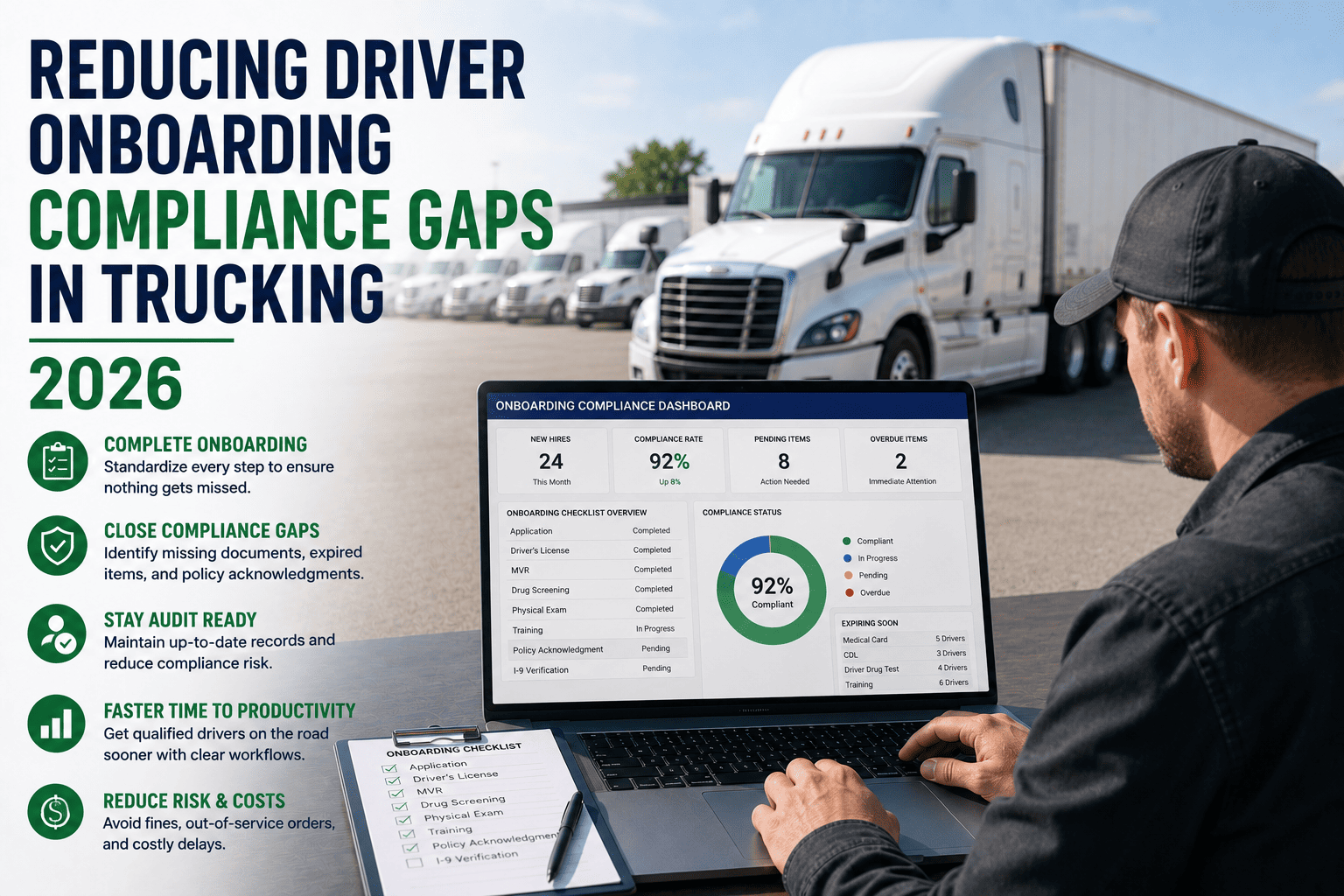
Digital driver qualification file platforms centralize all personnel documentation. The system tracks every driver's CDL status, medical certificate expiration, training certifications, and background check dates. Automated alerts warn 30-60 days before expiration, giving time for renewal before compliance issues arise. The platform prevents dispatch of unqualified drivers through integration with dispatching systems. When federal auditors request driver files, complete organized digital records appear instantly rather than requiring time-consuming manual compilation.
Audit Readiness and Regulatory Documentation
Federal safety audits examine vehicle maintenance records, driver files, DVIR documentation, HOS logs, and safety performance data. A comprehensive audit review typically requires examining 50-100 specific documents proving compliance across numerous regulatory areas. Fleets maintaining scattered, incomplete records face audit delays while investigators request missing documentation repeatedly. Incomplete records result in violations even when the fleet actually maintained compliance but failed to document it properly.
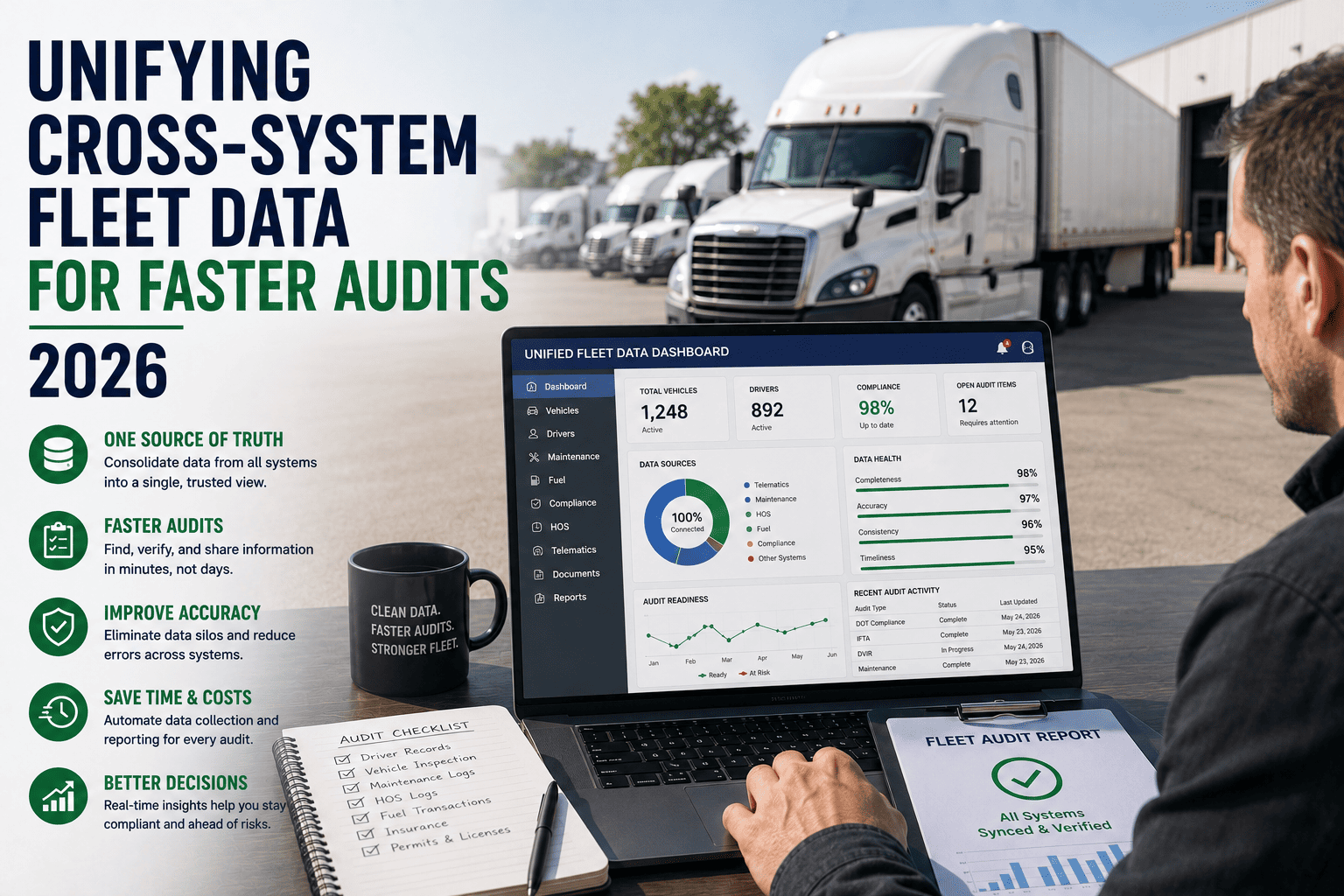
Compliance platforms designed for audit readiness organize all required documentation automatically. The system generates comprehensive audit reports compiling all DVIR records for specified date ranges, all HOS documentation proving Hours of Service compliance, complete driver qualification files for all drivers, and safety performance analysis showing accident prevention measures. When federal auditors arrive, your compliance team presents organized, complete documentation proving consistent regulatory adherence rather than scrambling to compile records from multiple sources.
Audit readiness extends beyond documentation. Compliance platforms track CSA (Compliance, Safety, Accountability) metrics that federal investigators use to evaluate fleet safety culture. Fleets demonstrating low accident rates, proper maintenance documentation, and strong driver qualification practices receive favorable audit outcomes. The compliance platform generates dashboards showing CSA performance, identifying areas needing improvement before federal audits occur. This proactive approach prevents violations rather than simply documenting compliance after the fact.
Safety Performance and CSA Score Management
The CSA (Compliance, Safety, Accountability) program measures fleet safety performance across multiple categories including unsafe driving, crashes, hours of service violations, vehicle maintenance, driver fitness, and hazardous materials handling. Federal auditors use CSA scores to identify fleets requiring intervention. Fleets with high CSA scores face increased inspection frequency, may be placed out of service, and lose customer business due to poor safety ratings accessible through public FMCSA databases.
Compliance platforms analyze telematics data to identify safety issues contributing to poor CSA scores. Driver behavior analysis identifies aggressive driving, excessive speeding, and harsh braking patterns that correlate with accident risk. Vehicle maintenance tracking ensures timely repairs preventing mechanical failures. DVIR analysis identifies recurring vehicle issues needing systemic attention. This data enables targeted safety improvements directly addressing CSA scoring factors.
Fleet managers using compliance software typically achieve CSA score improvements of 20-35% within 6-12 months through data-driven safety interventions. These improvements translate to lower insurance premiums, improved customer perception, and reduced federal inspection frequency. The compliance platform becomes a strategic tool improving operational safety while reducing regulatory risk, rather than simply documenting compliance for audit purposes.
Mobile App Adoption and Driver Engagement
Fleet compliance depends fundamentally on driver adoption of digital systems. Drivers using cumbersome, slow, or confusing compliance apps face friction performing required tasks, potentially skipping inspections under schedule pressure or entering data inaccurately. Effective compliance platforms feature mobile apps designed for driver usability, with guided workflows completing inspections in 3-4 minutes, clear instructions preventing data entry errors, and integration with dispatch systems eliminating extra communication channels.
Driver engagement with compliance systems improves when systems reduce rather than increase workload. Digital DVIRs completing faster than paper inspections encourage adoption. Real-time HOS alerts preventing fatigue-related safety issues resonate with safety-conscious drivers. Easy driver qualification file management eliminating confusion about certification status drives consistent compliance. Fleets with high driver engagement achieve compliance rates exceeding 98%, while those with poor adoption see consistent gaps.
Communication features integrated into compliance platforms improve driver coordination. Rather than radio traffic about maintenance issues, drivers receive targeted notifications about specific vehicle problems. Dispatch updates appear through mobile notifications. Drivers can report issues directly through the app eliminating communication delays. This integration improves compliance outcomes while reducing operational friction that drivers experience.
Regulatory Updates and Compliance Scalability
Federal transportation regulations change regularly, affecting hours of service rules, vehicle safety requirements, hazardous materials handling, and documentation requirements. Fleets maintaining manual compliance systems face challenges keeping up with regulatory changes. Spreadsheets become outdated. Training materials require revision. Process changes require manual implementation across teams. This creates windows of non-compliance when regulatory changes occur but fleet processes haven't updated yet.
Modern compliance platforms include regulatory update services automatically reflecting federal changes. When FMCSA modifies HOS requirements, the platform updates automatically without manual intervention. When new vehicle inspection standards take effect, DVIR templates update automatically. When driver qualification requirements change, the system adjusts documentation requirements. This automation prevents regulatory lag where fleets operate under outdated processes during transition periods.
Compliance platform scalability ensures consistency across growing fleets. A fleet operating 50 vehicles and 75 drivers can maintain compliance through diligent manual processes. A fleet growing to 200 vehicles and 300 drivers cannot manage compliance through spreadsheets and manual tracking. Scalable compliance platforms maintain the same compliance quality whether managing 10 or 500 vehicles, ensuring growth doesn't create compliance gaps as operations become more complex.
FleetRabbit's compliance solution integrates DVIR automation, HOS tracking, and driver qualification management into unified platform. Stay audit-ready continuously. Reduce regulatory risk by 85-95%. Free trial demonstrates real compliance improvement immediately.
Integration with Existing Telematics and Fleet Systems
Most fleets already invested in GPS tracking, telematics devices, and operational management systems. Compliance platforms requiring replacement of existing equipment create unnecessary costs and operational disruption. The most effective solutions integrate with existing infrastructure, combining GPS location data with compliance automation, leveraging installed telematics devices for vehicle diagnostics, and syncing with dispatch systems already managing fleet operations.
FleetRabbit integrates natively with common telematics providers and ELD systems without requiring hardware replacement. Existing GPS data feeds into compliance reporting. Vehicle diagnostic data supports DVIR analysis. Driver behavior data identified through existing telematics informs safety training. Data exports happen in standard formats enabling analysis with other tools. This integration approach protects your technology investment while adding powerful compliance capabilities.
System integration reduces administrative overhead requiring data entry between systems. Rather than manually copying HOS data from ELD to compliance system to dispatch system, automated data flows ensure consistency. When a driver completes a DVIR, the issue automatically triggers a maintenance work order in your existing maintenance system. When a driver's qualification expires, the dispatch system prevents operation automatically. This seamless integration transforms compliance from an isolated administrative function into a core operational capability.
Cost Structure and ROI Timeline
Fleet compliance platforms typically charge $2-8 per vehicle monthly depending on compliance scope and features. Lower-cost solutions provide basic DVIR and HOS tracking. Higher-cost solutions include comprehensive driver qualification management, advanced safety analytics, and regulatory update services. Implementation costs vary dramatically, with some solutions requiring custom integration costing $15,000-40,000, while others deploy through simple setup requiring minimal technical effort.
ROI calculation for compliance software differs from operational platforms. The primary benefit is violation prevention rather than cost reduction. A single federal violation can result in fines of $5,000-25,000 plus operational restrictions. A commercial vehicle placed out-of-service due to missing DVIR documentation generates no revenue while creating customer service disruptions. A driver operating without current medical certification creates liability exposure. Compliance platforms preventing these incidents deliver substantial ROI through violation prevention alone.
Secondary benefits include reduced audit duration and severity. A fleet maintaining comprehensive audit-ready documentation can complete federal audits in 2-3 days with minimal findings. A fleet with scattered documentation requires 5-7 days of audit time with multiple violations cited. Each violation carries financial and operational consequences beyond direct fines. Insurance premiums often increase 10-20% following federal violations. The compliance platform protecting against violations typically pays for itself many times over through violation prevention alone.
Frequently Asked Questions About Fleet Compliance Software
FleetRabbit's free trial for 3 vehicles includes complete DVIR automation, HOS tracking, and driver qualification management. Experience real compliance improvement before committing. No credit card required.
Selecting the Right Fleet Compliance Platform for Your Operations
Choosing a fleet compliance system requires evaluating your specific regulatory environment, fleet size, existing system integration needs, and audit frequency. Evaluate platforms through hands-on trial periods with your actual fleet and operations. How quickly can drivers complete DVIRs? Does the mobile app work reliably in poor connectivity areas? Does HOS tracking match your actual operational patterns? Does audit reporting generate documentation matching your audit process? Your evaluation team should include compliance officers, drivers, and maintenance personnel whose daily work changes with the new system.
Request references from fleets similar in size and industry. Ask specifically about federal audit outcomes since system implementation, how effectively the platform prevented violations, and how much time the system saved on compliance administration. Avoid vendors promising perfect compliance without specific metrics. The right platform demonstrates concrete compliance improvements through comparable operations.
FleetRabbit's approach prioritizes transparent compliance verification. Our free trial for 3 vehicles includes all core compliance features. Deploy for your actual fleet, track real compliance metrics, and experience genuine automation benefits before financial commitment. After evaluating real compliance improvements with your actual vehicles and drivers, you make informed decisions backed by evidence rather than vendor marketing promises.
Modern fleet compliance reduces violation risk by 85-95%, eliminates paperwork burden by 90%, and maintains audit readiness continuously. Evaluate platforms with real data from your own fleet before committing to annual contracts. Start your free trial today.