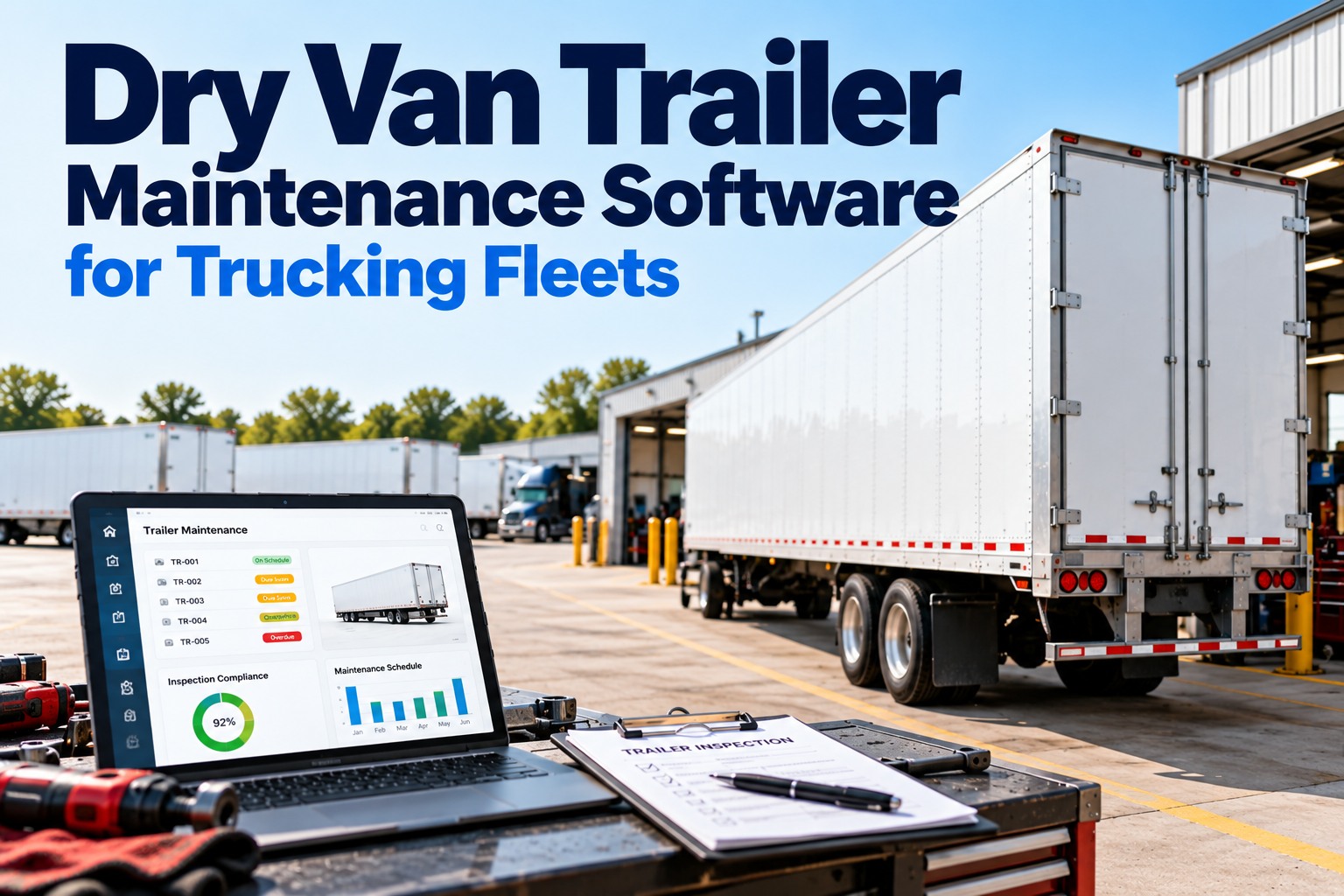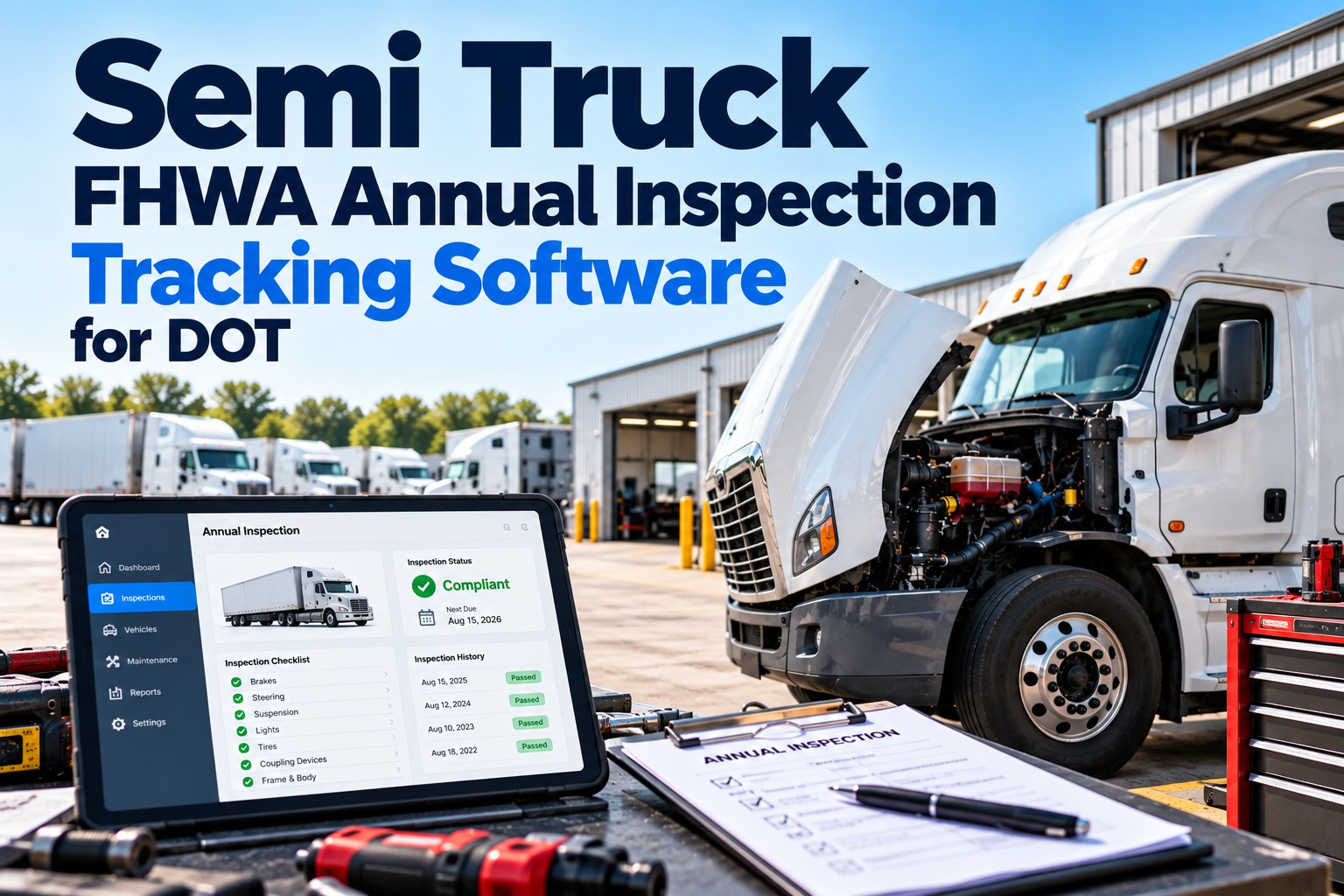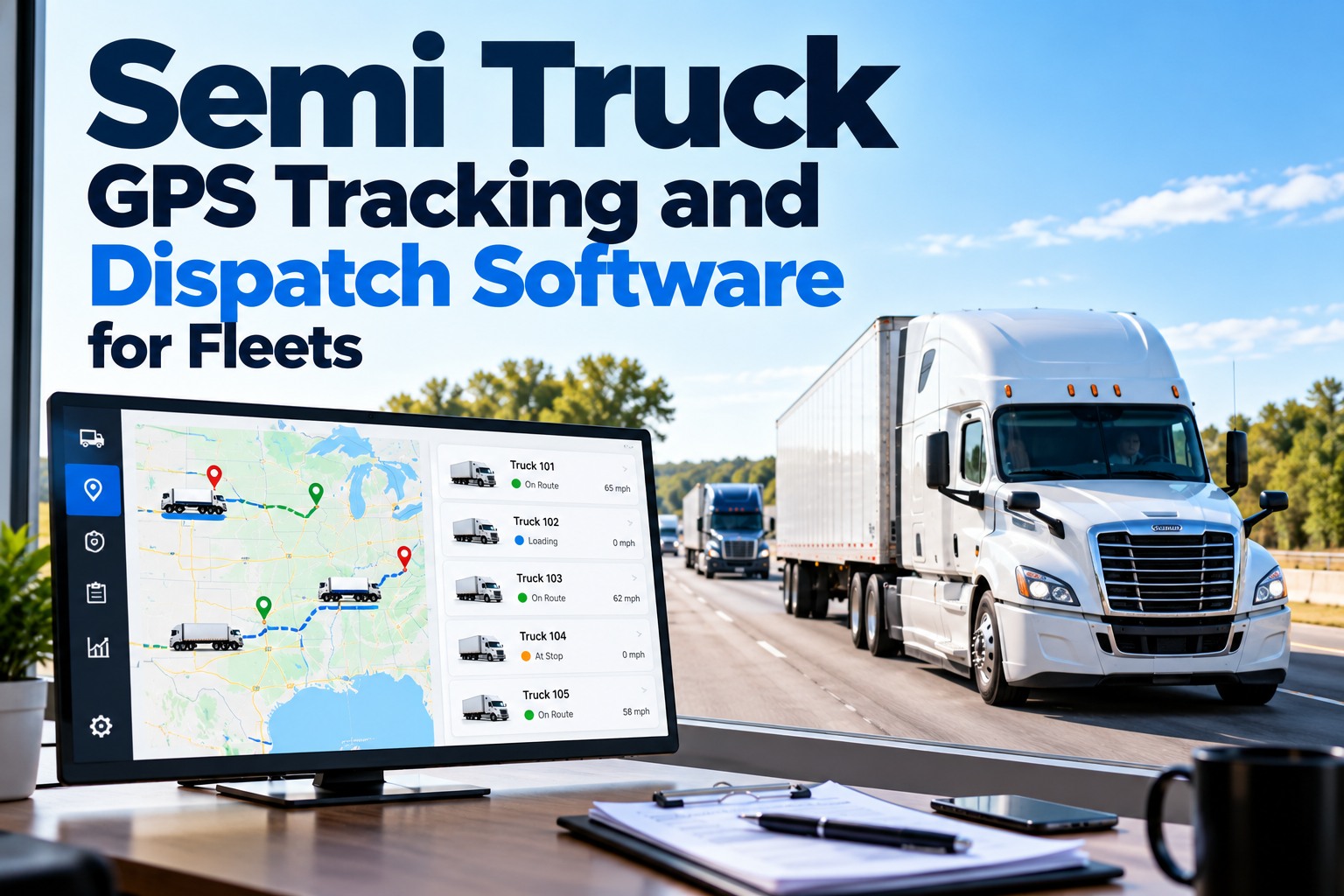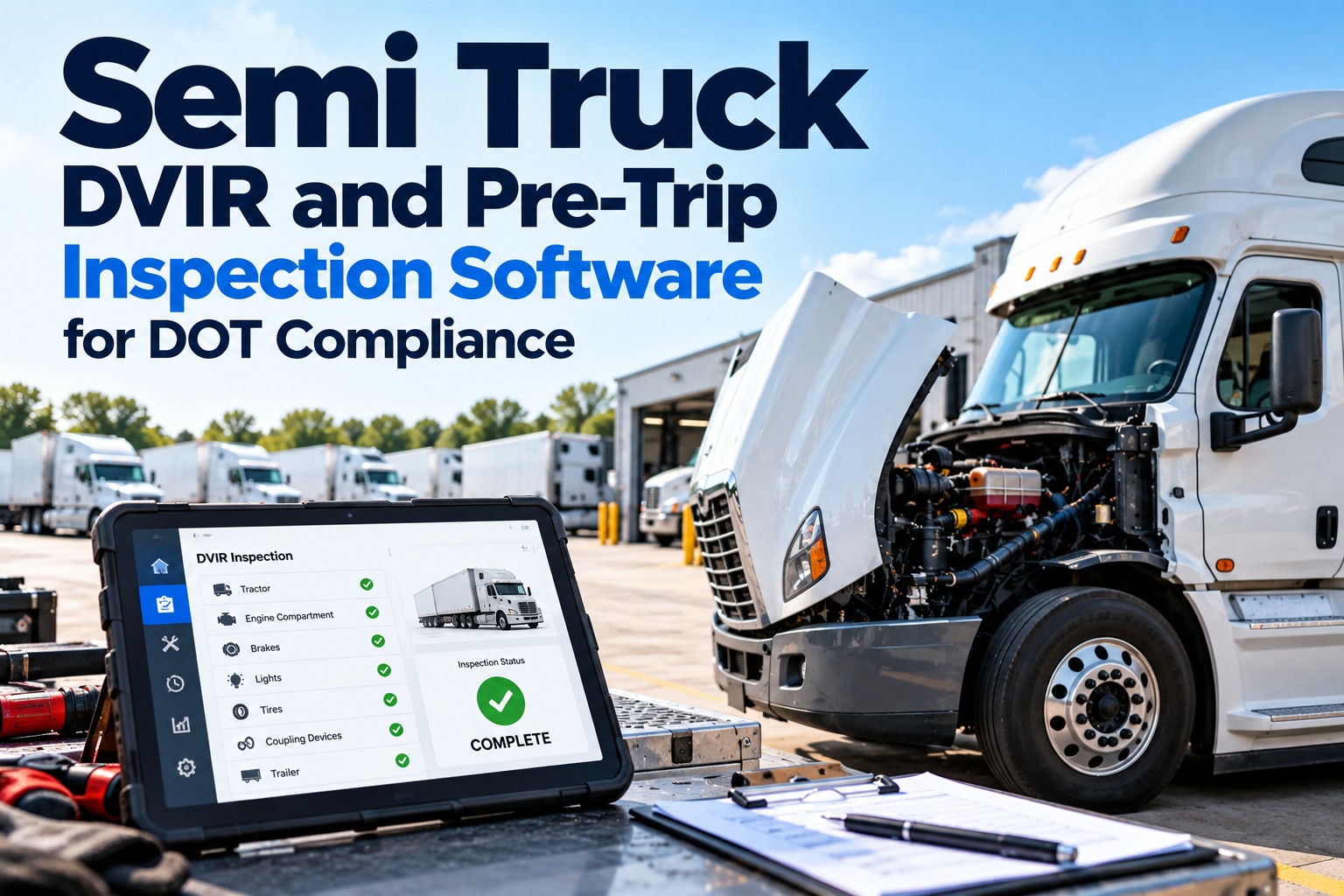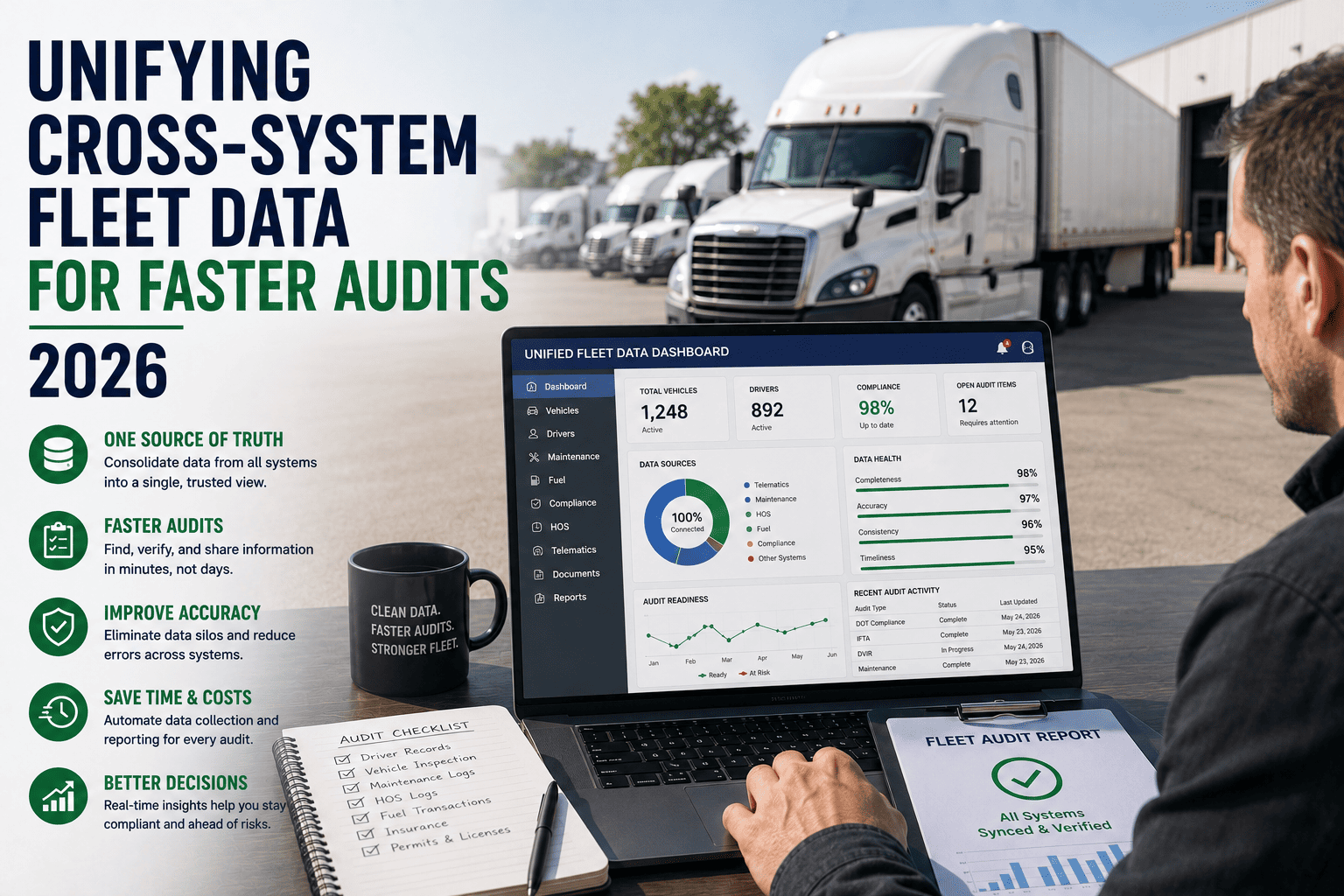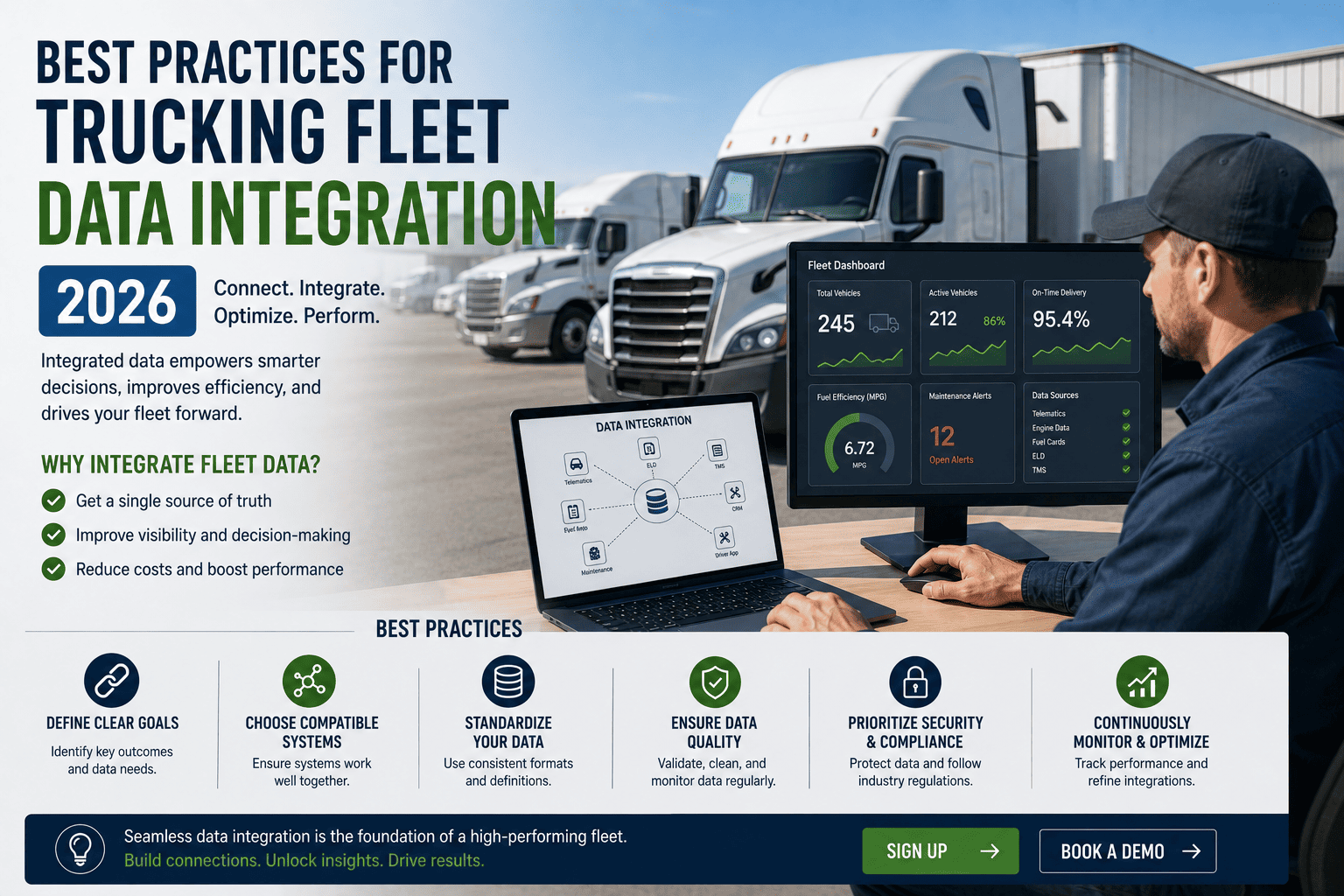
Most fleets are not short on data, they are short on connected data. The typical trucking operation runs somewhere between four and seven separate systems, GPS telematics, ELD compliance, maintenance tracking, fuel cards, inspection tools, and dispatch software, each collecting valuable information that stays trapped in its own dashboard. A fleet manager trying to make a vehicle replacement decision without unified fuel, maintenance, and downtime data is effectively working with a fraction of the information that actually exists. Fleet data integration is what turns those separate data streams into one operational picture, and doing it well is quickly becoming the difference between fleets that manage proactively and fleets that are still reacting to problems after they happen. This guide covers the practices that make integration actually work in 2026.
79 percent of mid-to-large commercial fleets already use telematics data, yet 46 percent of operations leaders say their system still does not connect vehicle data to maintenance execution. Fleets without integrated telematics-to-maintenance workflows experience 41 percent more unplanned breakdowns, while properly connected platforms turn scattered data into automated, condition-based decisions across the entire operation.
Why Data Silos Cost Fleets More Than They Realize
Running disconnected systems does not just create extra login screens, it actively degrades the quality of every decision built on that data. A maintenance trigger based on a manually entered odometer reading is only as accurate as the last person who typed it in, while a trigger pulled from live GPS odometer data is accurate by default. That gap between manual and automated data is where most of the operational damage from silos actually happens.
FleetRabbit connects telematics, maintenance, inspections, and compliance into a single real-time platform, so nothing gets lost between disconnected systems. Sign up free and see your fleet data unified today.
The Four Data Layers Every Integration Needs
Not all fleet data carries the same weight, but leaving any one of these four categories siloed reduces the value of the other three. A complete integration strategy accounts for each layer and connects it to the systems that can actually act on it.
Vehicle Location And Movement
GPS position, geofencing events, trip history, and route deviation data. Without this layer feeding dispatch, real-time rerouting and after-the-fact compliance audits both fall apart.
Engine And Diagnostics Data
Fault codes, battery status, fuel consumption, and OBD-II readings. Feeding this into a maintenance platform enables condition-based servicing instead of a fixed calendar schedule.
Driver Behavior Metrics
Speed, harsh braking, rapid acceleration, and idle time. ELDs are not required to collect braking or steering data, so behavioral data from telematics fills a compliance gap ELDs alone cannot close.
Utilization Data
Engine hours, days in service, and miles traveled per vehicle. This layer is what turns raw activity into accurate cost-per-mile and asset lifecycle decisions.
How A Properly Integrated Fleet Data Stack Is Built
Integration works best as three distinct layers, each doing one job well rather than one system trying to do everything at once. Understanding this structure makes it much easier to evaluate whether a platform is actually integrated or just displaying multiple data feeds side by side.
FleetRabbit links GPS, engine diagnostics, driver behavior, and compliance data through API-based integration, turning raw telematics into automated maintenance and dispatch decisions. Book a 30-minute demo to see it working with your existing systems.
Best Practices For Getting Integration Right
Fleets that successfully move from scattered systems to a connected data stack tend to follow the same sequence, rather than attempting to connect everything simultaneously.
Start With API-Based Connections, Not File Exports
Any integration built on manually exported spreadsheets will always lag behind reality and introduce human error. API-based connections keep data flowing continuously, which is the foundation every other best practice depends on.
Connect Telematics Directly To Maintenance Execution
Collecting engine fault data means little if it never reaches the team scheduling repairs. Fleets that close this specific gap are the ones avoiding the 41 percent increase in unplanned breakdowns seen in disconnected operations.
Standardize Data Formats Across Every Source
Mileage recorded differently across a fuel card system, an ELD, and a maintenance platform creates reconciliation work that undermines automation. Standardizing formats at the integration layer removes that friction permanently.
Centralize Everything Into One Operational Dashboard
Dispatch, maintenance, compliance, and cost data belong in a single view built around decisions, not four browser tabs a manager has to cross-reference manually every morning.
Automate Triggers Instead Of Reviewing Data Manually
Once data is unified, use it. Condition-based maintenance triggers, compliance violation alerts, and cost anomaly flags should fire automatically the moment integrated data crosses a defined threshold.
Fleet Data Integration Maturity Levels
Most fleets fall somewhere along a predictable maturity curve. Knowing where your operation sits today makes it much easier to identify the next practical step rather than trying to leap straight to full integration.
| Maturity Level | What It Looks Like | Decision Quality | Next Step |
|---|---|---|---|
| Disconnected | Four or more standalone systems with manual export between them | Based on partial, often outdated data | Prioritize API-based connections for highest-impact systems first |
| Partially Connected | A few systems linked, but maintenance and telematics remain separate | Improved but still missing key automation | Close the telematics-to-maintenance execution gap specifically |
| Fully Integrated | All core systems connected into one dashboard with automated triggers | Based on complete, real-time data | Refine automation rules and expand analytics depth over time |
Where Most Fleets Get Stuck
The jump from partially connected to fully integrated is where most fleets stall, usually because telematics and maintenance systems were purchased from different vendors at different times without integration as a selection criterion. Choosing a platform built to connect these systems from the outset avoids that gap entirely.
Measuring Whether Your Integration Is Actually Working
A properly integrated fleet data stack should show up in a handful of measurable outcomes. Track how many maintenance triggers fire automatically from telematics data versus how many still require a manual review. Track the time between a fault code appearing and a work order being created, aiming for minutes rather than days. Track how often reports require manual reconciliation across systems before they can be trusted, since a fully integrated stack should need close to none. If these numbers are not improving, the integration is likely surface-level, displaying data from multiple sources without actually connecting the workflows between them.
Key Takeaways On Fleet Data Integration
The technology to collect fleet data is no longer the bottleneck. Nearly 80 percent of mid-to-large fleets already have telematics running, yet almost half of operations leaders admit their systems still do not connect to maintenance execution. That gap between data collected and data actually used is exactly where preventable breakdowns, incomplete decisions, and wasted manager time keep accumulating.
Closing it does not require replacing every system at once. It requires prioritizing API-based connections over manual exports, closing the telematics-to-maintenance gap specifically, standardizing data formats, and centralizing everything into one dashboard that supports automated triggers instead of manual review. Fleets that make this shift move from reacting to problems after they surface to catching them in the data long before they ever affect a route.
FleetRabbit unifies telematics, maintenance, inspections, and compliance data into a single real-time platform, closing the gap between data collected and data actually acted on.