Most fleets already have a driver coaching program. Far fewer have one that drivers actually trust. The data gets collected, the alerts fire, the scorecards get printed, and somewhere in that pipeline drivers quietly decide the whole thing is just a surveillance system with a friendlier name. That decision happens fast, and once it happens, every coaching message that follows lands as criticism instead of help.
This guide is about that turning point. It looks at why drivers accept some coaching programs and reject others, and exactly what separates a program that builds trust from one that builds resentment. If you are evaluating how to launch or rebuild a coaching program in 2026, this is the practical, visual breakdown to work from.
Why Driver Coaching Programs Succeed Or Fail
The Two Roads Every Coaching Program Takes
Every fleet that introduces driver coaching ends up on one of two roads. One road treats telematics data as a watchdog: it flags mistakes, it triggers warnings, and drivers respond by hiding from it. The other road treats the same data as a mirror: it shows drivers their own progress, invites their input, and drivers respond by leaning into it. The hardware is often identical. The outcome depends entirely on which road the program is built on.
Surveillance-First Coaching
- Drivers find out about events only when something goes wrong
- Conversations start with "you did this wrong"
- No visibility into their own score between reviews
- One-size-fits-all targets, set without driver input
- Coaching feels like a warning, not a conversation
Transparency-First Coaching
- Drivers see their own scorecard anytime, not just at review time
- Conversations start with what is going well
- Real-time access builds self-awareness before a manager says a word
- Targets are discussed and agreed on together
- Coaching feels like a tool drivers actually use
The difference is not about being soft on safety. It is about sequencing. A driver who already knows their numbers before a coaching session walks in informed, not ambushed. That single change in sequence is responsible for most of the acceptance gap between programs that work and programs that drivers learn to dodge.
Why Drivers Resist Coaching In The First Place
Resistance rarely comes from the idea of improving. It comes from how improvement gets demanded. Three patterns show up again and again in fleets where coaching has failed to stick.
Feeling Watched, Not Heard
When data only appears at review time, drivers experience it as a surprise inspection rather than ongoing feedback they can act on day to day.
No Room For Context
A hard-braking alert looks identical whether it happened because of a careless habit or a child who ran into the road. Without context, every event reads as a fault.
Only Hearing About Mistakes
If a driver only ever gets contacted when a number drops, the entire safety program becomes associated with bad news, and naturally, they start avoiding it.
Coaching Backed By Real-Time, Transparent Data
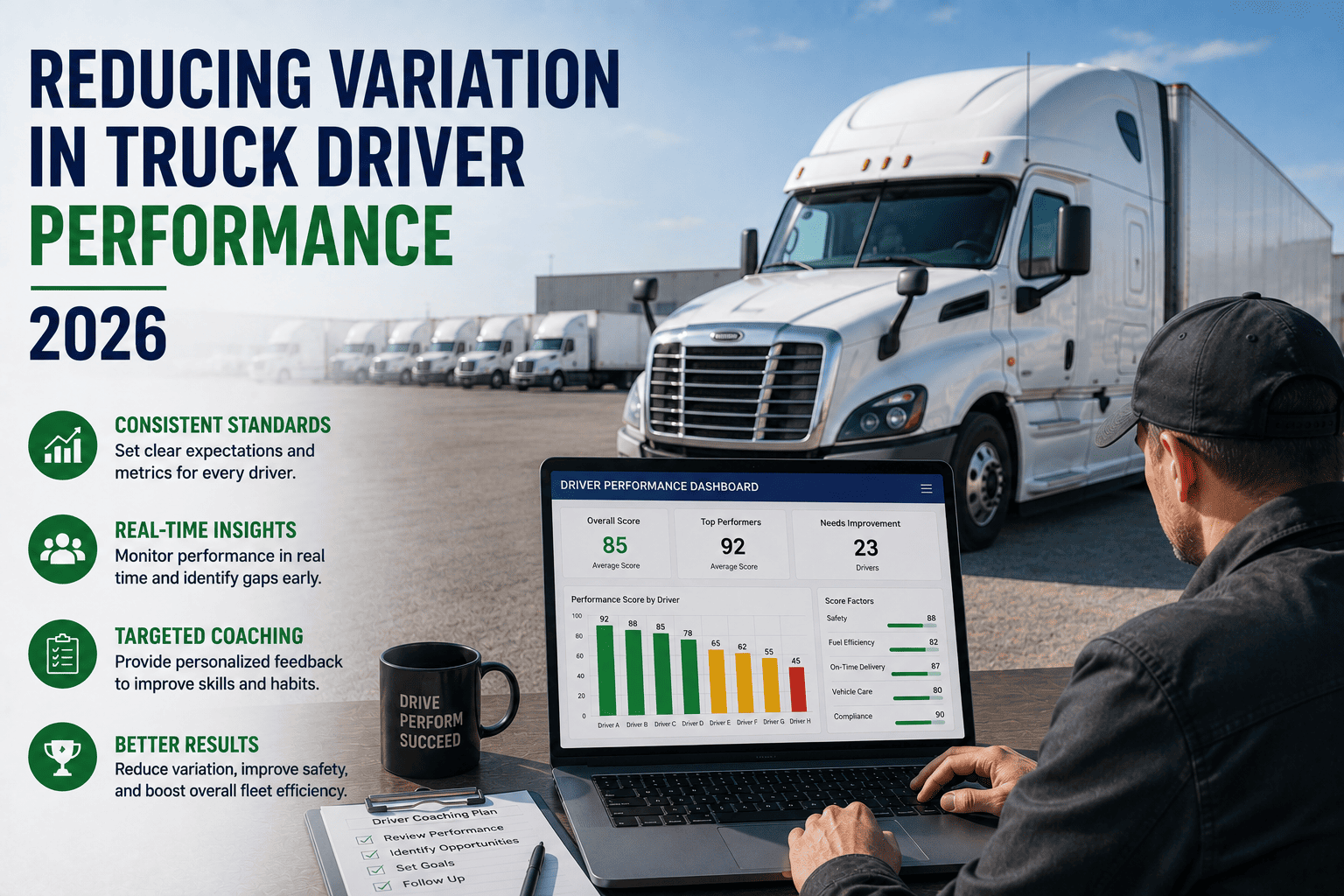
FleetRabbit gives every driver visibility into their own performance, not just a number handed down at review time. Pair that transparency with automated alerts, scorecards, and peer benchmarking, and coaching becomes a conversation drivers want to have. Sign up free and see how transparent coaching changes driver buy-in.
The Driver Acceptance Journey: From Skeptical To Bought-In
Driver buy-in is not a single decision. It is a sequence of small moments where drivers either gain or lose trust in the program. Mapping the journey makes it possible to design for it intentionally, instead of hoping acceptance happens on its own.
Introduction, Not Ambush
Drivers are shown the dashboard before it is ever used to evaluate them. They get to explore their own scorecard with zero pressure attached.
First Real Numbers Appear
Drivers start checking their own scores between shifts. Curiosity, not fear, drives the early engagement when the data is fully visible to them.
The First Coaching Conversation
The first sit-down opens with something positive before anything corrective. This single sequencing choice shapes how every future conversation is received.
Ownership Sets In
Drivers begin setting their own improvement targets instead of being assigned one. Self-set goals consistently outperform manager-assigned goals for follow-through.
The Program Becomes Routine
Checking the scorecard becomes habit rather than chore. Recognition for milestones keeps the relationship positive well past the initial rollout.
Five Design Choices That Drive Acceptance
Underneath every successful coaching program are a handful of concrete design choices. None of them require new hardware. All of them require deliberate intent when the program is built.
Give Drivers Their Own Dashboard
A driver who can check their own safety score on their phone, anytime, stops experiencing the system as something done to them and starts experiencing it as something they use.
Lead With Recognition
Coaching that opens with a genuine acknowledgment of something done well sets an entirely different emotional tone than coaching that opens with a problem to fix.
Compare To Peers, Not Just Standards
"You're at 6 events; the top drivers on this same route average 2" gives a driver something to aim for. A flat rulebook number rarely motivates the same way.
Let Drivers Set Their Own Targets
A target a driver proposes themselves, even a modest one, gets followed through on far more reliably than a target a manager hands down unilaterally.
Make Improvement Visible, Not Just Final Scores
A driver who cuts hard-braking events in half deserves recognition for that progress, even if they have not yet hit the fleet average.
Gamification: Turning Coaching Into Something Drivers Want To Win
Friendly competition changes how drivers relate to their own numbers. Leaderboards, streaks, and milestone badges reframe a safety metric from a judgment into a score worth improving, the same way a fitness app turns steps into something worth chasing.
Fleet Leaderboards
Rankings by route or terminal create healthy competition without singling anyone out unfairly.
Milestone Badges
Recognizing thirty, sixty, and ninety days of clean driving keeps motivation alive between formal reviews.
Improvement Streaks
A visible streak of consecutive safe weeks gives drivers a reason to protect their progress rather than risk breaking it.
Real-Time Score Updates
Seeing a score move right after a shift, instead of weeks later, makes cause and effect obvious and learning faster.
Give Every Driver A Score They Want To Improve
FleetRabbit turns raw telematics data into driver-facing scorecards, leaderboards, and progress milestones that make safety feel like a game worth playing instead of a rulebook to dodge. Book a free demo and see exactly how it looks from the driver's seat.
What To Track Before You Call The Program A Success
It is tempting to judge a coaching program purely on whether safety scores improved. That is only half the picture. A program can hit its safety targets while quietly pushing drivers toward the exit, which is its own kind of failure. Track both sides.
| What To Measure | Healthy Signal | Warning Sign |
|---|---|---|
| Scorecard Check-Ins | Drivers check their own data voluntarily between reviews | Drivers only see their data when a manager shows it to them |
| Coaching Tone Mix | A healthy share of conversations open with recognition | Nearly every conversation is corrective only |
| Target Ownership | Drivers propose their own improvement goals | All targets are assigned top-down with no input |
| Driver Turnover | Coached drivers stay at the same rate as the rest of the fleet | Coached drivers leave at a noticeably higher rate |
| Repeat Events | Same driver, same issue, declining over time | Same driver, same issue, recurring with no change |
A Simple Test: Would Your Drivers Defend This Program?
One useful gut-check for any coaching program is this: if a new driver asked an experienced one what the coaching program is like, would the answer be defensive or genuinely positive? Programs built on transparency and recognition tend to earn answers like "it actually helps you see what's going on." Programs built purely on monitoring tend to earn answers like "just keep your numbers up and they leave you alone." Only one of those answers builds a culture worth keeping.
Frequently Asked Questions
The Bottom Line
Drivers do not resist being coached. They resist being judged without context, watched without warning, and corrected without ever being recognized. Flip that sequence, give drivers their own data, open with what's going right, and let them help set the targets, and the exact same telematics that once felt like surveillance starts to feel like support.
Build A Coaching Program Drivers Actually Buy Into
FleetRabbit gives drivers real-time visibility into their own performance, turns safety metrics into something worth improving, and gives your safety team the tools to coach with recognition, not just correction. Get started in minutes, no credit card required.