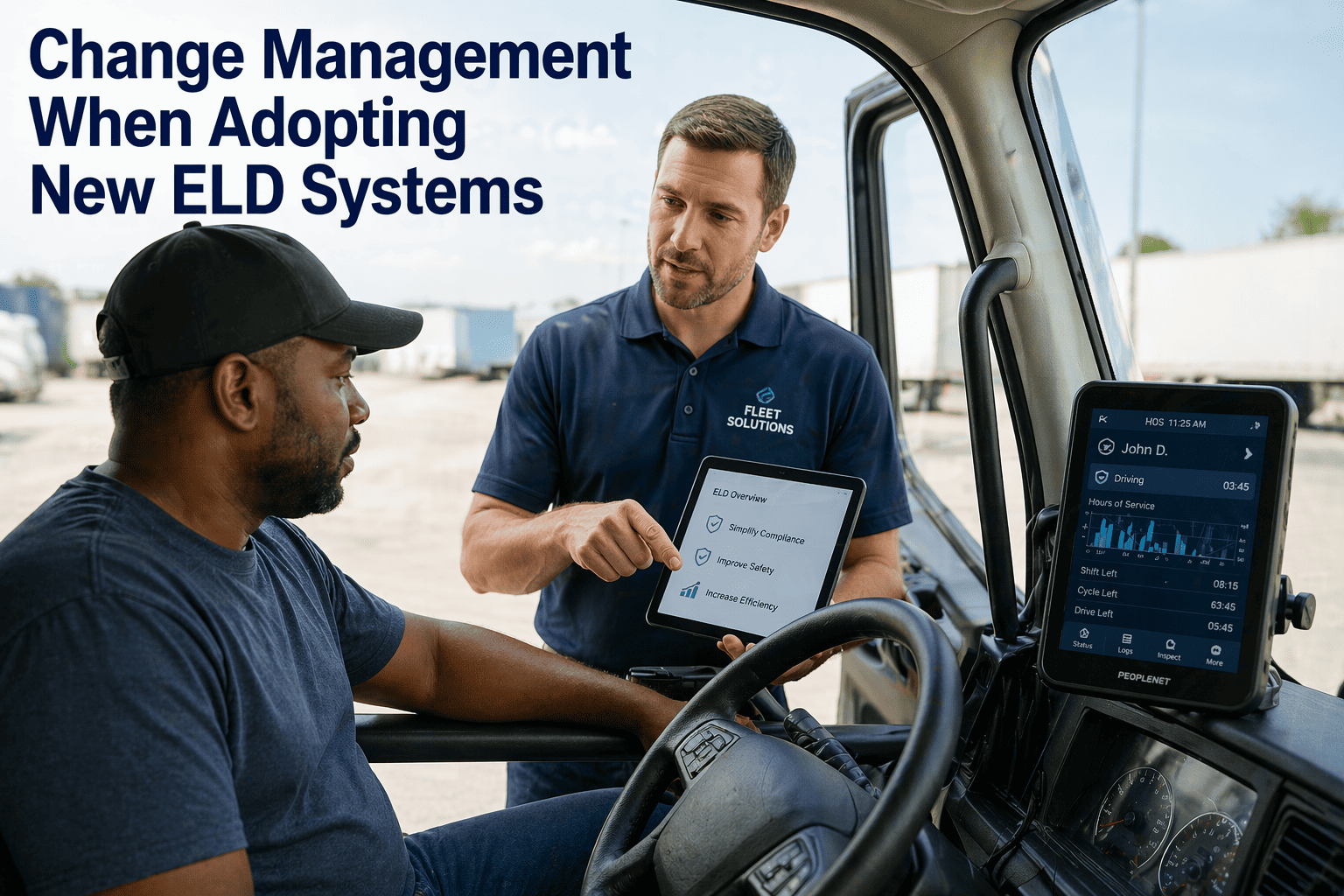
When fleets begin transitioning to new Electronic Logging Device systems, the technology itself rarely becomes the obstacle. The real friction surfaces in the human layer — drivers who distrust unfamiliar devices, dispatchers adapting to new workflows, and operations managers navigating resistance from teams that have run on paper logs or legacy systems for years. FleetRabbit has observed this pattern across transportation and logistics operators of every size: ELD compliance gaps are not hardware problems. They are change management problems.
Article Summary
Adopting a new ELD system across a transportation fleet involves more than device installation. This guide covers the structured change management approach that fleet managers and operations executives use to reduce driver resistance, accelerate compliance timelines, and maintain service continuity during the transition. FleetRabbit provides the operational infrastructure — ELD hardware integration, driver-facing mobile tools, real-time HOS dashboards, and compliance reporting — that makes this transition measurable and manageable from day one.
73%
of fleet ELD rollout delays are attributed to driver resistance, not technical failure
3 wks
average time for drivers to reach full ELD proficiency with structured onboarding
91%
HOS compliance rate achievable within 60 days of properly managed ELD deployment
40%
reduction in compliance violations reported by fleets using automated HOS alerts
Why ELD Transitions Fail Without a Change Management Framework
The Federal Motor Carrier Safety Administration mandate established ELD compliance as a non-negotiable for regulated carriers, yet violation rates remain significant across fleets of every size. The majority of post-implementation compliance failures trace back not to device malfunctions but to gaps in how the transition was communicated, trained, and reinforced within the fleet organisation.
Fleet managers often underestimate the degree to which experienced drivers have built their daily operating rhythms around paper log familiarity. A driver with fifteen years of experience completing paper logs does not simply adopt a new device because management instructs it. Without deliberate change management — clear communication of the rationale, hands-on training before go-live, accessible support channels during the adjustment period, and leadership that models compliance — ELD rollouts encounter sustained friction that translates directly into HOS errors, missed log submissions, and regulatory exposure.
FleetRabbit addresses this gap not just at the platform level but at the operational design level, providing fleet managers with the tools to monitor adoption in real time, identify drivers who are struggling before violations occur, and generate the compliance records that prove the transition was managed correctly.
01
Driver Distrust of New Technology
Experienced drivers associate ELD systems with surveillance and reduced autonomy. Without transparent communication about what data is collected, how it is used, and what it means for their daily workflow, distrust becomes active resistance during rollout.
02
Inconsistent Training Across Locations
Multi-terminal fleets often conduct ELD training inconsistently — some locations receive hands-on sessions, others receive a manual. Compliance outcomes differ accordingly, and operations managers have no visibility into where the adoption gaps exist until violations appear.
03
No Real-Time Adoption Visibility
Fleet managers operating without a centralised ELD dashboard cannot identify which drivers are logging correctly, which are missing certifications, and which are generating HOS exceptions — until those exceptions become FMCSA violations on the CSA score.
04
Dispatcher and Back-Office Workflow Disruption
ELD transitions affect more than drivers. Dispatchers must adapt to new HOS data inputs when planning loads. Safety managers must learn new compliance report formats. Without cross-functional preparation, the transition creates downstream workflow failures in dispatch and compliance operations.
The Four Phases of a Structured ELD Adoption Programme
Successful ELD transitions follow a recognisable structure regardless of fleet size. The specifics of execution vary, but the four phases below represent the framework that consistently produces clean go-live outcomes and sustained compliance performance in the weeks following deployment.
Phase 1
Stakeholder Alignment and Communication
Who It Involves
All Levels
Fleet executives, safety directors, terminal managers, dispatchers, and driver representatives should all be briefed before external deployment begins
Key Communication Elements
Why, What, When
Drivers require clear answers on why the change is happening, what will change in their daily workflow, and exactly when each phase affects them
Common Failure Point
Skipped
Most fleets begin device installation before communication is complete — creating the distrust and rumour cycles that drive resistance throughout rollout
Phase 2
Pilot Group Deployment and Feedback Collection
Pilot Group Size
10 to 15%
Select a representative group of drivers across experience levels and routes — not just early adopters — to surface real-world friction before full deployment
FleetRabbit Support
Live Dashboard
FleetRabbit's real-time compliance dashboard allows fleet managers to monitor pilot group HOS status, certification completion, and exception rates from day one of pilot deployment
Output Required
Documented Issues
Every friction point identified in the pilot must be documented and addressed before full fleet deployment — not deferred to post-rollout support tickets
Phase 3
Fleet-Wide Training and Go-Live
Training Format
Hands-On
Device-in-hand training with real scenarios — pre-trip inspection logging, duty status changes, adverse driving exceptions — produces significantly faster proficiency than video or manual-based onboarding
FleetRabbit Driver App
Mobile-First
FleetRabbit's driver-facing mobile application is designed for in-cab use — duty status changes, DVIR completion, and HOS remaining hours visible at a glance without navigating complex menus
Go-Live Support
First 72 Hours
The first three days after full deployment carry the highest exception risk. FleetRabbit's automated HOS alerts notify fleet managers of potential violations in real time — before they become recordable events
Phase 4
Post-Deployment Compliance Monitoring and Reinforcement
Monitoring Window
60 Days
Structured compliance monitoring for 60 days post-deployment allows fleet managers to identify persistent non-compliance before it establishes as a behavioural pattern
FleetRabbit Reporting
Automated
Automated weekly compliance summary reports per driver and per terminal — no manual extraction required from the fleet manager
Reinforcement Mechanism
Data-Driven Coaching
Drivers with persistent HOS exceptions receive targeted coaching sessions supported by FleetRabbit log data — making coaching conversations specific, not general
How FleetRabbit Supports ELD Adoption Across the Fleet Organisation
FleetRabbit is purpose-built for the operational realities of transportation and logistics fleets. The platform does not assume that compliance is solely a driver-level responsibility. Instead, it distributes compliance visibility and accountability across every role involved in fleet operations — from the driver in the cab to the executive reviewing CSA scores at the corporate level.
Driver Mobile Application
A clean, in-cab mobile interface that allows drivers to manage duty status changes, complete DVIR inspections, view remaining HOS in real time, and certify logs without complex navigation. Designed to reduce friction at the driver level — the highest point of resistance in any ELD transition.
Real-Time HOS Compliance Dashboard
Fleet managers see live HOS status across every active driver on a single dashboard. Colour-coded exception alerts surface drivers approaching violation thresholds before they become recordable. Dispatchers can make load assignment decisions with current availability data rather than estimated figures.
Automated Violation Alerts
FleetRabbit generates automatic alerts when a driver is approaching or has exceeded an HOS limit — notifying both the fleet manager and the driver simultaneously. This eliminates the discovery gap where violations only surface during post-trip log review or FMCSA audit preparation.
Compliance Report Generation
FMCSA-ready compliance reports are generated directly from the FleetRabbit platform — by driver, by terminal, by date range, or by exception type. Audit preparation time is reduced from days of manual log compilation to minutes of report export.
Multi-Terminal Portfolio View
Fleet operators managing multiple terminals or depots can view HOS compliance, driver certification status, and exception rates across all locations simultaneously. Operations executives gain the cross-fleet visibility required to identify systemic adoption gaps — not just individual driver issues.
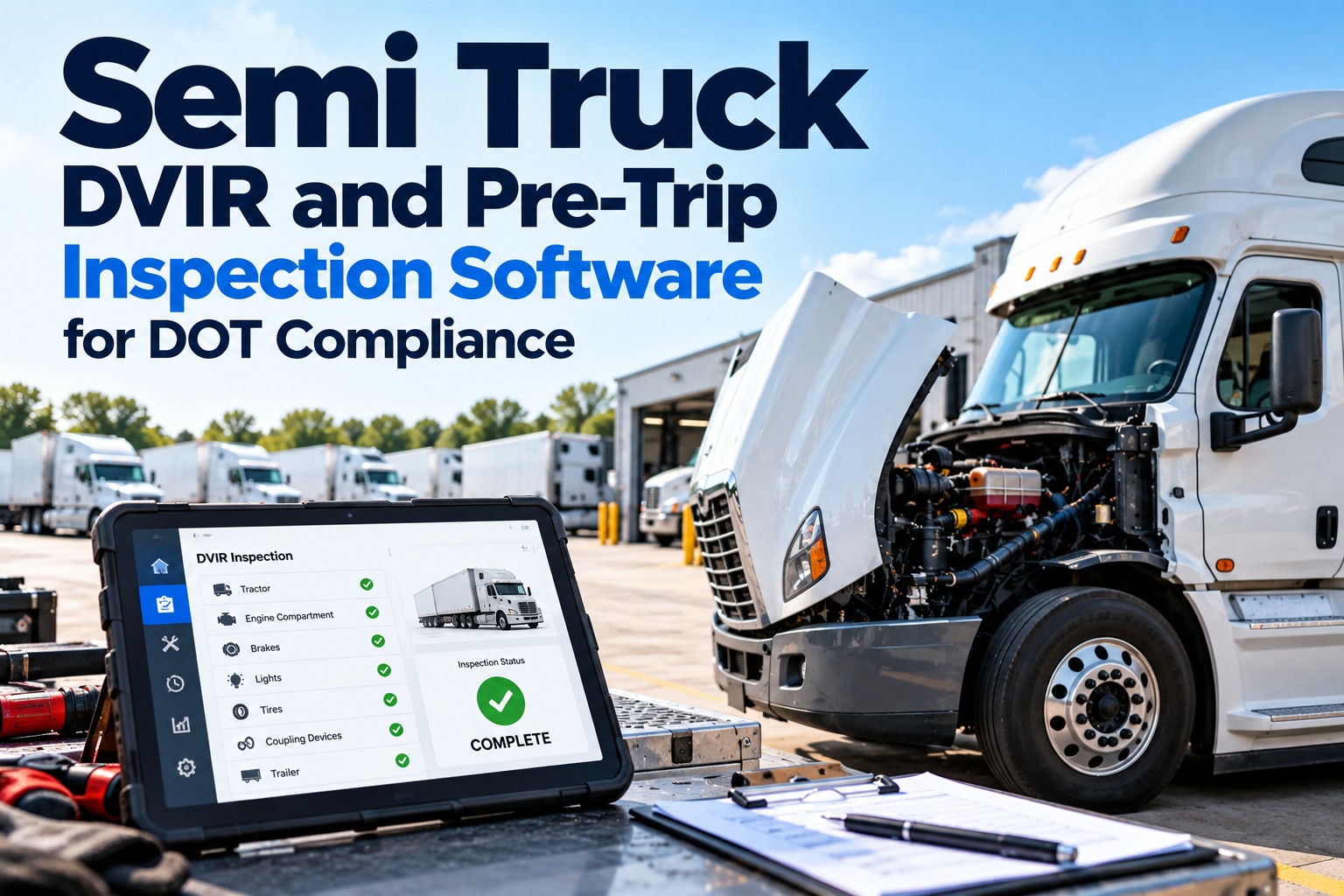
DVIR and Pre-Trip Integration
Driver vehicle inspection reports are completed and submitted through the same FleetRabbit driver application used for ELD logging — reducing the number of separate tools drivers must manage and consolidating vehicle condition records alongside HOS documentation in a single compliance record.
See How FleetRabbit Manages ELD Compliance Across Your Fleet
FleetRabbit provides real-time HOS monitoring, automated violation alerts, and FMCSA-ready compliance reports from the same platform your drivers and dispatchers use for daily operations. Book a personalised demo to see how the platform fits your fleet's specific compliance workflow.
Addressing Driver Resistance: The Practical Approach
Driver resistance to ELD systems most commonly stems from three sources: concern about surveillance of driving behaviour, anxiety about technology unfamiliarity, and the perception that the system will reduce earning potential by constraining flexibility in how hours are used. Each of these concerns requires a specific response — not a general reassurance that the technology is beneficial.
Concern: Surveillance Anxiety
Address Directly
Fleet managers should provide written documentation of exactly what data FleetRabbit records, how it is stored, who has access, and under what circumstances it is reviewed. Ambiguity amplifies resistance. Specificity reduces it. Drivers who understand the data boundaries are significantly more likely to accept ELD requirements without continued friction.
Concern: Technology Unfamiliarity
Hands-On Training
Schedule mandatory device-in-hand practice sessions before go-live — not after. Drivers who have successfully completed a simulated log cycle before their first real trip carry significantly less anxiety into deployment day than those encountering the device for the first time on a live run.
Concern: Earning Impact
Data-Backed Response
Share compliance data from the pilot group demonstrating that proficient ELD users do not experience meaningful changes to utilisation. Drivers who perceive the change as a threat to income respond to evidence far more effectively than they respond to reassurance.
Peer Champion Programme
Internal Advocates
Identify two to three respected drivers from the pilot group who have achieved proficiency and are willing to support colleagues during rollout. Peer credibility in driver communities far exceeds management credibility on technology adoption — the investment in a formal champion programme consistently accelerates adoption timelines.
Feedback Loop
Structured Channel
Create a formal mechanism — a designated contact, a submission form, or a regular call — through which drivers can report friction points during the first 30 days. Drivers who feel their concerns are being tracked and actioned reduce resistance significantly. Unaddressed friction festers into sustained non-compliance.
Recognition Programme
Positive Reinforcement
Acknowledge drivers who achieve full certification completion and zero HOS exceptions in the first 30 days post-deployment. Public recognition within the terminal — even without financial incentive — creates social proof that compliance is achievable and valued, and motivates the cohort still working toward proficiency.
What Fleet Managers and Operations Executives Need to Track During ELD Rollout
Effective ELD change management requires that fleet managers have access to the right metrics during the transition period — not just after it concludes. The metrics below represent the minimum tracking framework that allows operations leadership to distinguish between a rollout that is on track and one that is accumulating compliance risk that will surface in the next FMCSA review.
| Metric |
What It Indicates |
FleetRabbit Visibility |
| Log Certification Rate |
Percentage of drivers certifying daily logs on time — uncertified logs are a leading indicator of HOS non-compliance |
Live dashboard with per-driver certification status updated in real time across all terminals |
| HOS Exception Rate |
Frequency of hours-of-service exceptions per driver and per terminal — identifies both individual and systemic compliance gaps |
Automated exception alerts delivered to fleet manager and driver simultaneously before violations are recorded |
| Unassigned Driving Time |
Driving time not attributed to a logged driver — a direct FMCSA violation indicator that requires immediate investigation |
Flagged automatically in FleetRabbit dashboard with vehicle identification and time window for manager review |
| DVIR Completion Rate |
Driver vehicle inspection report completion rate — incomplete DVIRs are a separate compliance exposure that often increases during ELD transitions |
Integrated DVIR tracking within the same FleetRabbit driver application — completion rate visible alongside HOS metrics |
| Training Completion Rate |
Proportion of fleet that has completed ELD certification training — the leading predictor of post-go-live compliance performance |
Training completion records maintained per driver in the FleetRabbit platform — exportable for compliance documentation |
| Adverse Condition Exception Usage |
Rate at which drivers are invoking adverse driving and other HOS exceptions — abnormal rates indicate either driver misunderstanding or intentional misuse |
Exception type breakdown available per driver in compliance report — allows safety managers to identify exception coaching needs |
Cross-Functional Preparation: Dispatchers, Safety Teams, and Operations Leadership
ELD adoption is not exclusively a driver-facing event. The transition changes workflows for every function that interacts with driver availability, compliance documentation, or vehicle scheduling. Preparing only drivers for ELD go-live while leaving dispatchers and safety managers on old processes creates a coordination failure that is as damaging to compliance outcomes as driver non-compliance itself.
Dispatchers
Dispatchers must transition from estimated availability to real-time HOS data when planning loads and assignments. FleetRabbit's dispatch-facing dashboard provides live remaining hours by driver — enabling dispatchers to assign loads that fit within compliant windows rather than scheduling assignments that produce HOS violations during the run. Training dispatchers to read and act on HOS data is as critical as training drivers to record it.
Safety and Compliance Managers
Safety managers responsible for FMCSA compliance reporting must learn how to generate, review, and archive compliance documentation from the FleetRabbit platform. The audit trail structure in FleetRabbit is different from paper log archives — and safety teams who understand how to navigate the platform's reporting capabilities are able to respond to roadside inspections and FMCSA data requests in a fraction of the time required with paper systems.
Operations and Fleet Executives
Operations leadership requires visibility into ELD adoption metrics at the portfolio level — not the individual driver level. FleetRabbit's multi-terminal dashboard provides executives with a consolidated view of compliance rate by location, exception frequency trends, and certification completion status across the entire fleet. This enables data-driven escalation when a specific terminal is underperforming — rather than relying on self-reported status updates from terminal managers.
Common ELD Rollout Mistakes and How to Avoid Them
The patterns below represent the most consistent failure modes observed in ELD transitions across transportation and logistics operations. Each is preventable with preparation — but each requires deliberate attention before deployment begins, not remediation after go-live.
Mistake
Compressing the Communication Timeline
Announcing ELD deployment one to two weeks before go-live does not allow drivers sufficient time to process the change, ask questions, and resolve concerns. Four to six weeks of structured communication before device deployment produces significantly lower resistance at go-live.
Mistake
Training Without Device Access
Conducting ELD training through videos or documentation without giving drivers access to the actual FleetRabbit driver application before go-live creates a knowledge gap that surfaces as HOS exceptions in the first week of deployment. Hands-on pre-deployment practice is non-negotiable.
Mistake
Treating All Terminals as Identical
Multi-terminal fleets frequently apply a single rollout plan across all locations. Terminal-specific factors — local management culture, driver tenure mix, route types, and existing compliance posture — require adaptation of the rollout plan at the location level. What works in one terminal may require modification in another.
Mistake
Closing the Support Channel After Go-Live
Fleet managers who withdraw active support after deployment day leave drivers without a resolution pathway for the friction points that inevitably surface in the first two to three weeks of live operation. A defined support channel — staffed for at least 30 days post-deployment — prevents friction from converting into persistent non-compliance.
Measuring ELD Adoption Success: 30-60-90 Day Benchmarks
Fleet managers need clear benchmarks against which to measure ELD adoption progress. The targets below represent achievable performance thresholds for fleets following a structured change management approach with FleetRabbit deployed as the compliance infrastructure.
30 Days
Log Certification Rate
Above 80%
HOS Exception Rate
Declining week-on-week
Training Completion
100% of active drivers
Unassigned Drive Time
Zero unresolved instances
60 Days
Log Certification Rate
Above 90%
HOS Compliance Rate
Above 88% fleet average
Dispatch Integration
All dispatchers using live HOS data
Support Ticket Volume
Below 5% of driver base per week
90 Days
HOS Compliance Rate
Above 92% fleet average
DVIR Completion Rate
Above 95%
Compliance Report Readiness
Full audit trail available in FleetRabbit
Persistent Non-Compliance
All identified cases in coaching programme
What Transportation and Logistics Leaders Say About Structured ELD Transitions
We assumed the biggest challenge would be the technology setup. It was not. The challenge was getting our drivers to trust the system and understand it was not a tool for disciplinary surveillance. Once we addressed that directly — with clear written documentation of how data was used and who could access it — the adoption rate accelerated significantly. FleetRabbit's dashboard let us see exactly which drivers were still struggling and reach out before their exceptions became violations.
Director of Safety and Compliance
Regional LTL Carrier, Mid-Atlantic United States
Our dispatch team was the group we underestimated during the ELD transition. They were still assigning loads based on estimated available hours for three weeks after go-live because nobody had trained them on reading the FleetRabbit HOS dashboard. Once that was corrected, our HOS exception rate dropped substantially in a two-week window. The system was not the issue — our cross-functional preparation was the issue.
VP of Operations
Multi-Terminal Truckload Carrier, Southeast United States
Frequently Asked Questions
QHow does FleetRabbit help fleet managers monitor ELD adoption in real time during rollout?
FleetRabbit provides a centralised compliance dashboard that displays log certification status, HOS exception rates, and unassigned driving time across all active drivers and terminals simultaneously. During rollout, fleet managers can identify drivers who are struggling with certification or generating exceptions before those issues become recordable violations — enabling targeted intervention rather than post-hoc remediation.
Book a demo to see the compliance monitoring dashboard in the context of your fleet's structure.
QWhat is the typical timeline for drivers to become fully proficient with the FleetRabbit ELD system?
Drivers who receive structured hands-on training before go-live typically reach full proficiency within two to three weeks of live deployment. Drivers who receive documentation or video training only — without device-in-hand practice — typically take four to six weeks to reach equivalent proficiency, and generate significantly more HOS exceptions in the interim period. The training investment before go-live is the single highest-return action in any ELD rollout.
QCan FleetRabbit generate the compliance documentation required for an FMCSA roadside inspection or audit?
Yes. FleetRabbit generates FMCSA-format ELD output files and compliance reports directly from the platform. Drivers can transfer log data to an inspector's device via the FleetRabbit driver application during a roadside inspection. Fleet managers can generate driver log records, HOS exception reports, and vehicle inspection documentation for specified date ranges through the platform's compliance reporting module — reducing audit preparation time from days of manual log compilation to minutes of platform export.
Book a demo to review the compliance report output format for your fleet's specific context.
QHow should fleet managers handle drivers who continue to resist ELD compliance after the initial rollout period?
Persistent non-compliance after the initial adjustment period requires a differentiated response based on the underlying cause. FleetRabbit's per-driver compliance data allows fleet managers to distinguish between drivers experiencing genuine technical difficulty — who require additional training — and drivers demonstrating intentional avoidance — who require a formal performance management conversation supported by documented compliance records. The platform provides the evidence base for both types of intervention without requiring manual log reconstruction.
QDoes FleetRabbit support multi-terminal fleets where different locations may be at different stages of ELD adoption?
Yes. FleetRabbit's multi-site dashboard allows fleet managers and operations executives to view compliance metrics by terminal independently and consolidated across the entire fleet simultaneously. Terminals at different adoption stages can be monitored separately — allowing management resources to be directed toward locations with higher exception rates without losing visibility into the overall fleet compliance position.
Deploy ELD Compliance Across Your Fleet Without the Adoption Friction
FleetRabbit provides the real-time HOS monitoring, driver mobile tools, automated violation alerts, and FMCSA-ready compliance reporting that fleet managers need to manage ELD transitions successfully — from pilot deployment through the first regulatory audit.
ELD Compliance
Real-Time HOS Monitoring
Driver Mobile App
Multi-Terminal Dashboard
FMCSA-Ready Reporting
April 22, 2026
By Jason Smith
All Posts