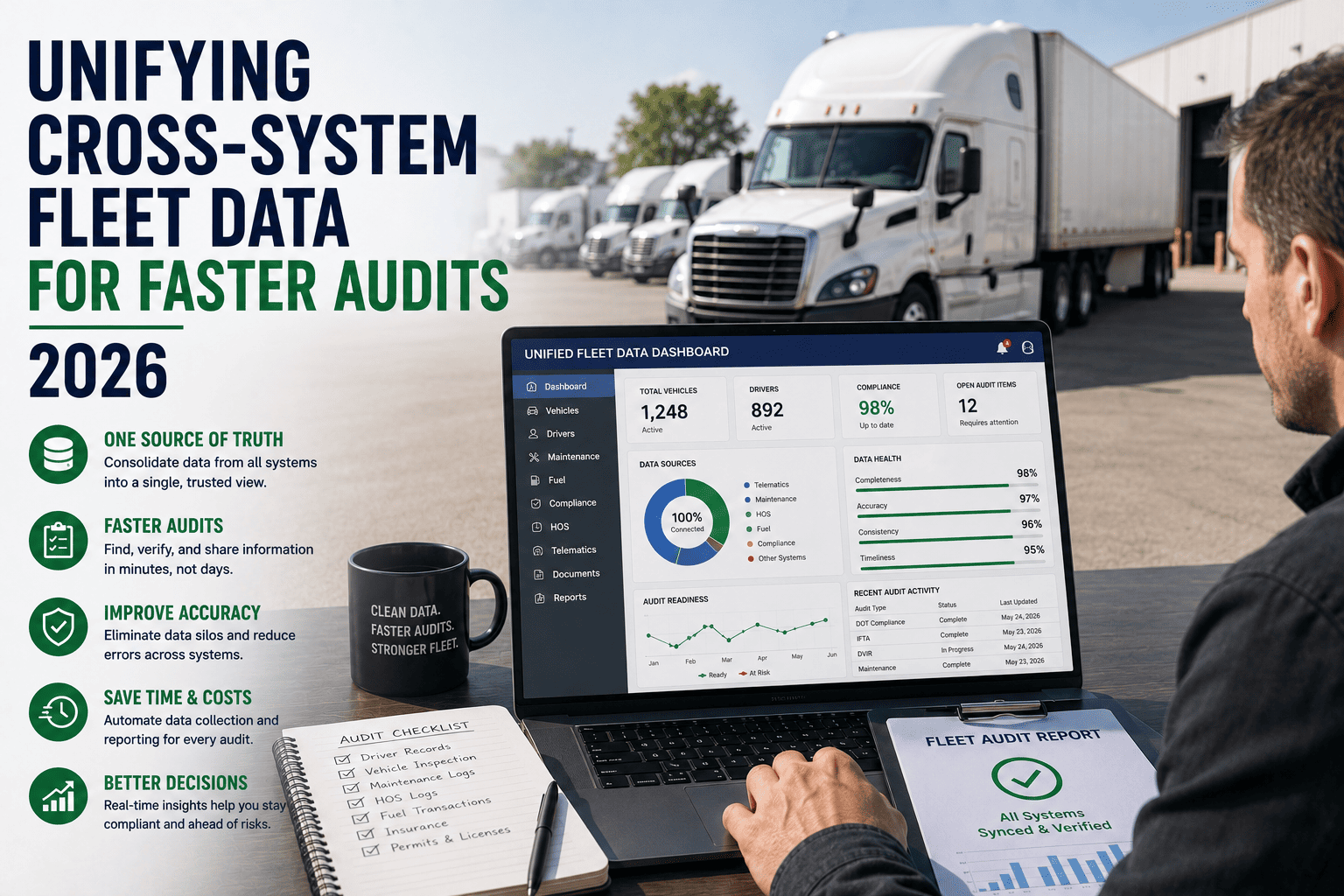
The decision to implement new fleet management software is often the easiest part of a digital transformation initiative. The hard part — the part that determines whether the investment delivers its promised operational and financial returns — is change management. Transportation companies that deploy new fleet technology without a structured approach to organizational adoption consistently underperform against implementation objectives. Drivers resist adoption. Dispatchers revert to familiar workarounds. Maintenance teams use the new system for basic functions while ignoring advanced capabilities. The technology works; the organization doesn't change. Book a demo to see how FleetRabbit's onboarding and adoption support framework ensures your fleet technology investment delivers maximum organizational value.
Guide
Change Management When Adopting New Fleet Software: Proven Strategies for Successful Digital Transformation Across Drivers, Dispatchers, and Fleet Operations Teams
DIGITAL TRANSFORMATION & FLEET ADOPTION GUIDE
Fleet Software Adoption Done Right: A Change Management Framework for Transportation and Logistics Operators
New fleet management software delivers value only when the people using it — drivers, dispatchers, maintenance technicians, and fleet managers — adopt it completely and consistently. Change management bridges the gap between technology deployment and organizational transformation. FleetRabbit's implementation methodology is built around structured change management principles that achieve high adoption rates across all user populations, regardless of workforce technology experience levels.
Why Fleet Software Implementations Fail: The Change Management Gap
Industry research across enterprise software implementations consistently shows that technology failure accounts for a small minority of implementation outcomes that fall short of objectives. The primary cause of implementation underperformance is adoption failure — the organizational behaviors, workflows, and data entry practices of the user population don't change sufficiently to realize the system's capability.
Resistance Without Context
When drivers and dispatchers don't understand why the new system is being implemented, what problem it solves for them specifically, and how it will change their daily routines, resistance is the natural default response. Change is uncomfortable. New systems require learning. Without compelling, role-specific context for why the change matters, the path of least resistance is to minimize new system use and maintain familiar habits.
Training Without Reinforcement
One-time training events — a two-hour orientation session in a conference room — create awareness but not capability. Operational proficiency requires practice in the actual work context. Without reinforcement training, follow-up coaching, and accessible reference resources during the first weeks of live operation, training-derived knowledge decays rapidly and adoption rates plateau below the threshold required for full system value realization.
Leadership Disengagement After Go-Live
Fleet managers and operations directors who treat software implementation as an IT project — complete at go-live — underestimate their role in the ongoing adoption process. When leadership doesn't actively use the new system, doesn't track adoption metrics, and doesn't reinforce new workflows in day-to-day management communications, the organizational signal is clear: the new system is optional. Adoption rates reflect leadership engagement levels directly.
Insufficient Measurement of Adoption Progress
Without systematic measurement of adoption progress — who is using the system, which features are being utilized, what workflows are being bypassed — implementation leaders cannot identify adoption gaps until they manifest as operational failures. Monthly adoption metrics reviews with defined accountability for addressing gaps are a prerequisite for managing adoption proactively rather than discovering deficiencies after the fact.
The Five Stages of Fleet Software Change Management
1
Pre-Implementation: Build the Case for Change
Before the first user touches the new fleet management system, the organization must understand why the change is happening and what it means for each role group. Fleet managers communicate the operational problems the new system addresses — whether that's compliance documentation gaps, reactive maintenance costs, or inefficient dispatch coordination — in language that is relevant to drivers, dispatchers, and maintenance teams rather than exclusively to executive leadership. Early involvement of respected frontline influencers — senior drivers, experienced dispatchers — in the selection and implementation planning process creates internal champions who can speak to peer credibility during adoption.
Key Deliverable: Role-specific change communication plan deployed 2–4 weeks before go-live.
2
Training Design: Match Learning to Roles and Learning Styles
Effective fleet software training is role-specific, format-diverse, and delivered in the actual operating context where the software will be used. Driver training on mobile DVIR workflows is most effective in the yard, on actual vehicles, with a trainer demonstrating the inspection process in the sequence drivers will follow operationally. Dispatcher training on load assignment and HOS monitoring is most effective at dispatch terminals with representative workload scenarios. Maintenance technician training on work order management connects directly to the maintenance team's physical workflow in the shop. FleetRabbit's onboarding team provides structured training support across all user roles through video resources, in-app tutorials, and facilitated role-specific orientation sessions.
Key Deliverable: Role-specific training plan completed before go-live with all user groups achieving basic proficiency assessment.
3
Go-Live: Structured Support During the Critical First 30 Days
The 30 days following system go-live are the highest adoption risk period. This is when the gap between training knowledge and operational proficiency is largest, when users encounter real workflows they hadn't anticipated in training, and when workaround habits form that can persist for months if not addressed immediately. Effective go-live support includes: a designated internal implementation champion available for real-time user support, clear escalation paths for system questions, daily adoption metric monitoring, and rapid response to any identified usability barriers. FleetRabbit's customer success team provides dedicated go-live support including daily check-ins with the implementation lead during the first two weeks of live operation.
Key Deliverable: 80%+ active user rate and core workflow compliance within 30 days of go-live.
4
Reinforcement: Sustaining Adoption Through the 30–90 Day Window
Between 30 and 90 days post-go-live, adoption patterns solidify into habits — either the desired new behaviors or entrenched workarounds that persist indefinitely. Fleet manager reinforcement during this window is the single most influential factor in determining which outcome prevails. Reinforcement strategies include: incorporating adoption metrics into regular management reporting, recognizing and acknowledging high-adoption drivers and dispatchers in team communications, providing targeted coaching for users identified as laggards through adoption analytics, and conducting structured follow-up training sessions focused on features and workflows with low utilization rates. FleetRabbit's adoption analytics dashboard gives fleet managers the data needed to manage reinforcement systematically rather than anecdotally.
Key Deliverable: 90%+ adoption rate across all user groups sustained through day 90.
5
Optimization: Expanding from Basic Adoption to Full Capability Utilization
Achieving basic adoption — drivers completing DVIRs, dispatchers using load management, maintenance teams entering work orders — delivers the foundational value of the fleet management platform. Full optimization requires expanding utilization to the system's advanced capabilities: analytics and reporting for management decision support, predictive maintenance scheduling based on condition data, fuel efficiency analysis for driver coaching, and automated compliance monitoring for executive-level risk management. FleetRabbit's quarterly business review process with customer success managers identifies underutilized capabilities and provides adoption guidance tailored to each fleet's specific operational priorities.
Key Deliverable: Advanced feature utilization plan with defined milestones for full platform capability activation at 90+ days.
FleetRabbit's Adoption Support Makes Digital Transformation Work
FleetRabbit's implementation methodology incorporates structured change management support at every stage — from pre-implementation communication through go-live support and long-term optimization guidance — ensuring your fleet achieves maximum adoption and maximum ROI. Book a demo to discuss your fleet's implementation and adoption requirements.
Role-Specific Adoption Strategies: What Works for Each User Group
Drivers
Primary Adoption Challenge
Drivers are the highest-volume user group and the most critical for core compliance data quality. Adoption challenges include technology comfort variability, limited time for learning during operational shifts, and skepticism about surveillance implications of digital fleet tools.
Effective Adoption Strategies
Communicate clearly what data is and is not shared with management
Train in-cab, in the yard — not in a conference room
Demonstrate how the app reduces paperwork burden for the driver
Recognize high-completion-rate drivers publicly in team communications
Use peer drivers as training support resources, not only managers
Dispatchers
Primary Adoption Challenge
Dispatchers typically have established workflows built around familiar tools — spreadsheets, phone calls, whiteboard schedules. New system adoption requires changing habits that have been operationally effective for years, which generates resistance even when the new system is objectively superior.
Effective Adoption Strategies
Involve dispatchers in workflow configuration decisions before go-live
Demonstrate specific time savings for tasks they find most burdensome
Provide side-by-side old-and-new workflow comparison during initial weeks
Allow parallel operation for limited period before requiring full transition
Track dispatcher adoption rates by feature with coaching for laggards
Maintenance Technicians
Primary Adoption Challenge
Maintenance team adoption is critical for work order data quality, which underlies cost tracking, warranty recovery, and asset lifecycle analytics. Technicians may resist electronic work order entry if the workflow feels slower than paper-based processes they are accustomed to.
Effective Adoption Strategies
Demonstrate warranty recovery value that digital work order records enable
Show how parts inventory lookup speeds up service versus manual search
Involve shop lead in configuration of work order workflows
Ensure tablet or device availability at maintenance shop for easy access
Track work order completion rate by technician with management visibility
Fleet Managers and Supervisors
Primary Adoption Challenge
Fleet managers are both users and adoption leaders. Their own adoption of analytics, compliance monitoring, and reporting features determines the organizational signal for the importance of the new system. Adoption failures at manager level cascade through the entire user population.
Effective Adoption Strategies
Configure dashboards for fleet managers during implementation, not after
Include fleet management analytics in every regular management report
Connect FleetRabbit KPIs to performance metrics for management roles
Provide executive-level reporting training specifically for leadership team
Use FleetRabbit data in every fleet-related operational decision visible to the team
Measuring Fleet Software Adoption Success
Adoption measurement must be systematic, not anecdotal. The following metrics provide an objective assessment of fleet software adoption progress across the implementation timeline and should be reviewed weekly during the first 90 days and monthly thereafter.
Active User Rate
Target: 90%+ by Day 30
Percentage of provisioned user accounts with active login and system interaction within the past 7 days. Accounts dormant after initial provisioning indicate adoption failures at the individual user level requiring direct coaching intervention.
DVIR Completion Rate
Target: 85%+ by Day 30, 94%+ by Day 60
Percentage of required pre-trip and post-trip inspections completed digitally through FleetRabbit. The most direct indicator of driver adoption quality. Rates below 80% at the 30-day mark signal need for targeted driver training and management reinforcement.
Work Order Digital Entry Rate
Target: 90%+ by Day 45
Percentage of maintenance work orders created and completed through FleetRabbit versus still being managed on paper or in legacy systems. Work orders processed outside FleetRabbit create data gaps that undermine cost tracking, warranty recovery, and lifecycle analytics.
PM Schedule Activation Rate
Target: 100% of fleet assets with PM schedules by Day 30
Percentage of fleet vehicles with active preventive maintenance schedules configured in FleetRabbit. Vehicles without PM schedules are invisible to the maintenance management system and cannot benefit from automated scheduling, overdue alerts, or compliance tracking.
Analytics Feature Utilization
Target: Fleet manager dashboard access 3x/week minimum
Frequency of access to analytics, reporting, and performance dashboard features by fleet managers and executives. Low analytics utilization indicates that the system is being used as a data entry tool rather than as a management intelligence platform — the highest-value use case that drives operational improvement decisions.
Dispatch Integration Rate
Target: 95%+ of load assignments through platform by Day 45
Percentage of load assignments created and managed through FleetRabbit's dispatch module versus phone calls, text messages, or external systems. High dispatch platform utilization ensures that HOS integration, vehicle availability data, and assignment tracking are captured in the fleet management record for compliance and analytics purposes.
How FleetRabbit Supports Your Change Management Journey
Structured Onboarding Program
FleetRabbit's onboarding methodology covers all major user groups — drivers, dispatchers, maintenance technicians, and fleet managers — with role-specific training resources, implementation checklists, and go-live support protocols. The onboarding program is designed to achieve operational proficiency within 30 days for all user roles regardless of previous technology experience levels.
Dedicated Customer Success Management
Every FleetRabbit customer is assigned a dedicated customer success manager who provides implementation guidance, adoption monitoring, and ongoing optimization support. CSMs conduct regular business reviews comparing adoption metrics, feature utilization, and operational KPIs against implementation objectives — ensuring that technology investment continues to deliver improving returns over the full platform lifetime.
In-App Training and Reference Resources
FleetRabbit's mobile app and web interface include in-app tutorials, contextual help, and guided workflow prompts that support user proficiency development without requiring separate training sessions. Drivers who forget how to complete a specific inspection item get in-app guidance without calling dispatch or a manager. The reference resources are available 24/7 wherever the user is operating.
Adoption Analytics for Implementation Leaders
FleetRabbit's administrative dashboard provides implementation leaders with real-time adoption analytics — active user rate, feature utilization by role, DVIR completion trends, and work order entry compliance rates. Implementation leaders can identify adoption gaps at the individual user level and intervene with targeted support before adoption deficiencies compound into operational performance problems.
Common Questions About Fleet Software Change Management
QHow long does a typical fleet software adoption take to reach full utilization?
For core workflows — driver DVIRs, maintenance work orders, and basic dispatch functions — most fleets reach 90%+ adoption within 60 days with structured change management support. For advanced features — analytics and reporting, predictive maintenance, fuel efficiency benchmarking — full utilization typically develops over 90–180 days as fleet managers build familiarity with the platform's analytical capabilities and integrate them into regular decision-making workflows. FleetRabbit's customer success team provides usage milestones and feature activation guidance throughout the adoption journey.
QWhat's the best way to handle drivers who actively resist using the new system?
Active resistance typically reflects one of two underlying issues: insufficient understanding of why the change is happening, or a specific usability barrier making the new system harder to use than their existing approach. Address both directly. Have a fleet manager — not an IT person — hold a one-on-one conversation that explains the specific operational problem the system solves and listens to the specific friction the driver is experiencing. Most individual resistance resolves when the driver feels heard and receives specific help with their particular workflow challenge. Persistent non-compliance after individualized support requires management escalation with defined consequence.
QShould we implement all FleetRabbit features at once or phase the rollout?
A phased approach consistently delivers higher adoption rates than full simultaneous feature deployment. FleetRabbit recommends starting with the driver DVIR workflow and fleet manager compliance dashboard — the highest-impact, most immediately valuable capability — and activating additional features on a 30-day cadence as initial workflows achieve adoption stability. This avoids overwhelming users with multiple simultaneous behavior changes and allows the organization to demonstrate ROI at each phase before activating the next. Sequencing recommendations are provided by your FleetRabbit customer success manager based on your fleet's specific operational priorities.
QHow do we maintain executive leadership engagement after the initial implementation excitement fades?
Sustained executive engagement requires connecting FleetRabbit data to executive-level decisions and communications consistently over time. When fleet performance reporting in leadership meetings is sourced from FleetRabbit analytics, executives maintain engagement with the platform because it is providing the data they rely on for strategic decisions. FleetRabbit's executive reporting templates and quarterly business reviews with customer success managers provide the structured touchpoints that maintain leadership visibility into platform value and operational performance progress.
Conclusion: Technology Alone Never Transforms Fleet Operations — People Do
The most technically capable fleet management platform available delivers zero operational value if the drivers, dispatchers, maintenance teams, and fleet managers who are supposed to use it don't. Change management is not a soft discipline that improves on nice-to-have margins — it is the critical success factor that determines whether fleet technology investment returns match investment objectives or fall systematically short.
Transportation companies that treat fleet software implementation as a technology project will consistently underperform against those that treat it as an organizational change initiative supported by technology. FleetRabbit's implementation methodology is built around this reality — providing not just software but structured adoption support, analytics-driven monitoring of change progress, and customer success expertise that helps your fleet achieve complete operational transformation, not just system installation.
Make Your Fleet Software Adoption a Success From Day One
FleetRabbit's implementation and change management support gives your fleet the structured adoption framework, dedicated customer success management, and real-time adoption analytics needed to achieve full organizational transformation — not just technology deployment. See how FleetRabbit's adoption methodology delivers industry-leading implementation outcomes for transportation fleets of all sizes.
Fleet Digital Transformation
Software Adoption Strategy
Driver Training
Change Management
Implementation Success
April 16, 2026
By Jason Smith
All Posts