Every fleet manager knows the feeling. Spring passes quietly, then freight demand spikes and trucks that ran fine for months suddenly start finding ways to fail. Brake pads that had another 30 days of life suddenly do not, and a fuel system that tolerated light duty in April struggles under the heat and runtime of July. The trucks didn't change. The workload did, and a maintenance schedule built around a calendar instead of demand has no way to see it coming.
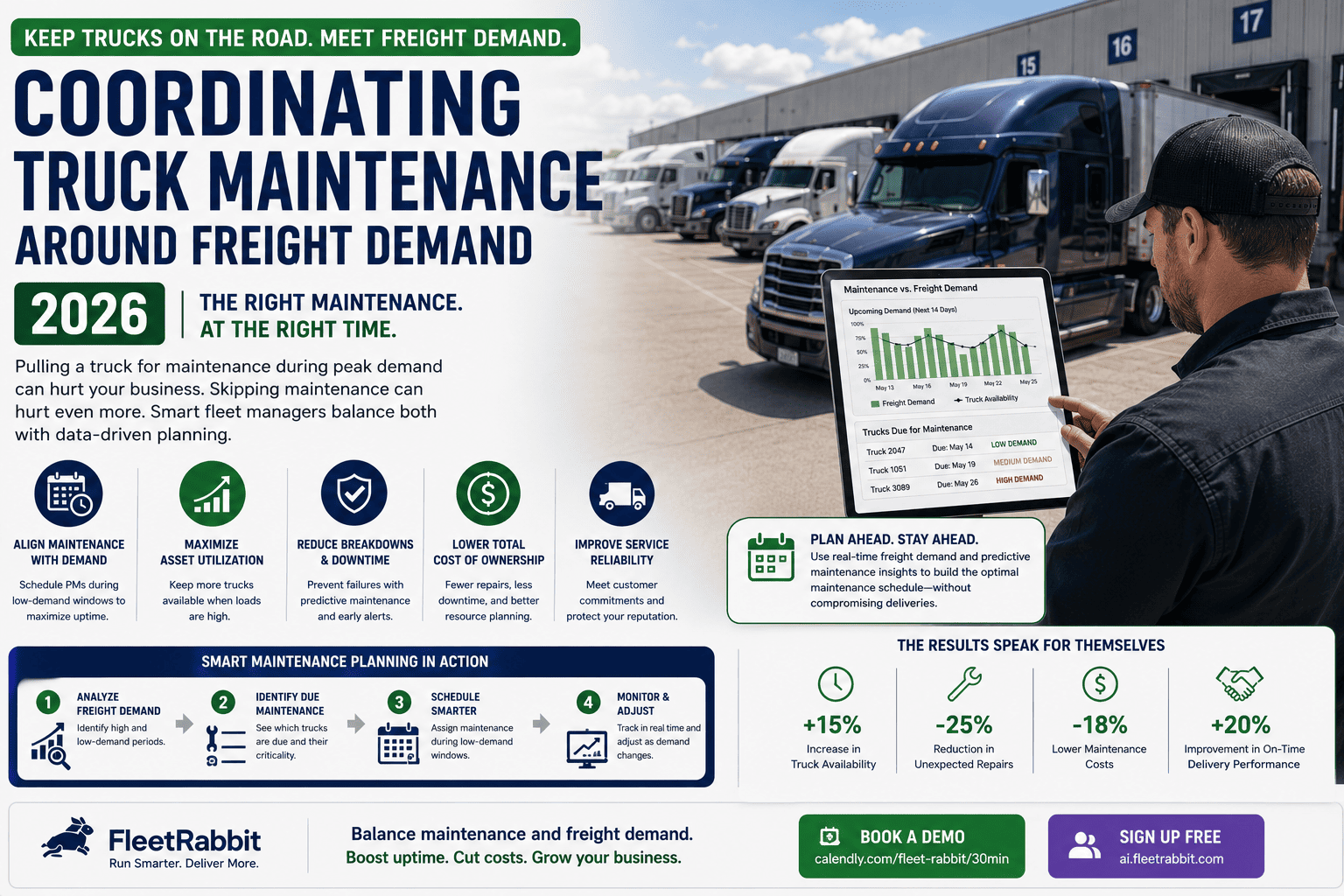
Coordinating truck maintenance with freight demand means scheduling major service during slow season and staggering routine service by mileage and engine hours instead of a fixed date. Fleets using demand-aware scheduling maintain around 95 percent uptime, compared with 80 percent in fleets using a one-size-fits-all batching schedule. Sign up for FleetRabbit to build a demand-aware maintenance calendar, or book a demo to see it applied to your fleet.
Why Calendar-Only Maintenance Fails During Freight Peaks
A fixed service date doesn't know your freight calendar. It just knows the last time a truck was in the shop, which is exactly why so many fleets get blindsided every peak season.
- Service dates fixed regardless of freight volume
- Major work often lands during peak, pulling trucks off routes
- Every unit batched into the same service week
- Breakdowns discovered mid-shift during high-demand runs
- Major service pushed into predictable slow periods
- Units staggered by mileage and hours, not one shared date
- Trucks flow through the shop in a steady rhythm all year
- Peak-season capacity protected before demand ever spikes
Planning for average demand creates peak-season breakdowns, so fleets need to build schedules, maintenance cycles, and capacity plans around their busiest months, not their quietest. That single shift in planning logic is what separates fleets that stay ahead of freight surges from the ones that scramble every time one arrives.
Build a Maintenance Schedule That Tracks Your Freight Calendar
FleetRabbit tracks mileage, engine hours, and route demand together, so service lands in your slow windows instead of your busiest weeks. Start your free trial to see a demand-aware schedule for your fleet, or book a 30-minute demo to walk through your 2026 calendar.
A Seasonal Maintenance Window for 2026
Slow Season, Heavy Service
January and February are the slowest months for most equipment types, making it the window to schedule annual DOT inspections, replace worn tires, and complete preventive maintenance before rates climb.
Front-Load Before the Ramp
Building maintenance schedules that front-load critical services before busy seasons protects capacity right as demand starts climbing.
Peak Freight, Light-Touch Only
Construction and produce freight both run at annual peak volume through summer, which is exactly when you want trucks staying on the road, not in the shop.
Holiday Surge, Minimal Disruption
Transition seasons are the best maintenance opportunity, so use the shoulder period before year-end retail pushes to catch anything that can't wait until January.
Staggering by Mileage and Hours, Not Just Dates
Every Truck Runs on Its Own Clock
Truck 07 might be due on a fixed date in July, but by mileage it's already running ahead of schedule in June, which moves it into an earlier service slot automatically. Staggering this way keeps the whole fleet from landing in the shop during the same week.
Running Three Triggers at Once
The professional standard is running mileage, engine hours, and calendar time simultaneously and servicing whichever trigger arrives first, since a truck that logs heavy idle hours needs attention even if it hasn't covered many miles.
Spreadsheets Are Where This Breaks Down
Running three service triggers at once sounds simple on paper but is almost impossible to track reliably with spreadsheets, which is exactly where most preventive maintenance programs quietly fail.
What Reactive Peak-Season Repairs Really Cost
When vehicles fail during peak seasons, fleets often need short-term rentals at inflated seasonal rates, driver overtime rises as routes compress, and customer contracts may carry penalties for missed service windows. None of that shows up on the repair invoice, which is exactly why it gets missed in most maintenance budgets.
Stop Losing Peak-Season Capacity to Preventable Repairs
FleetRabbit stages your 2026 maintenance calendar around your actual freight demand, keeping trucks out of the shop when you need them most. Create your free account to get started, or schedule a demo to map out your fleet's year.
Frequently Asked Questions
Freight demand will keep swinging every year, but your maintenance schedule doesn't have to be caught flat-footed by it. Fleets that plan around their busiest months instead of their quietest ones turn every peak season into routine business instead of an emergency. Sign up for FleetRabbit to build that calendar for 2026, or book a demo to see how it fits your fleet.
Keep Your Fleet Ahead of Every Freight Surge
FleetRabbit coordinates maintenance with mileage, engine hours, and seasonal freight demand, so your trucks are ready exactly when the market needs them.