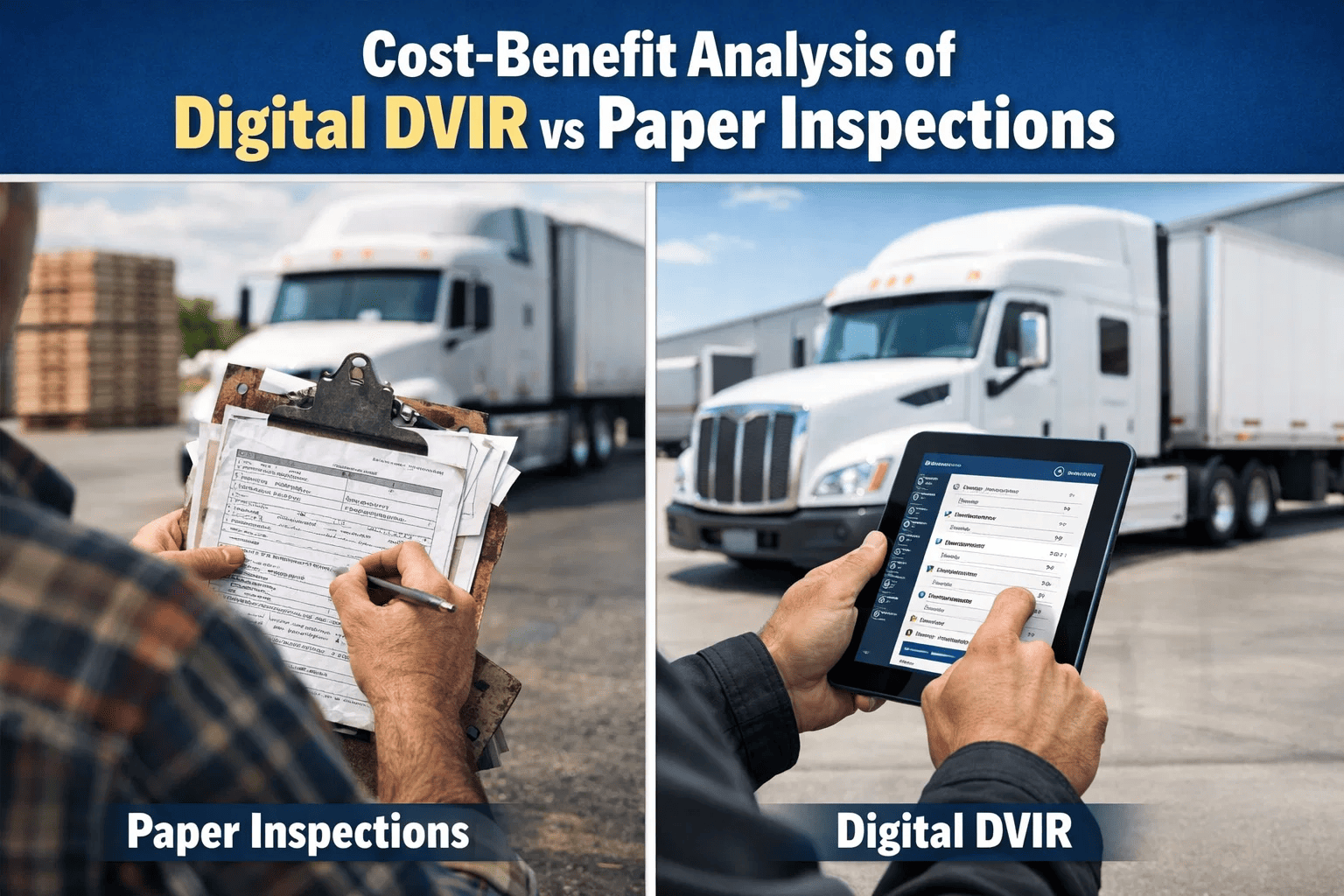
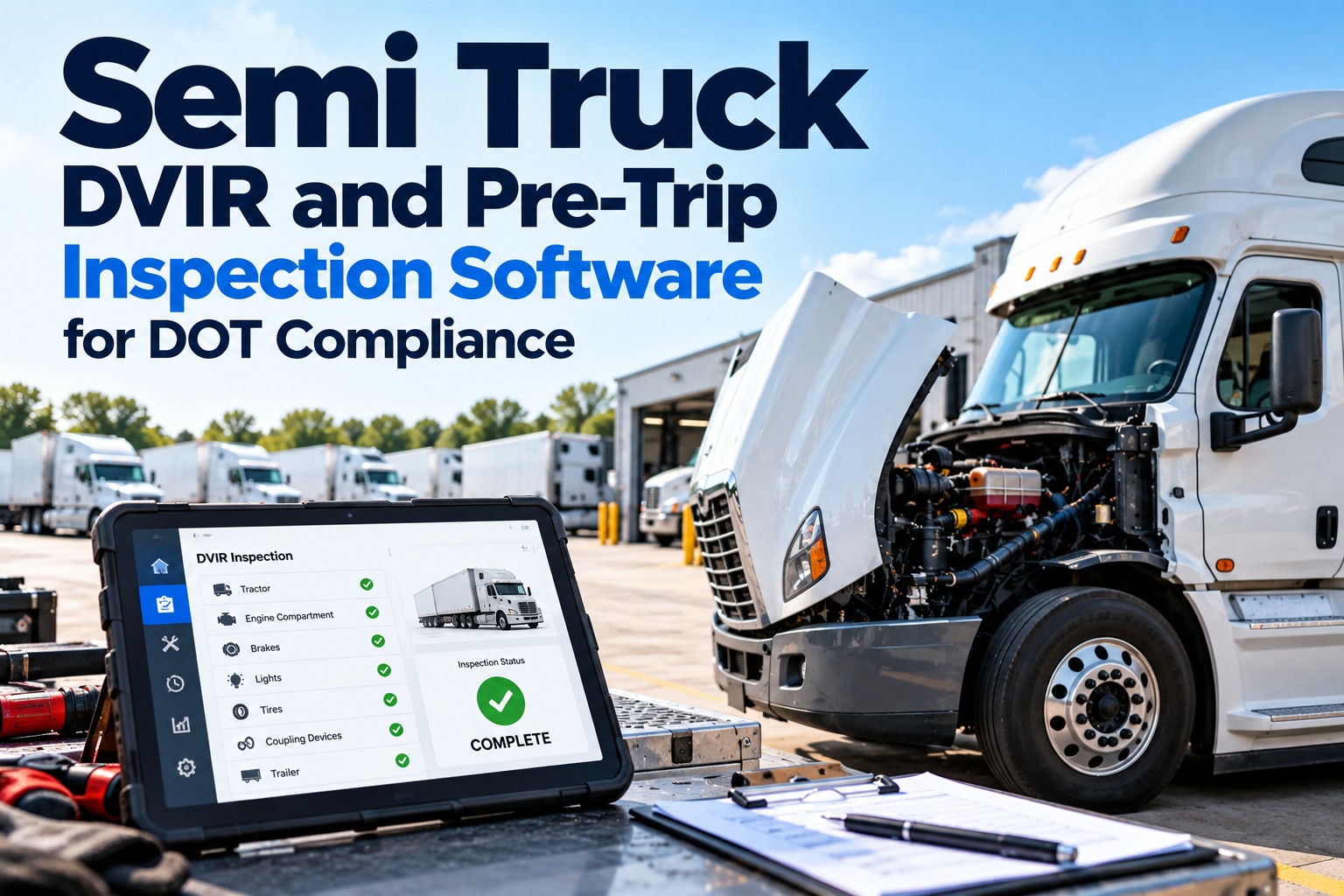
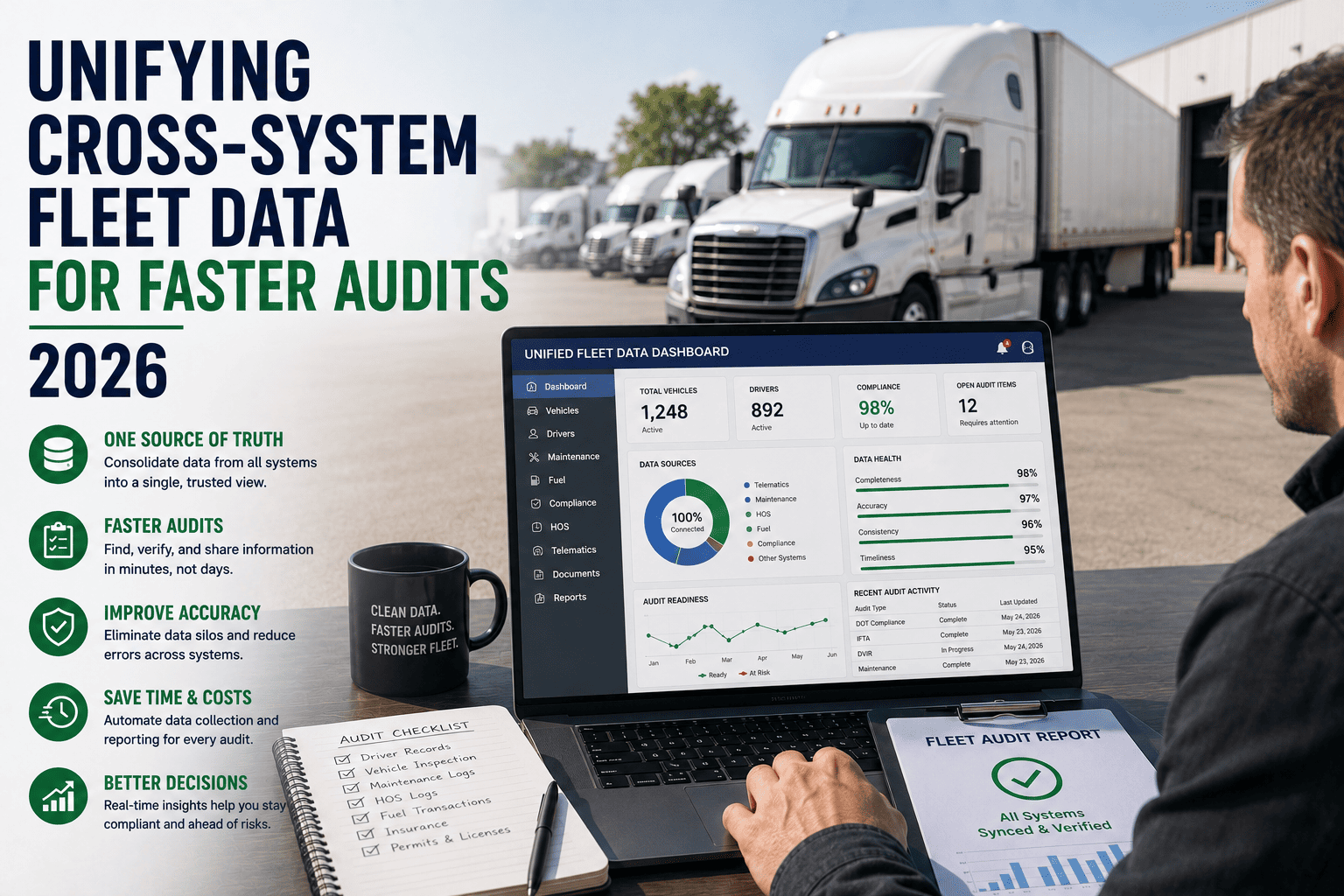
Paper DVIR inspections have served as the industry standard in commercial trucking for decades — but the operational cost of maintaining paper-based inspection workflows in modern fleet operations far exceeds the perceived cost of transitioning to digital systems. Fleet managers and transportation executives who have completed this analysis consistently find that digital DVIR platforms deliver measurable cost reductions within the first year of deployment, across direct administrative expenses, regulatory compliance risk, vehicle maintenance outcomes, and insurance claim outcomes. Book a demo to explore how FleetRabbit's digital DVIR platform reduces inspection costs and compliance risk across your fleet.
Cost Guide
Cost-Benefit Analysis of Digital DVIR vs Paper Inspections: A Comprehensive Guide for Trucking Fleet Managers and Executives Evaluating Inspection Technology Investment
FLEET OPTIMIZATION AND COST ANALYSIS
Digital DVIR vs Paper Inspections: The Complete Cost-Benefit Analysis for Transportation Fleet Operations in 2025
Every commercial vehicle inspection generates costs — the question is whether those costs are predictable, manageable, and producing measurable safety and compliance value, or whether they are unpredictable, administratively wasteful, and creating preventable regulatory and insurance exposure. Digital DVIR systems fundamentally change the economics of fleet inspection management by eliminating the hidden costs that paper inspection workflows carry across every dimension of trucking operations.
Understanding the True Cost of Paper DVIR in Trucking Operations
The direct cost of paper DVIR forms — printing, distribution, and physical storage — is only the most visible component of paper inspection expense. The true cost of paper-based inspection systems in commercial trucking includes administrative processing time, compliance error rates, inspection deficiency response delays, and the institutional cost of operating without aggregated inspection data that could inform maintenance and safety decisions.
$12–$22 per inspection
Estimated administrative labor cost per paper DVIR including driver form completion time, dispatcher review and filing, maintenance coordinator deficiency identification, and records management staff scanning and archiving. Fleets completing 100+ inspections daily accumulate $1,200 to $2,200 in daily administrative expense that digital workflows eliminate.
$1,270–$19,933 per violation
FMCSA civil penalty range for recordkeeping and inspection compliance violations identified during audits or roadside inspections. Paper DVIR systems are significantly more vulnerable to missing records, incomplete documentation, and inaccessible archived forms than digital systems with automated retention and instant retrieval capabilities.
24–72 hours average delay
Estimated average time between deficiency identification on a paper DVIR and awareness by maintenance staff when physical form routing is the notification mechanism. Digital DVIR systems notify maintenance coordinators at the moment of deficiency submission — eliminating routing delays that allow safety-relevant vehicle conditions to persist unaddressed across shifts or days.
$3,500–$12,000 annually
Estimated annual cost of physical DVIR record storage, scanning, archiving, and retrieval operations for fleets maintaining paper inspections over the minimum 90-day federal retention requirement. Digital records stored in cloud-based fleet management systems eliminate physical storage costs entirely while improving record accessibility and retrieval speed during audits.
The Digital DVIR Investment: What FleetRabbit Delivers and What It Costs
Digital DVIR implementation through FleetRabbit involves platform subscription costs and initial onboarding investment. The cost-benefit analysis requires comparing these transparent, predictable costs against the full range of paper inspection expenses — including both visible administrative costs and the hidden expenses of compliance risk, deficiency response delays, and missed maintenance intelligence.
01
Mobile-Based Digital Inspection Completion
Drivers complete structured inspection checklists on mobile devices with guided prompts that prevent skipped items and support photo documentation of deficiencies. Completion time for digital inspections is consistently shorter than paper equivalents because the digital workflow guides drivers through required items rather than relying on individual recall of inspection requirements. Mobile completion also eliminates the physical form distribution and collection logistics that paper systems require.
02
Automatic Deficiency Notification and Work Order Generation
When a driver records a deficiency in FleetRabbit's digital DVIR, the system automatically generates a maintenance notification and can create a work order for the repair workflow. This closed loop between inspection and maintenance eliminates the manual routing that paper systems require and reduces deficiency response time from hours or days to minutes after inspection submission. Faster deficiency response directly reduces the risk of vehicles operating in compromised condition between inspection and repair.
03
Centralized Digital Records With Instant Retrieval
All inspection records in FleetRabbit are stored in a searchable, cloud-based archive with instant retrieval by date, vehicle, driver, or deficiency type. During DOT roadside inspections or compliance audits, records that paper systems require minutes or hours to locate and produce are available to fleet managers in seconds through the FleetRabbit platform. Complete records accessibility reduces audit exposure and supports favorable regulatory outcomes.
04
Inspection Analytics for Maintenance Intelligence
Digital inspection data aggregated across the fleet reveals deficiency patterns by vehicle, route, and operational condition that paper systems cannot provide. Fleet managers using FleetRabbit's analytics can identify which vehicle units generate disproportionate inspection deficiencies, which component categories are generating recurring failure reports, and which routes correlate with accelerated wear patterns — enabling proactive maintenance prioritization that paper inspection data cannot support.
05
Driver Accountability and Compliance Visibility
FleetRabbit's DVIR dashboard gives fleet managers real-time visibility into inspection completion status across the entire driver pool — identifying which drivers have completed required inspections, which submissions have deficiencies pending maintenance response, and which vehicles have open deficiency issues that affect dispatch readiness. This visibility eliminates the blind spot that paper systems create between inspection submission and management awareness.
Calculate Your Fleet's Digital DVIR Savings
FleetRabbit's digital DVIR platform eliminates paper inspection administrative costs, reduces compliance risk exposure, and delivers inspection intelligence that paper systems cannot provide — at a predictable subscription cost that fleet managers can evaluate against current paper inspection expenses. Book a demo to review the ROI analysis for your fleet size and operational profile.
The Direct Financial Return: Where Digital DVIR Delivers Measurable ROI
The return on investment for digital DVIR implementation is realized across multiple financial categories. Fleet managers and CFOs evaluating digital inspection ROI should account for returns in each of the following areas when calculating total platform value against subscription cost.
Administrative Labor Reduction
40–65%
Reduction in inspection-related administrative labor hours after digital DVIR implementation, as driver completion time decreases, manual routing is eliminated, and records retrieval becomes instant rather than requiring physical search and scanning of archived paper forms.
Compliance Penalty Avoidance
Near Zero
Inspection recordkeeping violations attributable to missing or incomplete DVIR records in fleets using digital systems with automatic archiving — versus paper systems where records are susceptible to loss, damage, incomplete completion, and inaccessible storage during unscheduled audits.
Maintenance Cost Reduction
15–30%
Estimated reduction in unplanned maintenance costs in fleets where digital inspection deficiency data enables proactive maintenance intervention — identifying and resolving component issues before they progress to failure-level repairs that cost significantly more than early-stage service.
Insurance Claim Outcomes
Improved
Fleets with complete digital inspection records demonstrating proactive vehicle maintenance and safety compliance are in a materially stronger position during insurance claim processing and renewals than fleets relying on paper records that may be incomplete or unavailable when needed most.
Vehicle Uptime Improvement
8–18%
Estimated improvement in vehicle availability rates in fleets where faster deficiency identification and response reduces the duration of unplanned maintenance events — keeping more vehicles in revenue-generating service rather than awaiting reactive repairs that could have been addressed earlier.
Physical Storage Cost Elimination
100%
Complete elimination of paper DVIR storage space, filing supplies, scanning equipment, and archival labor costs when digital records replace physical documentation — with cloud retention providing compliant record storage that exceeds minimum federal retention requirements.
Implementation Pathway: Transitioning From Paper to Digital DVIR With FleetRabbit
The transition from paper to digital DVIR inspections is a defined operational process that FleetRabbit supports through structured onboarding, driver training resources, and implementation guidance based on fleet size and operational structure.
Step 1
Fleet Audit and Checklist Configuration
Document existing inspection requirements across all vehicle types in the fleet. Configure FleetRabbit digital inspection checklists to match vehicle-specific requirements, ensuring that inspection forms capture all federally required inspection items plus any fleet-specific safety items that current paper forms include. Vehicle-type-specific checklists ensure that tractor, trailer, and specialty vehicle inspections each address the appropriate component categories.
Step 2
Driver Mobile App Deployment and Training
Provision driver access to the FleetRabbit mobile application on company-issued or BYOD devices. Driver onboarding for digital inspection workflows focuses on app navigation, photo documentation of deficiencies, and submission procedures — training that most drivers complete in a single session. Digital inspection completion requires no additional certification beyond existing inspection knowledge, as the app guides drivers through each required item systematically.
Step 3
Maintenance Workflow Integration
Configure deficiency notification routing so that inspection deficiency alerts reach the appropriate maintenance coordinator or shop manager immediately upon driver submission. Establish work order generation procedures that connect inspection deficiencies to maintenance scheduling workflows, ensuring that deficiency-to-repair response timelines are defined, tracked, and visible to fleet management.
Step 4
Manager Dashboard Configuration and Reporting Setup
Configure fleet manager dashboard views to surface inspection completion rates, open deficiencies, pending work orders, and vehicle availability status. Establish automated reporting cadences that deliver inspection compliance summaries to fleet managers and executives on defined schedules — creating the management visibility that makes digital DVIR data operationally actionable rather than just archived.
Step 5
Compliant Paper Record Sunset and Digital Archiving
Manage the transition from paper records to digital archiving, ensuring that existing paper records within the minimum federal retention period are maintained in accessible form while new inspections are captured entirely in digital format. FleetRabbit's digital archiving meets or exceeds federal DVIR retention requirements, providing compliant record storage without the physical space and management costs of paper archives.
Common Questions About Digital DVIR Investment and Implementation
QIs digital DVIR legally compliant with FMCSA inspection requirements?
FMCSA regulations under 49 CFR Part 396 permit electronic DVIR systems that meet specific functional and retention requirements, including the ability to capture required inspection items, record driver acknowledgment of vehicle condition, document deficiency reporting, and maintain records for the minimum 90-day retention period. FleetRabbit's digital DVIR module is designed to meet FMCSA electronic record requirements. Fleet managers implementing digital DVIR should verify that their specific operational requirements and any state-specific regulations are addressed during the platform configuration process.
QHow do we handle inspections in areas with limited mobile connectivity?
FleetRabbit's mobile application supports offline inspection completion in areas with limited or no cellular connectivity. Inspection data captured in offline mode is stored locally on the driver's device and automatically synchronized to the fleet management platform when connectivity is restored — ensuring that remote facility departures or areas with limited network coverage do not create gaps in inspection documentation. Fleet managers should verify offline functionality requirements with the FleetRabbit implementation team during platform configuration for operations with significant remote routing.
QWhat is the typical payback period for digital DVIR implementation in trucking fleets?
Payback period for digital DVIR implementation varies based on fleet size, current paper inspection administrative costs, and the frequency of compliance-related expenses. Most trucking operations with 20 or more vehicles achieve positive ROI within 6 to 12 months of full deployment, with the largest contributors being administrative labor savings, compliance penalty risk reduction, and maintenance cost improvements from faster deficiency response. Fleets that experience a single significant compliance violation or preventable mechanical failure that digital inspection data could have prevented often recover the full implementation cost from a single avoidance event.
QCan FleetRabbit's digital DVIR integrate with our existing maintenance management system?
FleetRabbit provides an integrated fleet management platform where digital DVIR inspection data is natively connected to the maintenance management, parts inventory, and compliance modules within the same system. For fleets with existing maintenance systems, FleetRabbit's integration capabilities and the onboarding team can evaluate data exchange requirements. The native integration between inspection and maintenance within FleetRabbit eliminates the data transfer friction that exists when separate inspection and maintenance systems require custom integration to share deficiency and repair information.
Digital DVIR Performance Impact Summary
Cost Reduction
Administrative Inspection Costs
40–65% Lower
Per inspection administrative labor cost reduction after digital workflow implementation
Speed
Deficiency Response Time
Minutes vs Days
From inspection submission to maintenance awareness with digital versus paper routing
Compliance
Record Availability During Audits
Instant Retrieval
Digital records searchable and retrievable in seconds versus manual physical record location
Maintenance
Unplanned Repair Cost Reduction
15–30% Lower
Maintenance cost reduction from proactive deficiency response and pattern-based intervention
Conclusion: Paper DVIR Costs Are Higher Than They Appear
The transition from paper to digital DVIR is a cost-benefit decision that consistently favors digital implementation when the full range of paper inspection costs is properly accounted for. Administrative labor, compliance risk exposure, deficiency response delays, missed maintenance intelligence, and physical records management costs collectively represent a paper inspection expense that significantly exceeds the transparent subscription cost of digital DVIR platforms like FleetRabbit.
Fleet managers and executives who have made this transition report that the most significant realized benefit is often not the anticipated administrative labor savings — it is the improvement in vehicle condition visibility and maintenance response speed that digital inspection systems create, which in turn reduces the frequency of unplanned mechanical events that are both the most costly and the most operationally disruptive component of fleet operations management.
Eliminate Paper Inspection Costs With FleetRabbit Digital DVIR
FleetRabbit's digital DVIR platform replaces paper inspection workflows with mobile-based digital inspections that reduce administrative costs, accelerate deficiency response, provide instant compliance documentation, and deliver fleet-wide inspection intelligence that paper systems cannot produce — at a predictable subscription cost that delivers measurable ROI for transportation operations of all sizes.
Digital DVIR Inspections
Compliance Documentation
Deficiency Tracking
Maintenance Integration
Cost Reduction
Audit Readiness
April 17, 2026
By Jason Smith
All Posts