Dispatch efficiency is the invisible lever that separates high-margin trucking operations from those fighting to break even. A driver sitting idle for 45 minutes between assignments costs $48–$60 in wasted time. A poorly planned route adds 60–90 miles of deadhead per run. Multiply those losses across 30 drivers over 250 operating days and the number becomes impossible to ignore. FleetRabbit's dispatch and route planning tools give fleet managers and operations executives the visibility and control to eliminate preventable inefficiency from every load cycle. Book a demo to see how FleetRabbit optimizes dispatch for your operation.
Quick Answer
FleetRabbit's dispatch module filters driver availability by real-time HOS hours, vehicle maintenance status, and load requirements — preventing assignment errors, reducing driver idle time by 22%, and eliminating the 38% of HOS violations caused by dispatchers assigning loads without checking hours availability. Load scheduling, driver communication, and delivery tracking all connect in one platform.
The Operational Cost of Inefficient Dispatch
Every dispatch error has a dollar value. Fleet executives who quantify these losses consistently find that dispatch inefficiency is their second-largest controllable cost after fuel — and unlike fuel prices, dispatch quality is entirely within management control.
$60/hr
Cost of Driver Idle Time
38%
HOS Violations From Dispatch Errors
22%
Less Idle Time With FleetRabbit Dispatch
$1K–$16K
HOS Violation Fine per Infraction
Common Dispatch Problems That Kill Fleet Margin
01
Assigning Loads Without Checking HOS Hours
Dispatchers manually managing driver hours across a 20+ truck fleet make estimation errors that generate HOS violations. Each violation triggers FMCSA fines and CSA score damage that persists for 24 months — raising insurance premiums and increasing roadside inspection frequency.
02
No Real-Time Visibility Into Vehicle Maintenance Status
Dispatch coordinators assigning loads to trucks flagged for maintenance create breakdown risk on the road. Without real-time vehicle status integration, dispatchers can't see which trucks are cleared for departure versus scheduled for shop service — creating preventable breakdowns that cost $2,900–$4,800 per event in lost revenue.
03
High Deadhead Mileage From Reactive Load Planning
Fleets that manage loads reactively — assigning the nearest available driver rather than the most efficient available driver — accumulate deadhead miles that inflate cost per mile. At $0.42–$0.55 per deadhead mile, a 50-truck fleet running 60 empty miles per day per truck spends $756,000–$1,007,000 annually on miles that generate no revenue.
04
Communication Gaps Between Dispatch and Drivers
Phone-based dispatch communication creates documentation gaps — load instructions get miscommunicated, delivery changes don't reach drivers, and exception events go unreported until they become service failures. Manual communication overhead consumes 45–90 minutes per dispatcher per day that automated systems eliminate entirely.
How FleetRabbit Streamlines Dispatch From Assignment to Delivery
Step 1
HOS-Filtered Driver Pool
When a dispatcher creates a load, FleetRabbit instantly filters available drivers by remaining HOS hours relative to estimated run time. Drivers with insufficient hours are automatically excluded — eliminating the assignment errors that cause 38% of all HOS violations before they happen.
Step 2
Vehicle Availability Cross-Check
Each available truck's maintenance status is visible in dispatch — scheduled PM dates, open work orders, and out-of-service flags are cross-referenced in real time so dispatchers never assign a load to a vehicle that should be in the shop.
Step 3
Load Assignment and Driver Notification
Load details, pickup address, delivery instructions, and special requirements are sent directly to the driver's mobile app — no phone call required. Drivers acknowledge the assignment digitally, creating a timestamped record of load acceptance and instruction delivery.
Step 4
Real-Time Status Tracking
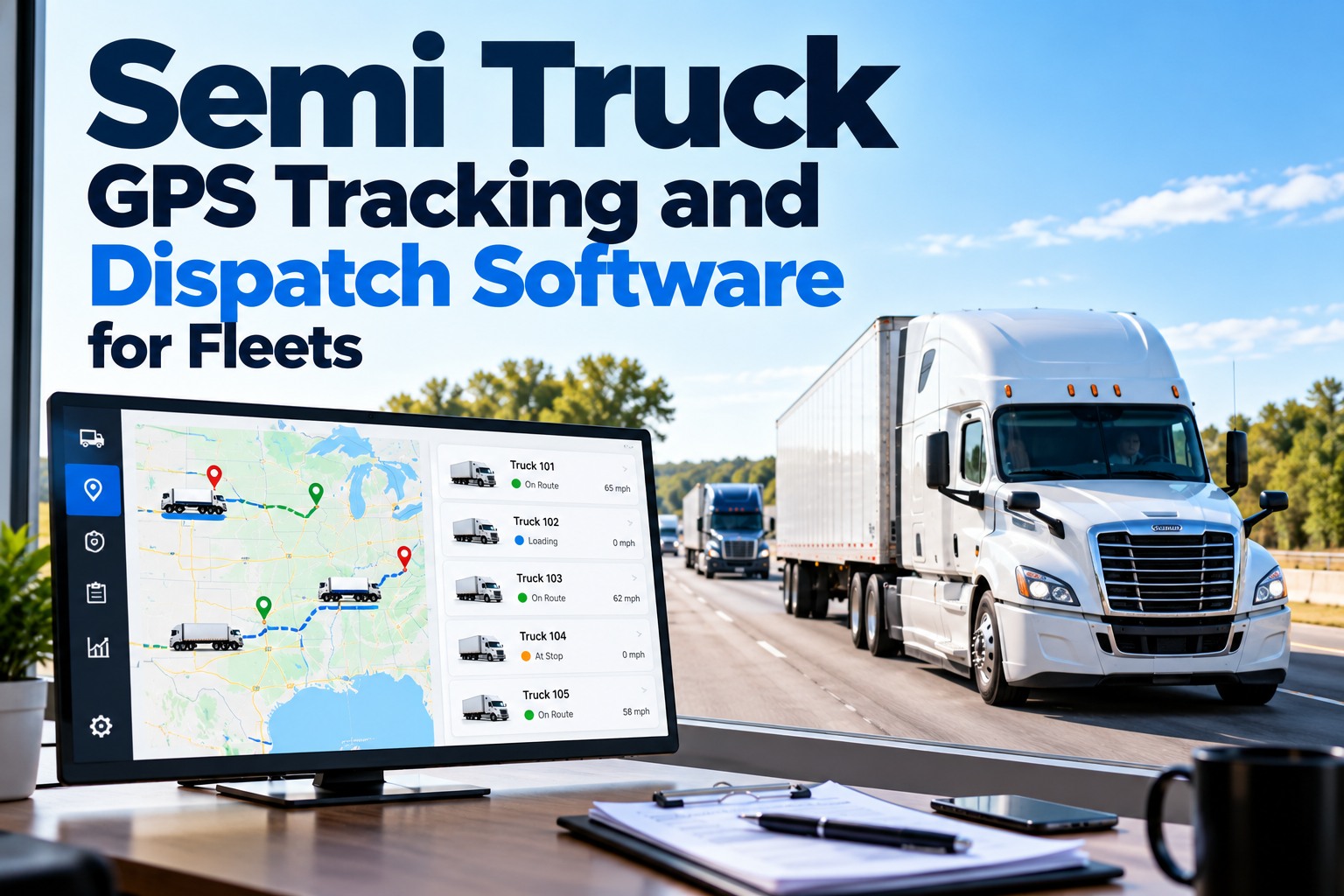
Dispatchers track active loads from assignment through delivery — seeing driver location, ETA updates, and exception alerts from a single operations board. Late delivery risk is visible before the customer calls, enabling proactive exception management that protects service level agreements.
FleetRabbit Dispatch vs Manual Dispatch Operations
Without FleetRabbit
Driver hours checked manually — estimation errors cause HOS violations
Vehicle status unknown at assignment — breakdowns assigned unknowingly
Load instructions via phone — no documentation trail
No delivery tracking — exceptions discovered after service failure
Deadhead driven by proximity, not efficiency — excess empty miles
HOS violations create CSA score damage lasting 24 months
With FleetRabbit
HOS filtering excludes ineligible drivers before assignment
Maintenance status visible in dispatch — no improper assignments
Digital load delivery with driver acknowledgment — full audit trail
Live tracking with ETA and exception alerts — proactive management
Driver efficiency score and hours data inform optimal assignment
91% reduction in dispatch-origin HOS violations
22%
Less Driver Idle Time
91%
HOS Violations Eliminated
$0
Phone-Based Dispatch Required
100%
Load Instructions Documented
FleetRabbit Dispatch
Replace Dispatch Errors With Automated, Compliance-Aware Load Assignment
FleetRabbit connects driver HOS status, vehicle maintenance availability, and load requirements in one dispatch interface — so every assignment decision is informed, compliant, and tracked. Over 1,000 fleet teams rely on FleetRabbit to eliminate the operational gaps that inflate cost per mile and generate compliance risk. Book a personalized demo to see the full dispatch system applied to your fleet size and route structure.
1,000+
Fleet Teams on FleetRabbit
$60/hr
Driver Idle Cost Eliminated
Frequently Asked Questions — Dispatch and Route Management
QHow does FleetRabbit determine driver availability for dispatch assignments?
FleetRabbit pulls real-time HOS data from ELD integration to calculate each driver's remaining drive time, on-duty window, and reset status. The dispatch interface shows available hours per driver dynamically — updating as drivers log on-duty and off-duty time throughout the day. Dispatchers see only drivers who have sufficient hours for the specific load's estimated drive time, preventing assignment errors at the source.
Review your ELD setup in a demo call.
QCan FleetRabbit dispatch integrate with our existing load management or TMS system?
FleetRabbit supports integration with transportation management systems and load boards via API. Load data can flow into FleetRabbit automatically — populating assignment queues without manual entry. For fleets using existing TMS platforms, the FleetRabbit integration layer imports load details and exports completion confirmation, maintaining data consistency between systems without duplicate entry.
QWhat happens when a driver can't complete an assigned load due to hours running out?
FleetRabbit alerts dispatchers when a driver's available hours drop below what's needed to complete an active load — providing enough lead time to arrange a handoff to a qualified relief driver. The alert includes the driver's reset time, the nearest available replacement with sufficient hours, and the current load status — enabling proactive resolution before a service failure occurs.
Start your free trial to activate HOS-aware dispatch today.
April 9, 2026
By Smith
All Posts