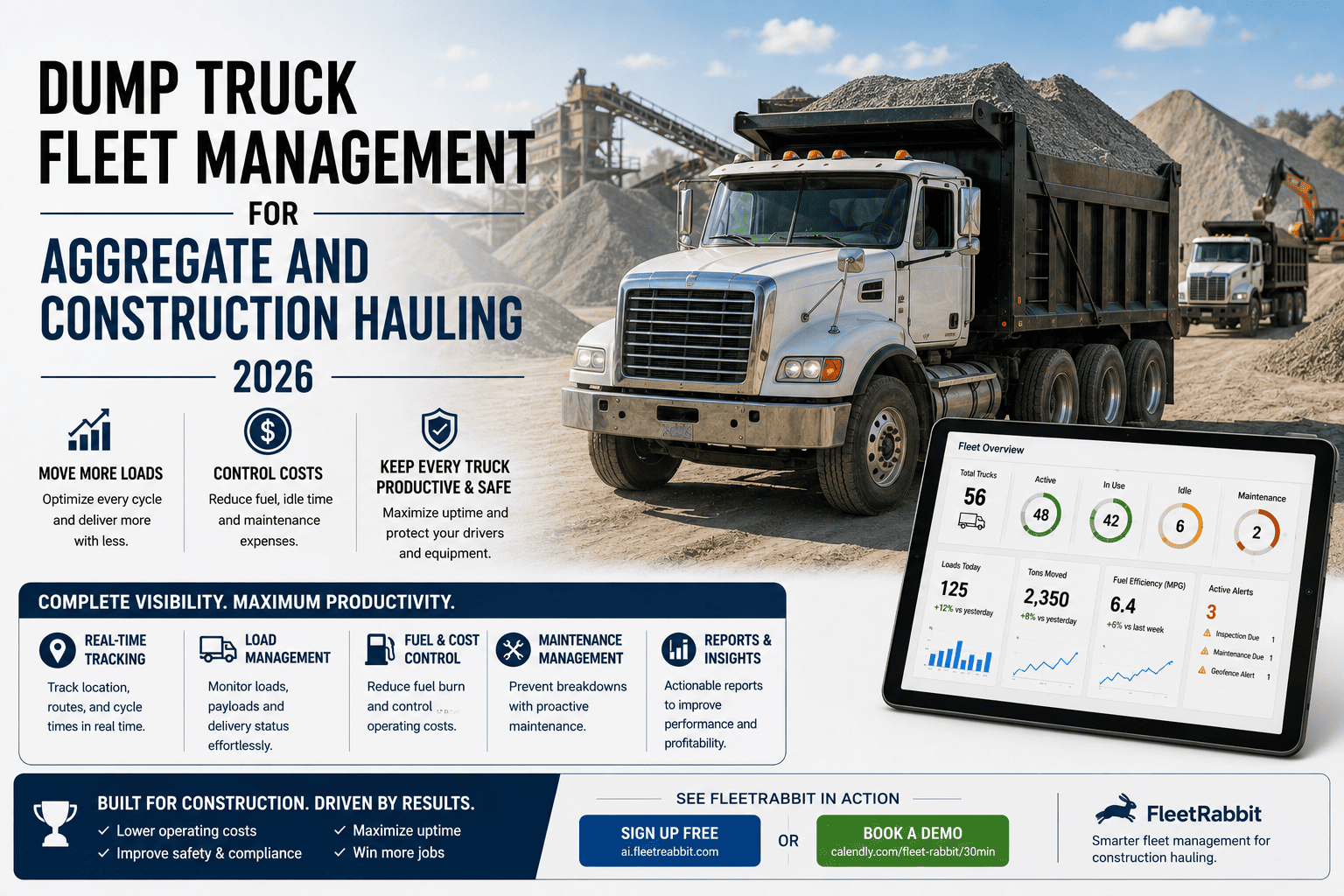
A dump truck sitting idle on a job site is not just parked, it is burning 448 to 760 dollars a day in lost productivity while a paper ticket sits in someone's cab and dispatch has no idea where the next load is coming from. That is still the daily reality for the vast majority of aggregate and construction hauling operations, where more than 90 percent run on pencil, paper, spreadsheets, and radio calls. Dump truck fleet management brings dispatch, payload tracking, maintenance, and compliance into one system built specifically for the dirt, dust, and deadlines of hauling work, instead of a generic trucking platform bolted onto a job it was never designed for. Sign up for FleetRabbit to see what your hauling operation looks like with everything on one dashboard.
Idle dump trucks cost 448 to 760 dollars a day in lost productivity, and 45 percent of operators name maintenance costs as their biggest operational drag. Fleets that move to digital dispatch and telematics report 26 percent better delivery efficiency and 19 percent less idle time, while structured PTO and tire monitoring cuts hydraulic breakdowns by up to 42 percent and extends tire life by 35 percent.
The Five Pillars Of Managing A Dump Truck Fleet
Aggregate and construction hauling has operational demands generic fleet software rarely accounts for. These five areas cover what actually moves the needle on a hauling operation's margin.
Dispatch And Load Tracking That Actually Reflects Reality
Paper tickets and radio-based dispatch are the biggest single source of lost visibility in hauling operations. A load gets picked up, but the ticket does not reach the office until end of shift, and by then a scheduling decision that could have saved a truck an hour has already been missed.
Digital Tickets Replace The Paper Trail
Load tickets captured digitally at pickup and delivery sync in real time, so billing and reconciliation reflect what actually happened that day instead of what a driver remembered to write down.
Dispatch Decisions Made On Live Data
Knowing exactly where every truck is and how far into its cycle it sits lets dispatch reroute or reassign in seconds instead of waiting on a radio call that may not come for twenty minutes after a breakdown or delay.
Maintenance Built Around How Dump Trucks Actually Fail
Highway trucks and dump trucks fail differently. A generic maintenance schedule tracks mileage. A dump truck needs PTO cycles, hydraulic pressure trends, body integrity, and rough-terrain tire wear tracked specifically, because these are where hauling-specific breakdowns actually originate.
PTO And Hydraulic Monitoring
Monitoring PTO engagement cycles and hydraulic pressure trends lets a team schedule fluid changes and seal replacements before a failure happens instead of after. Fleets doing this reduce hydraulic breakdowns by up to 42 percent.
Tire Life Depends On Structured Monitoring, Not Habit
Tracking tread depth per tire and flagging underinflation, then optimizing rotation schedules from that data, extends tire lifespan by roughly 35 percent compared to reactive, as-needed replacement on rough haul terrain.
| Operational Area | Paper And Radio Approach | Digital Fleet Management |
|---|---|---|
| Load Tickets | Written tickets reconciled at end of shift, prone to loss or delay | Digital tickets sync in real time from pickup to delivery |
| Breakdown Response | Dispatch finds out after a driver calls, often 20+ minutes later | Live GPS and status alerts flag issues as they happen |
| Maintenance Scheduling | Mileage-based reminders that miss PTO and hydraulic wear | Service triggers by hours, cycles, and condition data |
| DOT Compliance | Manually tracked expiration dates across spreadsheets | Automatic alerts 30, 14, and 7 days before due dates |
FleetRabbit brings dispatch, digital load tickets, PTO and hydraulic monitoring, and DOT compliance into one platform, so nothing about your dump truck fleet depends on a radio call or a paper ticket anymore.
What Unmanaged Dump Truck Operations Actually Cost
Fuel drives roughly 40 percent of all operational decisions in heavy hauling, and 45 percent of operators cite maintenance costs as a major operational drag, yet most of that spend is still managed reactively rather than tracked against real data. An idle truck on a job site burns 448 to 760 dollars a day in lost productivity alone, before counting the fuel, wages, and missed cycles that come with it. For a 15-truck operation, even a few unnecessarily idle days a month across the fleet adds up to tens of thousands of dollars a year sitting in plain sight.
Where The Recoverable Value Actually Sits
Payload per cycle, hydraulic uptime, tire lifespan, and DOT compliance are the four levers that consistently separate profitable hauling operations from ones running on thin margins. None of them require new trucks or new contracts to improve, only better visibility into what the existing fleet is already doing every shift.
Book a demo through FleetRabbit's scheduling page to see how these numbers translate to your specific fleet size and haul routes.
Key Takeaways On Managing A Dump Truck Fleet
Aggregate and construction hauling still runs largely on paper, radio, and habit, even though the margin lives in details that only real data can surface: payload per cycle, hydraulic uptime, tire lifespan, and DOT compliance. Every idle truck, missed cycle, and reactive repair is a cost that was avoidable with the right visibility in place.
Fleets that bring dispatch, maintenance, and compliance onto one platform see measurably better delivery efficiency and idle time, along with fewer hydraulic failures and longer tire life. The gap between a hauling operation running on gut instinct and one running on data is not a small one, and it shows up directly in the bottom line every single shift.
FleetRabbit combines dispatch, digital load tickets, PTO and hydraulic health monitoring, and DOT compliance for aggregate and construction hauling fleets of any size. See exactly where your trucks, your payload, and your maintenance dollars are actually going.