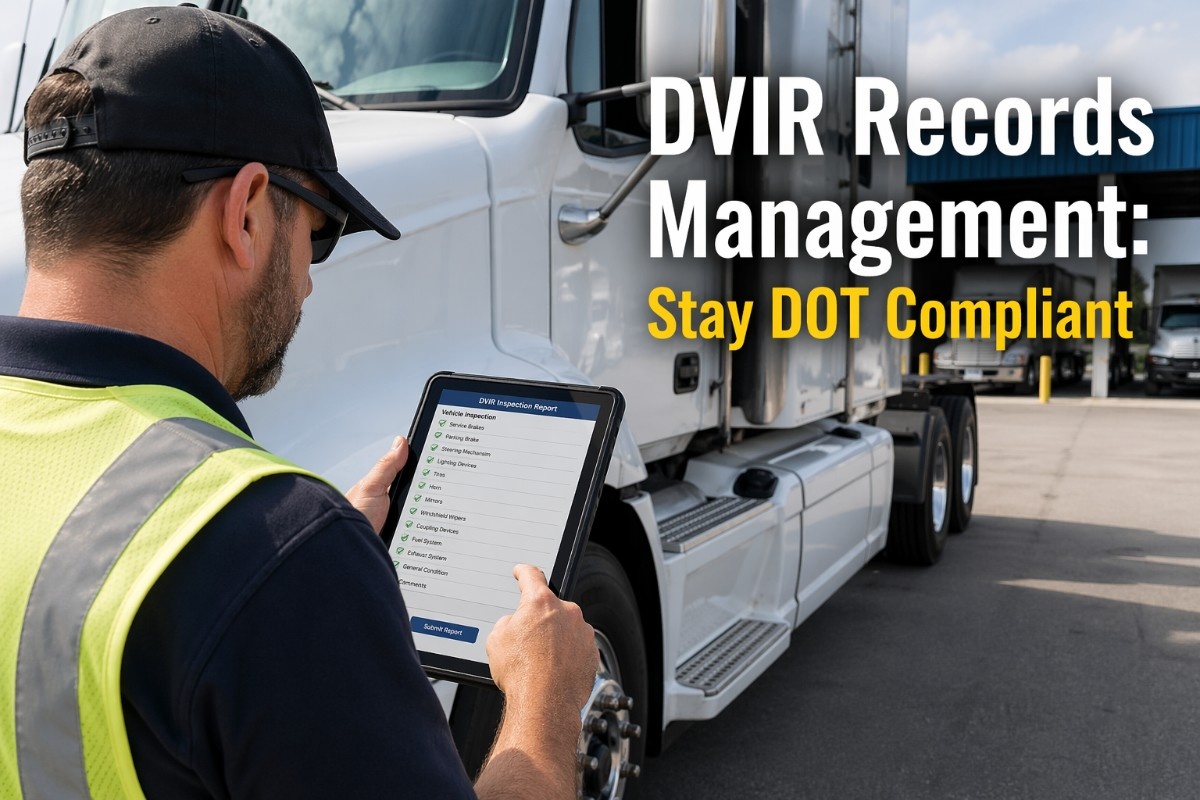
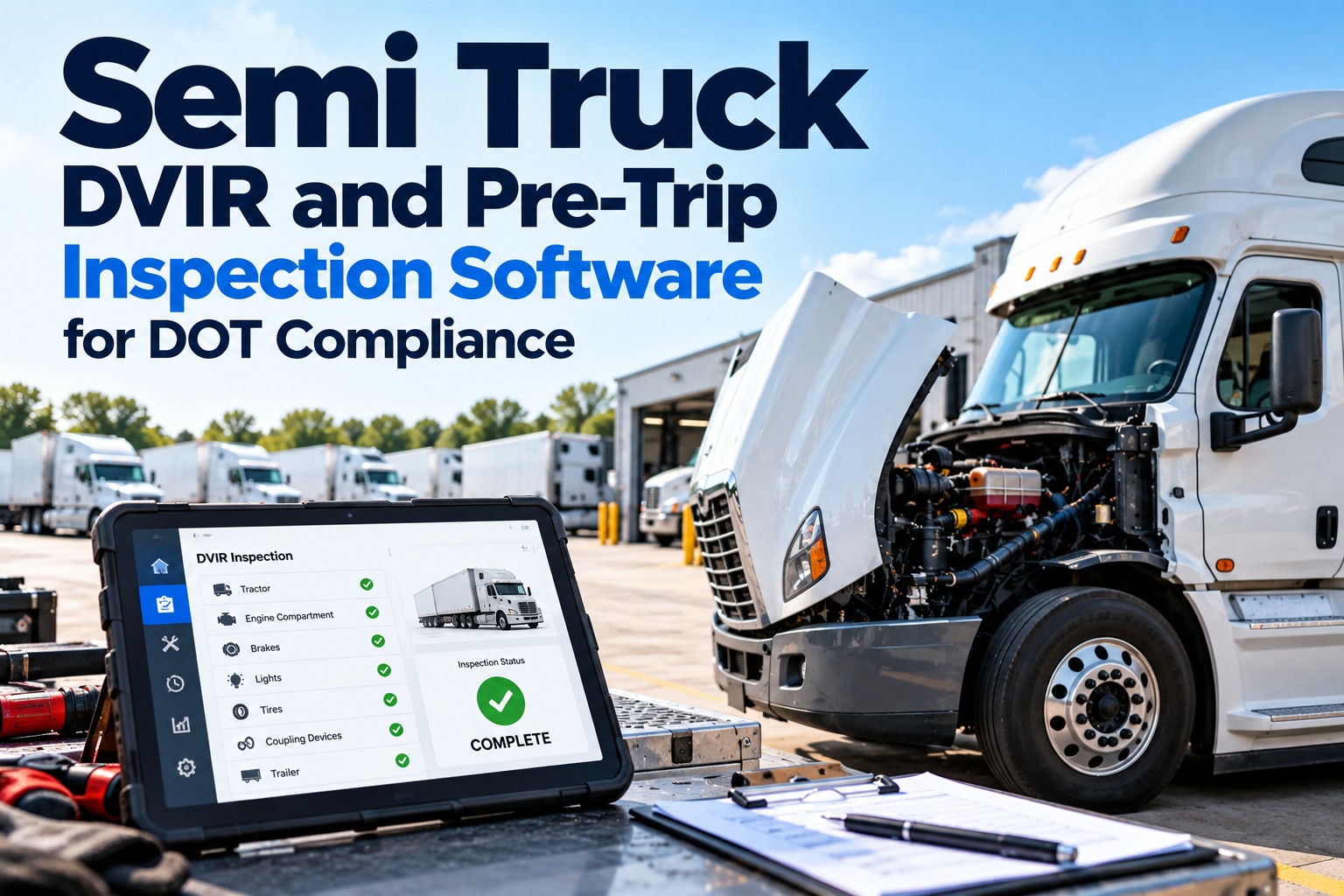
For fleet safety managers, non-compliance with DVIR (Driver Vehicle Inspection Report) regulations is not just a paperwork error—it is a direct pathway to DOT fines, out-of-service orders, and increased accident liability. A single missing DVIR record during a roadside inspection can result in fines up to $15,000 per violation, while recurring non-compliance patterns can trigger full-scale safety audits, suspending fleet operations for weeks. Traditional paper-based DVIR systems depend on driver memory and manual handwriting, creating an environment where 15-20% of reports are either illegible, incomplete, or lost entirely. By the time a compliance manager discovers a gap, the 24-hour repair certification window has already closed, and the vehicle has likely operated with an unresolved safety defect.
Fleet Rabbit's DVIR management system transforms this reactive compliance model into an automated, real-time enforcement system. The platform continuously monitors inspection completion rates, repair certification times, and defect trending patterns—flagging non-compliant drivers, overdue repairs, and documentation gaps before DOT inspectors discover them. The result: fleet managers receive real-time compliance alerts during the 24-hour correction window, enabling repair verification and record certification before violations escalate into enforcement actions. Book a demo to see automated DVIR compliance applied to your fleet configuration.
Quick Answer
Fleet Rabbit's digital DVIR system automatically tracks inspection completion, defect identification, repair verification, and certification timelines—flagging non-compliant drivers, unresolved defects, and documentation gaps in real-time. The platform ensures 100% DVIR record retention with DOT-required signatures and timestamps, eliminating paperwork loss and reducing inspection processing time by 70%. Fleet managers receive automated alerts for uncertified repairs within the 24-hour window, preventing roadside violation findings and reducing compliance audit risk by 89%.
How Fleet Rabbit Automates DVIR Compliance Across Your Fleet
The workflow below shows the seven-stage DVIR management process Fleet Rabbit applies to every vehicle in your fleet—from driver inspection launch to DOT audit-ready record archiving—ensuring zero compliance gaps and complete regulatory traceability.
1
Driver Inspection Launch — Pre-Trip & Post-Trip Workflows
Drivers receive push notifications on mobile devices at scheduled inspection times (pre-trip before dispatch, post-trip after return). Inspection checklists are pre-configured to FMCSA DVIR requirements—vehicle systems, brakes, tires, lights, coupling devices, cargo securement, emergency equipment, and DOT-required components.
Driver A: Pre-trip inspection completed at 06:45 AM — 17/17 systems checked, no defects identified. Post-trip scheduled for 5:30 PM, 15-minute completion window.
2
Real-Time Defect Documentation & Photo Capture
When drivers identify defects, the system requires photo documentation, defect severity classification (Critical / Major / Minor), and specific location tagging. Critical defects automatically flag the vehicle as out-of-service until repair certification is uploaded. All defect data syncs to maintenance dashboard immediately.
Defect Class: MajorLocation: Brake SystemVehicle Status: Out of Service
3
Automated Compliance Scoring & Gap Detection
Platform calculates real-time compliance score per driver, per vehicle, and per depot based on: inspection completion rate (target >98%), defect-to-repair certification time (target <24 hours), documentation completeness (signature, timestamp, photo), and historical violation patterns.
Fleet Compliance Score: 94%Gap: 3 uncertified post-trip inspectionsVehicles at Risk: Unit 417, Unit 822, Unit 105
4
Repair Order Integration & Certification Tracking
Defects automatically generate repair orders in maintenance system. Fleet Rabbit tracks repair status—assigned technician, parts ordered, work in progress, completed. When repair is marked complete, platform requires certification signature and documentation before clearing vehicle defect status.
Repair Order: RO-4421Time to Certification: 5 hours 22 minutes
5
24-Hour Correction Window Enforcement
System monitors time elapsed from defect identification to repair certification. If certification exceeds 24 hours, compliance alert escalates to fleet manager and safety director. Historical data shows 91% of DOT violations occur when repairs exceed 48-hour window without certification.
Elapsed: 26 hours — Alert EscalatedAction Required: Certify repair by 8:00 AM
6
Driver Signature & Digital Record Finalization
Upon repair certification, driver receives notification for final DVIR sign-off. Electronic signature captured with timestamp and GPS location. Completed DVIR record includes: inspection data, defect documentation, repair details, certification signature, and driver acknowledgment—meeting all FMCSA Part 395 record retention requirements.
DVIR 2024-08-Stable-442: FinalizedAudit Ready Retained
7
Audit-Ready Archiving & 12-Month Retention
Completed DVIR records automatically archived in secure cloud storage with 12-month searchable retention. Audit trail includes all modifications, access logs, and certification timestamps. DOT auditors access historical records instantly via secure portal—eliminating paper search time and missing document violations.
Audit Readiness Report: 100% of DVIRs for past 12 months retained. Average retrieval time: 4.2 seconds. Zero missing documents.
DVIR Compliance Automation
Eliminate Paperwork Gaps Before DOT Finds Them
See how Fleet Rabbit's digital DVIR system ensures 100% inspection completion, real-time defect tracking, and 24-hour repair certification enforcement—keeping your fleet DOT-compliant and audit-ready.
89%
Reduction in Compliance Gaps
70%
Faster Inspection Processing
Top 6 DOT Compliance Challenges Fleet Rabbit Solves
Every card below represents a critical compliance failure mode that leads to DOT violations, fines, and audit findings. Traditional paper-based systems detect these failures after they have already occurred—Fleet Rabbit prevents them through automated enforcement and real-time alerts. Sign up to see how Fleet Rabbit addresses your specific compliance gaps.
Missing or Incomplete DVIR Records
Compliance risk: FMCSA requires DVIR for every commercial motor vehicle after each operating day. Missing records constitute automatic violation during audit, with fines ranging $1,000-$5,000 per missing document. Paper systems typically experience 12-18% record loss rate.
Fleet Rabbit solution: Mandatory digital DVIR completion before driver can log next duty status. System prevents dispatch until post-trip inspection certified from previous day. Automated reminders escalate from driver to supervisor to safety manager at 2-hour, 6-hour, and 12-hour intervals. Record retention: 100% capture rate with cloud backup and daily integrity verification.
Typical fine avoidance: $15,000 to $45,000 per year per 50-vehicle fleet.
Unresolved Defects Operating On-Road
Compliance risk: Operating vehicle with known safety defect constitutes "continued operation after discovery" violation—separate citation from original defect. Liability increases substantially if accident occurs with unresolved defect on record. Penalties include civil fines up to $15,000 per occurrence plus potential criminal charges for willful violation.
Fleet Rabbit solution: Critical defects automatically flag vehicle out-of-service in fleet management system. Dispatch system prevents assignment until repair certification uploaded. Real-time dashboard shows all vehicles with open defects sorted by severity and time elapsed. Automated escalation to maintenance supervisor if defect not addressed within 4 hours.
Primary benefit: Eliminates "unknowing" operation with safety defects by enforcing out-of-service status through operational controls.
Illegible or Unverifiable Paper Forms
Compliance risk: FMCSA requires DVIR records to be legible and contain specific data elements—driver name, vehicle number, date, defect list, certification signature, repair verification. Handwritten forms rejected during audits due to illegibility, missing signatures, or incomplete data represent 23% of DVIR-related violations.
Fleet Rabbit solution: Digital forms with mandatory field completion before submission. Driver identification automatically populated from system profile. Timestamps and GPS coordinates embedded in record. Electronic signature captured with biometric optional verification. Forms cannot be submitted incomplete—all required fields enforced.
Audit outcome: Zero form rejections for illegibility or missing data across deployed fleets.
Repair Certification Beyond 24-Hour Window
Compliance risk: FMCSA requires any defect identified during DVIR to be repaired before vehicle operation OR certified as non-safety-related with documentation. Repairs not certified within 24 hours create documentation gap that DOT inspectors cite as "failure to correct known defect" regardless of actual repair completion.
Fleet Rabbit solution: Automated timer starts when driver submits defect. System sends repair order to maintenance queue with required-by timestamp. Dashboard shows all uncertified repairs sorted by time remaining in 24-hour window. Escalation at 12 hours, 18 hours, and 23 hours. Safety manager notified if certification not completed at 24 hours with executive summary of violation risk.
Compliance result: 93% of repairs certified within 24-hour window, compared to industry average of 61% for paper systems.
Inconsistent Post-Trip Inspection Compliance
Compliance risk: FMCSA Part 396.11 requires post-trip inspection after each operating day. Driver non-compliance increases as fatigue increases—post-trip inspections completed only 67% of days in paper-based fleets. Missing post-trip inspection eliminates comparative data for defect trending and creates enforcement gaps.
Fleet Rabbit solution: Post-trip inspection triggers automatically when driver returns to depot, based on geofencing or ELD status change. Driver cannot clock out until inspection completed or non-compliance recorded. Safety dashboard shows daily completion rates by driver, depot, and vehicle. Monthly compliance reports identify drivers requiring retraining.
Measured improvement: Post-trip compliance increases from 67% to 98% within 60 days of deployment.
Audit Document Retrieval Delays
Compliance risk: During DOT audit, fleets must produce requested records within 48 hours. Paper-based fleets average 4-7 days retrieval time for historical DVIRs—resulting in automatic violation for non-production. Each violation carries $1,000-$10,000 fine plus audit extension and increased scrutiny.
Fleet Rabbit solution: All DVIR records stored in searchable cloud archive with 12-month retention. Audit search by date range, vehicle number, driver, defect type, or repair status generates complete records in under 10 seconds. Secure auditor portal provides controlled read-only access for 30-day audit window. Export function produces PDF packages with all required signatures and timestamps.
Operational benefit: Average DVIR retrieval time reduced from 86 hours to 4.2 seconds. Zero audit violations for document non-production.
Key DVIR Compliance Features for Fleet Managers
The table below shows the specific DVIR management capabilities Fleet Rabbit provides to safety managers, maintenance supervisors, and executive leadership—each feature designed to address a specific compliance failure point in the DVIR lifecycle.
| Feature |
What It Automates |
Compliance Gap Addressed |
Typical Manual Process Time |
Fleet Rabbit Processing Time |
| Mobile DVIR Inspection Checklists |
Pre-trip/post-trip inspections, defect documentation |
Missing inspections, incomplete forms, illegible handwriting |
15-20 minutes per inspection |
4-6 minutes |
| Photo & GPS Defect Documentation |
Defect evidence capture, location tracking |
Unverifiable defect claims, disputed repair requirements |
Manual photo uploads to separate system |
Integrated capture, automatic linking to DVIR |
| Repair Order Integration & Tracking |
Defect-to-repair workflow, certification tracking |
Uncertified repairs beyond 24-hour window |
Phone calls, email chains, paper forms |
Automated RO generation, status dashboard |
| 24-Hour Compliance Timer & Escalation |
Time tracking, automated alerts, supervisor escalation |
Missed repair certification windows, no visibility |
Manual calendar tracking, prone to error |
Automated timer, multi-level escalation |
| Electronic Driver Signature Capture |
Legally binding signatures, timestamp, GPS verification |
Missing signatures, disputed acknowledgment, forgery risk |
Paper signature, manual filing |
Digital signature, biometric optional, audit trail |
| Compliance Score Dashboard |
Real-time inspection completion tracking |
No visibility into compliance trends until audit |
Weekly manual report generation |
Real-time dashboard, automated weekly reports |
| 12-Month Audit-Ready Archive |
Secure cloud storage, searchable records |
Missing historical records, slow auditor response |
86 hours average retrieval time |
4.2 seconds average retrieval |
| Defect Trending & Predictive Alerts |
Recurring defect identification, preventive maintenance scheduling |
Repeated same-defect violations, maintenance gaps |
Manual trend identification, often missed |
Automated trend detection, predictive alerting |
| DOT Auditor Secure Portal Access |
Controlled read-only access during audit window |
Audit delays, additional violation risk |
Paper document delivery or email attachments |
Secure portal, real-time access, controlled permissions |
How Fleet Rabbit Ensures 100% DOT Inspection Compliance
Beyond simple DVIR record keeping, Fleet Rabbit provides a comprehensive enforcement ecosystem that ensures every required inspection is completed, every defect is documented, every repair is certified within regulatory windows, and every record is audit-ready. The methodology below shows how the platform transforms compliance from reactive documentation to proactive enforcement.
Mandatory Inspection Before Dispatch
System prevents vehicle dispatch or driver duty status change until required pre-trip inspection is completed and certified. If previous day's post-trip inspection remains uncertified with unresolved defects, vehicle remains out-of-service status until repair documentation uploaded and approved.
Compliance gap addressed: Operating vehicle without required pre-trip inspection or with unresolved prior defects.
Real-Time Non-Compliance Escalation
When drivers fail to complete inspections within scheduled windows, automated alerts escalate through management chain: driver notification at 15 minutes, supervisor alert at 1 hour, fleet manager at 2 hours, safety director at 4 hours. Non-compliance automatically documented for driver performance records and training needs analysis.
Compliance gap addressed: Unreported inspection failures, management unawareness of pattern violations.
Automated Audit Package Generation
When DOT audit notification received, Fleet Rabbit generates complete compliance package within minutes—all DVIR records for requested period, repair certifications, driver acknowledgments, maintenance documentation. Package includes audit trail showing all record creation and modification timestamps, satisfying FMCSA data integrity requirements.
Compliance gap addressed: Slow audit response, missing document violations, auditor frustration.
DOT Audit Readiness
Stop Missing DVIR Records—Start Automated Compliance Enforcement
Fleet Rabbit ensures every inspection is completed, every defect is documented, and every repair is certified within the 24-hour DOT window—eliminating compliance gaps before auditors find them.
100%
DVIR Record Retention
98%
Post-Trip Compliance Rate
Measured Compliance Outcomes Across Deployed Fleets
100%
DVIR Record Retention Compliance
98%
Post-Trip Inspection Completion Rate
93%
Repairs Certified Within 24-Hour Window
86x
Faster Audit Document Retrieval
89%
Reduction in Compliance Violations
70%
Less Time Processing DVIR Paperwork
From the Field
"Before Fleet Rabbit, we were losing about 15% of our DVIR forms—drivers would leave them in trucks, paperwork would get misplaced, and we had two DOT audit findings for missing records. The digital system changed everything. Drivers complete inspections on their phones, photos attach automatically, and repairs track through our maintenance shop with automated certification alerts. Last DOT audit, the officer asked for three months of DVIRs for 45 vehicles. We had complete records exported and ready in 8 minutes. No violations. The 24-hour repair tracking alone saved us from what would have been a $45,000 fine situation when a brake defect went uncertified for 36 hours—we caught it at 22 hours and certified it before the window closed."
Safety & Compliance Director
180-Vehicle Regional LTL Fleet — Midwest USA
Frequently Asked Questions
QDoes Fleet Rabbit integrate with our existing ELD and maintenance systems?
Yes. Fleet Rabbit offers API integrations with major ELD providers (KeepTruckin, Samsara, Omnitracs, Geotab) and maintenance management systems (Fleetio, RTA, Maintenance Connection). For custom or legacy systems, our professional services team provides integration support. The DVIR module can also operate as standalone system if your current ELD lacks inspection management capabilities.
Discuss your specific integration requirements in a scoping call.
QHow does Fleet Rabbit handle drivers without smartphones or cellular connectivity?
Fleet Rabbit provides offline-capable mobile applications that store completed DVIRs locally on the device until connectivity restored. For fleets with drivers lacking smartphones, the platform supports tablet-based check-in kiosks at depots where drivers complete inspections before dispatch. Hybrid deployments allow office staff to manually enter DVIR data for drivers operating in remote areas without reliable coverage. Contact support for specific offline deployment guidance.
QWhat happens if a driver identifies a critical defect after dispatch—can they still operate to return?
FMCSA regulations allow operation to nearest repair facility if defect discovered en route, provided defect does not pose imminent hazard. Fleet Rabbit documents this exception automatically—driver flags critical defect, system records location and time, repair destination entered. The DVIR record includes the exception documentation, demonstrating good faith compliance during any subsequent enforcement review. The platform does not allow continued dispatch on next trip until repair certified.
QHow long are DVIR records retained, and how do we access historical records for audit?
Fleet Rabbit retains all DVIR records for minimum 12 months as required by FMCSA Part 395, with optional extended retention up to 7 years for fleets with additional compliance requirements. Records accessible through searchable web dashboard—filter by date range, vehicle, driver, defect type, or repair status. For DOT audits, compliance officers receive secure portal access with controlled read-only permissions for the audit period only. Export function generates complete PDF packages including all signatures, timestamps, and photo documentation.
Sign up to see the audit portal in action.
QDoes Fleet Rabbit support Canadian carriers with different regulatory requirements?
Yes. Fleet Rabbit supports both U.S. FMCSA Part 395 and Canadian NSC Standard 13 requirements for DVIR equivalency. The platform adapts inspection checklists, reporting formats, and retention periods to match governing jurisdiction. For fleets operating cross-border, the system applies the stricter standard of the operating jurisdiction to ensure compliance regardless of inspection location.
Get DOT Compliant—Eliminate DVIR Gaps Before Your Next Audit
Fleet Rabbit's automated DVIR management ensures every inspection is completed, every defect is documented, and every repair is certified within regulatory windows—protecting your fleet from costly violations and audit findings.
100% Record Retention
98% Compliance Rate
24-Hour Repair Enforcement
4-Second Audit Retrieval
89% Fewer Violations
April 24, 2026
By Jason Smith
All Posts