Electronic logging devices are mandatory for most commercial motor vehicles operating in interstate commerce. The FMCSA ELD mandate affects hundreds of thousands of carriers, and non-compliance carries out-of-service orders and significant fines. This ELD compliance checklist covers every requirement fleet managers need to verify, from device certification to driver training and hours of service integration. A complete ELD audit ensures your fleet avoids citations and maintains clean safety scores.
ELD Compliance Checklist
Complete FMCSA Mandate Requirements for Fleet Managers
Why ELD Compliance is Non-Negotiable for Fleet Safety
ELD non-compliance citations were among the top five violations cited during FMCSA roadside inspections in the past year. Fines start at over $1,000 per violation for carriers and can exceed $10,000 for egregious cases. Beyond penalties, ELD compliance directly impacts your CSA score, insurance rates, and DOT audit risk. This checklist ensures your fleet meets every mandate requirement from device registration to data transfer protocols.
ELD Compliance by Category: 8-Point Audit Framework
Systematically verify each ELD requirement category before your next DOT compliance review or roadside inspection. The framework below organizes mandate requirements by functional area, from device certification to data management protocols.
Critical ELD Compliance Requirements for Fleet Managers
The FMCSA mandate contains specific requirements that inspectors verify during every roadside inspection. Understanding these rules prevents costly violations and out-of-service orders.
Every ELD used to record hours of service must appear on the FMCSA ELD list of registered devices. The device must display a certification mark or provide documentation proving FMCSA compliance. Using an unregistered ELD is equivalent to having no ELD and carries the same penalties as gross HOS violations.
Drivers must be able to transfer ELD data to an inspector within minutes of request. Acceptable methods include email transmission, web service upload, or direct USB connection. Drivers who cannot demonstrate data transfer during an inspection face out-of-service orders until data can be produced.
When a driver fails to select a duty status for vehicle movement, the ELD records an unidentified driving event. Drivers must review and certify these events as on-duty driving or explain the discrepancy. Uncertified unidentified driving events create HOS gaps that violate the record of duty status requirements.
Drivers and carriers can edit ELD records to correct errors, but original data must remain visible. Every change requires an annotation explaining the correction reason. Editing to hide violations or manipulate HOS compliance constitutes falsification and carries severe penalties.
ELD records and all supporting documents must be retained for six months. Supporting documents include fuel receipts, delivery tickets, scale tickets, and any other paperwork that verifies driver location and duty status. Documents cannot be discarded even after transfer to the ELD system.
When an ELD malfunctions, the driver has 8 days to have the device repaired or replaced. During those 8 days, the driver must use paper logs and annotate each record as ELD malfunction. After 8 days without repair, the vehicle cannot operate until a compliant ELD is installed.
ELD Compliance vs. Non-Compliance Impact Analysis
The decision to maintain full ELD compliance affects everything from roadside inspections to insurance premiums. The table below compares compliant and non-compliant fleet outcomes across key operational metrics.
| Compliance Area | Fully Compliant Fleet | Non-Compliant Fleet |
|---|---|---|
| Roadside Inspection Outcome | Quick data transfer, no violations, vehicle continues | Out-of-service order, data transfer failure citation |
| DOT Audit Results | Clean audit with complete 6-month data retention | Extended audit, multiple violations, follow-up required |
| CSA Score Impact | HOS BASIC maintained at alert threshold or lower | Elevated HOS BASIC triggering interventions |
| Insurance Premiums | Standard or discounted rates for compliant carrier | Premium increases or policy non-renewal |
| Driver HOS Violations | Automatic tracking prevents unintentional violations | Manual errors cause violations and driver out-of-service |
| Legal Liability Exposure | Defensible HOS records protect during litigation | Incomplete records create presumption of violation |
| Operational Efficiency | Real-time HOS visibility enables optimal dispatch | Phone calls and manual logs delay decisions |
Scroll horizontally on mobile to view all columns
Automate ELD Compliance with Fleet Rabbit
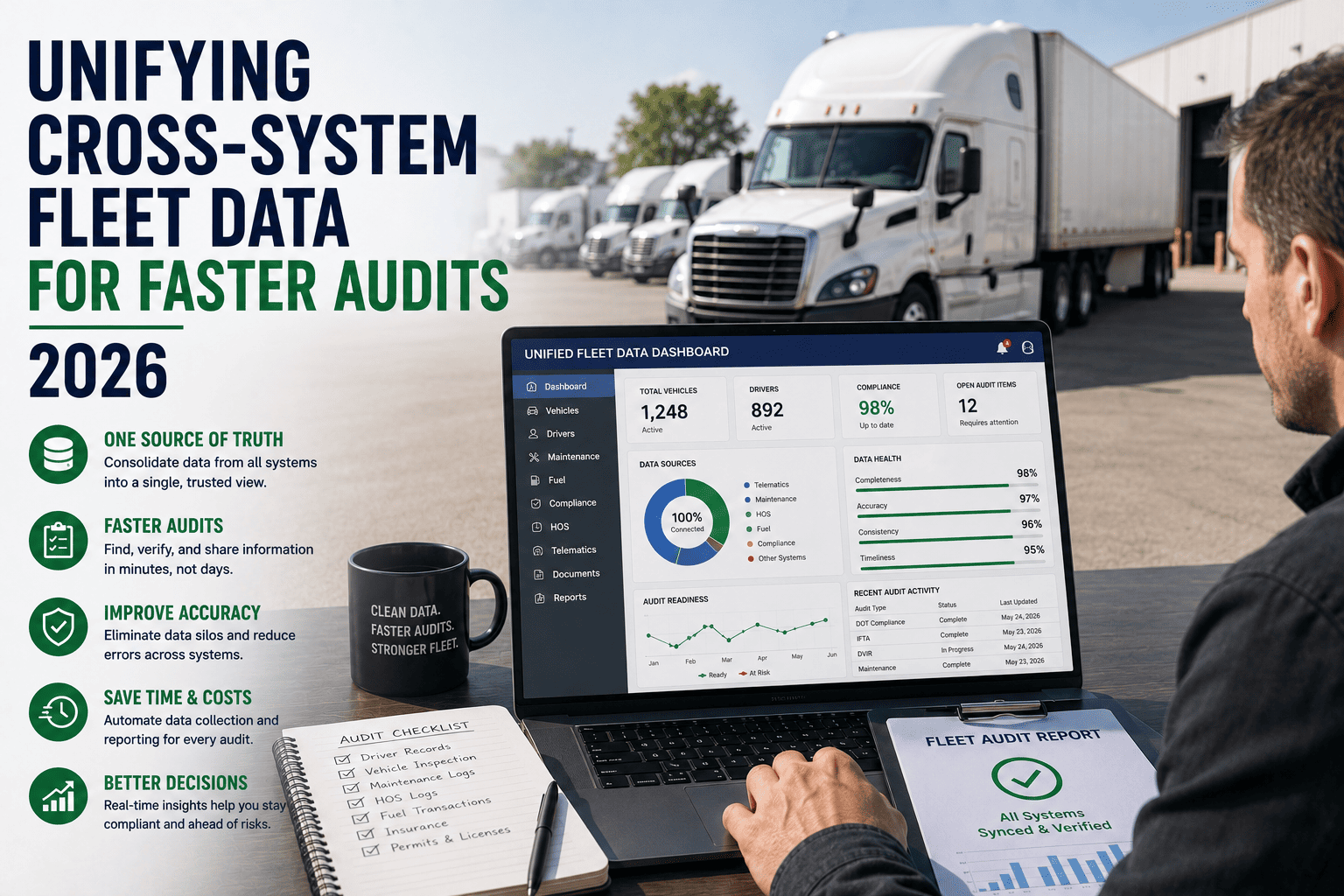
Fleet Rabbit integrates ELD data with daily inspections, maintenance tracking, and driver documentation. Your compliance dashboard shows every vehicle's ELD status, driver HOS remaining, and upcoming audit deadlines. Failed ELD connections trigger automatic alerts, and missing data retention periods flag for review before inspectors arrive.
Pre-Audit vs. Post-Audit ELD Checklist Focus
ELD compliance requires different emphasis depending on whether you are preparing for an upcoming DOT audit or reviewing findings after an audit has occurred. Use the comparison below to guide your compliance activities at each stage.
| Audit Phase | Primary Focus Areas | Verification Activities |
|---|---|---|
| Pre-Audit Preparation | Device registration, data retention, driver training | Run mock audit on 10 percent of drivers, verify all devices on FMCSA list, confirm 6 months of data accessible |
| During Audit Response | Data export, supporting documents, edit trail review | Provide complete data export within requested format, supply all supporting documents for audited period |
| Post-Audit Remediation | Corrective actions, policy updates, retraining | Document all cited violations, implement corrective measures within 30 days, retain audit records |
| Continuous Monitoring | Ongoing data quality, driver annotations, vehicle ELD status | Weekly ELD compliance report review, monthly random data audits, quarterly driver refresher training |
Scroll horizontally on mobile to view all columns
Frequently Asked Questions
1. Which vehicles are exempt from the ELD mandate?
ELD exemptions apply to vehicles with pre-2000 model year engines, driveaway-towaway operations where the vehicle being towed is part of the shipment, vehicles operating under short-haul exceptions using timecard records, and vehicles used primarily for agricultural operations within 150 air miles. Carriers claiming exemptions must maintain supporting documentation and be prepared to prove exemption status during inspections.
2. What happens during an ELD roadside inspection?
An inspector requests data transfer from the ELD. The driver must provide the ELD records within minutes using email, web service, or USB connection. The inspector reviews the record of duty status for HOS violations, checks for unidentified driving events, and verifies the ELD is registered with FMCSA. If the driver cannot transfer data or the ELD shows compliance issues, the vehicle may be placed out of service until the problem is resolved.
3. How long must ELD data be retained by carriers?
Carriers must retain ELD data and all supporting documents for six months from the date the record was created. Supporting documents include delivery receipts, fuel receipts, scale tickets, dispatch records, and any other document that verifies driver location or duty status. Supporting documents must be retained even after data is entered into or transferred by the ELD system.
4. What is the penalty for using a non-compliant ELD?
Using an ELD that is not registered on the FMCSA list of compliant devices results in the same penalties as having no ELD. Violations typically exceed $1,000 per occurrence and can reach $10,000 or more for repeated or egregious violations. Beyond fines, the vehicle receives an out-of-service order until a compliant ELD is installed, costing the carrier significant downtime and lost revenue.
5. How should a driver handle an ELD malfunction on the road?
The driver must note the malfunction in the ELD, continue using paper logs for the remainder of the current duty day, and annotate each record as ELD malfunction. The carrier has 8 days to repair or replace the malfunctioning ELD. During those 8 days, the driver continues using paper logs with proper annotations. After 8 days without repair, the vehicle cannot operate until a compliant ELD is installed.
6. What training do drivers need for ELD compliance?
Drivers must be trained on ELD login procedures, duty status changes, unidentified driving event review and certification, data transfer to inspectors, editing and annotating records, malfunction procedures, and the 8-day paper log exception. Carriers should document all training and provide refresher sessions at least annually or whenever ELD software is significantly updated.
7. How does ELD data affect CSA scores?
ELD data directly impacts the Hours of Service Compliance BASIC on your CSA score. Violations discovered during roadside inspections or audits increase your HOS BASIC percentile. A high percentile triggers warning letters, investigations, or interventions from FMCSA. Maintaining clean ELD data and HOS compliance keeps your CSA scores low and reduces regulatory scrutiny.
Automate ELD Compliance with Fleet Rabbit
Fleet Rabbit integrates ELD data with daily inspections, maintenance tracking, and driver documentation. Your compliance dashboard shows every vehicle's ELD status, driver HOS remaining, and upcoming audit deadlines. Failed ELD connections trigger automatic alerts, and missing data retention periods flag for review before inspectors arrive.