A pharmacy calls at 4 PM needing a temperature-controlled shipment 300 miles away by morning. A construction site is stalled because one hydraulic part didn't arrive on the flatbed that was supposed to deliver it at noon. This is the world of hotshot and expedited trucking, where the entire business model depends on hitting narrow delivery windows with Class 3-5 trucks and small fleets that can't absorb the same margin for error as a traditional truckload carrier. When a single load is time-critical, a fleet manager can't just react to problems after they happen. They need visibility into every truck, every driver's hours, and every mechanical warning sign before it turns into a missed delivery.
Expedited and hotshot fleets run on tight delivery windows, Class 3-5 trucks, and thin operational buffers, which means a single breakdown or compliance miss has an outsized impact on revenue. Real-time GPS tracking, predictive maintenance, and automated dispatch reduce late deliveries by a wide margin while keeping drivers compliant with hours-of-service rules. Fleet managers who adopt digital tools instead of spreadsheets and phone calls recover hours of planning time every week and protect the customer relationships that expedited freight depends on.
Why Expedited Freight Needs A Different Management Approach
Standard truckload fleet management tools were built around predictable lanes and multi-day delivery windows. Hotshot and expedited freight operates on a different clock. Loads are booked same-day or next-day, routes change based on which truck is closest and which driver has enough hours left, and a single late delivery can mean a lost contract with a broker or shipper who has other carriers to call next time. Managing this kind of operation with phone calls, text messages, and a whiteboard works until the fleet grows past a handful of trucks, and then dispatchers spend more time chasing information than actually dispatching.
The Hours-Of-Service Squeeze
Because hotshot drivers are frequently solo owner-operators or small teams, hours-of-service limits are a hard constraint on how much time-critical freight a fleet can accept. A dispatcher who doesn't have real-time visibility into remaining drive time risks assigning a load that a driver legally can't finish, creating a scramble to reassign it mid-route. Fleet management platforms that surface HOS status alongside location data let dispatchers match loads to drivers who can actually complete them on time.
Maintenance Downtime Hits Harder
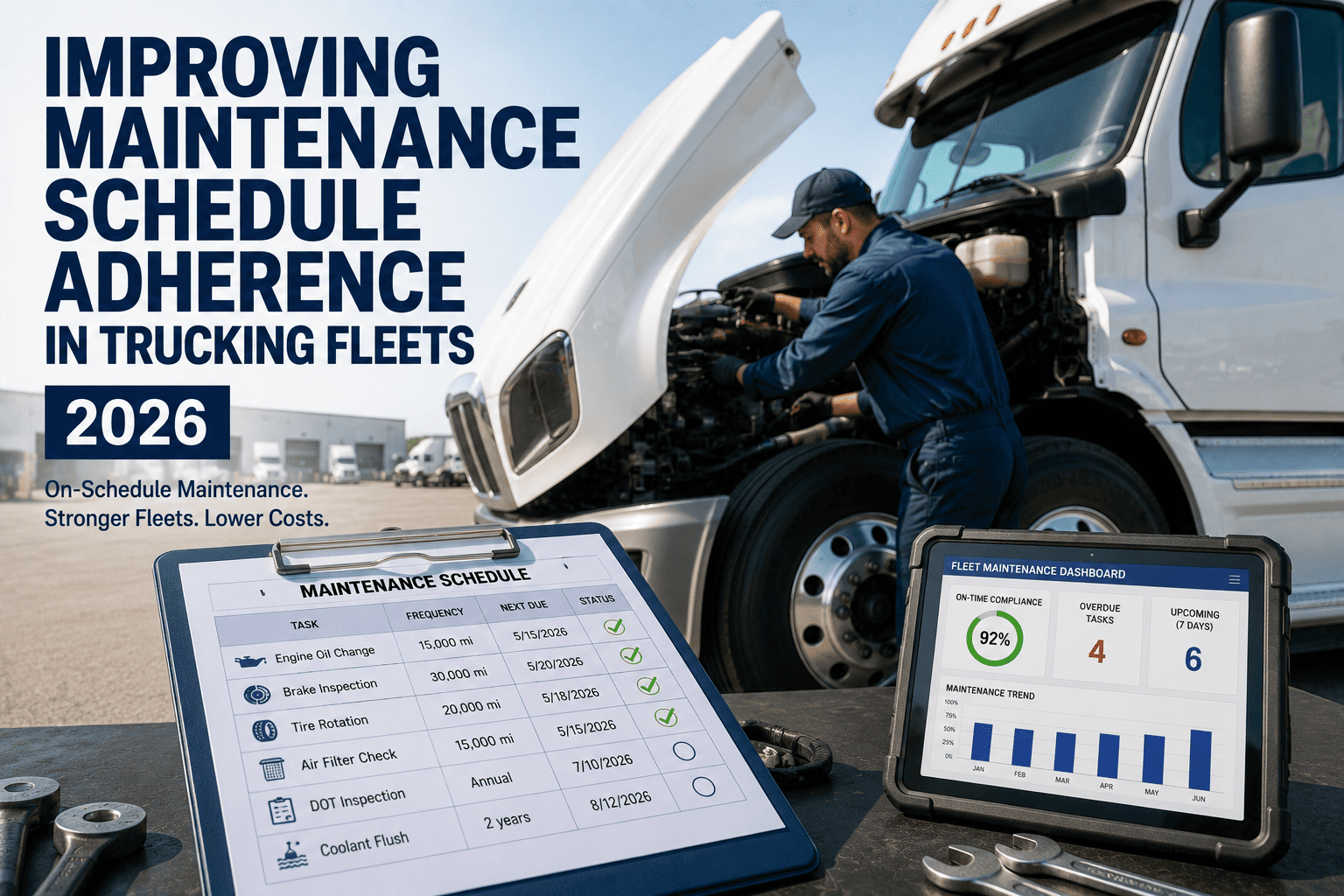
A single truck down for repairs in a 5-truck hotshot fleet removes 20 percent of total capacity overnight. Because expedited loads often can't wait for the next available truck, unplanned breakdowns force fleets to either turn down freight or lease emergency capacity at a markup. Preventive and predictive maintenance scheduling reduces the odds of a truck failing mid-route on a load with a hard deadline.
Broker And Customer Trust Is The Business
Expedited and hotshot carriers largely win repeat work through brokers and direct shippers who need confidence that a load will arrive on time every time. Fleet visibility tools that generate accurate ETAs and proactive delay notifications protect that trust, while fleets relying on guesswork tend to lose repeat bookings to competitors who can answer "where's my truck" with a live map instead of a phone call to the driver.
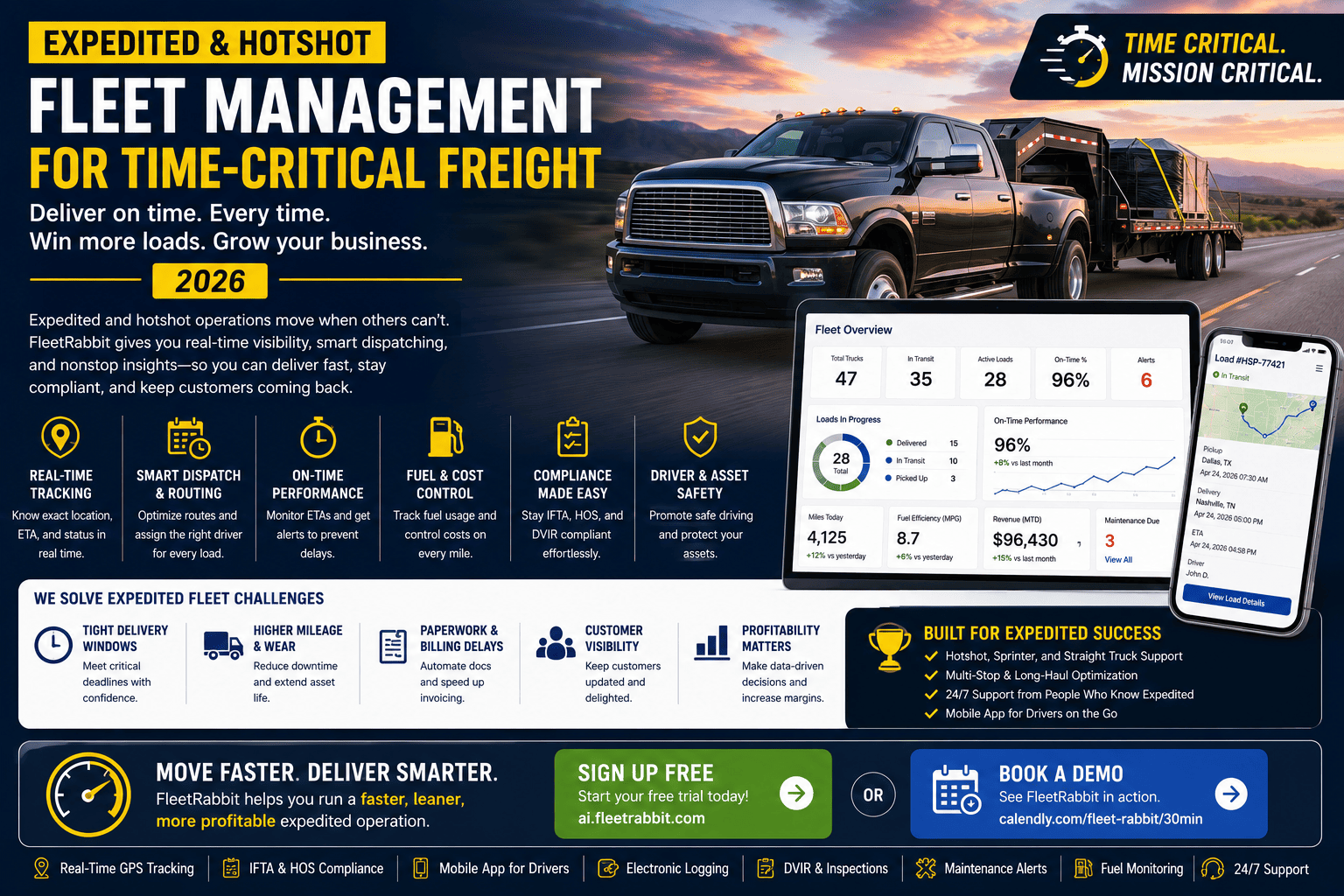
FleetRabbit gives expedited and hotshot fleets live GPS tracking, HOS-aware dispatch, and predictive maintenance alerts in one platform, so time-critical loads arrive on schedule and small breakdowns never turn into missed deliveries. Sign up free and see your fleet on one screen today.
Core Components Of A Hotshot Fleet Management System
A fleet management setup built for expedited freight needs to cover four operational areas at once: where the truck is right now, whether the driver can legally take the next load, whether the vehicle is healthy enough to make the run, and whether the paperwork behind the load is in order. The table below breaks down what each component needs to deliver for a hotshot operation specifically.
| Management Area | What It Needs To Do | Why It Matters For Hotshot Freight |
|---|---|---|
| Real-Time GPS Tracking | Show live truck location, speed, and route progress to dispatch and customers | Same-day loads need accurate, minute-level ETAs, not a location pinged once an hour |
| Dispatch Optimization | Match the closest available truck and legally eligible driver to each new load | Reduces deadhead miles and prevents assigning loads to drivers who are out of hours |
| Predictive Maintenance | Flag developing engine, brake, and tire issues before they cause a breakdown | One truck down removes a large share of capacity in a small fleet with a hard deadline |
| Compliance Management | Track HOS logs, ELD status, inspections, and driver qualification files automatically | Roadside citations and out-of-service orders directly delay time-critical freight |
| Route Planning | Build routes around weigh stations, weather, traffic, and delivery appointment windows | Expedited loads rarely have slack built in, so route accuracy directly protects delivery time |
Where Visibility Actually Changes Outcomes
Real-time visibility isn't just a dashboard feature, it's the difference between finding out about a delay before the customer calls and finding out after. For hotshot fleets, the value shows up in three specific moments during a typical load.
Before Dispatch: Choosing The Right Truck
When a same-day load comes in, dispatch needs to know instantly which trucks are closest, which drivers have enough remaining hours, and which vehicles have no open maintenance flags. Doing this by phone call means minutes lost on every decision. Doing it from a live map with driver hours and vehicle health layered in means the right truck gets assigned in seconds.
During Transit: Catching Problems Early
A truck running 40 minutes behind schedule because of traffic is a very different problem than a truck that has stopped moving because of a mechanical issue. Live tracking lets dispatch tell them apart immediately and act accordingly, whether that's notifying the customer of a short delay or sending a backup truck before the delivery window closes entirely.
Automated Delay Alerts
Instead of a dispatcher manually checking every truck's progress against its delivery window, automated alerts flag any load that's trending late while there's still time to respond, rather than after the appointment has already been missed.
Driver Communication Without Phone Tag
Mobile-connected drivers can confirm pickups, report delays, and upload proof of delivery directly from the cab, cutting out the back-and-forth calls that eat into a dispatcher's day when a fleet is running a dozen time-sensitive loads at once.
After Delivery: Proving It Happened On Time
Digital proof of delivery, timestamped and geotagged, gives brokers and shippers confidence in the carrier without a phone call to confirm. For fleets that depend on repeat business from the same brokers, a clean, automatic delivery record builds the kind of trust that turns a one-time load into a standing lane.
Compliance And Maintenance: The Two Things That Stop A Load Cold
Nothing derails a time-critical delivery faster than a roadside inspection that puts a truck out of service or a mechanical failure that strands it on the shoulder. Both are largely preventable with the right systems in place, and both are more damaging to a small expedited fleet than to a large one with spare capacity to fall back on.
Staying Ahead Of HOS And ELD Requirements
Enforcement around electronic logging devices and hours-of-service compliance has tightened, with inspectors increasingly cross-checking logs against fuel and toll records. A hotshot fleet running close to HOS limits to squeeze in more loads is one roadside stop away from an out-of-service order. Automated compliance tracking flags drivers approaching their limits before dispatch assigns them another load, keeping the fleet legal without dispatch having to do the math manually for every driver, every day.
Preventing Breakdowns Before They Happen
Unplanned mechanical downtime is expensive for any fleet, but a hotshot operation feels it immediately because there's rarely a spare truck sitting idle to cover the gap. Monitoring engine data, brake wear, and tire condition allows maintenance to be scheduled during downtime the fleet already has planned, instead of losing a truck mid-route on a load with a hard delivery deadline.
Choosing Fleet Management Technology That Fits A Hotshot Operation
Not every fleet platform is built with small, fast-moving fleets in mind. Many are designed around large truckload operations with dedicated compliance departments and maintenance shops. A hotshot or expedited fleet, often running with a lean team, needs something that a small dispatch team can actually run day to day without a full IT department behind it. Look for a platform that combines live tracking, HOS-aware dispatch, and predictive maintenance alerts in one system rather than three separate logins, mobile access so drivers can update status from the cab, and simple onboarding that doesn't require weeks of setup before the first load moves through it.
FleetRabbit was built around exactly this kind of operation. Instead of stitching together a GPS app, a separate ELD system, and a spreadsheet for maintenance schedules, fleet managers get truck location, driver hours, vehicle health, and delivery status in one place. That means a dispatcher handling ten time-critical loads at once can see everything that matters without switching between four different tools, and a fleet owner can book a demo to see exactly how it maps onto their own trucks and lanes before committing to anything.
FleetRabbit brings live GPS tracking, HOS-aware dispatch, predictive maintenance, and compliance management into one platform built for hotshot and expedited fleets. See your whole operation on one screen and stop losing time-sensitive loads to preventable delays.