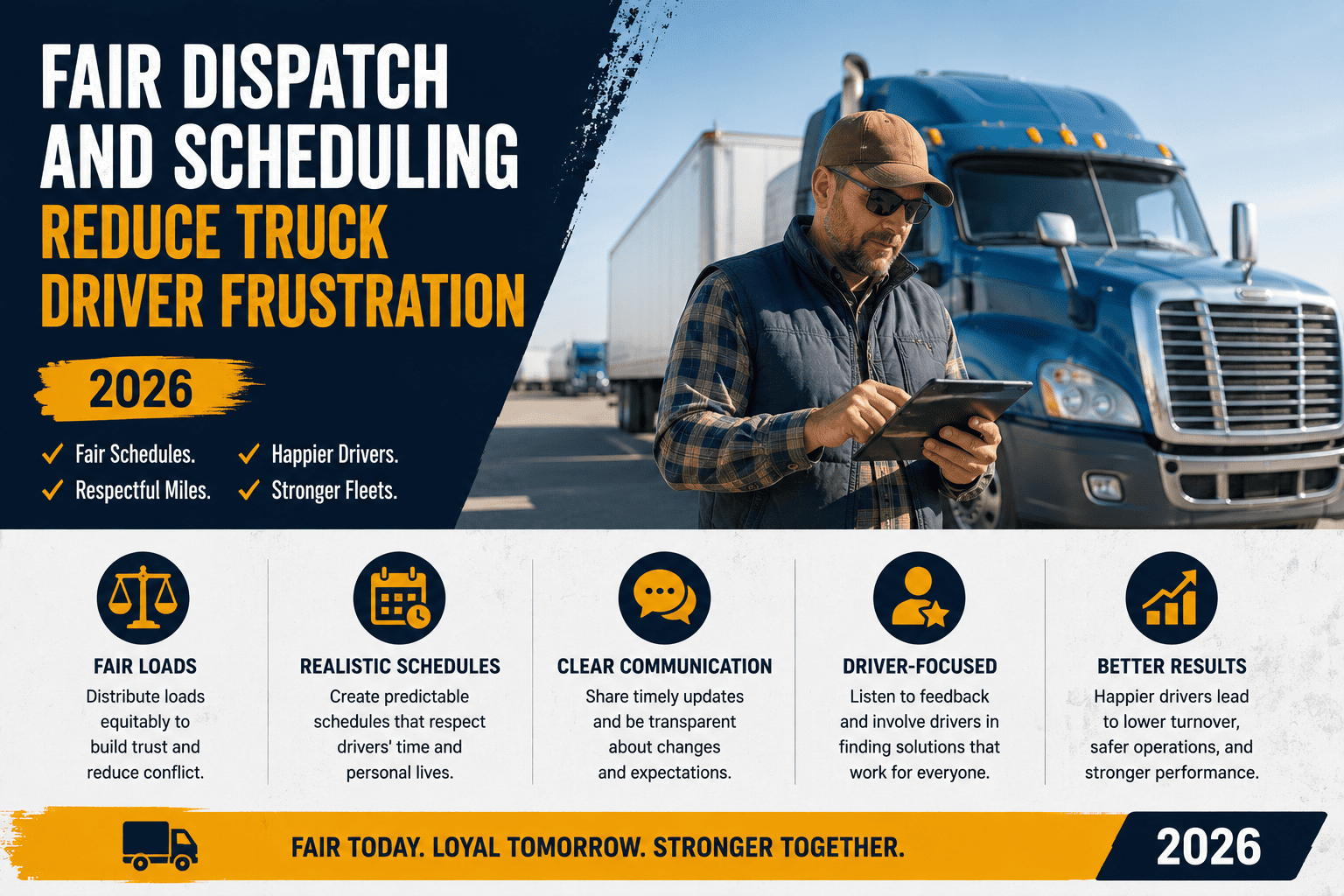
Ask any group of truck drivers what frustrates them most, and dispatch comes up before pay, before routes, before almost anything else. Not because dispatching is inherently a thankless job, but because so much of it still runs on whoever picks up the phone fastest, whoever the dispatcher remembers first, or whoever has been quietest about complaining lately. None of that is fair, and drivers know it the moment it happens to them.
This guide breaks down what "fair dispatch" actually means in practice, why unfair scheduling quietly drains driver morale long before anyone files a complaint, and exactly what a transparent, balanced dispatch system looks like in 2026.
Why Dispatch Fairness Is A Retention Issue
What "Unfair Dispatch" Actually Looks Like
Fairness in dispatch is rarely about one big dramatic decision. It is built from dozens of small ones, repeated week after week, that quietly tell a driver where they stand. Below are the patterns drivers report most often, paired with what a fairer version of the same decision looks like.
"The same three drivers always get the good runs. The rest of us get whatever is left."
Load rotation tracked across the whole fleet, so good and bad runs are spread evenly over time, not concentrated with a favored few.
"Dispatch never checks my hours before assigning a load. I find out I'm short on time after I've already started."
HOS visible at the exact moment a load is assigned, so a driver is never set up to fail before the wheels even start turning.
"My schedule changes by text, sometimes after I've already left for a different load."
One mobile app showing every assignment, change, and update in real time, with a timestamped acceptance so nothing gets lost in a text thread.
"I have no idea why I got this load instead of someone else. It just feels random, or worse, personal."
Assignment logic that's visible and explainable, based on hours, proximity, and rotation order, not a dispatcher's memory of who asked nicely.
Why Drivers Notice Unfairness Faster Than Managers Think
Drivers compare notes constantly, at fuel stops, on group chats, over the CB. A pattern that looks like coincidence to a dispatcher often looks like a clear favoritism trend to the drivers experiencing it from the outside. By the time a complaint reaches a manager's desk, the resentment behind it has usually been building for months.
Dispatch Drivers Can See And Trust
FleetRabbit filters every load assignment by real-time HOS hours, location, and rotation history, so dispatchers make faster decisions and drivers see exactly why they got the load they got. Sign up free and see how transparent dispatch logic changes driver trust.
The Fairness Wheel: Four Things Every Balanced Schedule Needs
A genuinely fair dispatch system is not just "nicer." It is built on four specific inputs working together at the moment a load gets assigned. Remove any one of them and fairness starts to break down, even with good intentions.
Hours of Service
A load should never reach a driver who doesn't legally have the hours to finish it. Checking this first prevents both violations and last-minute scrambling.
Proximity And Position
Assigning the closest available driver reduces deadhead miles and avoids the unfair pattern of one driver always covering the long, inconvenient hauls.
Rotation History
Tracking who got the premium runs and who got the tough ones last week, and the week before, keeps any single driver from being stuck at the bottom of the pile indefinitely.
Equipment And Vehicle Status
A driver shouldn't be assigned a truck that's due for maintenance or flagged out of service. Matching the right vehicle to the right load protects both safety and schedule.
Before And After: What Changes When Scheduling Becomes Transparent
The clearest way to understand the impact of fair dispatch is to see the same week, run two different ways. Below is a simplified look at how a typical regional driver's week shifts once HOS visibility and rotation tracking are built into the dispatch process.
| What The Driver Experiences | Manual, Memory-Based Dispatch | Transparent, Data-Based Dispatch |
|---|---|---|
| Load Notification | Phone call or text, sometimes last minute | Mobile app alert with full load details in advance |
| Hours Check | Driver discovers a shortfall mid-run | Hours verified automatically before assignment is sent |
| Route Quality | Same few drivers get the best lanes repeatedly | Rotation history spreads premium and tough runs evenly |
| Schedule Changes | Updates lost in a text thread or missed call | Every change logged and visible in one place |
| Sense Of Fairness | Feels random, sometimes personal | Feels explainable, based on visible rules |
Why This Matters More In A Tight Driver Market
When qualified drivers have options, the carrier with a reputation for fair, predictable scheduling wins the better candidates without raising pay a single cent. Word travels fast among drivers, and "they dispatch fair there" is one of the highest compliments a carrier can earn.
Build A Dispatch Process Drivers Trust
FleetRabbit's dispatch module checks hours, vehicle status, and rotation history automatically, so every assignment is fast for dispatchers and fair for drivers. Book a free demo and see how it removes the guesswork from scheduling.
A Five-Point Fairness Checklist For Your Dispatch Process
Use this as a quick audit. If your dispatch process can confidently check most of these boxes, you are likely already ahead of a large share of the industry. If it cannot, these are the exact gaps drivers are noticing.
Hours Are Verified Before, Not After
No load reaches a driver until their available hours have been confirmed against the estimated run time.
Rotation Is Tracked, Not Remembered
A system, not a dispatcher's memory, keeps record of who has had the better and tougher runs recently.
Drivers Can See Their Own Schedule
Assignments, changes, and upcoming loads are visible to drivers in one place, without needing to call dispatch to ask.
Every Assignment Has A Reason
If a driver asks why they got a particular load, there is a clear, consistent answer beyond "that's just how it worked out."
Changes Are Logged, Not Lost
Schedule updates and acknowledgments are timestamped and stored, so nothing depends on someone remembering a phone call correctly.
Frequently Asked Questions
The Bottom Line
Drivers do not expect every load to be a great one. They expect the process behind it to make sense, and to apply the same way to everyone. The moment a schedule feels explainable instead of arbitrary, the frustration that drives so much of the industry's turnover starts to ease, often before a single rate or benefit changes.
Build A Dispatch Process Your Drivers Will Trust
FleetRabbit checks hours, tracks rotation, and keeps every assignment visible in one place, so dispatchers move faster and drivers see exactly why they got the load they got. Get started in minutes, no credit card required.