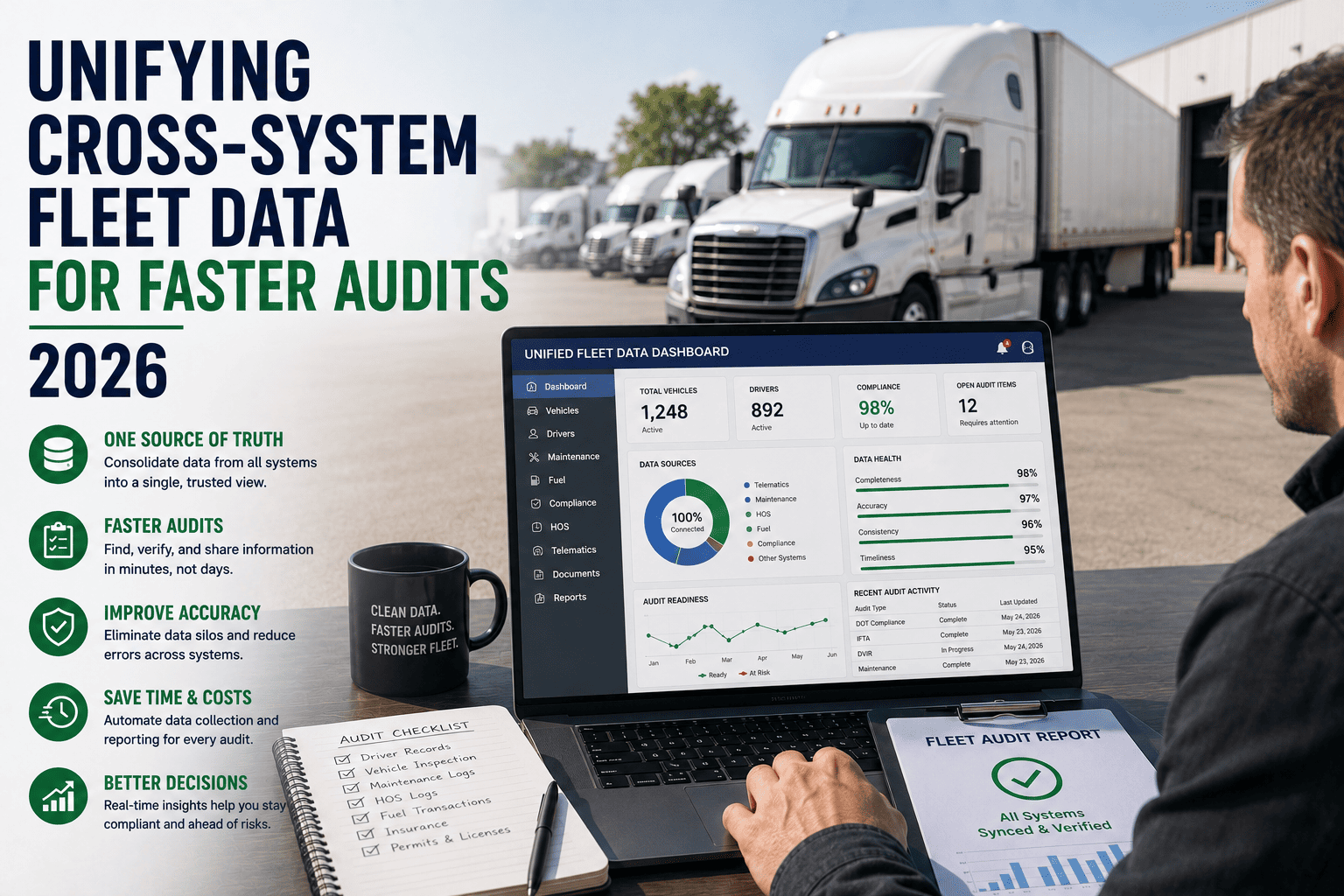
Fleet Compliance Checklist FMCSA DOT and HOS Requirements
Fleet compliance under FMCSA, DOT, and HOS regulations is not a single action but a continuous process of documentation, verification, and correction across multiple regulatory domains. Non-compliance in any area—driver qualification, hours of service, vehicle maintenance, drug and alcohol testing, or insurance filing—can trigger civil penalties, out-of-service orders, safety fitness determinations, and in severe cases, shutdown of operating authority. This fleet compliance checklist provides safety directors, compliance managers, and fleet owners with a complete framework covering FMCSA regulatory requirements across all major compliance categories, organized by documentation standard, audit readiness, and enforcement response. FleetRabbit digitizes the entire compliance workflow, connecting driver qualification files, HOS logs, vehicle inspection reports, and maintenance records in a single auditable platform that produces DOT-defensible documentation on demand.
47%
Of FMCSA compliance reviews result in at least one citation for inadequate driver qualification files—the most frequently cited violation in agency audits.
$16,500+
Average civil penalty assessed per violation in a single FMCSA compliance review, with multiple violations often cited in a single audit event.
2.8x
Higher likelihood of passing a DOT compliance review for fleets operating digital compliance management systems versus paper-based documentation processes.
89%
Of HOS violations identified during roadside inspections are preventable with electronic logging device compliance and active log auditing before driver submission.
How FleetRabbit Transforms Fleet Compliance from Reactive Documentation to Proactive Audit Readiness
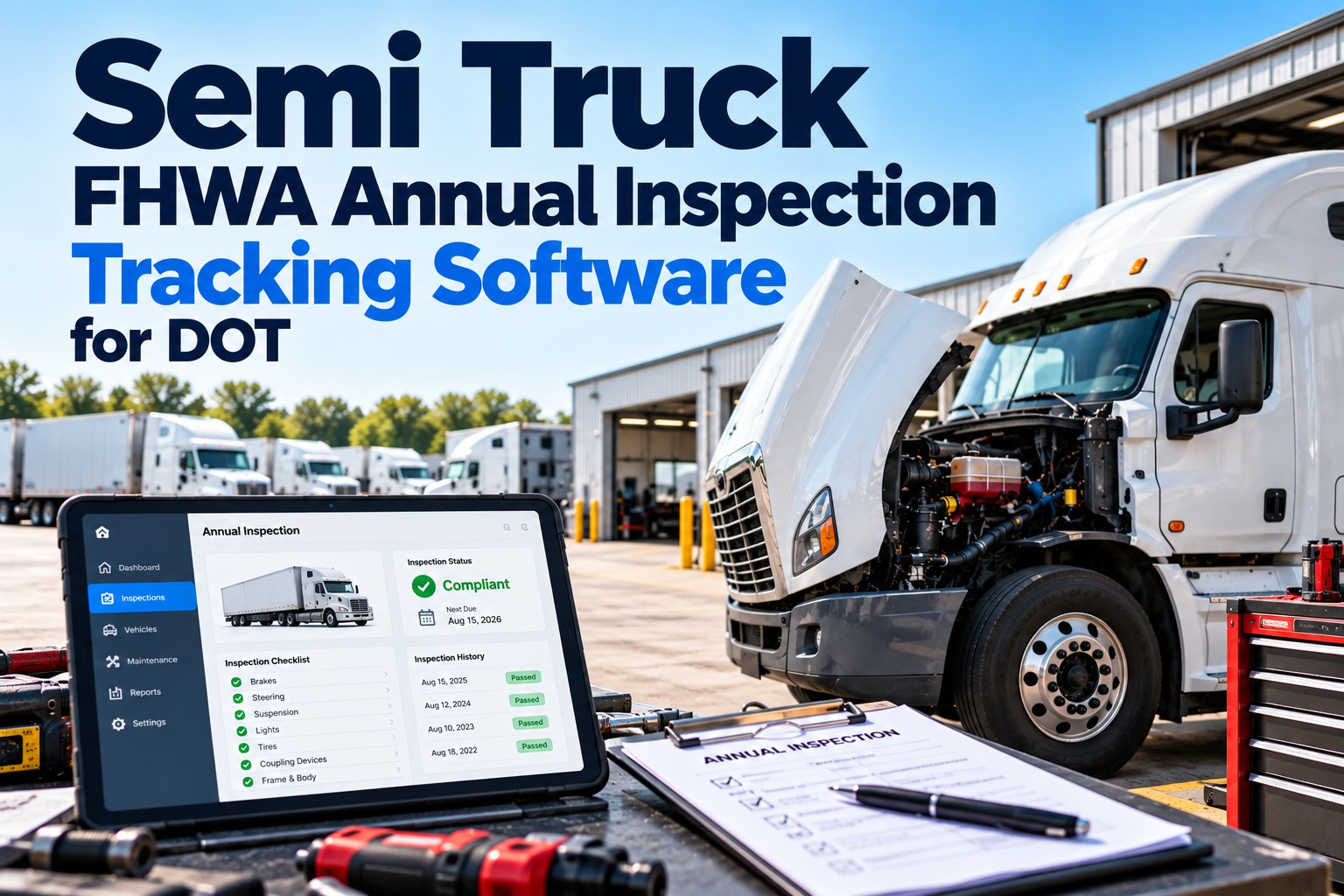
Traditional fleet compliance management relies on paper files, spreadsheet trackers, and manual calendar reminders—a system that fails when a driver qualification document expires, an HOS violation goes unaddressed, or a maintenance record cannot be located during an audit. FleetRabbit replaces that fragmented approach with a unified compliance platform that connects driver qualification tracking, HOS log auditing, vehicle inspection records, and maintenance documentation in a single system with automated deadline alerts and audit-ready reporting. When a driver's medical certificate approaches expiration, FleetRabbit notifies both the driver and the compliance manager 60 days, 30 days, and 7 days before the deadline. When a roadside inspection generates an HOS violation, FleetRabbit flags the driver for remedial training and logs the violation in the driver qualification file. When a DOT auditor requests three years of maintenance records, the fleet manager exports complete, searchable documentation in seconds. Every compliance requirement on this checklist corresponds to an automated tracking field within the FleetRabbit platform that generates alerts, reports, and audit exhibits without manual data entry.
FMCSA Compliance Review Severity Classification and Response Framework
Violation Severity
FMCSA Definition and Point Value
Consequences and Required Response
FleetRabbit Automated Workflow
Acute Violation
A violation so severe that a single occurrence indicates a fundamental breakdown in the carrier's safety management controls—carries 1-10 CSA points depending on category
Immediate corrective action required. Civil penalty up to $15,000 per violation. Potential safety fitness determination and operating authority suspension.
Automatic supervisor alert, compliance task assignment with 48-hour closure requirement, documentation hold on all affected driver files until resolution
Critical Violation
A violation that substantially increases the risk of a crash or regulatory non-compliance—carries 5-20 CSA points depending on severity and pattern
Corrective action required within 14 days. Civil penalty up to $10,000 per violation. Pattern of critical violations triggers compliance review.
Compliance manager notification, corrective action plan generated, 14-day follow-up task with automated escalation if incomplete
Non-Critical Violation
A violation that does not create immediate safety risk but indicates documentation or process deficiency—carries 1-5 CSA points
Corrective action required within 28 days. Civil penalty typically waived for first occurrence but accumulates for repeat violations.
Compliance task generated, driver or file flagged for correction, next audit cycle includes verification of documented correction
See how FleetRabbit's unified compliance platform connects driver qualification tracking, HOS log auditing, vehicle inspection records, and maintenance documentation in a single auditable system. We demonstrate against your fleet's compliance exposure and audit history—not in a generic demo environment.
Part 1: Driver Qualification File Compliance Checklist
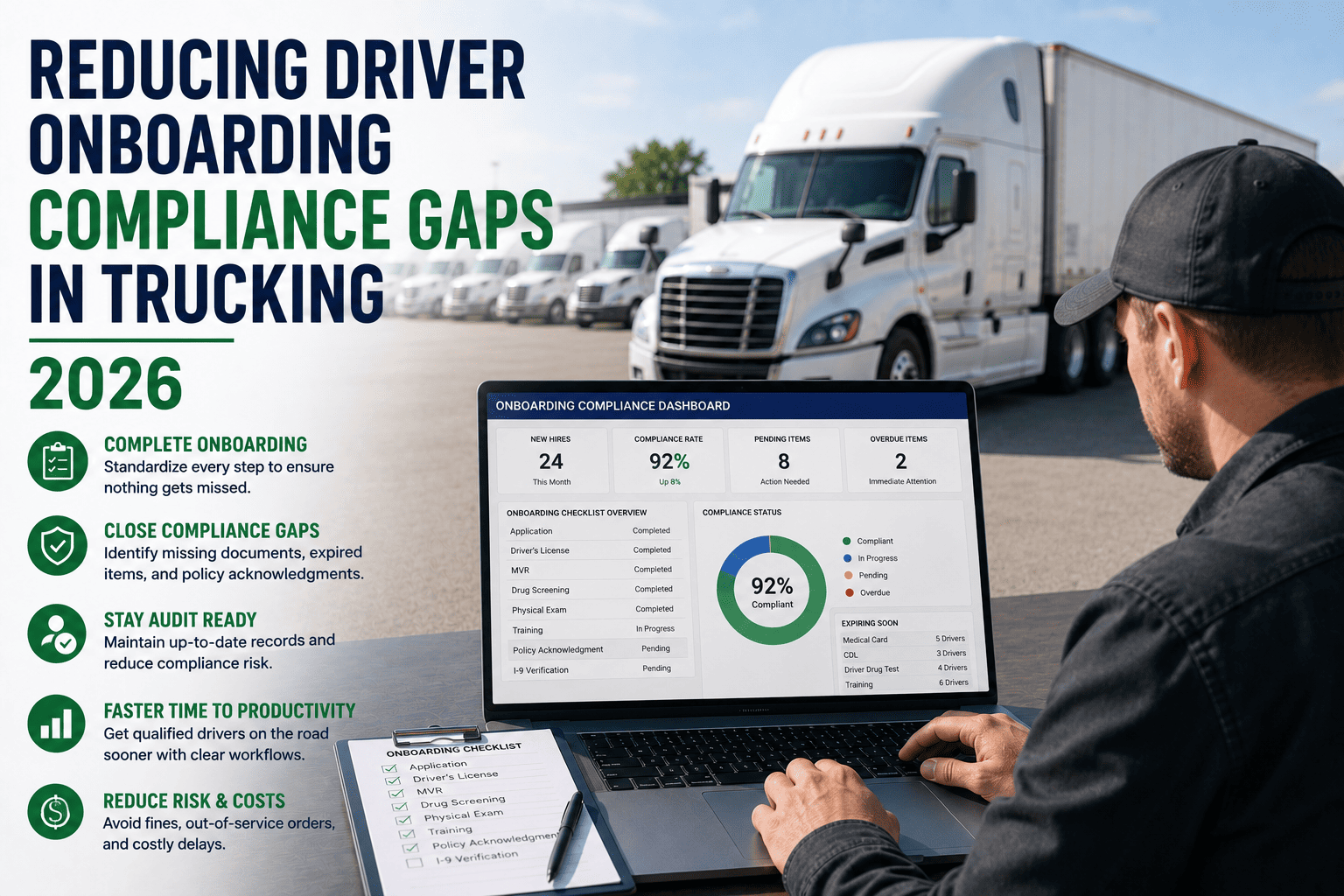
Driver qualification files are the most frequently cited violation category in FMCSA compliance reviews, and incomplete or missing documents are not excused by good intentions or partial compliance. FMCSA 49 CFR Part 391 establishes specific documentation requirements for every driver operating a commercial motor vehicle in interstate commerce, and each document must be retained for specific time periods. The driver qualification file checklist below covers every required document, retention period, and review frequency—completing this checklist for each driver is not optional for compliance.
Application and Employment History Documentation
Licensing, Medical, and Testing Documentation
Part 2: Hours of Service and ELD Compliance Checklist
Hours of service regulations under 49 CFR Part 395 are the most actively enforced compliance category in roadside inspections, with a single HOS violation capable of placing an entire driver and vehicle out of service for up to 24 hours. The electronic logging device mandate requires automatic recording of driving time, but compliance extends beyond ELD hardware to include supporting document retention, log auditing, and violation remediation. The HOS compliance checklist below covers ELD configuration, log auditing procedures, supporting document collection, and violation response protocols.
ELD System Configuration and Driver Training
Daily HOS Log Auditing and Supporting Document Retention
HOS Violation Remediation and Corrective Action
FleetRabbit HOS Compliance and ELD Integration
FleetRabbit integrates directly with major ELD providers (including KeepTruckin, Samsara, Omnitracs, PeopleNet, and Garmin) to pull real-time HOS status and violation records into the compliance management dashboard. The platform's automated log auditing engine reviews each driver's daily logs against FMCSA regulations, flagging potential violations before they are submitted to the carrier's HOS records. When a driver approaches an HOS limit, FleetRabbit sends proactive alerts to dispatch and driver mobile devices, enabling real-time operational adjustments. For fleets operating outside the ELD mandate (vehicles pre-2000 model year or operating under short-haul exceptions), FleetRabbit supports paper log and timecard workflows with automated calculation of available duty hours and violation detection.
Part 3: Vehicle Maintenance and Inspection Compliance Checklist
Vehicle maintenance compliance under 49 CFR Part 396 requires more than performing repairs when failures occur—it requires a systematic inspection, repair, and documentation program that demonstrates the carrier's continuous attention to vehicle safety. The maintenance compliance checklist below covers periodic inspection requirements, DVIR management, repair documentation standards, and retention requirements for each vehicle in the fleet.
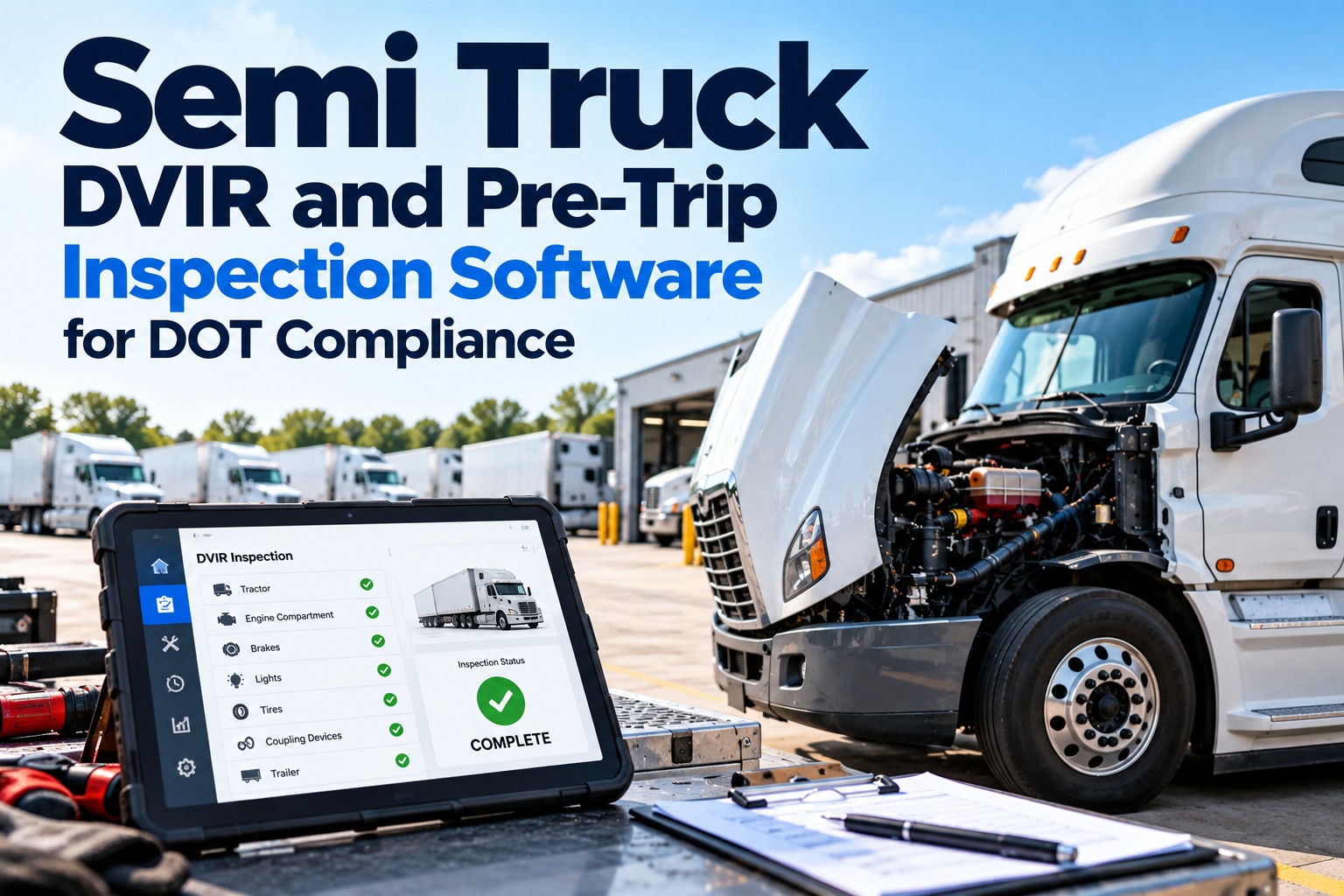
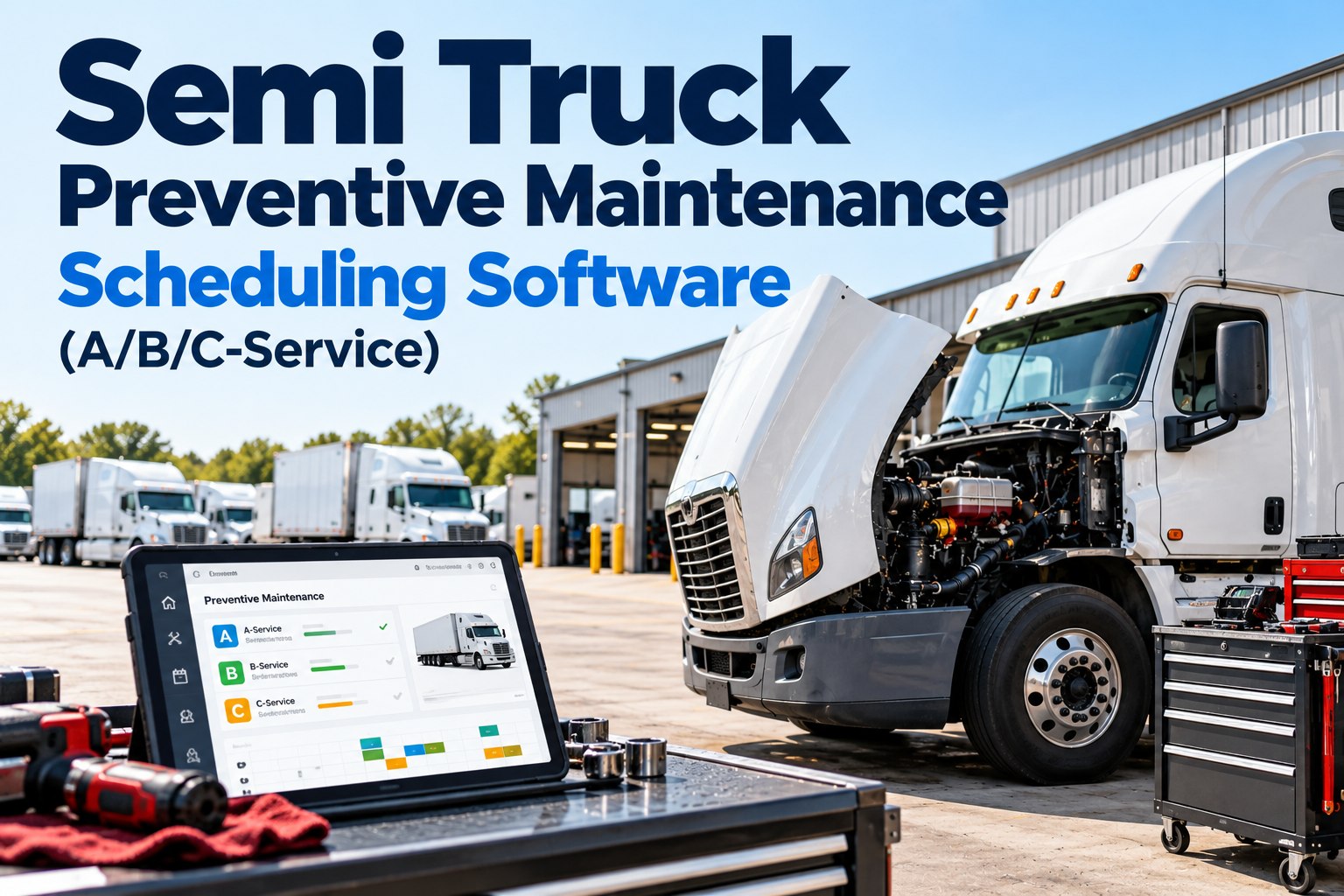
Periodic Vehicle Inspection and Maintenance Documentation
Maintenance Record Retention and Audit Presentation
Part 4: Drug and Alcohol Testing Compliance Checklist
Drug and alcohol testing compliance under 49 CFR Part 382 and Part 40 is the most procedurally complex area of FMCSA regulation, with strict documentation requirements for every step of the testing process—from random selection notification to result reporting to return-to-duty protocols. The testing compliance checklist below covers pre-employment testing, random testing program administration, post-accident testing triggers, reasonable suspicion protocols, and return-to-duty documentation requirements.
Testing Program Administration and Random Testing Implementation
Post-Accident and Reasonable Suspicion Testing Protocols
Return-to-Duty and Follow-Up Testing Protocols
Part 5: Insurance and Operating Authority Compliance Checklist
Insurance and operating authority compliance is the foundational requirement for legal commercial vehicle operations—without current, correctly filed insurance and operating authority, the carrier cannot operate in interstate commerce regardless of driver qualification or vehicle maintenance status. The insurance and authority checklist below covers filing requirements, proof of insurance documentation, and authority suspension prevention protocols.
FMCSA Insurance Filing and Proof of Coverage
Operating Authority Registration and BOC-3 Filing
Frequently Asked Questions
What triggers an FMCSA compliance review?
FMCSA compliance reviews are triggered by multiple factors including a carrier's CSA BASIC percentiles (scores above the alert threshold of 50-65 percent depending on the BASIC category), crash rates above the national average, driver or vehicle out-of-service rates above the national average, complaints filed against the carrier, or random selection from the carrier population. Carriers with an Unsatisfactory safety fitness rating are reviewed at least annually. FleetRabbit's compliance analytics module monitors CSA scores and notifies the compliance manager when any BASIC threshold approaches the alert level, enabling proactive corrective action before a triggered review occurs.
How long must driver qualification files be retained after a driver leaves the carrier?
Driver qualification files must be retained for three years after the driver leaves the carrier for most documents, including employment applications, MVRs, and annual safety performance reviews. However, drug and alcohol testing records—including pre-employment test results, random test results, and return-to-duty documentation—must be retained for five years from the date of the test record. FleetRabbit automatically segregates drug and alcohol records for extended retention while expiring general qualification documents after the three-year period, ensuring compliance with both retention standards.
What is the difference between an Acute Violation and a Critical Violation in CSA scoring?
An Acute Violation is a severe safety deficiency that indicates a fundamental breakdown in a carrier's safety management controls—a single Acute Violation is sufficient to trigger an immediate compliance review. Examples include requiring or allowing a driver with a suspended license to operate, failing to implement a random drug and alcohol testing program, or operating a vehicle under an out-of-service order. A Critical Violation is a serious deficiency that indicates a pattern of non-compliance but may not alone trigger a review—examples include failing to complete the annual driver safety performance review or failing to retain maintenance records. Acute Violations carry a base point value of 10 in CSA scoring, while Critical Violations carry 5 points. FleetRabbit's compliance dashboard flags any inspection or audit finding that meets the Acute definition and escalates directly to the carrier principal for immediate action.
Can a fleet pass a DOT audit with digital records instead of paper files?
Yes. FMCSA's Electronic Record Retention rules (49 CFR Part 390, Subpart F) specifically permit electronic recordkeeping provided the system captures required data elements, prevents unauthorized modification or deletion, maintains an audit trail of any changes, and produces legible copies when requested by an authorized representative. FleetRabbit meets all electronic record retention requirements, including automatic audit logging of every record access and modification, encrypted storage with redundancy, and one-click generation of audit-ready exhibits. In practice, digital records often present more favorably in audits than paper files because digital records are searchable, organized, and cannot be lost or misfiled.
What is the penalty for operating a commercial vehicle without a current medical certificate?
Operating a commercial motor vehicle in interstate commerce without a valid Medical Examiner's Certificate can result in civil penalties up to $15,000 per occurrence, driver out-of-service order at roadside inspection, and a driver qualification file violation cited in the carrier's compliance review. The driver may also be disqualified from operating in interstate commerce until a valid medical certificate is obtained. FleetRabbit prevents this exposure by locking dispatch assignment for any driver whose medical certificate has expired, and the platform generates automated renewal alerts starting 90 days before expiration—no driver can be dispatched without a valid, unexpired medical certificate in the system.
How does FleetRabbit handle compliance documentation during a roadside inspection?
When a driver is stopped for a roadside inspection, FleetRabbit provides immediate access to all required compliance documentation through the driver's mobile app, including current medical certificate, ELD logs with supporting documents, vehicle maintenance records, and proof of insurance. The driver can transmit requested documents to the inspector via email, text message, or by displaying the document on the mobile device screen. For ELD data transfer, FleetRabbit supports both USB download and web services transfer methods. The platform also maintains an inspection history record that documents the date, location, inspector name, and outcome of each roadside inspection, creating a searchable audit trail for compliance trend analysis.
What is the annual random drug testing rate for drivers, and how is it calculated?
The annual random drug testing rate for controlled substances is set by FMCSA based on the industry-wide positive test rate from the prior year's data. As of 2025, the rate is 50 percent of driver positions for controlled substances and 10 percent of driver positions for alcohol. The rate is applied to the average number of driver positions during the calendar year—not the number of tests administered. For example, a carrier with an average of 10 driver positions must conduct 5 random drug tests and 1 random alcohol test during the calendar year. FleetRabbit tracks the average driver count, calculates the required test numbers, and monitors random test completion against the annual requirement, generating alerts if the carrier falls behind the pro-rated testing rate at any quarter.
Build Your Fleet Compliance Program with FleetRabbit
FleetRabbit's unified compliance platform includes automated tracking for every regulatory requirement in this checklist—driver qualification file management, HOS log auditing, vehicle maintenance documentation, drug and alcohol testing administration, and insurance filing monitoring. Implement digital compliance management across your entire fleet without building custom trackers, managing manual calendar reminders, or struggling to locate documents during a compliance review.
Fleet managers using FleetRabbit's compliance platform report faster audit response times, fewer compliance review citations, and reduced administrative overhead for document management. The platform is deployed fleet-wide with role-specific access for compliance managers, safety directors, drivers, and shop personnel—not as a generic compliance tool, but as a configured solution built around your fleet's regulatory exposure and audit history.
Schedule Your FleetRabbit Compliance Platform Demonstration
See how FleetRabbit's unified compliance system connects driver qualification tracking, HOS log auditing, vehicle inspection records, and maintenance documentation in a single auditable platform. We demonstrate against your fleet's compliance exposure and audit history—not in a generic demo environment.