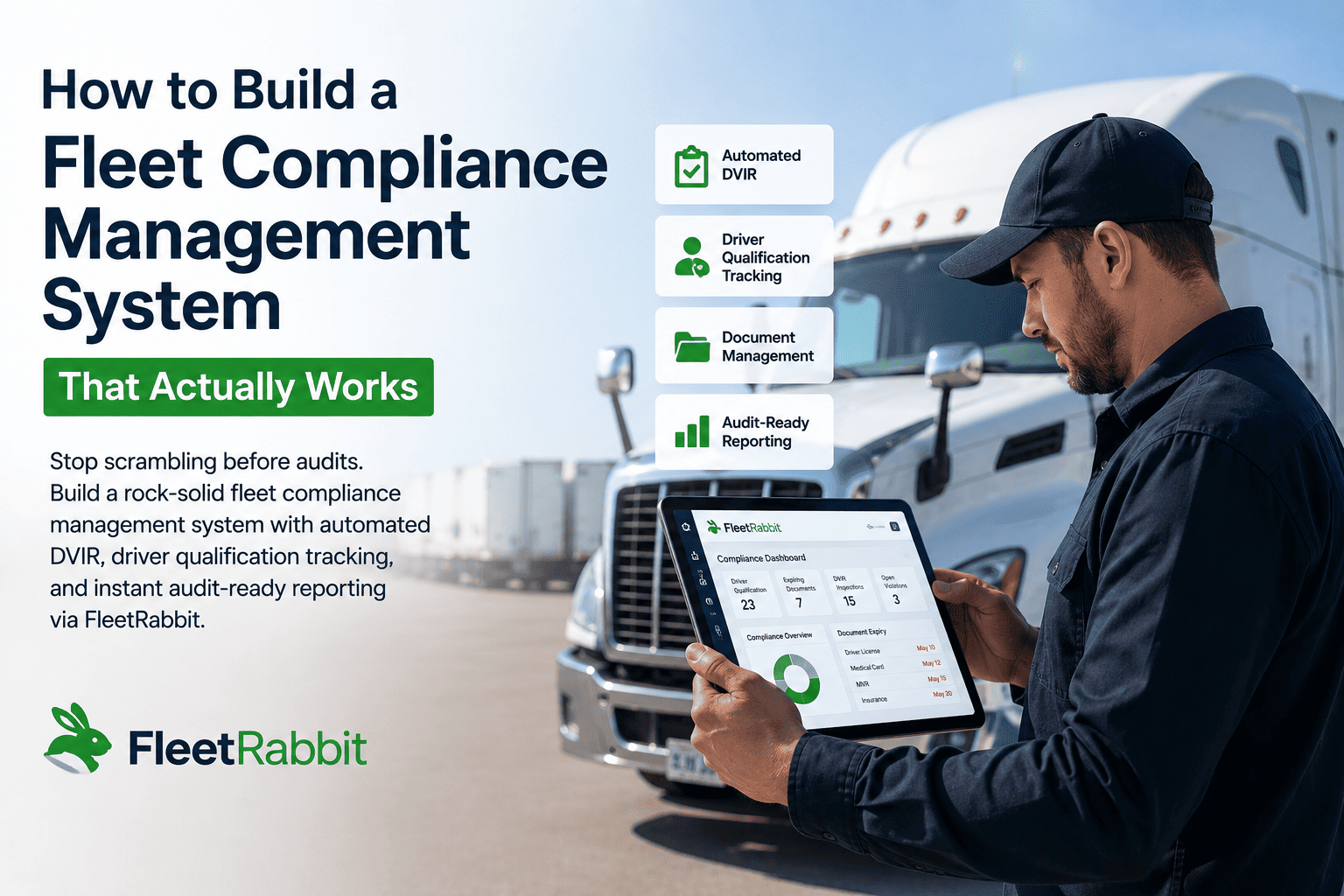
Fleet compliance is complex. Regulations change, requirements stack up, and one missed deadline can trigger fines ranging from $1,000 to $16,000 per violation. Small and mid-sized fleet operators face the same FMCSA regulations as large enterprises, but lack the administrative infrastructure to manage compliance systematically. Manual spreadsheets create gaps. Paper records get lost. Expiration dates slip past unnoticed. When audits arrive, compliance documentation becomes a scramble rather than a demonstration of your safety program.
A rock-solid fleet compliance management system eliminates this chaos. Instead of manual tracking scattered across spreadsheets and email, compliance automation centralizes driver records, vehicle documentation, inspection reports, and maintenance history into a single source of truth. Alerts trigger before deadlines arrive. Audit-ready reports generate in seconds. Your team knows exactly what's compliant and what's at risk—all the time.
Compliance Made Simple
FleetRabbit automates DVIR compliance, driver qualification tracking, and DOT documentation so you pass audits confidently. Free for 3 vehicles. All features included.
Why Manual Compliance Tracking Fails
Spreadsheets Create Blind Spots: When compliance tracking lives in Excel, critical information gets fragmented across multiple sheets. Driver medical certificates expire in one spreadsheet while vehicle inspections sit in another. No single view shows overall compliance status. Missing data doesn't surface until an audit reveals gaps months old.
Paper Records Don't Scale: Paper DVIR forms pile up in truck cabs and office cabinets. Forms get lost in transit. Handwriting becomes illegible. The signature chain breaks. When auditors ask for 90 days of inspection records for a specific vehicle, gathering that documentation takes hours of manual searching instead of seconds.
Expiration Dates Slip Past: Driver medical certificates, CDL renewals, vehicle annual inspections, and insurance renewals don't trigger alerts in spreadsheet-based systems. They expire unnoticed until a DOT officer flags them during an inspection. At that point, penalties become inevitable.
Audit Preparation Becomes a Crisis: Manual compliance systems treat audits as emergencies requiring all-hands scrambling. Teams spend days compiling documentation, searching for records, and reconstructing timelines. This reactive approach increases error rates and leaves compliance gaps visible to auditors.
What a Compliant Fleet System Must Include
Core Compliance Components
- Digital DVIR with Full Audit Trail: Every pre-trip and post-trip inspection captured electronically with driver signature, timestamp, GPS verification, and defect photos. Records stored for the federally required retention period with tamper-evident documentation.
- Driver Qualification File Tracking: Automated monitoring of medical certificate expirations, CDL renewal dates, and annual MVR reviews. Alerts trigger before deadlines arrive so drivers never operate without valid credentials.
- Vehicle Annual Inspection Management: Track vehicle annual inspection dates and generate automated renewal reminders. Maintain documentation proving inspections completed on schedule.
- HOS and ELD Integration: Real-time monitoring of driver duty status with automated alerts for hours-of-service violations. Integrated ELD data prevents false HOS records and supports FMCSA compliance.
- Maintenance Documentation: Complete repair records from every DVIR defect, tracking service completion, certification of repairs, and return-to-service authorization. Meets FMCSA requirements for comprehensive maintenance records.
- Recall Monitoring: Automated NHTSA recall tracking with affected vehicle identification and compliance status updates. Demonstrates proactive response to safety recalls.
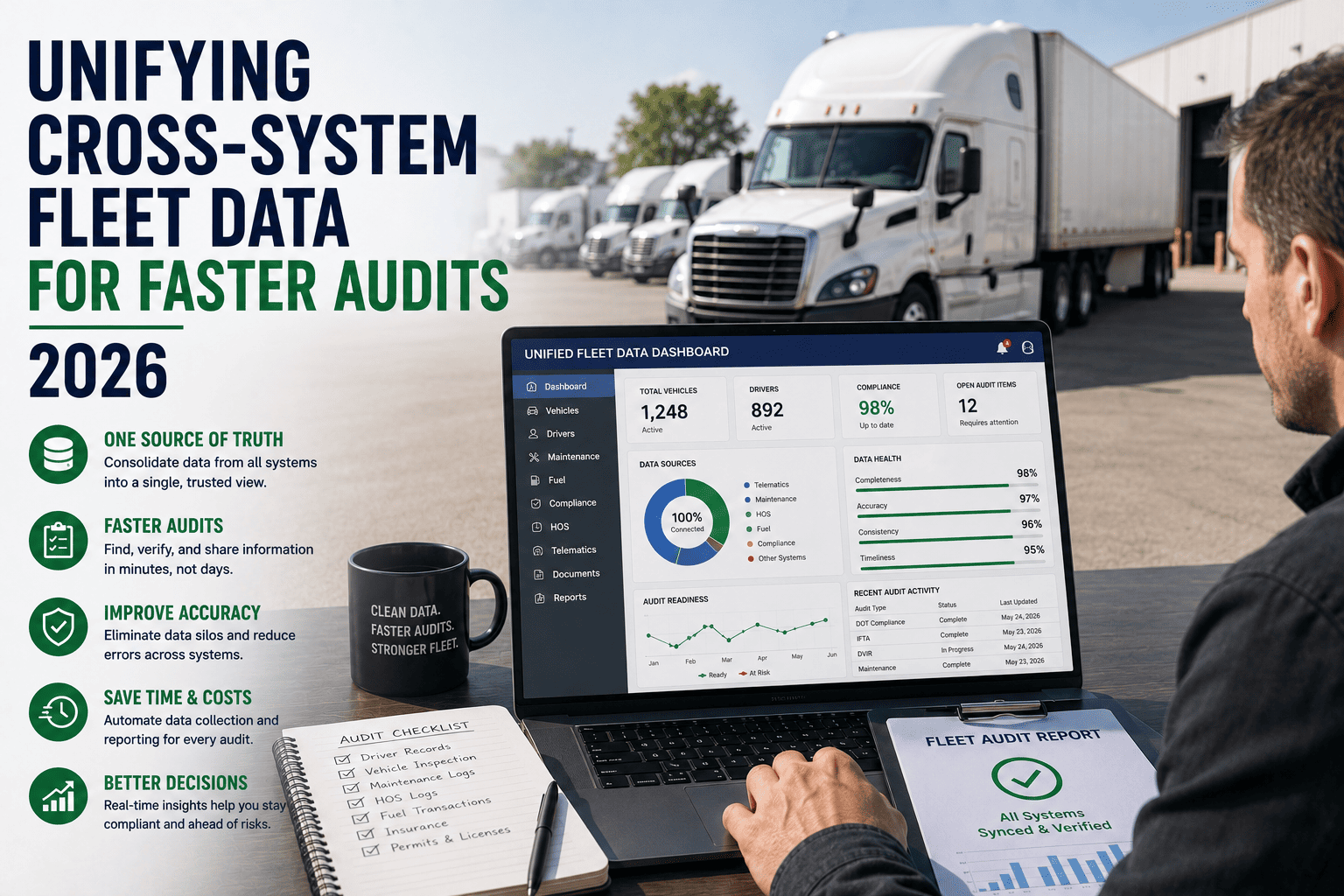
- Audit-Ready Reporting: Generate compliance reports in minutes showing driver qualification status, DVIR completion rates, maintenance history, and inspection records. All data organized and formatted for FMCSA review.
- Centralized Document Storage: All compliance documents stored in tamper-evident cloud storage accessible instantly during audits. Multi-year retention with searchable retrieval by vehicle, driver, or date range.
How Automated Compliance Systems Prevent Violations
Proactive Alerting Eliminates Missed Deadlines: Automated systems send alerts before compliance deadlines arrive, not after they pass. A driver's medical certificate expires in 14 days, the system sends an alert today. The driver can renew immediately, and their qualification file stays current without operational disruption.
Real-Time Visibility Enables Informed Decision Making: Fleet managers can log in and see exact compliance status across the entire fleet: which drivers are due for medical renewals, which vehicles need annual inspections, which DVIRs are incomplete. This visibility supports informed operational decisions and prevents knowingly operating non-compliant vehicles.
Automated Work Order Generation From Inspections: When a driver flags a defect in a digital DVIR, the system automatically creates a maintenance work order and routes it to the assigned technician in 60 seconds. This ensures defects don't languish in paper forms waiting for manual processing. Repairs get started immediately, and completion status is tracked to ensure vehicles return to service properly certified.
Digital Signatures and Timestamp Verification: Electronic signatures with GPS-verified timestamps create tamper-evident records that stand up to auditor scrutiny. Paper forms can be backdated or forged. Digital records with geolocation verification prove inspections actually occurred and where they occurred.
Closed-Loop Defect Resolution: Compliance failures often occur when defects are reported but not repaired. Automated systems create a closed-loop workflow: driver reports defect, mechanic is alerted, repair is completed, repairs are certified, vehicle returns to service. Nothing falls through the cracks because the system enforces the process.
Building a Compliance System Step by Step
Step 1: Centralize Your Records: Move all driver qualification files, medical certificates, CDL renewals, vehicle inspections, DVIRs, and maintenance records into a single system. This eliminates the blind spots created by scattered spreadsheets. All compliance data is now in one place where it can be tracked systematically.
Step 2: Set Up Automated Alerts: Configure the system to send alerts before every compliance deadline. Medical certificate expires in 14 days, alert goes out. CDL renewal due in 30 days, driver gets notified. Vehicle annual inspection due in 7 days, manager is alerted. These advance warnings give your team time to act before deadlines pass.
Step 3: Automate DVIR Completion and Defect Routing: Implement digital DVIR inspections on driver mobile devices. Drivers complete inspections faster than paper, defects are instantly routed to maintenance, and work orders are automatically generated. This eliminates manual data entry between inspection and repair.
Step 4: Track Repairs to Completion: Ensure every DVIR defect generates a work order, gets assigned to a technician, and tracks to completion. Technicians certify repairs as finished, and drivers can't return vehicles to service until repairs are certified. This closed-loop process ensures no defects remain unrepaired.
Step 5: Generate Audit-Ready Reports Weekly: Run compliance reports weekly to identify any gaps before they become violations. See which drivers are approaching compliance deadlines, which DVIRs are incomplete, which maintenance work is overdue. Address issues proactively rather than reactively during audits.
FMCSA Compliance Requirements Your System Must Meet
| Compliance Requirement | What's Required | System Automation |
|---|---|---|
| DVIR (49 CFR 396.11) | Daily pre-trip and post-trip inspections with driver signature and vehicle condition certification | Digital DVIR on mobile with electronic signature, timestamp, GPS verification, and instant defect routing |
| Driver Qualification Files (49 CFR 391.51) | Medical certificates, CDL copies, MVR records, and hiring documentation maintained for each driver | Automated tracking of medical cert expirations, CDL renewals, and annual MVR reviews with advance alerts |
| Vehicle Maintenance (49 CFR 396.21) | Complete maintenance records showing all repairs, service history, and return-to-service certification | Automatic work order generation from DVIR defects with completion tracking and repair certification |
| HOS Compliance (49 CFR 395) | Records showing drivers comply with hours-of-service limits and mandatory rest periods | Real-time HOS monitoring with ELD integration and automated alerts for violations |
| Annual Inspections (49 CFR 396.17) | Proof that each vehicle passes annual inspection and meets safety standards | Annual inspection tracking with renewal reminders and documentation storage |
| Record Retention (49 CFR 391.51) | All compliance records maintained for minimum 3 years, some for 7 years | Cloud storage with tamper-evident records, automatic retention scheduling, and searchable retrieval |
Real-World Impact: How Compliance Systems Reduce Violations
Complete DVIR Compliance: Fleets implementing digital DVIR systems achieve near 100% inspection completion rates compared to 60-75% with paper forms. Complete inspection records demonstrate proactive safety management and dramatically reduce audit findings related to missing or incomplete DVIRs.
Elimination of Expired Credentials: Automated expiration alerts eliminate the primary driver qualification file violation. Drivers don't operate without valid medical certificates or CDL renewals because the system prevents it. Medical certificate violations drop to near zero when alerts trigger before expiration dates arrive.
Organized Maintenance Records: Digital work order tracking from DVIR defects creates comprehensive maintenance documentation. Auditors see complete repair histories for every vehicle, demonstrating preventive maintenance practices and proper return-to-service procedures. Maintenance-related violations drop significantly.
Faster Audit Preparation: When FMCSA auditors request compliance documentation, audit-ready reports can be generated instantly. No scrambling to find documents. No time spent reconstructing records. Documentation demonstrates consistent compliance over time rather than last-minute compliance theater.
Common Compliance Pitfalls and How to Avoid Them
Pitfall: DVIR Defects That Never Get Repaired: Paper DVIRs often report defects that don't result in repairs. Drivers submit inspection forms noting brake issues, but those forms sit in a pile and repairs never happen. Auditors find unrepaired defects from weeks or months ago. Automated systems create work orders automatically from defects and track repairs to completion, ensuring defects don't languish.
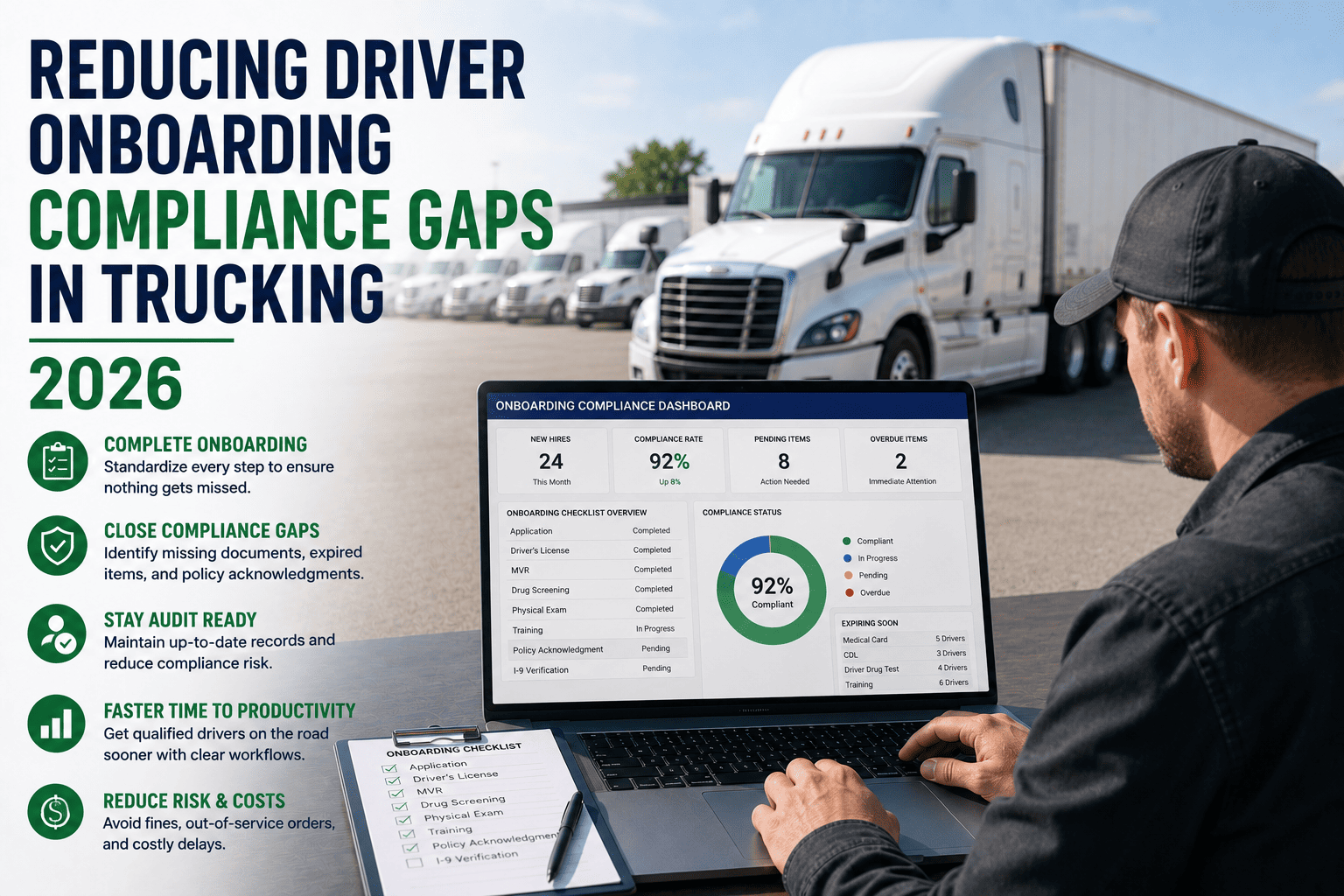
Pitfall: Driver Qualification Files Missing Required Documents: Incomplete driver files are among the most common audit findings. A driver's medical certificate expires but isn't renewed. Annual MVR review isn't completed. The file looks incomplete to auditors. Automated tracking of medical expirations, CDL renewals, and MVR reviews means documents are completed before they become violations.
Pitfall: DVIR Records Lost or Incomplete: Paper DVIRs get lost in vehicles. Handwritten forms become illegible. The signature chain is incomplete. When auditors ask for inspection records, your fleet can't produce them. Digital DVIRs with electronic signatures and cloud storage ensure records are complete, legible, and instantly retrievable.
Pitfall: No Evidence of Preventive Maintenance Program: Auditors look for evidence that your fleet practices preventive maintenance, not just reactive repairs. Organized digital maintenance records showing scheduled PM, completed work, and parts sourcing demonstrate a mature maintenance program. Spreadsheet-based maintenance often looks reactive and disorganized by comparison.
Timeline: From Compliance Crisis to Audit-Ready Operations
Week 1: System Setup and Driver Onboarding - Implement digital DVIR on driver mobile devices. Upload existing driver qualification files and medical certificate data. Configure automated expiration alerts. Identify compliance gaps in current documentation.
Week 2-3: Defect Routing and Maintenance Integration - Set up automated work order generation from DVIR defects. Train mechanics on digital work order completion. Begin tracking repairs to completion. Establish return-to-service certification process.
Week 4: Audit Report Generation - Configure compliance reports showing driver qualification status, DVIR completion rates, maintenance history. Generate weekly compliance reports to identify any remaining gaps. Address gaps before they become violations.
Month 2: Continuous Monitoring - Monitor compliance metrics weekly. Address any defects or violations that appear. Maintain audit-ready documentation without scrambling. Handle upcoming FMCSA audits confidently with complete records instantly accessible.
Stop Scrambling Before Audits
FleetRabbit automates DVIR compliance, driver qualification tracking, and DOT documentation so audits become routine reviews instead of emergencies. Free for 3 vehicles with all features included.
Frequently Asked Questions About Fleet Compliance Systems
Q: How quickly can compliance automation show results?
Most fleets see immediate improvements in DVIR completion rates and defect routing within the first week. Expiration alerts prevent missed deadlines within days. Audit-ready reports are generated instantly rather than taking hours of manual work. Long-term benefits include elimination of compliance violations and dramatically improved audit outcomes.
Q: Will digital DVIR records hold up during audits?
Yes. FMCSA explicitly authorized electronic DVIRs under 49 CFR 396.11 in 2026. Digital records with electronic signatures, GPS verification, and timestamps are legally equivalent to paper forms and provide stronger evidence of compliance. Auditors see tamper-evident records with complete audit trails, which is actually superior to paper documentation.
Q: What if we have existing paper records and multiple driver qualification files?
Most compliance systems include tools to import existing records and consolidate scattered driver files into a single system. You can migrate gradually or upload historical documentation. Once records are centralized, automated tracking takes over monitoring expirations and scheduling renewals going forward.
Q: Does compliance software prevent violations or just document them better?
Both. Automated alerts trigger before deadlines arrive, preventing violations from happening in the first place. Work order automation ensures defects reported in inspections actually get repaired. Real-time visibility prevents operating non-compliant vehicles. Documentation is complete and audit-ready when violations are prevented from occurring.
Q: How does compliance automation integrate with existing dispatch and maintenance systems?
Modern compliance platforms integrate with accounting software, telematics providers, fuel card systems, and parts suppliers. This means compliance data flows automatically between systems rather than requiring manual re-entry. Integrations eliminate data silos and ensure all systems stay synchronized with current compliance status.
Q: What happens if a driver or vehicle goes non-compliant?
Compliance systems alert you immediately when deadlines approach and show clear status for every driver and vehicle. If someone goes non-compliant, you have real-time visibility and can take immediate action. Start free to see compliance status across your fleet.
Q: How do I get started with compliance automation?
FleetRabbit is free for 3 vehicles with no credit card required. Set up digital DVIR, upload your existing driver qualification files, and see compliance status across your fleet immediately. Book a demo to walk through your specific compliance requirements.
Q: Is compliance automation worth the investment for small fleets?
Absolutely. A single FMCSA violation costs $1,000 to $16,000 per finding. Compliance automation prevents violations rather than just documenting them. Most small fleets recover the cost of compliance software within the first audit they pass without findings. Beyond cost recovery, automated compliance enables safe, confident fleet operations without the stress of manual tracking.
Compliance Without Crisis
Get compliance visibility, automated expiration alerts, digital DVIR, and audit-ready reports free for 3 vehicles. All features included from day one.