.png)
A fleet driver safety program is the structured foundation that separates high-performing transportation companies from those that cycle through accidents, violations, and rising insurance premiums. Commercial fleets face a compounding risk: driver behavior directly affects fuel consumption, vehicle wear, liability exposure, and DOT compliance simultaneously. Without a documented, consistently enforced safety program, fleet managers are left reacting to incidents rather than preventing them. This guide covers the core components of an effective fleet driver safety program, including driver scorecards, HOS compliance, behavior monitoring, safety coaching, and the documentation practices that hold everything together. FleetRabbit's driver management tools support each of these areas, giving fleet managers objective data to track performance, identify risk, and coach drivers toward measurable improvement.
Fleet Driver Safety: 2026 Industry Snapshot
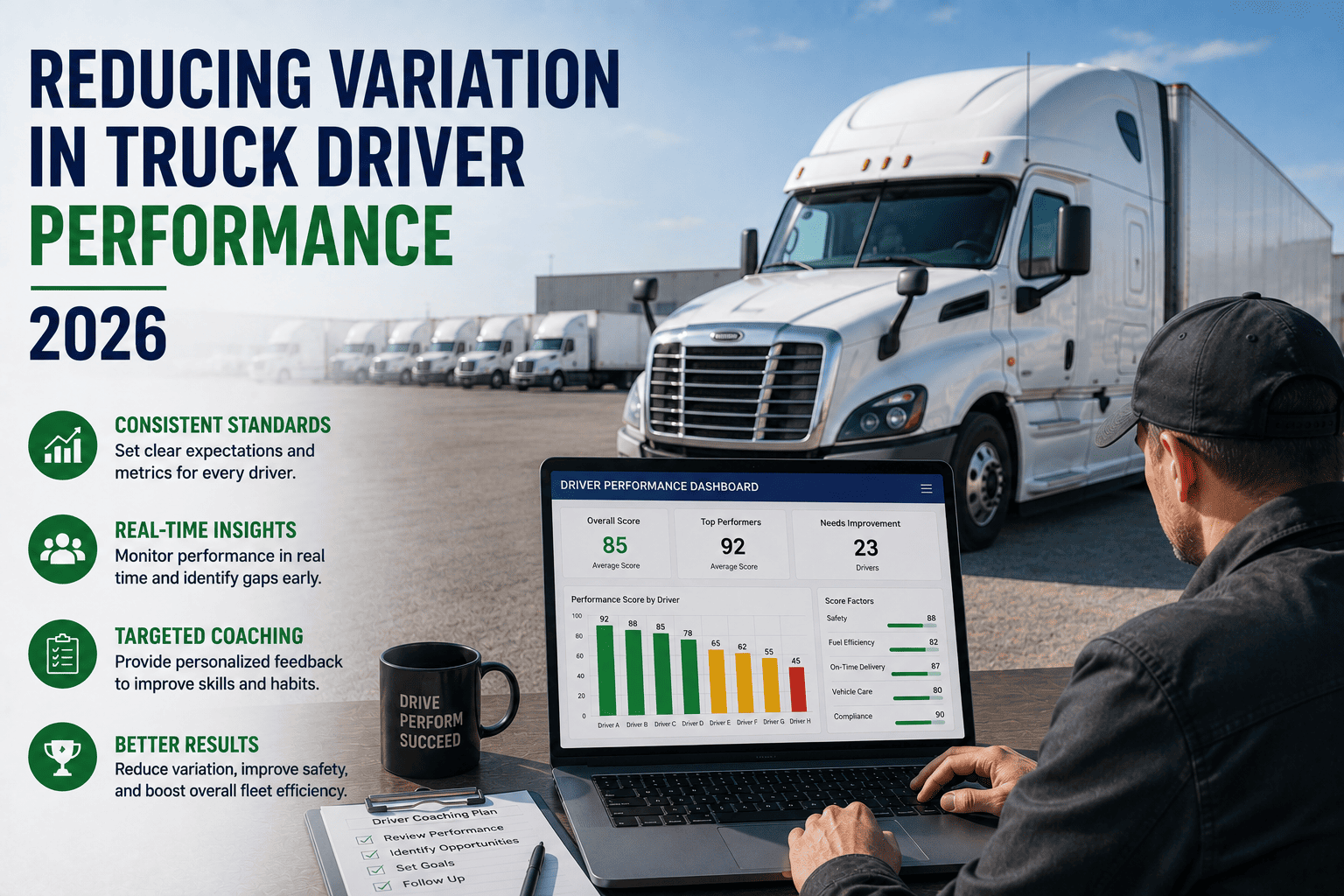
Driver behavior is the single largest controllable variable in fleet operating cost. Two drivers running identical vehicles on identical routes can differ by 15 to 20 percent in fuel consumption, 30 to 40 percent in maintenance incidence, and significantly in safety event frequency. Fleets with documented safety programs and data-driven coaching consistently see fewer accidents, lower insurance premiums, and reduced regulatory exposure compared to fleets relying on informal oversight. A structured safety program is not an administrative exercise. It is a direct operating cost reduction strategy.
Build a Data-Driven Driver Safety Program
FleetRabbit tracks driver scorecards, behavior metrics, HOS compliance, and safety documentation in one platform so your safety program runs on objective data, not guesswork.
Section 1: Foundations of a Fleet Driver Safety Program
An effective fleet driver safety program requires more than a policy document handed to drivers at onboarding. It requires consistent processes, objective measurement, and documented follow-through at every level of the operation. The five core components that define a functional safety program are: a written safety policy, driver qualification standards, behavior monitoring, performance coaching, and compliance recordkeeping. Fleets that build all five into daily operations create a self-reinforcing safety culture rather than relying on periodic interventions after incidents occur.
Written Safety Policy Requirements
A written fleet safety policy establishes expectations, defines consequences, and creates the legal documentation that protects the carrier in the event of litigation or regulatory review. The policy must cover hours of service limits, mobile device restrictions, pre-trip and post-trip inspection requirements, accident reporting procedures, and the consequences for safety violations. Drivers must acknowledge receipt and understanding of the policy in writing, and that acknowledgment must be retained in the driver qualification file.
Policies that sit in a binder and are never referenced have no operational value. Effective safety policies are reinforced through regular safety meetings, pre-trip briefings, and coaching conversations that connect the written rules to specific, observable behaviors on the road and at the yard.
Driver Qualification Standards
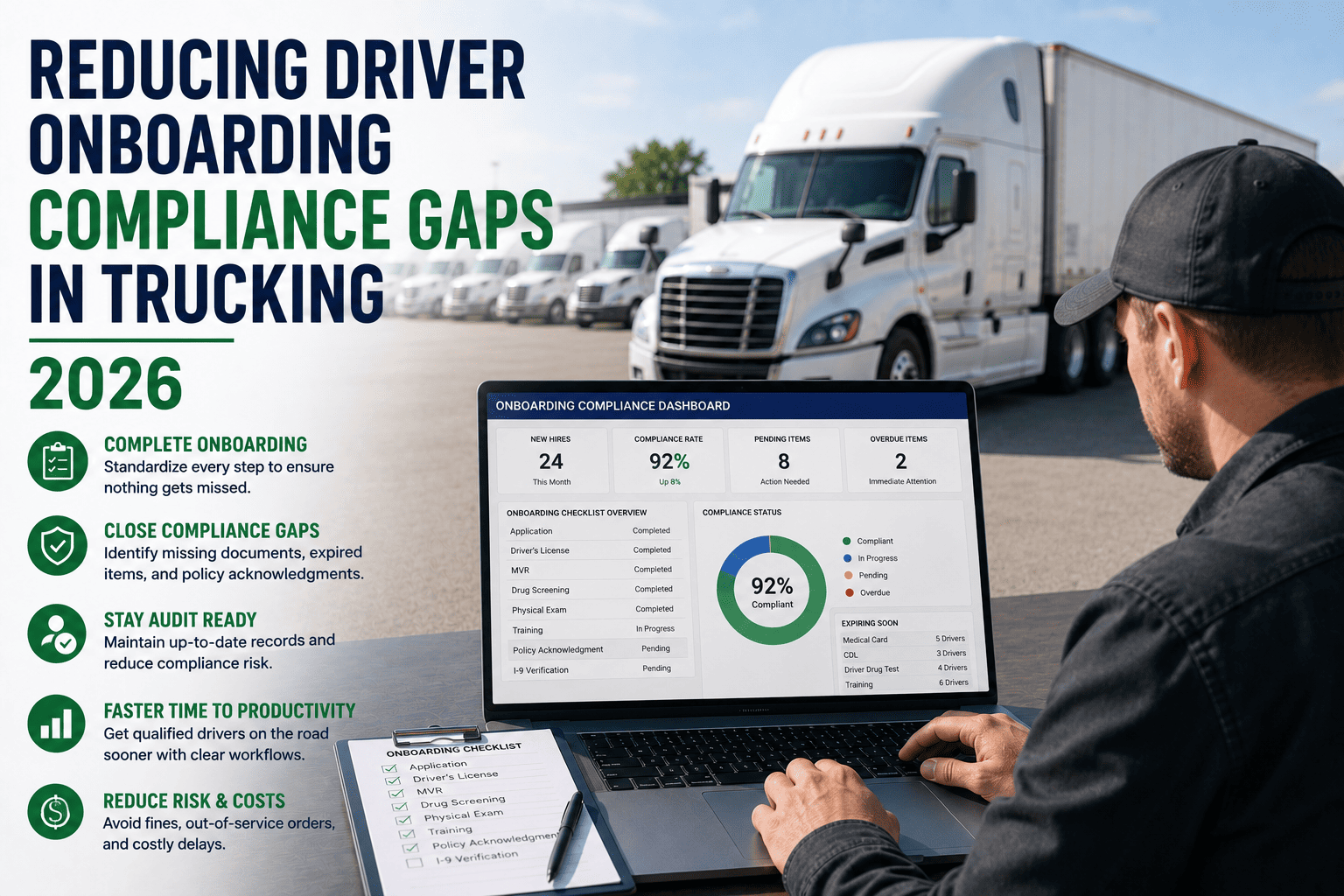
Before a driver operates a commercial vehicle, the carrier must verify that the driver meets minimum qualification standards under 49 CFR Part 391. This includes confirming a valid CDL with appropriate endorsements, reviewing the motor vehicle record, verifying a current DOT medical certificate, completing the FMCSA Drug and Alcohol Clearinghouse pre-employment query, and obtaining safety performance history from previous DOT-regulated employers. These are baseline requirements, not optional steps.
Safety Program Foundation Checklist
- Written safety policy distributed and acknowledged by every driver
- Driver qualification files complete and current for all active drivers
- Pre-employment drug test and Clearinghouse query completed before first drive
- MVR reviewed at hire and annually for every driver
- Accident reporting procedure documented and communicated to all drivers
- Safety meeting schedule established and records of attendance maintained
- Disciplinary process for safety violations documented and consistently applied
Section 2: Driver Behavior Monitoring
Driver behavior monitoring converts daily driving activity into objective, measurable data that fleet managers can use to identify risk, prioritize coaching, and document improvement over time. Without monitoring systems, assessments of driver performance are based on incident history, which only captures failures after they occur. Behavior monitoring identifies risk patterns before incidents happen, giving managers the opportunity to intervene proactively.
Key Driver Behavior Metrics to Track
The most operationally relevant driver behavior metrics are speeding frequency and severity, harsh braking events, rapid acceleration patterns, hard cornering, idle time, and seatbelt compliance. Each metric correlates with a different cost driver: speeding affects fuel consumption and accident severity, harsh braking accelerates brake wear, excessive idling increases fuel cost, and hard cornering stresses tires and suspension components. Tracking all metrics together provides a complete picture of driving style and its impact on operating costs.
| Behavior Metric | What It Indicates | Primary Cost Impact | Risk Level |
|---|---|---|---|
| Speeding | Frequency and severity above posted limits | Fuel, accident liability, violations | High |
| Harsh Braking | Sudden deceleration events per trip | Brake wear, rear-end accident risk | High |
| Rapid Acceleration | Hard throttle applications from stop or low speed | Fuel consumption, drivetrain wear | Medium |
| Hard Cornering | Lateral G-force events during turns | Tire wear, rollover risk, cargo damage | High |
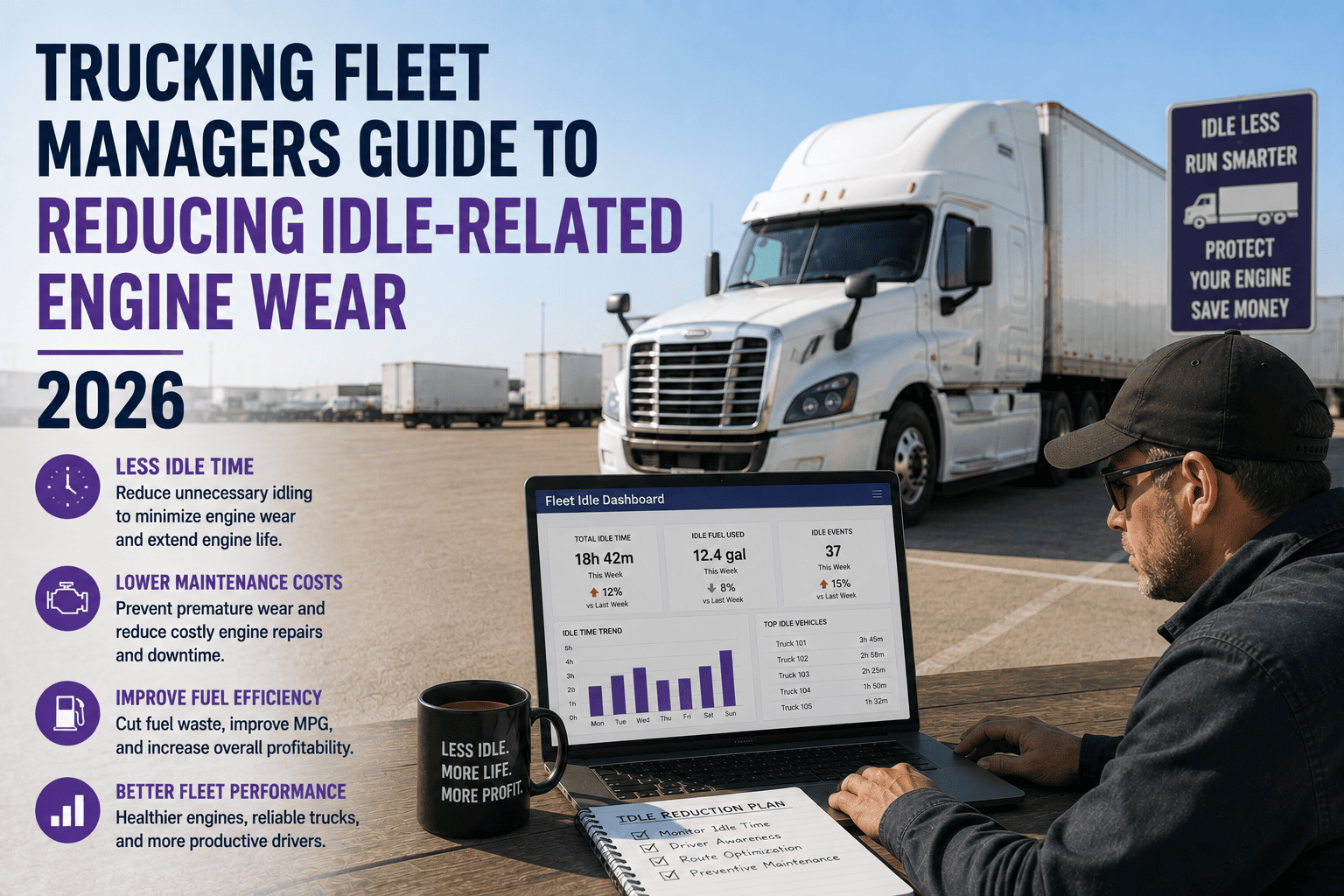
| Idle Time | Engine-on time with no vehicle movement | Fuel cost, engine hours, emissions | Medium |
| Seatbelt Compliance | Detected non-use of seatbelt while in motion | Driver injury severity, liability exposure | High |
Behavior Monitoring Frequency and Review Cadence
Behavior data is only useful if it is reviewed consistently and acted upon in a defined timeframe. Daily review of high-severity events (extreme speeding, seatbelt violations) allows for same-day intervention when warranted. Weekly scorecard review enables coaching conversations before poor habits become entrenched. Monthly trend analysis across the fleet identifies drivers who are improving and those whose performance is deteriorating despite coaching. Quarterly program reviews assess whether the safety program is producing measurable change at the fleet level.
Section 3: Driver Scorecard Program
A driver scorecard aggregates multiple behavior and compliance metrics into a single performance indicator that reflects each driver's overall safety profile. Scorecards enable fair, objective comparisons across drivers operating in similar conditions and create a documented basis for coaching, recognition, and disciplinary decisions. Without scorecards, safety management defaults to incident-based feedback, which means drivers only hear about their performance after something goes wrong.
Building an Effective Driver Scorecard
An effective scorecard weights metrics according to their relative safety impact. Speeding, seatbelt compliance, and HOS adherence typically carry the highest weights because they correlate most directly with accident severity and regulatory risk. Fuel-efficiency behaviors such as idle time and smooth acceleration carry moderate weight because their primary impact is operating cost. The weighting structure should reflect the fleet's specific risk profile and operating environment.
Driver Scorecard Program Checklist
- Scorecard metrics defined and weighted based on fleet risk profile
- All drivers informed of scorecard criteria before monitoring begins
- Scorecards generated on a consistent weekly or monthly cycle
- High-risk drivers identified and flagged for priority coaching
- Improving drivers recognized to reinforce positive behavior change
- Scorecard data retained as part of driver performance documentation
- Scorecard methodology reviewed and updated at least annually
- Scorecard results tied to coaching process and, where applicable, incentive program
Using Scorecards for Driver Recognition and Retention
Driver scorecards are most effective when they are used for recognition as well as remediation. Fleets that publicly recognize top-performing drivers and create tangible incentives around scorecard performance see higher engagement with the safety program and lower resistance to monitoring. Safety bonuses, schedule preferences, or public acknowledgment tied to scorecard rankings create positive motivation that enforcement-only approaches cannot replicate. Drivers who understand the program and see fair, transparent measurement are significantly more likely to sustain improved behavior over time.
Section 4: HOS Compliance in Driver Safety Programs
Hours of Service compliance is a non-negotiable component of any fleet driver safety program. FMCSA's HOS regulations under 49 CFR Part 395 exist specifically because driver fatigue is a proven contributor to serious accidents involving commercial vehicles. A safety program that addresses speeding and harsh braking while tolerating HOS violations is incomplete and creates significant regulatory and liability exposure for the carrier.
HOS Rules Every Safety Program Must Enforce
11-Hour Driving Limit: Property-carrying drivers may not drive more than 11 hours after 10 consecutive hours off duty. This limit applies regardless of operational pressure or schedule requirements.
14-Hour On-Duty Window: Drivers may not drive beyond the 14th consecutive hour after coming on duty, even if fewer than 11 driving hours have been used. Off-duty periods during the shift do not extend this window.
30-Minute Break: A 30-minute non-driving break is required after 8 cumulative hours of driving. The break must be documented in the ELD record.
60/70-Hour Rule: Drivers may not drive after reaching 60 on-duty hours in 7 consecutive days or 70 hours in 8 consecutive days. The 34-hour restart provision resets this limit after 34 consecutive off-duty hours.
HOS Compliance Checklist for Safety Programs
- ELD installed, registered, and functioning on all applicable vehicles
- All drivers trained on correct ELD operation and malfunction procedures
- 11-hour and 14-hour limits monitored daily with alerts before violations
- 30-minute break compliance verified through ELD records
- Weekly hour accumulations tracked with alerts approaching 60/70-hour limits
- Dispatch processes reviewed to ensure schedules do not pressure HOS violations
- ELD records retained for minimum six months and available for roadside review
- HOS violation patterns reviewed monthly to identify systemic scheduling problems
Dispatch Practices That Affect HOS Compliance
HOS violations frequently originate in dispatch, not with the driver. Load assignments that require driving beyond available hours, pickup windows that push drivers past the 14-hour on-duty limit, and scheduling practices that prevent adequate off-duty recovery all create HOS pressure. A complete safety program reviews dispatch workflows as part of HOS compliance management, not just driver behavior. Carriers that identify and correct scheduling practices that routinely push drivers toward HOS limits reduce violation rates more effectively than enforcement alone achieves.
Section 5: Safety Coaching Program
Data and scorecards only produce results when they are connected to a structured coaching program. Monitoring without coaching creates resentment; coaching without data creates subjectivity. The combination of objective scorecard data and consistent coaching conversations is what drives measurable, sustained behavior change across a driver population.
Structuring Effective Safety Coaching Conversations
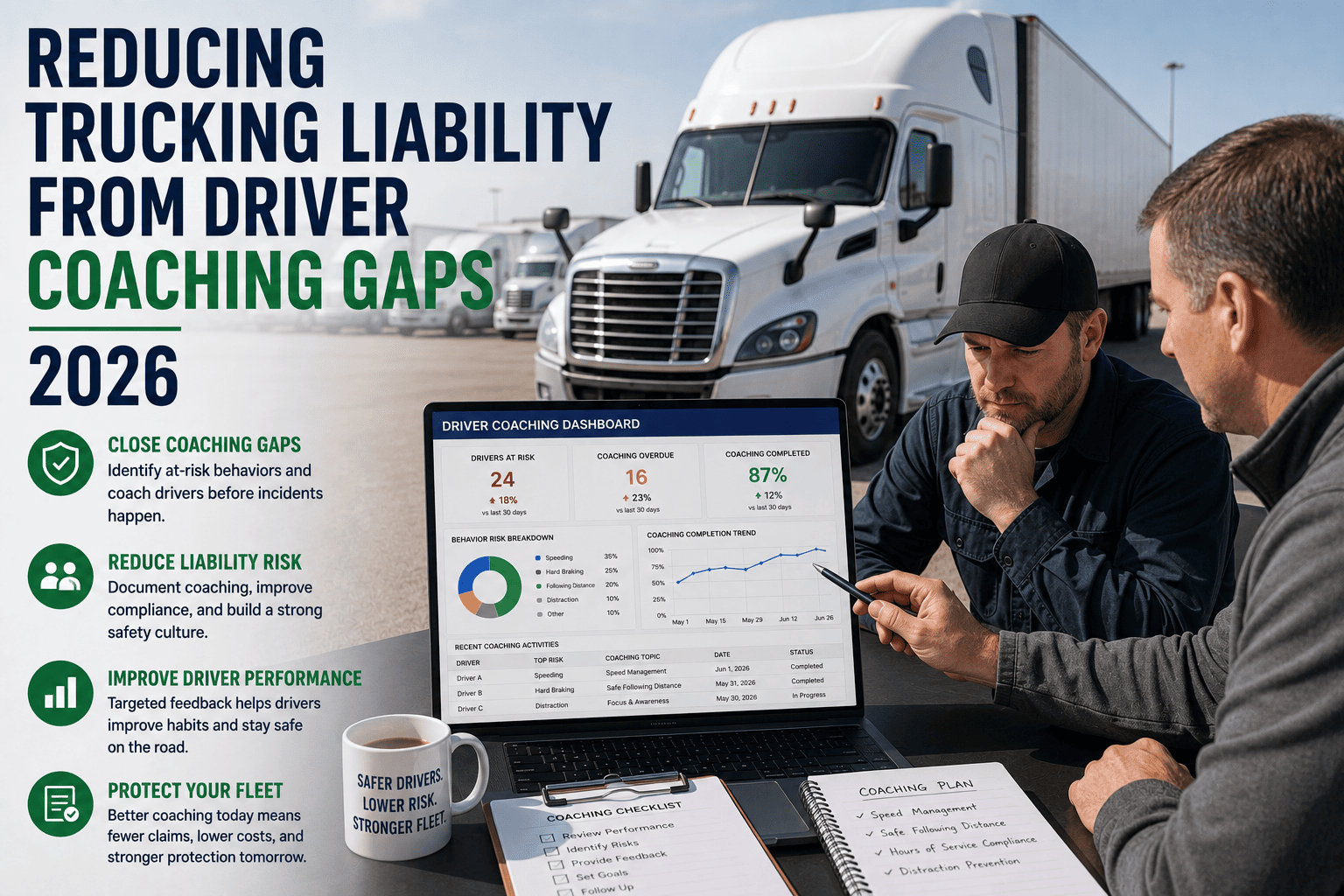
Effective coaching conversations focus on specific, documented events rather than general assessments of driver character or attitude. A coaching session anchored in a specific speeding event on a specific date, shown through ELD data and scorecard trends, is far more actionable than a general conversation about driving too fast. The coaching record should document the specific behavior discussed, the agreed improvement target, the timeline for follow-up review, and the driver's acknowledgment of the conversation. This documentation protects the carrier in the event of a subsequent incident and creates accountability for both the driver and the supervisor.
| Coaching Trigger | Recommended Response | Documentation Required | Follow-Up Timeline |
|---|---|---|---|
| First HOS violation | Documented coaching with cause analysis | Coaching record, driver signature | 30-day review |
| Repeated speeding events | Formal coaching with scorecard review | Coaching record, specific events cited | 2-week review |
| Preventable accident | Full accident review and remedial training | Accident report, training completion | Immediate and 60-day |
| Declining scorecard trend | Proactive coaching before incident occurs | Scorecard data, coaching notes | 30-day review |
| Seatbelt violation | Same-day coaching conversation | Coaching record, date and event | Immediate follow-up |
Section 6: Safety Program Documentation and Recordkeeping
Documentation is what transforms a safety program from an informal management practice into a defensible, auditable system. In the event of a serious accident, litigation, or FMCSA compliance review, documentation is the evidence that demonstrates the carrier maintained reasonable safety standards. Gaps in safety records are interpreted by courts, insurers, and regulators as gaps in the safety program itself.
Safety Program Documentation Checklist
- Written safety policy with signed driver acknowledgments on file
- Driver scorecards generated and retained on a defined schedule
- Coaching session records documenting specific behaviors, dates, and follow-up plans
- Safety training completion records with dates and content covered
- Accident reports and post-accident drug and alcohol test results retained
- HOS violation records with documented corrective actions
- Annual safety program review documented with findings and adjustments made
- All records organized by driver and accessible for audit within 24 hours
How FleetRabbit Supports Fleet Driver Safety Programs
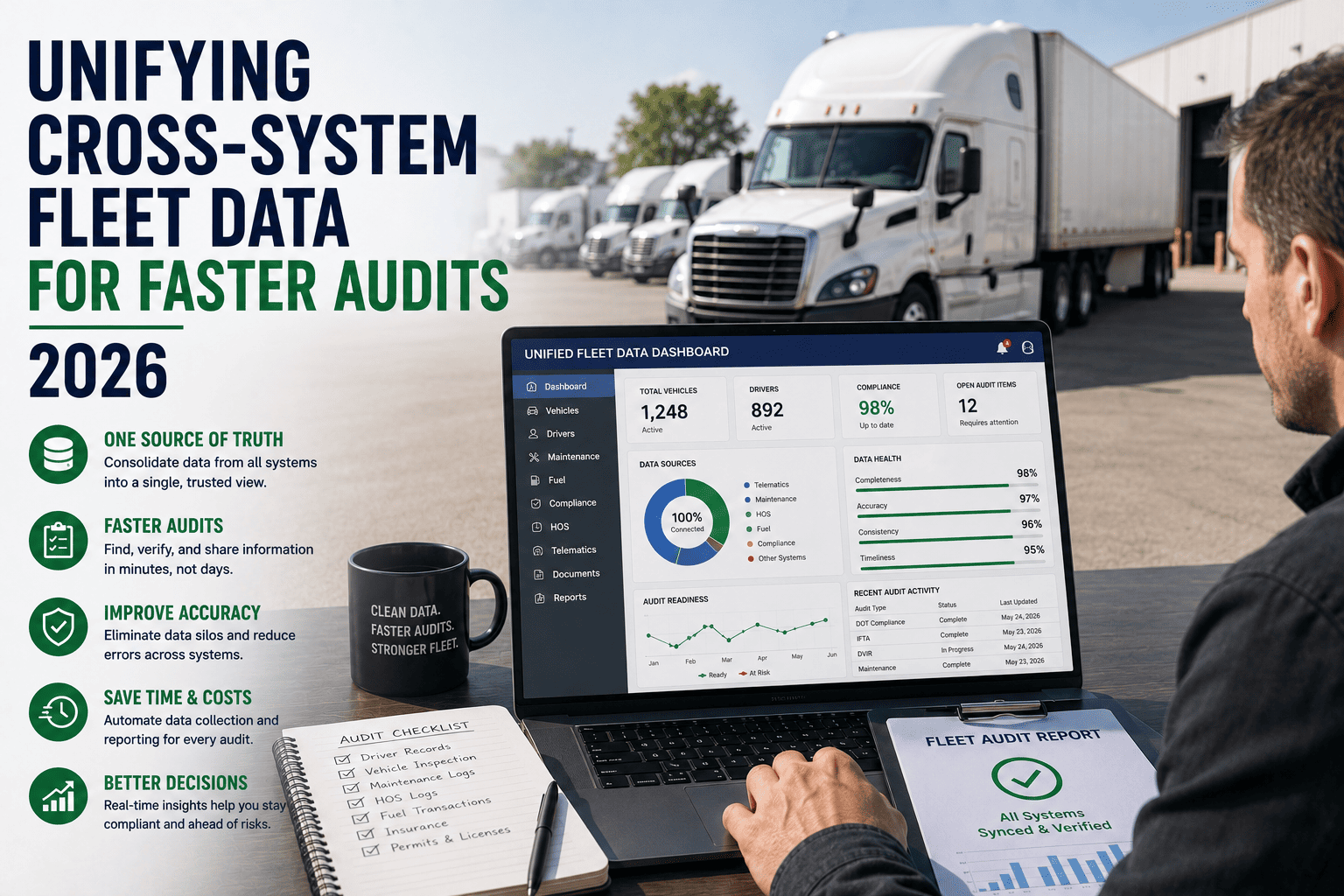
Managing a driver safety program across a fleet of any size requires consistent data collection, organized recordkeeping, and timely visibility into performance trends. FleetRabbit's driver management tools centralize behavior tracking, compliance documentation, and driver qualification records in one platform, so safety managers spend less time gathering information and more time acting on it.
FleetRabbit Driver Safety Features
- Driver Behavior Reports: Track speeding frequency, harsh braking rates, acceleration patterns, and safety score trends. Reports are generated automatically and formatted for fleet manager review and coaching sessions.
- Driver Scorecards: Individual driver scorecards aggregate behavior metrics into performance indicators that enable objective coaching decisions and fair comparisons across the driver population.
- Driver Qualification Tracking: Store and track all DQ file documents with automated expiration alerts for medical certificates, CDL renewals, and annual MVR review dates.
- Digital DVIR on Mobile: Drivers complete FMCSA-compliant pre-trip and post-trip inspections from their smartphones. Defects are automatically routed to maintenance work orders with no manual handoff required.
- Compliance Documentation: Safety records, coaching notes, and compliance documents are stored digitally and accessible for audit-ready reporting at any time.
- Fleet Safety Dashboard: Real-time view of driver performance trends, compliance status, and open safety items across the entire fleet in a single screen.
Frequently Asked Questions: Fleet Driver Safety Programs
Q: What are the core components of a fleet driver safety program?
A complete fleet driver safety program includes a written safety policy, driver qualification standards, behavior monitoring, a structured coaching process, and documented recordkeeping. All five components must work together. Start a free trial or book a demo to see how FleetRabbit supports each area.
Q: What driver behavior metrics should a fleet safety program track?
The most important metrics are speeding frequency, harsh braking events, rapid acceleration, hard cornering, idle time, and seatbelt compliance. Each metric corresponds to a specific safety risk or operating cost impact and should be weighted accordingly in driver scorecards.
Q: How often should fleet managers review driver scorecards?
High-severity events should be reviewed daily. Individual driver scorecards should be reviewed weekly or monthly depending on fleet size and risk level. Monthly fleet-wide trend analysis identifies whether the safety program is producing measurable improvement over time.
Q: What documentation should be kept for driver coaching sessions?
Each coaching session should document the specific behavior discussed, the data it was based on, the improvement target agreed upon, the follow-up timeline, and the driver's acknowledgment. This documentation is critical in the event of a subsequent accident or regulatory review.
Q: Is HOS compliance part of a driver safety program?
Yes, HOS compliance is a required component. FMCSA regulations link driver fatigue directly to accident risk, and carriers that ignore HOS violations in their safety programs face compounding regulatory and liability exposure. Safety programs must monitor and enforce HOS limits as a baseline.
Q: How does driver behavior monitoring affect insurance premiums?
Insurers increasingly accept documented driver behavior reports as evidence of a managed safety program, and fleets with improving scorecard trends may qualify for telematics-based premium discounts. Sign up free or book a demo to see FleetRabbit's behavior reporting.
Q: Do small fleets need a formal driver safety program?
Yes. FMCSA safety regulations apply regardless of fleet size, and the liability exposure from a single serious accident is the same for a five-truck operation as for a hundred-truck fleet. Smaller fleets benefit from structured programs because the impact of one high-risk driver is proportionally larger.
Q: What is the role of driver scorecards in safety culture?
Scorecards create objective, transparent performance standards that drivers can understand and respond to. When used for recognition as well as remediation, they build engagement with the safety program and reduce resistance to monitoring, which is essential for long-term culture change.
Q: Can FleetRabbit help manage a fleet driver safety program?
FleetRabbit tracks driver behavior metrics, generates scorecards, manages driver qualification files, and centralizes safety documentation in one platform. Start a free trial or book a demo to see the driver safety dashboard.
Manage Driver Safety With Objective Data
FleetRabbit gives your team driver scorecards, behavior reports, HOS compliance tracking, and qualification file management in one platform, so your safety program runs on facts, not guesswork.