The paper inspection form is one of the most persistent inefficiencies in fleet operations. Drivers spend fifteen to twenty minutes per shift filling out pre-trip and post-trip inspection sheets. Supervisors spend additional time reviewing forms for completeness and legibility. Completed forms fill filing cabinets or accumulate in storage boxes, rarely accessed for trend analysis and almost never available when a compliance auditor requests documentation for a specific vehicle on a specific date. Fleet inspection apps have eliminated these inefficiencies for early adopters, replacing paper forms with mobile workflows that capture inspection data in real time, flag defects immediately, and maintain audit-ready records without physical storage. For fleet managers still managing inspections on paper, the question is whether to continue absorbing the efficiency loss and compliance risk of manual processes or to transition to a digital inspection platform that pays for itself through reduced administrative overhead alone.
Fleet Compliance
Mobile Inspection
High Priority
9 min read
Guide Overview
This guide covers the complete transition from paper inspection forms to digital fleet inspection apps — including workflow design, driver adoption strategies, defect management integration, and compliance documentation. FleetRabbit's inspection module enables drivers to complete pre-trip and post-trip inspections from mobile devices, automatically routes defect reports to maintenance work orders, and maintains permanent audit-ready inspection records for every vehicle in the fleet.
73%
reduction in inspection-related administrative time reported by fleets switching from paper forms to digital inspection apps
48hrs
average time saved annually per driver by eliminating manual form completion and submission steps
94%
of fleet compliance officers identify real-time defect notification as the most valuable feature of digital inspection systems
100%
legibility rate for digital inspection records versus estimated 10 to 15 percent illegibility rate for handwritten forms
The Cost of Paper Inspection Forms in Modern Fleet Operations
Paper inspection forms impose costs that fleet managers often underestimate because they are spread across multiple operational areas and rarely calculated as a single line item. The true cost includes driver time spent completing forms, supervisor time spent reviewing and filing forms, storage space for historical records, retrieval time when auditors request documentation, and the compliance exposure created by missing, incomplete, or illegible forms.
Beyond direct labor and storage costs, paper forms create information latency that undermines safety and maintenance efficiency. A driver who discovers a defect during a morning pre-trip inspection writes it on a form that may not reach the maintenance team for hours or days. By the time the defect is entered into a work order system, the vehicle may have already been dispatched, the driver may have completed multiple trips, and the defect may have progressed from a minor issue to a major repair. Fleet inspection apps eliminate this latency by converting defect detection into immediate maintenance workflow triggers.
Efficiency Cost
Driver Time and Productivity
A driver completing a thirty-point pre-trip inspection on paper spends an average of twelve to fifteen minutes filling out the form, plus additional time for post-trip documentation. For a fleet of one hundred drivers completing two inspections per day, that represents over forty hours of driver time consumed by paperwork each week. Fleet inspection apps reduce completion time to three to five minutes per inspection through structured checklists, photo capture, and pre-populated vehicle data.
Compliance Risk
Missing and Illegible Records
Compliance audits require complete, legible inspection records for specified vehicles and dates. Paper forms are frequently lost, damaged, or stored in locations that make retrieval time-consuming. Handwriting legibility varies significantly between drivers, creating forms that are partially or completely unreadable when auditors request review. Digital inspection records are permanent, searchable, and uniformly legible regardless of which driver performed the inspection.
Maintenance Cost
Delayed Defect Response
The gap between defect identification on a paper form and defect entry into a maintenance work order allows minor issues to become major failures. A tire with low pressure on the morning inspection may be completely flat by afternoon if the defect report sits on a supervisor's desk. Digital inspection apps create work orders automatically when drivers flag defects, reducing the time between detection and repair by hours or days.
Storage Cost
Physical Record Retention
Regulatory retention requirements for inspection forms typically range from three to twelve months depending on jurisdiction, but many fleets retain forms for years out of concern that auditors may request older records. Filing cabinets, storage boxes, and offsite storage represent direct cost. Digital inspection records eliminate physical storage entirely while providing faster retrieval and better protection against record loss.
Essential Features of a Fleet Inspection App
Not all fleet inspection apps deliver the same operational value. Fleet managers evaluating digital inspection solutions should prioritize features that address the specific friction points in their current inspection workflows.
01
Customizable Inspection Checklists
Different vehicle types require different inspection points. A heavy truck inspection checklist is not appropriate for a cargo van or a passenger sedan. Fleet inspection apps should support vehicle-specific checklists that can be customized by fleet managers without developer involvement. Checklist items should support multiple response types — pass-fail, text entry, numeric values, and photo capture for defect documentation.
02
Offline Inspection Capability
Vehicle inspection locations frequently have poor cellular connectivity — underground parking garages, remote depot yards, and rural operating areas. Fleet inspection apps must support offline inspection completion, storing data locally on the device until connectivity is restored and automatic synchronization is possible. Inspection schedules should never be delayed by network availability.
03
Photo and Annotation Capture
Defects described in text are often ambiguous. A driver reporting unusual tire wear may describe it differently than a mechanic would expect. Photo capture with annotation capability — drawing arrows or circles to highlight specific defect locations — eliminates ambiguity and accelerates repair diagnosis. FleetRabbit's inspection module supports photo capture with location and timestamp metadata attached to each image.
04
Defect-to-Work Order Integration
The primary operational value of digital inspection is defect-to-repair workflow automation. When a driver flags a defect during inspection, the app should automatically create a maintenance work order, assign it to the appropriate shop or vendor based on defect type and vehicle location, and notify relevant team members. Fleet managers should not need to re-enter defect information from inspection records into separate maintenance systems.
05
Driver Identification and Authentication
Inspection records must identify which driver performed the inspection. Fleet inspection apps should support secure driver authentication — unique PIN codes, biometric authentication, or integration with driver management systems. The system should prevent drivers from submitting inspections for vehicles they are not authorized to operate and should maintain a permanent record linking each inspection to the responsible driver.
06
Compliance Reporting and Audit Trail
When auditors request inspection records for specific vehicles and dates, fleet managers need immediate access to complete documentation. Fleet inspection apps should maintain a permanent, unalterable audit trail of every inspection — timestamp of inspection start and completion, driver identification, vehicle identification, checklist responses, defect photos, and electronic signatures. Compliance reporting should allow retrieval by vehicle, by driver, by date range, and by inspection type.
Replace Paper Inspection Forms with Digital Workflows
FleetRabbit's mobile inspection app reduces inspection time, eliminates data entry duplication, and maintains audit-ready compliance records. Start your paperless transition today.
From Paper to Digital: Implementing a Fleet Inspection App
Transitioning from paper inspection forms to a digital inspection app requires more than software deployment. Successful implementations address driver adoption, workflow integration, and data migration as interconnected components of the transition plan.
Phase 1
Checklist Configuration and Vehicle Setup
Begin by configuring inspection checklists for each vehicle type in the fleet. Review current paper forms to identify required inspection points, but do not simply recreate paper forms in digital format — consolidate redundant items, reorder checklist flow for efficiency, and add photo capture requirements for critical components. Enter all vehicles into the system with complete identification data — license plate, VIN, unit number, and assigned inspection checklist. FleetRabbit's checklist builder enables configuration by vehicle class without requiring custom development per vehicle.
Vehicle types configured
Checklists built and validated
Driver accounts created
Phase 2
Pilot Deployment with Lead Drivers
Select a small group of drivers for pilot deployment — ideally drivers who are comfortable with mobile technology and respected by their peers. Provide hands-on training on the inspection app, including checklist navigation, defect photo capture, and electronic signature submission. Run the pilot for two to four weeks, collecting driver feedback on checklist completeness, app usability, and any operational friction points. Use pilot learnings to refine checklists and training materials before full deployment.
Pilot group trained
Feedback collected and incorporated
Refined checklists deployed
Phase 3
Full Deployment and Parallel Run
Deploy the inspection app to all drivers with a parallel run period of two to four weeks where drivers complete both digital inspections and paper forms. The parallel run provides compliance coverage if any digital inspections are missed and allows comparison between digital and paper data for validation. Monitor inspection completion rates during the parallel run to identify drivers who need additional training or support before retiring paper forms entirely.
All drivers trained
Parallel run active
Completion rates monitored
Phase 4
Paper Retirement and Continuous Improvement
With parallel run complete and digital inspection compliance at target levels, formally retire paper inspection forms. Communicate the paper retirement date clearly and provide drivers with a transition support contact for questions or issues. Use inspection data from the digital system to identify trends — components that fail most frequently, drivers with higher defect rates, vehicles requiring repeated repairs. Use these insights to adjust preventive maintenance schedules, target driver training, and plan vehicle replacement.
Paper forms retired
Trend analysis active
Continuous improvement loop established
DVIR Workflow: Managing Defects from Inspection to Repair
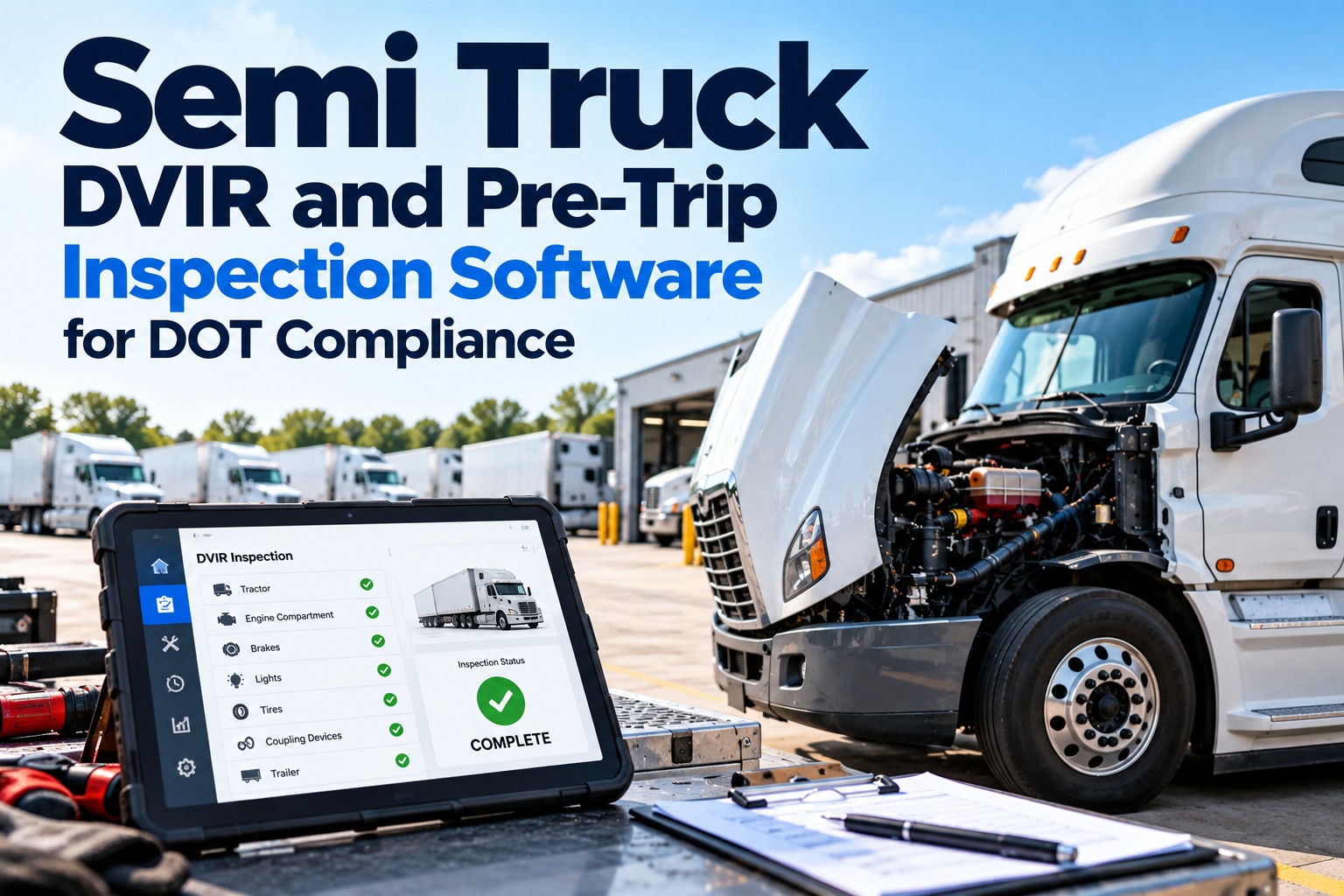
Driver Vehicle Inspection Reports with defects create a workflow that spans inspection completion, defect notification, repair assignment, verification of repair, and certification that the vehicle is safe to return to service. Paper-based DVIR workflows break down at multiple points in this chain — defect notifications delayed, repair assignments unclear, verification undocumented. Digital inspection apps integrate defect management directly into the DVIR workflow.
Immediate Defect Notification
When a driver flags a defect during digital inspection, the system notifies designated maintenance personnel immediately — not when the paper form is handed in at end of shift. Notifications can be configured by defect severity — critical defects alert shop supervisors and fleet managers by mobile push notification, while minor defects appear in a daily summary report. FleetRabbit's notification engine routes defects based on vehicle location, defect type, and time of day.
Automated Work Order Creation
Digital inspection systems eliminate the manual data entry step between defect identification and work order creation. When a driver submits an inspection with defects, FleetRabbit automatically generates a maintenance work order populated with vehicle identification, defect description with photos, driver notes, and timestamp. The work order enters the maintenance queue without any manual intervention, reducing the time between detection and repair from hours or days to minutes.
Repair Verification and Sign-Off
A DVIR workflow is not complete until repairs are verified and the vehicle is certified safe for return to service. Digital inspection systems should support repair verification workflows — mechanics document completed repairs with photos and parts records, supervisors review repair documentation, and the system records the verification timestamp and certifying personnel. FleetRabbit's DVIR module maintains complete repair verification records as part of the permanent inspection history.
Defect Analytics and Trend Identification
Digital inspection data aggregated across vehicles and time periods reveals maintenance trends that are invisible in paper-based systems. Which components fail most frequently across the fleet. Which vehicles have recurring defects despite repeated repairs. Which drivers consistently identify defects that others miss. FleetRabbit's analytics module transforms inspection data from compliance documentation into maintenance optimization intelligence.
Driver resistance is the most common barrier to successful digital inspection implementation. Drivers who have completed paper inspections for years may view digital systems as additional work, surveillance tools, or technology they are not comfortable using. Fleet managers who anticipate and address these concerns during implementation achieve significantly higher adoption rates.
Frame Digital as Efficiency, Not Surveillance
Drivers who believe digital inspections are designed to monitor their performance or identify mistakes will resist adoption. Frame the transition as reducing paperwork burden, eliminating redundant data entry, and making defect reporting easier. Demonstrate how the app saves time compared to paper forms. Show drivers that defect reports flow directly to maintenance — they no longer need to track down supervisors to ensure their reports are seen.
Provide Hands-On Training and Support
Classroom training on inspection software is rarely sufficient. Drivers need hands-on practice with the app on the device they will use during inspections. Run training sessions at the vehicle with drivers completing mock inspections. Identify drivers who struggle with the technology and provide additional one-on-one support. Designate driver champions who can provide peer support after deployment.
Start with a Pilot Group of Influential Drivers
Drivers listen to other drivers more than they listen to management. Select pilot participants who are respected by their peers and comfortable with technology. When these drivers report that the inspection app is easier and faster than paper forms, their credibility with the broader driver group accelerates adoption. Driver champions who have used the system successfully become powerful advocates during full deployment.
Provide Backup Processes for Technology Issues
Drivers need confidence that technology failures will not prevent them from completing required inspections and beginning their shifts. Establish clear backup procedures — a designated phone number for technical support, a web-based inspection option for drivers whose devices fail, and a process for documenting inspections if the app is unavailable. The existence of backup processes reduces driver anxiety about technology dependency and accelerates adoption.
Inspection records are not operational tools — they are legal documents. Regulatory agencies require fleet operators to maintain complete, accurate inspection records for specified retention periods and to produce those records upon request during compliance audits. Digital inspection systems must meet or exceed the evidentiary standards of paper records while adding features that paper cannot provide.
Tamper-Evident Records
Auditors require confidence that inspection records have not been altered after the fact. Digital inspection systems should maintain tamper-evident records with timestamp metadata for each inspection event — start time, completion time, each checklist response, each photo capture, and final submission. Any alteration to a submitted record should be logged as a separate event with its own timestamp, preserving the original record in the audit trail.
Electronic Signatures
Regulatory inspection forms require driver signature to certify the accuracy of the inspection. Digital inspection systems must support electronic signatures that meet evidentiary standards — capturing the driver's intent to sign, associating the signature uniquely with the specific inspection record, and preserving signature metadata including timestamp and authentication method. FleetRabbit's electronic signature module captures driver PIN-authenticated signatures as legally binding attestations.
Instant Audit Response
When an auditor requests inspection records during a roadside inspection or facility audit, the operator has limited time to produce documentation. Digital inspection systems enable instant retrieval by vehicle, by date, or by driver — producing complete records in seconds rather than the hours or days required to locate paper forms. Fleet managers using FleetRabbit can respond to audit requests immediately rather than requesting additional time to locate records.
Retention Policy Enforcement
Regulatory retention requirements specify minimum retention periods for inspection records, but retaining records longer than required creates unnecessary storage and data management burden. Digital inspection systems should support retention policy configuration — automatically archiving and eventually deleting records after the required retention period expires, with complete deletion logs maintained for audit purposes.
The business case for digital inspection apps typically produces positive ROI within the first year of deployment. Fleet managers building a business case should calculate savings across driver time, administrative time, maintenance cost reduction, and compliance risk reduction.
ROI Component
Paper-Based Baseline
Digital Inspection Value
Driver Time
12 to 15 minutes per inspection, two inspections per driver per day
3 to 5 minutes per inspection — 60 to 70 percent time reduction, directly reducing non-driving labor cost
Supervisor Review Time
Manual review of each form for completeness and legibility, data entry of defects into maintenance systems
Automatic completeness verification, defect data flows directly to maintenance, zero re-entry
Defect-to-Repair Time
Hours or days between defect identification and work order creation
Minutes between defect identification and work order creation, reducing minor-to-major failure escalation
Record Retrieval Time
Minutes to hours to locate paper forms for specific vehicle and date
Seconds to retrieve complete inspection history for any vehicle and date range
Storage Cost
Filing cabinets, storage boxes, offsite storage, and administrative time for record management
Zero physical storage cost, automated retention and deletion
Does FleetRabbit's inspection app work without cellular connectivity?
Yes. FleetRabbit's mobile inspection module includes offline capability — drivers can complete full inspections including photo capture without an active internet connection. Inspection data is stored locally on the device and automatically synchronizes to the central system when connectivity is restored. This ensures that inspections can be completed in parking garages, remote depot yards, and rural operating areas without network delays or inspection deferrals.
Can we customize inspection checklists for different vehicle types?
Yes. FleetRabbit supports unlimited inspection checklist configurations by vehicle class, by individual vehicle, or by operating route. The checklist builder allows fleet managers to add or remove inspection points, reorder checklist sequence, configure required photo capture for specific items, and set pass-fail criteria. Customization is managed through the admin interface without requiring developer support.
Book a demo to see how checklist configuration works for your fleet's vehicle types.
How does defect-to-work order integration work?
When a driver flags a defect during inspection and submits the form, FleetRabbit automatically creates a maintenance work order populated with vehicle identification, defect description, driver notes, and attached photos. The work order enters the maintenance queue based on defect severity configuration — critical defects appear immediately with priority flags, minor defects enter the standard queue. Fleet managers can configure notification rules to alert specific maintenance personnel by email, SMS, or mobile push notification based on defect type and vehicle location.
Book a demo to see the defect-to-work order workflow configured for your maintenance operation.
Are electronic signatures on digital inspections legally compliant?
Yes. FleetRabbit's electronic signature module complies with regulatory requirements for driver-attested inspection records. The system captures driver authentication via unique PIN code, associates the signature uniquely with the specific inspection record, timestamps the signature event, and maintains an unalterable audit trail. The signature record cannot be separated from the inspection record or applied to different records. For regulated fleets subject to specific electronic signature requirements, FleetRabbit can be configured to meet additional jurisdictional standards.
How long does it take to deploy digital inspections across a fleet?
Typical deployment timelines range from two to six weeks depending on fleet size and configuration complexity. Small fleets with simple inspection requirements can be operational in one to two weeks. Larger fleets with multiple vehicle types, complex checklist requirements, and extensive driver training needs typically complete deployment within three to six weeks. FleetRabbit's implementation team provides deployment support including checklist configuration assistance, driver training materials, and integration setup for defect-to-work order workflows.
April 28, 2026
By Jason Smith
All Posts