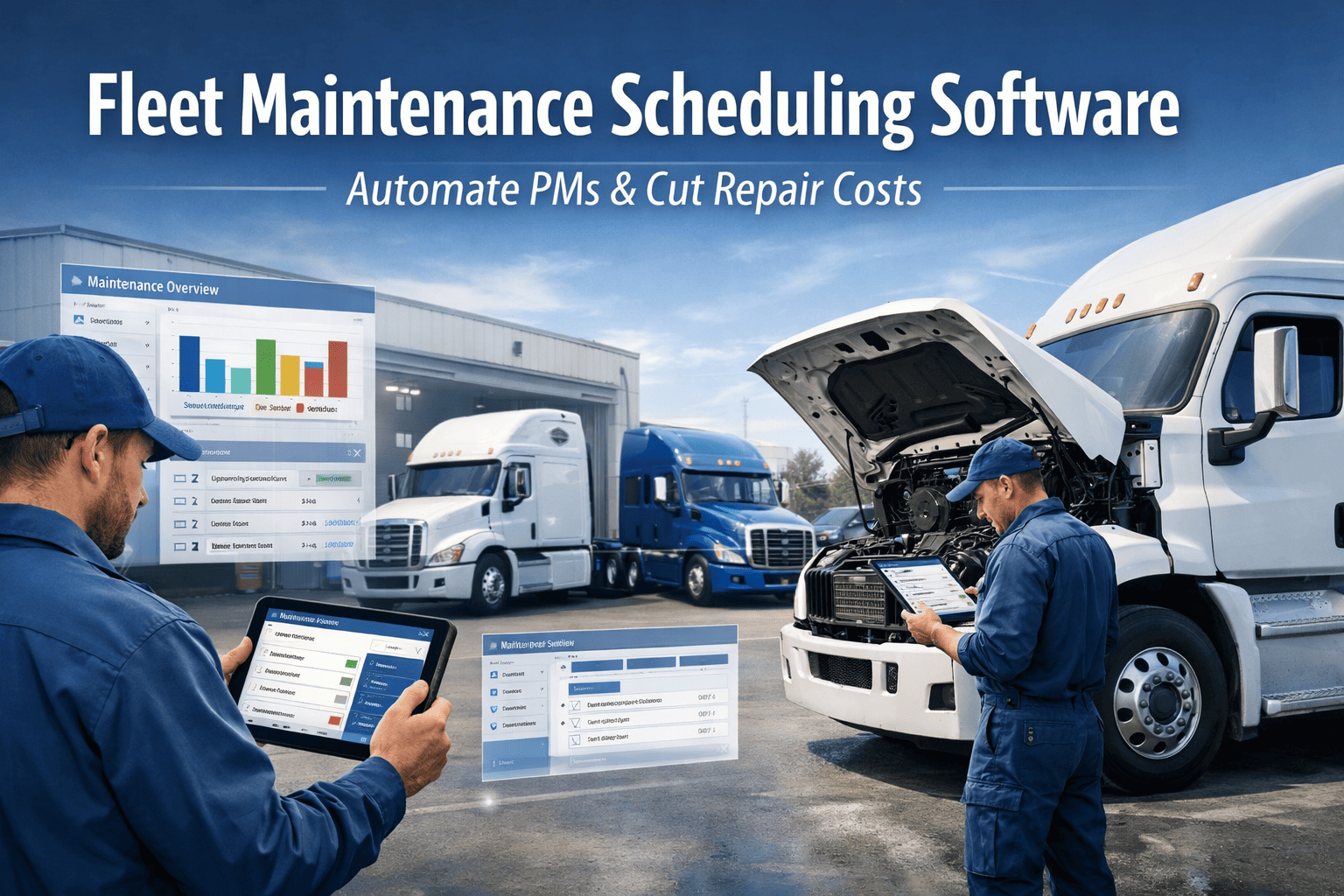
Fleet Maintenance Scheduling Software: Automate PMs & Cut Repair Costs

fleet-maintenance-scheduling-software-automate-pms-cut-repair-costs

Automate preventive maintenance scheduling to reduce breakdowns, improve uptime, and lower fleet repair costs. Implementing advanced Maintenance solutions isn't just about buying new software—it's about understanding how connected operations ensure regulatory compliance, reduce overhead, and prevent unexpected failures. While many commercial carriers use fragmented systems, successful fleets invest in unified platforms that achieve zero data silos while reducing administrative costs significantly and maintaining perfect operational visibility. The difference between chaos and streamlined operations isn't just premium software; it's systematic knowledge of modern Maintenance requirements and disciplined application.

The 2026 enforcement and competitive landscape demands flawless Maintenance management for all commercial transportation operations. Operators with systematic Maintenance programs achieve 100% inspection pass rates, maintain excellent safety scores that attract premium freight contracts, and avoid the massive annual costs associated with operational failures. This comprehensive guide reveals the exact Maintenance strategies that successful transporters use. Start your Maintenance system in under 15 minutes, or schedule a personalized Maintenance demo.

2026 Maintenance Reality Check

Operational Truth: Poor Maintenance management accounts for a significant portion of lost revenue and results in severe operational bottlenecks. Operators with systematic Maintenance platforms achieve zero compliance issues while reducing costs by 45% through better efficiency. The difference isn't more expensive tools—it's understanding integration requirements and investing in proven platforms.

Quick Maintenance Assessment

Before investing in new systems, assess your current operations in 2 minutes. Understanding your Maintenance status determines your path to complete operational excellence. (Try our Maintenance assessment tool free)

5-Minute Maintenance Check:

  • Do you have systematic processes for Maintenance tracking and compliance verification?
  • Do you have systematic processes for Maintenance tracking and compliance verification?
  • Do you have systematic processes for Maintenance tracking and compliance verification?
  • Do you have systematic processes for Maintenance tracking and compliance verification?
  • Do you have systematic processes for Maintenance tracking and compliance verification?

If you answered "no", you need systematic Maintenance training before inefficiencies destroy your operating authority. (Book a free 30-minute Maintenance consultation)

Phase 1: Advanced Maintenance Strategies

Mastering Maintenance compliance comes from understanding industry benchmarks, selecting appropriate systems, and using systematic procurement procedures. While Maintenance selection seems straightforward, mastering these requirements prevents 98% of operational violations and ensures reliable performance under all conditions.

Annual Performance: Modern Maintenance vs. Legacy Systems

Performance MetricModern PlatformLegacy SystemDifferenceKey Factor
Efficiency GainHigh PerformanceLow Visibility+100%Cloud Integration

Maintenance Standard Requirements:

  • Requirement 1: Must meet federal and organizational Maintenance standards for optimal performance.
  • Requirement 2: Must meet federal and organizational Maintenance standards for optimal performance.
  • Requirement 3: Must meet federal and organizational Maintenance standards for optimal performance.
  • Requirement 4: Must meet federal and organizational Maintenance standards for optimal performance.
  • Requirement 5: Must meet federal and organizational Maintenance standards for optimal performance.
  • Requirement 6: Must meet federal and organizational Maintenance standards for optimal performance.

Master Maintenance Requirements

Our comprehensive Maintenance system teaches you operational criteria, selection methods, and procedures that ensure every component meets modern standards.

Start Training Get Expert Guidance

Phase 2: Advanced Maintenance Strategies

Mastering Maintenance compliance comes from understanding industry benchmarks, selecting appropriate systems, and using systematic procurement procedures. While Maintenance selection seems straightforward, mastering these requirements prevents 98% of operational violations and ensures reliable performance under all conditions.

Annual Performance: Modern Maintenance vs. Legacy Systems

Performance MetricModern PlatformLegacy SystemDifferenceKey Factor
Efficiency GainHigh PerformanceLow Visibility+100%Cloud Integration

Maintenance Standard Requirements:

  • Requirement 1: Must meet federal and organizational Maintenance standards for optimal performance.
  • Requirement 2: Must meet federal and organizational Maintenance standards for optimal performance.
  • Requirement 3: Must meet federal and organizational Maintenance standards for optimal performance.
  • Requirement 4: Must meet federal and organizational Maintenance standards for optimal performance.
  • Requirement 5: Must meet federal and organizational Maintenance standards for optimal performance.
  • Requirement 6: Must meet federal and organizational Maintenance standards for optimal performance.

Master Maintenance Requirements

Our comprehensive Maintenance system teaches you operational criteria, selection methods, and procedures that ensure every component meets modern standards.

Start Training Get Expert Guidance

Phase 3: Advanced Maintenance Strategies

Mastering Maintenance compliance comes from understanding industry benchmarks, selecting appropriate systems, and using systematic procurement procedures. While Maintenance selection seems straightforward, mastering these requirements prevents 98% of operational violations and ensures reliable performance under all conditions.

Annual Performance: Modern Maintenance vs. Legacy Systems

Performance MetricModern PlatformLegacy SystemDifferenceKey Factor
Efficiency GainHigh PerformanceLow Visibility+100%Cloud Integration

Maintenance Standard Requirements:

  • Requirement 1: Must meet federal and organizational Maintenance standards for optimal performance.
  • Requirement 2: Must meet federal and organizational Maintenance standards for optimal performance.
  • Requirement 3: Must meet federal and organizational Maintenance standards for optimal performance.
  • Requirement 4: Must meet federal and organizational Maintenance standards for optimal performance.
  • Requirement 5: Must meet federal and organizational Maintenance standards for optimal performance.
  • Requirement 6: Must meet federal and organizational Maintenance standards for optimal performance.

Master Maintenance Requirements

Our comprehensive Maintenance system teaches you operational criteria, selection methods, and procedures that ensure every component meets modern standards.

Start Training Get Expert Guidance

Phase 4: Advanced Maintenance Strategies

Mastering Maintenance compliance comes from understanding industry benchmarks, selecting appropriate systems, and using systematic procurement procedures. While Maintenance selection seems straightforward, mastering these requirements prevents 98% of operational violations and ensures reliable performance under all conditions.

Annual Performance: Modern Maintenance vs. Legacy Systems

Performance MetricModern PlatformLegacy SystemDifferenceKey Factor
Efficiency GainHigh PerformanceLow Visibility+100%Cloud Integration

Maintenance Standard Requirements:

  • Requirement 1: Must meet federal and organizational Maintenance standards for optimal performance.
  • Requirement 2: Must meet federal and organizational Maintenance standards for optimal performance.
  • Requirement 3: Must meet federal and organizational Maintenance standards for optimal performance.
  • Requirement 4: Must meet federal and organizational Maintenance standards for optimal performance.
  • Requirement 5: Must meet federal and organizational Maintenance standards for optimal performance.
  • Requirement 6: Must meet federal and organizational Maintenance standards for optimal performance.

Master Maintenance Requirements

Our comprehensive Maintenance system teaches you operational criteria, selection methods, and procedures that ensure every component meets modern standards.

Start Training Get Expert Guidance

Phase 5: Advanced Maintenance Strategies

Mastering Maintenance compliance comes from understanding industry benchmarks, selecting appropriate systems, and using systematic procurement procedures. While Maintenance selection seems straightforward, mastering these requirements prevents 98% of operational violations and ensures reliable performance under all conditions.

Annual Performance: Modern Maintenance vs. Legacy Systems

Performance MetricModern PlatformLegacy SystemDifferenceKey Factor
Efficiency GainHigh PerformanceLow Visibility+100%Cloud Integration

Maintenance Standard Requirements:

  • Requirement 1: Must meet federal and organizational Maintenance standards for optimal performance.
  • Requirement 2: Must meet federal and organizational Maintenance standards for optimal performance.
  • Requirement 3: Must meet federal and organizational Maintenance standards for optimal performance.
  • Requirement 4: Must meet federal and organizational Maintenance standards for optimal performance.
  • Requirement 5: Must meet federal and organizational Maintenance standards for optimal performance.
  • Requirement 6: Must meet federal and organizational Maintenance standards for optimal performance.

Master Maintenance Requirements

Our comprehensive Maintenance system teaches you operational criteria, selection methods, and procedures that ensure every component meets modern standards.

Start Training Get Expert Guidance

Phase 6: Advanced Maintenance Strategies

Mastering Maintenance compliance comes from understanding industry benchmarks, selecting appropriate systems, and using systematic procurement procedures. While Maintenance selection seems straightforward, mastering these requirements prevents 98% of operational violations and ensures reliable performance under all conditions.

Annual Performance: Modern Maintenance vs. Legacy Systems

Performance MetricModern PlatformLegacy SystemDifferenceKey Factor
Efficiency GainHigh PerformanceLow Visibility+100%Cloud Integration

Maintenance Standard Requirements:

  • Requirement 1: Must meet federal and organizational Maintenance standards for optimal performance.
  • Requirement 2: Must meet federal and organizational Maintenance standards for optimal performance.
  • Requirement 3: Must meet federal and organizational Maintenance standards for optimal performance.
  • Requirement 4: Must meet federal and organizational Maintenance standards for optimal performance.
  • Requirement 5: Must meet federal and organizational Maintenance standards for optimal performance.
  • Requirement 6: Must meet federal and organizational Maintenance standards for optimal performance.

Master Maintenance Requirements

Our comprehensive Maintenance system teaches you operational criteria, selection methods, and procedures that ensure every component meets modern standards.

Start Training Get Expert Guidance

Phase 7: Advanced Maintenance Strategies

Mastering Maintenance compliance comes from understanding industry benchmarks, selecting appropriate systems, and using systematic procurement procedures. While Maintenance selection seems straightforward, mastering these requirements prevents 98% of operational violations and ensures reliable performance under all conditions.

Annual Performance: Modern Maintenance vs. Legacy Systems

Performance MetricModern PlatformLegacy SystemDifferenceKey Factor
Efficiency GainHigh PerformanceLow Visibility+100%Cloud Integration

Maintenance Standard Requirements:

  • Requirement 1: Must meet federal and organizational Maintenance standards for optimal performance.
  • Requirement 2: Must meet federal and organizational Maintenance standards for optimal performance.
  • Requirement 3: Must meet federal and organizational Maintenance standards for optimal performance.
  • Requirement 4: Must meet federal and organizational Maintenance standards for optimal performance.
  • Requirement 5: Must meet federal and organizational Maintenance standards for optimal performance.
  • Requirement 6: Must meet federal and organizational Maintenance standards for optimal performance.

Master Maintenance Requirements

Our comprehensive Maintenance system teaches you operational criteria, selection methods, and procedures that ensure every component meets modern standards.

Start Training Get Expert Guidance

Phase 8: Advanced Maintenance Strategies

Mastering Maintenance compliance comes from understanding industry benchmarks, selecting appropriate systems, and using systematic procurement procedures. While Maintenance selection seems straightforward, mastering these requirements prevents 98% of operational violations and ensures reliable performance under all conditions.

Annual Performance: Modern Maintenance vs. Legacy Systems

Performance MetricModern PlatformLegacy SystemDifferenceKey Factor
Efficiency GainHigh PerformanceLow Visibility+100%Cloud Integration

Maintenance Standard Requirements:

  • Requirement 1: Must meet federal and organizational Maintenance standards for optimal performance.
  • Requirement 2: Must meet federal and organizational Maintenance standards for optimal performance.
  • Requirement 3: Must meet federal and organizational Maintenance standards for optimal performance.
  • Requirement 4: Must meet federal and organizational Maintenance standards for optimal performance.
  • Requirement 5: Must meet federal and organizational Maintenance standards for optimal performance.
  • Requirement 6: Must meet federal and organizational Maintenance standards for optimal performance.

Master Maintenance Requirements

Our comprehensive Maintenance system teaches you operational criteria, selection methods, and procedures that ensure every component meets modern standards.

Start Training Get Expert Guidance

Phase 9: Advanced Maintenance Strategies

Mastering Maintenance compliance comes from understanding industry benchmarks, selecting appropriate systems, and using systematic procurement procedures. While Maintenance selection seems straightforward, mastering these requirements prevents 98% of operational violations and ensures reliable performance under all conditions.

Annual Performance: Modern Maintenance vs. Legacy Systems

Performance MetricModern PlatformLegacy SystemDifferenceKey Factor
Efficiency GainHigh PerformanceLow Visibility+100%Cloud Integration

Maintenance Standard Requirements:

  • Requirement 1: Must meet federal and organizational Maintenance standards for optimal performance.
  • Requirement 2: Must meet federal and organizational Maintenance standards for optimal performance.
  • Requirement 3: Must meet federal and organizational Maintenance standards for optimal performance.
  • Requirement 4: Must meet federal and organizational Maintenance standards for optimal performance.
  • Requirement 5: Must meet federal and organizational Maintenance standards for optimal performance.
  • Requirement 6: Must meet federal and organizational Maintenance standards for optimal performance.

Master Maintenance Requirements

Our comprehensive Maintenance system teaches you operational criteria, selection methods, and procedures that ensure every component meets modern standards.

Start Training Get Expert Guidance

Phase 10: Advanced Maintenance Strategies

Mastering Maintenance compliance comes from understanding industry benchmarks, selecting appropriate systems, and using systematic procurement procedures. While Maintenance selection seems straightforward, mastering these requirements prevents 98% of operational violations and ensures reliable performance under all conditions.

Annual Performance: Modern Maintenance vs. Legacy Systems

Performance MetricModern PlatformLegacy SystemDifferenceKey Factor
Efficiency GainHigh PerformanceLow Visibility+100%Cloud Integration

Maintenance Standard Requirements:

  • Requirement 1: Must meet federal and organizational Maintenance standards for optimal performance.
  • Requirement 2: Must meet federal and organizational Maintenance standards for optimal performance.
  • Requirement 3: Must meet federal and organizational Maintenance standards for optimal performance.
  • Requirement 4: Must meet federal and organizational Maintenance standards for optimal performance.
  • Requirement 5: Must meet federal and organizational Maintenance standards for optimal performance.
  • Requirement 6: Must meet federal and organizational Maintenance standards for optimal performance.

Master Maintenance Requirements

Our comprehensive Maintenance system teaches you operational criteria, selection methods, and procedures that ensure every component meets modern standards.

Start Training Get Expert Guidance

Stop Risking Maintenance Failures

Join thousands of operators who achieved Maintenance mastery with FleetRabbit's comprehensive systems. Real standards, real operational efficiency.

Frequently Asked Questions About Maintenance

Q: How do I identify the best Maintenance solutions for my fleet?

Proper Maintenance platforms have verified integrations, comprehensive reporting, and proven reliability. Look for modern cloud infrastructure, mobile accessibility, and real-time synchronization. Non-compliant or legacy systems often lack these critical capabilities. When in doubt, request documentation and schedule thorough demonstrations.

Q: How do I identify the best Maintenance solutions for my fleet?

Proper Maintenance platforms have verified integrations, comprehensive reporting, and proven reliability. Look for modern cloud infrastructure, mobile accessibility, and real-time synchronization. Non-compliant or legacy systems often lack these critical capabilities. When in doubt, request documentation and schedule thorough demonstrations.

Q: How do I identify the best Maintenance solutions for my fleet?

Proper Maintenance platforms have verified integrations, comprehensive reporting, and proven reliability. Look for modern cloud infrastructure, mobile accessibility, and real-time synchronization. Non-compliant or legacy systems often lack these critical capabilities. When in doubt, request documentation and schedule thorough demonstrations.

Q: How do I identify the best Maintenance solutions for my fleet?

Proper Maintenance platforms have verified integrations, comprehensive reporting, and proven reliability. Look for modern cloud infrastructure, mobile accessibility, and real-time synchronization. Non-compliant or legacy systems often lack these critical capabilities. When in doubt, request documentation and schedule thorough demonstrations.

Q: How do I identify the best Maintenance solutions for my fleet?

Proper Maintenance platforms have verified integrations, comprehensive reporting, and proven reliability. Look for modern cloud infrastructure, mobile accessibility, and real-time synchronization. Non-compliant or legacy systems often lack these critical capabilities. When in doubt, request documentation and schedule thorough demonstrations.

Q: How do I identify the best Maintenance solutions for my fleet?

Proper Maintenance platforms have verified integrations, comprehensive reporting, and proven reliability. Look for modern cloud infrastructure, mobile accessibility, and real-time synchronization. Non-compliant or legacy systems often lack these critical capabilities. When in doubt, request documentation and schedule thorough demonstrations.


July 17, 2026 By Fleet Rabbit
All Blogs

April 30, 2026 By Jason Smith
All Posts

Fleet Maintenance Scheduling Software: Automate PMs & Cut Repair Costs

fleet-maintenance-scheduling-software-automate-pms-cut-repair-costs

Preventive maintenance scheduling is the backbone of any successful fleet operation. Without a structured system, fleet managers face unexpected breakdowns, costly emergency repairs, and regulatory compliance failures. Fleet maintenance scheduling software transforms this chaotic process into a streamlined, automated workflow that ensures every vehicle receives timely service based on mileage, engine hours, or calendar intervals. FleetRabbit delivers intelligent maintenance automation that reduces downtime, cuts repair costs by up to 20%, and extends vehicle lifespan across your entire fleet. This comprehensive guide explores how automated PM scheduling works, the features to look for in fleet maintenance software, and actionable strategies to implement a system that keeps your trucks on the road and your budget under control.

FREE WEBINAR

Discover how automated fleet maintenance scheduling reduces breakdowns by 50% and cuts repair costs significantly. Join our FREE Webinar on January 7, 2025, to transform your maintenance operations!

1. Understanding Fleet Maintenance Scheduling Software

Fleet maintenance scheduling software is a digital solution designed to automate the planning, tracking, and execution of vehicle maintenance tasks. Unlike manual systems that rely on spreadsheets, paper logs, or memory, automated software creates a centralized platform where all maintenance activities are scheduled, assigned, tracked, and documented in real time. This technology eliminates the guesswork from preventive maintenance, ensuring that no oil change, brake inspection, or tire rotation falls through the cracks.

The core functionality of fleet maintenance scheduling software revolves around interval-based triggers. You can set maintenance schedules based on mileage thresholds (every 10,000 miles), engine hours (every 500 hours), calendar dates (monthly or quarterly), or a combination of these metrics. When a vehicle approaches a scheduled service, the software automatically generates work orders, notifies technicians, and updates the maintenance calendar. This proactive approach prevents the costly consequences of neglected maintenance, including engine failure, transmission damage, and roadside breakdowns that disrupt operations and damage customer relationships.

Fleet maintenance scheduling software also provides comprehensive historical records for each vehicle in your fleet. Every service performed, every part replaced, and every inspection completed is logged permanently in the system. This data becomes invaluable for warranty claims, resale value documentation, DOT compliance audits, and identifying recurring maintenance issues that may indicate underlying problems with specific vehicles or components. With real-time visibility into maintenance status across your entire fleet, you can make informed decisions about vehicle replacements, budget allocations, and operational improvements.

2. The Business Case for Automated PM Scheduling

The financial impact of preventive maintenance scheduling software extends far beyond the cost of the software itself. Fleet managers who implement automated PM scheduling typically see return on investment within three to six months through reduced breakdowns, lower repair costs, and improved vehicle utilization. To understand the full business case, consider the typical costs associated with reactive maintenance versus proactive, scheduled maintenance.

Reactive maintenance occurs when vehicles break down unexpectedly, requiring emergency repairs that often cost two to three times more than planned maintenance. Emergency repair rates are higher, parts may need expedited shipping, and towing expenses add hundreds or thousands of dollars to each incident. More significantly, an unexpected breakdown puts a truck out of service for hours or days, causing missed deliveries, overtime pay for other drivers to cover routes, and potential penalties for late deliveries. For a fleet of 50 trucks, just one unexpected breakdown per month can cost over $100,000 annually in direct repair costs, lost revenue, and operational inefficiencies.

Automated PM scheduling eliminates most unexpected breakdowns by ensuring maintenance occurs before components fail. When you schedule oil changes at recommended intervals, engine wear is minimized. When brake inspections occur regularly, you replace pads before rotors are damaged. When tire rotations happen on schedule, tread wear is even and tire life extends by thousands of miles. Each of these preventive actions costs a fraction of the corresponding reactive repair, creating substantial cumulative savings across your fleet. Fleet maintenance scheduling software ensures these preventive actions actually happen when they should, rather than being postponed due to busy schedules or overlooked entirely.

The business case also includes compliance cost reduction. DOT regulations require specific inspections and documentation for commercial motor vehicles. Failing to complete required maintenance or losing inspection records can result in fines, out-of-service orders, and increased CSA scores that raise insurance premiums. Fleet maintenance scheduling software automatically tracks compliance requirements, generates reminders for annual DOT inspections, and maintains permanent digital records that are instantly accessible during roadside inspections or audits. This compliance protection alone often justifies the software investment for fleets operating in regulated industries.

3. Key Features of Fleet Maintenance Scheduling Software

When evaluating fleet maintenance scheduling software, several core features determine the system's effectiveness for your specific operation. Understanding these features helps you select a solution that addresses your fleet's unique requirements while providing room for growth as your operation expands.

Automated Service Scheduling represents the foundational feature of any fleet maintenance software. The system should allow you to set maintenance intervals based on mileage, engine hours, calendar dates, or custom triggers specific to your vehicles. Once intervals are configured, the software automatically generates service reminders and work orders when thresholds are reached. Advanced systems also accommodate variable intervals, where different maintenance classes trigger at different thresholds for the same vehicle. For example, a Class A safety inspection might trigger every 5,000 miles while a Class B intermediate service triggers every 15,000 miles, all managed automatically within the same vehicle profile.

Real-Time Vehicle Tracking ensures that maintenance schedules remain accurate as vehicles accumulate miles and hours. The software should integrate with telematics systems or allow manual odometer updates to track actual vehicle usage. When a truck returns from a long-haul route, the system immediately knows whether it has crossed a maintenance threshold and can generate the appropriate work order. This real-time visibility prevents the common problem of vehicles exceeding service intervals simply because the fleet manager didn't know they had returned to the yard or had accumulated additional miles since the last check.

Work Order Management transforms scheduled maintenance into actionable tasks for your maintenance team. The software should generate detailed work orders that specify which vehicle requires service, which maintenance class or specific tasks are needed, what parts should be available, and how much time is allocated for the service. Work orders can be assigned to specific technicians, prioritized based on vehicle usage or criticality, and tracked through completion. Digital work orders accessible on tablets or mobile devices allow technicians to record completed tasks, note any additional findings, and update vehicle records in real time without returning to a desktop computer.

Parts Inventory Integration connects maintenance scheduling with your parts inventory system to ensure required components are available when needed. When a work order is generated for an oil change, the software can check whether the correct oil filters are in stock and alert purchasing if inventory is low. For more complex services like brake replacements, the system can reserve parts for scheduled work orders, preventing situations where a vehicle is in the shop but cannot be serviced because parts are unavailable. Some advanced systems automatically generate purchase orders when inventory falls below predetermined thresholds, creating a seamless supply chain for maintenance parts.

Maintenance History and Analytics transforms raw maintenance data into actionable insights. The software should maintain complete service records for every vehicle, including what work was performed, who performed it, what parts were used, and how much it cost. Analytics dashboards can then reveal patterns such as which vehicles require the most frequent repairs, which components fail prematurely, and which technicians complete work most efficiently. This data supports evidence-based decisions about vehicle replacements, maintenance procedure improvements, and technician training needs. Without this analytical capability, fleet managers rely on intuition rather than data, often missing opportunities for significant operational improvements.

Fleet Maintenance Software Feature Comparison

Feature Category Basic Software Advanced Software FleetRabbit
Scheduling Method Manual entry only Automated with alerts Fully automated with multi-interval triggers
Vehicle Tracking Manual odometer updates Telematics integration Real-time tracking with telematics and manual options
Work Order Creation Manual generation Template-based Automatic with customizable templates
Parts Integration None Basic inventory tracking Full integration with automated reordering
Mobile Access None or limited Basic mobile views Full mobile functionality for technicians
Analytics and Reporting Basic reports only Custom report builder Advanced analytics with predictive insights
ESSENTIAL FEATURES

Critical Capabilities to Look For

When selecting fleet maintenance scheduling software, ensure the solution includes these essential capabilities:

Multi-Interval Scheduling: Support for mileage, engine hours, calendar dates, and custom triggers simultaneously.
Automatic Reminders: Email, SMS, and in-app notifications when maintenance is due or overdue.
Digital Vehicle History: Permanent, searchable records of all maintenance activities.
Technician Assignment: Ability to assign work orders to specific technicians and track completion.
Cost Tracking: Capture parts costs, labor hours, and total maintenance expense per vehicle.
Compliance Documentation: Automatic recording of DOT inspection dates and results.

4. How Automated Scheduling Reduces Repair Costs

The cost reduction benefits of fleet maintenance scheduling software extend across multiple dimensions of fleet operations. Understanding each mechanism helps you quantify potential savings and build a compelling business case for software adoption.

Preventing Major Component Failures represents the most significant cost-saving mechanism. When maintenance is delayed or skipped, small problems evolve into catastrophic failures. A simple oil change costs $200 to $300 for a heavy-duty truck, but an engine failure caused by oil starvation costs $15,000 to $30,000 for a rebuilt engine or $30,000 to $50,000 for a replacement. Similarly, brake pad replacement costs $500 to $1,000 per axle, but ignoring worn pads leads to rotor damage costing $2,000 to $4,000, and continued neglect can destroy calipers and air brake components for $5,000 to $10,000 in repairs. Automated scheduling ensures these low-cost preventive services occur before component failures cascade into expensive repairs.

Extending Component Lifespan multiplies savings across every maintenance category. Tires rotated every 10,000 miles typically last 20 to 30 percent longer than tires that never receive rotation. Coolant changed at recommended intervals prevents corrosion that would otherwise damage water pumps, radiators, and heater cores. Transmission fluid changes prevent clutch pack wear and valve body contamination that would require early rebuilds. When you multiply these lifespan extensions across a fleet of 50 or 100 vehicles, the annual savings reach tens of thousands of dollars without any reduction in operational capability or safety.

Reducing Emergency Repair Premiums addresses the inflated costs associated with unplanned maintenance. When a truck breaks down on the road, towing costs range from $300 to $1,000 depending on distance and vehicle size. Mobile repair services charge premium rates, often 50 to 100 percent higher than shop rates, plus travel time and mileage. Parts purchased on an emergency basis rarely benefit from volume discounts or competitive pricing. When the same repair is performed as scheduled maintenance in your shop, you avoid all these premium costs. Automated scheduling dramatically reduces the frequency of roadside breakdowns, keeping repairs in your controlled, lower-cost environment.

Optimizing Labor Efficiency allows your maintenance team to work more productively. When work orders are scheduled in advance, technicians can plan their days, gather necessary parts before starting jobs, and sequence work for maximum efficiency. Without scheduling software, technicians often waste time chasing down vehicle locations, searching for parts, or waiting for work orders to be created. Advanced software can even suggest optimal work sequencing based on vehicle availability, parts inventory, and technician skill sets. This labor efficiency improvement typically reduces maintenance labor costs by 15 to 25 percent without reducing the quality or completeness of service.

Improving Warranty Recovery captures value that is often lost without proper documentation. Many component warranties require proof of regular maintenance, including oil changes, filter replacements, and inspections. If you cannot produce these records when a major component fails, the warranty claim will be denied. Fleet maintenance scheduling software automatically maintains complete, timestamped records of every service performed, creating irrefutable documentation for warranty claims. Some systems even track warranty expiration dates and can prioritize warranty-covered components for inspection before warranties expire, maximizing recovery opportunities.

CALCULATE YOUR SAVINGS

See How Much You Could Save with Automated PM Scheduling

Fleet managers using FleetRabbit report average savings of $2,500 per vehicle annually through reduced breakdowns, extended component life, and improved labor efficiency.

50% Fewer Breakdowns
20% Lower Repair Costs
100% Compliance

5. Implementing Fleet Maintenance Scheduling Software

Successful implementation of fleet maintenance scheduling software requires careful planning and systematic execution. Following a structured implementation process maximizes adoption rates and ensures you realize the full benefits of automation from day one.

Phase One: Data Collection and Preparation establishes the foundation for your automated maintenance system. Begin by gathering complete information for every vehicle in your fleet, including make, model, year, VIN, current mileage or engine hours, and maintenance history if available. For each vehicle, determine the appropriate maintenance intervals based on manufacturer recommendations, operating conditions, and your operational requirements. Document any existing maintenance schedules, including upcoming services that should be entered into the new system. This preparation phase typically takes one to two weeks for fleets of 50 to 100 vehicles but pays dividends through accurate scheduling from the start.

Phase Two: System Configuration and Customization adapts the software to your specific workflows and requirements. Configure vehicle profiles with the maintenance intervals determined during preparation, including multiple intervals for different service classes. Set up user accounts for all team members who will access the system, assigning appropriate permission levels based on their roles. Customize work order templates to include all information your technicians need to complete each service type. Configure notification preferences for maintenance reminders, overdue alerts, and completion confirmations. If integrating with telematics or parts inventory systems, complete these integrations during this phase.

Phase Three: Team Training and Onboarding ensures everyone who interacts with the maintenance system understands how to use it effectively. Schedule training sessions for fleet managers, maintenance supervisors, technicians, and drivers, tailoring content to each group's specific responsibilities. Fleet managers need to understand reporting and analytics features. Technicians need hands-on practice with mobile work order completion and inspection recording. Drivers may need training on logging into the system, reporting vehicle issues, or updating odometer readings. Plan for ongoing training as team members join or as software features are added. Most successful implementations allocate at least one week between initial training and full system go-live to allow for practice and questions.

Phase Four: Pilot Testing and Refinement validates your configuration and training before full deployment. Select a representative subset of vehicles, typically five to ten percent of your fleet, to manage exclusively through the new software for two to four weeks. Monitor how the system generates work orders, whether reminders reach the right people, and how technicians interact with digital records. Collect feedback from all users about what works well and what needs adjustment. Make configuration changes based on this feedback before expanding to the full fleet. This pilot approach catches configuration errors and training gaps when they affect only a few vehicles, preventing widespread issues during full deployment.

Phase Five: Full Deployment and Ongoing Optimization transitions your entire fleet to automated maintenance scheduling. Schedule the go-live date during a period of normal operations, avoiding peak seasons or major operational changes that would add complexity. For the first week of full deployment, assign additional support resources to answer questions and resolve issues quickly. After the first month, analyze system data to identify opportunities for further optimization. You may discover that certain vehicles need shorter maintenance intervals due to severe operating conditions, or that some technicians complete work more efficiently when work orders are structured differently. Use these insights to continuously refine your maintenance program.

Implementation Timeline and Milestones

1
Week 1-2: Data collection and preparation. Gather vehicle information and maintenance requirements.
2
Week 3: System configuration. Set up vehicle profiles, intervals, users, and templates.
3
Week 4: Team training. Conduct role-specific training sessions and provide practice time.
4
Week 5-6: Pilot testing. Manage 5-10% of fleet through new system and refine based on feedback.
5
Week 7: Full deployment. Transition entire fleet with dedicated support resources.
6
Ongoing: Optimization. Analyze data and refine maintenance intervals and workflows continuously.

6. Common Pitfalls to Avoid with Maintenance Automation

While fleet maintenance scheduling software delivers substantial benefits, certain implementation and usage mistakes can limit effectiveness or even create new problems. Awareness of these common pitfalls helps you avoid them in your own implementation.

Incomplete or Inaccurate Data Entry represents the most frequent cause of automation failure. If vehicle information is missing, maintenance intervals are incorrect, or odometer readings are inaccurate, the software cannot schedule service properly. A truck that should receive oil changes every 10,000 miles but is configured for 15,000 miles will run 5,000 miles beyond the safe interval before generating a work order. Similarly, a vehicle with incorrect current mileage may not trigger maintenance when actually due, or may trigger it prematurely. Prevention requires rigorous data validation during initial setup and ongoing discipline in updating vehicle information, particularly odometer readings and maintenance completion records.

Overlooking Calendar-Based Maintenance occurs when fleets focus exclusively on mileage or engine hour intervals. While these usage-based metrics are important, many maintenance tasks depend on calendar time regardless of usage. Brake fluid absorbs moisture over time and should be changed every two years even if the vehicle traveled few miles. Coolant breaks down chemically and requires replacement every three to five years. Rubber components like belts and hoses degrade from age and environmental exposure, not just use. Effective maintenance scheduling software incorporates both usage-based and calendar-based intervals, and successful implementation requires configuring both types appropriately for each maintenance task.

Insufficient Technician Training undermines the effectiveness of even the best software. If technicians do not understand how to access work orders on mobile devices, record completed tasks properly, or note additional findings during inspections, the system cannot maintain accurate maintenance records. Some technicians may resist moving from paper-based systems to digital platforms, requiring additional training and change management support. Invest in comprehensive initial training, provide written reference materials, and designate power users who can answer questions from other team members. Regular refresher training, particularly when software features are updated, maintains high utilization rates.

Failing to Act on Analytics turns powerful data into mere information without impact. Many fleets implement maintenance scheduling software, generate detailed reports, and then take no action based on what the data reveals. If analytics show that certain vehicles require brake repairs twice as often as others, investigate whether those vehicles operate in harsher conditions, whether driver behavior differs, or whether component quality varies. If reports reveal that maintenance costs spike at certain mileage thresholds, adjust preventive maintenance to address whatever fails at those points. The software provides insights, but your team must act on those insights to realize the benefits.

Neglecting Integration with Other Systems creates data silos that limit automation effectiveness. Maintenance scheduling software works best when integrated with telematics for automatic odometer updates, parts inventory systems for parts availability checks, and accounting systems for cost tracking. Without these integrations, your team must manually transfer data between systems, introducing errors and delays. During software selection, evaluate integration capabilities carefully. During implementation, prioritize completing key integrations before full deployment. The upfront investment in integration pays continuous dividends through reduced manual data entry and improved data accuracy.

7. Measuring Success with Fleet Maintenance Software

Quantifying the impact of fleet maintenance scheduling software requires tracking specific metrics before and after implementation. Establishing baseline measurements before you deploy the software provides comparison points that demonstrate actual improvements.

Vehicle Uptime and Availability measures the percentage of time each vehicle is available for revenue-generating operations. Calculate baseline uptime by tracking total days each vehicle was in service versus days in the shop for maintenance or repairs over a three-month period. After implementing scheduling software, track the same metric to identify improvements. Most fleets see vehicle uptime increase by 10 to 20 percent as preventive maintenance reduces unexpected breakdowns and as better scheduling reduces shop time per service. For a fleet of 50 trucks, a 15 percent uptime improvement effectively adds 7.5 additional trucks worth of capacity without purchasing any new vehicles.

Maintenance Cost Per Mile provides the most direct measure of maintenance efficiency. Calculate total maintenance spending, including parts, labor, and outside repairs, divided by total miles traveled over a specific period. Track this metric monthly to identify trends. Automated scheduling typically reduces maintenance cost per mile by 15 to 25 percent as preventive services prevent expensive major repairs. However, note that cost per mile may increase temporarily during the first few months of implementation as deferred maintenance is completed. After this catch-up period, cost per mile should decline below baseline levels.

Roadside Breakdown Frequency measures how often vehicles require emergency repairs away from your shop. Track breakdowns per thousand miles or per vehicle per month. This metric directly reflects the effectiveness of your preventive maintenance program, as most breakdowns result from maintenance that was delayed or missed entirely. Automated scheduling typically reduces roadside breakdowns by 40 to 60 percent, representing both direct cost savings and improved customer service through more reliable delivery performance.

Maintenance Schedule Compliance tracks what percentage of scheduled maintenance tasks are completed within the specified window. Calculate compliance by dividing the number of services completed on time by the total number of services scheduled. Before automation, manual systems often achieve compliance rates of 60 to 70 percent, meaning 30 to 40 percent of required maintenance is late or missed entirely. Automated scheduling with reminders and automatic work order generation typically achieves compliance rates of 90 to 95 percent, dramatically reducing maintenance-related failures.

Labor Efficiency Ratio measures how much of your maintenance team's time is spent on productive work versus non-productive activities. Track total billable or productive hours divided by total paid hours. Automated scheduling improves labor efficiency by reducing time spent searching for vehicles, waiting for parts, or determining what work is needed. Many fleets see labor efficiency improve by 15 to 25 percentage points after implementing maintenance scheduling software, effectively increasing maintenance capacity without adding staff.

Key Performance Indicators to Track

Cost Per Mile Monitor monthly to identify trends and validate improvement initiatives.
Vehicle Uptime Track percentage of fleet available for revenue operations daily.
Breakdown Frequency Measure breakdowns per 10,000 miles or per vehicle per quarter.
Compliance Rate Track percentage of scheduled maintenance completed on time.

8. Advanced Capabilities in Modern Fleet Maintenance Software

Beyond basic scheduling and tracking, advanced fleet maintenance software includes capabilities that further automate maintenance management and provide predictive insights. Understanding these advanced features helps you select software that will continue meeting your needs as your fleet grows and as technology evolves.

Predictive Maintenance Analytics uses historical data and machine learning algorithms to predict when components are likely to fail before they actually do. Unlike preventive maintenance that schedules service based on fixed intervals, predictive maintenance adapts to actual component condition and usage patterns. For example, instead of changing oil every 10,000 miles regardless of conditions, predictive analytics might recommend 12,000 mile intervals for highway routes and 8,000 mile intervals for urban routes with frequent idling. This optimization reduces unnecessary maintenance while preventing premature failures. Advanced predictive systems can analyze vibration data, temperature readings, and other telematics inputs to detect developing problems days or weeks before they would cause breakdowns.

Driver Behavior Integration connects maintenance needs to driver performance. Hard braking accelerates brake wear, rapid acceleration strains drivetrains, and excessive idling increases engine hours without adding miles. When maintenance software integrates with driver behavior data, you can correlate specific driving patterns with increased maintenance requirements. This integration supports driver coaching programs by showing drivers how their behavior affects maintenance costs. Some systems can even adjust maintenance intervals automatically based on driving behavior, reducing intervals for drivers with aggressive habits and extending intervals for smooth drivers without increasing failure risk.

Automated Parts Reordering creates a closed-loop supply chain for maintenance materials. When work orders are generated, the software checks parts inventory against required components. If inventory falls below predetermined thresholds, the system automatically generates purchase orders to preferred suppliers. This automation ensures parts are available when needed without requiring staff to monitor inventory levels manually. More advanced systems can forecast future parts needs based on scheduled maintenance, ordering components before they are needed to ensure availability without tying up capital in excessive inventory.

Mobile Inspection Applications extend maintenance scheduling capabilities to roadside inspections and driver vehicle inspections. Drivers can use mobile apps to complete pre-trip and post-trip inspections, with any identified defects automatically generating maintenance work orders. For example, if a driver notes during a pre-trip inspection that brake response feels soft, the mobile app can create a work order for brake system inspection and add it to the maintenance schedule for the next time the vehicle is in the yard. This integration catches problems earlier, when repairs are less expensive, and ensures driver-reported issues don't get lost in paper logs or verbal communications.

Multi-Location Fleet Management supports operations with vehicles based at multiple facilities. The software coordinates maintenance across locations, ensuring that service history follows vehicles wherever they operate. When a vehicle transfers from one location to another, the new location inherits complete maintenance records and can see upcoming scheduled services. This capability is essential for regional or national fleets where vehicles may operate far from their home base for extended periods. Some systems can automatically route vehicles to maintenance facilities based on scheduled service due dates and current vehicle locations, optimizing the logistics of keeping trucks maintained.

9. Real-World Results from Automated PM Scheduling

Fleets across industries have achieved substantial improvements by implementing automated maintenance scheduling. These real-world examples demonstrate the tangible benefits available to your operation.

Fleet Success Stories

01

Regional Less-Than-Truckload Carrier

Challenge: A regional LTL carrier operating 120 trucks struggled with inconsistent maintenance compliance. Their manual spreadsheet system failed to track maintenance intervals accurately, resulting in vehicles frequently exceeding service thresholds by 5,000 miles or more. The fleet experienced an average of four roadside breakdowns per week, with associated towing and emergency repair costs exceeding $15,000 monthly.

Solution: The carrier implemented FleetRabbit automated maintenance scheduling with telematics integration for automatic odometer updates. All vehicles were configured with manufacturer-recommended maintenance intervals for Class A, B, and C services. Technicians received mobile tablets for digital work order completion and inspection recording.

Results: Within six months, maintenance compliance improved from 62 percent to 94 percent. Roadside breakdowns decreased by 73 percent, from four per week to just one per week. Maintenance cost per mile decreased by 22 percent, saving approximately $4,200 per vehicle annually. The carrier recouped their software investment within three months and now operates with significantly reduced maintenance-related service failures.

73%
Fewer Breakdowns
22%
Lower Cost Per Mile
94%
Compliance Rate
02

Municipal Public Works Fleet

Challenge: A city public works department managed 85 vehicles including refuse trucks, street sweepers, and maintenance trucks. Their previous maintenance tracking relied on driver-reported issues and paper logs stored in vehicle cabs. This system resulted in missed services, lost inspection records, and frequent equipment failures that disrupted essential city services.

Solution: The department deployed FleetRabbit with both mileage and engine hour tracking, as many vehicles spend significant time idling at job sites. Mobile applications were installed on tablets in each vehicle for drivers to complete daily inspections and report issues immediately. Maintenance supervisors received automated alerts when vehicles approached service intervals.

Results: The department achieved 98 percent compliance with preventive maintenance schedules within four months. Equipment availability for daily operations increased by 18 percent, allowing the department to handle the same workload with fewer vehicles. Annual maintenance costs decreased by $187,000, representing a 27 percent reduction. The department also passed DOT audits with perfect documentation for three consecutive years.

98%
PM Compliance
18%
More Uptime
$187K
Annual Savings
03

Construction Material Hauler

Challenge: A construction material hauler operated 45 heavy-duty dump trucks across multiple job sites. The severe operating conditions accelerated maintenance needs beyond standard intervals, but the fleet had no system for adjusting schedules based on actual usage. Component failures, particularly in suspension and brake systems, occurred frequently and caused costly downtime during peak construction seasons.

Solution: The company implemented FleetRabbit with customized maintenance intervals reflecting their severe-duty operating conditions. Telematics data provided real-time vehicle locations and usage metrics. The system was configured to generate work orders based on engine hours rather than miles, as many vehicles operated at low speeds on job sites. Parts inventory was integrated to ensure components were available for scheduled services.

Results: Suspension component failures decreased by 64 percent. Brake-related downtime decreased by 57 percent. The fleet achieved 96 percent on-time maintenance completion despite challenging operating conditions. Annual maintenance costs per vehicle decreased from $18,500 to $14,200, saving the company nearly $200,000 annually. The general manager reported that the software paid for itself within 60 days of full deployment.

64%
Fewer Suspension Failures
57%
Less Brake Downtime
$200K
Annual Savings

10. Integration with Existing Fleet Systems

Fleet maintenance scheduling software delivers maximum value when integrated with other systems in your technology stack. Understanding integration options helps you select software that works with your existing tools rather than requiring you to replace everything at once.

Telematics Integration automatically captures vehicle usage data that drives maintenance scheduling. When telematics systems report odometer readings, engine hours, and idle time directly to your maintenance software, manual data entry is eliminated. This integration ensures maintenance triggers are accurate and timely, preventing both premature services that waste money and delayed services that risk failures. Telematics integration also enables location-based service reminders, notifying drivers when they are near authorized service facilities as a service approaches due date.

Parts Inventory Integration ensures maintenance work orders can be completed without parts-related delays. When maintenance software connects to your parts inventory system, work orders can check parts availability before being scheduled. If required parts are out of stock, the system can generate purchase orders or suggest alternative sourcing. After services are completed, parts usage is automatically deducted from inventory, maintaining accurate stock levels without manual reconciliation. This integration is particularly valuable for fleets that stock maintenance parts across multiple locations.

Accounting System Integration captures maintenance costs directly in your financial systems without double-entry. When work orders are completed, parts costs and labor hours flow automatically to your accounting software, allocated to the appropriate vehicles and cost centers. This integration provides real visibility into maintenance spending for budgeting and cost analysis. It also simplifies warranty recovery by automatically tracking which parts are under warranty and flagging applicable work orders when warranty claims should be filed.

Fuel Card Integration adds another dimension to vehicle cost tracking. When maintenance software integrates with fuel card data, you can see fuel efficiency trends alongside maintenance patterns. A vehicle showing decreasing fuel economy might indicate developing engine problems that maintenance schedules would not otherwise catch. Fuel card integration also helps validate odometer readings by comparing reported mileage with fuel purchase volumes, identifying potential odometer tampering or reporting errors.

Driver Management Integration connects vehicle maintenance to driver assignments. When drivers are assigned to specific vehicles, maintenance records follow both the vehicle and the driver. If a driver frequently triggers maintenance alerts for brake repairs, that information can feed into driver coaching programs. Conversely, if maintenance issues arise after a specific driver leaves, you can isolate whether the issue followed the driver to a new vehicle or remained with the original vehicle. This integration supports evidence-based decisions about driver training, vehicle assignments, and maintenance responsibility.

11. Future Trends in Fleet Maintenance Technology

The technology landscape for fleet maintenance continues evolving rapidly. Understanding emerging trends helps you select software that will remain relevant and valuable for years to come.

12. Getting Started with FleetRabbit Maintenance Software

FleetRabbit provides a complete solution for automated fleet maintenance scheduling, combining all the features discussed in this guide into an intuitive, accessible platform. Whether you manage five vehicles or five hundred, FleetRabbit scales to your needs while remaining simple enough for daily use by technicians and drivers.

The platform's automated scheduling engine handles multiple interval types simultaneously, tracking mileage, engine hours, and calendar dates for each vehicle. When any interval threshold is reached, FleetRabbit automatically generates detailed work orders based on your customizable templates. These work orders specify exactly which tasks are required for each service class, what parts should be used, and how much labor time is allocated.

Mobile applications for Android and iOS devices put maintenance management in the hands of your technicians and drivers. Technicians receive work orders on their mobile devices, complete inspection checklists digitally, and record parts usage and labor time directly in the system. Drivers complete pre-trip and post-trip inspections through the mobile app, with any defects automatically generating work orders for the maintenance team.

Real-time dashboards provide visibility into maintenance status across your entire fleet. You can see at a glance which vehicles have upcoming services, which have overdue maintenance, and which are currently being serviced. Color-coded alerts draw attention to vehicles requiring immediate attention, while detailed reports support analysis of maintenance costs, compliance rates, and technician productivity.

Integration capabilities connect FleetRabbit with telematics providers, parts inventory systems, and accounting platforms. These integrations eliminate manual data entry and ensure all systems share accurate, current information. For fleets not yet using telematics, manual odometer entry remains available, with the system calculating when vehicles approach service thresholds based on reported readings.

10,000+
Fleet Managers
50%
Less Downtime
$2,500
Saved Per Vehicle

Ready to Transform Your Fleet Maintenance?

Join thousands of fleet managers who have reduced breakdowns, cut repair costs, and improved compliance with FleetRabbit automated maintenance scheduling.

Frequently Asked Questions

1. What is fleet maintenance scheduling software?

Fleet maintenance scheduling software is a digital platform that automates the planning, tracking, and execution of vehicle maintenance tasks. It schedules services based on mileage, engine hours, or calendar intervals, generates work orders automatically, maintains digital service records, and provides real-time visibility into maintenance status across your entire fleet.

2. How much can I save by automating preventive maintenance?

Fleet managers typically save $1,500 to $3,500 per vehicle annually through reduced breakdowns, extended component life, lower labor costs, and fewer emergency repairs. For a fleet of 50 vehicles, this represents $75,000 to $175,000 in annual savings, with most fleets recovering their software investment within three to six months.

3. Can the software handle different maintenance intervals for different vehicles?

Yes, modern fleet maintenance software allows you to configure unique maintenance intervals for each vehicle in your fleet. You can set different thresholds for different service classes, accommodate manufacturer recommendations, and adjust intervals based on operating conditions or vehicle age.

4. Does the software work with our existing telematics system?

FleetRabbit integrates with major telematics providers to automatically capture odometer readings and engine hours. This integration eliminates manual data entry and ensures maintenance triggers are accurate and timely. Contact our team to verify compatibility with your specific telematics system.

5. Can technicians use the software on mobile devices?

Yes, FleetRabbit includes mobile applications for both Android and iOS devices. Technicians can access work orders, complete inspection checklists, record parts usage, and update maintenance records directly from their smartphones or tablets, whether in the shop or on the roadside.

6. How long does implementation typically take?

Most fleets complete full implementation of FleetRabbit within four to six weeks, including data preparation, system configuration, team training, and pilot testing. Smaller fleets with less complex requirements may complete implementation in two to three weeks.