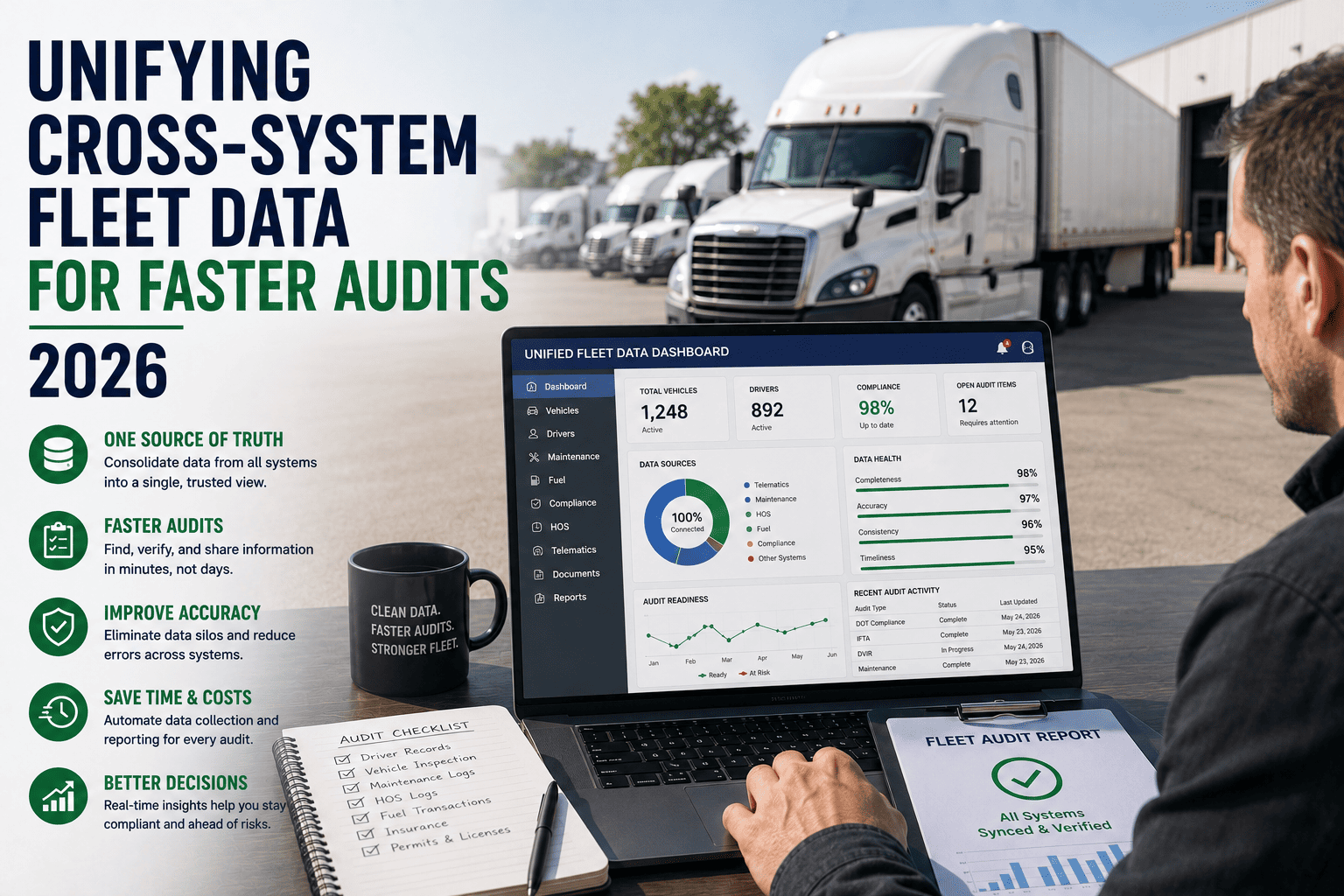
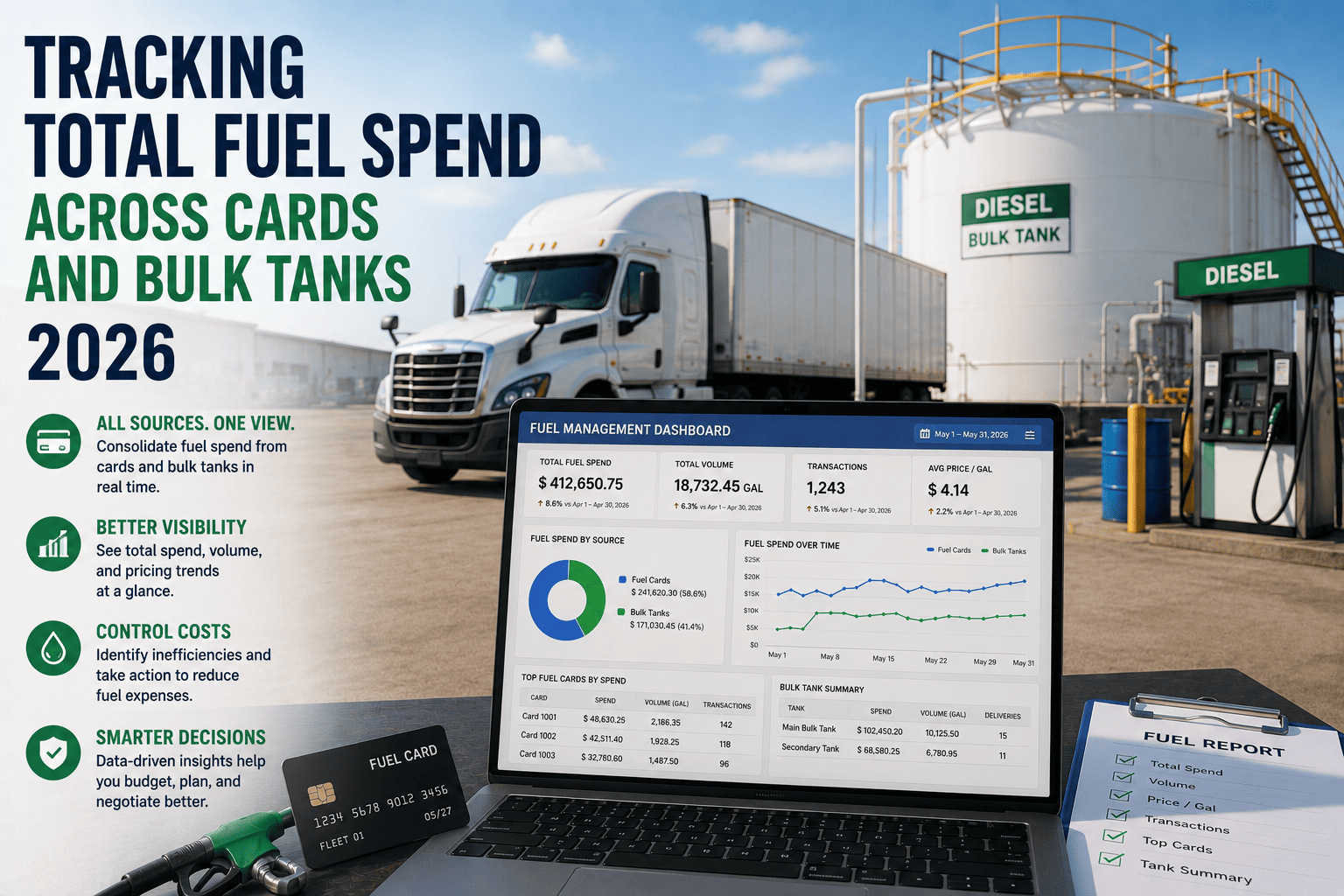
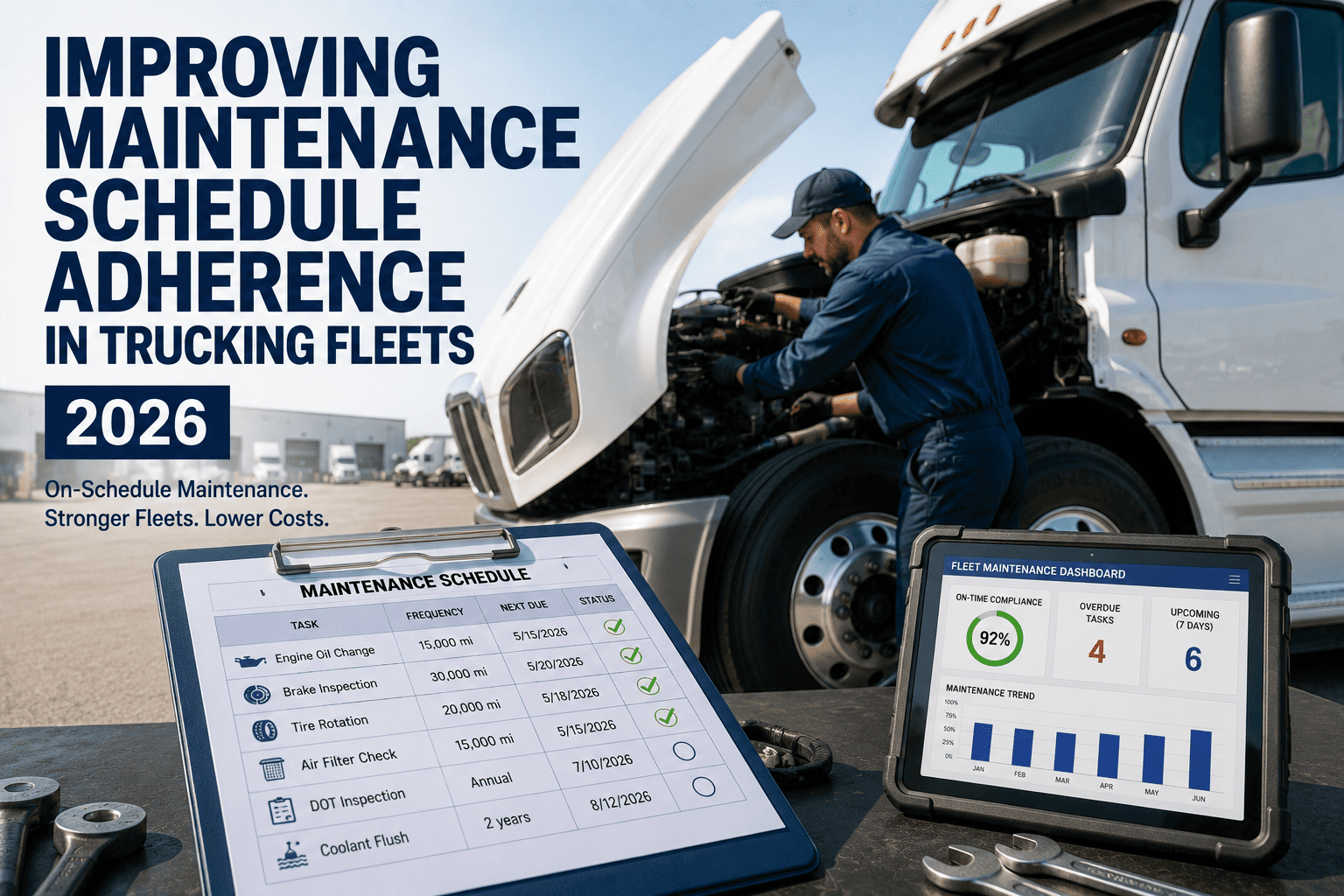
The difference between a profitable fleet and a problem fleet often comes down to maintenance workflow execution. In 2026, as commercial vehicle complexity increases with mixed diesel-electric powertrains and advanced telematics, fleet managers who rely on spreadsheets, whiteboards, or disconnected repair tracking systems face a rising tide of preventable downtime, unbudgeted repair costs, and compliance exposure. The question for operations leaders is no longer whether to implement fleet maintenance software — it is how to deploy a system that reduces vehicle downtime, enforces preventive maintenance schedules, and creates auditable repair documentation without adding administrative burden to shop teams already operating at capacity.
Fleet Maintenance
Workflow Management
High Priority
12 min read
Guide Overview
This guide provides a practical framework for selecting and implementing fleet maintenance software that improves repair workflow efficiency, reduces vehicle downtime, and creates auditable maintenance records. FleetRabbit's maintenance management module connects preventive maintenance schedules, work order creation, service history tracking, and compliance documentation in a unified system — enabling fleet managers to shift from reactive repair management to proactive fleet health optimization.
28%
average reduction in vehicle downtime reported by fleets implementing structured maintenance workflow software versus manual tracking methods
3.5x
higher preventive maintenance compliance rate in fleets using automated scheduling versus calendar-based manual reminder systems
$4,200
average annual savings per vehicle from reduced unscheduled repairs through predictive maintenance integration
62%
of fleet maintenance managers identify work order tracking and repair history access as their highest priority software requirement
The Business Case for Fleet Maintenance Software in Commercial Operations
Fleet maintenance software has moved from a convenience tool to an operational necessity for commercial fleet operators. The cost of unplanned downtime, the complexity of mixed fleet maintenance requirements, and the documentation burden of regulatory compliance have made manual maintenance tracking systems operationally unsustainable for fleets of any significant size.
Fleet managers who continue to rely on paper-based work orders, shared spreadsheets, or fragmented shop management tools face cascading operational risks — maintenance tasks missed due to calendar gaps, repair history unavailable when a vehicle arrives at an external shop, warranty claims rejected due to incomplete documentation, and compliance failures during roadside inspections. Fleet maintenance software addresses these risks by creating a structured, auditable maintenance environment that connects preventive schedules to work order execution and repair documentation to vehicle service records.
Financial Driver
Downtime Cost Reduction
Every hour a commercial vehicle spends in unscheduled repair is revenue lost and service commitment at risk. Fleet maintenance software reduces unplanned downtime through preventive maintenance compliance enforcement, early fault detection via telematics integration, and work order prioritization that directs shop resources to the most operationally critical repairs first. The downtime reduction alone typically covers the software investment within the first year of implementation.
Operational Driver
Work Order Visibility
Fleet managers operating multiple shop locations or working with external repair vendors face a common problem — incomplete visibility into repair status, parts ordering delays, and work completion verification gaps. Fleet maintenance software creates a single work order view across all maintenance providers, eliminating the status update calls and manual follow-up that consume shop supervisor time.
Compliance Driver
Audit-Ready Documentation
Regulatory inspection requirements, warranty claim documentation, and internal audit standards all require complete, timestamped maintenance records. Fleet maintenance software structures this documentation automatically — service dates, repair descriptions, parts replaced, technician identification, and cost allocation — creating audit-ready records without manual record assembly before each inspection.
Strategic Driver
Asset Lifecycle Optimization
Complete maintenance history directly impacts vehicle residual value at disposal. Fleet operators who can document consistent preventive maintenance, timely repairs, and parts replacement history achieve higher resale values than operators who cannot produce complete service records. Fleet maintenance software preserves this documentation as part of the permanent asset record.
Essential Capabilities of Fleet Maintenance Software for Repair Workflow Management
Not all fleet maintenance software products deliver the same operational value. Fleet managers evaluating solutions in 2026 should prioritize capabilities that directly address the repair workflow friction points that create downtime and documentation gaps in current operations.
01
Preventive Maintenance Scheduling Automation
Manual preventive maintenance scheduling using calendar reminders or odometer tracking inevitably produces missed intervals as fleet size grows. Fleet maintenance software should automate PM scheduling based on date, odometer reading, or engine hours — generating work orders automatically when thresholds are reached and escalating alerts when vehicles approach overdue status. FleetRabbit's PM scheduler tracks each vehicle against its specific maintenance requirements, not a generic fleet average.
02
Work Order Creation and Assignment
The gap between fault identification and repair assignment is where preventable downtime accumulates. Fleet maintenance software should enable rapid work order creation from multiple sources — driver defect reports, preventive maintenance triggers, telematics fault codes, and shop inspection findings — with assignment to specific technicians or external vendors based on skill matching and current workload. Work order status tracking provides real-time visibility from creation through completion.
03
Parts Inventory and Procurement Integration
Repair delays caused by missing parts are avoidable with proper inventory management. Fleet maintenance software should track parts inventory levels, set reorder thresholds, generate purchase orders automatically, and verify parts receipt against work order requirements. For fleets without in-house parts inventory, the software should integrate with vendor catalogs for direct ordering and expected delivery tracking.
04
Service History and Vehicle Maintenance Records
Complete vehicle service history is essential for diagnostics, warranty claims, and compliance. Each vehicle in the system should maintain a permanent record of every work order — service date, odometer at service, repairs performed, parts replaced, technician or vendor identification, and cost. This history must be accessible by vehicle identification number, by date range, and by maintenance type for compliance audits.
05
Mobile Access for Technicians and Drivers
Shop-based software that cannot be accessed from the shop floor or the cab creates data entry bottlenecks and information delays. Technicians should be able to view assigned work orders, log repair progress, and mark work completion from mobile devices. Drivers should be able to submit defect reports, view scheduled maintenance alerts, and access vehicle service history from the cab. FleetRabbit's mobile interface supports both use cases without requiring separate applications.
06
Reporting and Analytics for Maintenance Performance
Fleet maintenance software should transform operational data into actionable intelligence — mean time between failures by vehicle type, cost per mile by asset class, preventive maintenance compliance rate, and vendor performance metrics. These analytics enable fleet managers to identify underperforming assets, optimize replacement timing, and hold maintenance providers accountable to service level agreements.
Streamline Your Maintenance Workflow with FleetRabbit
FleetRabbit's maintenance management module automates preventive scheduling, work order tracking, and service history documentation — reducing administrative overhead while improving compliance and vehicle uptime.
Fleet Maintenance Software Implementation: From Selection to Operational Integration
The value of fleet maintenance software is realized in operational integration, not in the software purchase itself. Fleet managers who approach implementation as a workflow redesign project rather than a simple technology deployment achieve significantly higher adoption rates and faster ROI than those who treat software as a drop-in replacement for existing processes.
Implementation Phase 1
Data Migration and Asset Setup
The foundation of effective fleet maintenance software is accurate asset data. Each vehicle must be entered with complete specifications — make, model, year, VIN, current odometer reading, and assigned maintenance schedule based on manufacturer recommendations. Service history from existing records should be migrated to establish a complete maintenance baseline. FleetRabbit's bulk import tools and data validation workflows reduce the data entry burden while ensuring accuracy before operational use begins.
Complete asset registry
Maintenance schedules configured
Historical service records migrated
Implementation Phase 2
Workflow Configuration and Role Setup
Fleet maintenance software must reflect how the maintenance operation actually works, not require the operation to adapt to rigid software assumptions. Configure work order approval workflows, technician assignment rules, parts requisition processes, and vendor approval hierarchies to match current operating procedures. Define user roles and permissions — who can create work orders, who can approve repairs, who can close work orders, and who can access cost data. FleetRabbit's configurable workflow engine adapts to existing processes rather than requiring process reengineering.
Workflow rules defined
User roles and permissions assigned
External vendors added
Implementation Phase 3
Team Training and Pilot Operation
Software adoption succeeds or fails in the first thirty days of operational use. Conduct role-specific training sessions for shop supervisors, technicians, drivers, and fleet managers — each group needs different system access and different workflow training. Run a pilot period with a subset of vehicles and a single shop location before full deployment. Use the pilot to identify training gaps, workflow friction points, and reporting requirements before scaling to the full fleet.
All users trained by role
Pilot metrics collected
Workflow adjustments documented
Implementation Phase 4
Full Deployment and Continuous Optimization
With pilot learnings incorporated, deploy the software across all vehicles, shops, and maintenance vendors. Establish regular review cadence for maintenance metrics — preventive compliance rate, work order cycle time, cost per mile trends, and vendor performance. Use the analytics dashboard to identify improvement opportunities and adjust maintenance strategies based on actual performance data rather than assumptions.
Full fleet active
Performance dashboard live
Continuous improvement process established
Preventive Maintenance Scheduling: Moving From Reactive to Proactive Fleet Health
The most significant operational shift enabled by fleet maintenance software is the transition from reactive repair management to proactive maintenance planning. Fleets operating on reactive models — addressing failures after they occur — consistently experience higher downtime costs, higher repair costs, and shorter asset service lives than fleets that maintain rigorous preventive maintenance schedules.
Interval-Based Scheduling
The most common preventive maintenance trigger is time or distance — oil changes every 10,000 miles, brake inspections every 90 days, transmission service every 50,000 miles. Fleet maintenance software tracks each vehicle against its specific interval requirements and generates work orders automatically when thresholds are reached. FleetRabbit's PM scheduler maintains separate interval tracking for date-based and odometer-based requirements, ensuring neither calendar nor distance triggers are missed.
Condition-Based Maintenance
Advanced fleet maintenance software integrates with vehicle telematics to enable condition-based maintenance — triggering work orders when fault codes appear, when sensor readings indicate component degradation, or when usage patterns suggest accelerated wear. Condition-based maintenance catches developing failures before they become roadside breakdowns, converting unplanned repairs into scheduled maintenance events.
Usage-Based Maintenance Adjustments
Not all vehicles in a fleet experience the same operating conditions. Vehicles operating in severe duty cycles — high idle time, heavy loads, rough terrain, extreme temperatures — require shorter maintenance intervals than vehicles operating in standard conditions. Fleet maintenance software should allow interval adjustments by vehicle based on actual operating data rather than applying the same schedule to all assets of the same type.
Compliance Verification and Documentation
Preventive maintenance is only valuable if it is actually performed and properly documented. Fleet maintenance software tracks each PM work order from creation to completion, verifies that required tasks were completed, and attaches documentation to the vehicle service record. For regulated fleets — commercial vehicle safety inspections, hazardous materials endorsements — the software maintains separate compliance schedules and documentation requirements.
Work Order Management: From Fault Identification to Repair Completion
The work order is the central document of fleet maintenance operations. Every repair, every inspection, every preventive maintenance event generates a work order that must be created, assigned, tracked, and documented. Fleet maintenance software transforms work order management from a manual paper process into a structured digital workflow.
Work Order Capability
Multi-Source Work Order Creation
Work orders can originate from multiple sources — driver defect reports submitted via mobile device, preventive maintenance triggers from the PM scheduler, telematics fault codes automatically generating work orders, shop inspection findings from routine checks, and external vendor repair requests. All sources feed into the same work order queue for consistent assignment and tracking.
Work Order Capability
Work Order Assignment and Prioritization
Not all repairs have the same operational urgency. Fleet maintenance software supports work order prioritization based on vehicle criticality, safety implications, and downtime cost. Assignments can be directed to specific technicians based on skill certification and current workload, or to external vendors based on service level agreements and location proximity.
Work Order Capability
Parts and Labor Tracking
Each work order captures detailed repair data — parts used with quantities and costs, labor hours by technician, outside vendor charges, and total repair cost. This granular data feeds into per-vehicle cost tracking, vendor performance analysis, and total cost of ownership calculations. FleetRabbit's cost allocation structure ensures repair expenses are correctly assigned to vehicles, cost centers, and budget categories.
Work Order Capability
Approval Workflows and Authorization
Repair authorization requirements vary by cost threshold and repair type. Fleet maintenance software should support configurable approval workflows — routine PM work orders may auto-approve, repairs over a set dollar amount require supervisor approval, and major component replacements require fleet manager authorization. Approval history is preserved as part of the permanent work order record.
Work Order Capability
Work Order Closure and Documentation
Work order closure requires completion verification, parts reconciliation, cost confirmation, and documentation attachment — repair photos, inspection forms, warranty claim numbers. Closed work orders become part of the vehicle's permanent service history, accessible for future diagnostics, warranty claims, and compliance audits. FleetRabbit's closure workflow ensures no work order is marked complete without required documentation.
Work Order Capability
External Vendor Integration
Fleets using external repair vendors require special work order management capabilities — vendor selection based on location and specialization, purchase order generation, repair approval before work begins, and vendor invoice reconciliation. Fleet maintenance software should create a structured interface with external vendors that provides the same visibility and documentation standards as internal shop work orders.
Vehicle Service History: The Permanent Maintenance Record
The vehicle service history is the most valuable maintenance document in fleet operations. Every repair, every preventive service, every component replacement, every inspection should be permanently recorded and attached to the vehicle record. Fleet maintenance software transforms service history from a collection of paper files and disconnected spreadsheets into a structured, searchable, auditable asset record.
Complete Repair Documentation
Each vehicle service history entry captures the complete repair record — service date, odometer at service, repair description, parts replaced with part numbers and quantities, labor hours, technician or vendor identification, total cost, and associated work order number. This documentation supports warranty claims, diagnostic reference for subsequent repairs, and compliance verification during inspections.
Searchable and Filterable Access
Service history is only useful if it can be retrieved when needed. Fleet maintenance software should support searching by vehicle identification number, by date range, by maintenance type, by component, and by technician or vendor. Fleet managers should be able to quickly answer questions like when was the last brake service on vehicle 427, or how many transmission repairs has this asset required.
Warranty Tracking Integration
Warranty claims require specific documentation — repair date, odometer at repair, parts replaced, and proof of required preventive maintenance. Fleet maintenance software should track warranty expiration by component, flag warranty-eligible repairs during work order creation, and preserve the documentation required for claim submission. FleetRabbit's warranty tracking module integrates with service history to prevent missed warranty recovery opportunities.
Disposal and Residual Value Support
At vehicle disposal, complete service history directly impacts residual value. Buyers pay premium prices for vehicles with documented preventive maintenance and repair histories. Fleet maintenance software exports complete vehicle service records in formats acceptable to auction houses, dealers, and direct buyers — transforming maintenance documentation from an internal record into a value-creation asset.
Get Complete Visibility Into Your Fleet Maintenance Operations
FleetRabbit's maintenance management module gives fleet managers preventive scheduling, work order tracking, and service history documentation in a single platform. Book a demo to see how the system handles your specific fleet maintenance requirements.
Fleet Maintenance Software Pricing and ROI Considerations
Fleet maintenance software pricing varies significantly based on deployment model, feature set, and fleet size. Fleet managers building a business case for software investment should understand both the cost structure and the ROI drivers that determine payback period.
Pricing Model
Typical Structure
Best For
Per Vehicle Per Month
Monthly subscription based on active vehicle count — typically $8 to $25 per vehicle per month depending on feature tier
Fleets with variable vehicle count, seasonal operations, or phased deployment timelines — pay only for vehicles actively in the system
Flat Monthly Subscription
Fixed monthly fee for unlimited vehicles within defined range — typically $500 to $2,500 per month for mid-market fleets
Fleets with stable vehicle counts and predictable maintenance volume — cost predictability without per-vehicle metering
Enterprise Custom Pricing
Custom pricing based on vehicle count, user seats, integration requirements, and deployment complexity
Large fleets with complex integration needs, multi-location operations, or custom reporting requirements
ROI for fleet maintenance software typically comes from three primary sources. Downtime reduction delivers the largest and fastest ROI — shorter unplanned repair duration, fewer breakdowns from missed preventive maintenance, and faster dispatch of vehicles from scheduled service. Extended component life from consistent preventive maintenance reduces parts replacement frequency and defers major repair costs. Labor efficiency gains reduce administrative time spent on manual work order tracking, parts ordering, and vendor follow-up — redirecting shop supervisor time from paperwork to actual maintenance oversight.
Common Fleet Maintenance Software Implementation Challenges
Fleet managers considering maintenance software implementation should anticipate and plan for common adoption barriers. The most successful implementations actively address these challenges during the planning phase rather than discovering them after deployment has begun.
Data Migration Quality
The value of maintenance software depends on data accuracy at launch. Incomplete vehicle records, incorrect odometer readings, or missing service history create reporting gaps and undermine user confidence in the system. Fleet managers should budget sufficient time for data validation during migration and consider phased asset loading to verify accuracy before full deployment.
User Adoption and Training
Technicians, drivers, and shop supervisors who find the software difficult to use will default to existing manual processes, creating dual-system operations and incomplete data. Training must be role-specific and reinforced during the pilot period. Fleet managers should identify internal champions who can provide peer support and early issue resolution during the adoption window.
Integration With Existing Systems
Fleet maintenance software rarely operates in isolation — integration with telematics systems, accounting software, parts vendor systems, and fuel management platforms is often required. Fleet managers should verify integration capabilities before selection and include integration testing in the implementation timeline.
Workflow Resistance to Change
Established maintenance teams have developed efficient informal processes over years of operation. Introducing structured workflow software can feel like unnecessary bureaucracy to experienced technicians who know how to get repairs done without formal work orders. Successful implementations frame software as a tool that simplifies documentation and reduces administrative burden, not as a control mechanism that adds steps to the repair process.
What Fleet Managers Say About Maintenance Software Implementation
Before implementing fleet maintenance software, we were operating on a calendar-based PM schedule that required our shop supervisor to manually check each vehicle each week. When the supervisor was out, PM tasks got missed. Within three months of deploying FleetRabbit's maintenance module, our preventive maintenance compliance rate went from 71 percent to 94 percent — and the system generates the work orders automatically so no one has to remember what is due on which vehicle.
Fleet Maintenance Manager
Regional Delivery Fleet, 165 vehicles
Our biggest pain point was external vendor management. We use three different shops across our operating region, and tracking work orders, approvals, and invoicing across all three was consuming hours of supervisor time each week. FleetRabbit's vendor work order module gives us the same visibility into external repairs that we have for internal shop work. Work order status, cost approval, and invoice reconciliation are now handled through the same system regardless of who performs the repair.
Director of Fleet Operations
Construction and Heavy Equipment, 210 vehicles
Frequently Asked Questions
How does FleetRabbit's maintenance scheduling handle vehicles with different preventive maintenance requirements?
FleetRabbit maintains individual maintenance schedules for each vehicle based on manufacturer specifications, operating conditions, and fleet-specific requirements. Schedules can be configured for date-based intervals, odometer-based intervals, engine hour-based intervals, or any combination. The system triggers work orders automatically when any configured threshold is reached and escalates notifications as vehicles approach overdue status.
Book a demo to see how the scheduling engine handles your fleet's specific PM requirements.
Can FleetRabbit integrate with our existing telematics system for fault code work order generation?
Yes. FleetRabbit supports telematics integration for automatic work order creation when fault codes are detected or when sensor readings indicate component degradation. The integration architecture allows connection to most major telematics providers through API or data file import. Work orders generated from telematics data include the fault code, timestamp, and vehicle operating conditions at fault detection — providing diagnostic context for the shop team before the vehicle arrives for repair.
What reporting capabilities does FleetRabbit provide for maintenance performance analytics?
FleetRabbit's analytics module includes preventive maintenance compliance reporting by vehicle and by shop, work order cycle time analysis from creation to closure, cost per mile or cost per kilometer tracking by asset class, parts usage and inventory turnover reporting, vendor performance scorecards with repair quality and timeliness metrics, and total cost of ownership projections based on actual maintenance history. All reports are exportable for board presentations and compliance documentation.
Book a demo to review the reporting dashboard for your fleet size and type.
Does FleetRabbit support multi-location fleet operations with maintenance performed at different shops?
Yes. FleetRabbit is designed for distributed fleet operations with maintenance performed at multiple internal shops, external vendor locations, or combination of both. The platform maintains a unified work order view across all maintenance locations, tracks vehicle location relative to shop availability for assignment decisions, and preserves complete service history regardless of where individual repairs were performed. Fleet managers with regional or national footprints can manage maintenance across all locations from a single dashboard.
How does FleetRabbit handle warranty claim documentation and tracking?
FleetRabbit's warranty management module tracks warranty expiration by component and by vehicle, flags warranty-eligible repairs during work order creation to ensure required documentation is captured before work begins, and preserves the documentation required for claim submission — repair date, odometer, parts replaced with part numbers, labor hours, and proof of required preventive maintenance. The module includes claim status tracking and recovery reconciliation to ensure warranty claims are not abandoned after submission.
Transform Your Fleet Maintenance Operations With FleetRabbit
FleetRabbit's maintenance management module provides preventive scheduling, work order tracking, service history documentation, and compliance reporting in a single platform designed for commercial fleet operations.
Preventive Maintenance
Work Order Management
Service History
Parts Inventory
Vendor Management
Warranty Tracking
April 28, 2026
By Jason Smith
All Posts
.jpeg)