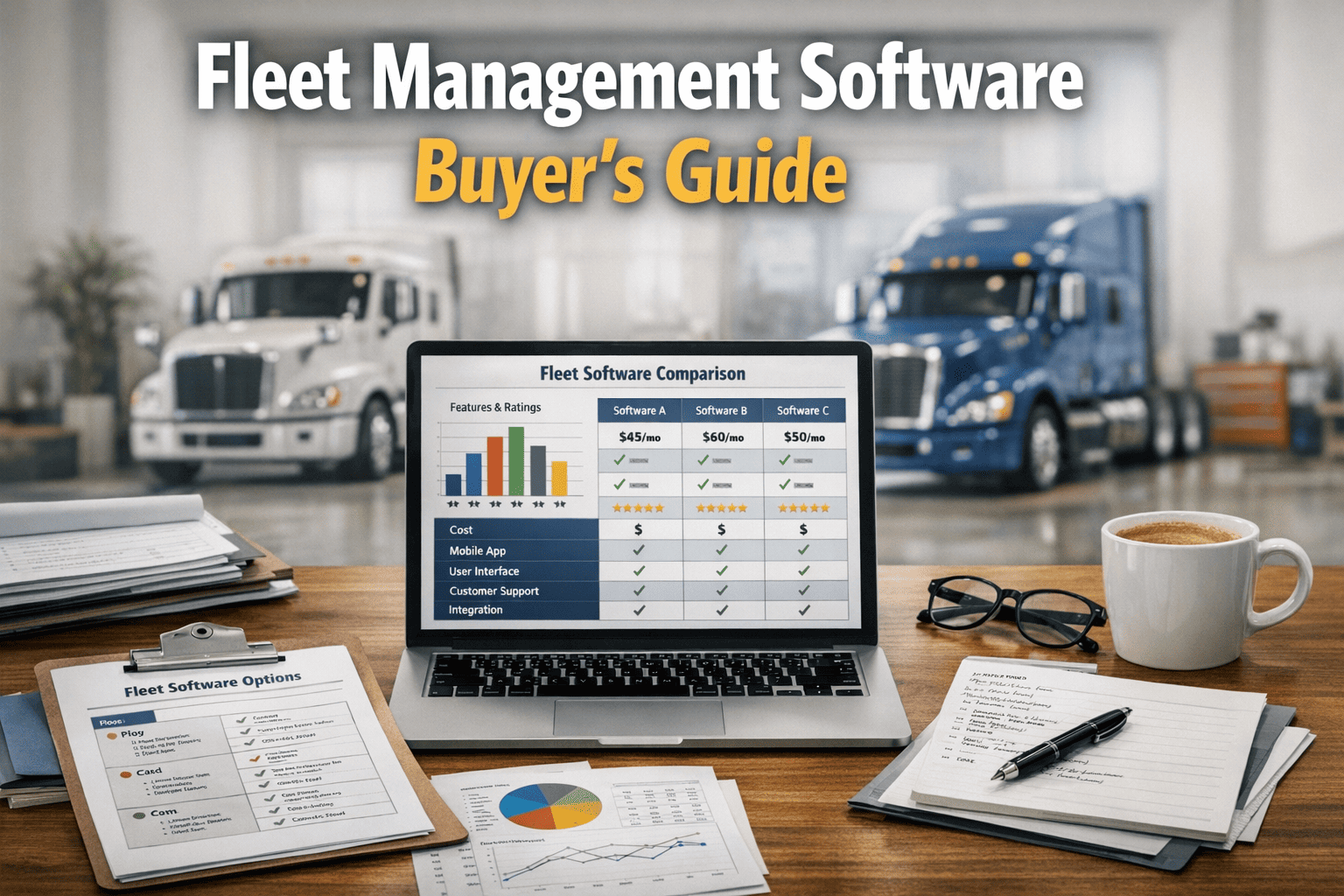
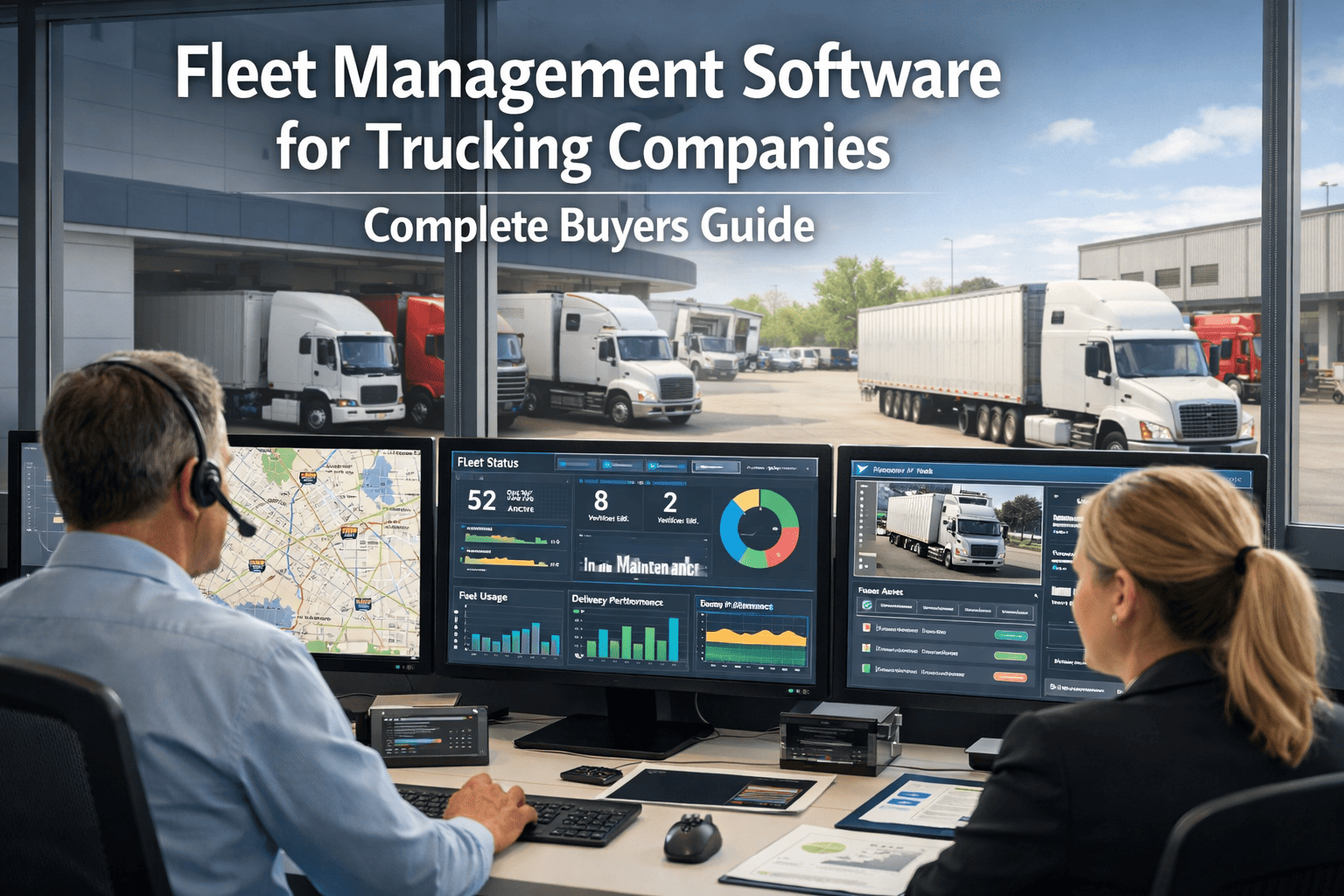
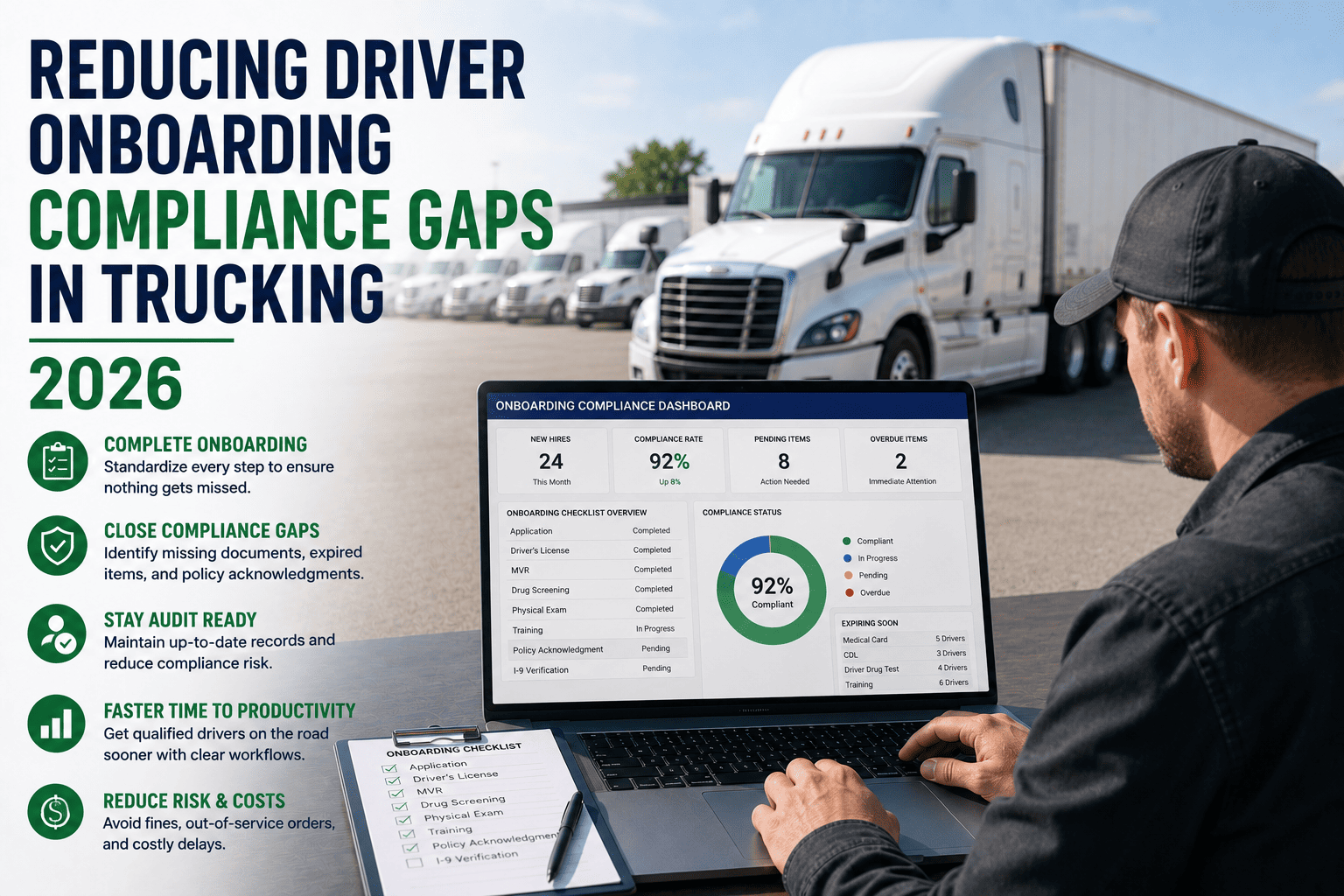
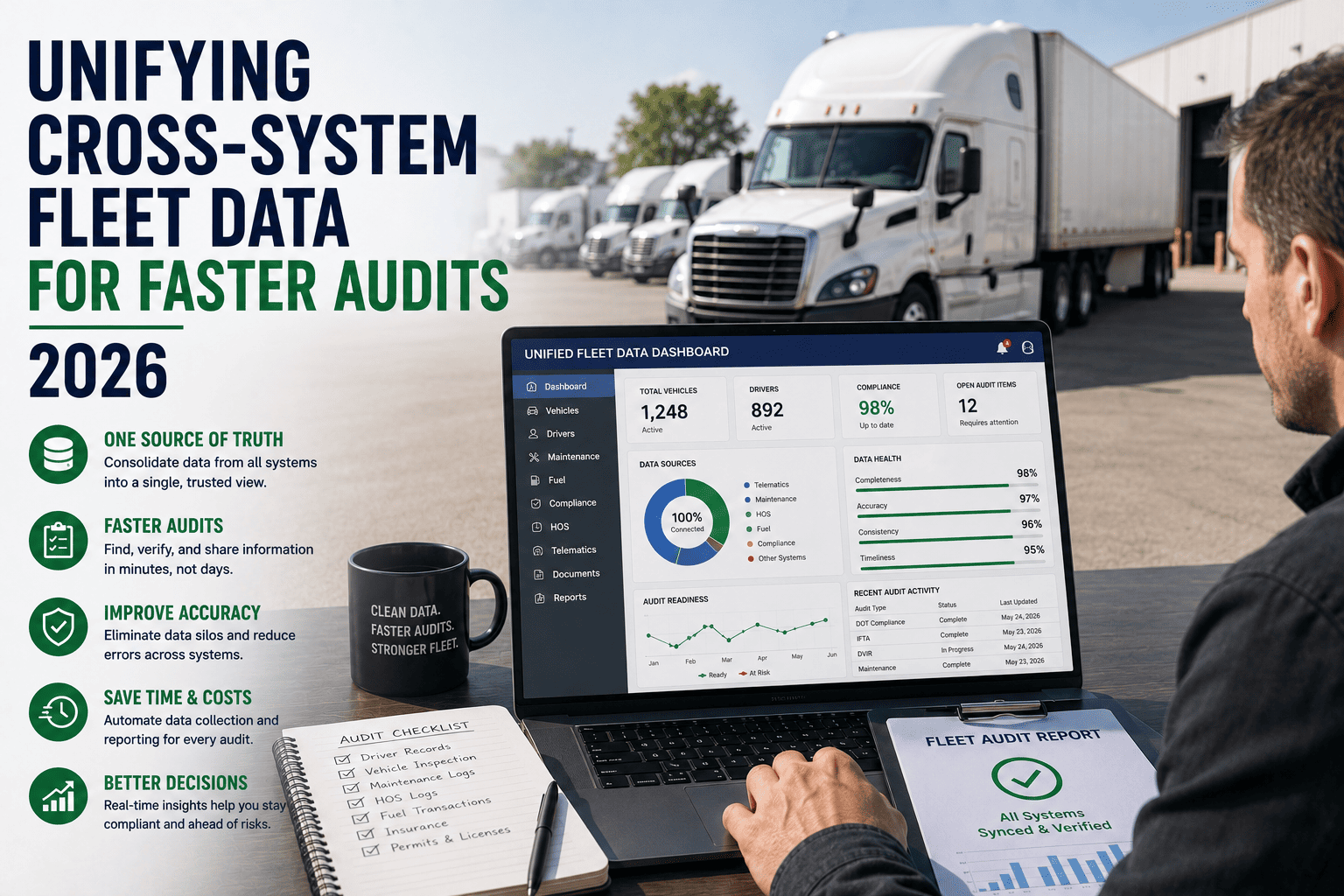
Choosing the right fleet management software is the most critical technology decision a trucking company will make. The right platform boosts margins, ensures compliance, and keeps drivers happy, while the wrong one becomes a costly administrative burden. Book a free demo to evaluate FleetRabbit for your trucking company →
What This Page Covers
Compare the best fleet management software for trucking companies with this complete buyer's guide covering features, integrations, pricing, analytics, and fleet optimization tools. Setup takes under 10 minutes. No hardware required.
10,600+
Monthly searches for trucking software
20%
Average boost in fleet utilization
1
Unified platform for all operations
24/7
Real-time dispatch visibility
Why Generic Tracking Fails Trucking Companies
Basic GPS dots on a map are not enough for commercial trucking. You need deep data integration across dispatch, ELD compliance, and maintenance. Start free and experience true trucking software →
In today's fast-paced environment, standard solutions simply do not provide the granular data necessary to stay competitive. Operations leaders are realizing that reactive approaches cost far more in the long run than investing in proactive, smart technology. The modern logistics landscape demands precision, and that is exactly what the next generation of fleet tools provides. Whether you are managing five vehicles or five hundred, the principles of efficiency remain the same: capture the right data, surface actionable insights, and automate routine decisions.
By upgrading your operational toolset, you eliminate the guesswork that plagues traditional management methods. Dispatchers can see exactly where issues are developing before they escalate, and drivers feel supported by technology that actually works. Start your digital transformation today with a free trial →
Problem 1
Fragmented Systems
Using separate apps for routing, maintenance, and compliance forces dispatchers to double-enter data across platforms.
Problem 2
Poor Driver Experience
Clunky mobile apps frustrate drivers, leading to ignored alerts, missed check-ins, and ultimately, driver turnover.
Problem 3
Hidden Fees
Many legacy providers lock fleets into long-term contracts with hidden fees for API access, support, and basic reporting.
What to Look For in 2026 Trucking Software
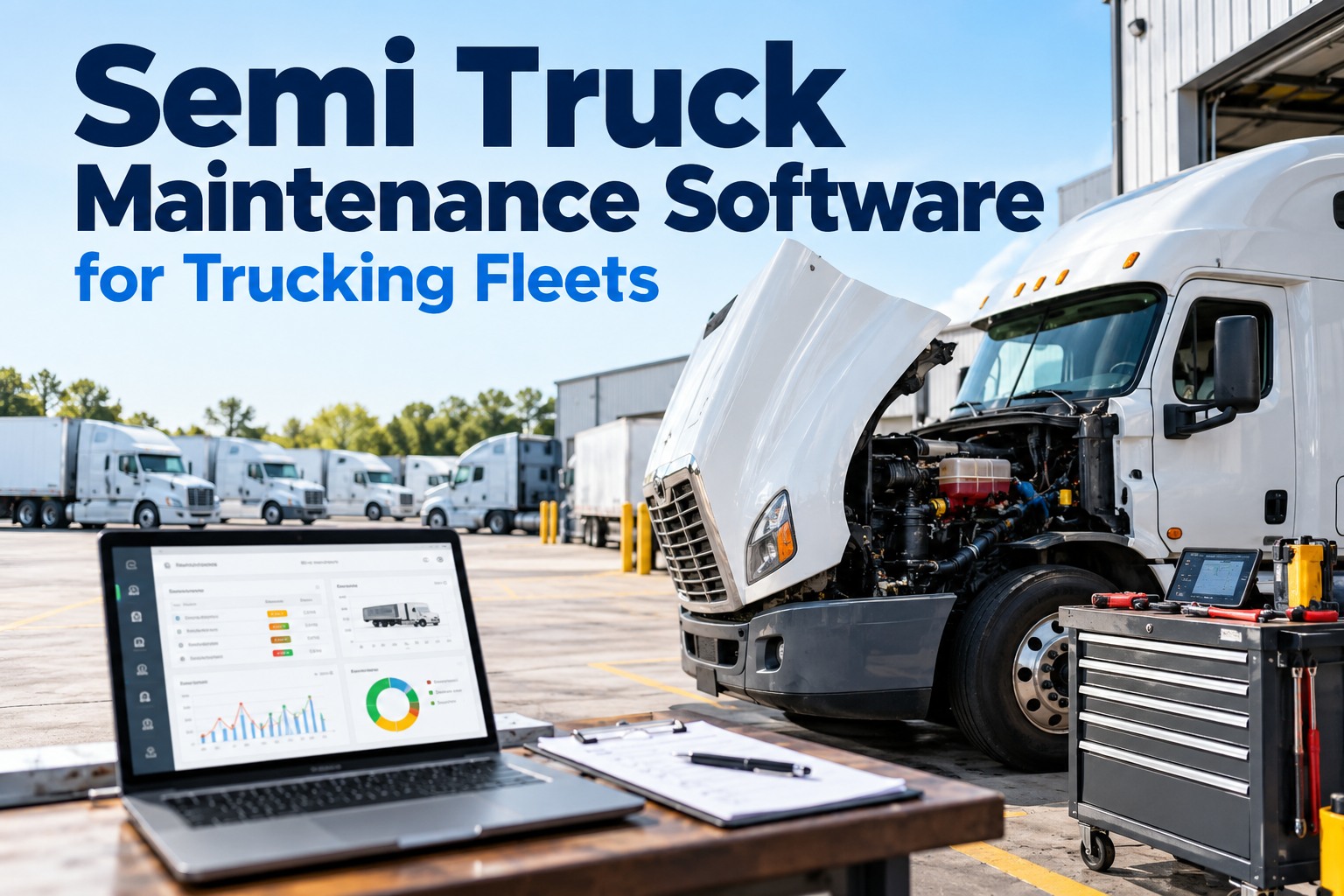
Modern trucking software like FleetRabbit unifies every aspect of fleet operations into a single, intuitive platform. See the unified platform in action →
Implementing these solutions does not require weeks of downtime or expensive hardware installations. Cloud-based platforms deploy instantly, utilizing the mobile devices your drivers already have in their pockets. The onboarding process is designed to be frictionless, ensuring that your team can start reaping the benefits of advanced analytics from day one.
Furthermore, the built-in artificial intelligence continuously learns from your specific operational patterns. Over time, the recommendations become more tailored and accurate, effectively turning your historical data into a predictive engine for future success. Book a free consultation to see how our predictive engine works →
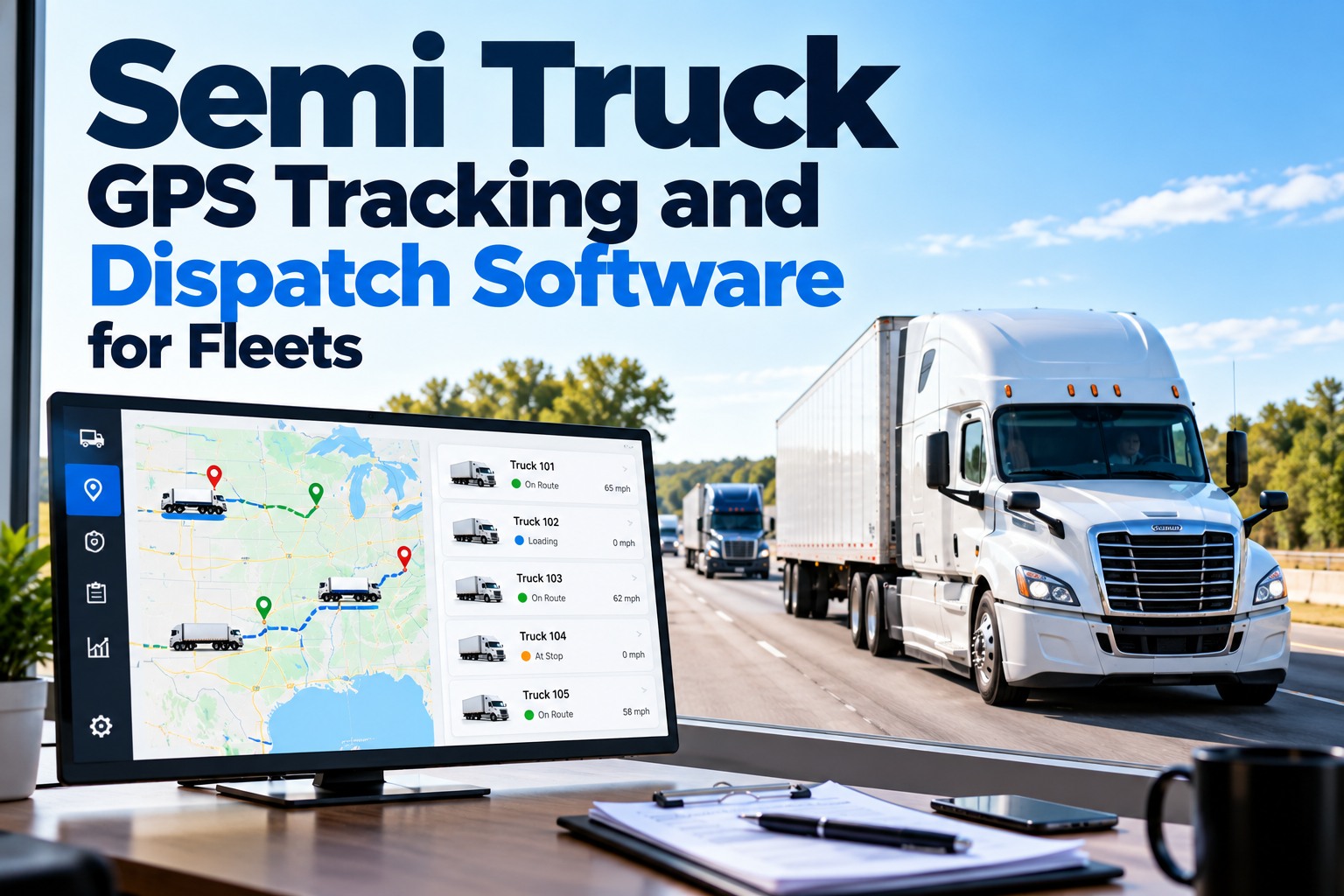
A single dashboard that connects customer orders, optimized routing, and live driver ETAs to eliminate operational friction.
This level of visibility transforms how your back office operates. Instead of making frantic calls to determine status, your team manages by exception—only intervening when the system highlights an anomaly.
Drag-and-drop dispatching
Live customer ETA sharing
Automated proof of delivery
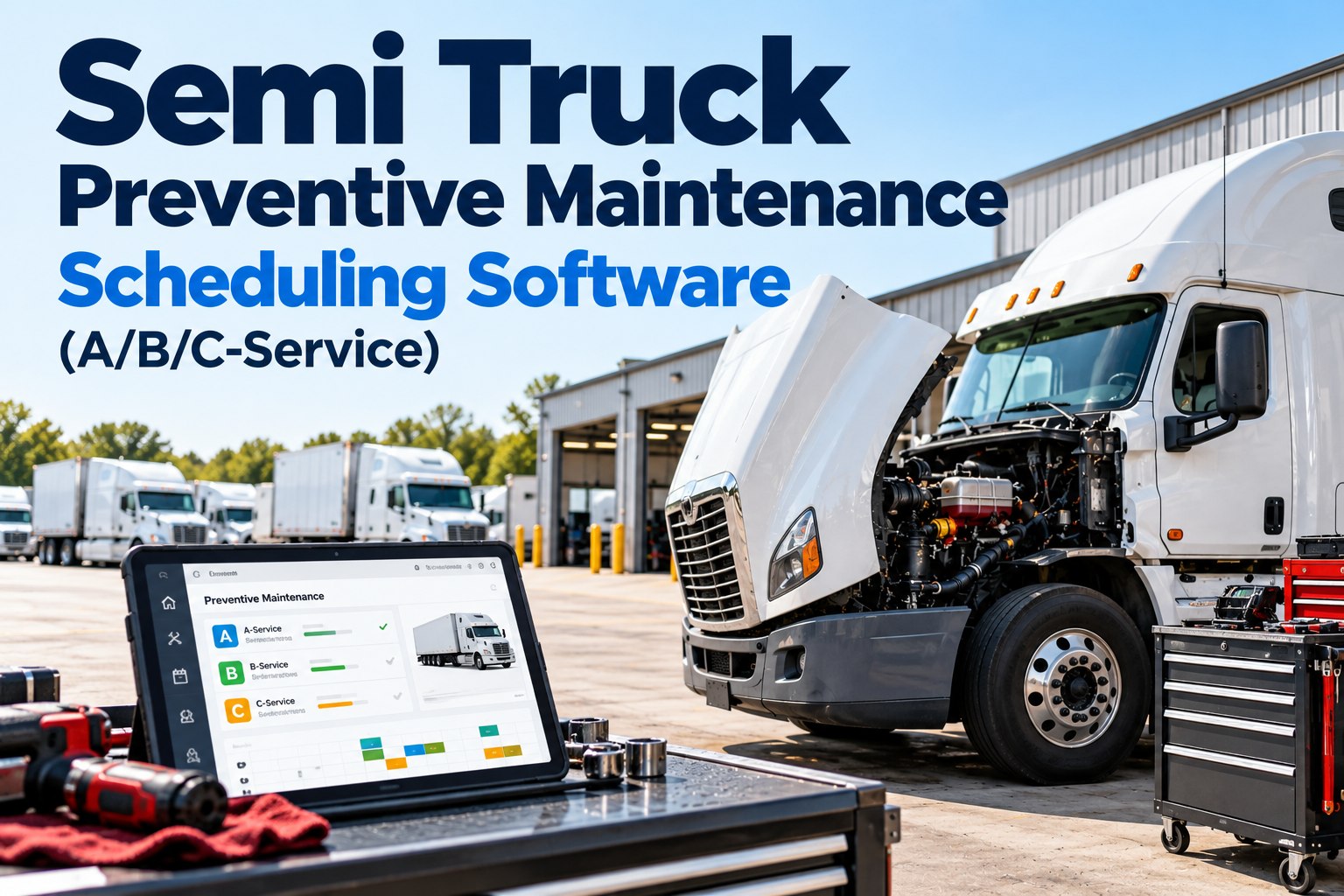
Maintenance schedules linked directly to live odometer readings and engine fault codes, ensuring preventive care is never missed.
The resulting workflow is entirely streamlined. Information flows securely and instantly between the field and the office, creating a single source of truth that powers better business decisions and healthier bottom lines.
Automated PM scheduling
Live engine diagnostic alerts
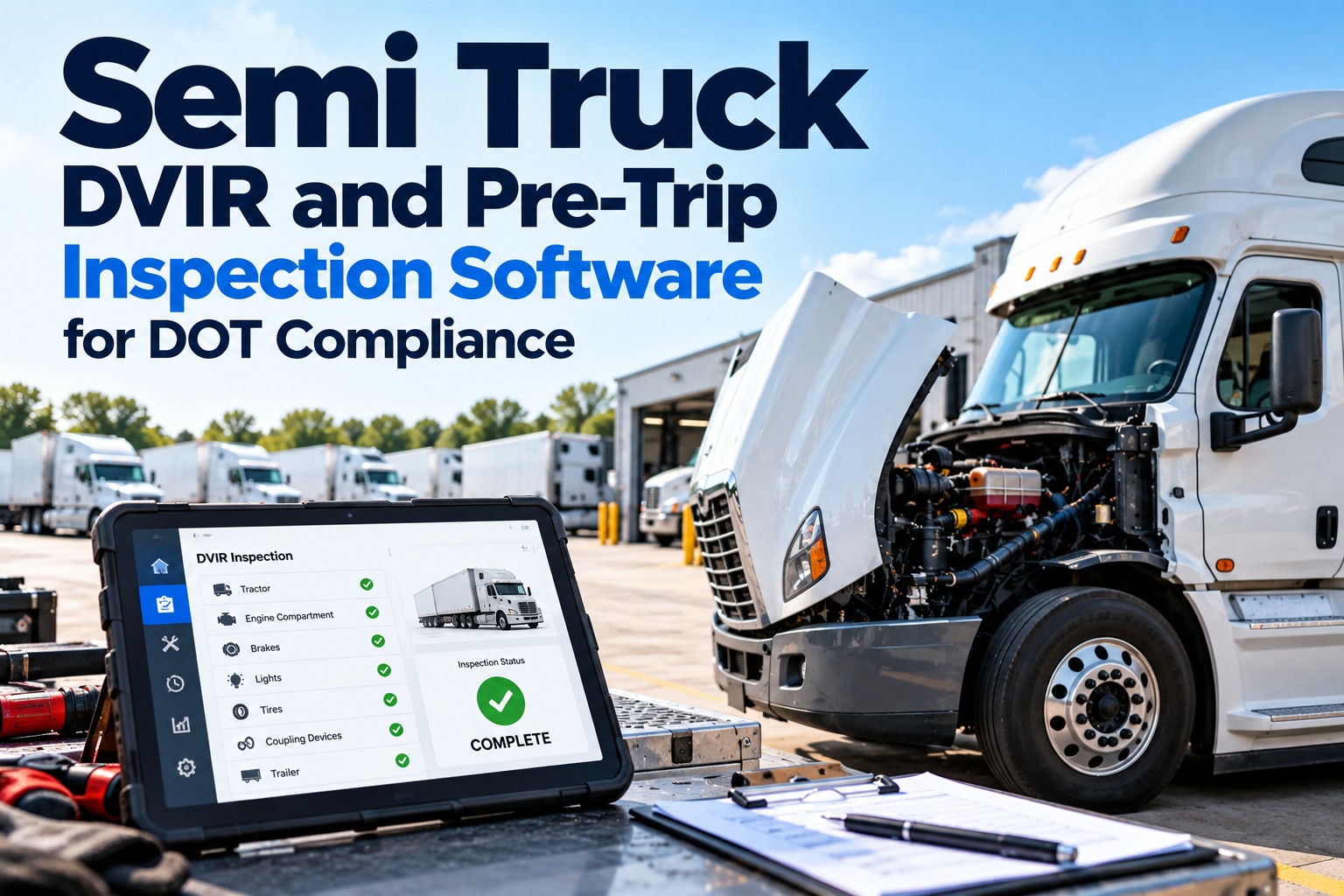
Digital DVIR integration
Fleet Management — Free to Start
Upgrade Your Trucking Software in Under 10 Minutes
Unified dispatch, automated maintenance, and live tracking — free for up to 3 vehicles. No hardware. No contracts.
Step-by-Step Implementation Framework
Transforming your operational workflows does not happen overnight. It requires a deliberate, structured approach to ensure maximum adoption and minimal disruption to ongoing deliveries. Organizations that succeed in modernizing their fleet operations universally follow a rigorous implementation framework. Rather than forcing a massive, simultaneous transition, deploying technology in strategic phases guarantees that dispatchers, managers, and drivers acclimate to the new tools comfortably and safely. A phased rollout acts as a crucial risk-mitigation strategy, allowing management to fine-tune predictive parameters and communication channels in a controlled environment before scaling globally.
The first phase focuses entirely on data visibility without changing the core driver workflows. By simply installing the telematics layer—whether through plug-and-play OBD-II devices or API integrations with existing OEM hardware—fleet managers immediately gain a baseline understanding of their operational realities. This passive observation period is essential. It highlights routing inefficiencies, uncovers hidden idling costs, and establishes a genuine behavioral baseline for every driver in the fleet. Once the management team understands the true cost of their current operations, they can configure alerts and automated workflows that address the most expensive pain points first. This strategy builds instant credibility for the technology investment by delivering rapid, measurable ROI.
Subsequent phases introduce active management protocols, such as automated predictive maintenance alerts and dynamic route adjustments. Here, the technology transitions from a simple tracking tool into a proactive operational partner. Dispatchers begin relying on AI-generated ETAs rather than manual check-ins, and mechanics start ordering parts based on predictive engine fault codes before a vehicle even enters the yard. Finally, the integration phase connects this rich fleet data directly into enterprise accounting, payroll, and CRM systems. This eliminates double-entry, automates IFTA reporting, and ensures that the financial health of the organization is directly synchronized with the real-time performance of its vehicles.
Connect vehicles to the platform and monitor operations for two to three weeks without altering driver routines. Establish critical benchmarks for fuel consumption, route adherence, and safety incidents. This phase is entirely friction-free for field staff.
Configure automated alerts for maintenance triggers, geofence boundary crossings, and unauthorized after-hours usage. Train dispatchers to monitor the live dashboard and transition away from whiteboards and static spreadsheets.
Roll out the digital DVIR and compliance mobile application to drivers. Introduce photo-enforced inspections, real-time defect reporting, and automated route assignments directly to the driver's smartphone or tablet.
Connect the telematics platform to your ERP, payroll, and TMS software via open APIs. Automate fuel tax reporting, streamline billing with automated proof of delivery, and utilize predictive AI to continuously optimize asset utilization.
Advanced Analytics and Predictive Maintenance Strategies
The difference between a good fleet and a great fleet lies entirely in how they handle maintenance. Reactive maintenance—waiting for a part to fail before fixing it—is an incredibly expensive strategy. It results in exorbitant emergency towing fees, canceled customer deliveries, and severely diminished asset lifespans. The introduction of predictive maintenance analytics has fundamentally disrupted this antiquated approach, offering fleet operators a way to look into the future of their engines. By leveraging machine learning models trained on millions of miles of historical driving data, modern fleet systems can detect minute anomalies in engine performance long before a check engine light ever illuminates.
Consider the cost implications of a failing alternator on a long-haul route. In a traditional setup, the driver experiences a sudden loss of power, the vehicle is stranded on the side of a highway, and the load is compromised. With predictive analytics, the telematics device registers a subtle drop in voltage consistency over a period of days. The system automatically flags the vehicle, cross-references the alert with the parts inventory, and schedules a replacement during the truck's next planned downtime. The repair costs a fraction of an emergency service call, the delivery schedule is entirely unaffected, and the driver remains safe and productive. This level of foresight transforms the maintenance department from a cost center into a strategic advantage.
Furthermore, these analytics extend beyond engine health to encompass holistic asset utilization. Heat maps and historical route playbacks allow managers to identify bottlenecks at specific customer sites or recurring delays at specific intersections. By aggregating this data, fleets can negotiate better delivery windows, reroute vehicles around chronic congestion, and identify underutilized assets that can be sold or redeployed. When every data point is captured, structured, and presented in an actionable format, executives are empowered to make strategic decisions backed by undeniable empirical evidence rather than gut feeling.
Data Security, Privacy, and Regulatory Compliance
As fleets become increasingly connected, they simultaneously become increasingly vulnerable to cybersecurity threats. The data generated by modern commercial vehicles is highly sensitive, encompassing real-time location tracking, proprietary customer delivery schedules, and detailed driver behavior profiles. Protecting this data is not merely an IT concern; it is a critical operational imperative. Industry-leading fleet management platforms prioritize security at every level of their architecture, employing end-to-end encryption to ensure that telemetry data cannot be intercepted or manipulated in transit. By utilizing enterprise-grade cloud infrastructure with continuous vulnerability scanning, these platforms guarantee that fleet data is secure against both external breaches and internal misuse.
Privacy concerns are equally paramount, particularly regarding driver tracking. While managers require visibility to ensure efficiency and safety, it is vital to balance this need with respect for driver privacy. Advanced platforms offer granular permission settings and time-based tracking constraints. For instance, a system can be configured to stop logging location data immediately when a driver clocks out or enters a "personal conveyance" status. This ensures compliance with labor laws and builds trust between the management team and the workforce. When drivers understand that the technology is deployed to protect them and optimize their day—rather than to micromanage their every move—adoption rates skyrocket.
From a regulatory standpoint, the landscape is becoming exponentially more complex. Government agencies are continuously updating requirements surrounding emissions, hours of service, and vehicle safety standards. Navigating this labyrinth of regulations manually is virtually impossible for modern fleets. Integrated compliance software automates the entire process, generating DOT-ready reports with a single click and maintaining secure digital archives of all required documentation. Whether facing a sudden roadside inspection or a comprehensive corporate audit, having immediate access to perfectly formatted, indisputable compliance records eliminates the risk of catastrophic fines and operational grounding.
Real-World Use Cases That Drive Massive ROI
The theoretical benefits of advanced fleet technology are impressive, but the real-world applications are where the true financial return on investment is realized. Fleets across the globe are utilizing these tools to solve complex logistical challenges, eliminate waste, and create entirely new revenue streams. By examining specific, high-impact use cases, operations leaders can identify exactly how to apply these capabilities to their own unique business models. The following scenarios illustrate how transitioning from static tracking to intelligent fleet management delivers immediate, measurable value to the bottom line.
Automated Customer Arrival and Departure Logs
Standard operations require drivers to manually call dispatch or log their arrival times, leading to disputed detention times and delayed billing. Advanced systems use precision geofencing to automatically trigger arrival and departure timestamps the moment a vehicle crosses a customer's property line. This provides indisputable proof of service, automates detention billing, and allows the accounting department to generate invoices the exact moment a job is completed.
Eliminates billing disputes and accelerates cash flow by up to 14 days.
Fuel Theft and Unauthorized Usage Prevention
Fuel represents one of the largest variable costs for any fleet. When fuel cards are unlinked from vehicle locations, the risk of theft and skimming is incredibly high. By integrating fuel card data directly with live vehicle telematics, the system instantly cross-references the location of the fuel purchase with the physical location of the assigned truck. If a card is swiped in Dallas but the truck is in Houston, an immediate fraud alert is triggered, and the card is deactivated.
Reduces fraudulent fuel expenditures by an average of 18% annually.
Dynamic Route Re-Optimization During Transit
Static routes fail the moment a truck leaves the yard. Accidents, severe weather, and canceled orders instantly render a printed route sheet obsolete. Smart dispatch platforms continuously monitor live traffic feeds and weather patterns, automatically calculating alternative routes and sending them directly to the driver's in-cab display. This ensures that drivers are always taking the most efficient path possible, regardless of changing external conditions.
Cuts average route completion times by 12% and significantly reduces engine idling.
Driver Safety Gamification and Retention
High driver turnover is a crippling expense. Traditional safety programs often feel punitive, reprimanding drivers for mistakes without acknowledging exceptional performance. Modern platforms flip this paradigm by gamifying safety. Drivers receive scores based on smooth braking, adherence to speed limits, and defensive driving techniques. These scores fuel friendly leaderboards and reward programs, transforming safety into a positive, incentivized culture rather than a disciplinary tool.
Improves driver retention rates by 25% while lowering insurance premiums.
Future-Proofing Your Fleet for 2026 and Beyond
The pace of technological advancement in the logistics sector shows no signs of slowing. As we move deeper into 2026, the integration of autonomous vehicle technologies, advanced artificial intelligence, and hyper-connected smart city infrastructure will redefine what is possible in fleet management. Organizations that invest in flexible, cloud-based telematics platforms today are not merely solving their current operational headaches; they are actively laying the foundational infrastructure required to compete in the future. Legacy, on-premise software simply cannot adapt to the massive influx of data that next-generation vehicles will produce. Upgrading now ensures that your fleet remains agile, competitive, and highly profitable regardless of how the industry evolves.
Consider the impending expansion of low-emission zones in major urban centers. Municipalities are increasingly utilizing geofencing technology to restrict entry to high-polluting vehicles automatically. Fleets equipped with intelligent routing software can seamlessly navigate these complex regulatory environments, automatically assigning electric or low-emission vehicles to restricted routes while directing traditional diesel trucks to unrestricted areas. This dynamic adaptability prevents costly fines and ensures uninterrupted service delivery to urban customers.
Ultimately, the transition to intelligent fleet management is a strategic imperative. The data generated by your vehicles is one of your most valuable corporate assets, but it is completely useless if it remains trapped in disconnected silos or buried in paper logs. By harnessing the power of advanced analytics, predictive maintenance, and automated compliance, operations leaders can transform their fleets from unpredictable cost centers into highly optimized engines of competitive advantage. The tools exist today to achieve complete operational transparency. The only question remaining is how quickly you will deploy them to secure your fleet's future.
Advanced Executive Implementation Framework
Transforming your operational workflows does not happen overnight. It requires a deliberate, structured approach to ensure maximum adoption and minimal disruption to ongoing deliveries. Organizations that succeed in modernizing their fleet operations universally follow a rigorous implementation framework. Rather than forcing a massive, simultaneous transition, deploying technology in strategic phases guarantees that dispatchers, managers, and drivers acclimate to the new tools comfortably and safely. A phased rollout acts as a crucial risk-mitigation strategy, allowing management to fine-tune predictive parameters and communication channels in a controlled environment before scaling globally.
The first phase focuses entirely on data visibility without changing the core driver workflows. By simply installing the telematics layer—whether through plug-and-play OBD-II devices or API integrations with existing OEM hardware—fleet managers immediately gain a baseline understanding of their operational realities. This passive observation period is essential. It highlights routing inefficiencies, uncovers hidden idling costs, and establishes a genuine behavioral baseline for every driver in the fleet. Once the management team understands the true cost of their current operations, they can configure alerts and automated workflows that address the most expensive pain points first. This strategy builds instant credibility for the technology investment by delivering rapid, measurable ROI.
Subsequent phases introduce active management protocols, such as automated predictive maintenance alerts and dynamic route adjustments. Here, the technology transitions from a simple tracking tool into a proactive operational partner. Dispatchers begin relying on AI-generated ETAs rather than manual check-ins, and mechanics start ordering parts based on predictive engine fault codes before a vehicle even enters the yard. Finally, the integration phase connects this rich fleet data directly into enterprise accounting, payroll, and CRM systems. This eliminates double-entry, automates IFTA reporting, and ensures that the financial health of the organization is directly synchronized with the real-time performance of its vehicles.
Connect vehicles to the platform and monitor operations for two to three weeks without altering driver routines. Establish critical benchmarks for fuel consumption, route adherence, and safety incidents. This phase is entirely friction-free for field staff.
Configure automated alerts for maintenance triggers, geofence boundary crossings, and unauthorized after-hours usage. Train dispatchers to monitor the live dashboard and transition away from whiteboards and static spreadsheets.
Roll out the digital DVIR and compliance mobile application to drivers. Introduce photo-enforced inspections, real-time defect reporting, and automated route assignments directly to the driver's smartphone or tablet.
Connect the telematics platform to your ERP, payroll, and TMS software via open APIs. Automate fuel tax reporting, streamline billing with automated proof of delivery, and utilize predictive AI to continuously optimize asset utilization.
Advanced Analytics and Predictive Maintenance Strategies
The difference between a good fleet and a great fleet lies entirely in how they handle maintenance. Reactive maintenance—waiting for a part to fail before fixing it—is an incredibly expensive strategy. It results in exorbitant emergency towing fees, canceled customer deliveries, and severely diminished asset lifespans. The introduction of predictive maintenance analytics has fundamentally disrupted this antiquated approach, offering fleet operators a way to look into the future of their engines. By leveraging machine learning models trained on millions of miles of historical driving data, modern fleet systems can detect minute anomalies in engine performance long before a check engine light ever illuminates.
Consider the cost implications of a failing alternator on a long-haul route. In a traditional setup, the driver experiences a sudden loss of power, the vehicle is stranded on the side of a highway, and the load is compromised. With predictive analytics, the telematics device registers a subtle drop in voltage consistency over a period of days. The system automatically flags the vehicle, cross-references the alert with the parts inventory, and schedules a replacement during the truck's next planned downtime. The repair costs a fraction of an emergency service call, the delivery schedule is entirely unaffected, and the driver remains safe and productive. This level of foresight transforms the maintenance department from a cost center into a strategic advantage.
Furthermore, these analytics extend beyond engine health to encompass holistic asset utilization. Heat maps and historical route playbacks allow managers to identify bottlenecks at specific customer sites or recurring delays at specific intersections. By aggregating this data, fleets can negotiate better delivery windows, reroute vehicles around chronic congestion, and identify underutilized assets that can be sold or redeployed. When every data point is captured, structured, and presented in an actionable format, executives are empowered to make strategic decisions backed by undeniable empirical evidence rather than gut feeling.
Data Security, Privacy, and Regulatory Compliance
As fleets become increasingly connected, they simultaneously become increasingly vulnerable to cybersecurity threats. The data generated by modern commercial vehicles is highly sensitive, encompassing real-time location tracking, proprietary customer delivery schedules, and detailed driver behavior profiles. Protecting this data is not merely an IT concern; it is a critical operational imperative. Industry-leading fleet management platforms prioritize security at every level of their architecture, employing end-to-end encryption to ensure that telemetry data cannot be intercepted or manipulated in transit. By utilizing enterprise-grade cloud infrastructure with continuous vulnerability scanning, these platforms guarantee that fleet data is secure against both external breaches and internal misuse.
Privacy concerns are equally paramount, particularly regarding driver tracking. While managers require visibility to ensure efficiency and safety, it is vital to balance this need with respect for driver privacy. Advanced platforms offer granular permission settings and time-based tracking constraints. For instance, a system can be configured to stop logging location data immediately when a driver clocks out or enters a "personal conveyance" status. This ensures compliance with labor laws and builds trust between the management team and the workforce. When drivers understand that the technology is deployed to protect them and optimize their day—rather than to micromanage their every move—adoption rates skyrocket.
From a regulatory standpoint, the landscape is becoming exponentially more complex. Government agencies are continuously updating requirements surrounding emissions, hours of service, and vehicle safety standards. Navigating this labyrinth of regulations manually is virtually impossible for modern fleets. Integrated compliance software automates the entire process, generating DOT-ready reports with a single click and maintaining secure digital archives of all required documentation. Whether facing a sudden roadside inspection or a comprehensive corporate audit, having immediate access to perfectly formatted, indisputable compliance records eliminates the risk of catastrophic fines and operational grounding.
Enterprise Scenarios That Drive Massive ROI
The theoretical benefits of advanced fleet technology are impressive, but the real-world applications are where the true financial return on investment is realized. Fleets across the globe are utilizing these tools to solve complex logistical challenges, eliminate waste, and create entirely new revenue streams. By examining specific, high-impact use cases, operations leaders can identify exactly how to apply these capabilities to their own unique business models. The following scenarios illustrate how transitioning from static tracking to intelligent fleet management delivers immediate, measurable value to the bottom line.
Automated Customer Arrival and Departure Logs
Standard operations require drivers to manually call dispatch or log their arrival times, leading to disputed detention times and delayed billing. Advanced systems use precision geofencing to automatically trigger arrival and departure timestamps the moment a vehicle crosses a customer's property line. This provides indisputable proof of service, automates detention billing, and allows the accounting department to generate invoices the exact moment a job is completed.
Eliminates billing disputes and accelerates cash flow by up to 14 days.
Fuel Theft and Unauthorized Usage Prevention
Fuel represents one of the largest variable costs for any fleet. When fuel cards are unlinked from vehicle locations, the risk of theft and skimming is incredibly high. By integrating fuel card data directly with live vehicle telematics, the system instantly cross-references the location of the fuel purchase with the physical location of the assigned truck. If a card is swiped in Dallas but the truck is in Houston, an immediate fraud alert is triggered, and the card is deactivated.
Reduces fraudulent fuel expenditures by an average of 18% annually.
Dynamic Route Re-Optimization During Transit
Static routes fail the moment a truck leaves the yard. Accidents, severe weather, and canceled orders instantly render a printed route sheet obsolete. Smart dispatch platforms continuously monitor live traffic feeds and weather patterns, automatically calculating alternative routes and sending them directly to the driver's in-cab display. This ensures that drivers are always taking the most efficient path possible, regardless of changing external conditions.
Cuts average route completion times by 12% and significantly reduces engine idling.
Driver Safety Gamification and Retention
High driver turnover is a crippling expense. Traditional safety programs often feel punitive, reprimanding drivers for mistakes without acknowledging exceptional performance. Modern platforms flip this paradigm by gamifying safety. Drivers receive scores based on smooth braking, adherence to speed limits, and defensive driving techniques. These scores fuel friendly leaderboards and reward programs, transforming safety into a positive, incentivized culture rather than a disciplinary tool.
Improves driver retention rates by 25% while lowering insurance premiums.
Strategic Outlook Your Fleet for 2026 and Beyond
The pace of technological advancement in the logistics sector shows no signs of slowing. As we move deeper into 2026, the integration of autonomous vehicle technologies, advanced artificial intelligence, and hyper-connected smart city infrastructure will redefine what is possible in fleet management. Organizations that invest in flexible, cloud-based telematics platforms today are not merely solving their current operational headaches; they are actively laying the foundational infrastructure required to compete in the future. Legacy, on-premise software simply cannot adapt to the massive influx of data that next-generation vehicles will produce. Upgrading now ensures that your fleet remains agile, competitive, and highly profitable regardless of how the industry evolves.
Consider the impending expansion of low-emission zones in major urban centers. Municipalities are increasingly utilizing geofencing technology to restrict entry to high-polluting vehicles automatically. Fleets equipped with intelligent routing software can seamlessly navigate these complex regulatory environments, automatically assigning electric or low-emission vehicles to restricted routes while directing traditional diesel trucks to unrestricted areas. This dynamic adaptability prevents costly fines and ensures uninterrupted service delivery to urban customers.
Ultimately, the transition to intelligent fleet management is a strategic imperative. The data generated by your vehicles is one of your most valuable corporate assets, but it is completely useless if it remains trapped in disconnected silos or buried in paper logs. By harnessing the power of advanced analytics, predictive maintenance, and automated compliance, operations leaders can transform their fleets from unpredictable cost centers into highly optimized engines of competitive advantage. The tools exist today to achieve complete operational transparency. The only question remaining is how quickly you will deploy them to secure your fleet's future.
Frequently Asked Questions
QHow hard is it to switch fleet software providers?
With cloud-based platforms like FleetRabbit, switching is seamless. We offer bulk data import tools for vehicles and drivers, and our hardware-free options mean you can be up and running in hours, not months.
QDoes it integrate with my accounting software?
Yes, modern platforms feature open APIs and native integrations with popular accounting systems to automate IFTA reporting and freight billing.
QHow does FleetRabbit secure my operational data?
Security is paramount. FleetRabbit employs AES-256 encryption at rest and TLS 1.3 in transit. We run on enterprise-grade cloud infrastructure with continuous vulnerability scanning, ensuring your proprietary route data and driver information remain strictly confidential and protected against external threats.
QCan I trial the platform before committing my entire fleet?
Absolutely. We highly encourage a phased rollout. Our free tier allows you to connect up to 3 vehicles permanently, giving you ample time to test predictive analytics, digital DVIRs, and dispatch workflows without any financial commitment or hardware costs.
Don't Settle for Outdated Trucking Technology
Get the complete buyer's solution today. Unified operations, integrated maintenance, and driver-friendly apps. Free for up to 3 vehicles.
Live Tracking
Smart Analytics
Compliance
Route Optimization
Free for 3 Vehicles
$3 per Vehicle Pro
May 6, 2026
By Jason
All Posts