.png)
The transportation and logistics industry stands at an inflection point. Digital transformation initiatives that seemed optional five years ago have become competitive necessity. Fleet managers who operated successfully through 2023 using incremental improvements to existing workflows now face a fundamentally different operating environment defined by real-time data requirements, driver retention pressures, sustainability mandates, and the urgent need to extract profitability from an industry where margin compression has become chronic. The fleet management trends shaping 2026 and beyond are not marginal refinements to current operations. They represent structural shifts in how fleets compete, how drivers engage with their work, and how carriers demonstrate value to customers and investors.
Trend 1: AI-Powered Predictive Maintenance Moves From Promise to Practice
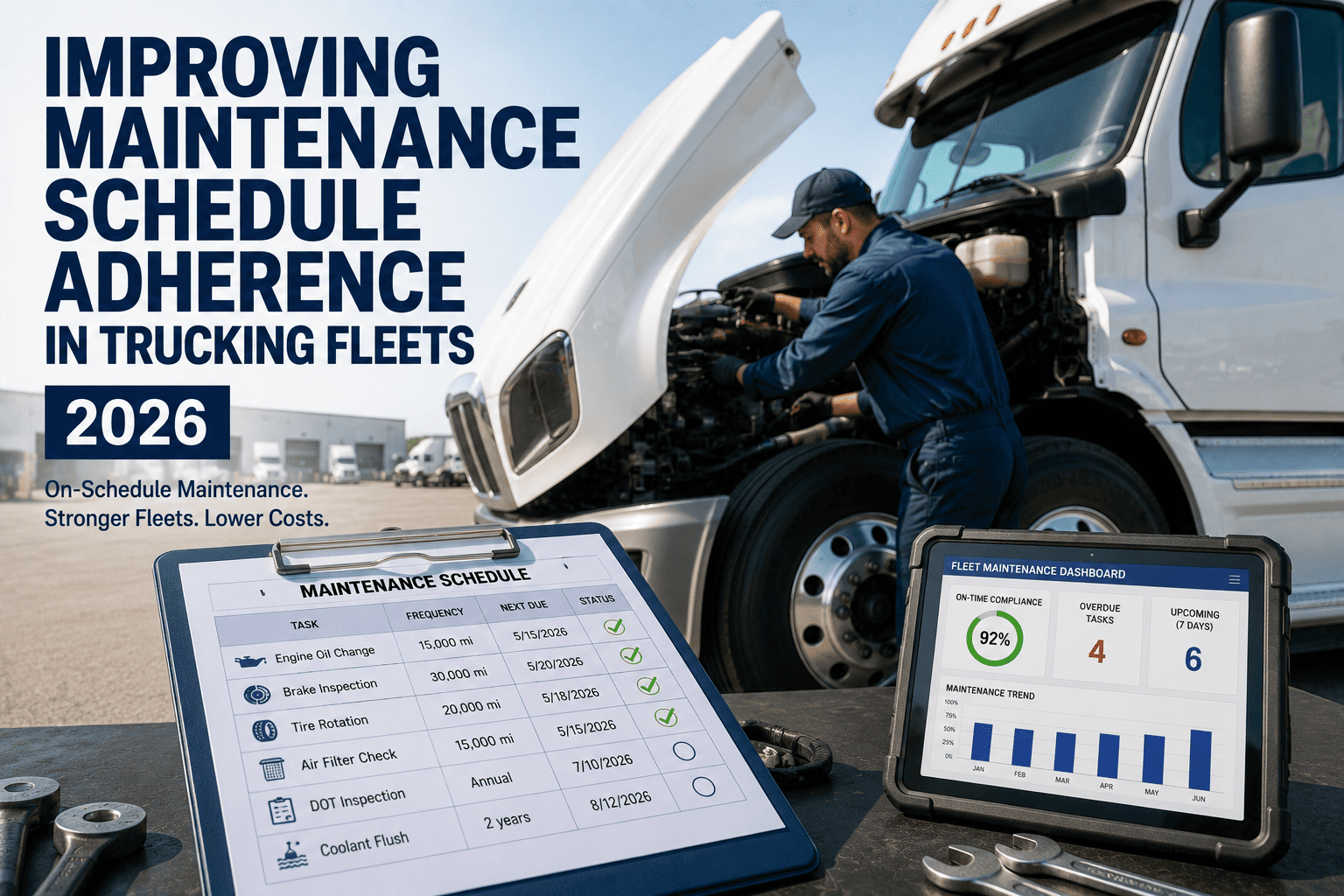
Predictive maintenance technology has been promised for a decade. In 2026, it is finally delivering measurable results because data quality has improved and computational models have matured enough to be actionable rather than theoretical. The trend is no longer whether AI will predict failures before they occur. The trend is now how quickly carriers can integrate AI-powered maintenance insight into actual maintenance workflow and how completely they can automate the routine decisions that currently consume fleet maintenance time.
OBD-II telematics data streams from connected vehicles now provide real-time operational parameters that AI models can analyze for anomaly detection. Machine learning models trained on failure patterns from thousands of vehicles can now predict specific failure modes 7 to 14 days before occurrence with accuracy that justifies maintenance intervention. This predictive capability is no longer marginal improvement. It is maintenance workflow transformation.
Carriers must integrate telematics data feeds with their maintenance management systems and staff their maintenance operations for predictive intervention rather than reactive repair. A fleet currently scheduling maintenance on calendar or mileage intervals has significant untapped efficiency opportunity in implementing predictive scheduling that correlates actual component wear patterns with maintenance timing.
Leading carriers have already implemented basic predictive maintenance capabilities. Mid-market carriers are beginning pilots in 2026. Smaller carriers are still evaluating options. The competitive window is narrowing. By 2027, predictive maintenance will be expected capability, not differentiator. Implementation should begin now if your fleet has not already started.
FleetRabbit integrates telematics data from multiple providers with maintenance scheduling and work order management. This integration enables correlation of vehicle performance anomalies with maintenance planning without requiring carriers to replace existing telematics relationships. Predictive maintenance insights flow directly into FleetRabbit's maintenance dashboard for fleet manager review and work order generation.
Implement Predictive Maintenance Into Your Fleet Operations
Carriers integrating telematics with maintenance management reduce unplanned downtime by 22 to 35 percent. FleetRabbit connects your telematics data with maintenance workflow without system replacement or IT complexity. Start with sign up free to see how connected maintenance works in your operation.
Trend 2: Real-Time Compliance Automation Becomes Competitive Necessity
The 2026 FMCSA regulatory environment has increased compliance complexity while simultaneously raising the bar for acceptable compliance performance. Carriers can no longer afford to view compliance as periodic audit readiness exercise. Compliance must be continuous operational discipline with real-time visibility and automated enforcement of policy across all vehicles and drivers simultaneously.
Digital DVIR Completion Becomes Expected Standard
The March 2026 FMCSA eDVIR guidance finalized what had been emerging for years: electronic DVIRs are the regulatory baseline. Carriers still operating on paper or basic digital checklists are now at compliance disadvantage compared to competitors with photo-verified, timestamped, geotagged DVIRs that create audit-ready documentation automatically. DVIR completion rates of 95 percent or higher are now achievable and expected.
HOS Compliance Moves to Real-Time Enforcement
ELD systems have existed for years, but real-time HOS compliance management is now becoming standard. Automated alerts when drivers approach HOS limits, proactive dispatch adjustment to prevent violations, and continuous driver coaching on HOS optimization are shifting compliance from after-the-fact documentation to operational prevention. Carriers implementing real-time HOS management are seeing violation reduction of 40 to 60 percent.
Driver Qualification File Management Automation
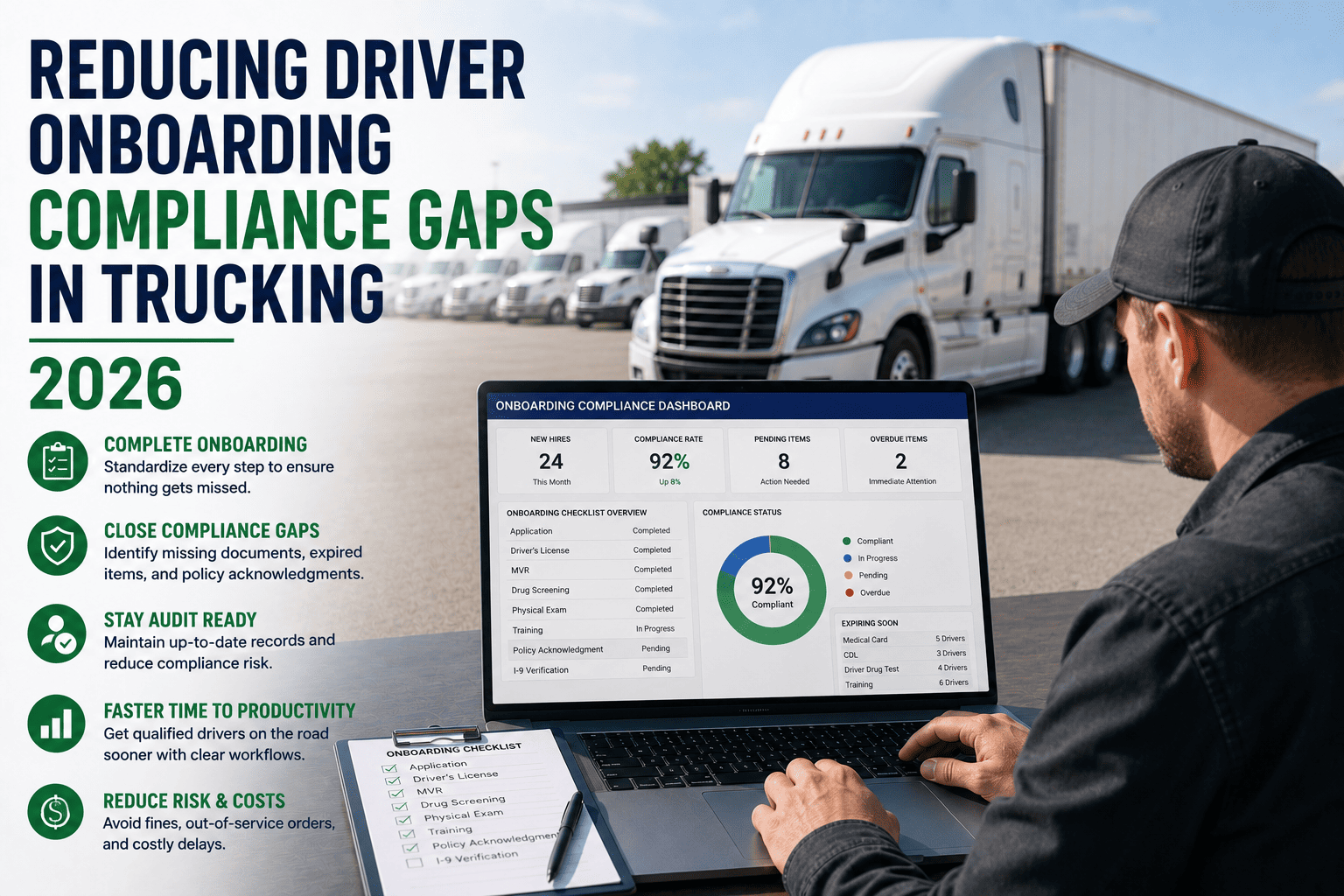
Medical certificate expirations, CDL renewals, and annual MVR reviews can no longer be managed through manual calendar systems or spreadsheets. Automated tracking with 60-day advance alerts is now required to maintain compliance at scale. Carriers operating with manual DQF management are exposing themselves to preventable violations and operating authority risk.
Integrated Compliance Dashboards Enable Proactive Management
Real-time compliance visibility across DVIRs, HOS, driver qualifications, and maintenance creates the operational context required for proactive management. Carriers must see compliance status for every vehicle and driver at any moment to respond to issues before they become violations. Integrated compliance dashboards are becoming standard, not optional, for fleet operations.
Trend 3: Driver Experience Technology Becomes Recruitment and Retention Tool
The persistent driver shortage is reshaping how carriers view fleet technology investment. Technology decisions that once focused purely on operational efficiency now must also address driver satisfaction, engagement, and retention. Fleets with superior driver experiences are winning recruitment battles. Carriers offering real-time performance feedback, transparent compensation, and modern logistics tools are retaining drivers longer and improving quality of hire.
Drivers now expect mobile app access to their schedules, performance metrics, compensation, and compliance status. Carriers providing modern, intuitive mobile experiences are reporting higher driver satisfaction and longer tenure. Fleet technology that requires driver interaction must be designed for driver workflow, not dispatcher convenience.
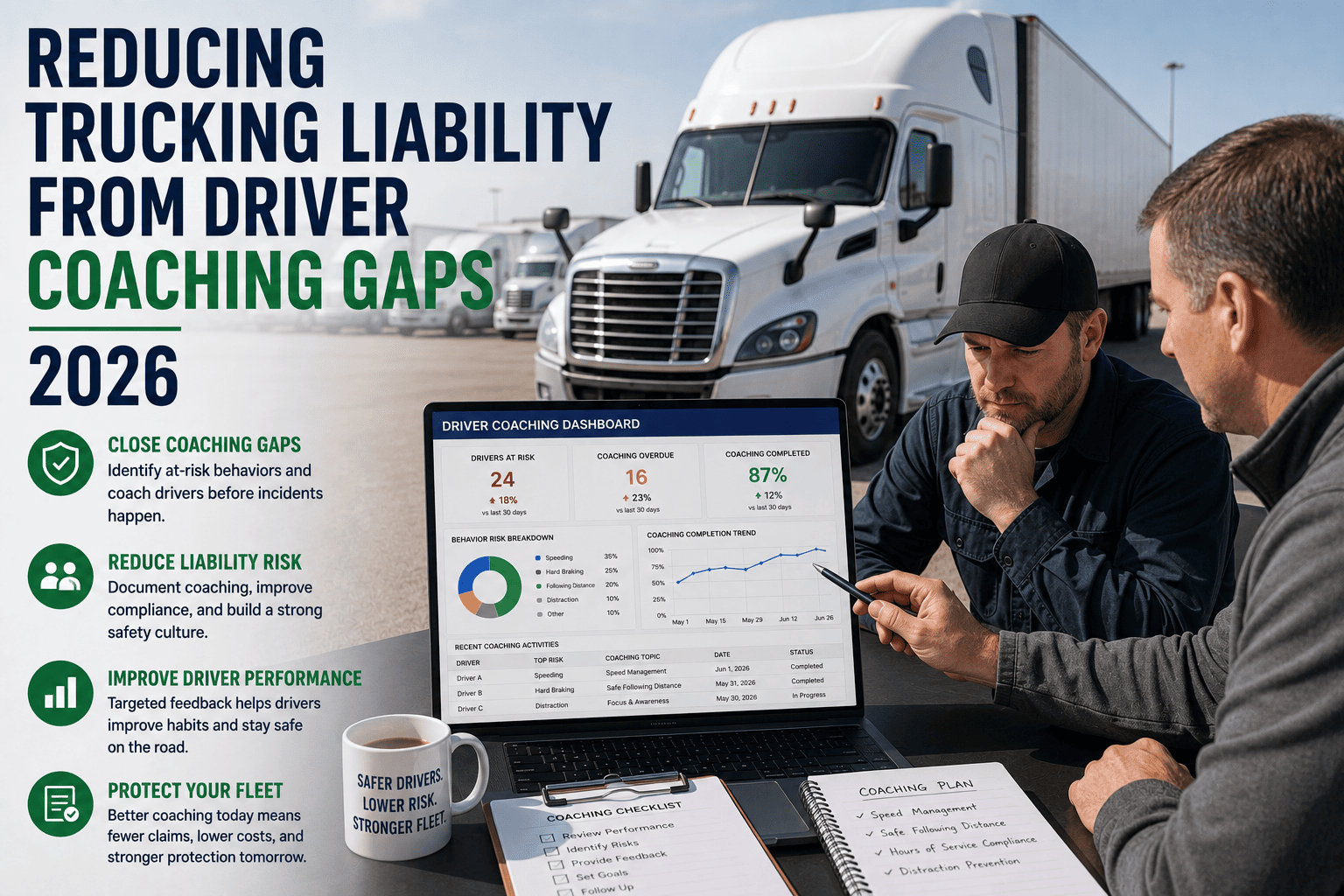
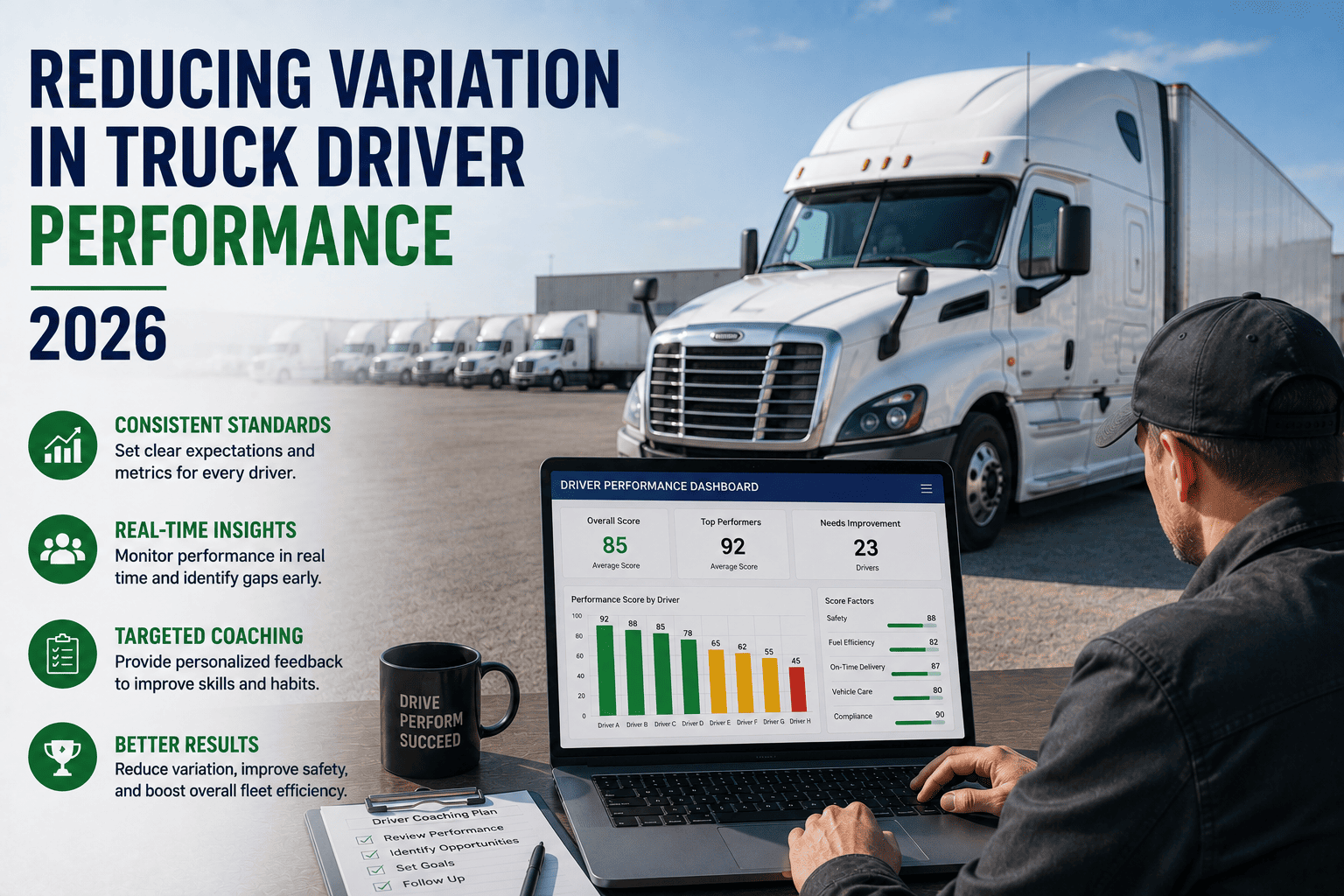
Drivers want real-time feedback on their fuel efficiency, safety metrics, and compliance performance. Opaque performance evaluation that appears only at quarterly reviews creates frustration and disengagement. Drivers with real-time access to their performance data show higher motivation for improvement and greater retention.
Driver concerns about autonomous vehicles are legitimate and persistent. Carriers providing transparency about automation timelines, career paths in an increasingly autonomous industry, and emphasis on the advanced skills autonomous technology will require are addressing driver anxiety more effectively than carriers denying automation reality.
Fleet technology increasingly includes driver safety monitoring, fatigue detection, and wellness integration. Drivers perceive this technology as protective rather than punitive when implemented transparently. Fleets offering driver wellness programs alongside safety monitoring show improved recruitment messaging and retention outcomes.
Trend 4: Sustainability Tracking Moves From CSR Initiative to Competitive Requirement
Environmental sustainability has transitioned from corporate social responsibility initiative to concrete business requirement driven by customer mandates, investor pressure, and regulatory evolution. Large shippers increasingly require carrier sustainability reporting. Insurance companies are adjusting premiums based on fleet sustainability metrics. Drivers now consider environmental impact when choosing employers.
| Sustainability Metric | Current State | 2026 Requirement | Competitive Advantage |
|---|---|---|---|
| Fuel Consumption Tracking | Manual compilation from fuel cards monthly | Real-time automated tracking by vehicle and driver | Automated reporting enables continuous optimization |
| CO2 Emissions Reporting | Estimated from average fuel consumption | Calculated from actual fuel consumption and telematics | Accurate reporting required for customer sustainability contracts |
| Electric Vehicle Integration | Pilot programs for large carriers only | Integration planning required for mid-size carriers | Early movers capture customer preference for EV fleets |
| Idle Time Reduction | General operational goal | Measured and reported metric with targets | Measurable idle reduction directly correlates to emissions and cost savings |
| Driver Coaching for Efficiency | Occasional training sessions | Continuous real-time coaching through fleet app | Driver efficiency improvements generate compounding sustainability and cost benefits |
| Sustainability Reporting to Customers | Annual or on-request reporting | Real-time sustainability dashboard access for customers | Transparent, real-time reporting builds customer confidence and loyalty |
Trend 5: Integration Replaces Standalone Point Solutions
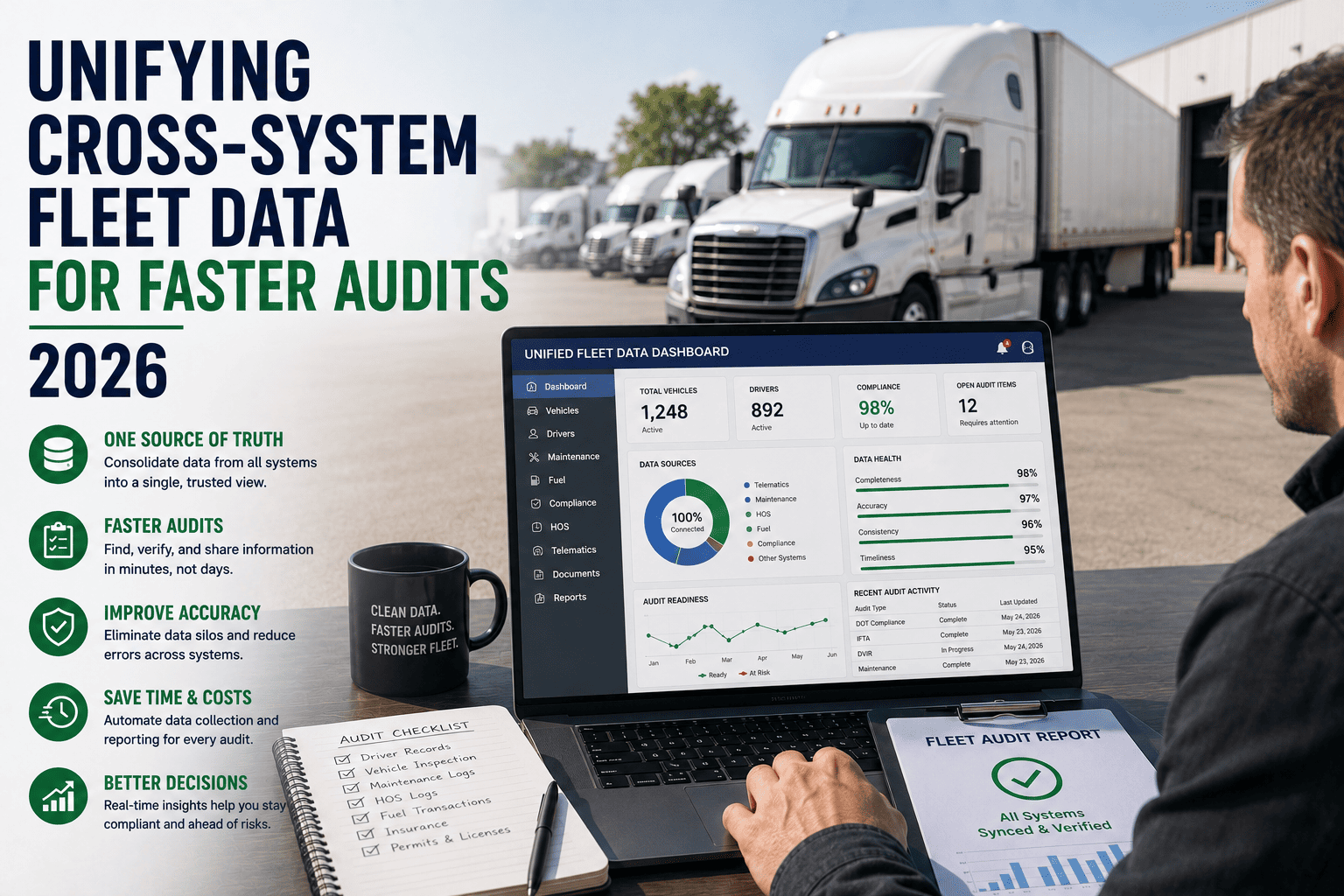
The era of standalone specialty software solutions is ending. Fleet managers cannot afford to operate five different systems for DVIRs, maintenance, compliance, fuel tracking, and HOS monitoring. The trend is decisively toward integrated platforms where data flows seamlessly between modules, eliminating manual re-entry and creating single source of truth for operational decisions.
Data Collection Layer
Telematics from vehicles, fuel card networks, ELD systems, and mobile app-based inspections funnel data into central platform. Data quality at collection point is critical. Standardized data formats enable integration rather than custom middleware.
Unified Data Repository
All collected data maps to single vehicle and driver records. Cross-module relationships enable queries like "show me all service records and DVIRs for vehicle XYZ" without manual data matching. This unified view is impossible in siloed point solutions.
Automated Workflow Orchestration
DVIR defects automatically trigger work orders routed to maintenance. ELD HOS violations automatically alert dispatch. Fuel policy violations automatically notify compliance manager. Workflows that required manual intervention in point solution environments are automatically orchestrated in integrated platforms.
Role-Based Operational Views
Fleet managers, maintenance teams, dispatch, finance, and compliance all access the same underlying data through views designed for their specific role and decision requirements. Information silos are eliminated. Communication improves. Response time to issues accelerates.
External System Integration
Integrated platforms connect to existing accounting systems, dispatch platforms, and third-party telematics providers. Integration is the modern requirement, not the exception. Platforms that cannot integrate with existing carrier systems create more problems than they solve.
Consolidate Your Fleet Operations on a Unified Platform
FleetRabbit integrates DVIRs, maintenance, compliance, fuel tracking, and driver management without requiring carriers to replace existing telematics or ELD relationships. Start with sign up free to see how unified operations work in your fleet environment.
Trend 6: Autonomous Vehicle Integration Becomes Operational Reality
Autonomous vehicles are no longer theoretical future concept. Limited autonomous capabilities are already operating in controlled environments. Full autonomous trucks remain 3 to 7 years away from widespread deployment, but the transition process is beginning now. Carriers must begin planning autonomous vehicle integration, managing driver transitions, and adapting fleet operations for mixed autonomous and human-operated fleets.
Leading carriers are running limited autonomous pilot programs on specific routes. Focus is on operational integration, training of automation specialists, and financial modeling of autonomous vehicle productivity compared to human drivers. Carriers should evaluate autonomous vehicle economics for their specific route profiles and operational requirements.
First-generation autonomous trucks begin operating on longer haul routes where operating conditions are most predictable. Fleets become mixed autonomous and human-operated. Driver roles shift from pure operation to vehicle monitoring and exception handling. Training programs evolve to develop new skillsets.
Autonomous fleets achieve economic advantage sufficient to drive rapid adoption. Most long-haul operations incorporate autonomous capability. Driver market stabilizes around roles that remain fundamentally human-centric. Industry consolidation accelerates around carriers with superior autonomous vehicle integration.
Fleet managers should begin autonomous vehicle planning now by understanding:which routes and operations are most suitable for automation, what driver transition support will be required, how mixed autonomous-human fleets will be managed operationally, and what technology infrastructure is required to support autonomous vehicle integration.
Trend 7: Data Privacy and Cybersecurity Become Strategic Differentiator
As fleets adopt more connected technology, data security and driver privacy concerns are increasing. Carriers must demonstrate that they are protecting driver data, vehicle location information, and operational metrics against misuse and unauthorized access. Privacy-first fleet technology is becoming competitive requirement rather than optional feature.
Encrypted Data Transmission
All data in transit between vehicles, mobile apps, and fleet management platform must be encrypted. This is baseline requirement, not optional feature. Carriers should verify encryption protocols with software providers before deployment.
Role-Based Access Control
Not all personnel need access to all data. Dispatch needs route and HOS data but not detailed fuel expense information. Finance needs expense data but not real-time GPS location. Fleet management platforms should enable granular access control aligned with job responsibilities.
Audit Trails and Compliance
All data access and modification must be logged with audit trails. This requirement is driven by regulatory evolution toward stricter data governance. Carriers should ensure fleet management platforms provide complete audit trail documentation for compliance verification.
Data Retention Policies
Drivers increasingly expect carriers to explain why they are retaining personal and operational data and how long data is retained. Clear data retention policies that respect driver privacy while maintaining operational requirements are becoming competitive differentiator.
Third-Party Security Assessment
Fleet software providers should undergo independent security audits and maintain current compliance certifications. Carriers should request security assessment documentation and understand the provider's security practices before committing to long-term relationships.
Tag Section: Fleet Management Innovation
How These Trends Interconnect
Individual trends are powerful. But their combined impact is transformational. Predictive maintenance reduces downtime, which improves driver schedules and increases driver satisfaction. Automated compliance reduces administrative burden, freeing resources for driver coaching. Integrated platforms enable all of these simultaneously. Carriers addressing these trends holistically will achieve substantially greater competitive advantage than carriers implementing them in isolation.
FleetRabbit's platform architecture is designed around this trend integration. Digital DVIR reduces compliance burden while creating data for predictive maintenance. Real-time HOS management improves driver experience while reducing violations. Fuel integration provides driver coaching data while automating expense management. The platform benefits accumulate and compound because its design treats fleet operations as an integrated system rather than collection of disconnected functions.
Implementation Priorities for Fleet Managers in 2026
Achieve Real-Time Compliance Visibility
Manual compliance management is no longer viable at any fleet size. Automated DVIR completion, HOS monitoring, and driver qualification tracking must be implemented before the 2026 compliance cycle concludes. This is immediate requirement, not long-term initiative.
Improve Driver Experience Through Technology
Driver shortage is competition for talent. Fleet technology that improves driver experience is recruitment tool. Modern mobile app access to schedules, real-time performance feedback, and transparent compensation management should be implemented before competitor recruitment advantage becomes insurmountable.
Connect Maintenance with Operational Data
Predictive maintenance requires data integration. Telematics data, DVIR defects, and fuel consumption must connect to maintenance planning. This foundation enables progression toward true predictive maintenance capability as data quality improves and algorithms mature.
Establish Sustainability Tracking Baseline
Customer and investor pressure on sustainability is accelerating. Carriers must begin tracking fuel consumption, emissions, and efficiency metrics now. Baseline data enables credible sustainability reporting and identifies optimization opportunities before sustainability requirements become regulatory mandate.
Frequently Asked Questions
Are autonomous vehicles a realistic threat to driver employment in the next 5 years?
Full autonomy for all route types is 5 to 7 years away. Immediate threat is concentrated on long-haul routes where operating conditions are most predictable. Regional and urban operations will remain human-driven much longer. Drivers should prepare for evolving roles rather than elimination.
How much does implementing these trends cost for a mid-size fleet?
Comprehensive implementation ranges $30 to 80 per vehicle monthly depending on feature scope. Most carriers achieve payback within 6 to 12 months through reduced compliance violations, improved efficiency, and administrative cost elimination. ROI calculation should include prevented violation costs and labor savings, not just software cost.
Can I implement these trends gradually or do I need a comprehensive overhaul?
Phased implementation is practical and recommended. Start with real-time compliance visibility because it delivers immediate value. Progress to driver experience and sustainability tracking. Integrate data sources over time. Most carriers complete meaningful implementation within 6 to 12 months with phased approach.
How does FleetRabbit help carriers implement these trends?
FleetRabbit integrates DVIRs, maintenance, compliance, and driver management to address all major 2026 trends simultaneously. The platform integrates with existing telematics, ELDs, and fuel cards rather than requiring replacement. Carriers can implement trends without replacing existing systems. Start with sign up free or book a demo to see how integration works in your environment.
Which trend should I implement first for maximum impact?
Real-time compliance automation delivers immediate value and is required by regulatory environment. Implement compliance visibility first, then add driver experience and sustainability tracking. Integrated approach enables all trends to support each other and compound benefits over time.
Are these trends only relevant for large enterprise carriers?
No. Trends apply to fleets of all sizes. Mid-market and smaller carriers often achieve faster ROI from technology investment because lower baseline implementation cost combined with same operational benefits. Industry consolidation pressure is actually driving mid-market and smaller carriers faster than large enterprises.
Tag Section: Fleet Operations and Strategy
Implement 2026 Trends Into Your Fleet Operations Today
FleetRabbit's integrated platform addresses all major fleet management trends shaping transportation and logistics. Real-time compliance, driver experience improvement, maintenance integration, and sustainability tracking work together in single unified system. Start with sign up free to experience how trend implementation works in your specific fleet environment.
Tag Section: Future Fleet Operations
Fleet Management Evolution Is Accelerating. Competitive Advantage Goes to Early Implementers.
The fleet management trends outlined here are not speculative or theoretical. They are operational requirements for competitive carriers in 2026. The question is not whether these trends will reshape fleet operations. The question is how quickly your fleet can adapt to meet them.
Carriers that implement real-time compliance, integrate driver experience technology, establish predictive maintenance capability, and track sustainability metrics will operate with substantially lower costs and better outcomes than carriers that delay. The competitive window is closing. Implementation should begin now.
Transform Your Fleet Operations to Compete in 2026
FleetRabbit helps carriers implement all major 2026 fleet management trends without system replacement or IT overhaul. Real-time compliance automation, driver experience improvement, integrated maintenance, and sustainability tracking. Single unified platform. Existing system integration. Start free for up to 3 vehicles. Scale when ready.