.png)
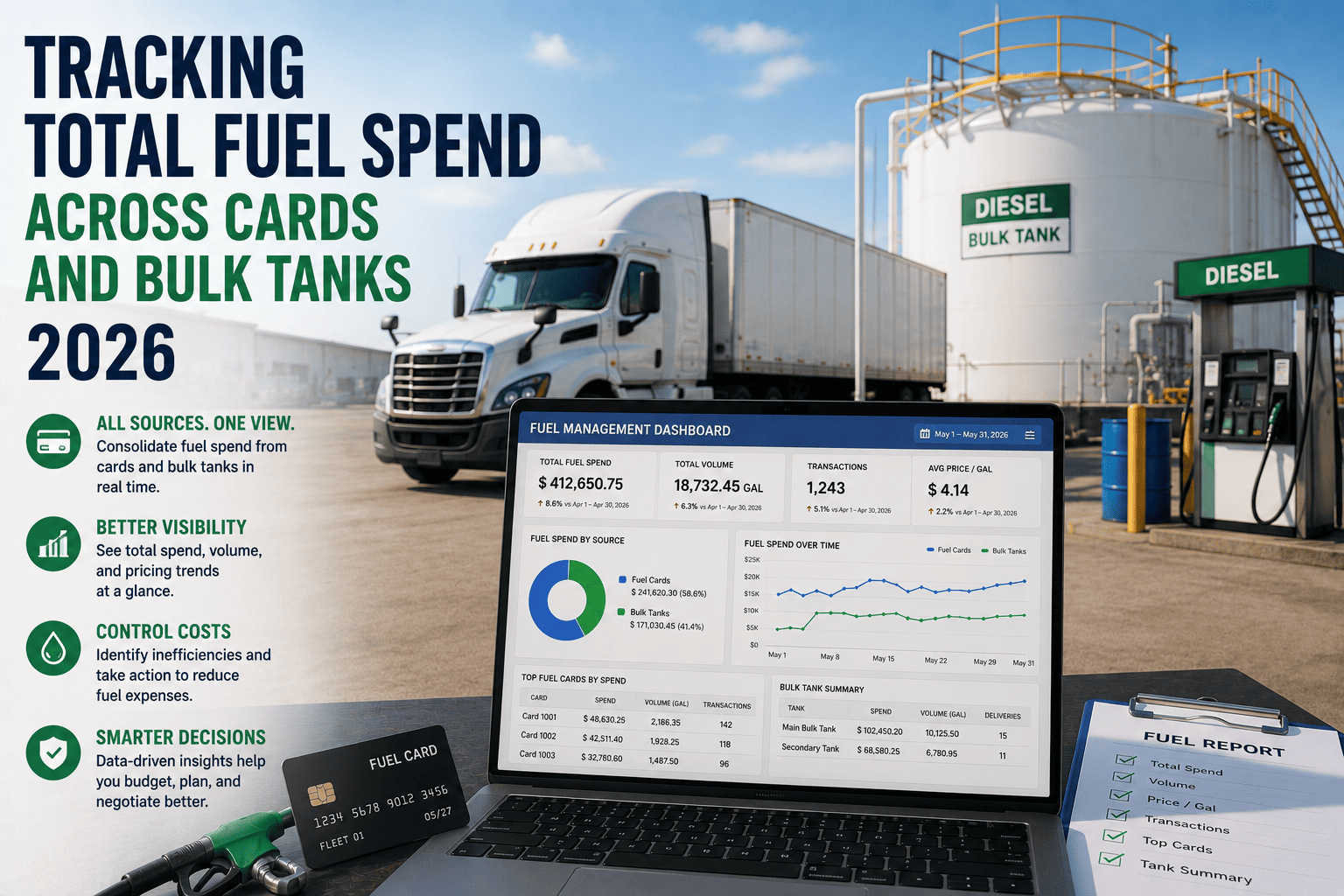
Fleet fuel costs represent one of the largest operational expenses for trucking companies, construction fleets, and logistics businesses. For a 10-vehicle fleet, fuel expenses can exceed $50,000 annually, making fuel tracking essential for profitability and operational visibility. Yet most small fleet operators track fuel consumption through manual spreadsheets, handwritten logs, or scattered fuel receipts, creating data entry errors, missed efficiency insights, and incomplete records for tax and compliance purposes. A structured fuel log template provides the foundation for accurate fuel tracking, cost analysis, and performance benchmarking across your fleet. This free downloadable template includes pre-built formulas for calculating miles per gallon, cost per mile, and fuel efficiency trends. Book a demo to see how FleetRabbit automates this process.
Free Fleet Fuel Log Template
Download our professional fuel log template in Excel and printable PDF format. Track fuel consumption with pre-built formulas and reduce operational costs across your fleet.
Why Fuel Log Templates Matter for Fleet Operators
Fuel is your second largest operating expense: For most fleets, fuel represents 15 to 25 percent of total operating costs. Without structured tracking, fleet managers operate blindly, unable to identify which vehicles consume excessive fuel, which drivers exhibit poor fuel economy, or where leakage and theft occur. A fuel log template creates visibility into fuel spending trends and consumption patterns that enable cost reduction decisions.
Manual tracking creates data gaps and errors: Spreadsheets and handwritten logs are vulnerable to data entry mistakes, lost receipts, and incomplete records. Drivers forget to log fuel stops, fuel cards provide incomplete details, and managers manually compile data from multiple sources. These gaps hide inefficiencies and make it difficult to calculate accurate cost per mile or identify vehicles underperforming on fuel economy.
Fuel theft and waste are difficult to detect without data: Fuel represents physical inventory subject to loss and theft. A driver siphoning fuel goes undetected without comparative fuel consumption data. A mechanical failure affecting engine efficiency emerges gradually in consumption patterns. Organized fuel logs highlight abnormal consumption that alerts managers to investigate underlying issues before they become expensive problems.
Benchmarking drives efficiency improvements: Without comparative data, fleet managers cannot assess vehicle performance or driver behavior objectively. A fuel log template enables comparison of miles per gallon across vehicles, cost per mile across routes, and fuel efficiency trends across drivers. This benchmarking motivates drivers to adopt efficient practices and helps managers retire underperforming vehicles. Book a demo to learn how benchmarking improves your fleet's efficiency.
Key Features of an Effective Fleet Fuel Log Template
Essential Data Fields for Fuel Tracking
- Date and time of fuel purchase: Tracks fuel spending across daily and weekly periods to identify spending peaks and optimize fueling schedules.
- Vehicle identification: Links fuel purchases to specific vehicles, enabling performance comparison across fleet and identifying vehicles requiring maintenance.
- Odometer reading (starting and ending): Enables accurate mileage calculation and miles per gallon computation for fuel efficiency analysis.
- Gallons purchased and fuel type: Tracks total fuel consumption, diesel versus gasoline usage, and special fuel requirements for different vehicle classes.
- Cost per gallon and total cost: Supports cost tracking and identification of fuel price variations across vendors and fuel card programs.
- Driver name and signature: Creates accountability and enables performance metrics comparing fuel efficiency across individual drivers.
- Fuel vendor and location: Identifies preferred fuel stations and tracks spending across vendors to negotiate better fuel card rates.
- Pre-calculated metrics: MPG, cost per mile, and variance alerts highlight unusual consumption patterns requiring investigation.
How Fuel Log Templates Compare to Manual and Software Approaches
| Tracking Method | Setup Time | Monthly Cost | Data Accuracy | Scalability |
|---|---|---|---|---|
| Handwritten Logs | Minimal | $0 | Low | Poor |
| Excel Template | 15 minutes | $0 | High | Good |
| Fuel Card System | 30 minutes | 0-2% fee | High | Excellent |
| FleetRabbit Platform | 48 hours | $3 to $5 per vehicle | Automatic | Unlimited |
What's Included in This Free Fuel Log Template
Our free fuel log template includes everything needed to begin tracking fuel consumption immediately. The template arrives with pre-built formulas that calculate key metrics automatically, eliminating manual math and reducing data entry errors. Book a demo to see how FleetRabbit extends these capabilities with automation and real-time analytics.
Template Capabilities and Features
- Excel and PDF formats: Use Excel to enter data and track trends, or print the PDF for drivers to complete manually and transfer to digital later.
- Automatic MPG calculation: Enter starting odometer, ending odometer, and gallons purchased. The template calculates miles per gallon instantly.
- Cost per mile metric: Compares fuel cost against distance traveled, enabling benchmarking across vehicles and routes for efficiency comparison.
- Fleet summary page: Aggregates individual vehicle data to show overall fleet fuel efficiency, average cost per mile, and total fuel spending across all vehicles.
- Monthly and year-to-date tracking: Organize fuel data by month with year-to-date totals for budgeting and trend analysis across seasons.
- Variance highlighting: Cells automatically highlight when fuel consumption deviates from baseline, alerting managers to unusual patterns.
- Driver performance section: Track fuel efficiency metrics by individual driver to identify top performers and coaching opportunities.
- Customizable for your fleet: Add vehicle types, fuel card numbers, cost center codes, and other data fields specific to your operations.
Cost Savings Potential from Fuel Log Tracking
Identify inefficient vehicles: A fleet fuel log highlights which vehicles consume excessive fuel relative to peers. A vehicle with 4 MPG when the fleet average is 6.5 MPG wastes fuel equivalent to $1,200 annually. Identifying and retiring or repairing this vehicle recovers thousands in annual fuel costs.
Detect fuel theft and fraud: Fuel represents portable inventory subject to theft. Drivers siphoning fuel or vendors short-pumping fuel amount becomes apparent in fuel consumption patterns. A fuel log template comparing expected consumption against actual consumption highlights these losses before they become significant.
Monitor driver behavior: Fuel efficiency correlates strongly with driving behavior. Aggressive acceleration, excessive idling, and speeding reduce fuel economy. A fuel log tracking driver-specific efficiency metrics creates incentives for fuel-conscious driving and identifies which drivers require coaching on efficiency best practices.
Optimize route planning: Fuel logs reveal which routes and zones consume more fuel than others. Analyzing fuel consumption by route enables route optimization that reduces distance and fuel consumption simultaneously.
Maintain mechanical health: Fuel consumption trends indicate mechanical issues before they become costly failures. A vehicle whose MPG gradually declines may have engine problems, transmission issues, or tire pressure problems. Early detection through fuel log analysis prevents expensive repairs and downtime. Book a demo to see how FleetRabbit predicts maintenance needs using fuel data.
Fuel Tracking in FleetRabbit Platform
For fleets ready to move beyond spreadsheets, FleetRabbit includes automated fuel tracking integrated with GPS telematics, maintenance records, and driver accountability systems. The platform automatically captures fuel purchase data from integrated fuel card systems and vehicle onboard computers, eliminating manual entry errors and reducing administrative burden. Book a demo to see the platform in action.
FleetRabbit Fuel Analytics Features
- Automatic fuel consumption tracking: Integrates with vehicle onboard computers and fuel card data to capture all fuel purchases without manual entry.
- Real-time MPG alerts: Monitors fuel efficiency in real time and alerts managers when a vehicle's consumption deviates from baseline by more than 10 percent.
- Driver efficiency scoring: Compares fuel efficiency across drivers within the same vehicle type, creating transparency and accountability for fuel-conscious driving.
- Route fuel analysis: Identifies which routes consume more fuel than expected, enabling route optimization that reduces distance and fuel consumption simultaneously.
- Predictive maintenance alerts: Declining fuel economy often signals mechanical problems. FleetRabbit correlates fuel consumption trends with maintenance history to predict issues before they become expensive.
- Theft and fraud detection: Unusual fuel consumption patterns that suggest theft or fuel card fraud trigger automatic alerts for investigation.
- Cost per mile tracking: Calculates accurate cost per mile including fuel, maintenance, and depreciation for true vehicle operating cost analysis.
- Fuel budget vs actual reporting: Compare budgeted fuel costs against actual spending and identify trends affecting future budget projections. Book a demo to explore all analytics features.
Ready to Optimize Fleet Fuel Management?
Use this free template to start immediately, or experience automated fuel tracking integrated with maintenance, compliance, and telematics in FleetRabbit's comprehensive platform.
Implementation Checklist for Fleet Fuel Tracking
Getting Your Fleet Fuel Log Running
- Download the template and customize vehicle names, identification numbers, and fleet-specific data fields to match your operations.
- Calculate baseline MPG and cost per mile for each vehicle type using historical fuel consumption data or industry benchmarks.
- Establish data entry responsibility and process. Decide whether drivers enter data on mobile, print forms for manual entry, or if fuel card data populates automatically.
- Train drivers on fuel log procedures and explain how efficiency metrics affect fleet performance and their individual accountability.
- Set up automatic variance highlighting to alert managers when fuel consumption deviates from baseline by more than 10 percent.
- Schedule weekly fuel log reviews with operations and maintenance teams to identify trends, discuss findings, and assign corrective actions.
- Integrate fuel card transaction downloads into the template to minimize manual data entry and improve accuracy.
- Plan upgrade path to fleet management software if your fleet grows beyond 20 vehicles or if manual tracking becomes administratively burdensome.
Frequently Asked Questions About Fleet Fuel Logs
Q: How much can a fleet save by tracking fuel consumption?
Most fleets save 5 to 15 percent on fuel costs through improved efficiency and detection of waste. For a 10-vehicle fleet consuming 50,000 gallons annually at $3 per gallon, a 10 percent savings equals $15,000 annually. Check FleetRabbit's free trial to see savings potential for your fleet.
Q: Can this template work for construction equipment and vehicles?
Yes, the template is customizable for any fleet type: trucks, construction equipment, delivery vehicles, or mixed fleets. Add columns for equipment type and operating hours if needed. For equipment-heavy operations, book a demo to see equipment-specific tracking features.
Q: What is a good fuel consumption baseline for fleet vehicles?
Baselines vary by vehicle type, engine, load, and routes. Diesel trucks average 5 to 7 MPG, delivery vans 15 to 18 MPG, and light-duty pickups 18 to 22 MPG. Compare your baseline against similar vehicle types in your fleet, then investigate vehicles falling below baseline by more than 10 percent.
Q: How do I detect fuel theft using the template?
Compare fuel purchased against distance driven. If a vehicle drives 200 miles but consumes more fuel than expected for that distance consistently, theft or fraud may be occurring. Use the template's variance highlighting to flag unusual patterns for investigation.
Q: Can I integrate this template with my accounting software?
Most accounting software accepts Excel imports. Export fuel data from the template and import into accounting for cost allocation and budgeting. FleetRabbit integrates directly with major accounting platforms. Start your free trial to explore integrated accounting features.
Q: When should I upgrade from a template to fleet management software?
When your fleet exceeds 20 to 25 vehicles, spreadsheet management becomes time-consuming. If manual data entry consumes more than 5 hours weekly or you need real-time alerts and mobile access, software investment becomes worthwhile. Book a demo to see how automation saves time.
Q: Does the template work on mobile devices?
The Excel template works on mobile but is difficult to use in the field. Print the PDF and have drivers fill manually, then transfer to Excel. FleetRabbit's mobile app enables drivers to log fuel and complete inspections directly on smartphones in the field.
Download Your Free Fleet Fuel Log Template
Get instant access to the professionally designed fuel log template. No credit card required. Start tracking fuel consumption and optimizing costs today.