Fleet Onboarding Checklist for New Drivers [FMCSA + Safety Ready]
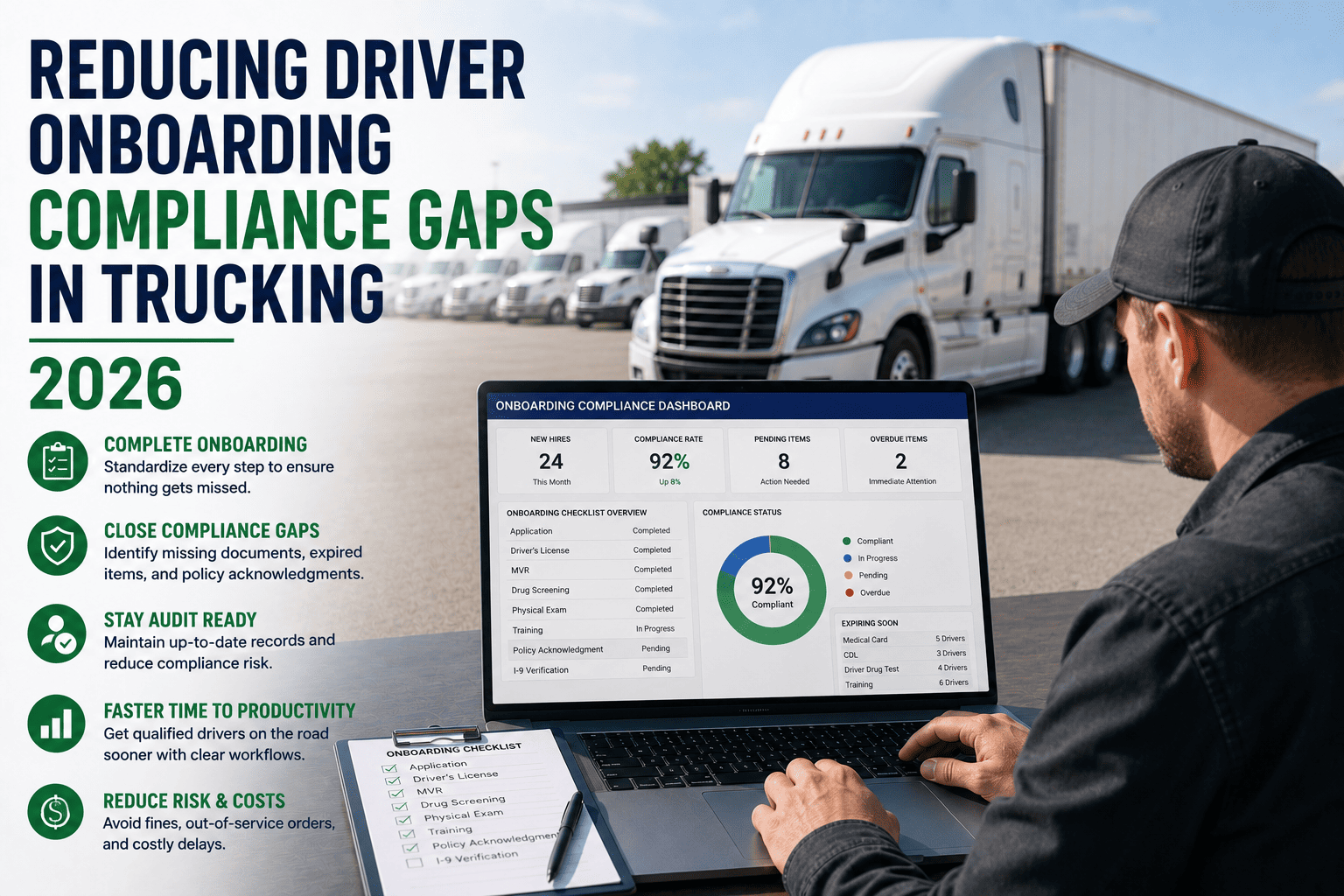
Onboarding new commercial drivers represents a critical compliance and safety inflection point for transportation companies. The first days and weeks of a driver's employment establish safety culture expectations, confirm regulatory qualification completeness, and create the documentation foundation that demonstrates FMCSA compliance during audits. Many fleets execute onboarding reactively, gathering documents as needed and training drivers on an ad-hoc basis. This reactive approach creates compliance gaps, inconsistent safety messaging, and drivers who enter the fleet without understanding the carrier's specific safety expectations and operational requirements. This comprehensive checklist covers every onboarding element required for FMCSA compliance, organized by the typical onboarding sequence, with specific guidance on documentation, training requirements, and how FleetRabbit's driver records and compliance management systems organize onboarding workflows to ensure no driver enters revenue service without completing all required qualification steps.
Streamline New Driver Onboarding with Compliance Confidence
FleetRabbit's driver qualification management system ensures every new hire completes all FMCSA-required documentation and safety training before operating a commercial vehicle. Automated checklists prevent compliance gaps.
The pre-hire phase occurs before the driver operates any company vehicle and establishes the qualification foundation required by FMCSA regulations. This phase cannot be rushed or completed retroactively. All pre-hire elements must be completed and documented before the driver is authorized to operate a commercial motor vehicle.
Pre-Employment Background Verification
Commercial Driver License Verification
Pre-Employment Drug Testing
Medical and Physical Qualification Phase
Medical Examination Completion
Road Test or Skills Test Documentation
Safety Training and Orientation Phase
Safety training establishes the driver's understanding of the carrier's specific safety culture and operational requirements. This training is not a one-time event but the beginning of continuous safety reinforcement throughout the driver's employment.
Company Safety Orientation
Vehicle-Specific Training
Compliance Program Training
Operational Readiness Phase
Practical Operational Training
Documentation Completion
Onboarding Element
Timing
Responsibility
Documentation Required
Background Verification
Before hire
HR/Safety
Verification report, signed authorization
CDL Verification
Before hire
HR/Safety
CDL copy, verification date
Pre-Employment Drug Test
Before first shift
Drug program
Negative test result, MRO doc
Medical Exam
Before first shift
Medical
MEC, examiner registry confirmation
Road Test
Before independent operation
Operations/Trainer
Road test cert, examiner signature
Safety Training
First week
Safety/Trainer
Training sign-off, receipt confirmation
DVIR Training
First week
Operations
Training completion, system access verified
Accompanied Driving
First 50-200 miles
Trainer
Trainer sign-off, readiness confirmation
Common Onboarding Gaps and How to Prevent Them
Missing Drug Test Results: The most common onboarding failure is allowing drivers to operate before a negative pre-employment drug test result is confirmed. Many companies schedule the test but then have drivers start driving before receiving the official MRO result. Implement a policy that drivers cannot be assigned to driving duty until a negative test result is in the qualification file.
Incomplete Medical Examination Documentation: Obtain the original Medical Examiner Certificate or a certified copy, not just a verbal confirmation that the exam occurred. Some companies start drivers after the examination but before the certificate is received, creating documentation gaps. Require the certificate in hand before authorization for driving.
Missing Previous Employer Inquiry Documentation: FMCSA frequently cites missing or incomplete documentation of the pre-employment safety performance history inquiry required by 49 CFR 391.23. Document every contact attempt, including those resulting in no response, and what information was obtained.
Inadequate Safety Training Documentation: Training completion requires more than attendance; it requires documented understanding and acknowledgment. Have drivers sign training completion forms confirming they received the training, understood the policies, and can ask questions. Retain these signed forms in the driver's personnel file.
Incomplete Road Test Records: Road test certificates must include examiner name, date, vehicle tested, and pass/fail determination. Many companies conduct road tests but fail to document them properly. Create a standard road test form that captures all required elements and requires the trainer's signature and date.
Automate Your Fleet Driver Onboarding
FleetRabbit's driver records management system automatically tracks every onboarding requirement and alerts you to missing documents before new drivers operate company vehicles. Never start a driver without complete, audit-ready qualification files.
Frequently Asked Questions About Driver Onboarding
Q: Can a driver start work before completing the pre-employment drug test?
No. FMCSA regulations require a negative pre-employment drug test result before a driver operates any commercial vehicle. Allowing a driver to work before test completion creates a compliance violation. Schedule the test immediately and do not authorize driving until the negative result is documented.
Q: What if a previous employer refuses to provide safety history information?
Document the contact attempt with the date, method of contact, and the employer's refusal. Continue with the hiring decision but retain documentation of the attempt. FMCSA accepts documented good-faith efforts to obtain information when employers decline to respond.
Q: How long should accompanied driving training last before a driver operates independently?
FMCSA does not specify a minimum accompanied driving duration, but best practice is 50 to 200 miles or until the trainer confirms the driver understands company procedures and operates vehicles safely. Document the training with trainer name, dates, and readiness confirmation before authorizing independent operation.
Q: Can a driver's CDL from their previous employer substitute for a road test?
A valid CDL of the appropriate class satisfies the road test requirement, but the company should still conduct an operational road test to verify the driver can operate the specific vehicles and understand company-specific procedures. Document this company-specific test separately from CDL verification.
Q: What if a driver's medical examination identifies conditional requirements?
Document the conditional requirements on the MEC and ensure the driver complies before authorizing driving. For example, if corrective lenses are required, verify the driver wears them during the road test. Book a demo to see conditional requirement tracking.
Q: How should onboarding documentation be organized for FMCSA audit access?
Organize all driver qualification files by driver name with clear section tabs for DQ elements, medical documentation, training records, and drug program files. Start free to see FleetRabbit's automated driver record organization.
Q: Can onboarding be completed entirely remotely or does it require in-person training?
Most onboarding can occur remotely (background checks, drug testing coordination, online training), but vehicle-specific training and road tests require in-person interaction. Accompanied driving must occur in person. Plan onboarding with both remote and in-person elements combined.
Build Compliant Driver Onboarding Programs
FleetRabbit organizes every onboarding requirement, tracks completion status, and prevents new drivers from operating without complete qualification files. Ensure every driver starts with FMCSA-compliant documentation.
.png)