.png)
Fleet telematics has transformed how transportation managers operate. What once required manual tracking and driver logs is now automated, real-time, and precise. Telematics systems collect data from vehicles through GPS, onboard diagnostics, and connected sensors, providing fleet managers with comprehensive visibility into vehicle location, engine performance, driver behavior, and maintenance needs. For fleet operators of any size, understanding telematics has become essential not just for operational efficiency but for regulatory compliance, safety, and profitability. This guide explains what fleet telematics is, how it works, why it matters for modern transportation management, and how to implement the right system for your operation.
Start Monitoring Your Fleet with Real-Time Telematics
FleetRabbit integrates with 200+ telematics providers, giving you complete vehicle visibility without replacing your existing hardware or systems.
What is Fleet Telematics?
Fleet telematics is a technology system that combines telecommunications, GPS positioning, and onboard diagnostics to monitor and manage vehicle operations in real time. The term "telematics" comes from the combination of "telecommunications" and "informatics," reflecting how the technology transmits vehicle and operational data to a central platform where managers can access it through dashboards, reports, and alerts.
Telematics systems work by collecting data from multiple sources within and around each vehicle. GPS receivers track location and movement patterns. Onboard diagnostic ports (OBD-II) connect to vehicle engine computers, retrieving fuel consumption, engine health, emissions status, and fault codes. Additional sensors monitor harsh acceleration, braking intensity, idle time, and driver seatbelt use. This data flows continuously to cloud servers where it is processed, analyzed, and made accessible to fleet managers through software dashboards.
The key distinction between telematics and simple GPS tracking is depth of insight. GPS-only solutions tell you where vehicles are. Telematics tells you where vehicles are, how they are operating, why they might need maintenance, whether drivers are operating them safely, and what corrective actions are needed. This comprehensive view has made telematics the standard for professional fleet management.
How Fleet Telematics Works: The Complete Data Flow
Understanding how telematics systems function helps you recognize their value and choose the right implementation for your fleet.
The Telematics Data Pipeline
- Vehicle Data Collection: Telematics devices or onboard units continuously collect data from vehicle systems. GPS provides location coordinates updated every 10 to 60 seconds depending on configuration. OBD-II ports connect to engine computers, reading fuel consumption, coolant temperature, oil pressure, transmission status, fault codes, and hundreds of other data points. Accelerometers and gyroscopes in devices measure acceleration, braking, and cornering intensity. All this data flows to the telematics device's local processor.
- Data Transmission: Telematics devices transmit collected data through cellular networks (LTE, 4G) or satellite connections for remote areas. Data is encrypted for security and transmitted in compressed format to minimize bandwidth consumption. Some systems batch data transmission to reduce costs, while others stream data in near real-time for urgent situations.
- Cloud Processing: Fleet management platforms receive raw telematics data and process it through algorithms that detect patterns, calculate metrics, and trigger alerts. The system identifies harsh driving events, calculates fuel efficiency per mile, predicts maintenance needs based on engine diagnostics, and generates performance scores for drivers.
- Dashboard Access and Reporting: Processed data appears in manager dashboards showing real-time vehicle locations, vehicle health status, driver performance, fuel consumption trends, and maintenance alerts. Automated reports can be scheduled weekly or monthly, summarizing key metrics and highlighting issues requiring attention.
This end-to-end process happens continuously, meaning fleet managers have access to current operational data rather than historical snapshots. A manager can check their dashboard and immediately see that a vehicle is idling excessively at a loading dock, that another vehicle's engine fault code indicates a developing transmission issue, and that a driver is operating their vehicle with unusually harsh acceleration patterns.
Key Components of Modern Telematics Systems
Effective telematics implementation requires multiple components working together. Understanding these components helps you evaluate whether a telematics system meets your specific needs.
Essential Telematics Components
- Telematics Hardware: GPS receivers, cellular modems, onboard processors, and sensors mounted in vehicles. Hardware ranges from plug-and-play OBD-II devices (simple, low-cost) to hardwired vehicle integration (more reliable, but requires professional installation). Modern telematics works with most vehicles manufactured after 2008.
- Data Collection and Transmission Infrastructure: The network backbone that moves data from vehicles to cloud servers. Quality telematics systems use redundant cellular networks and have fallback options for areas with poor connectivity. Data is encrypted during transmission to protect privacy.
- Cloud Platform and Data Processing: Servers that receive, process, and store telematics data. This includes algorithms that detect driving events, calculate efficiency metrics, predict maintenance needs, and identify compliance issues. Scalable cloud platforms handle data growth as fleet size increases.
- Manager Dashboard and Reporting Tools: Web-based and mobile interfaces where fleet managers view real-time vehicle data, historical reports, driver performance, and maintenance status. Good dashboards provide at-a-glance views for quick decisions and detailed drill-down capabilities for analysis.
- Alert and Notification System: Automated alerts that notify managers of important events: harsh driving, vehicle breakdowns, maintenance due dates, compliance violations, geofence breaches, or excessive idle time. Alerts can be customized by severity and delivery method (push notification, SMS, email).
- Integration Capabilities: APIs and connectors that link telematics platforms with dispatch systems, maintenance software, accounting systems, and ELDs. Quality integration eliminates manual data entry and keeps information synchronized across your operations.
Why Fleet Telematics Matters for Transportation Managers
Safety and Risk Reduction: Telematics captures objective data about how vehicles are being operated. Harsh acceleration, speeding, hard braking, and seatbelt non-use are all tracked and reported. This data enables managers to coach drivers on safer practices, identify training needs, and reduce accident rates. Fleets implementing telematics typically see 5 to 15 percent reductions in accident frequency within six months.
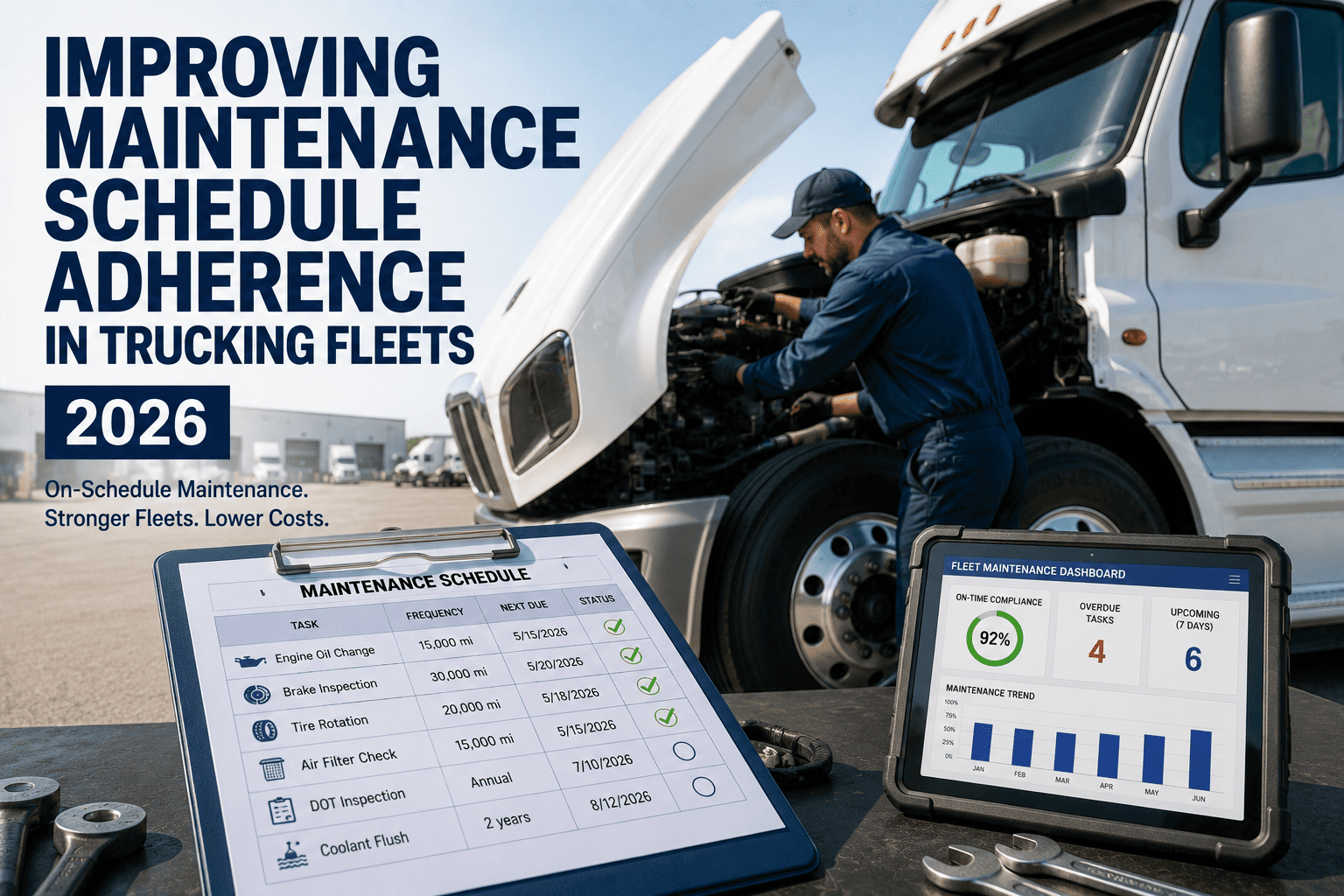
Maintenance Cost Control: Engine diagnostic data reveals developing mechanical issues before they become catastrophic failures. When a sensor detects abnormal oil pressure, transmission temperature, or emissions readings, managers can schedule maintenance before the component fails. This shift from reactive to predictive maintenance reduces unexpected breakdowns, extends vehicle lifespan, and typically reduces maintenance costs 15 to 25 percent.
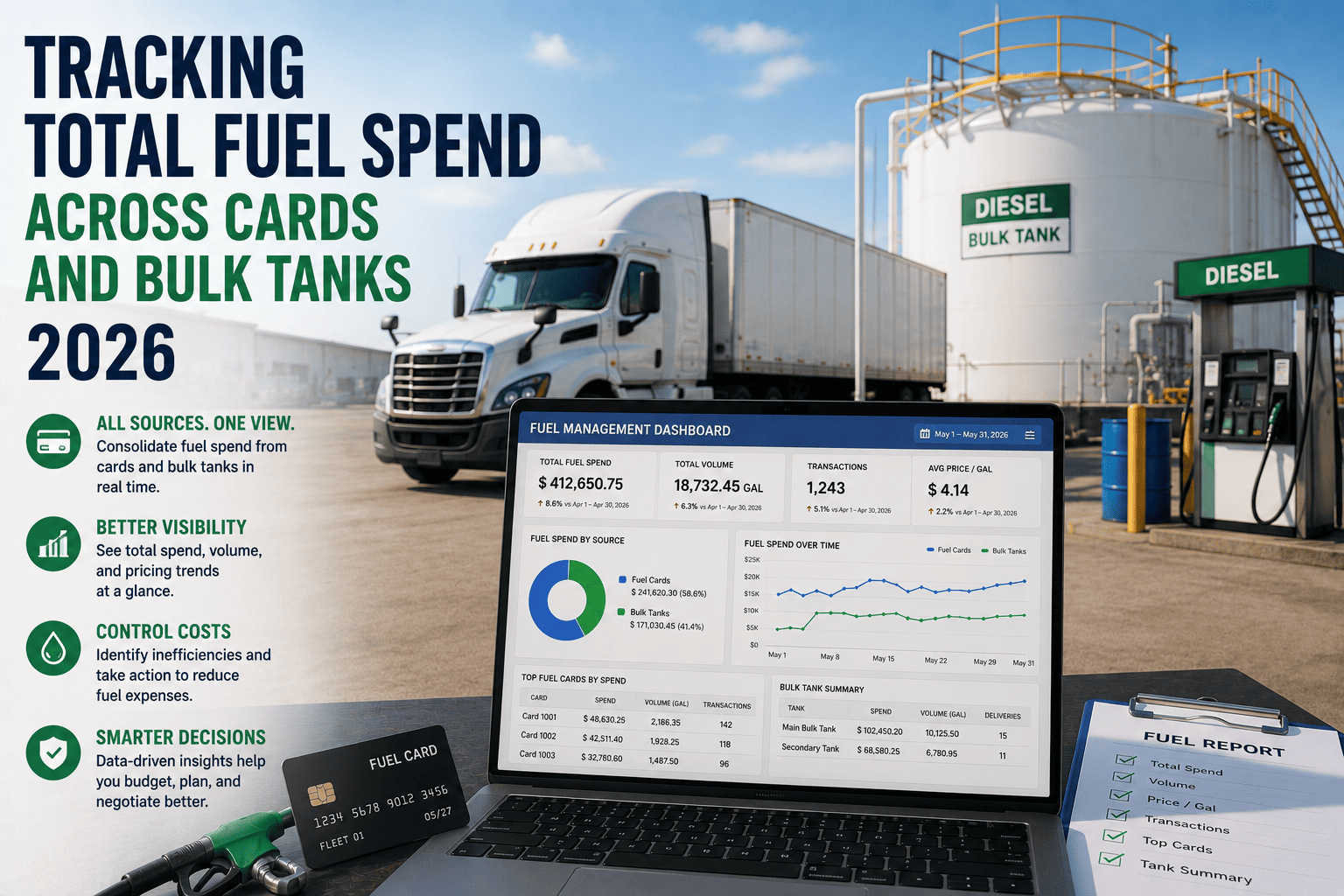
Fuel Efficiency Optimization: Telematics tracks fuel consumption per mile for every vehicle. The system identifies which vehicles or drivers consume more fuel than expected, revealing issues like improper tire pressure, engine problems, or inefficient driving patterns. Fleet managers can implement targeted improvements and measure their impact immediately through updated fuel economy metrics.
Regulatory Compliance: DOT and FMCSA regulations require tracking of hours of service, vehicle maintenance, driver qualifications, and safety violations. Telematics systems automatically capture much of this data, making compliance documentation easier and audit readiness more reliable. Digital records with timestamps are more defensible in audits than manual logs.
Operational Efficiency: Real-time location data enables better dispatch optimization. Managers can route vehicles more efficiently, respond faster to customer requests, and reduce empty miles. Performance analytics reveal patterns like excessive idle time, inefficient routes, or underutilized vehicles, enabling targeted improvements.
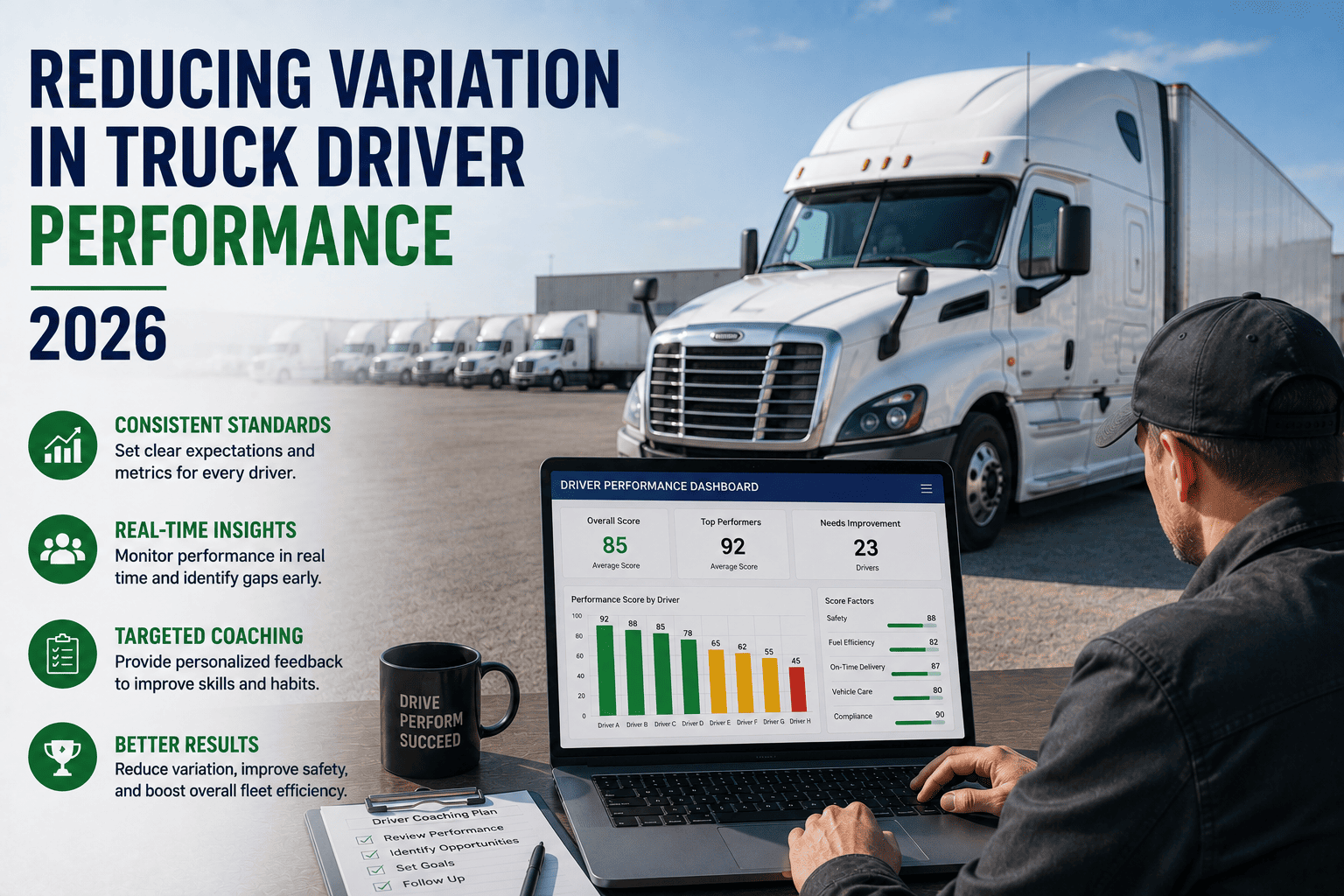
Driver Accountability and Retention: Transparent performance tracking helps managers identify top performers and provide data-driven coaching to underperformers. Drivers appreciate clear expectations and objective feedback. Fleets implementing telematics with positive coaching cultures see improved driver retention and satisfaction.
Types of Telematics Data Your Fleet Should Monitor
Different data points serve different purposes. Effective telematics implementation focuses on metrics that directly impact your business priorities.
| Data Category | Key Metrics | Business Impact |
|---|---|---|
| Vehicle Location | GPS coordinates, geofence alerts, route tracking | Improves dispatch, customer service, theft prevention |
| Vehicle Health | Engine fault codes, oil pressure, coolant temp, battery voltage | Reduces breakdowns, extends vehicle life, prevents costly repairs |
| Fuel Consumption | Miles per gallon, fuel used per trip, fuel efficiency trends | Controls second-largest fleet operating cost, identifies mechanical issues |
| Driver Behavior | Harsh acceleration, speeding, hard braking, seatbelt use, distraction | Improves safety, reduces insurance costs, enables coaching |
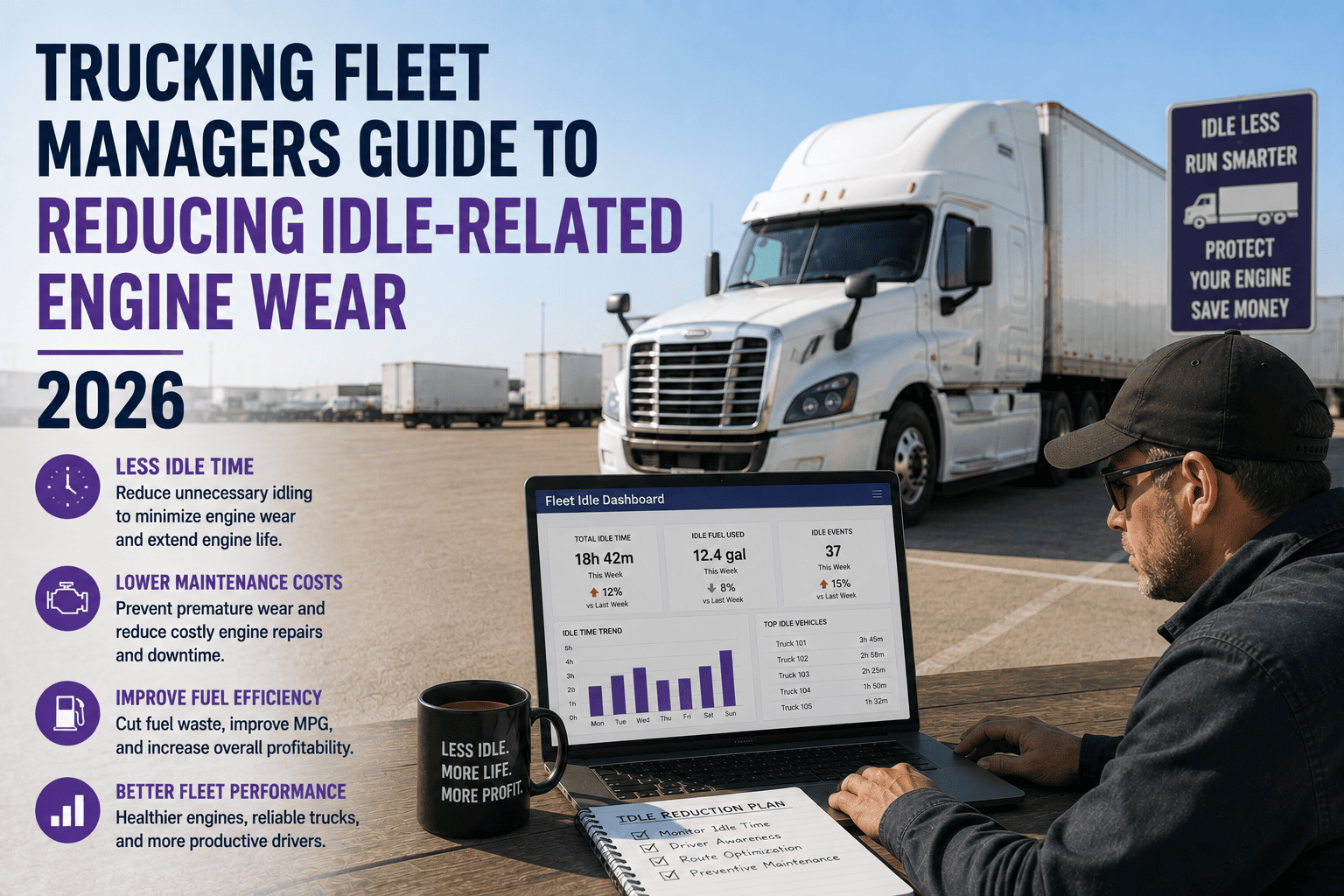
| Idle Time | Duration, frequency, location of idle periods | Identifies wasted fuel, inefficient processes, dispatch opportunities |
| Hours of Service | Driving time, duty time, rest time, compliance violations | Ensures DOT compliance, prevents safety violations, manages liability |
Choosing the Right Telematics System for Your Fleet
Not all telematics platforms are equal. Evaluating options against your specific needs prevents costly mistakes and ensures you get measurable value from your investment.
Critical Evaluation Criteria
- Hardware Compatibility: Does the system work with your existing vehicles? Can it integrate with your current GPS hardware if you have it? Does it require expensive new equipment or work with what you already have? Plug-and-play OBD-II devices are easiest for small fleets, while hardwired systems offer more reliability for larger operations.
- Data Integration: Will telematics data automatically flow to your dispatch system, maintenance software, and accounting platform? Manual data entry across systems multiplies labor and creates errors. Platforms with built-in integrations save significant administrative time.
- Ease of Implementation: How quickly can you get vehicles online and receiving data? Cloud-based systems with mobile apps are faster to implement than systems requiring on-premise servers. Small fleets need solutions deployable within days, not months.
- Alert Customization: Can you configure which events trigger notifications and who receives them? Systems with rigid alert structures generate alert fatigue. Platforms allowing threshold customization let you focus on metrics that matter to your operation.
- Reporting Depth: Does the platform offer the specific reports your operation needs? Some systems excel at safety metrics, others at maintenance tracking. Ensure the platform reports on your business priorities, not just generic metrics.
- Data Privacy and Security: How is vehicle and driver data protected? Is data encrypted in transit and at rest? Who has access to raw data? Ensure compliance with privacy regulations and that driver data is not sold to third parties.
- Pricing Structure: Do costs scale with fleet size or are there setup and implementation fees? Month-to-month pricing provides flexibility for small fleets trying new solutions. Per-vehicle monthly pricing is more predictable than enterprise contracts.
- Customer Support Quality: When you have questions or technical issues, how quickly do you get help? Small fleets need responsive support that understands transportation operations. Check reviews and ask for references before committing.
FleetRabbit's Approach to Fleet Telematics Integration
FleetRabbit connects with 200+ telematics providers, meaning you can maintain your current telematics hardware and provider while gaining comprehensive fleet management capabilities. This flexibility matters for fleets that have already invested in GPS or diagnostic systems.
Rather than forcing a specific telematics provider, FleetRabbit integrates telematics data from systems like Samsara, Omnitracs, Verizon Connect, Geotab, and dozens of others. Your vehicle location, diagnostic data, and performance metrics flow automatically into FleetRabbit's platform where they combine with digital inspections, maintenance tracking, DOT compliance, and analytics. This integration eliminates manual data entry and provides a unified view of your fleet across all dimensions.
For small fleets without existing telematics hardware, FleetRabbit recommends plug-and-play OBD-II devices that cost $30 to $80 per vehicle and integrate directly. The system works with most vehicles manufactured after 2008 and requires no professional installation.
Benefits of Integrated Telematics in FleetRabbit
- Telematics data automatically triggers maintenance work orders when engine diagnostics indicate needed service
- Harsh driving alerts link to digital inspection records and driver performance dashboards for coaching
- Fuel consumption data appears alongside maintenance history to diagnose efficiency losses
- GPS data combines with compliance tracking to verify that drivers are operating within DOT hours of service limits
- Performance analytics use telematics data to identify which vehicles or drivers are costing you money through poor efficiency or safety issues
Common Telematics Implementation Mistakes
Implementing Telematics Without Clear Objectives: Some fleets deploy telematics systems and then struggle to extract value because they never defined what success looks like. Are you implementing telematics to reduce accidents? Improve fuel economy? Catch maintenance issues earlier? Different objectives require different configurations and focus areas. Define objectives before implementation and measure against them regularly.
Alert Overload from Misconfigured Alerts: Systems set with default alert thresholds generate hundreds of notifications that managers ignore. A harsh acceleration event every time a driver encounters normal traffic creates fatigue. Configure alerts to focus on genuinely important events and trust drivers to handle normal driving variations.
Using Telematics for Punishment Rather Than Coaching: Fleets that use telematics data to penalize drivers typically see defensive reactions and resentment. Drivers understand their behavior is monitored and work-around the system. Fleets that use telematics data for supportive coaching and skill development see improved behavior and retention.
Ignoring Data Integration Opportunities: Installing telematics but manually entering data into dispatch or maintenance systems doubles labor and creates errors. Prioritize platforms with API integration to your existing systems. The time saved in administrative work often pays back software costs within months.
Failing to Set Data Governance Practices: Telematics systems generate vast amounts of data. Without clear practices about data storage, access, and retention, you create privacy risks and operational confusion. Define who can access driver data, how long to retain records, and how to handle sensitive information.
Expected ROI from Fleet Telematics Implementation
Safety Improvements and Insurance Savings: Fleets implementing telematics typically reduce accident frequency 5 to 15 percent. Reduced accidents mean fewer injuries, lower vehicle repair costs, and reduced insurance premiums. Insurers often offer 5 to 10 percent premium discounts for fleets with verified telematics and driver training programs. For a 20-vehicle fleet with $2,000 per vehicle annual insurance costs, this represents $2,000 to $4,000 annual savings from insurance alone.
Fuel Economy Improvements: Better visibility into fuel consumption typically drives 3 to 8 percent improvements in fleet-wide fuel economy. For a fleet burning 50,000 gallons annually at $3.50 per gallon, a 5 percent improvement saves $8,750 annually. Fuel represents 25 to 35 percent of fleet operating costs, making efficiency gains high-impact.
Maintenance Cost Reduction: Predictive maintenance based on engine diagnostics typically reduces maintenance costs 15 to 25 percent by shifting from reactive emergency repairs to planned maintenance. Emergency repairs cost more due to towing, expedited parts ordering, and overtime labor. Planned maintenance allows batch work orders and better parts sourcing.
Downtime Reduction: Fewer unexpected breakdowns means more revenue-generating miles. A single major breakdown can sideline a vehicle for days or weeks. For a truck generating $150 per day in profit, preventing one major breakdown pays for telematics systems for an entire year.
Timeline to Positive ROI: Most fleets see measurable improvements within the first month and positive return on investment within 3 to 6 months through the combination of safety improvements, fuel efficiency gains, and maintenance cost reduction. Ongoing benefits continue accumulating beyond the initial ROI timeline.
Telematics Implementation Checklist
Step-by-Step Implementation Plan
- Define specific objectives: What will success look like? Reduced accidents? Better fuel economy? Earlier maintenance detection? Document measurable targets.
- Verify vehicle compatibility: Confirm that your vehicles have OBD-II ports or can accept telematics hardware. Check that your existing telematics provider integrates with your fleet management platform.
- Plan alert configuration: Determine which events should trigger notifications. Start with fewer, more meaningful alerts rather than overwhelming managers with notifications.
- Set integration requirements: Identify which systems (dispatch, maintenance, accounting) should automatically receive telematics data. Ensure your platform supports these integrations.
- Establish data governance: Define who can access driver and vehicle data, how long data is retained, and how to handle privacy concerns. Document these policies.
- Pilot with a subset: Deploy telematics to 2 to 3 vehicles and 2 to 3 weeks before full rollout. Use pilot results to refine alert configurations and identify training needs.
- Train team members: Ensure drivers, dispatchers, and mechanics understand what data is collected and how it will be used. Address privacy concerns and explain the coaching, not punishment, approach.
- Deploy fleet-wide: Roll out telematics to all vehicles. Provide ongoing support as team members learn to use dashboards and reports.
- Monitor baseline metrics: Track safety incidents, fuel consumption, maintenance costs, and downtime before and after telematics deployment to measure actual ROI.
- Refine continuously: Review telematics data monthly. Adjust alert thresholds, add new reports, and identify additional optimization opportunities as you learn from the data.
Fleet Telematics Best Practices
Focus on Data Quality Over Data Volume: Telematics systems can track hundreds of metrics. Resist the temptation to monitor everything. Focus on metrics directly tied to your business objectives. Quality insights from 5 to 10 relevant metrics beat confusion from 200 irrelevant data points.
Use Telematics for Coaching, Not Criticism: When drivers know they are being monitored, they respond better to positive reinforcement than to criticism. Recognize safe driving, reward efficiency improvements, and use data to help drivers improve rather than to catch them doing something wrong.
Combine Telematics with Maintenance Planning: Telematics data predicting maintenance needs is only valuable if you act on it. Establish processes for reviewing maintenance alerts, scheduling work, and tracking completion. Unaddressed alerts build frustration and erode trust in the system.
Regularly Review and Adjust Configurations: Your optimal alert thresholds and reporting priorities may evolve as you use the system. Schedule monthly reviews to analyze data patterns and adjust configurations. Small refinements compound into significant improvements.
Maintain Data Security Practices: Telematics systems contain sensitive vehicle and driver information. Ensure data is encrypted, access is restricted to authorized personnel, and old data is securely deleted. Regular security audits protect your fleet and drivers.
Frequently Asked Questions About Fleet Telematics
Q: How much does fleet telematics cost?
Telematics costs vary widely. Basic GPS tracking costs $15 to $30 per vehicle monthly. Advanced telematics with engine diagnostics and driver coaching typically cost $25 to $50 per vehicle monthly. Plug-and-play OBD-II devices cost $30 to $100 per vehicle one-time. FleetRabbit integrates with existing telematics at $3 to $5 per vehicle monthly, or start free for up to 3 vehicles.
Q: Can I use telematics with older vehicles?
Yes. Most vehicles manufactured after 2008 have OBD-II ports that telematics devices connect to. Older vehicles can still use GPS tracking and driver reports, though they cannot access engine diagnostic data. Older fleets transitioning to telematics typically phase in new hardware as vehicles are replaced.
Q: Does telematics violate driver privacy?
Properly implemented telematics tracks vehicle and operational data, not personal driver activities. Transparent policies communicating what is monitored and why help drivers understand telematics improves safety and fairness. Laws in most states allow vehicle monitoring when disclosed to drivers. Book a demo to discuss privacy practices for your operation.
Q: How does telematics integrate with dispatch systems?
Quality telematics platforms offer API integrations with major dispatch systems like Samsara, Omnitracs, and Geotab. Vehicle location, vehicle health status, and driver availability flow automatically between systems. Manual integration can also be performed through CSV exports if your systems do not have direct API connections.
Q: What should I do if a driver disputes telematics data?
Review the specific incident with the driver. Telematics data can sometimes be misinterpreted in isolation. A harsh braking event could indicate collision avoidance rather than poor driving. Use data as a coaching conversation starter, not as proof of wrongdoing. Start free to explore how to configure alerts that focus on genuine safety issues.
Q: How often should I review telematics data?
At minimum weekly, ideally daily. Real-time alerts notify you of urgent issues immediately. Weekly reviews identify trends. Monthly reports show longer-term patterns. The frequency depends on your fleet size and operational complexity. Larger, more complex operations benefit from daily review.
Q: Can telematics data be used in legal disputes?
Yes. Telematics data with timestamps is admissible in accident investigations and legal proceedings. Proper data governance and maintenance of records is important. Document data collection practices and ensure data is not altered after events occur to maintain credibility in legal proceedings.
Q: How does fleet size affect telematics strategy?
Small fleets focus on quick ROI through accident reduction and fuel efficiency. Large fleets can invest in sophisticated telematics analytics and predictive modeling. Mid-size fleets typically prioritize maintenance cost control and compliance automation. Every fleet size can see positive ROI from well-implemented telematics regardless of focus areas.
Ready to Implement Telematics for Your Fleet?
FleetRabbit integrates telematics from any provider, combining it with digital inspections, maintenance tracking, and compliance automation. See the difference integrated fleet management makes in your operation.