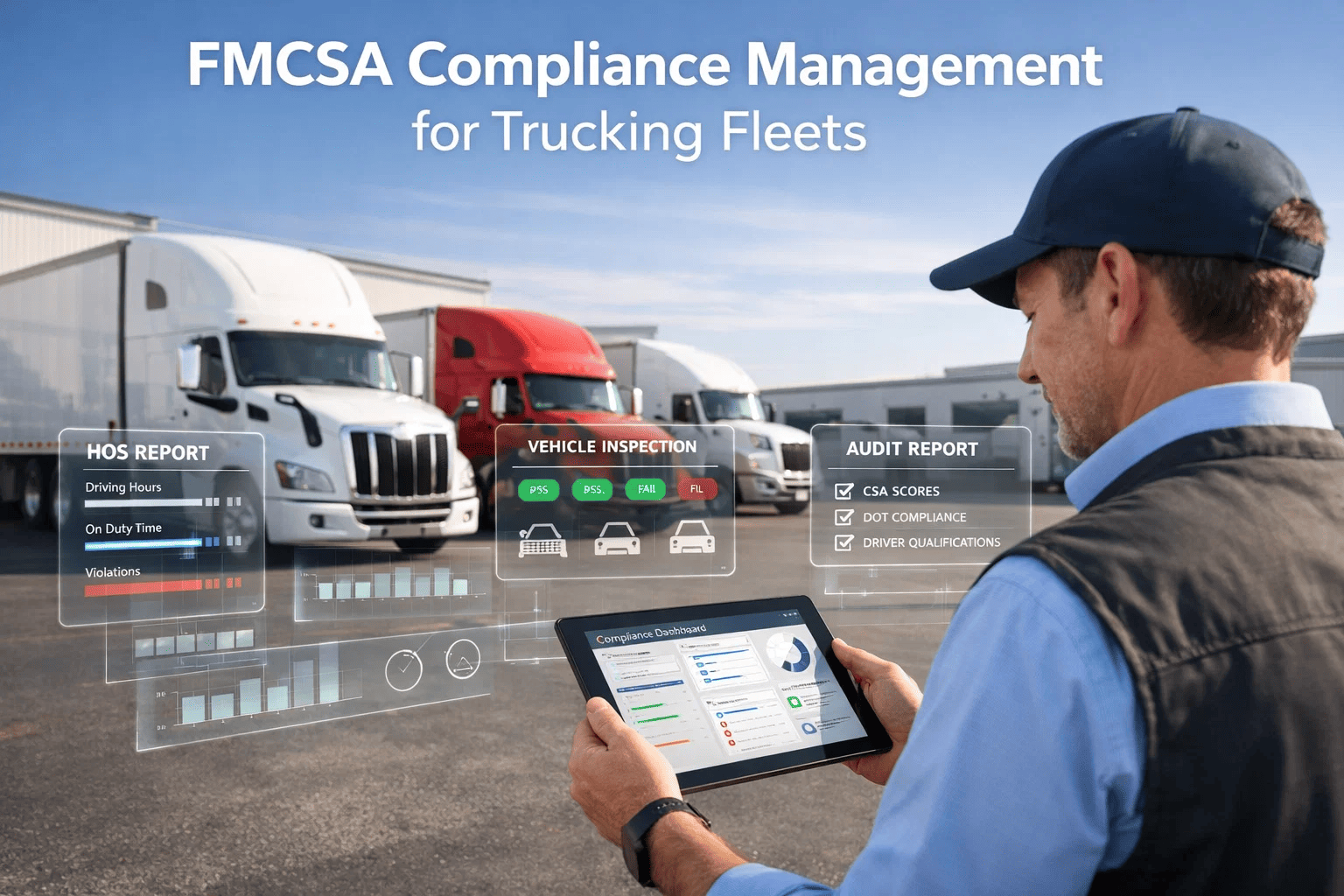
FMCSA compliance is not a quarterly project — it is a daily operational obligation that determines whether your fleet keeps its operating authority, maintains its safety rating, and qualifies for freight that insurers and brokers allow. In 2026, FMCSA enforcement has fundamentally shifted: overhauled CSA scoring, CDL revocations for Clearinghouse violations, electronic DVIR authorization, and new medical certification verification protocols have changed the compliance landscape that transportation fleets must navigate.
Carriers managing compliance manually — through paper files, reminder-based scheduling, and disconnected systems — are structurally unable to maintain consistent adherence across these regulatory dimensions simultaneously. This guide covers every FMCSA compliance requirement that transportation and logistics fleets must manage in 2026, and how FleetRabbit's compliance management platform transforms reactive compliance firefighting into systematic, automated compliance operations.
FMCSA Compliance Management for Trucking Fleets
Every Regulation, Every Deadline, Every Requirement — Managed in One System
2026 FMCSA Enforcement: What Changed and What It Means for Your Fleet
The regulatory changes that took effect in 2026 represent the most significant enforcement shift since the ELD mandate. Transportation operators who have not updated their compliance programs to reflect these changes face elevated violation risk even if their underlying operations are sound. Understanding each change is the starting point for effective compliance management.
New CSA Safety Measurement System
FMCSA overhauled the Compliance, Safety, Accountability scoring system with three major changes: Vehicle Maintenance split into two separate BASIC categories (increasing its scoring weight), the violation scoring window shrunk from 24 months to 12 months making recent violations more impactful, and 950+ violation codes were consolidated into 116 standardized groups. The practical effect is that any vehicle maintenance violation in 2026 scores at double the previous weight.
Electronic DVIRs Formally Authorized
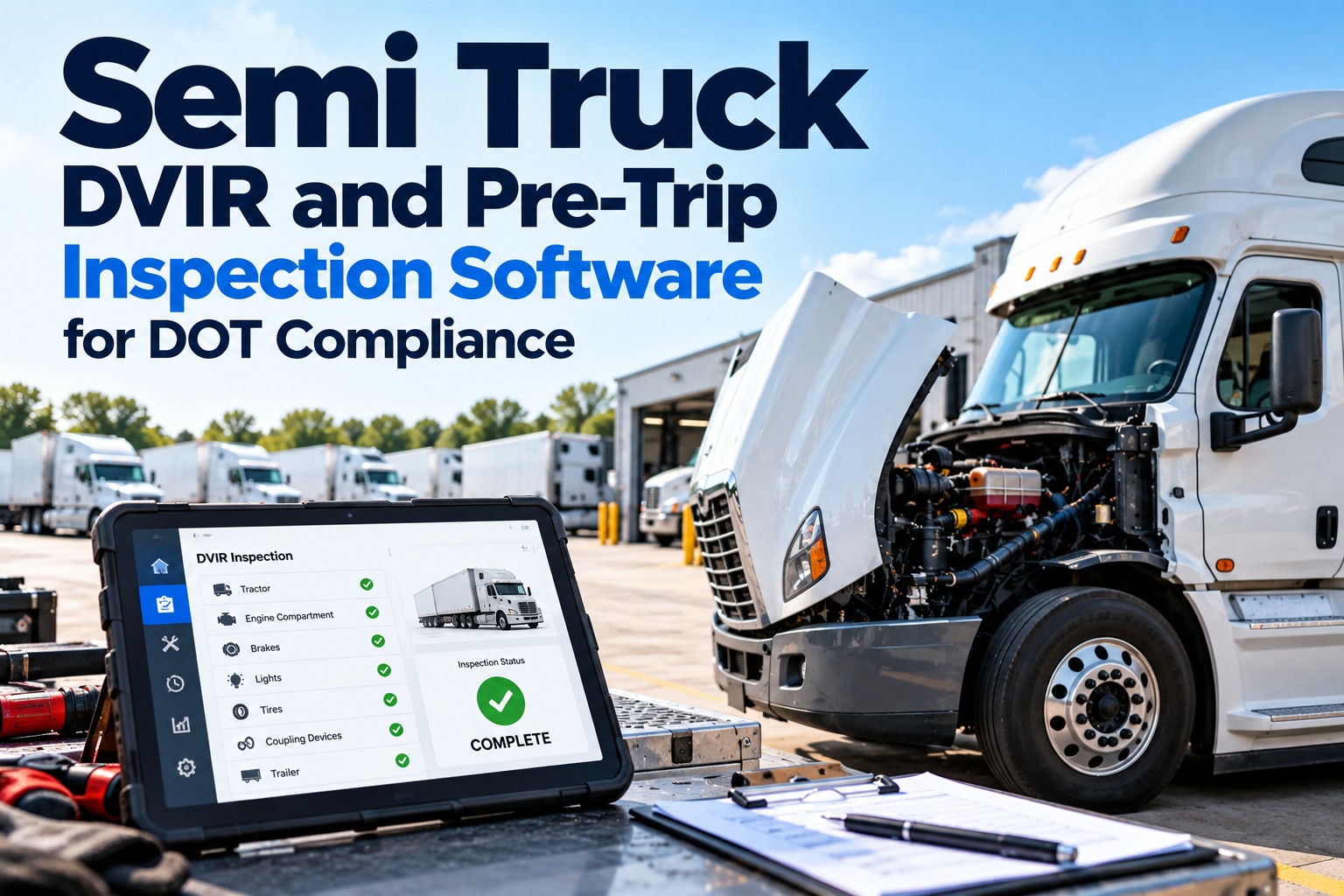
FMCSA-2025-0115 explicitly authorizes electronic Driver Vehicle Inspection Reports with GPS-verified timestamps, digital signatures, and photo evidence uploads. This removes any regulatory ambiguity around digital DVIR platforms. Electronic DVIRs with GPS stamps are now recommended over paper for audit clarity and chain-of-custody documentation.
Paper MEC Waiver for CDL Drivers Expired
The temporary waiver allowing carriers to accept paper Medical Examiner Certificates from CDL drivers for DQ file purposes expired. Effective January 2026, all CDL driver medical certification verification must occur exclusively through state Motor Vehicle Records. Carriers still collecting paper MECs from CDL drivers are operating with non-compliant DQ file management procedures.
Active CDL Revocations for Clearinghouse Violations
FMCSA intensified Clearinghouse enforcement by directing state DMVs to revoke CDLs for drivers with unresolved prohibited status. State licensing agencies now query the Clearinghouse before issuing or renewing CDLs. With 190,000+ drivers under prohibited status, carriers employing drivers who are unaware of their status face both immediate liability and potential criminal charges for responsible management.
The Complete FMCSA Compliance Framework: All 6 Regulatory Areas
Every FMCSA audit — whether compliance review, new entrant audit, or safety audit — evaluates carriers across six distinct regulatory areas. A deficiency in any single area can trigger deeper investigation across your full operation. Understanding exactly what each area demands is the foundation of systematic compliance management.
Driver Qualification & Clearinghouse
12% of all FMCSA violationsHours of Service & ELD Compliance
Up to $19,277 per violationVehicle Maintenance & DVIR Program
Now 2 CSA categories — doubled weight in 2026Drug & Alcohol Testing Program
$10,000/day violation for Clearinghouse failuresManage All 6 Compliance Areas in One Platform
FleetRabbit tracks every FMCSA requirement across all six audit areas with automated alerts, digital documentation, and one-click audit reporting.
Compliance Audit Preparation: A 90-Day Readiness Framework
Effective compliance programs operate continuously, but when an audit notice arrives, having a structured response framework prevents the scrambling that leads to avoidable violations. This 90-day readiness framework provides the systematic approach that allows transportation operators to approach any audit with confidence.
Complete Internal Audit
- Conduct a systematic review of all DQ files — every driver, every document
- Pull and review CSA scores across all eight BASIC categories
- Run Clearinghouse queries for any driver not queried in the past 12 months
- Verify all vehicle annual periodic inspections are current
- Review 90 days of ELD logs for unresolved unassigned events
- Audit DVIR records for gaps in pre-trip or post-trip completion
Remediate All Identified Gaps
- Obtain all missing MVRs, Clearinghouse queries, and medical certificates
- Complete any overdue annual driver qualification reviews
- Schedule and complete any overdue vehicle inspections or PM services
- Obtain written documentation of all previous employer safety performance history attempts
- File DataQ challenges for any incorrect roadside inspection entries affecting CSA scores
- Ensure all testing documentation is complete and properly filed
Complete Audit Package Assembly
- Organize all DQ files in chronological order with clearly labeled sections
- Prepare vehicle maintenance history summaries for all vehicles
- Generate accident register summary for the past 3 years
- Compile drug and alcohol testing program documentation and results
- Confirm all insurance certificates and operations authority documents are current
- Brief all relevant personnel on audit procedures and document request protocols
How FleetRabbit Automates FMCSA Compliance Management
FleetRabbit's compliance management platform is purpose-built for transportation and logistics fleets that need systematic, scalable compliance operations without proportional increases in administrative headcount. The platform automates the tracking, alerting, and documentation workflows that make continuous FMCSA compliance achievable in high-volume fleet environments.
Automated Compliance Calendar
Every compliance deadline — DQ file renewals, Clearinghouse query schedules, medical certificate verification, annual inspections, and insurance renewals — tracked automatically with configurable alert windows at 90, 60, and 30 days before expiration.
Digital DVIR with Complete Audit Trail
GPS-verified, timestamped electronic DVIRs with photo evidence and complete certification chain documentation. Defect repair workflow links driver report to mechanic certification to driver acknowledgment — satisfying the complete DVIR chain-of-custody requirement.
HOS Monitoring & ELD Integration
Real-time HOS availability tracking with automatic approaching-limit alerts to dispatchers. Unassigned ELD event management workflow ensures all events are reviewed and resolved within the 24-hour window. Configurable violation reporting for systematic exception management.
Instant Audit Package Generation
Generate a complete, audit-ready documentation package for any compliance area or the full six-area FMCSA framework in minutes. Packages are structured to match auditor review sequences, eliminating the reorganization labor that delays responses to audit production requests.
CSA Score Monitoring
Continuous CSA score tracking across all BASIC categories with comparison against intervention thresholds. New violation alerts post automatically when roadside inspection data updates. Historical trend analysis identifies pattern violations requiring systematic corrective action.
Driver Qualification File Management
Centralized digital DQ file repository with per-document expiration tracking, automated renewal workflows, and completeness scoring. Supports 48-hour remote audit response for document production requests without scrambling through physical filing systems.
Compliance Violation Cost Reference: What Each Failure Actually Costs
Understanding the financial exposure created by specific compliance failures helps fleet managers prioritize compliance investments. These are the documented penalty ranges for the most common FMCSA violations affecting transportation fleets in 2026.
Frequently Asked Questions: FMCSA Compliance Management
Stay Ahead of FMCSA — Not Behind
FleetRabbit automates every FMCSA compliance requirement across all six audit areas — with real-time monitoring, proactive alerts, and instant audit packages that keep your fleet permanently compliant.
Free for 3 vehicles | $3/vehicle/month | No contracts