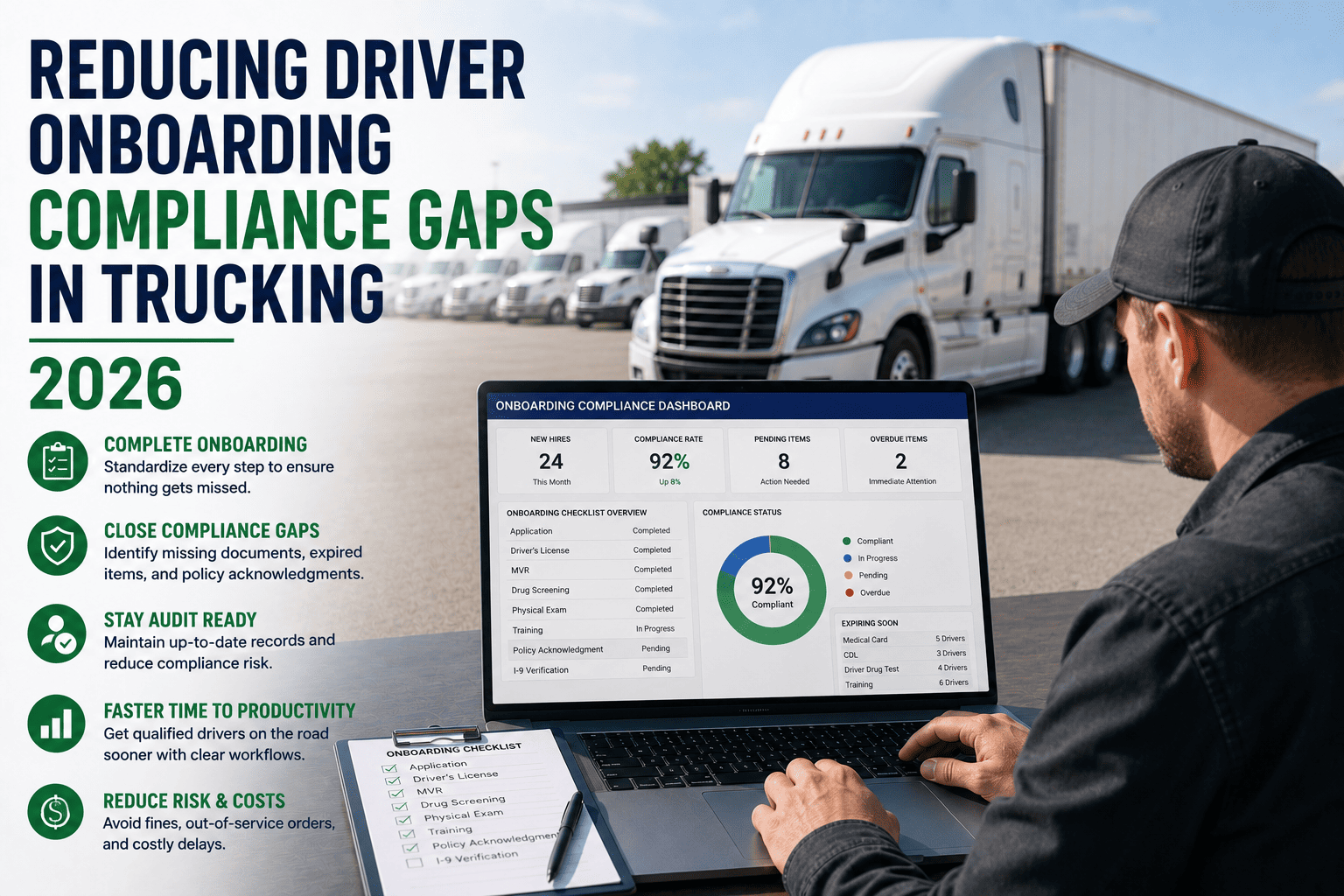
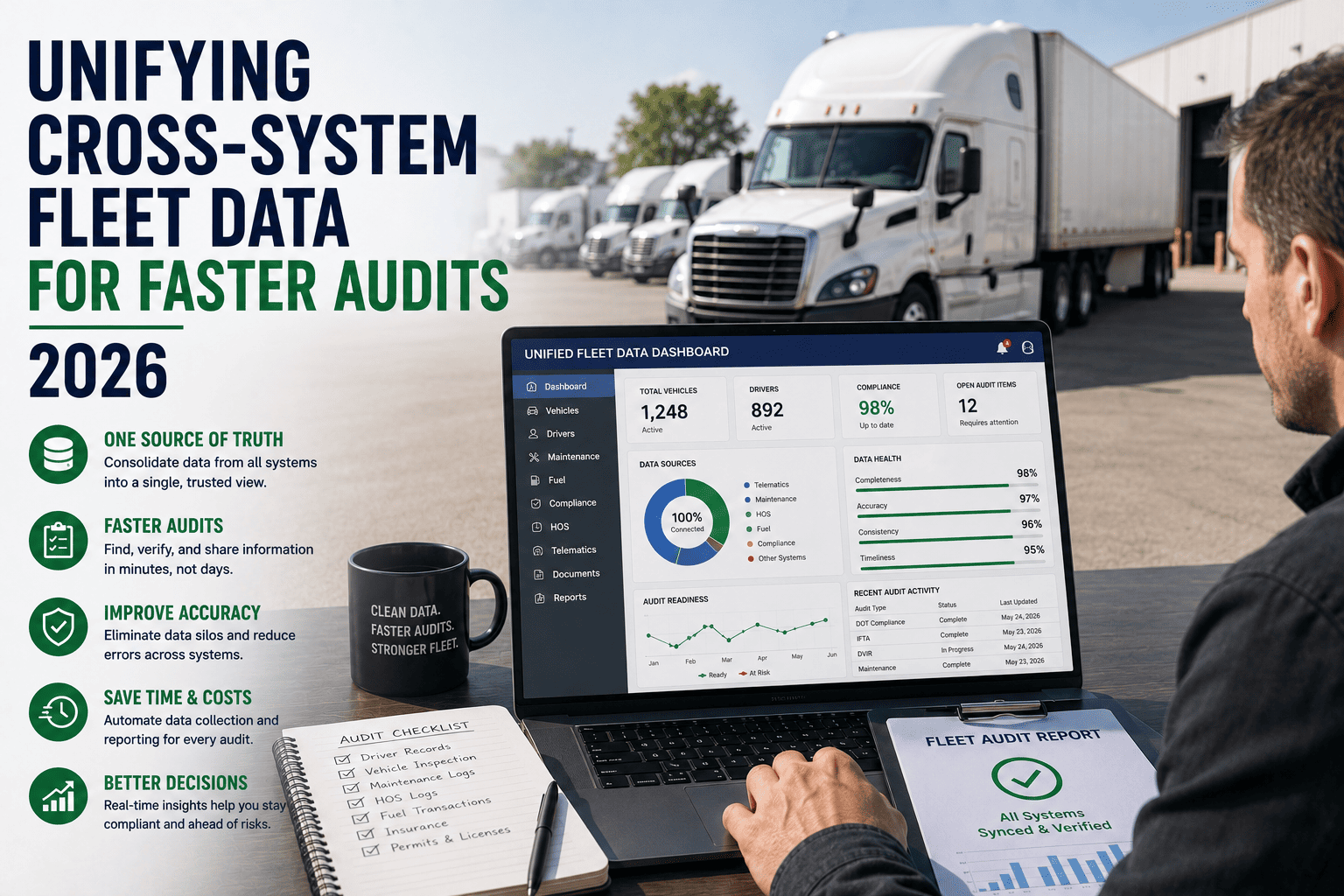
Federal Motor Carrier Safety Administration regulations govern every aspect of commercial trucking operations in the United States — from the hours a driver can spend behind the wheel to the minimum maintenance intervals for brake components on a Class 8 tractor. Non-compliance is not a competitive disadvantage; it is a legal liability that exposes fleet operators to civil penalties ranging from thousands to hundreds of thousands of dollars per enforcement action, out-of-service orders that remove revenue-generating equipment from service, and — in cases involving serious accidents — criminal exposure for operations leadership. Yet the majority of motor carrier compliance failures are not intentional violations of known rules. They are the result of compliance programs that rely on manual processes, paper records, and reactive management rather than systematic monitoring, automated alerts, and evidence-based documentation. Book a FleetRabbit demo to see complete FMCSA and DOT compliance management applied to your fleet configuration.
Quick Answer
FleetRabbit's compliance platform covers the full spectrum of FMCSA and DOT requirements — Hours of Service monitoring with ELD integration, digital DVIR with defect resolution workflows, preventive maintenance scheduling with overdue escalation, driver qualification file management, IFTA fuel tax reporting, and audit-ready documentation that consolidates complete compliance records for any vehicle, driver, or time period on demand. The result is a fleet that maintains continuous regulatory compliance without the manual overhead that makes compliance management a burden rather than an operational discipline.
The FMCSA Regulatory Framework — What Every Fleet Operation Must Comply With
Understanding FMCSA compliance requirements begins with recognizing that the regulatory framework is not a single rule set but a multi-layer system that governs different dimensions of commercial motor vehicle operations simultaneously. Fleet managers responsible for compliance must maintain a working understanding of each regulatory domain and the specific documentation requirements that demonstrate compliance during enforcement actions.
49 CFR Part 395
Hours of Service Regulations
Governs maximum driving and on-duty time for commercial motor vehicle operators. Property-carrying drivers: 11-hour driving limit, 14-hour on-duty window, 30-minute break after 8 cumulative hours, 60/70-hour weekly limits, 34-hour restart provisions. Passenger-carrying drivers: separate limits apply. ELD mandate (Part 395.8) requires electronic logging for most interstate operations. Exemptions for short-haul, agricultural, and adverse driving conditions.
49 CFR Part 396
Inspection, Repair, and Maintenance
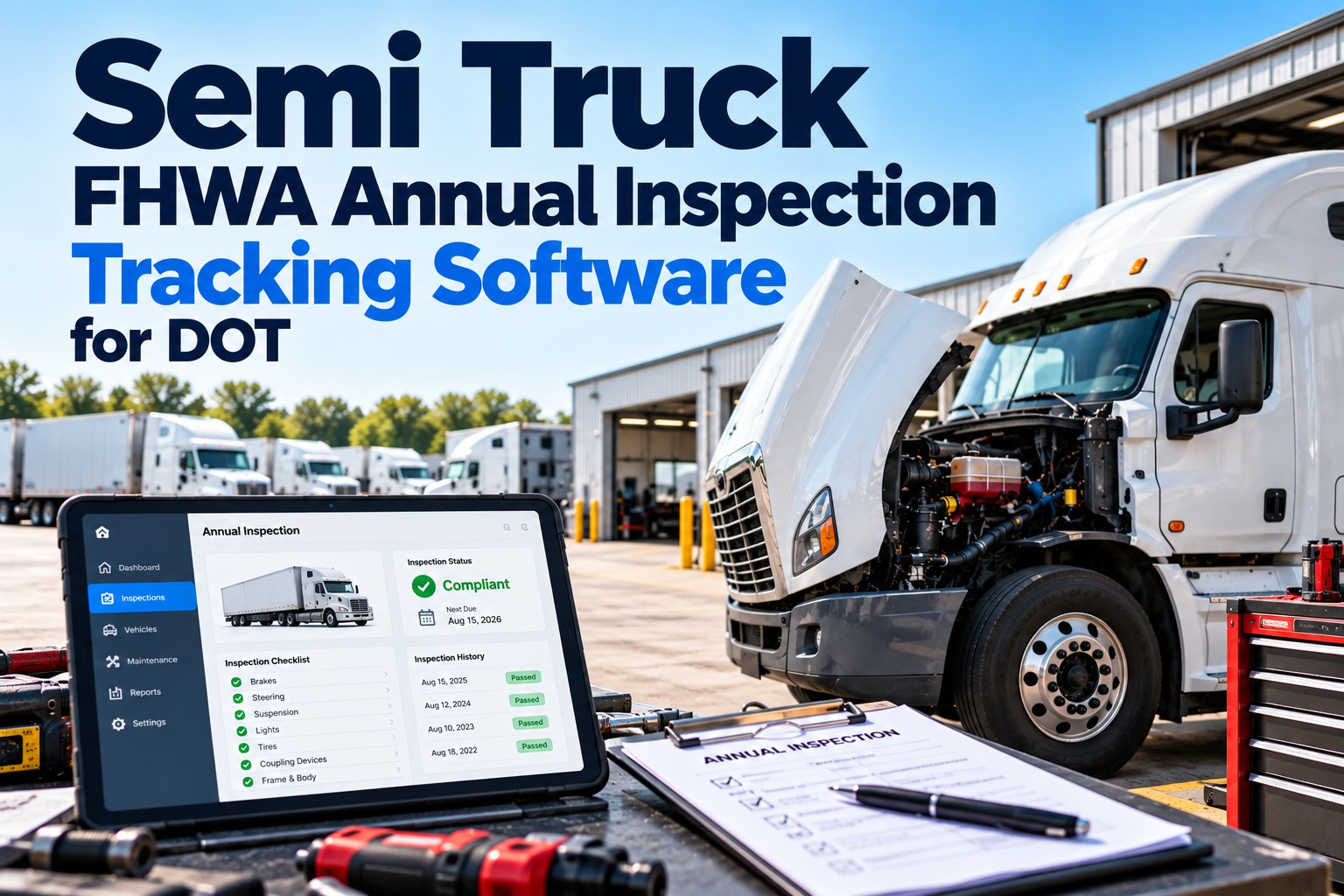
Requires carriers to systematically inspect, repair, and maintain all vehicles under their control. Minimum annual inspection requirement. Driver pre-trip and post-trip inspection obligation. DVIR requirement — drivers must report defects affecting safe operation; carriers must repair reported defects before vehicle returns to service; mechanic certification of repair required. Maintenance records must be retained for prescribed periods.
49 CFR Part 391
Driver Qualification Standards
Defines minimum qualifications for commercial motor vehicle operators — CDL requirements by vehicle class, medical certification standards (DOT physical, Medical Examiner Certificate), driving record standards, drug and alcohol testing compliance (49 CFR Part 382), road test and skills test requirements. Driver qualification files must be maintained for each driver with specific document retention requirements for active and terminated drivers.
49 CFR Part 387
Minimum Financial Responsibility
Establishes minimum insurance coverage requirements for commercial motor vehicle operations — $750,000 to $5,000,000 depending on cargo type and vehicle weight. Carriers must maintain proof of insurance on file with FMCSA. Lapsed insurance results in automatic operating authority revocation. Cargo insurance requirements for contract carriers. Surety bond requirements for freight brokers and forwarders.
49 CFR Part 382
Drug and Alcohol Testing
Mandates pre-employment, random, reasonable suspicion, post-accident, return-to-duty, and follow-up drug and alcohol testing for CDL holders subject to FMCSA jurisdiction. Random testing rate requirements (currently 50% for drugs, 10% for alcohol). Positive test results and refusals must be reported to the Drug and Alcohol Clearinghouse. Drivers cannot operate following positive test without completing Return-to-Duty process.
49 CFR Part 375
Transportation of Household Goods
Governs household goods carriers — written estimates, binding agreement requirements, item inventory, weight procedures, and customer rights. Separate compliance discipline for carriers operating in the household goods segment alongside general freight operations. FMCSA enforcement has increased in this category following consumer complaint trends.
The Compliance Safety Accountability (CSA) System — How FMCSA Scores Your Fleet
The Compliance, Safety, Accountability program is FMCSA's primary enforcement prioritization tool — using data from roadside inspections, crash reports, and investigation results to calculate BASIC (Behavior Analysis and Safety Improvement Category) scores for each registered motor carrier. Understanding how CSA scores are calculated, what triggers intervention thresholds, and how FleetRabbit helps manage the specific operational factors that influence each BASIC score is essential for fleet executives managing regulatory relationships.
| BASIC Category |
What It Measures |
Intervention Threshold |
FleetRabbit Monitoring |
| Unsafe Driving |
Speeding, reckless driving, improper lane change, inattention violations |
65% (passenger) / 65% (freight) |
GPS-based speed monitoring, driver behavior analytics, coaching workflows |
| Hours of Service Compliance |
HOS log violations, ELD tampering, form and manner violations |
65% (all carriers) |
Real-time HOS monitoring, pre-violation alerts, ELD integration |
| Driver Fitness |
Driver disqualification, invalid medical certificate, CDL violations |
80% (all carriers) |
Driver qualification file management, medical cert expiry alerts, eligibility blocking |
| Controlled Substances/Alcohol |
Drug or alcohol violations, testing program deficiencies |
80% (all carriers) |
Testing cycle tracking, Clearinghouse status monitoring, positive-result workflow |
| Vehicle Maintenance |
Brake defects, tire defects, lighting violations, inspection deficiencies |
80% (passenger) / 80% (freight) |
PM scheduling, DVIR defect management, inspection record management |
| Hazardous Materials Compliance |
Hazmat permit, placard, and handling violations |
80% (all carriers) |
Hazmat endorsement tracking, placard compliance documentation |
| Crash Indicator |
Crash involvement rate relative to peer carriers |
65% (all carriers) |
Accident documentation workflow, preventive maintenance compliance |
Hours of Service Compliance — FleetRabbit's Monitoring and Prevention System
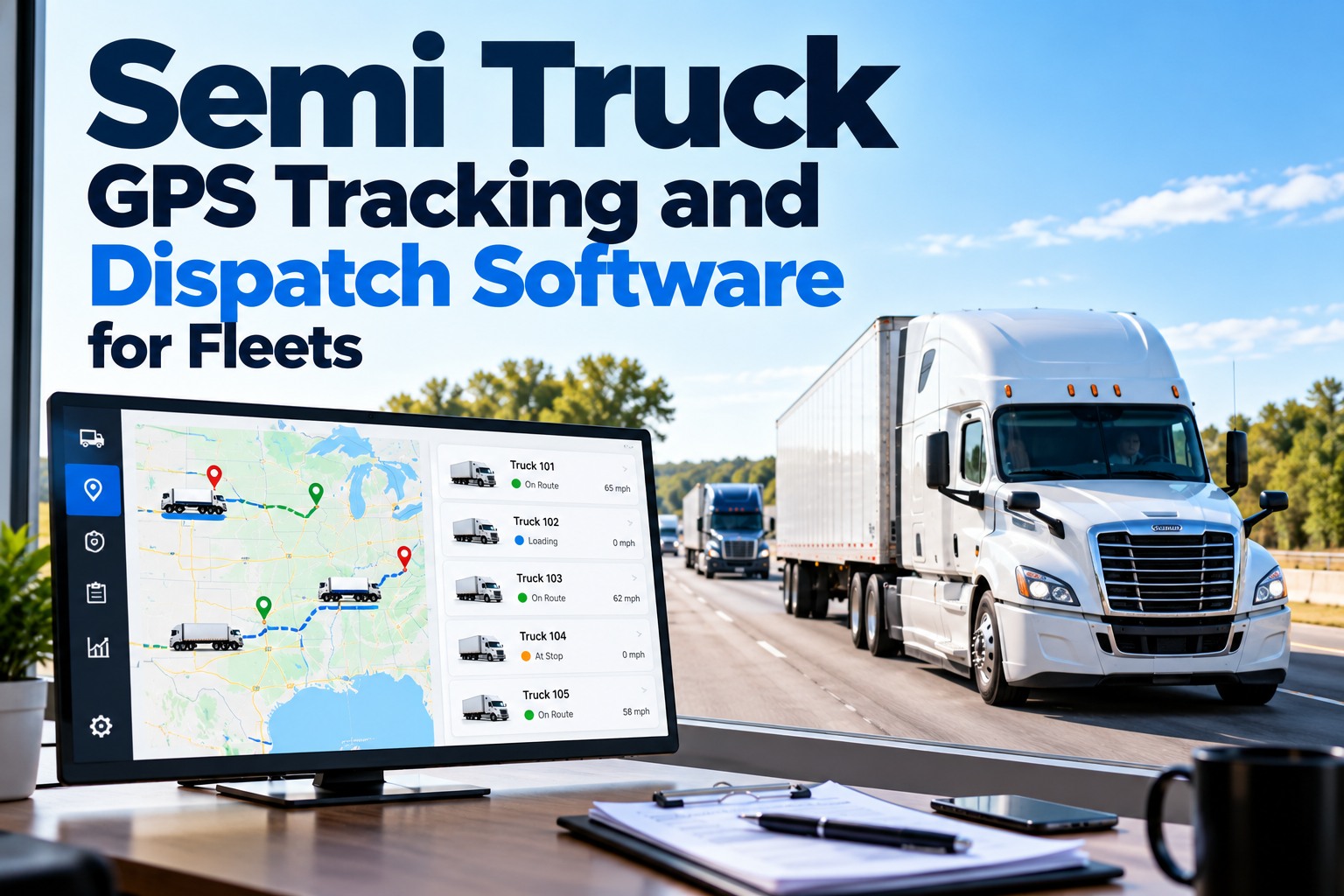
Hours of Service violations are among the most frequently cited during roadside inspections and the most impactful on CSA scores. They are also among the most preventable — when monitoring systems provide accurate real-time status and pre-violation alerts to dispatchers and drivers before the compliance window closes. FleetRabbit's HOS monitoring capability transforms ELD data from a recording function into an active compliance management tool.
01
Real-Time Status Dashboard
Every driver's current HOS status visible on the fleet dashboard — remaining driving time, remaining on-duty window, time since last break, and current duty status classification. Color-coded status indicators identify drivers approaching limits (yellow) and drivers in violation territory (red). Dashboard updates continuously from ELD data feeds.
02
Pre-Violation Alert System
Configurable alert thresholds trigger notifications before violation occurs — dispatch supervisor notified when a driver is 60, 45, and 30 minutes from HOS limit. Alerts delivered via push notification to mobile app and email simultaneously. Dispatcher can take action — rerouting, driver swap authorization, rest stop coordination — before the violation event is recorded by the ELD.
03
Trip Feasibility Analysis
Before a dispatcher assigns a new load, FleetRabbit calculates whether the route distance and estimated transit time is achievable within the driver's available HOS — considering current duty status, time already accumulated, and required break points. Loads that cannot be completed within available hours are flagged before dispatch, preventing the assignment of trips that will inevitably result in HOS violations.
04
Violation Documentation and Corrective Action
When violations occur despite monitoring — due to unforeseen delays, traffic, or driver decisions — FleetRabbit automatically creates violation records with corrective action workflows assigned to the driver's dispatcher and supervisor. Violation documentation is preserved in audit-ready format with timestamps, driver response, and management corrective action records.
ELD Mandate Compliance — What the Regulation Requires and How FleetRabbit Delivers
The Electronic Logging Device mandate, effective for most interstate carriers since December 2017, requires that hours of service records be maintained electronically on a device meeting FMCSA technical specifications. The mandate covers drivers of commercial motor vehicles in interstate commerce that are required to maintain records of duty status — with exemptions for short-haul drivers using the 150 or 100 air-mile radius exemptions, drive-away/tow-away operations, and vehicles manufactured before 2000.
ELD compliance has two dimensions that fleet operators must both address: the technical specification compliance of the ELD device itself, and the operational compliance of how ELD records are managed, stored, and made available during roadside inspections. FleetRabbit integrates with FMCSA-registered ELD devices to pull real-time HOS data into the compliance monitoring platform, while also providing the data transfer and display capabilities required during roadside inspections — allowing officers to view or receive transferred ELD records through the methods specified in 49 CFR 395.8(d).
Complete FMCSA and DOT Compliance
Build a Compliance Program That Survives Any Federal Audit
FleetRabbit's comprehensive compliance platform covers every FMCSA regulatory requirement with automated monitoring, pre-violation alerts, and audit-ready documentation that demonstrates compliance in real time.
100%
Document Availability During DOT Audits
91%
Reduction in Chargeable Violations
Driver Qualification File Management — The Compliance Domain Most Fleets Underinvest In
The driver qualification file is one of the oldest and most detailed documentation requirements in commercial trucking regulation. Every CDL driver must have a qualification file maintained by the carrier that contains a specific set of documents and meets specific retention requirements — some of which continue for three years following driver termination. The failure to maintain complete qualification files carries severe penalties during compliance reviews and is among the most common findings during FMCSA new entrant safety audits that can result in carrier authority revocation.
01
Application for Employment and Driver's License Verification
FleetRabbit stores the original employment application, CDL copy, CDL expiry date, and CDL class verification. Automated alerts notify HR when CDL expiry approaches — 90, 60, 30, and 7 days before expiry. Drivers with lapsed CDLs are automatically flagged as ineligible for dispatch until renewal is documented in the system.
02
Medical Examiner Certificate Tracking
DOT physical examination results and Medical Examiner Certificate expiry dates tracked with automated renewal alerts. Drivers operating with expired medical certificates are a direct regulatory violation with immediate CSA score impact. FleetRabbit prevents expired-certificate drivers from being dispatched and maintains a complete history of medical examination dates for the driver's qualification file.
03
Motor Vehicle Record Management
Annual MVR pull results stored in the driver's qualification file with review date, reviewer identification, and determination of continued driving eligibility. FleetRabbit alerts when annual MVR review is approaching, tracks completion, and stores results. Driving record disqualifications identified through MVR review trigger driver eligibility review workflow.
04
Drug and Alcohol Testing Records
Pre-employment test results, random testing selection and completion records, reasonable suspicion test documentation, and post-accident test results stored in the driver's compliance record. Random testing cycle completion tracked to ensure required annual participation rates are met. Drug and Alcohol Clearinghouse query results recorded for pre-employment and annual required queries.
DVIR and Vehicle Maintenance Compliance — Meeting Part 396 Requirements
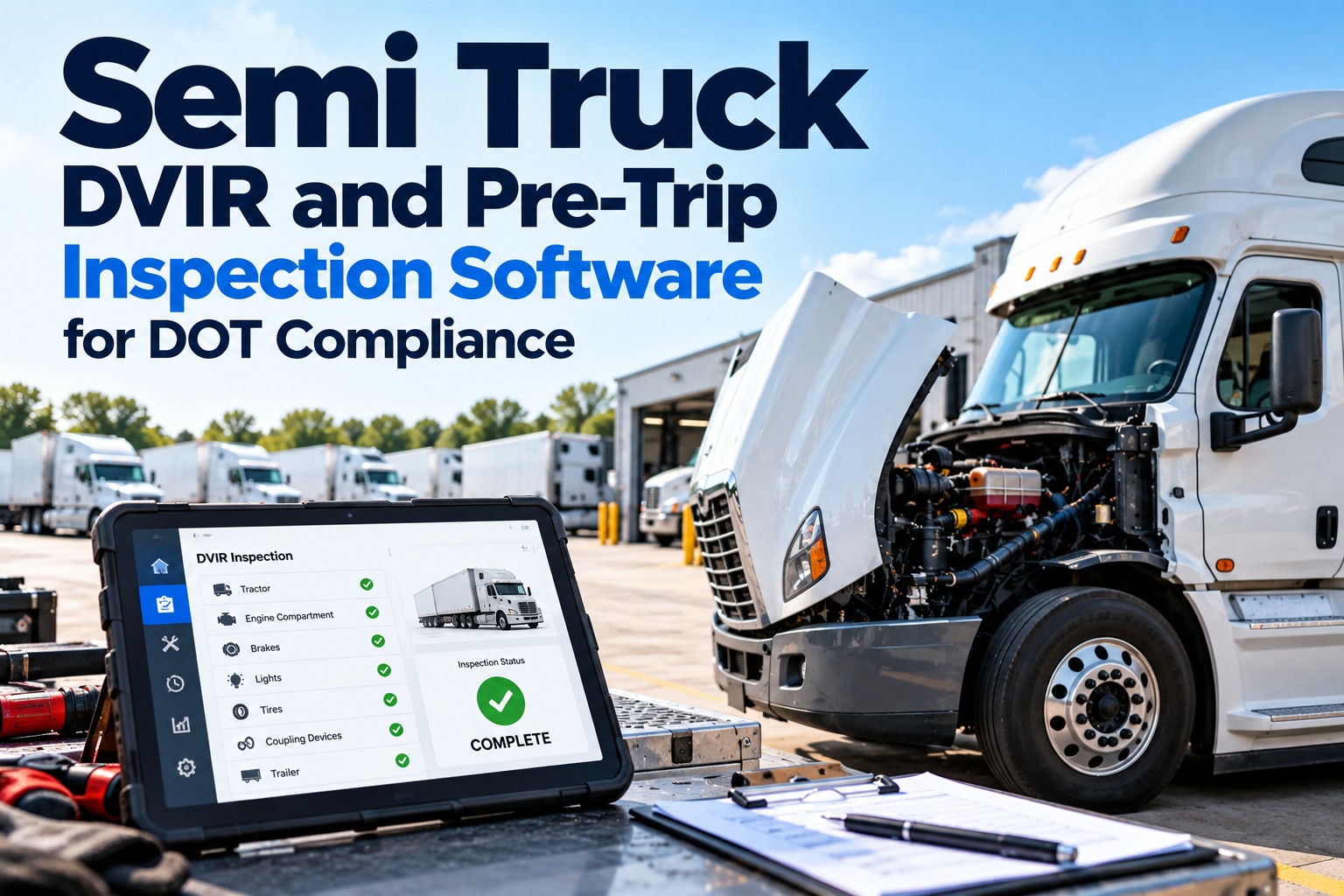
49 CFR Part 396 requires carriers to systematically inspect, repair, and maintain all motor vehicles under their control in safe operating condition. The DVIR requirement is the daily documentation mechanism that creates the record of vehicle condition and defect resolution — and it is among the most commonly cited violation categories during roadside inspections and compliance reviews. FleetRabbit converts the Part 396 compliance requirements into automated digital workflows that generate the required documentation without administrative overhead.
Daily DVIR Completion Rate
96%
Average DVIR completion rate on FleetRabbit-managed fleets within 60 days of deployment — compared to 71% industry average for paper-based systems where driver compliance with inspection requirements is manually monitored
Defect Resolution Cycle Time
4.2 hrs
Average time from DVIR defect report to mechanic resolution sign-off on FleetRabbit-managed fleets — enabling faster vehicle return to service while maintaining complete compliance documentation of the repair cycle
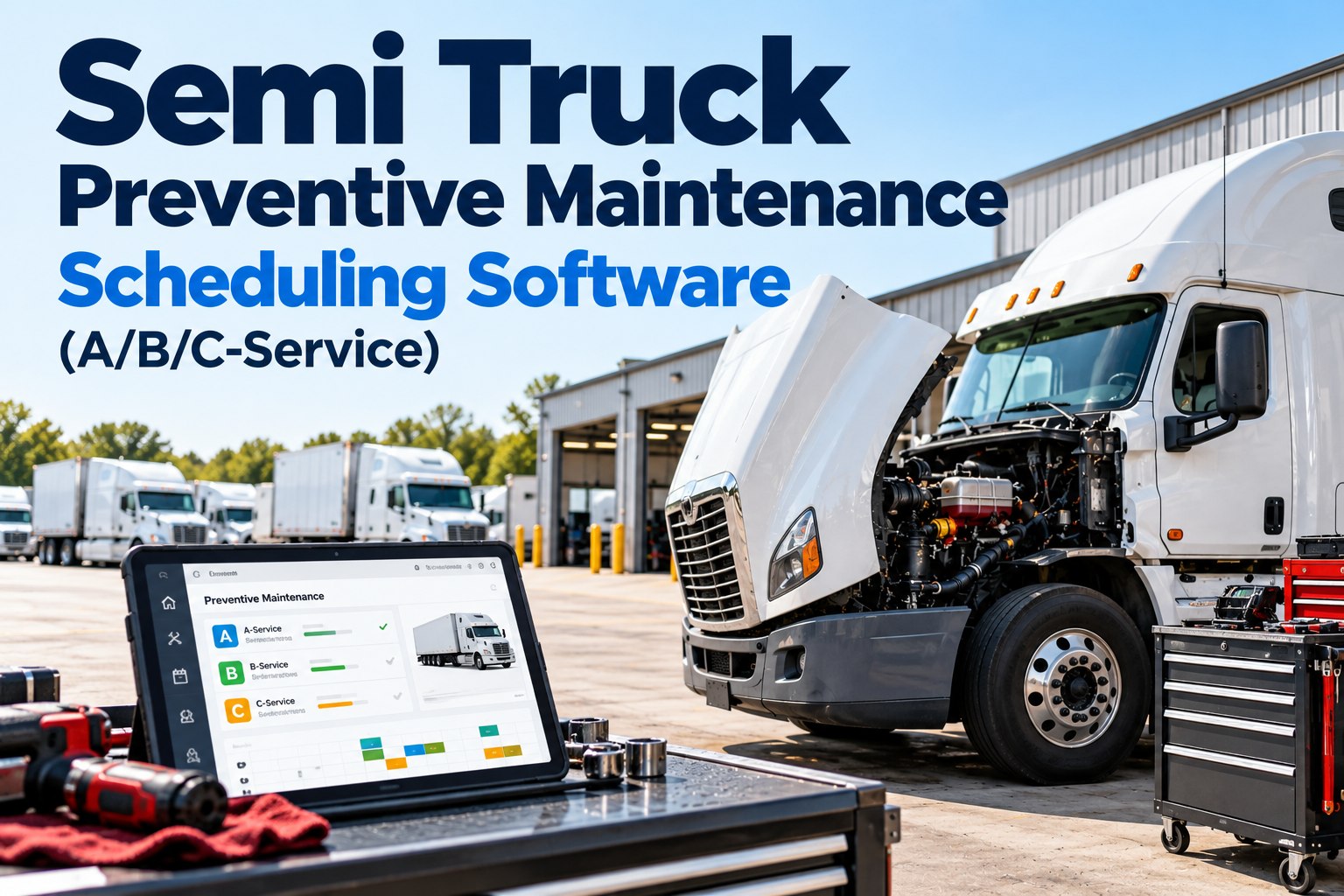
PM Compliance Rate
98%
Preventive maintenance completion within scheduled interval on fleets using FleetRabbit automated PM scheduling — compared to 83% average for fleets using manual PM tracking spreadsheets and reminder systems
Out-of-Service Rate Reduction
67%
Average reduction in roadside out-of-service violations for vehicle maintenance defects (brake deficiencies, tire violations, lighting failures) on FleetRabbit-managed fleets after 12 months — resulting from improved DVIR compliance and PM schedule adherence
IFTA Compliance — Eliminating Quarterly Tax Filing Complexity
The International Fuel Tax Agreement requires interstate motor carriers operating qualified motor vehicles to report fuel consumption and mileage by jurisdiction quarterly — calculating the net fuel tax owed to or due from each member jurisdiction based on the difference between taxes paid at the pump in each state and the taxes owed based on miles driven in each state. Manual IFTA compliance requires reconciling fuel purchase receipts with mileage records by state for every vehicle in the fleet — a time-consuming process prone to errors that create audit exposure during IFTA audits conducted by member states.
FleetRabbit automates the IFTA data collection process through integration with GPS telematics systems that track mileage by state automatically and fuel card systems that import fuel purchase records by location. Quarterly IFTA reports are generated within the platform — showing fuel consumed and mileage by jurisdiction for each vehicle, calculating net tax position, and providing the detailed backup records required during IFTA audits. The time savings from automated IFTA preparation — often measured in days of manual reconciliation work per quarter for larger fleets — represents a significant operational efficiency gain in addition to the audit risk reduction from accurate record-keeping.
What Happens During a DOT Compliance Audit — and How FleetRabbit Prepares You
FMCSA compliance reviews fall into three categories: new entrant safety audits (required within 12 months of operating authority issuance), focused compliance reviews (targeting carriers with specific BASIC score concerns), and comprehensive safety reviews (examining the full regulatory compliance program). Each audit type examines different aspects of the compliance program with different document request scope, but all share a common requirement: carriers must produce requested records within defined timeframes, and inability to produce required documentation is treated the same as non-compliance with the underlying regulatory requirement.
Before the Audit
FleetRabbit's compliance dashboard provides a continuous view of compliance status across all regulatory domains — identifying documentation gaps, upcoming expiry dates, and procedural deficiencies before they are discovered by an auditor. Pre-audit compliance reviews can be conducted internally using the same document retrieval and report generation tools that would be used during an actual audit — identifying and correcting deficiencies before enforcement review occurs.
During the Audit
FleetRabbit generates compliance summary reports for any time period, vehicle subset, or driver group within minutes. Driver qualification files, HOS logs, DVIR records, maintenance histories, and inspection certificates are retrieved through the platform search interface and exported in audit-standard formats. The speed and completeness of document production demonstrates the operational rigor of the compliance program — an audit-ready presentation that influences auditor perception of carrier compliance culture.
After the Audit
If audit findings identify compliance gaps, FleetRabbit's corrective action workflow documents the remediation steps taken in response to each finding — creating the evidence record required for post-audit compliance review. Corrective action documentation is preserved in the carrier's compliance record, demonstrating good-faith response to enforcement findings in subsequent regulatory interactions.
Frequently Asked Questions
QWhich FMCSA regulations does FleetRabbit's compliance platform cover?
FleetRabbit covers the core FMCSA regulatory requirements applicable to the majority of commercial motor carrier operations: 49 CFR Part 395 (Hours of Service and ELD mandate), 49 CFR Part 396 (Inspection, Repair, and Maintenance), 49 CFR Part 391 (Driver Qualification Standards), 49 CFR Part 382 (Drug and Alcohol Testing tracking), and 49 CFR Part 383 (CDL qualification tracking). IFTA reporting compliance is supported through fuel card integration and GPS mileage tracking. Hazmat-specific compliance documentation (49 CFR Parts 171-180) is supported through hazmat endorsement tracking and load classification recording.
QHow does FleetRabbit handle compliance requirements that vary by state for intrastate operations?
Many states adopt FMCSA regulations by reference with state-specific modifications for intrastate operations — different HOS rules, lower weight thresholds for CDL requirements, or additional inspection standards. FleetRabbit's compliance configuration supports state-specific rule sets for fleets with significant intrastate operations. During implementation, your state's intrastate compliance requirements are mapped against the configurable monitoring rules in FleetRabbit — ensuring that drivers operating under state-specific exemptions from federal HOS rules are monitored against the applicable state standard rather than the federal standard they are exempt from.
QHow long does it take to transition from paper-based compliance records to FleetRabbit?
The transition timeline depends on the volume of historical records to be digitized and the current state of driver qualification files and vehicle records. FleetRabbit's implementation team conducts an initial compliance record assessment and prioritizes digitization based on regulatory retention requirements and audit risk. Forward-looking compliance monitoring activates immediately for new records — new DVIRs, new HOS events, new maintenance work orders. Historical record digitization is typically completed within 30-60 days of deployment start, with full digital compliance archives operational at the end of the first quarter of FleetRabbit use.
QCan FleetRabbit help carriers improve their CSA scores after violations have already been recorded?
CSA violation data remains on the record for 24 months and cannot be removed except through the DataQ challenge process for factually incorrect inspection records. FleetRabbit helps in two ways: First, initiating systematic preventive compliance monitoring that prevents new violations from occurring — stopping the score from worsening while time naturally ages existing violations off the record. Second, the DataQ challenge process — challenging incorrect inspection records that are contributing to elevated BASIC scores — is supported through FleetRabbit's inspection documentation records, which provide the timestamped maintenance and DVIR records needed to demonstrate that a cited defect was not present at the time of inspection.
Discuss your current CSA score profile in a compliance consultation.
From Reactive Compliance Management to Regulatory Confidence
FleetRabbit's comprehensive FMCSA and DOT compliance platform gives fleet managers and executives the monitoring, documentation, and audit preparation capability to operate with regulatory confidence — turning compliance from a constant vulnerability into a demonstrable competitive advantage.
HOS and ELD Compliance
Driver Qualification Files
DVIR and Maintenance Records
CSA Score Management
Audit-Ready Documentation
April 17, 2026
By Jason Smith
All Posts