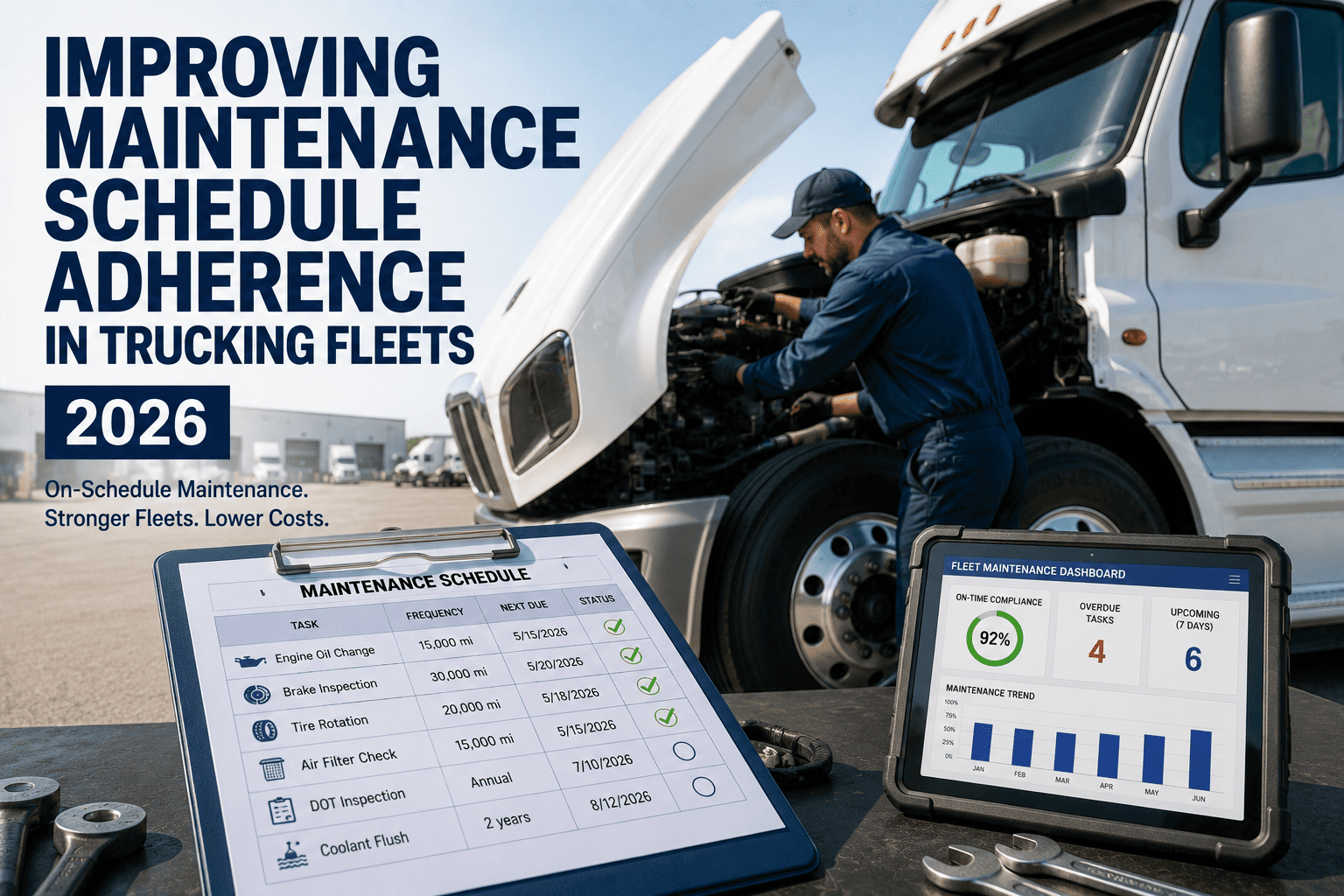
.png)
Fleet vehicle inspections are the foundation of DOT compliance, driver safety, and maintenance planning. Yet many fleets still rely on paper checklists, handwritten forms, and manual tracking that create delays, lost records, and compliance gaps. This comprehensive guide provides both printable and digital DVIR-compliant inspection templates that you can use immediately, plus guidance on building a systematic inspection program that catches defects before they become roadside violations.
Why Fleet Vehicle Inspections Matter
Vehicle maintenance violations account for 44 percent of all roadside out-of-service orders issued annually. Defects discovered during regular inspections, when documented and repaired promptly, prevent the costly roadside citations, vehicle impounds, and operational disruptions that result from undetected safety issues. Fleets with systematic daily inspection processes and documented repair tracking reduce audit findings and maintenance costs significantly compared to reactive maintenance operations.
Get Free Inspection Templates Right Now
Download printable DVIR-compliant inspection checklists for trucks, trailers, and equipment. Use them on the road today or transition to digital with FleetRabbit's mobile inspection app.
What is a Fleet Vehicle Inspection Checklist?
A fleet vehicle inspection checklist is a structured, item-by-item record of a vehicle's mechanical and safety condition at a specific point in time. According to 49 CFR 396.11, commercial motor vehicle drivers must complete a written vehicle inspection report (DVIR) at the end of each driving day if any defects were found. The next driver must review and sign that report before operating the vehicle. An inspection checklist serves as the foundation for this compliance requirement, ensuring consistent documentation and preventing safety issues from going undetected.
Inspection checklists are used in two primary contexts. Pre-trip inspections occur before a driver begins operating a vehicle and verify that the truck is safe to operate for that day's routes. Post-trip inspections occur at the end of the driving day and document any defects discovered during operation. Both must be completed, documented, and accessible for DOT review.
Pre-Trip Fleet Vehicle Inspection Checklist
Pre-trip inspections verify the safe mechanical condition of a truck before the driver begins operating it. The driver systematically checks critical safety systems and equipment and documents the condition. Any defect that could affect safe operation must be reported and repaired before the vehicle is driven.
Pre-Trip Inspection Checklist Items
- Service brakes: pedal travel, responsiveness, air pressure (if equipped)
- Parking brake: engagement, holding power, indicator lights
- Steering: wheel free play, looseness in tie rods, response to steering input
- Lighting: headlights, tail lights, brake lights, turn signals, all functional and clean
- Reflectors: front, rear, and side reflectors visible and undamaged
- Tires: tread depth (minimum 4/32 inch front, 2/32 inch rear), inflation, sidewall condition, no bubbles or cuts
- Wheels and rims: no cracks, dents, or missing lug nuts; proper alignment
- Coupling devices: fifth wheel secure, kingpin properly engaged, safety chains connected
- Horn: functional and audible
- Windshield and mirrors: no obstructing cracks or damage, wipers functional, all mirrors present and adjusted
- Emergency equipment: fire extinguisher present, reflective triangles available, spare fuses on board
- Exhaust system: no leaks, properly secured, no cracks or separation near cab
- General condition: no fluid leaks under vehicle, frame secure, cargo properly secured
- Cargo securing devices: straps, chains, or bars functional and properly tensioned
Post-Trip Fleet Vehicle Inspection Checklist
Post-trip inspections are completed at the end of the driving day and document any defects discovered during operation. Unlike pre-trip inspections which verify safe condition before driving, post-trip inspections record what actually happened during the day's operation. A driver might discover that a light stopped working mid-route, a tire developed an issue, or brakes felt soft. These discoveries must be documented on the post-trip DVIR.
Post-Trip Inspection Documentation Requirements
- Driver name and signature: identifying who completed the inspection
- Vehicle identification: unit number, VIN, and license plate
- Odometer reading: documenting mileage at time of inspection
- Date and time: when the inspection was completed
- Defect description: specific details of any items found defective (not just checked or passed)
- Defect location: where on the vehicle the issue is located
- Safety severity: whether the defect makes the vehicle unsafe to operate
- Mechanic review: mechanic signature or name certifying repairs were made or not needed
- Repair documentation: date repairs were completed, by whom, and what was done
- Next driver acknowledgment: signature of driver who reviews report before operating vehicle
Printable vs. Digital DVIR Templates
Both printable paper checklists and digital inspection forms satisfy FMCSA requirements, but they have different practical implications for fleet operations. Understanding the trade-offs helps you choose the approach that works for your fleet size and operational needs.
| Aspect | Printable Checklist | Digital DVIR |
|---|---|---|
| Setup Time | Immediate, no software needed | Installation of mobile app, 5-10 min setup |
| Cost | Paper and printing, minimal cost | Subscription-based, starts free for 3 assets |
| Inspection Time | 10-15 minutes with handwriting | 5-7 minutes with guided checklists |
| Photo Documentation | Must be attached separately or missing | Built-in, photos attach to defect instantly |
| Storage and Retrieval | File cabinets or boxes, hard to search | Cloud searchable by date, vehicle, or defect |
| Work Order Creation | Manual transcription required | Automatic from defect to work order |
| Audit Compliance | Compliant but time-consuming to gather | Audit-ready reports generated in seconds |
How to Use a Fleet Vehicle Inspection Checklist
Using an inspection checklist effectively requires more than just having the form. Your team needs to understand the process, complete inspections consistently, and route defects to repair quickly.
Step 1: Complete the Pre-Trip Inspection Before the driver begins operation, they systematically walk around the vehicle and check each item on the checklist. For items that pass, they mark them as safe. For any defect observed, they document the specific issue, location, and severity. If any defect makes the vehicle unsafe to operate, the vehicle cannot be driven until that defect is repaired.
Step 2: Document and Sign The driver signs the inspection form certifying that they completed the inspection accurately. On digital systems, timestamp and GPS location are captured automatically. The form includes the driver's name, vehicle ID, date, odometer reading, and any defects found.
Step 3: Route Defects to Maintenance Any defects noted must be reviewed by a mechanic who either repairs the vehicle or certifies that no repairs are needed. With paper forms, this requires manual transcription to a work order. With digital systems, the defect automatically creates a work order that routes to the maintenance team with photos and details included.
Step 4: Mechanic Review and Repair The mechanic reviews the defect, determines what repair is needed, completes the work, and documents it in the system. This creates a complete chain of custody from defect discovery to resolution. With paper systems, this information is scattered across multiple documents.
Step 5: Next Driver Review Before operating the vehicle, the next driver must review the previous day's DVIR and sign it, certifying they reviewed the report and the vehicle is safe to operate. This is a critical compliance requirement. The driver must have access to that report before driving.
Fleet Inspection Compliance and FMCSA Requirements
FMCSA regulations establish specific requirements for inspection documentation and maintenance records. Understanding these requirements prevents compliance violations during audits and roadside inspections.
49 CFR 396.11 DVIR Requirements: Drivers must complete a written report at the end of each driving day if any defects were found. The report must be signed by the driver and reviewed by the next driver before vehicle operation. A qualified mechanic must certify that repairs were made or that no repairs were needed.
49 CFR 396.3 Maintenance Records: Motor carriers must systematically inspect, repair, and maintain vehicles. Records of all inspections, repairs, and maintenance must be retained. Annual vehicle inspections must be completed and documented. Records must be available for FMCSA review.
Record Retention: DVIR records must be retained at the motor carrier's principal place of business for a minimum of three months. Annual inspection reports must be kept for one year while the vehicle is in service, plus six months after the vehicle leaves the fleet.
Defect Documentation Standards: Inspections must document specific defects, not just check boxes. A defect report should include what is wrong, where on the vehicle it is located, and how severe the issue is. Vague documentation like "brake issue" without specifics does not meet compliance standards. The mechanic certification must specify what work was performed to correct the defect.
Transition from Paper to Digital Inspections
Start with our free printable templates to standardize your inspection process. As your fleet grows, switch to mobile digital DVIRs that automatically route defects to work orders and keep your fleet audit-ready.
Common Fleet Inspection Defects and How to Document Them
Understanding the most frequently cited defects helps drivers and maintenance teams prioritize what to check and how to document issues that DOT inspectors look for.
Brake System Defects: Brake issues are the most frequently cited vehicle defect, accounting for a significant portion of roadside out-of-service orders. Document specific brake problems: soft pedal, spongy brake response, uneven braking, brake fluid leaks, worn brake linings, or air pressure below normal. Specify which axle or wheel (front left, rear right, etc.) if the issue is localized.
Tire and Wheel Issues: Tire defects include tread depth below minimum (4/32 front, 2/32 rear), uneven wear, bulges or cuts in sidewalls, under or over inflation, or recapped tires on front wheels. Specify which tires are affected and the specific condition observed.
Lighting Defects: Document which lights are not functioning: headlights, tail lights, brake lights, turn signals, clearance lights, or reflectors. Specify location if the issue is limited to one side of the vehicle.
Steering and Suspension: Describe steering problems specifically: excessive play in steering wheel, loose tie rods, unresponsive steering, or suspension noises. Specify if the issue occurs during turns, acceleration, or over bumps.
Coupling Devices: For trailers, document fifth wheel condition, kingpin engagement, safety chain condition, or air line connections. Specify exactly what is loose, corroded, or missing.
Emergency Equipment: Document missing or non-functional emergency equipment: fire extinguisher absent or expired, reflective triangles missing, spare fuses not available, or warning triangles damaged.
Best Practices for Fleet Inspection Programs
Having a checklist is the starting point. A truly effective inspection program requires training, consistent execution, and integration with maintenance operations.
Train Drivers on Proper Inspection Techniques: Drivers must understand what they are inspecting and why. A 10-minute training covering the most common defects, what to look for, and how to document issues accurately reduces missed defects significantly. Update training annually or when inspection requirements change.
Make Inspections Quick and Simple: If the inspection takes 20 minutes, drivers will rush through it. Streamlined checklists with guided visual steps reduce inspection time to 5-7 minutes, making compliance less burdensome and more likely to be done thoroughly.
Create Accountability Through Documentation: Requiring driver signatures on inspection reports creates accountability. Digital systems that capture GPS location, timestamp, and photo documentation strengthen the audit trail and prevent falsified records.
Link Inspections to Maintenance Work Orders Immediately: The moment a defect is discovered, it should create a maintenance work order. Paper systems lose days or weeks in the gap between discovery and work order creation. Digital systems eliminate this lag, getting repairs started within hours instead of days.
Track Repeat Defects and Problem Vehicles: If a vehicle keeps having the same brake issue or lighting problem, that indicates a deeper maintenance problem. Tracking repeat defects helps identify vehicles that need more attention and components that fail frequently.
Conduct Random Audits of Inspection Quality: Periodically, have a maintenance manager or safety director ride along with drivers during inspections or review completed inspection reports to verify quality. This catches drivers who are falsifying inspections or missing obvious defects.
Integrating Vehicle Inspections with Your Maintenance Program
Inspections feed directly into your maintenance and repair operations. A well-integrated program means defects discovered during inspections flow seamlessly into work orders, parts are ordered when needed, and repairs are tracked for compliance documentation.
When a driver discovers a brake defect during a pre-trip inspection, that defect should automatically notify your maintenance team, trigger parts ordering if needed, assign a technician, and create a work order with all the details needed to start the repair immediately. With paper systems, this happens through multiple manual steps spread across different people and documents. With digital systems, one DVIR entry creates the entire workflow automatically.
Tracking maintenance history by vehicle allows you to see the complete service record: what was inspected, what defects were found, what repairs were completed, what parts were used, and how much the repair cost. This history becomes invaluable when evaluating whether a vehicle is worth keeping in your fleet or should be retired. It also provides the documentation FMCSA auditors need to verify your maintenance program is systematic and effective.
Frequently Asked Questions: Fleet Vehicle Inspections
Q: How often should trucks be inspected?
Pre-trip inspections must occur before every driving shift. Post-trip inspections must be completed at the end of each day if any defects are found. Annual vehicle inspections are required and must be documented. Sign up free to automate annual inspection tracking or book a demo to see how digital inspections work.
Q: What happens if a defect is found during a pre-trip inspection?
Any defect affecting safe operation must be repaired before the vehicle is driven. The driver must document the defect on the DVIR, the maintenance team must review it, repair it, and certify completion before the next driver can operate the vehicle.
Q: How long must inspection records be kept?
DVIR records must be retained for minimum three months. Annual inspection reports must be kept one year while vehicle is in service, plus six months after vehicle leaves the fleet. Start a trial to store records digitally or book my demo.
Q: Can digital inspection forms replace paper DVIRs?
Yes. FMCSA officially authorized electronic DVIRs effective March 23, 2026. Digital forms must capture driver signature, defect description, and mechanic certification, which standard compliant platforms do automatically.
Q: Who is responsible if a defect is not documented?
The driver who discovered the defect and the maintenance team who reviewed the DVIR are responsible. If a defect is discovered during inspection but not documented or repaired, the motor carrier is liable for violations if the vehicle is involved in a roadside inspection.
Q: Are there FMCSA penalties for incomplete inspection records?
Yes. Incomplete, missing, or falsified DVIRs are cited frequently during audits. Penalties range from $1,100 to $16,000 per violation. Maintain complete, legible inspection records to avoid citations.
Q: Can I use the same checklist for all vehicle types?
No. Trailers have different inspection requirements than tractors (coupling devices). Refrigerated units require temperature monitoring. Heavy equipment has unique components. Use vehicle-specific checklists for each type of asset.
Q: How can I transition my fleet from paper to digital inspections?
Start with a pilot group of drivers using digital inspections while maintaining paper backup. Train drivers on the mobile app (typically takes 10 minutes). Run both systems in parallel for 2-4 weeks. Once drivers are comfortable, transition the rest of the fleet. Start free or book demo.
Download Your Free Inspection Templates Today
Get printable DVIR-compliant checklists and transition to mobile digital inspections whenever you're ready. Free forever for up to 3 vehicles, with advanced automation available when you scale.