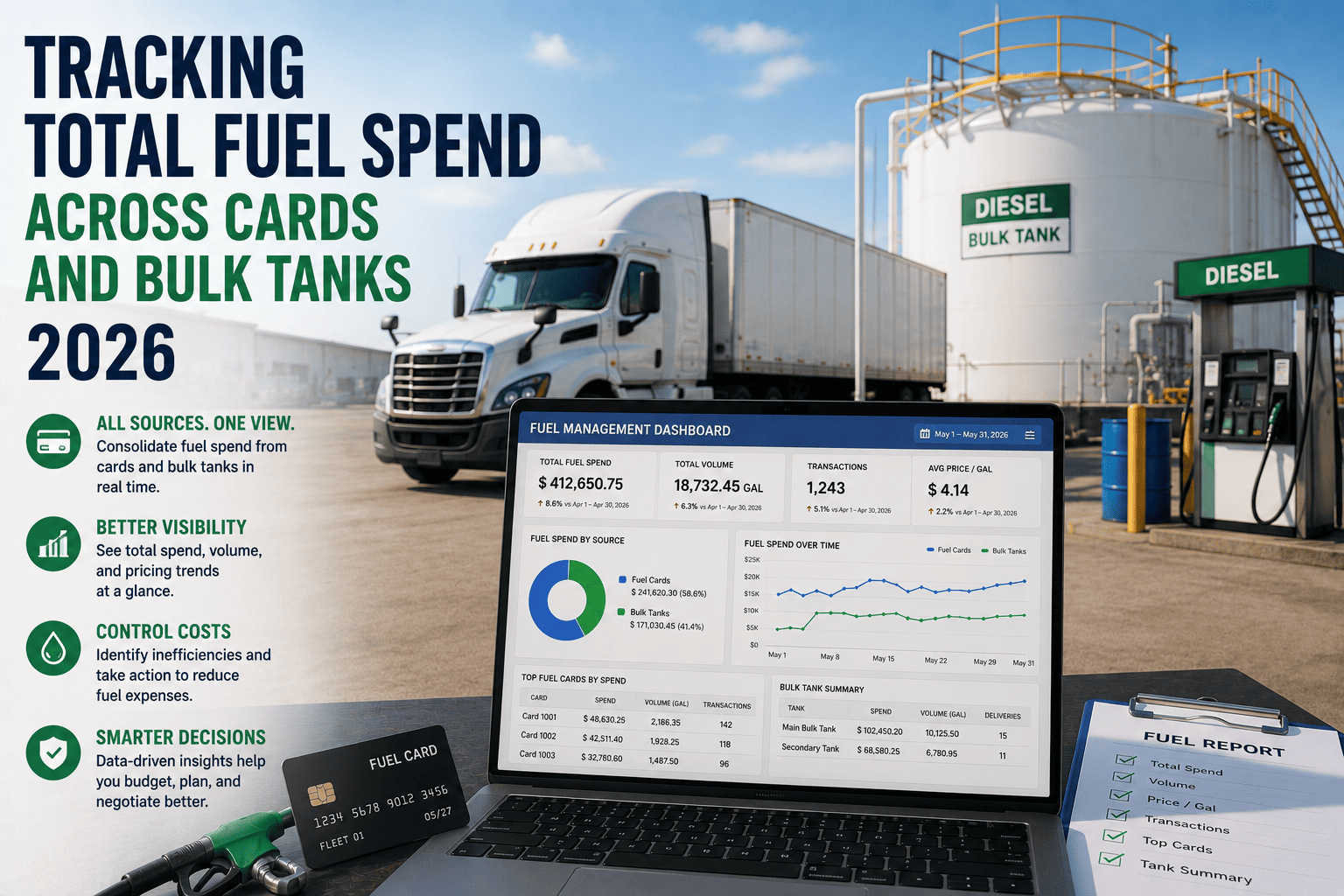
Fuel is the single largest controllable operating expense in commercial transportation, representing 25 to 40 percent of total trip cost for most freight carriers. Yet the majority of fleets managing fuel spend through manual receipt collection, end-of-week summary reports, and card statement reconciliation are operating with a six to ten day information lag — receiving cost data too late to identify driver behavior patterns, detect unauthorized purchases, or intervene in real-time fuel inefficiency before it compounds across an entire fleet cycle. FleetRabbit's fuel card integration and expense automation platform eliminates this information lag entirely — delivering real-time transaction visibility, automated exception alerting, and consolidated expense reporting that transforms fuel management from a bookkeeping process into an active cost control program.
The Fuel Expense Management Gap in Commercial Trucking Operations
The gap between how most carriers currently manage fuel expense and how the highest-performing carriers manage it is an operational and financial chasm — not a marginal difference. Understanding the specific points where conventional fuel management fails is essential context for evaluating the business case for FleetRabbit's integrated approach.
How FleetRabbit's Fuel Card Integration Works
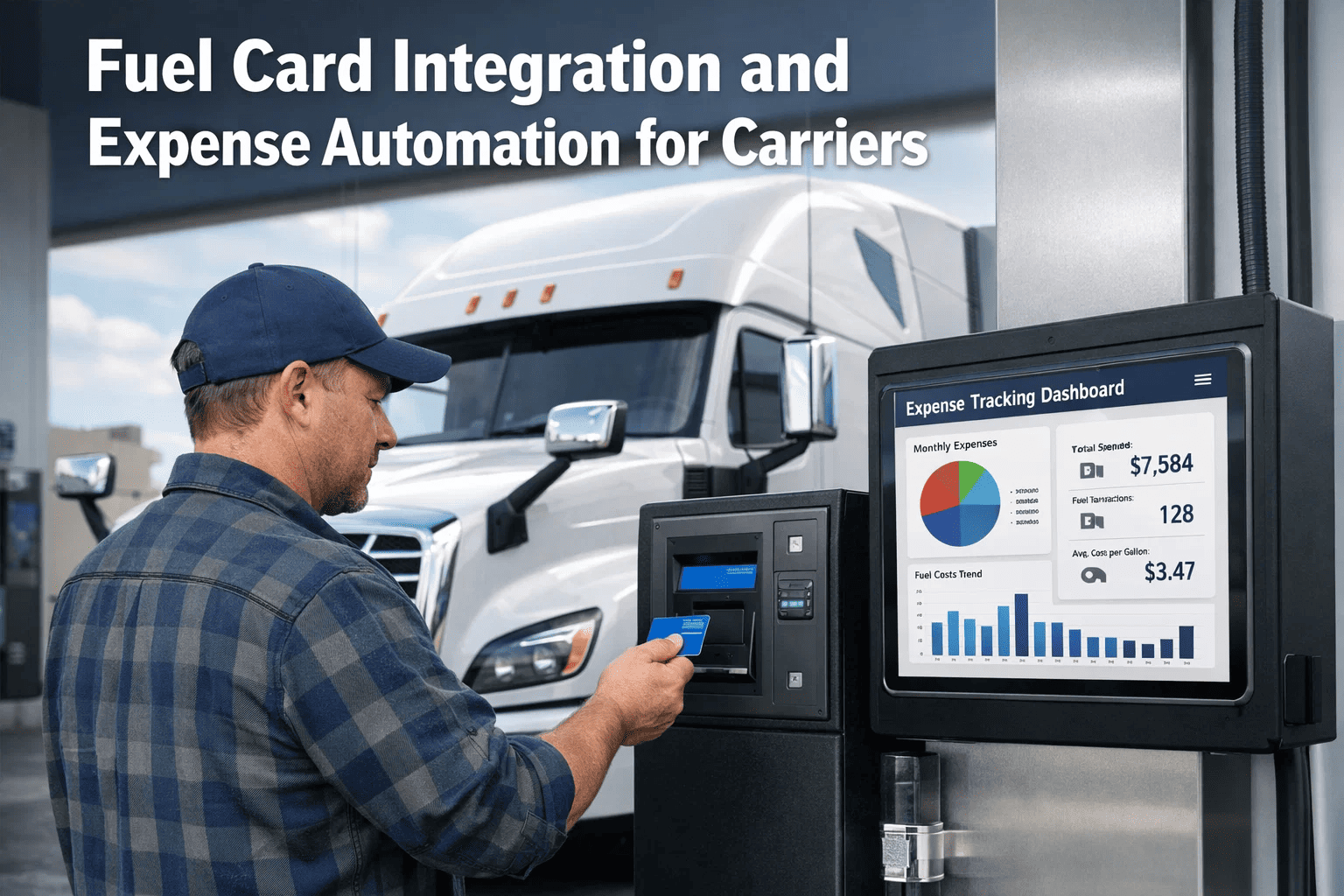
FleetRabbit integrates directly with the major commercial fuel card networks used by transportation carriers, pulling transaction data automatically as purchases occur. The integration architecture is connection-based — not file import-based — meaning data flows continuously rather than requiring periodic manual exports and uploads that create the information lag that makes conventional fuel management reactive rather than proactive.
Direct API Connection to Fuel Card Network
FleetRabbit establishes a direct API connection between your existing fuel card account and the fleet management platform. Setup requires your card network credentials and takes less than 30 minutes. No changes to your card provider relationship, pricing agreement, or driver card issuance procedures are required. The integration pulls transaction data including timestamp, location, gallons purchased, fuel grade, price per gallon, and card number — providing the full transaction record that enables meaningful exception analysis.
Automatic Vehicle and Driver Attribution
Each incoming fuel transaction is automatically matched to the vehicle and driver associated with the card used — pulling from FleetRabbit's driver assignment and dispatch records for the relevant date and time. Purchase location is cross-referenced with vehicle GPS data where telematics integration is active, enabling automated detection of card-vehicle location mismatches that indicate potential unauthorized use. Attribution is fully automated — no manual assignment required from fleet managers or administrative staff.
Real-Time Policy Compliance Monitoring
FleetRabbit applies your fleet's configured fuel policy rules to each incoming transaction in real time — flagging purchases that exceed per-transaction volume limits, occur at unauthorized vendor categories, deviate from route-expected geographic zones, or fall outside approved time windows. Policy violations generate immediate alerts to fleet managers via the FleetRabbit dashboard and optional SMS or email notification — enabling same-day response rather than end-of-month discovery.
Automated Expense Categorization and Accounting Integration
Fuel transactions automatically populate FleetRabbit's expense ledger with full categorization — vehicle, driver, route, cost center, and GL account mapping based on the vehicle and driver record. Direct integration with accounting software platforms eliminates the manual export-import cycle that currently consumes administrative time and introduces reconciliation errors. Monthly fuel expense reports are generated automatically with full audit trail documentation for both internal review and external audit requirements.
Cost Analytics and Performance Reporting
FleetRabbit's analytics engine converts the continuous stream of attributed fuel transactions into structured performance metrics — fuel cost per mile by vehicle, driver, route, and fleet segment; trend analysis showing cost evolution over time; and benchmarking against fleet-wide averages and industry reference data. Fleet managers access these analytics through the FleetRabbit dashboard without running reports or building spreadsheets — the data is always current and always accessible in structured, decision-ready format.
Stop Managing Fuel Costs From Last Month's Statement. Take Control With Real-Time Transaction Intelligence.
FleetRabbit's fuel card integration eliminates the information lag that makes fuel expense management reactive. Connect your existing card relationship, configure your policy rules, and start receiving real-time transaction visibility and automated exception alerts from day one.
Fuel Theft and Unauthorized Use: How Real-Time Monitoring Changes the Recovery Equation
Fuel theft and misuse represent a material financial risk for carriers operating large card programs, with industry estimates suggesting that 3 to 7 percent of commercial fuel card spend is attributable to unauthorized use in fleets without active monitoring. The detection methodology determines whether this cost is a loss or a recoverable fraud event — and real-time integration changes that methodology entirely.
Location Mismatch Detection
When a fuel card transaction is processed at a location that does not correspond to the GPS-verified position of the assigned vehicle within a reasonable time and distance tolerance, FleetRabbit generates an immediate location mismatch alert. This is the primary detection mechanism for card lending — where a driver allows another person to use their assigned card at a different location. Same-hour detection enables card suspension before additional unauthorized purchases occur.
Volume Anomaly Flagging
FleetRabbit tracks historically normal fuel volumes per driver and vehicle based on tank capacity, route length, and consumption patterns. Purchases that exceed tank capacity, occur at abnormally short intervals relative to route mileage, or show unusual volume patterns compared to the vehicle's consumption baseline generate automated anomaly alerts. Volume anomaly detection catches reefer fuel theft — purchasing diesel under the over-the-road rate while billing the fleet — and pump manipulation schemes that generate inflated volume records.
Off-Hours Transaction Monitoring
Fuel purchases occurring outside of the driver's scheduled driving hours or at times inconsistent with the vehicle's operational status are flagged by FleetRabbit's time-window policy enforcement. When HOS data indicates a driver is in sleeper berth status and a fuel transaction appears under their card, the time-context mismatch triggers an immediate alert to fleet management for investigation. Off-hours transaction monitoring also catches weekend or overnight household fuel purchases made using commercial fleet cards.
Premium Fuel Unauthorized Upgrade
Fleet cards configured to approve diesel only can be used at multi-product pumps to purchase premium gasoline, DEF, or other non-authorized products. FleetRabbit's transaction detail monitoring — including product code from the card network — identifies fuel type violations in real time, enabling policy enforcement notification before the pattern becomes habitual across multiple drivers.
Driver-Level Fuel Efficiency Tracking: From Cost Center to Coaching Opportunity
The single most controllable driver of fuel cost in commercial trucking is driver behavior — speed management, idle time, shifting technique, and load management decisions that individually appear minor but aggregate to fuel efficiency differentials of 15 to 25 percent between top and bottom performers in equivalent equipment and routes. FleetRabbit's integrated fuel analytics enable the identification, measurement, and coaching of these behavioral drivers at the individual driver level with continuous data.
Miles Per Gallon by Driver
FleetRabbit calculates rolling MPG averages for each driver across assigned vehicles, normalized for load weight, terrain, and route type where this data is available through telematics integration. Normalization removes the confounding effect of route variation — enabling fair comparison of fuel efficiency performance between drivers running different run types and accurate identification of behavioral underperformance separate from route or load factors.
Idle Fuel Cost Attribution
Where telematics integration provides idle time data, FleetRabbit calculates the fuel cost of excess idle time per driver — converting idle hours into dollar cost at current fuel prices and displaying this attribution on driver performance scorecards. Quantifying idle cost in dollar terms rather than hours creates more actionable context for coaching conversations and more impactful driver self-monitoring when displayed in the mobile application.
Fuel Cost Per Route Segment
FleetRabbit's dispatch integration enables attribution of fuel spend to specific route segments and load movements — enabling fleet managers to identify routes where fuel cost consistently exceeds estimates, drivers whose performance varies significantly across route types they both operate, and loads where fuel efficiency losses are consistently concentrated. Route-level fuel analytics inform both driver coaching and dispatch optimization decisions.
Fleet Benchmarking and Cohort Comparison
Individual driver fuel efficiency is benchmarked against the fleet-wide distribution for drivers in comparable route categories — providing context that makes coaching conversations fair and motivating rather than based on absolute comparisons between drivers in inherently different operating conditions. Drivers performing in the bottom quartile of their route-type cohort are automatically flagged for coaching review. Top-quartile performers are identified for recognition and potential mentorship program participation.
Expense Automation: Eliminating the Administrative Burden of Fuel Cost Management
Beyond the fraud prevention and performance analytics dimensions of fuel card integration, the operational efficiency gains from automating the currently manual fuel expense workflow are substantial and immediately realized. Fleet managers and administrative staff in conventional operations spend 8 to 15 hours weekly on fuel-related administrative tasks that FleetRabbit's integration eliminates entirely.
Administrative Tasks Eliminated by FleetRabbit Integration
Manual Receipt Collection and Matching
Paper fuel receipts collected from drivers, matched to card statement line items, and filed for accounting record purposes — typically consuming 3 to 5 hours weekly per administrative staff member across a 40 to 60 truck fleet. Fully eliminated through automated transaction attribution in FleetRabbit.
Monthly Card Statement Reconciliation
Manual comparison of card statement line items against expected vehicle assignments, driver records, and route schedules to identify discrepancies — typically a full-day process for a mid-size fleet performed by a finance manager or controller. Replaced by automated attribution with continuous exception flagging in FleetRabbit.
Fuel Cost Allocation to Cost Centers
Manual calculation and allocation of fuel spend to specific vehicles, divisions, or customer load accounts for internal accounting and customer invoicing — subject to calculation errors and requiring rework when attribution errors are discovered. Automated through FleetRabbit's GL mapping and direct accounting integration.
Fuel Efficiency Reporting for Management
Periodic compilation of fuel consumption metrics from multiple data sources into management reports — typically prepared monthly or quarterly using spreadsheet models that require significant data manipulation. Replaced by FleetRabbit's always-current dashboard analytics available to management on demand without report preparation.
Financial Impact: Quantifying the Return on Fuel Card Integration
The financial case for implementing FleetRabbit's fuel card integration is compellingly direct — the three primary value streams each independently justify the platform cost at typical fleet sizes, and the combined return is among the highest available from any fleet technology investment in commercial transportation.
Value Stream 1: Unauthorized Spend Reduction
A 75-truck carrier with a $2.8 million annual fuel spend and an estimated 4 percent unauthorized use rate is losing approximately $112,000 annually to card misuse, theft, and policy violations — most of which is undetected under conventional monthly reconciliation. FleetRabbit's real-time monitoring and exception alerting, based on industry-observed results, recovers 70 to 80 percent of identifiable unauthorized spend through same-day detection and card management response.
Estimated annual recovery: $78,000 to $90,000 in previously undetected unauthorized fuel spend
Value Stream 2: Driver Efficiency Improvement
A 75-truck fleet where structured driver fuel efficiency coaching — enabled by FleetRabbit's driver-level analytics — improves average fleet MPG by 4 percent. At 120,000 miles per truck annually and 6.5 MPG baseline average with diesel at $3.85 per gallon, a 4 percent MPG improvement generates a per-truck annual fuel saving of approximately $2,200 — across 75 trucks totaling $165,000 annually in direct fuel cost reduction.
Estimated annual saving: $140,000 to $165,000 from systematic driver efficiency coaching enabled by attribution data
Value Stream 3: Administrative Cost Elimination
A mid-size carrier with three administrative staff members each spending an average of 8 hours per week on fuel-related reconciliation, receipt matching, expense coding, and report preparation at a fully-loaded labor cost of $32 per hour. FleetRabbit automation eliminates approximately 80 percent of this time — representing $31,000 annually in direct labor cost reduction that can be redirected to higher-value finance and operations support functions.
Estimated annual saving: $25,000 to $31,000 in administrative labor cost directly attributed to fuel expense management activities
How FleetRabbit Presents Fuel Data to Fleet Managers and Executives
The value of real-time fuel transaction data depends entirely on how it is presented to the managers and executives who need to act on it. FleetRabbit's fuel management dashboard architecture is designed for operational decision-making — not accounting reconciliation — organizing data in role-appropriate views that enable action without requiring analytical expertise from the users consuming the information.
Fleet Manager Fuel Dashboard
Finance and Operations Executive View
Vehicle-Level Fuel Analytics
FleetRabbit Fuel Integration Across Transportation Fleet Operations
Fuel cost dynamics and management priorities vary significantly across different carrier segments within the transportation industry. FleetRabbit's fuel card integration and analytics platform serves these distinct operational contexts through flexible configuration rather than a one-size-fits-all approach to monitoring rules and reporting structures.
Long-Haul Truckload Carriers
Highway fuel efficiency management focuses on speed management coaching, idle reduction programs, and route-level fuel price optimization. FleetRabbit's fuel card integration enables carriers to monitor driver speed-related efficiency indicators through telematics data correlation, track idle cost per driver for coaching programs, and identify route segments where fuel cost-per-mile consistently exceeds expected standards — enabling both driver coaching and route planning adjustments.
LTL and Regional Distribution
Multi-stop regional operations generate complex fuel attribution challenges — multiple daily transactions per driver, variable route lengths, and mixed urban and highway driving cycles that create significant efficiency variance. FleetRabbit's stop-level route integration enables per-delivery fuel cost attribution for customer invoicing and cost recovery programs, and identifies urban idle patterns that represent the highest-value coaching opportunity in stop-and-go operating environments.
Owner-Operator and Leased-On Programs
Owner-operators using fleet-issued fuel cards create distinct monitoring requirements — fuel purchases must be reconciled against load settlements, card limits managed against operator status and advance settlement structures, and efficiency metrics contextualized against independent operator accountability frameworks. FleetRabbit's owner-operator configuration applies appropriate monitoring parameters for leased-on driver populations while maintaining the same real-time visibility and exception alerting that protects carrier fuel program integrity.
Refrigerated and Specialized Carriers
Reefer operations generate dual fuel expense streams — tractor fuel and diesel-powered refrigeration unit fuel — that require separate monitoring, attribution, and efficiency analysis. FleetRabbit's multi-fuel tracking capability supports separate monitoring of tractor and reefer fuel consumption, enabling efficiency analysis specific to refrigeration unit operation and identification of reefer-specific misuse patterns that differ in both detection methodology and financial impact from tractor fuel management.
Frequently Asked Questions: Fuel Card Integration and Expense Automation for Carriers
Which fuel card networks does FleetRabbit integrate with for real-time transaction data?
FleetRabbit integrates directly via API with the major commercial fuel card networks serving the North American trucking industry. Where direct API integration is available with a carrier's card provider, real-time transaction feed is the standard delivery method. For card programs without direct API connectivity, FleetRabbit supports structured data import at defined intervals. Fleet managers do not need to change card provider relationships to implement FleetRabbit — the platform accommodates existing card partnerships. Contact FleetRabbit during onboarding to confirm integration support for your specific card program.
How does FleetRabbit verify that a fuel purchase location corresponds to the assigned vehicle's actual position?
FleetRabbit compares the GPS coordinates of the fuel station where the card transaction occurred against the vehicle's GPS position as recorded by the connected telematics system at the time of purchase. The comparison applies a configurable tolerance threshold — typically a 2 to 5 mile radius — to account for normal GPS positioning variation and cases where drivers fuel adjacent to their route before or after a delivery. Purchases that exceed the location mismatch threshold generate an automated alert. This feature requires active GPS telematics integration in addition to fuel card integration.
Can FleetRabbit automate fuel expense entry into QuickBooks, Sage, or other accounting platforms?
Yes. FleetRabbit's accounting software integration covers the major platforms used by transportation carriers, including QuickBooks, Sage, and others accessible through the integration layer. Fuel transactions attributed and categorized within FleetRabbit flow automatically into the configured accounting system with the correct GL account mapping, cost center assignment, and period allocation — eliminating manual data entry and the reconciliation discrepancies it produces. Integration setup is handled during the FleetRabbit onboarding process with direct accounting system credential configuration.
How does the exception alerting system work, and who receives notifications of flagged transactions?
FleetRabbit's exception alerting applies the policy rules configured for your fleet to each incoming transaction in real time. When a transaction triggers a policy violation — location mismatch, volume anomaly, off-hours purchase, unauthorized product type, or card limit exceedance — an alert is generated immediately. Alert recipients are configurable per fleet — typically the fleet manager and optionally the finance manager. Notifications are delivered through the FleetRabbit dashboard, and optionally via email. The alert includes the full transaction detail, the specific policy rule violated, and the driver and vehicle attribution for immediate investigation context.
Does FleetRabbit's fuel efficiency analytics account for differences in route difficulty and load weight when comparing drivers?
FleetRabbit's driver efficiency benchmarking applies cohort-based comparison — grouping drivers by route type, operating region, and vehicle class for fair comparison — rather than a flat fleet-wide average that would unfairly penalize drivers in more demanding operating environments. Where telematics integration provides load weight or terrain data, this information is incorporated into normalized efficiency calculations. The explicit goal of FleetRabbit's analytics design is ensuring that performance comparisons used in coaching conversations are perceived as fair by drivers and managers alike — a prerequisite for coaching effectiveness.
How long does implementation of FleetRabbit's fuel card integration take, and what is required from the fleet to complete it?
Fuel card API integration setup is typically completed within one to five business days depending on the card network and the carrier's account configuration. Fleet-side requirements include fuel card network account credentials for FleetRabbit's integration configuration, vehicle and driver roster data import for attribution setup, and fuel policy rule configuration reflecting the carrier's existing card program guidelines. The FleetRabbit onboarding team guides the setup process and tests transaction feed accuracy before the integration goes live. Most carriers receive their first real-time transaction feed within the first week of implementation.
Fuel Is Your Largest Variable Cost. Real-Time Integration Makes It Your Most Visible and Controllable One.
The transportation carriers achieving fuel cost leadership in their markets are not operating on better routes or newer equipment alone — they are managing fuel spend as an active, real-time operational discipline rather than a periodic accounting exercise. FleetRabbit's fuel card integration provides the transaction visibility, automated policy enforcement, and driver-level analytics that make this management approach scalable without adding administrative headcount.
The financial return — from unauthorized spend recovery, driver efficiency improvement, and administrative cost elimination — typically exceeds platform cost by a factor of eight to fifteen at mid-size carrier scale. The program pays for itself within the first quarter for most implementations while delivering compounding benefits as driver coaching effectiveness and fraud deterrence effects accumulate over time.
Take Control of Your Fuel Spend Starting Today With FleetRabbit Integration
FleetRabbit connects directly to your existing fuel card program, delivers real-time transaction visibility, automates exception alerting and expense reconciliation, and provides the driver-level analytics that make fuel cost a managed outcome rather than an unpredictable variable. No card relationship change required. No administrative overhaul needed.