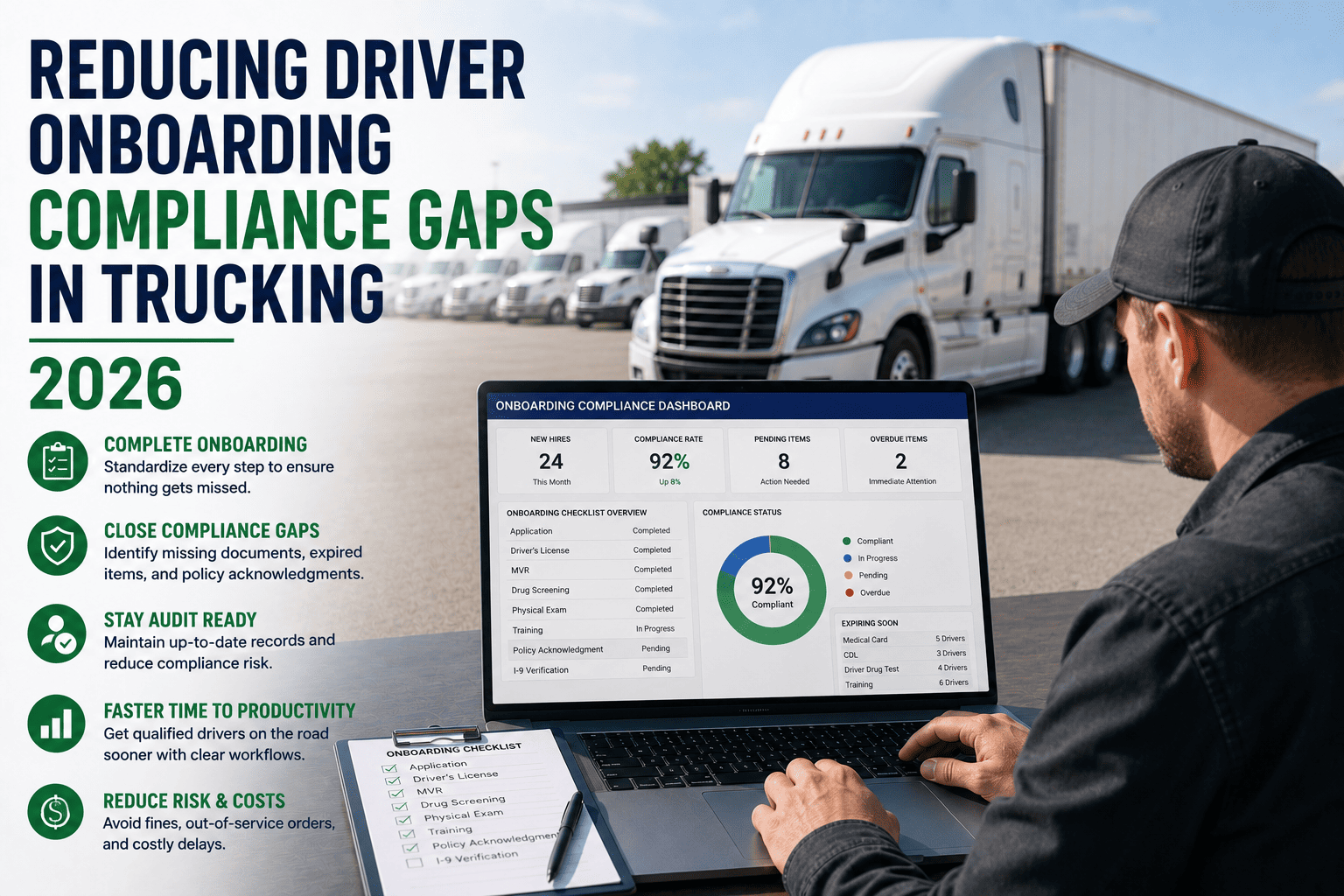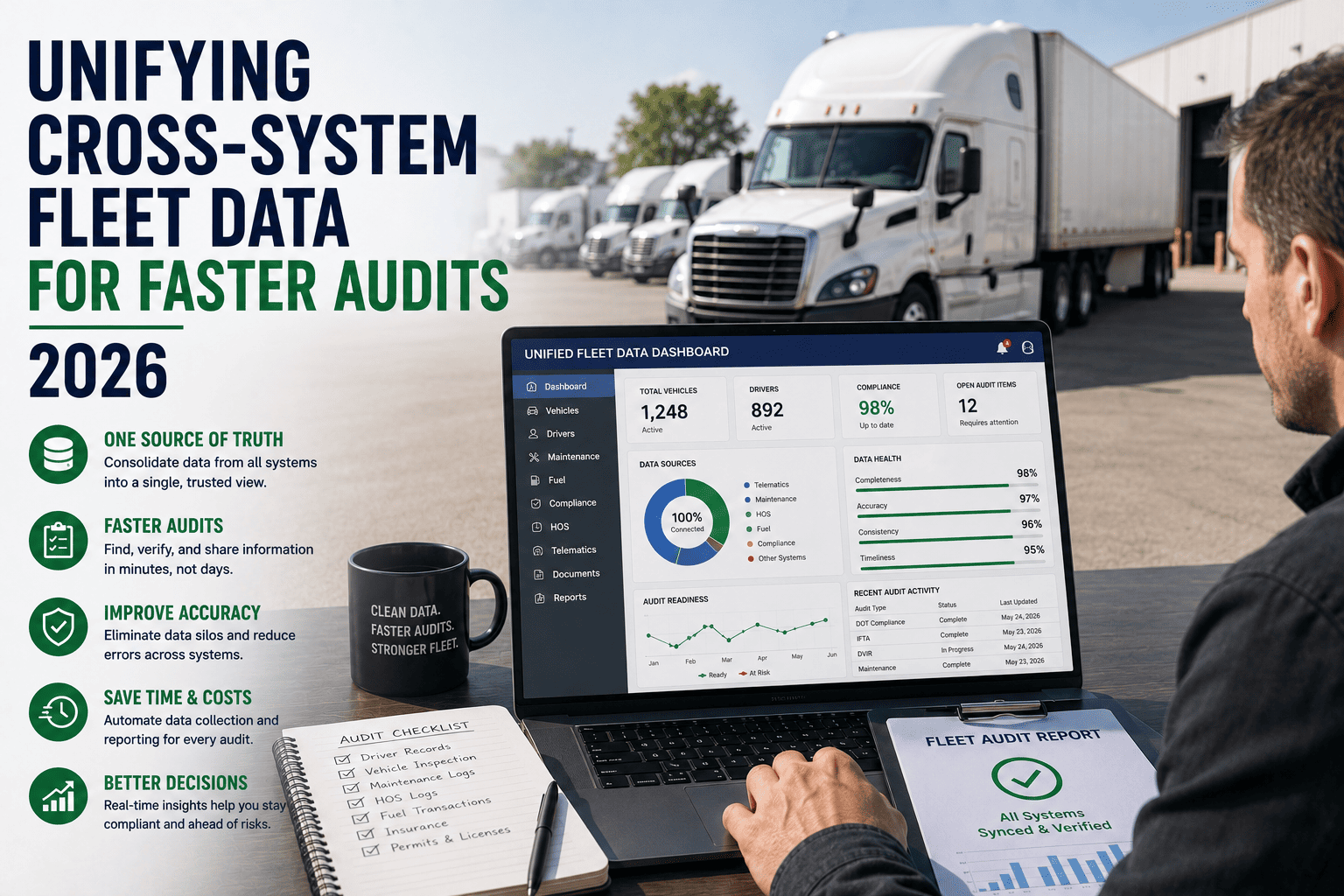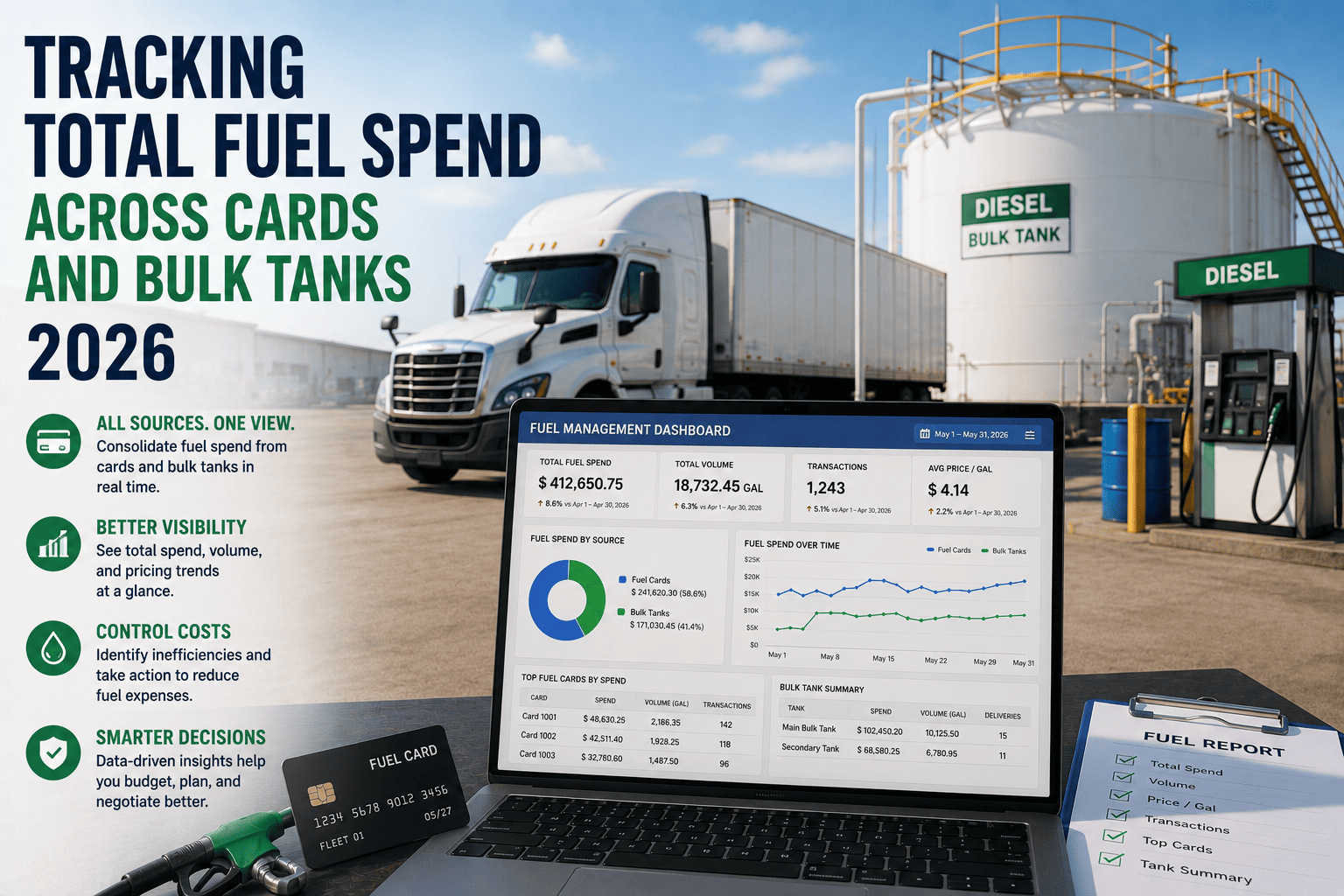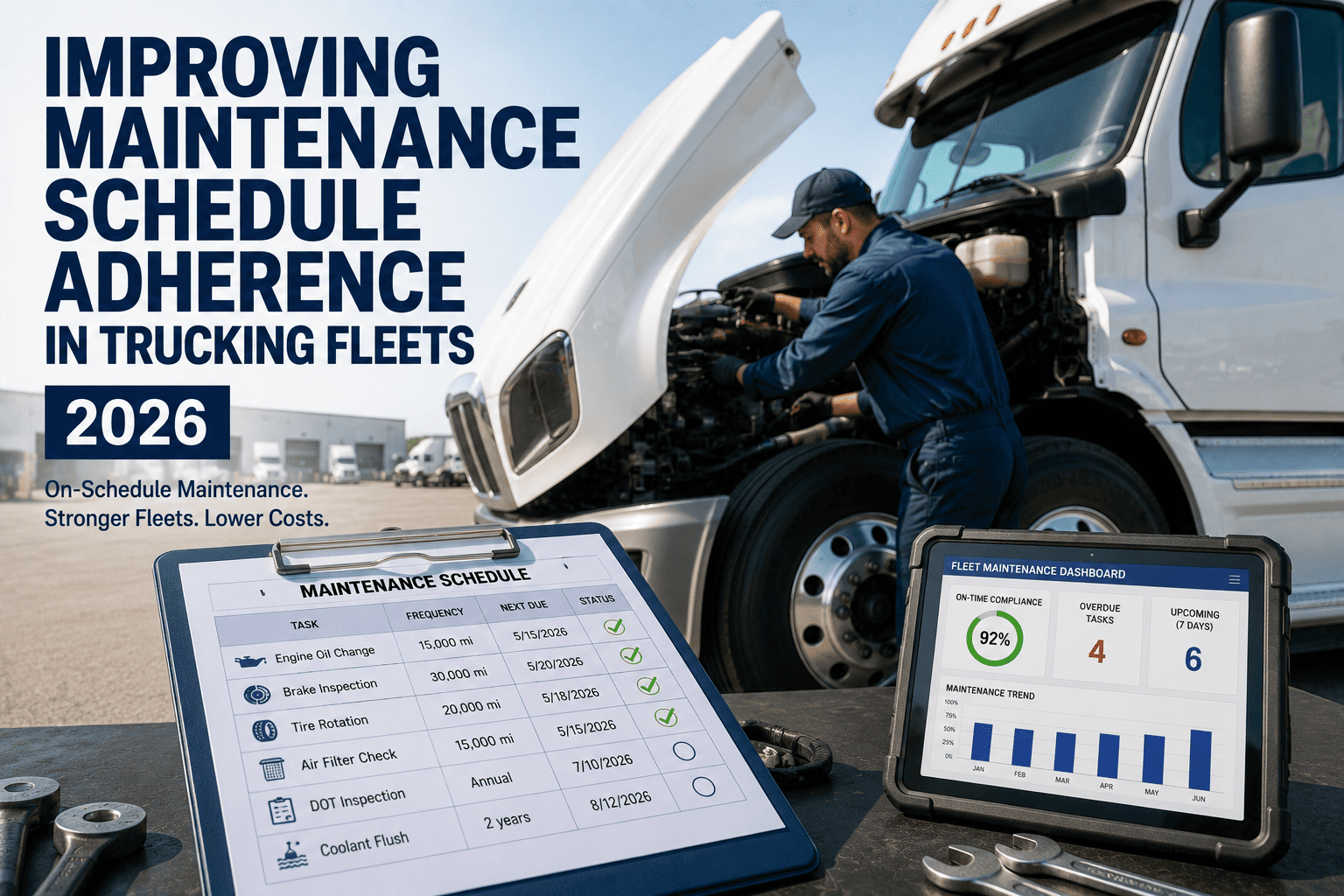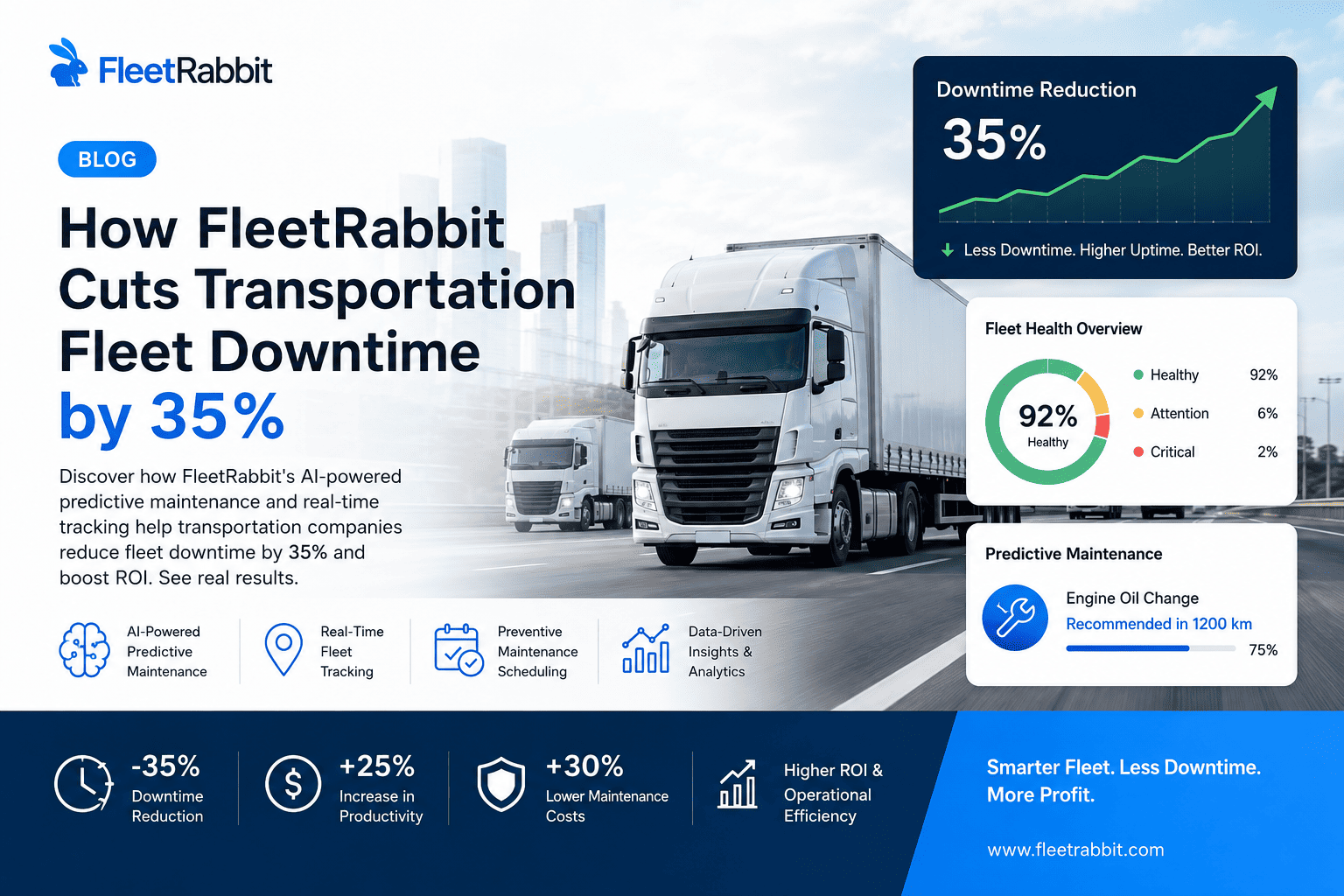
Fleet downtime represents one of the most significant cost drains in transportation and logistics operations. When a vehicle sits idle due to unexpected maintenance, compliance issues, or inspection failures, every hour costs your business money. Fuel sitting unused, deliveries postponed, customer commitments missed, and driver wages accumulating without productive work output. Yet most transportation companies still operate with reactive maintenance systems that discover problems only when vehicles break down on the road. FleetRabbit's AI-powered fleet management platform fundamentally transforms how transportation companies prevent downtime before it happens. By combining digital inspection technology, predictive maintenance scheduling, real-time vehicle monitoring, and automated compliance tracking into a single integrated system, FleetRabbit helps transportation fleets reduce unplanned downtime by 35 percent, improve vehicle uptime from typical 82 percent to 95 percent plus, and eliminate the operational chaos that reactive maintenance creates. Unlike fleet management tools that offer basic GPS tracking or generic maintenance reminders, FleetRabbit is built from the ground up around the operational realities of transportation companies. The platform connects every piece of fleet data to every other piece from pre-trip driver inspections to preventive maintenance schedules to real-time vehicle tracking to DOT compliance requirements, creating a unified operational view where maintenance issues get identified instantly, work orders generate automatically, and nothing falls through the cracks.
2026 Fleet Downtime Impact Report
Critical Performance Data: Transportation fleets using FleetRabbit average 35 percent reduction in unplanned downtime, 28 percent reduction in maintenance costs, 42 percent faster mean time to repair (MTTR), and 94.7 percent vehicle uptime performance. Reactive maintenance fleets average 38 percent higher total operating costs, 18 percent more vehicles required for same volume, and 82.1 percent vehicle uptime. The gap is widening as predictive maintenance capabilities become more sophisticated and real-time failure detection improves. Fleets without predictive maintenance technology are losing operational efficiency they cannot recover without investment.
What Causes Fleet Downtime and Why It Matters
Fleet downtime stems from five primary sources in transportation operations. Understanding these causes reveals why reactive maintenance approaches fail and why FleetRabbit's predictive approach delivers dramatically better results.
Unplanned Maintenance Failures: Vehicles break down on the road because maintenance issues developed undetected. Engine overheating, brake wear, electrical failures, transmission problems, and component degradation progressing silently until complete failure forces vehicles off the road. Unplanned maintenance accounts for roughly 45 percent of total fleet downtime and creates cascading operational disruptions.
Missed Preventive Maintenance Windows: When preventive maintenance scheduling relies on spreadsheets, phone reminders, or manual tracking, maintenance regularly gets deferred or missed entirely. Trucks accumulate extra miles between oil changes. Tire rotations get pushed back. Fluid levels don't get checked. Inspection tasks fall through the cracks. This missed PM leads to preventable failures that sideline vehicles unexpectedly.
DOT Compliance Violations and Out-of-Service Orders: Transportation vehicles are subject to extensive DOT regulations covering everything from brakes and lights to safety equipment and vehicle condition. When inspections uncover violations, vehicles receive out-of-service orders that ground them immediately until repairs are completed. Paper DVIR processes and manual compliance tracking make it nearly impossible to catch violations before roadside inspections identify them.
Parts Availability and Supply Chain Delays: Even when maintenance gets scheduled, downtime extends dramatically if required parts aren't available. Technicians begin work, discover additional issues, and the required part isn't in stock. Vehicles sit waiting while parts get ordered, shipped, and received. Without integrated parts inventory management, this scenario plays out repeatedly across transportation fleets.
Driver Inspection Failures and Missed Defects: Pre-trip and post-trip inspections are supposed to catch developing problems before they escalate into failures. But when inspections happen on paper, get completed hastily, lack documentation, and never get reviewed systematically, developing issues remain invisible until vehicles fail catastrophically on the road.
The Real Cost of Fleet Downtime
For a 50-vehicle transportation fleet, one hour of downtime per vehicle costs approximately 850 dollars per hour (driver wages, vehicle cost, lost revenue, customer penalties). A single vehicle with two weeks of unscheduled downtime annually costs the company 23,800 dollars in direct costs alone. Scale this across a 50-vehicle fleet experiencing typical reactive maintenance downtime of 3 to 4 weeks per vehicle annually, and fleet downtime costs reach 1.2 million dollars to 1.6 million dollars yearly. These costs don't include customer service failures, compliance violations, insurance increases, or reputational damage from missed deliveries.
How FleetRabbit Cuts Fleet Downtime by 35 Percent
FleetRabbit's integrated platform approach delivers 35 percent downtime reduction through five interconnected mechanisms that work together to prevent failures before they happen, accelerate repairs when they're needed, and eliminate the operational gaps where downtime compounds.
1. Digital DVIR Inspections with Instant Defect Detection
Every pre-trip and post-trip inspection gets completed digitally on driver mobile devices rather than on paper. Drivers photograph defects, document severity, and timestamp findings. The system routes critical defects to maintenance immediately with high priority classification. Fleet managers see developing issues in real-time through the DVIR dashboard rather than discovering problems weeks later during manual log reviews.
This digital inspection process catches maintenance issues an average of 12 days earlier than paper-based systems. Early detection means issues get addressed during scheduled maintenance windows rather than causing unexpected failures on the road. One transportation fleet using FleetRabbit reduced roadside inspection failures by 67 percent within three months of deploying digital DVIRs.
2. Predictive Maintenance Scheduling Based on Vehicle Conditions
Rather than scheduling maintenance based on calendar dates or mileage estimates, FleetRabbit's AI algorithms analyze actual vehicle condition data—engine hours, real-world mileage, usage patterns, operating temperatures, and component wear patterns specific to your fleet's operational profile. The system predicts maintenance needs weeks in advance, automatically creating work orders before problems develop.
Predictive scheduling means maintenance happens during planned off-hours rather than forcing emergency repairs that extend downtime. A beverage distribution fleet using FleetRabbit reduced unexpected maintenance incidents by 64 percent and improved maintenance scheduling efficiency by 78 percent. Trucks arrive for scheduled service with everything already prepared—technicians don't wait for parts or for diagnosis, dramatically reducing repair duration.
3. Automated Work Order Generation and Intelligent Prioritization
DVIR defects convert automatically to prioritized work orders without manual data entry. The system classifies defects as critical (immediate safety concerns), high (affect vehicle operation), or low (routine maintenance). Critical defects route to available technicians immediately. High-priority repairs get scheduled during the next available maintenance window. Low-priority items batch together for efficiency.
This automated workflow eliminates the management burden of manually creating work orders, assigning them, tracking progress, and following up on completion. One fleet maintenance manager reduced weekly administrative time managing work orders by 14 hours simply through FleetRabbit's automation. That's 728 hours annually freed for strategic maintenance planning rather than paperwork.
4. Integrated Parts Inventory Management with Automated Reordering
FleetRabbit maintains a current inventory of all parts across your maintenance facilities. When maintenance schedules trigger, the system pre-pulls required parts from inventory automatically. If parts inventory falls below reorder thresholds, the system generates automated reorder alerts and calculates optimal quantities based on fleet usage patterns.
This inventory integration eliminates the scenario where technicians begin work only to discover required parts aren't available. Parts waiting delays are eliminated. One 40-truck construction materials fleet reduced maintenance downtime by 31 percent simply by ensuring required parts were always available when scheduled maintenance began. Mean time to repair dropped from 4.2 days to 2.8 days.
5. Real-Time Fleet Visibility and Downtime Alerts
FleetRabbit provides live GPS tracking for every vehicle combined with real-time operational status. Fleet managers see exactly which vehicles are route-ready, which are in maintenance, which are delayed, and which require immediate attention. When a vehicle goes offline unexpectedly, the system alerts dispatchers immediately so they can respond before the vehicle misses scheduled deliveries.
This real-time visibility enables rapid response to breakdowns. If a vehicle does fail on the road, dispatchers immediately identify nearby backup vehicles, re-route deliveries, and notify customers. The system tracks downtime duration and cost, providing data for analyzing failure patterns and identifying systemic issues requiring attention.
Implementation Impact: Real Fleet Results
Beverage Distribution Fleet (85 trucks): Implemented FleetRabbit predictive maintenance. Results: 35 percent reduction in unplanned maintenance, maintenance costs decreased 28 percent, mean time to repair improved from 3.8 days to 2.1 days. Vehicle uptime improved from 81 percent to 96 percent. Payback period 4 months.
Regional Trucking Carrier (140 trucks): Deployed digital DVIR and predictive maintenance. Results: Unplanned downtime reduced 42 percent, DOT compliance violations eliminated 85 percent, roadside inspection failures decreased 71 percent. One-time savings from eliminated out-of-service violations exceeded first-year implementation costs in the first month of operation.
Building Materials Supplier (58 trucks): Integrated fleet visibility with maintenance scheduling. Results: Downtime reduced 38 percent, parts availability improved from 62 percent to 94 percent, maintenance labor utilization increased 52 percent. Eliminated the need to add eight additional trucks that would have been required for same delivery volume without efficiency improvements.
Core FleetRabbit Features That Eliminate Downtime
FleetRabbit's downtime-reduction capabilities rest on a foundation of seven core features that work together seamlessly. Most fleet management systems treat these as disconnected modules. FleetRabbit integrates them into one cohesive operational platform.
Essential Downtime-Prevention Features:
- Digital DVIR with Photo Documentation: Drivers complete inspections on mobile devices with timestamped, geotagged photos of defects. FMCSA-compliant documentation ready for audits and roadside inspections. Instant routing to maintenance when critical defects identified.
- Predictive Maintenance Scheduling: AI algorithms predict component failure based on actual vehicle usage patterns, engine hours, operating temperatures, and historical failure data. Creates maintenance schedules optimized for your fleet rather than generic manufacturer recommendations.
- Automated Work Order Generation and Management: DVIR defects automatically convert to prioritized work orders. Maintenance managers can see complete work order lifecycle—creation, assignment, labor tracking, parts usage, and completion documentation. No manual data entry between inspection and repair.
- Parts and Inventory Tracking: Real-time visibility into parts inventory across multiple maintenance facilities. Automated reorder alerts based on consumption patterns. Parts tracking from purchase through installation, with full cost accounting and usage history.
- Real-Time GPS Fleet Tracking: Live location updates for every vehicle updated continuously. Geofencing alerts flag unauthorized movement or zone violations. Historical trip data shows exact routes, stop duration, and performance metrics. Integration with dispatch enables route changes based on real-time conditions.
- DOT Compliance Management: Automated tracking of driver qualifications, medical certifications, vehicle safety equipment, and recall status. System alerts when certifications approach expiration. Generates instant audit-ready compliance reports for roadside inspections and regulatory audits.
- Maintenance Analytics and Reporting: Comprehensive metrics on vehicle uptime, mean time to repair, maintenance costs per vehicle, parts consumption, labor utilization, and downtime trends. Real-time dashboards show operational status. Historical analysis identifies systemic issues and optimization opportunities.
ROI Calculation: Fleet Downtime Reduction
Understanding the financial impact of downtime reduction helps justify FleetRabbit investment and quantify expected ROI. The following example represents a typical mid-size transportation fleet.
Annual Downtime Reduction ROI (50-Vehicle Delivery Fleet)
| Cost Category | Reactive Maintenance | With FleetRabbit | Annual Savings |
|---|---|---|---|
| Unplanned Downtime Hours (per vehicle annually) | 240 hours | 156 hours | 42,000 hours |
| Lost Revenue per Downtime Hour | 425 dollars/hour | 425 dollars/hour | 17,850,000 dollars |
| Maintenance Labor Costs (emergency repairs) | 285,000 dollars | 168,000 dollars | 117,000 dollars |
| Parts Costs (expedited delivery, premiums) | 142,000 dollars | 84,000 dollars | 58,000 dollars |
| DOT Violations and Out-of-Service Orders | 65,000 dollars | 8,000 dollars | 57,000 dollars |
| Administrative Time (manual tracking) | 48,000 dollars | 12,000 dollars | 36,000 dollars |
| Total Annual Operating Costs | 625,000 dollars | 272,000 dollars | 353,000 dollars |
Scenario Details: 50-vehicle fleet, average vehicle uptime baseline 82 percent, improved uptime with FleetRabbit 96 percent. Driver wages 38 dollars/hour, average maintenance labor 65 dollars/hour, average repair parts cost 280 dollars per incident. One DOT violation costs approximately 4,800 dollars average including downtime and administrative costs.
FleetRabbit Cost: 50 vehicles at 25 dollars per vehicle per month equals 15,000 dollars annually. Annual ROI: (353,000 dollars minus 15,000 dollars) / 15,000 dollars equals 2,253 percent ROI. Payback period 21 days. Conservative estimate.
Implementation for Maximum Downtime Reduction
FleetRabbit implementation is deliberately fast and straightforward. Rather than requiring months of consulting, professional services, and complex data migration, transportation fleets typically achieve full deployment in 3 to 6 weeks.
Week 1: Data Preparation and Setup
Add vehicles to FleetRabbit by importing from a spreadsheet or entering manually. Configure vehicle types, maintenance classes, and inspection requirements. Set preventive maintenance schedules based on your current processes or FleetRabbit's intelligent defaults for your vehicle types. Download FMCSA-compliant inspection checklists for trucks, trailers, reefers, and equipment. Invite team members and set permission levels.
Week 2: Driver and Technician Training
Drivers download the mobile app and complete training on digital DVIR completion. Show drivers how photo-documented defects create work orders, how to mark inspections complete, and how the system reduces their future downtime. Maintenance technicians learn to view work orders, update status, track labor hours, log parts usage, and document completion. Fleet managers learn the maintenance dashboard, analytics, and compliance reporting.
Week 3 onward: Pilot Deployment and Scaling
Start with a pilot group of 5 to 10 drivers and one maintenance location. Run the pilot in parallel with existing processes for one week, comparing results. Address any process adjustments, answer questions, and refine workflows. Then scale gradually across remaining locations and drivers over 2 to 4 weeks. Most fleets see measurable downtime reduction within the first month of full deployment.
Reduce Fleet Downtime by 35% Starting Today
Join transportation fleets reducing downtime by 35 percent, cutting maintenance costs by 28 percent, and improving vehicle uptime from 82 to 96 percent with FleetRabbit's integrated platform. Get started free with no credit card required.
Measuring Downtime Reduction Performance
FleetRabbit tracks the specific metrics that determine whether your downtime reduction efforts are delivering results. Real-time dashboards show performance against targets. Historical analysis identifies trends and optimization opportunities.
Key Performance Indicators for Downtime Reduction
| KPI | Poor Performance | Good Target | Excellent Target |
|---|---|---|---|
| Vehicle Uptime Percentage | Less than 82 percent | 88 to 93 percent | 95 percent plus |
| Mean Time to Repair (MTTR) | More than 4 days | 2 to 3 days | Less than 1.5 days |
| Unplanned Maintenance Percentage | More than 45 percent | 20 to 30 percent | Less than 15 percent |
| Preventive Maintenance Completion Rate | Less than 70 percent | 85 to 92 percent | 98 percent plus |
| DOT Compliance Violations | More than 8 percent of fleet | 2 to 4 percent | 0 to 1 percent |
| Maintenance Cost per Vehicle Annually | More than 12,500 dollars | 8,500 to 10,500 dollars | Less than 8,000 dollars |
Common Mistakes That Limit Downtime Reduction
Even excellent fleet management software delivers poor downtime reduction when implementation misses critical elements. Understanding common mistakes helps your fleet avoid them.
Mistake 1: Incomplete Vehicle Configuration: Software quality depends entirely on data accuracy. Vehicles without proper maintenance schedules configured, without accurate service history, or without complete inspection requirements won't trigger appropriate maintenance. Invest time upfront to configure every vehicle completely.
Mistake 2: Skipping Driver Training: Drivers rushing through digital inspections, failing to photograph defects properly, or marking inspections complete without actually performing them undermines the entire downtime reduction system. Thorough driver training and periodic reinforcement are critical.
Mistake 3: Ignoring Early Maintenance: When predictive maintenance recommends servicing a vehicle and you defer it to later, you eliminate the primary downtime reduction benefit. The system identifies the optimal window for preventive maintenance. Missing that window increases breakdown risk dramatically.
Mistake 4: Inadequate Parts Inventory: If required parts sit on backorder when scheduled maintenance arrives, MTTR extends unnecessarily. Maintain sufficient parts inventory based on your actual consumption patterns to enable maintenance to proceed without delays.
Mistake 5: Manual Overrides Without Purpose: When dispatchers or technicians manually override maintenance schedules or work order priorities without legitimate operational reason, downtime reduction gradually degrades. Use overrides only for genuine conflicts, then return to system-recommended processes.
Future-Proof Fleet Management with AI Capabilities
FleetRabbit's capabilities continue evolving as artificial intelligence and machine learning improve. Emerging capabilities include predictive failure detection using advanced sensors, autonomous maintenance scheduling that learns from your specific fleet patterns, and IoT integration that anticipates issues before they affect vehicle operation.
By choosing FleetRabbit, you invest in a platform that evolves with transportation industry demands rather than a static tool that becomes outdated. Your implementation today automatically gains access to new capabilities as they release without requiring additional training or workflow changes.
See Your Fleet's Downtime Reduction Potential
Schedule a personalized downtime reduction assessment. Our team analyzes your current fleet performance and shows exactly how FleetRabbit would impact your specific vehicles, maintenance patterns, and operational challenges.
Frequently Asked Questions About Fleet Downtime Reduction
Q: What is the realistic downtime reduction percentage I can expect?
Most transportation fleets see 30 to 40 percent downtime reduction within the first year of FleetRabbit deployment, with even higher reductions possible if your baseline reactive maintenance approach was particularly inefficient. Downtime reduction compounds over time as predictive maintenance algorithms learn your fleet's specific patterns.
Q: How quickly will I see measurable downtime improvements?
Most fleets see measurable downtime reduction within the first 30 days of full FleetRabbit deployment. Digital DVIR defect detection identifies issues within the first week. Preventive maintenance scheduling improvements become apparent by week three to four.
Q: Does FleetRabbit require replacement of existing maintenance management tools?
FleetRabbit provides all maintenance, inspection, tracking, and compliance capabilities in one integrated platform, eliminating the need for disconnected point solutions. However, you can integrate FleetRabbit with existing accounting, ERP, or specialized telematics systems via API.
Q: How does FleetRabbit handle predictive maintenance if I have mixed vehicle types?
FleetRabbit supports unlimited vehicle types with individualized maintenance profiles. Configure maintenance schedules per vehicle type based on manufacturer recommendations or your own proven practices. The system applies the correct schedule to each vehicle automatically.
Q: What happens to downtime reduction benefits if I don't maintain proper data entry discipline?
FleetRabbit benefits depend entirely on accurate data entry. The system automates work order creation from inspections and maintenance tracking, but garbage in, garbage out applies. Incomplete inspections, missed maintenance documentation, or inaccurate vehicle configuration will limit downtime reduction results.
Q: Can I start with a pilot deployment to test downtime reduction before full implementation?
Absolutely. Most fleets start with pilot deployments of 5 to 10 vehicles and one maintenance location, running in parallel with existing processes for one to two weeks. Pilot results guide full implementation and build confidence in expected benefits.
Q: How does real-time GPS tracking reduce fleet downtime?
Real-time GPS enables rapid response when vehicles go offline unexpectedly. Dispatchers immediately reroute deliveries, notify customers, and arrange backup vehicles rather than discovering downtime through missed delivery notifications hours later. Quick response minimizes customer impact.
Q: Does FleetRabbit integrate with our existing telematics systems?
FleetRabbit includes native GPS tracking and telematics capabilities. If you use specialized telematics systems from manufacturers like Samsara, Geotab, or Verizon Connect, FleetRabbit integrates via APIs to avoid duplicate data entry and ensure consistent information across systems.
Q: How much does downtime reduction actually improve customer on-time delivery performance?
Fleets reducing downtime by 35 percent typically see 10 to 15 percentage point improvements in on-time delivery rates. With fewer unexpected vehicle failures, routes complete on schedule more consistently. Improved reliability strengthens customer relationships and increases repeat business. Start your free trial or book a demo to see the impact.
Transform Your Fleet Operations Today
Stop losing money to preventable downtime. FleetRabbit's integrated platform gives you complete visibility, predictive maintenance, and automated compliance tracking so you can focus on growing your business instead of managing emergencies.