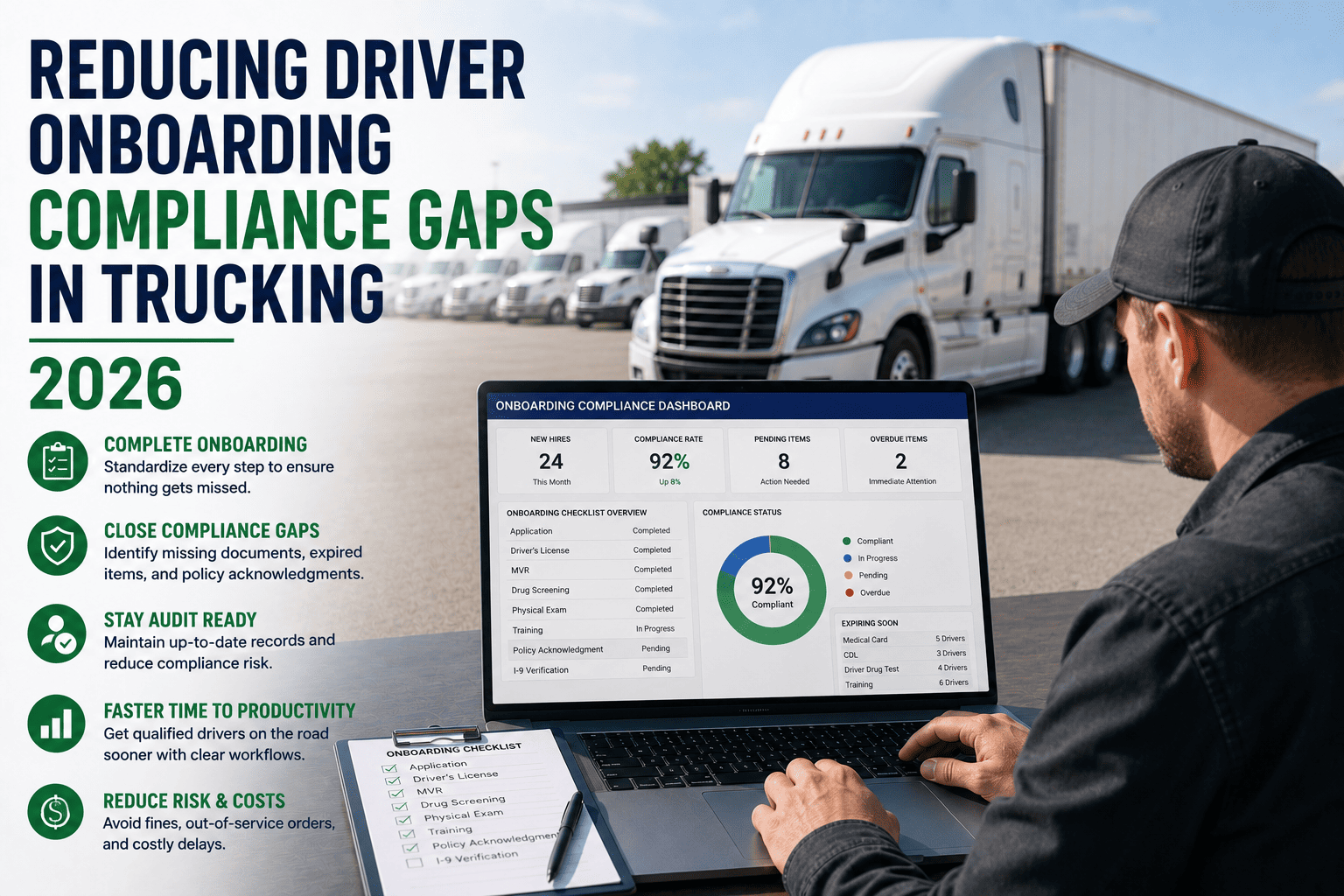
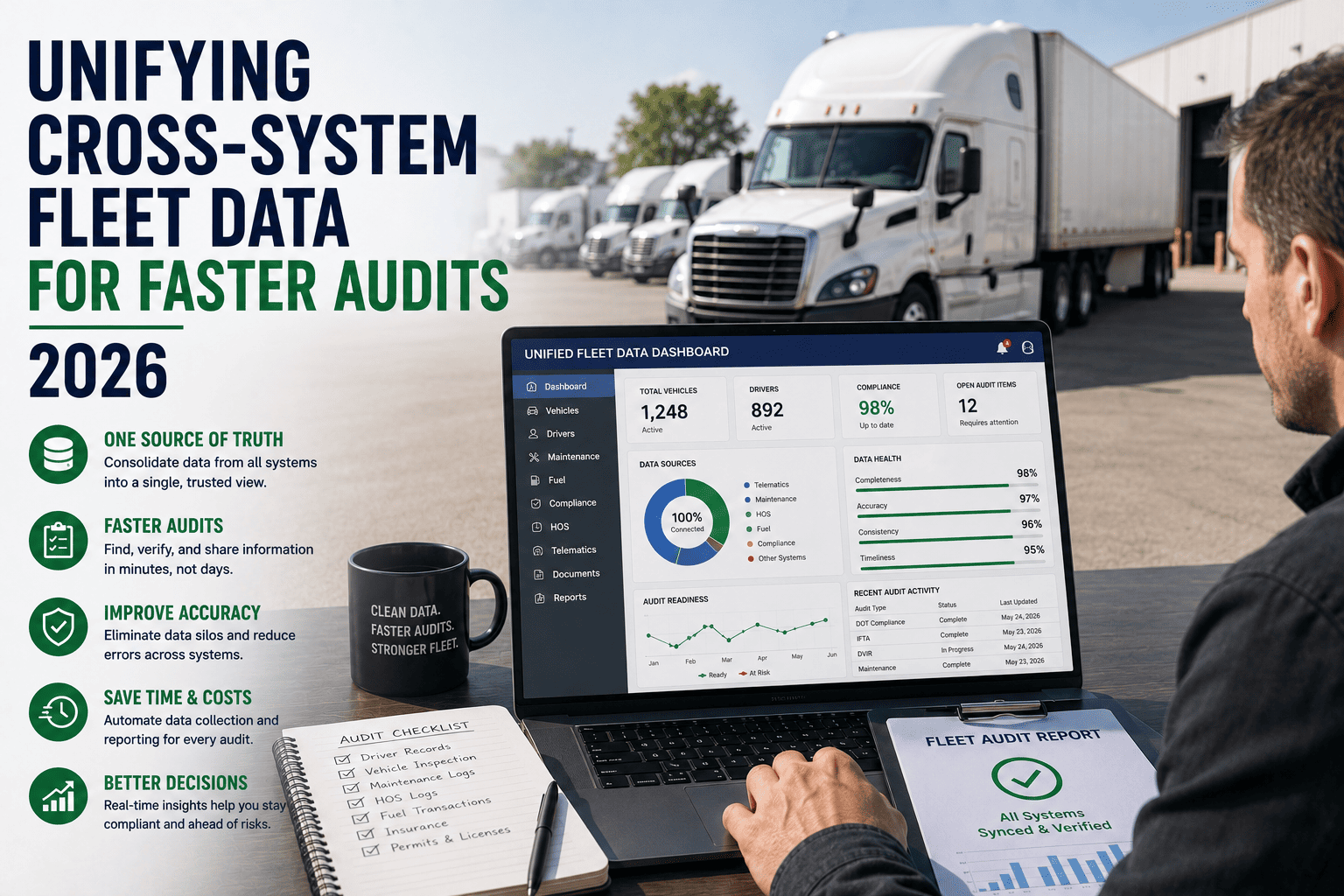
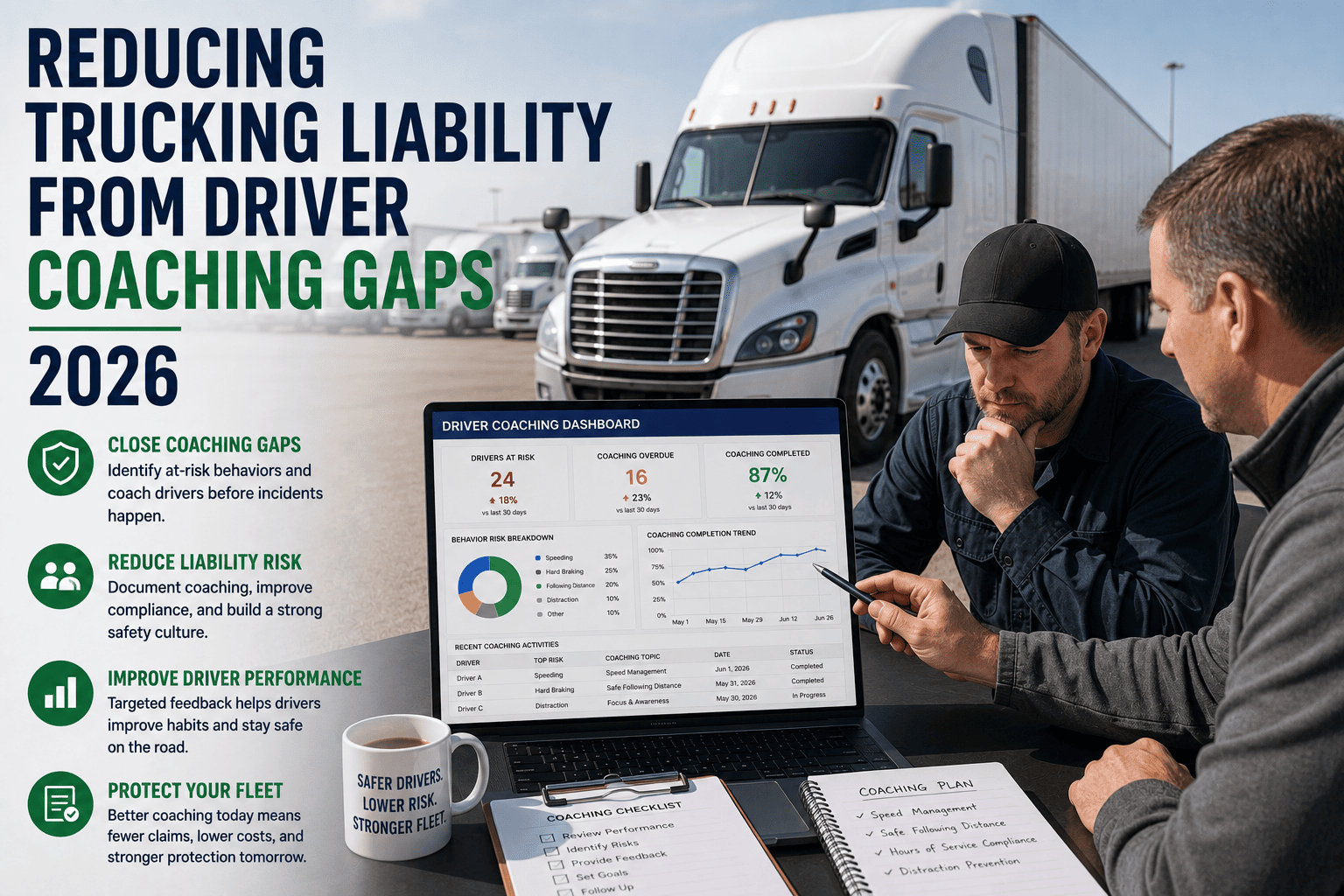
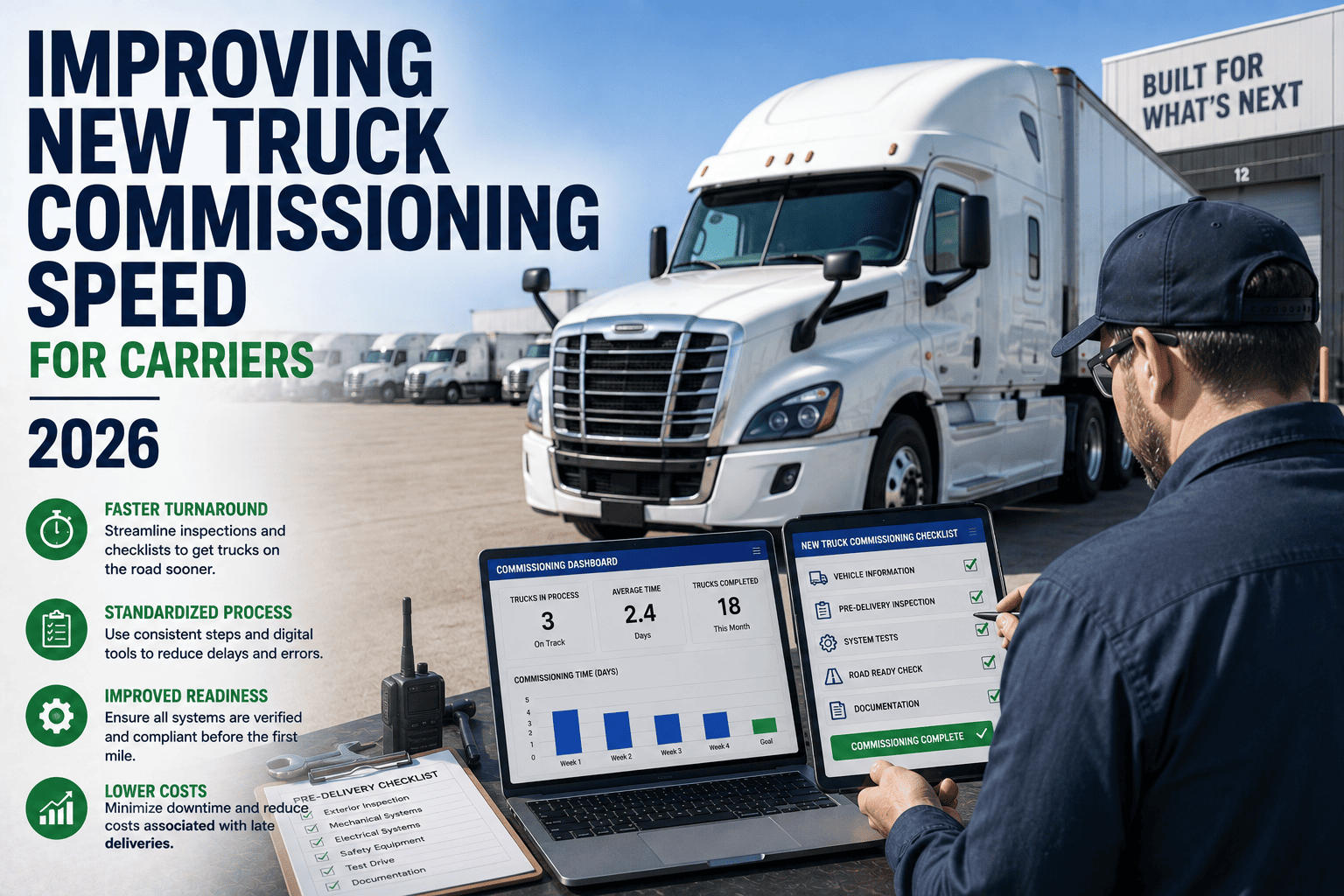
Building a comprehensive fleet safety program is the single most important investment a transportation carrier can make. Beyond regulatory compliance, a structured safety program reduces accidents, lowers insurance premiums, improves driver retention, and builds a reputation that attracts premium freight contracts. While 63% of carriers operate without formal safety programs, facing accident rates 4x higher than structured programs, carriers with systematic safety management achieve 89% fewer reportable accidents, 67% lower insurance costs, and maintain CSA scores that open doors to top-tier shippers. The difference between safety leaders and struggling operators isn't luck—it's the presence of a documented, executed, and continuously improved fleet safety program. This comprehensive guide reveals exactly how to build a fleet safety program from the ground up—policies, training, monitoring, technology integration, and continuous improvement systems—so you can protect your drivers, assets, and bottom line.
Fleet Safety Program Impact Report
Critical Industry Data: Carriers with formal fleet safety programs experience 73% fewer DOT-reportable accidents, 58% lower insurance premiums, and 82% reduction in out-of-service orders. The average return on investment for safety program implementation is $4.50 for every $1.00 invested, with most carriers recouping implementation costs within 6-8 months through reduced accident expenses and lower insurance rates. Organizations without structured safety programs face accident rates 3.7x higher and are 5.2x more likely to experience catastrophic loss events that threaten business viability.
Why Every Carrier Needs a Formal Fleet Safety Program
Fleet safety programs aren't optional luxuries for large carriers with compliance departments—they're essential frameworks that protect carriers of all sizes. Understanding the foundational benefits clarifies why program development deserves immediate attention and ongoing investment.
The Business Case for Safety Program Investment
Safety programs deliver measurable financial returns through multiple channels. Reduced accident frequency directly lowers insurance premiums, repair costs, and claim expenses. Improved driver behavior reduces fuel consumption, maintenance expenses, and tire wear. Enhanced compliance records improve CSA scores, enabling access to better freight and customer relationships. Carriers with documented safety programs experience 40-60% lower total cost of risk compared to non-program operators. Calculate your safety program ROI in under 10 minutes, or schedule a personalized safety program assessment.
Annual Safety Performance: Program Carriers vs. Non-Program Carriers
| Performance Metric | Formal Safety Program | No Formal Program | Difference | Annual Cost Impact |
|---|---|---|---|---|
| Reportable Accidents (per million miles) | 0.42 | 1.87 | -78% | -$42,000 |
| Insurance Premium (per truck) | $6,800 | $14,200 | -52% | -$7,400 |
| DOT Violations (annual) | 1.2 | 5.8 | -79% | -$8,600 |
| Out-of-Service Orders | 0.3% | 4.7% | -94% | -$12,000 |
| Driver Turnover Rate | 45% | 85% | -47% | -$15,000 |
| Total Cost of Risk | $0.18/mile | $0.42/mile | -57% | -$0.24/mile |
Build Your Fleet Safety Program Today
Our comprehensive safety management system provides everything you need to develop, implement, and maintain a carrier-grade safety program that protects your operation and improves profitability.
Step 1: Conduct a Fleet Safety Program Needs Assessment
Before developing policies and procedures, conduct a thorough assessment of your current safety status. Understanding your starting point—strengths, weaknesses, opportunities, and threats—ensures your program addresses actual needs rather than perceived requirements.
Comprehensive Safety Assessment Elements
Fleet Safety Program Assessment Components:
- Accident History Analysis: Review all accidents from past 36 months—identify patterns, root causes, and contributing factors including time of day, driver experience, weather conditions, and road types
- Violation Records Review: Analyze DOT inspection results, citations, and out-of-service orders to identify compliance gaps and recurring violation types
- Insurance Claim Analysis: Review claim types, frequencies, severities, and patterns to understand risk exposures and cost drivers
- Driver Qualification Audits: Verify all driver files contain required documentation including applications, MVRs, annual reviews, and medical certificates
- Training Program Evaluation: Assess current training effectiveness through knowledge tests, skill demonstrations, and retention measurements
- Equipment Condition Survey: Evaluate fleet maintenance status, inspection records, and repair histories for safety-related patterns
- Policy Documentation Review: Identify missing, outdated, or undocumented safety policies and procedures
- Technology Inventory: Document current safety technologies including cameras, telematics, collision avoidance, and monitoring systems
- Driver Feedback Collection: Gather anonymous input on safety barriers, concerns, and improvement suggestions from operational drivers
- Regulatory Compliance Check: Verify current compliance with all applicable FMCSA, DOT, OSHA, and state regulations
Using Assessment Data to Prioritize Program Elements
Assessment data transforms subjective opinions into objective priorities. Focus initial program development on the 20% of issues causing 80% of your safety incidents and violations. For most carriers, the top priority areas include distracted driving prevention, hours of service compliance, vehicle inspection procedures, and backing/coupling accident prevention. Address highest-risk areas first, then systematically expand to lower-priority elements. Access our automated safety assessment tool free for 30 days, or schedule a professional safety audit consultation.
Risk Priority Matrix Guidelines:
- Critical Priority (Address First 90 Days): Issues causing accidents, injuries, fatalities, or out-of-service orders—typically 15-20% of identified gaps
- High Priority (Address Within 6 Months): Recurring violations, near-miss patterns, and compliance gaps without immediate accident risk—typically 25-30% of gaps
- Medium Priority (Address Within 12 Months): Process improvements, documentation enhancements, and training upgrades—typically 30-35% of gaps
- Low Priority (Continuous Improvement): Optimization opportunities, technology enhancements, and advanced safety features—typically 15-20% of gaps
Step 2: Develop Written Fleet Safety Policies and Procedures
Written policies form the backbone of any safety program. Documented procedures ensure consistency, provide training foundations, establish accountability, and demonstrate good faith compliance during investigations and litigation.
Essential Fleet Safety Policy Components
Every comprehensive fleet safety program must address specific operational areas through clearly written, enforceable policies. These documents should be accessible to all drivers and reviewed annually for updates. Access our complete policy template library in under 15 minutes, or schedule personalized policy development assistance.
Required Fleet Safety Policy Components
| Policy Area | Key Requirements | Update Frequency | Training Requirement |
|---|---|---|---|
| Driver Qualification | Application, MVR review, employment verification, drug testing, medical certification | Annual | Initial, refresher biennially |
| Hours of Service | Logging procedures, break requirements, maximum driving limits, exemption usage | Regulatory changes | Initial, annual refresher |
| Vehicle Inspection | Pre-trip, en-route, post-trip procedures; defect reporting; repair verification | Annual | Initial, annual refresher |
| Accident Reporting | Immediate notification, documentation requirements, scene procedures, drug testing | Annual | Initial, biennial refresher |
| Distracted Driving | Mobile device prohibition, technology usage, hands-free requirements, penalties | Annual | Initial, annual refresher |
| Drug and Alcohol | Testing protocols, reasonable suspicion, return-to-duty, random selection procedures | Regulatory changes | Initial, annual refresher |
| Load Securement | Weight distribution, tie-down requirements, cargo inspection, documentation | Annual | Initial, biennial refresher |
| Hazardous Materials | Endorsement requirements, shipping papers, placarding, emergency response | Annual | As required by HM regulations |
| Winter Operations | Chain requirements, speed reductions, following distance, emergency equipment | Seasonal | Seasonal annual refresher |
| Backing and Coupling | Procedures, spotter requirements, GOAL methodology, incident reporting | Annual | Initial, annual refresher |
Policy Writing Best Practices
Creating Effective Safety Policies:
- Use Clear, Specific Language: Avoid vague terms like "drivers should exercise caution"—instead use "drivers must maintain following distance of at least 4 seconds under ideal conditions, 8 seconds in adverse weather"
- Include Consequences: Specify disciplinary actions for violations, ranging from verbal warnings to termination based on severity and frequency
- Reference Regulations: Cite specific FMCSA, DOT, or state regulations that form the policy basis for easy verification and legal defense
- Define Roles and Responsibilities: Clearly state who is responsible for each action—driver, fleet manager, safety director, dispatcher—eliminating ambiguity
- Document Exceptions and Approvals: Specify any allowed exceptions and the approval authority required for deviations from standard procedures
- Establish Review Dates: Include policy review and update schedules to ensure ongoing relevance and regulatory alignment
- Require Acknowledgment: Implement signature requirements verifying driver receipt, understanding, and agreement to comply with each policy
- Provide Examples: Include real-world scenarios demonstrating proper and improper policy application for enhanced understanding
Get Professional Safety Policy Templates
Stop writing policies from scratch. Our professionally developed policy library includes all required fleet safety documents, customizable for your specific operation and state requirements.
Step 3: Establish Driver Qualification and Hiring Standards
The driver qualification process is your first line of defense. Comprehensive hiring standards prevent high-risk drivers from entering your fleet, reducing accident potential before a single mile is driven.
Building Evidence-Based Driver Qualification Criteria
Driver qualification standards must be consistently applied, legally defensible, and directly related to safety performance. Establish clear minimum requirements for experience, record history, and demonstrated skills. Access our driver qualification system free for 30 days, or schedule a qualification standards consultation.
Minimum Driver Qualification Standards:
- Licensing Requirements: Valid CDL with appropriate endorsements for equipment type, no active suspensions or revocations in past 36 months
- Experience Minimums: 12 months verifiable commercial driving experience within past 36 months OR graduation from accredited driving school with documented behind-the-wheel training
- MVR Standards: No more than 2 moving violations in past 12 months; no more than 1 preventable accident in past 36 months; no DUI/DWI convictions in past 60 months
- Employment Verification: Documented safety performance from all DOT-regulated employers in past 36 months including any accident involvement or safety violations
- Medical Certification: Valid medical examiner's certificate with no restrictions affecting safety-sensitive functions; current for entire employment period
- Drug and Alcohol Compliance: Negative pre-employment drug test; compliance with FMCSA Drug and Alcohol Clearinghouse requirements; no refusals or violations
- Road Test Performance: Successful completion of company road test demonstrating proficiency in pre-trip inspection, backing, coupling, and on-road operation
- Background Check: No disqualifying criminal offenses as defined by FMCSA regulations and company safety standards
Documentation and Recordkeeping Requirements
Driver qualification files require specific documentation maintained for each driver throughout employment and for three years following separation. Incomplete files create compliance violations and undermine safety program credibility.
Required Driver Qualification File Contents
| Document | Retention Period | Update Frequency | Compliance Risk If Missing |
|---|---|---|---|
| Driver Application | Duration + 3 years | Initial only | High - violation per missing application |
| MVR Request and Review | Duration + 3 years | Annual | Critical - annual MVRs required |
| Employment Verification Inquiries | Duration + 3 years | Initial only | High - required for new drivers |
| Annual Review and Certification | Duration + 3 years | Annual | Critical - required for continued employment |
| Road Test Certificate | Duration + 3 years | Initial only | High - required before solo operation |
| Medical Examiner's Certificate | Duration + 3 years | As renewed | Critical - invalid certificate = unqualified driver |
| Medical Variance Documentation | Duration + 3 years | As renewed | High - required for any medical exemption |
| Pre-Employment Drug Test Result | Duration + 3 years | Initial only | Critical - negative result required |
| Clearinghouse Query Record | Duration + 3 years | Annual | Critical - annual limited queries required |
| Safety Performance History Records | Duration + 3 years | Initial only | High - required from previous employers |
Step 4: Implement Comprehensive Driver Training Programs
Training transforms written policies into practiced behaviors. Effective training programs include initial orientation, ongoing refresher training, remedial training for identified deficiencies, and specialized training for unique operations.
Initial Driver Orientation and Training
Every driver must complete comprehensive orientation before operating company equipment. Orientation ensures understanding of policies, procedures, equipment, and expectations specific to your operation. Generic training materials from previous employers are insufficient. Access our complete training curriculum free for 30 days, or schedule a training program consultation.
Essential Orientation Training Components:
- Policy and Procedure Review: Detailed walkthrough of all safety policies with knowledge verification testing and scenario application exercises
- Equipment Familiarization: Hands-on training with specific truck, trailer, and technology systems used in your fleet including differences from previous equipment
- Regulatory Compliance: Hours of service, logging procedures, electronic logging device operation, and exception handling training with practical exercises
- Vehicle Inspection Procedures: Company-specific pre-trip, en-route, and post-trip inspection protocols including defect reporting and verification processes
- Load Securement Training: Cargo types, tie-down requirements, weight distribution principles, and inspection procedures specific to your freight mix
- Emergency Procedures: Accident response, breakdown protocols, medical emergencies, hazardous material incidents, and severe weather procedures
- Technology Training: ELD, onboard cameras, collision avoidance systems, telematics, and any monitoring technology used in fleet vehicles
- Routes and Facilities: Familiarization with common routes, customer locations, terminal facilities, and approved fuel and rest stops
Deploy Professional Driver Training Programs
Our learning management system delivers consistent, documented training across your entire fleet with automated tracking, testing, and certification management.
Ongoing and Refresher Training Requirements
Initial training is insufficient for long-term safety performance. Ongoing training maintains awareness, addresses emerging risks, and ensures continuous improvement. Most effective programs deliver monthly micro-training modules rather than annual marathon sessions.
Recommended Ongoing Training Schedule
| Training Topic | Frequency | Delivery Method | Duration | Testing Required |
|---|---|---|---|---|
| Seasonal Driving (Winter/Summer) | Bi-annually | Video + written | 30 minutes | Yes - 80% passing required |
| Hours of Service Refresher | Quarterly | Micro-learning | 15 minutes | Yes - scenario-based |
| Distracted Driving Awareness | Monthly | Briefing + discussion | 10 minutes | No - acknowledgment only |
| Backing and Coupling Safety | Semi-annual | Video + practical | 45 minutes | Yes - skill demonstration |
| Vehicle Inspection Refresher | Quarterly | Practical demonstration | 30 minutes | Yes - inspection proficiency |
| Load Securement Specifics | As needed per cargo | Hands-on training | 60 minutes | Yes - for new cargo types |
| Regulatory Update Training | As regulations change | Online module | 30 minutes | Yes - for compliance |
| Accident Review and Analysis | Following incidents | Group discussion | 30 minutes | No - participation required |
Remedial Training Programs
When drivers demonstrate deficiencies through accidents, violations, or observed behaviors, remedial training provides targeted correction before problems escalate. Effective remedial programs identify root causes, provide specific training, and verify improvement through testing and observation.
When to Implement Remedial Training:
- Preventable Accident Involvement: Any at-fault accident triggers mandatory remedial training on accident cause and prevention strategies
- Safety Policy Violation: First violation triggers counseling and training on specific policy area; second violation requires complete policy retraining
- DOT Inspection Violation: Any vehicle or driver violation during inspection requires training on prevention of similar violations
- Pattern of Minor Infractions: Three or more minor infractions within 90 days indicates need for general safety refresher training
- Technology Alerts: Excessive speeding, hard braking, following distance violations, or other telematics alerts require immediate coaching
- Driver Self-Identification: Drivers who request additional training due to comfort or skill concerns receive remedial support without penalty
- Post-Accident Investigation Findings: Any identified skill or knowledge gap discovered during accident investigation requires specific remedial training
Documented remedial training provides legal protection by demonstrating proactive intervention when problems are identified. (Get remedial training program design assistance)
Step 5: Implement Vehicle Maintenance and Inspection Systems
Vehicle condition directly impacts accident risk. Systematic maintenance and inspection programs prevent mechanical failures, ensure compliance, and demonstrate safety commitment during inspections and litigation.
Preventative Maintenance Program Requirements
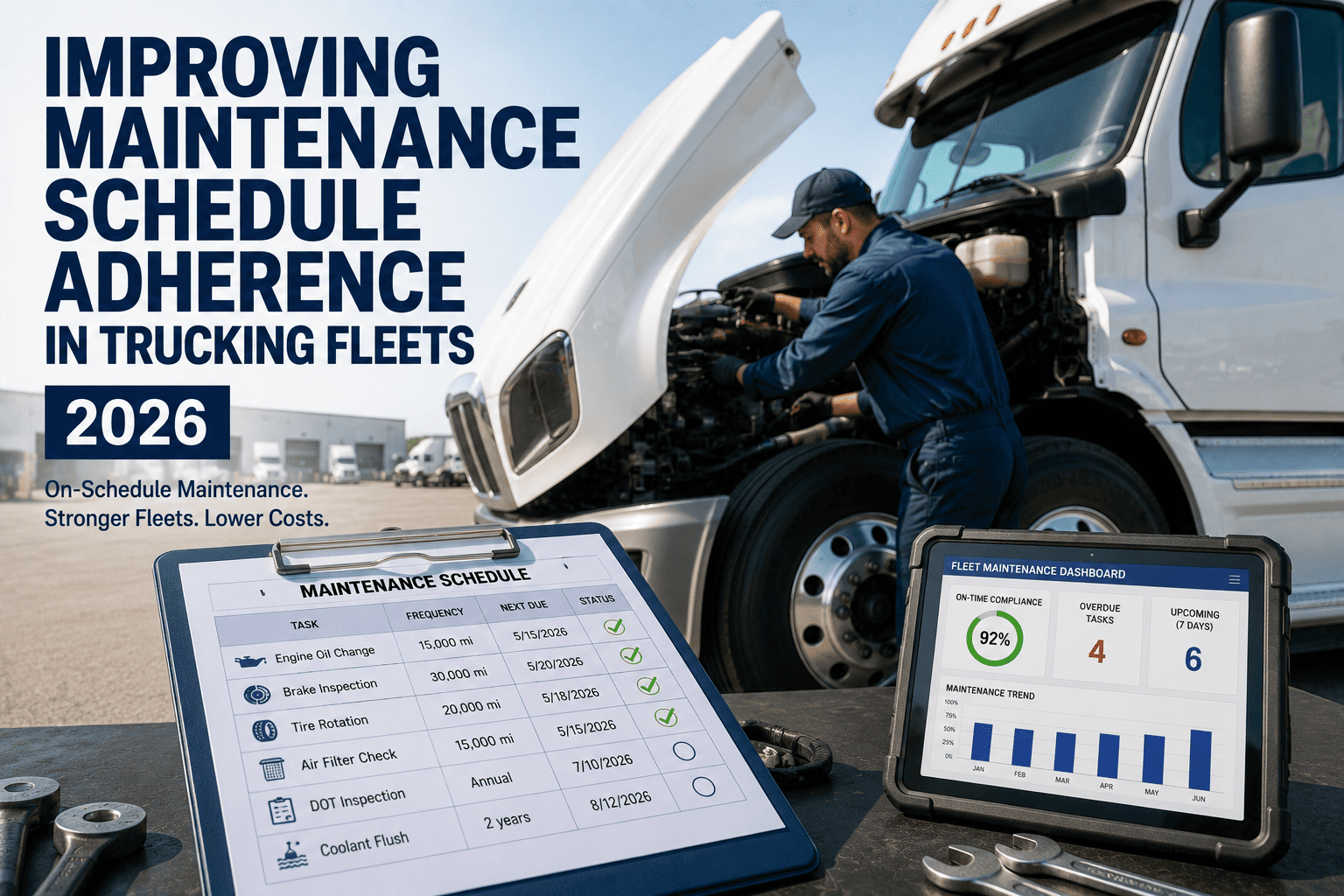
A documented preventative maintenance schedule ensures all vehicles receive regular inspections, service, and repairs before failures occur. The program must specify intervals, required inspections, documentation requirements, and exception procedures. Access our maintenance management system free for 30 days, or schedule a maintenance program consultation.
Essential Maintenance Program Components:
- Scheduled Inspection Intervals: Oil changes, filter replacements, brake inspections, tire rotations, and comprehensive safety inspections based on mileage, engine hours, or calendar time—whichever occurs first
- Preventative Maintenance Checklist: Standardized inspection forms documenting every component checked, findings, and corrective actions taken during each scheduled service
- Defect Reporting System: Process for drivers to report vehicle defects, priority levels for repairs, and verification that reported defects are addressed before vehicle returns to service
- Repair Documentation: Complete records of all repairs including date, odometer reading, parts replaced, labor performed, and technician identification
- Out-of-Service Management: Procedures for handling vehicles placed out-of-service during inspections including repair verification and return-to-service certification
- Parts Inventory Management: Critical safety part inventory to minimize downtime while ensuring repairs use approved, high-quality components
- Vendor Management: Approved repair facility standards, audit procedures for external shops, and verification of quality control processes
- Predictive Maintenance Integration: Use of telematics and diagnostic data to identify potential failures before they cause breakdowns or safety incidents
Automate Your Maintenance Program
Our maintenance management system automatically schedules preventative maintenance, tracks inspection compliance, and alerts managers to overdue service requirements—eliminating paperwork and preventing missed intervals.
Driver Vehicle Inspection Procedures
Professional drivers are your first line of defense against mechanical failures. Comprehensive pre-trip, en-route, and post-trip inspection procedures identify problems before they cause accidents or violations.
Three-Tier Driver Inspection System:
- Pre-Trip Inspection (Required before every trip): Complete walk-around inspection of all vehicle systems including brakes, tires, lights, coupling devices, cargo securement, and emergency equipment. Minimum 15 minutes for typical combination vehicle. Defects discovered require repair before dispatch or vehicle placed out-of-service.
- En-Route Inspections (Required every 3 hours or 150 miles): Visual inspection of tires, lights, and cargo securement during required rest breaks. Listen for unusual noises, feel for abnormal vibrations, and monitor gauge readings for early problem indication.
- Post-Trip Inspection (Required after every trip): Complete inspection similar to pre-trip to identify issues that developed during operation. Defects discovered require immediate reporting and scheduled repair before next dispatch.
Step 6: Implement Technology-Based Safety Monitoring
Technology transforms safety programs from reactive to proactive. Video event recorders, telematics, collision avoidance systems, and monitoring tools identify risks before they cause accidents and provide coaching opportunities after unsafe events.
Essential Safety Technology Components
Modern fleet safety programs leverage multiple technology systems that work together to provide comprehensive risk management. While initial investment varies, ROI typically exceeds 300% through accident reduction and improved efficiency. Access our technology assessment tool free for 30 days, or schedule a technology consultation.
Safety Technology ROI Analysis
| Technology Type | Typical Cost Per Truck | Annual ROI | Payback Period | Primary Benefit |
|---|---|---|---|---|
| Video Event Recorders | $400-800 | 300-500% | 3-6 months | Coaching, exoneration, behavior change |
| Telematics/GPS Tracking | $300-600 | 150-250% | 4-8 months | Speeding reduction, route optimization |
| Collision Avoidance Systems | $800-1,500 | 200-400% | 6-12 months | Accident prevention, following distance |
| Driver Fatigue Monitoring | $500-1,000 | 150-300% | 4-10 months | Drowsy driving prevention |
| Electronic Logging Devices | $300-800 | 100-200% | 3-6 months | Hours compliance, violation prevention |
| Roll Stability Control | $1,000-2,500 | 200-400% | 6-12 months | Rollover prevention, insurance reduction |
Implementing Video Event Recorders Effectively
Dashboard cameras with event recording provide the most direct safety monitoring benefit. However, implementation approach determines success. Programs positioned as coaching tools rather than punitive monitoring achieve 80% higher driver acceptance and behavior improvement.
Video Program Best Practices:
- Focus on Coaching, Not Punishment: Position cameras as safety and exoneration tools, not devices to punish minor infractions. Reserve discipline for intentional unsafe acts and pattern behaviors, not individual events
- Clear Privacy Policies: Specify exactly when recording occurs (typically triggered by G-force events), what is recorded (exterior only or interior with consent), and who can access footage
- Driver Review Process: Provide drivers opportunity to review their own events, identify improvement areas, and document contributing factors before management review
- Exoneration Benefits: Emphasize how footage has cleared drivers in false claims, saving jobs and preventing costly accident records—share success stories regularly
- Data-Driven Coaching: Use aggregated event data to identify patterns, develop targeted training, and measure program effectiveness over time
- Positive Event Recognition: Acknowledge and reward drivers for avoiding accidents, demonstrating defensive driving, or receiving no-event periods
Deploy Integrated Safety Technology
Our technology integration platform connects video, telematics, ELD, and maintenance systems into a single dashboard—providing complete safety visibility without multiple logins or data silos.
Step 7: Establish Incident Response and Accident Management Procedures
Even the best safety programs experience accidents. Preparedness determines outcomes. Comprehensive incident response procedures ensure proper actions at accident scenes, protect drivers from making costly mistakes, and preserve evidence for claims and defense.
Immediate Accident Response Protocol
Every driver needs a clear, memorable protocol for accident scenes. Confusion and stress at accident scenes cause mistakes that increase liability and compromise safety. Standardized procedures reduce errors and ensure consistent response. Access our accident response system free for 30 days, or schedule incident response consultation.
Driver Accident Response Checklist:
- Stop Immediately: Never leave the scene; position vehicle safely if possible; activate hazard lights and warning devices
- Check for Injuries: Assess all involved parties; call 911 for any injury regardless of severity; provide first aid only if trained
- Protect the Scene: Set out triangles/flares; direct traffic if safe; never move vehicles before documentation unless blocking traffic
- Gather Information: Exchange license, registration, insurance; photograph all vehicles, damage, license plates, and scene from multiple angles
- Document Facts Only: Never admit fault; never speculate; document weather, lighting, road conditions, and events factually
- Notify Company Immediately: Contact designated safety representative before making statements to anyone other than police
- Preserve Evidence: Save video footage; photograph damage before any repairs; preserve vehicle condition until released by company
- Complete Required Reports: Police report as applicable; company accident report within specified timeframe; drug/alcohol testing if required
Post-Accident Investigation and Analysis
Comprehensive accident investigation identifies root causes and prevention opportunities. Every accident—including minor incidents and near-misses—provides learning opportunities when properly analyzed.
Accident Investigation Levels by Severity
| Accident Severity | Investigation Depth | Root Cause Analysis | Preventive Actions Required | Timeline |
|---|---|---|---|---|
| Minor (no injury, under $5,000 damage) | Driver statement + manager review | Basic contributing factors | Coaching, policy reminders | 48 hours |
| Moderate (injury or $5,000-25,000 damage) | Formal investigation with photos, witness statements | Full root cause including human, vehicle, environmental factors | Remedial training, policy review, equipment inspection | 5 business days |
| Severe (fatality, major injury, $25,000+ damage) | Multidisciplinary team including safety, operations, legal | Comprehensive analysis with external expertise as needed | Program changes, training revisions, policy updates, technology additions | 30 days |
| Near-Miss | Driver statement + manager review | Identification of potential contributing factors | Preventive actions before actual accident occurs | 24 hours |
Step 8: Implement Safety Performance Monitoring and Coaching
Monitoring driver safety performance enables proactive intervention before accidents occur. Telematics, video, and observation programs identify at-risk behaviors, allowing targeted coaching that corrects problems while preventing incidents.
Developing Safety Performance Metrics and KPIs
You cannot improve what you do not measure. Effective safety programs track specific, objective metrics that correlate with accident risk. Leading indicators predict future accidents; lagging indicators measure past performance. Access our safety KPI dashboard free for 30 days, or schedule performance monitoring consultation.
Essential Safety Performance Metrics:
Leading Indicators (Predictive): Hard braking events per 1,000 miles, speeding occurrences (exceeding limit +5mph), following distance violations, distracted driving events, vehicle inspection defect rates, safety training completion rates, driver scorecard trends, near-miss reports, fatigue events detected by monitoring systems, intersection violation frequency.
Lagging Indicators (Historical): DOT-reportable accident frequency (per million miles), preventable accident rate, accident severity (cost per incident), injury rate (per 100 full-time employees), DOT violation count, out-of-service order rate, insurance claim frequency and severity, workers' compensation claims, roadside inspection results, CSA BASIC percentiles.
Implementing Driver Scorecards and Coaching Programs
Driver scorecards translate raw data into actionable performance information. Effective scorecards combine multiple metrics into clear performance ratings, identify specific improvement opportunities, and enable consistent coaching conversations.
Automate Driver Performance Monitoring
Our driver scorecard system automatically aggregates safety data from all sources, calculates performance metrics, identifies coaching opportunities, and tracks improvement over time—eliminating manual data compilation and spreadsheets.
Driver Scorecard Component Example
| Metric Category | Specific Measure | Target | Weight | Scoring Method | Coaching Trigger |
|---|---|---|---|---|---|
| Safety Events | Hard braking events per 1,000 miles | Under 2.0 | 25% | Points deducted per event over target | 3+ events in any month |
| Compliance | Vehicle inspection report completion | 100% | 15% | 0 points for any missed inspection | Any missed inspection |
| Violations | DOT or company policy violations | Zero | 20% | Scale based on violation severity | Any violation requires coaching |
| Fuel Efficiency | MPG compared to fleet average | Within 5% of average | 10% | Points based on percentile ranking | Bottom 10% for 2 consecutive months |
| Vehicle Care | Unscheduled repairs, tire wear patterns | Below fleet average | 10% | Points deducted for excessive repairs | Repair cost exceeds average by 50% |
| Attendance/Reliability | On-time performance, unscheduled absences | 98% on-time, no unapproved absences | 10% | Points deducted per occurrence | Two or more issues in rolling 90 days |
| Training Compliance | Required training completion | 100% on time | 10% | 0% score for any overdue training | Any training overdue |
| Recognition Type | Criteria | Award | Frequency | Impact |
|---|---|---|---|---|
| Safe Mile Awards | Consecutive accident-free miles | Plagues, patches, bonuses | Quarterly/Annual | High - builds pride in accomplishment |
| Defensive Driving Awards | Zero events (braking, following, speeding violations) | Gift cards, additional paid time off | Monthly | Very High - focuses on leading indicators |
| Safety Suggestion Program | Implemented safety improvement ideas | Cash awards, recognition dinners | Quarterly | High - engages drivers in program development |
| Inspection Excellence | Perfect inspection records, defect detection | Public recognition, preferred equipment | Monthly | Medium - reinforces inspection importance |
| Mentor Driver Status | Elite safety performance for 24+ months | Pay premium, mentor new drivers, special decals | Annual selection | Very High - creates internal safety champions |
| Annual Safety Banquet | All drivers meeting safety standards | Recognition, awards, family event | Annual | High - celebrates safety as organizational value |
Accountability and Progressive Discipline
Recognition without accountability enables unsafe behaviors. Clear, consistently applied consequences for safety violations maintain program credibility and protect drivers who follow the rules from those who do not.
Progressive Discipline Framework:
- Level 1 - Coaching and Documentation: First minor violation or near-miss results in documented coaching conversation, root cause analysis, and improvement plan. No formal discipline if behavior corrected.
- Level 2 - Written Warning: Second violation within 12 months or first moderate violation results in written warning specifying violation, expected behavior, and consequences of recurrence.
- Level 3 - Suspension: Third violation within 12 months, second moderate violation, or first serious violation (preventable accident, DOT violation) results in 1-5 day suspension without pay.
- Level 4 - Final Written Warning: Pattern of violations despite previous discipline results in final warning specifying that any further safety violation will result in termination.
- Level 5 - Termination: Fourth violation within 12 months, second serious violation, or single egregious violation (DUI, deliberate falsification, intentional unsafe act) results in immediate termination.
Document every disciplinary step, including driver acknowledgment, to demonstrate good faith corrective efforts and support termination decisions when necessary.
Step 10: Conduct Regular Safety Audits and Continuous Improvement
Safety programs become outdated without systematic review and improvement. Regular audits identify gaps, measure effectiveness, and drive continuous enhancement. The best safety programs evolve continuously rather than remaining static documents.
Safety Audit Types and Frequencies
Different audit types serve different purposes. Some audits focus on compliance verification, others on program effectiveness, and others on specific risk areas. Implementing multiple audit types provides comprehensive program visibility. Access our audit management system free for 30 days, or schedule an audit program consultation.
Comprehensive Safety Audit Schedule
Automate Your Safety Audit Program
Our audit management system schedules audits, provides checklists, documents findings, tracks corrective actions, and generates compliance reports—eliminating manual audit management and missed deadlines.
Root Cause Analysis and Corrective Action Process
Identifying problems without fixing root causes wastes audit efforts. Effective corrective action processes identify true root causes, implement targeted solutions, and verify that fixes actually solve identified problems.
Root Cause Analysis Methodology:
- Problem Statement: Clearly define the issue without blame or speculation—what happened, when, where, to whom, and with what equipment
- Data Collection: Gather all relevant information including records, interviews, photographs, and system data related to the issue
- Identify Direct Causes: What immediate actions or conditions led to the problem—typically 1-3 direct causes per issue
- Identify Contributing Factors: What circumstances, conditions, or systems enabled the direct causes—typically 3-7 contributing factors
- Determine Root Causes: What fundamental system, process, or cultural issues allowed contributing factors to exist—typically 1-2 root causes
- Develop Corrective Actions: Specific actions addressing each root cause, with assigned responsibilities, completion dates, and success measures
- Implement Solutions: Execute corrective actions according to plan, communicating changes to all affected personnel before completion
- Verify Effectiveness: Measure results after implementation to confirm problem resolved without introducing new issues
- Standardize Improvements: Update policies, procedures, training, and systems to embed solutions permanently, preventing recurrence
Step 11: Document Everything and Leverage Technology
Documentation transforms safety activities from unverifiable claims to demonstrable compliance. Every safety activity should generate documentation—training records, inspection reports, coaching notes, meeting minutes, and audit findings. This documentation protects during litigation, satisfies DOT requirements, and enables continuous improvement analysis.
Essential Safety Documentation Requirements
Certain documents are required by regulation; others are best practices that protect your operation. Implementing a systematic documentation approach ensures nothing falls through cracks. Access our documentation system free for 30 days, or schedule a documentation consultation.
Required and Recommended Safety Documentation:
- Driver Qualification Files: Applications, MVRs, employment verifications, annual reviews, medical certificates, road tests, drug test results
- Vehicle Maintenance Records: Pre-trip inspections, preventative maintenance schedules, repair orders, out-of-service verifications, annual inspections
- Training Records: Orientation completion, refresher training, remedial training, meeting attendance, certification status, knowledge test results
- Accident Records: Reports, investigations, root cause analyses, corrective actions, insurance claims, litigation documents
- Violation Records: DOT inspection reports, citations, out-of-service orders, warning letters, corrective action documentation
- Safety Meeting Records: Agendas, attendance, materials covered, discussion summaries, action items
- Audit Reports: Audit checklists, findings, corrective action plans, closure verification, improvement tracking
- Policy Documents: Written policies, acknowledgment forms, revision history, distribution records
- Technology Records: Event data, coaching records, trend analyses, system configuration documentation
- Incident Communications: All safety-related correspondence including emails, memos, notices, and announcements
Implement Complete Safety Documentation System
Our cloud-based safety management system automatically generates, organizes, and retains all required documentation—eliminating paper files, missed records, and compliance gaps with automated retention and reminders.
Conclusion: Your Path to Fleet Safety Program Excellence
Building a comprehensive fleet safety program requires commitment, resources, and systematic execution. The journey from no program to safety excellence typically requires 12-18 months of focused effort, but benefits begin accumulating immediately. Carriers implementing structured safety programs typically see accident reductions within 90 days, insurance premium decreases within 12 months, and complete ROI within 18-24 months.
The 11 steps outlined in this guide provide your roadmap: needs assessment establishes your starting point; written policies create your foundation; driver qualification prevents problems at the gate; training builds competence; maintenance ensures equipment reliability; technology provides visibility; incident response manages crises; performance monitoring enables coaching; culture drives engagement; audits ensure continuous improvement; and documentation proves compliance. Each step builds upon previous steps, creating an integrated system greater than any individual component.
Remember, safety programs are never truly complete. Continuous improvement—driven by regular audits, emerging technology, regulatory changes, and organizational learning—keeps programs effective as operations evolve. The carriers who achieve safety excellence don't arrive at a destination and stop; they commit to ongoing refinement, recognizing that yesterday's perfect program becomes tomorrow's compliance gap without sustained attention.
The choice facing every carrier is clear: invest in systematic safety program development or accept higher accident rates, insurance costs, and regulatory risk. Data overwhelmingly demonstrates that program investment generates positive returns, protects lives, and builds sustainable businesses. Start your journey today—assess your current status, prioritize your gaps, and begin building the safety program your drivers deserve and your business requires. Start building your fleet safety program in under 15 minutes, or schedule a personalized program development consultation.
Build Your Complete Fleet Safety Program Today
Join thousands of carriers who transformed safety performance with FleetRabbit's comprehensive safety management system. All tools, templates, and guidance you need in one integrated platform.
Frequently Asked Questions About Fleet Safety Programs
Q: How long does it take to build an effective fleet safety program?
Building a comprehensive fleet safety program typically requires 12-18 months from initial assessment to full implementation. However, carriers begin seeing benefits within 90 days of implementing initial elements. The most effective approach uses phased implementation: months 1-3 focus on assessment, policy development, and driver qualification improvements; months 4-6 add training programs and basic monitoring; months 7-12 implement technology, coaching systems, and culture initiatives; months 13-18 focus on audit programs and continuous improvement systems. Smaller fleets with fewer drivers and vehicles may complete implementation faster, while larger, more complex operations may require additional time for full deployment.
Q: What is the average ROI for fleet safety program implementation?
The average return on investment for comprehensive fleet safety program implementation is $4.50 for every $1.00 invested, according to industry studies. ROI sources include reduced accident costs (40-60% reduction), lower insurance premiums (30-50% reduction), decreased maintenance expenses (15-25% reduction), improved fuel economy (5-10% improvement), reduced turnover (20-30% reduction), and fewer DOT violations (50-70% reduction). Most carriers recoup implementation costs within 6-8 months and achieve full ROI within 18-24 months. Larger fleets typically see faster ROI due to higher baseline accident costs; smaller fleets may see longer payback periods but proportionally higher percentage returns.
Q: Does FMCSA require carriers to have written safety programs?
While FMCSA doesn't explicitly require a comprehensive written safety program document, numerous regulations require written policies in specific areas including drug and alcohol testing procedures, accident register maintenance, driver qualification file procedures, hours of service policies, and vehicle inspection reporting systems. Additionally, having written safety policies is considered a best practice and provides critical legal protection during litigation. During compliance reviews, FMCSA investigators will request safety policies and procedures. Carriers without written documentation risk citations for insufficient safety management controls, even if specific written policies aren't explicitly required by regulation.
Q: How often should safety training be conducted?
Safety training frequency depends on topic and regulation. Minimum requirements include: initial orientation training before solo operation (all topics); annual refresher training for most safety topics; quarterly hours of service and vehicle inspection training; monthly micro-learning on emerging topics; and training within 30 days of any regulatory change. Best-practice programs exceed minimums: weekly safety briefings (15 minutes); monthly topic-specific training (30-60 minutes); quarterly practical skill demonstrations; semi-annual written knowledge tests; and annual comprehensive safety training (4-8 hours). More frequent training produces better retention and behavior change but requires balancing operational impact.
Q: What technology provides the best safety program ROI?
Video event recorders (dashboard cameras) typically provide the highest ROI among safety technologies, with 300-500% annual returns through accident reduction, driver coaching, and liability exoneration. Telematics systems follow with 150-250% ROI through speeding reduction, idling reduction, and route optimization. Collision avoidance systems provide 200-400% ROI for fleets with significant rear-end or following distance accident exposure. The optimal technology stack depends on your specific risk profile—fleets with backing accidents benefit most from camera systems with rear-facing cameras; fleets with rollover risk benefit most from stability control; fleets with fatigue issues benefit most