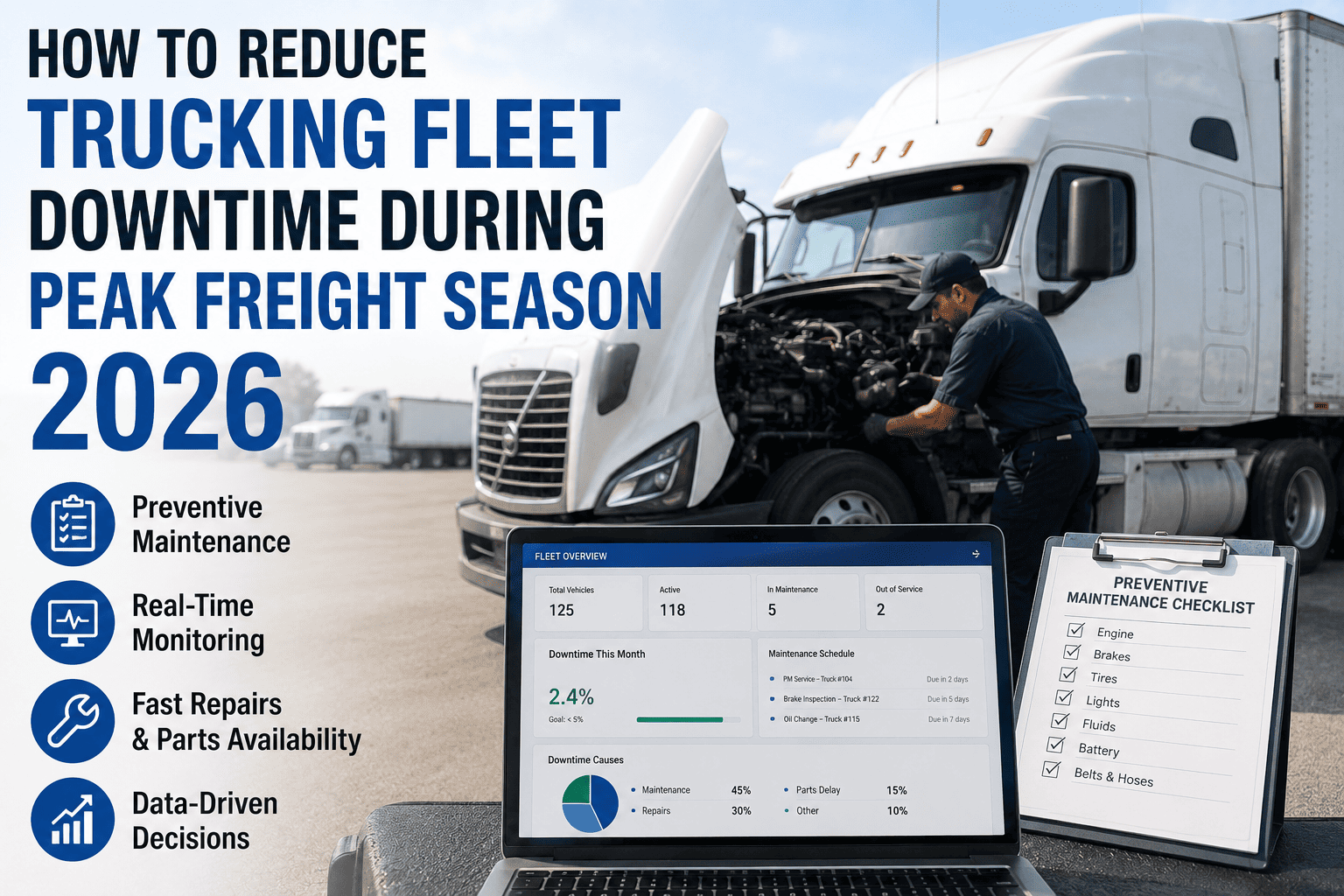
Every fleet manager knows the feeling. A truck that ran flawlessly all spring suddenly throws a check-engine light the week freight volumes double. Brake pads that had another month of life stop cooperating. A trailer that sat quiet through the slow season suddenly can't keep up with back-to-back loads. Peak freight season doesn't create new problems in a fleet, it exposes every weakness that was already there and charges a premium for ignoring them. With 2026's peak season arriving earlier and tighter than usual as capacity crunches hit ocean, rail, and drayage lanes simultaneously, the fleets that protect their uptime before the surge are the ones capturing the pricing power everyone else is fighting over.
Reducing fleet downtime during peak freight season comes down to three moves made before volume spikes: front-loading preventive maintenance while freight is still slow, stocking high-failure parts in advance, and switching from calendar-based servicing to real-time predictive monitoring so problems get caught before a truck is loaded for a run it can't finish. FleetRabbit automates all three from one dashboard.
Why Trucks That Run Fine All Year Fail During Peak Season
Heat, extended runtime, and back-to-back dispatches change the math on every component in a truck. A brake system tolerating light duty in a slower month can fail under the combined weight of longer routes, heavier loads, and drivers pushing extra hours to keep up with demand. Fuel systems that worked fine at half capacity get pushed past their limit. Tires that had tread to spare start showing separation under sustained highway speed and higher ambient temperatures. None of this is random. It's the predictable result of asking components that were already near the end of their service life to work harder, longer, and hotter than they were built for.
The financial stakes are higher in 2026 specifically because peak season is arriving earlier and less evenly than usual, with tightening capacity across ocean, rail ramp, and drayage lanes pushing fleet managers who survived the recent freight downturn into a rare window of pricing power. A single truck stuck in the shop during that window doesn't just cost the repair bill, it costs the load that customer takes to a competitor instead, right when rates finally favor carriers again.
The Seasonal Maintenance Window Most Fleets Waste
The slowest freight months of the year are also the cheapest time to fix everything that peak season will punish. Shops are less backed up, parts arrive faster, and technicians aren't stretched across emergency calls. Yet many fleets treat this quiet window as a break rather than a preparation period, only to scramble once volume climbs and shop appointments are booked out for weeks.
FleetRabbit flags every vehicle nearing a service threshold before freight volume climbs, so your shop schedule fills with planned work instead of emergency calls. Sign up free and see which trucks need attention before the next surge hits.
Reactive vs. Proactive: What Actually Changes During Peak Season
The gap between a fleet that sails through peak season and one that bleeds money in the shop almost always comes down to whether maintenance decisions get made before or after a component fails. The table below shows how the same underlying issue plays out differently depending on which approach a fleet takes.
| Fleet Challenge | Reactive Approach | Proactive Approach |
|---|---|---|
| Brake Wear Under Load | Truck pulled from route mid-shift when pads fail during a run | Replaced during the pre-peak service window using historical wear data |
| Parts Availability | Rush ordering at premium prices with multi-day shipping delays | Common failure parts stocked in advance based on seasonal demand history |
| Shop Scheduling | Emergency slots squeezed into an already backed-up shop calendar | Service booked during the slow season when appointments are easy to secure |
| Route Coverage | Remaining trucks absorb extra routes, accelerating their own wear | Buffer capacity planned in advance so one failure doesn't cascade |
| Customer Commitments | Delivery windows missed right when pricing power is highest | On-time performance protected during the exact window rates are best |
Stocking Parts Before the Rush, Not During It
Emergency parts sourcing during peak season routinely costs 2 to 3 times more than normal procurement, because dealers know demand has spiked and suppliers bypass standard channels to fill rush orders. Fleets that review the past year's failure data and pre-order the components most likely to fail under heavy load, brake pads, belts, filters, and cooling system parts, avoid paying that premium and avoid the multi-day wait that turns a same-day fix into a three-day shop visit.
Reading Last Year's Failure Pattern
The fastest way to know what to stock is to look at what actually broke during the last peak season. A digital maintenance history makes this a five-minute lookup instead of a week of digging through paper work orders scattered across multiple shops.
Building a Seasonal Parts Buffer
A modest buffer of the five or six components that fail most often under sustained load prevents the majority of peak-season shop delays, since most emergency repairs trace back to the same handful of predictable failure points every year.
Predictive Monitoring Replaces Guesswork Once Peak Season Starts
Calendar-based maintenance schedules assume every truck ages at the same rate, which falls apart the moment runtime hours double during peak weeks. Predictive monitoring tracks actual vehicle condition, engine temperature trends, brake application patterns, tire pressure anomalies, so maintenance teams see a developing problem while it's still cheap to fix instead of finding out when a driver calls in from the shoulder of the highway. If your team is still relying on fixed mileage intervals to decide when a truck needs attention, book a free demo to see how real-time monitoring changes that equation during your busiest weeks.
FleetRabbit combines maintenance history, parts tracking, and real-time vehicle monitoring in one platform, so your busiest weeks stay predictable instead of chaotic.
Frequently Asked Questions
FleetRabbit turns maintenance history, parts tracking, and predictive monitoring into one simple dashboard, so your fleet stays on the road exactly when freight rates and capacity favor you most.