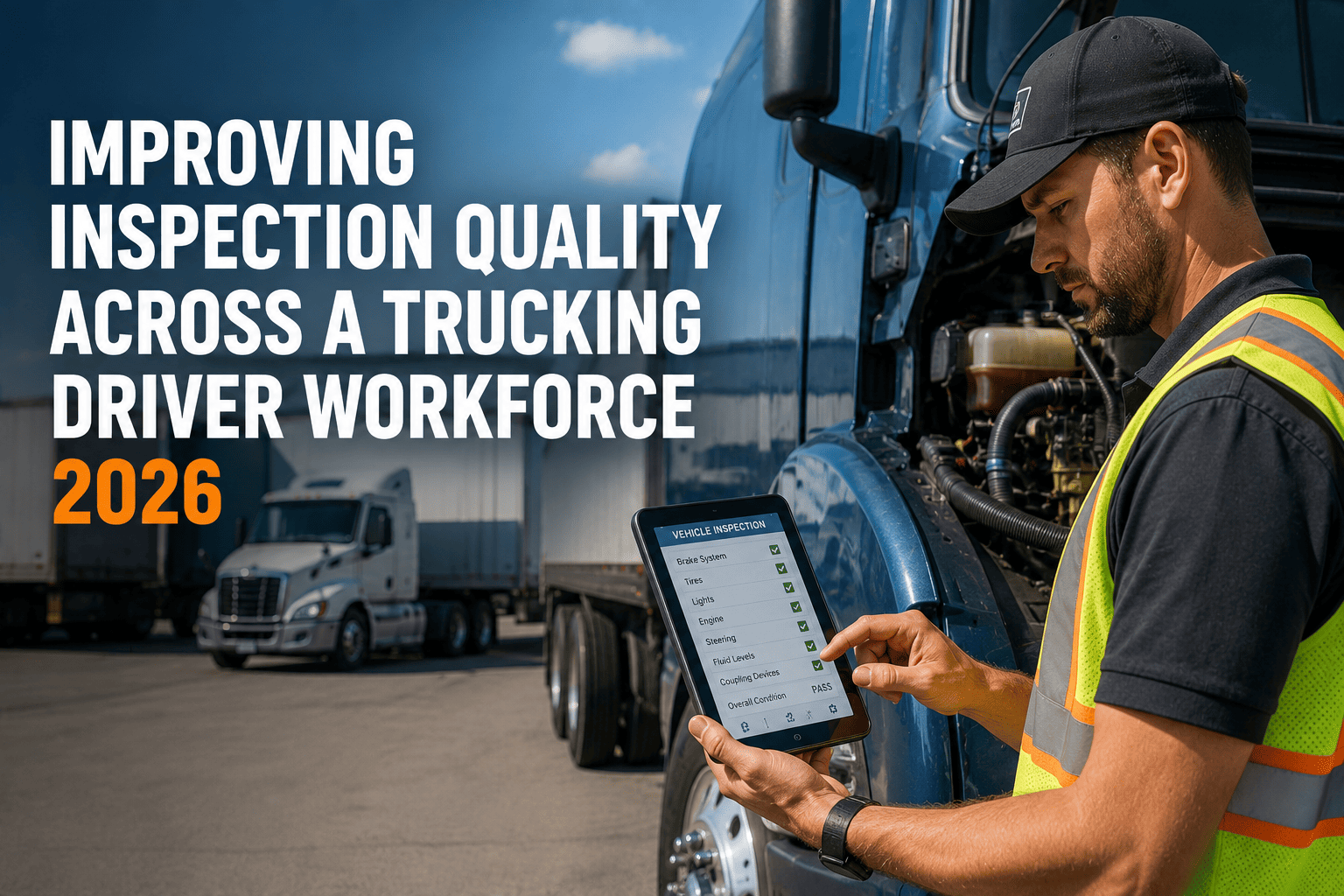
Ask any safety manager what keeps them up at night and "inspection quality" rarely makes the list the way "accidents" or "CSA scores" do. Yet almost every roadside violation, missed defect, and unplanned breakdown traces back to one weak link: an inspection that was rushed, incomplete, or never really happened at all. Across the U.S. trucking industry, only 7 percent of motor carriers pass a focused compliance review without a single DVIR-related citation, which means inspection quality is not a paperwork problem, it's a fleet-wide performance gap hiding in plain sight.
Inspection quality across a driver workforce improves when fleets replace vague paper checklists with standardized digital walk-arounds, photo-verified defect reporting, and clear driver accountability. FMCSA data shows properly completed DVIRs help prevent roughly 14,000 crashes a year, yet inconsistent driver habits remain the top cause of missed defects. Fleets that digitize and enforce a consistent inspection process typically see defect-catch rates rise sharply within the first 90 days.
Why Inspection Quality Quietly Falls Apart
Every fleet has an inspection policy on paper. Far fewer have one that survives contact with a tired driver at the end of a 10-hour shift. Inspection quality erodes for a handful of predictable reasons, and once you see the pattern across your own workforce, it becomes easy to fix.
FleetRabbit turns every pre-trip and post-trip inspection into a guided, photo-verified workflow so no driver skips a step and no defect slips through. If you're ready to see it working across your own fleet, sign up and load your first vehicle in minutes, or book a demo to walk through it with our team first.
The Real Cost of Low-Quality Inspections
Poor inspection quality is expensive in ways that don't show up on a single invoice. It shows up as an out-of-service order that costs an average of 861 dollars per incident, a CSA score that quietly climbs across two separate Vehicle Maintenance BASIC categories, and a defect that was technically "reported" but described so vaguely the shop never fixed the right part. Roadside enforcement isn't slowing down either, with more than 3.5 million inspections conducted annually and close to 15 commercial vehicles checked every minute during International Roadcheck season.
The financial exposure compounds fast. Failure to file a required inspection report can trigger penalties starting around 1,270 dollars per day, falsifying a report can reach roughly 12,700 dollars, and dispatching a vehicle with a known unrepaired defect can carry penalties near 15,420 dollars. A fleet of 50 trucks with systemic inspection gaps can face more than 63,500 dollars in fines from a single audit alone.
Where the Damage Actually Lands
| Impact Area | Low-Quality Inspections | Standardized Digital Inspections |
|---|---|---|
| Defect Detail | Vague notes like "check brakes," no photos, hard to action | Structured fields, severity ratings, and photo evidence attached automatically |
| Chain of Custody | Signatures missed or misplaced between shifts | Driver, mechanic, and next-driver signatures enforced digitally and timestamped |
| Audit Readiness | Paper files scattered across terminals, slow to retrieve | Searchable records exportable in seconds, even with 48-hour notice |
| CSA Score Exposure | Violations land across two red Vehicle Maintenance categories | Fewer citations because defects are caught and resolved before roadside checks |
| Driver Consistency | Quality depends on individual habits and shift fatigue | Guided checklist enforces the same standard for every driver, every time |
Four Building Blocks of a High-Quality Inspection Program
Improving inspection quality across a whole driver workforce isn't about hiring stricter supervisors. It's about designing a workflow where doing it right is also the easiest option.
1. Standardize the Checklist, Not Just the Paperwork
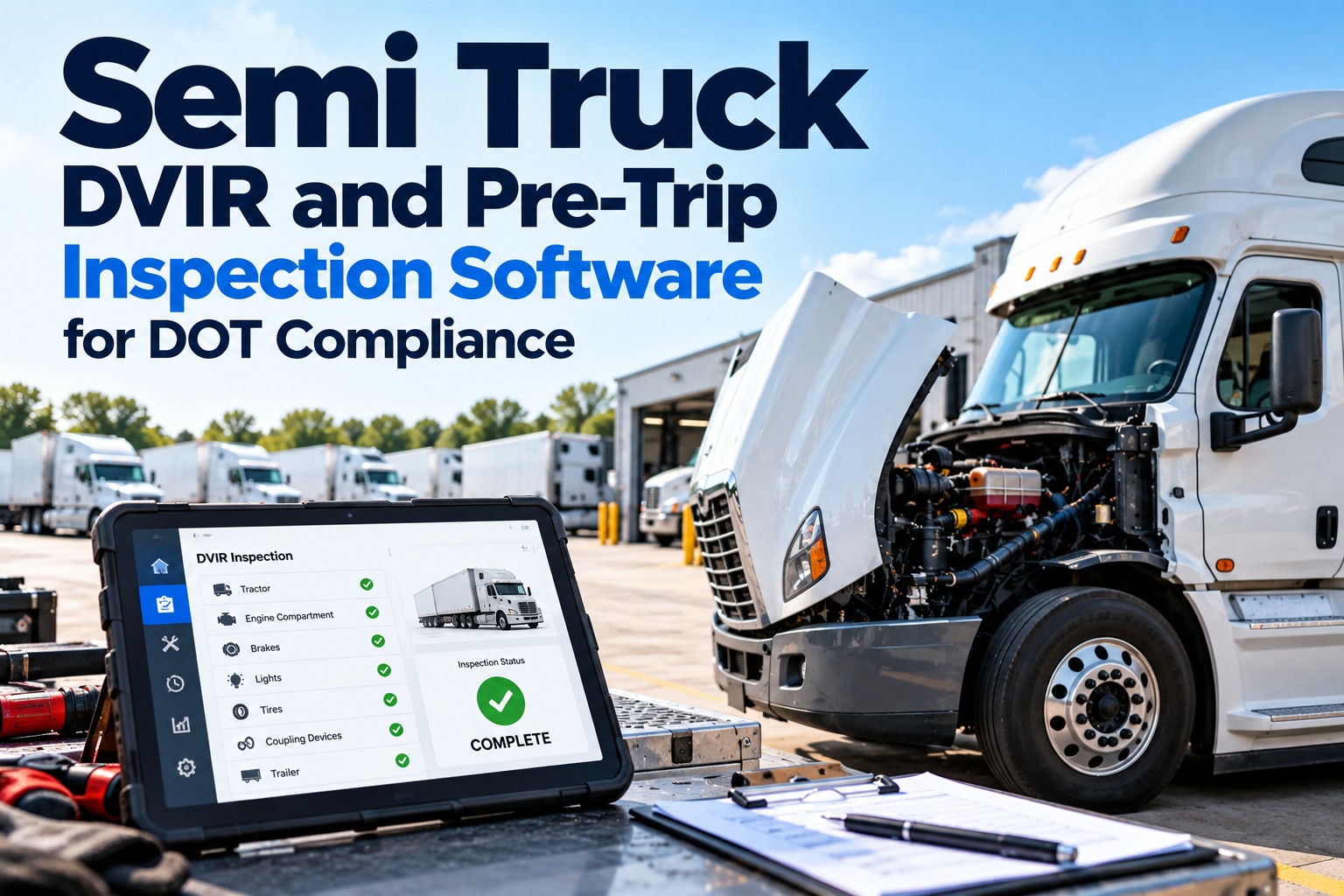
Every driver should see the same guided sequence covering the federally required components, from brakes and tires to lighting and coupling devices, plus any company-specific items like fluid levels or load securement. A standardized digital checklist removes guesswork and makes skipping a step visibly obvious rather than easy to hide.
What Good Standardization Looks Like
A guided walk-around that won't let a driver move to the next section until the current one is complete, with drop-down defect categories instead of free text.
2. Make Photo Verification the Default
A photo with a location pin removes almost all ambiguity from a defect report. Instead of a technician guessing what "worn tire" means, they see exactly which tire, exactly how worn, before ordering parts or scheduling labor.
3. Close the Loop With Real Accountability
Inspection quality collapses when nobody follows up. A defect reported without a repair certification and a next-driver acknowledgment is a broken chain, and it's the single most common reason carriers fail compliance reviews.
Building the Full Chain
Driver reports the defect, a qualified mechanic certifies the repair or confirms none was needed, and the next driver reviews and signs before operating the vehicle. All three steps, every time.
4. Turn Inspection Data Into Coaching, Not Just Compliance
The most overlooked opportunity in inspection quality is using the data itself. Which drivers consistently catch issues early? Which routes or vehicles generate repeat defects? That pattern recognition turns inspections from a compliance chore into a genuine safety and cost advantage.
FleetRabbit's guided inspection workflow, photo verification, and automatic three-signature chain make it structurally difficult to miss a defect or a step. Explore how it fits your fleet by choosing to sign up for a free trial, or book a demo and we'll map it against your current inspection process.
Metrics That Tell You Inspection Quality Is Actually Improving
You cannot improve what you don't measure. A handful of simple metrics tell you whether inspection quality across your workforce is genuinely getting better or just looking better on paper.
Defect Detection Rate
Track how many defects are caught during scheduled inspections versus discovered during a breakdown or roadside stop. A rising ratio of driver-caught defects means your workforce is genuinely engaging with the process.
Time-to-Repair Certification
Measure how long a reported defect sits before a mechanic certifies the repair. Photo-verified, structured defect reports typically get resolved faster because there's no back-and-forth clarifying what's actually wrong.
Signature Chain Completion Rate
Every DVIR should show all three signatures: driver, mechanic, next driver. Any gap here is your single clearest early-warning signal of an inspection program breaking down.
Frequently Asked Questions
Inconsistent inspections cost more than fines, they cost trust, uptime, and safety. FleetRabbit's guided digital inspections, photo verification, and automatic accountability chain make high-quality inspections the default across your entire workforce, not the exception.