The Internet of Things is revolutionizing fleet management by transforming commercial vehicles into intelligent, connected assets that communicate continuously with central management systems. IoT fleet management integrates telematics sensors, GPS tracking, engine diagnostics, and environmental monitors into a unified network that provides real-time visibility into vehicle health, driver behavior, cargo condition, and operational efficiency. This connected ecosystem enables logistics operators to move from reactive maintenance and manual tracking to predictive analytics and automated decision-making. FleetRabbit leverages IoT technology to deliver comprehensive fleet intelligence, helping transportation companies reduce downtime, optimize routes, improve safety, and lower operating costs through data-driven insights. This comprehensive guide explores how IoT fleet management works, the technologies powering connected vehicles, and the transformative benefits for logistics operations of all sizes.
Discover how IoT fleet management can reduce downtime by 50% and improve operational efficiency. Join our FREE Webinar on January 7, 2025, to explore connected vehicle technology!
1. Understanding IoT Fleet Management
IoT fleet management represents the application of Internet of Things technology to commercial vehicle operations, creating an interconnected ecosystem where vehicles, drivers, cargo, and infrastructure communicate seamlessly. Unlike traditional fleet tracking that provides basic location data, IoT-enabled fleets generate thousands of data points per vehicle daily, enabling unprecedented visibility and control.
The fundamental architecture of IoT fleet management consists of three layers: sensors and devices on vehicles, connectivity infrastructure, and cloud-based analytics platforms. Sensors collect data from vehicle systems, cargo areas, driver behavior, and environmental conditions. Connectivity technologies including cellular networks, satellite communications, and short-range wireless protocols transmit this data to central platforms. Analytics engines then process the data, generating insights, alerts, and automated actions that improve fleet operations.
What distinguishes IoT fleet management from earlier telematics systems is the density and diversity of data collection. Traditional GPS tracking might record location every few minutes. IoT-enabled fleets collect data second by second from dozens of sensors: engine temperature, tire pressure, brake wear, fuel consumption, acceleration patterns, cargo temperature, door status, and ambient conditions. This rich data stream enables predictive analytics that forecast maintenance needs, identify efficiency opportunities, and detect anomalies before they become problems.
IoT fleet management also enables bidirectional communication, not just data collection. Fleet managers can send instructions to vehicles, update routes in real time, adjust cargo temperature settings remotely, or even perform over-the-air software updates. This closed-loop communication transforms vehicles from passive assets into active participants in the logistics network, responding dynamically to changing conditions and central commands.
2. Core IoT Sensors and Devices for Fleets
Effective IoT fleet management relies on a network of sensors and devices strategically placed throughout vehicles, cargo areas, and driver compartments. Understanding these components helps fleet managers select the right technology stack for their operational requirements.
Essential IoT Hardware Components for Connected Fleets
3. How IoT Transforms Fleet Operations
IoT technology fundamentally changes how fleets operate across every functional area. Understanding these transformations helps fleet managers identify where IoT investment will deliver the greatest returns for their specific operations.
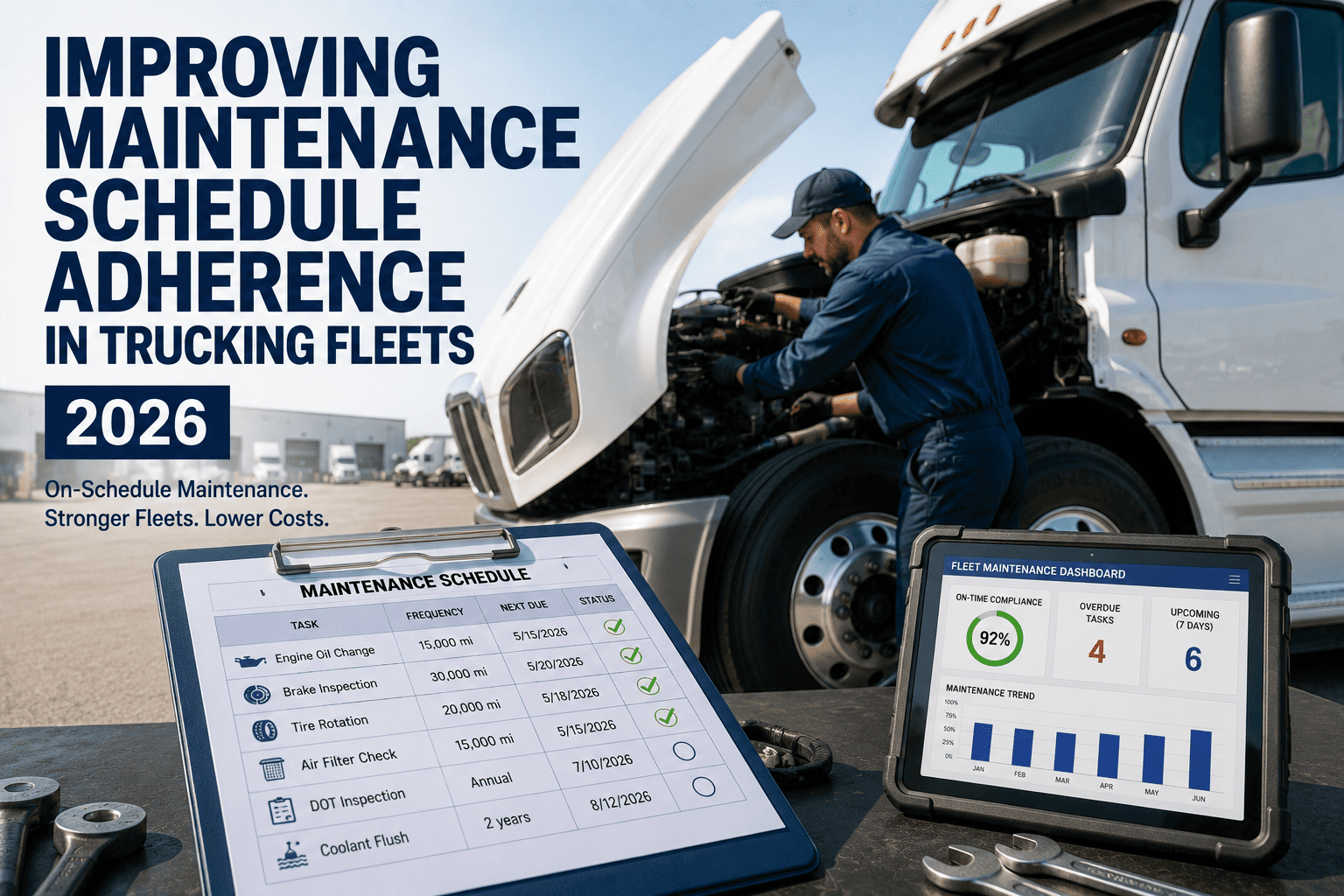
Real-Time Vehicle Diagnostics replace periodic manual inspections with continuous automated monitoring. Engine control modules generate diagnostic trouble codes when systems operate outside normal parameters. IoT platforms instantly alert maintenance teams when codes appear, often before the driver notices any performance issue. A failing oxygen sensor triggers immediate notification rather than waiting for the next scheduled maintenance. A developing transmission problem generates a warning when minor symptoms first appear, enabling proactive repair before catastrophic failure. This continuous diagnostic capability reduces unexpected breakdowns by 40 to 60 percent and extends component life through early intervention.
Predictive Maintenance Analytics evolve beyond simple diagnostic trouble codes by analyzing sensor data patterns to forecast failures before any code appears. Machine learning algorithms trained on thousands of vehicle operating hours can detect subtle anomalies that precede component failures. A slight increase in exhaust gas temperature might predict a failing diesel particulate filter weeks before the vehicle triggers any warning light. Changes in vibration patterns from driveshaft sensors might forecast universal joint failure months in advance. Predictive maintenance reduces unplanned downtime by an additional 20 to 30 percent beyond traditional preventive maintenance, while also reducing unnecessary parts replacement when components still have useful life remaining.
Dynamic Route Optimization leverages real-time data from multiple sources to continuously adjust routing as conditions change. IoT sensors provide current vehicle locations, speeds, and estimated arrival times. Traffic data from connected infrastructure and other vehicles identifies congestion ahead. Weather sensors detect deteriorating conditions that might affect safety or transit times. The IoT platform continuously recalculates optimal routes, sending updated directions to drivers through in-cab displays. This dynamic capability reduces fuel consumption by 10 to 15 percent, improves on-time delivery performance, and reduces driver stress from unexpected delays.
Cargo Condition Monitoring ensures sensitive freight arrives in perfect condition. For refrigerated goods, temperature sensors verify that cold chain integrity was maintained throughout transit, with alerts triggered immediately if temperatures deviate from acceptable ranges. For fragile cargo, accelerometers detect impacts or excessive vibration that might indicate damage. For high-value goods, door sensors provide tamper evidence. This continuous monitoring reduces cargo claims, provides evidence for insurance purposes, and enables proactive intervention when conditions deteriorate. Pharmaceutical companies using IoT cargo monitoring report 50 to 70 percent reductions in temperature-related product losses.
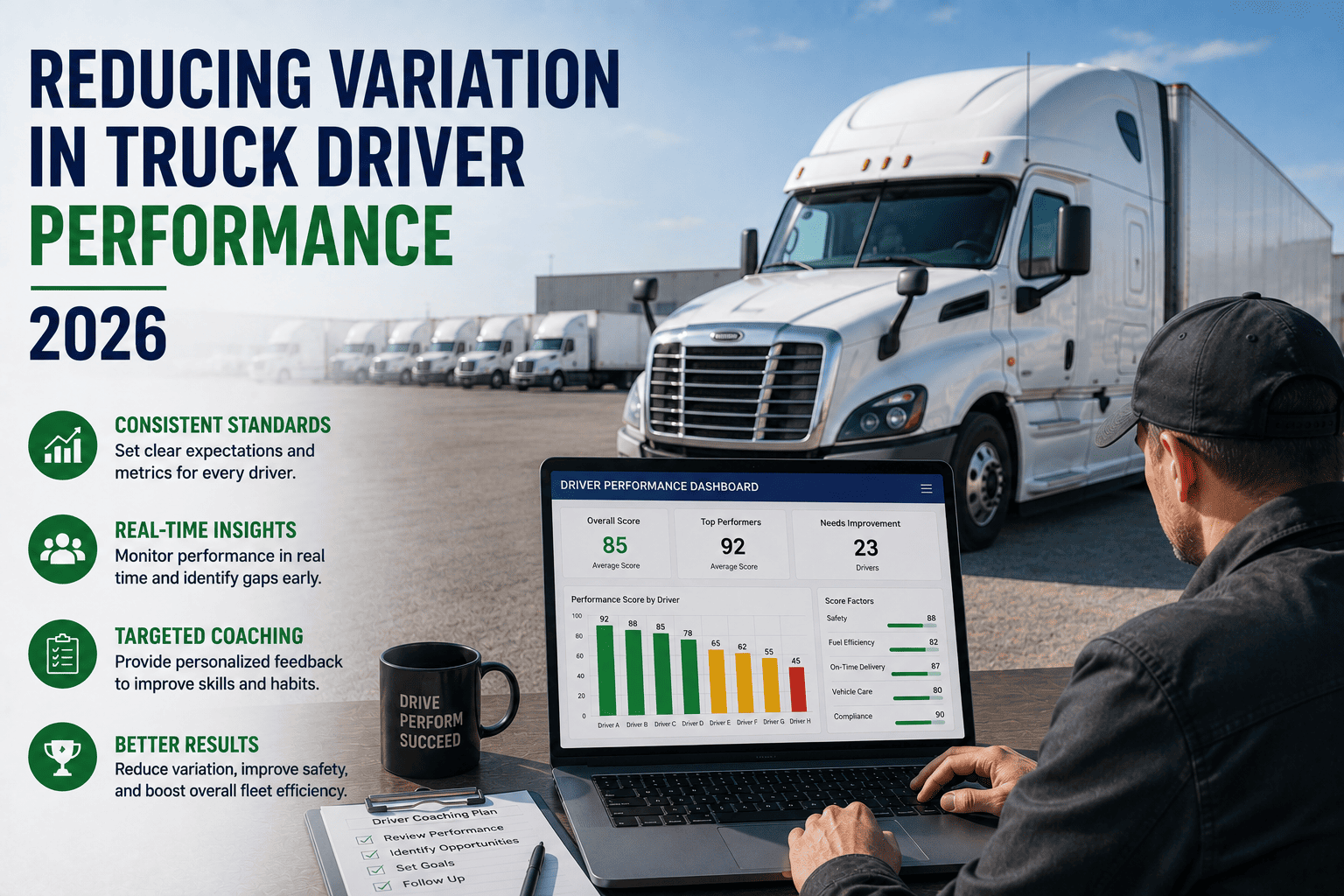
Driver Performance Optimization moves beyond punitive monitoring to coaching and incentive programs based on objective data. IoT sensors capture hard braking events, rapid acceleration, excessive speeding, and unnecessary idling. This data feeds driver scorecards that identify coaching opportunities and track improvement over time. The same data supports incentive programs that reward safe, efficient driving. Drivers receiving IoT-based coaching typically improve fuel efficiency by 8 to 12 percent, reduce accident rates by 20 to 30 percent, and report higher job satisfaction because feedback is objective rather than subjective.
Traditional vs. IoT-Enabled Fleet Management
| Operational Area | Traditional Approach | IoT-Enabled Approach |
|---|---|---|
| Vehicle Maintenance | Scheduled intervals based on mileage or time | Predictive based on actual component condition and usage patterns |
| Route Planning | Static routes determined before departure | Dynamic routes adjusting to real-time traffic, weather, and conditions |
| Driver Management | Subjective supervision and annual reviews | Data-driven coaching and real-time feedback |
| Fuel Management | Monthly fuel card statement analysis | Real-time consumption monitoring and efficiency alerts |
| Cargo Monitoring | Manual temperature checks and paper logs | Continuous sensor monitoring with automated alerts |
| Compliance | Paper logs and manual record keeping | Automated HOS tracking and digital inspection reporting |
| Incident Response | Driver calls dispatcher after incident occurs | Automatic crash notification with video evidence |
4. Connectivity Technologies Powering IoT Fleets
The effectiveness of IoT fleet management depends on reliable, high-bandwidth connectivity that transmits sensor data from vehicles to cloud platforms. Understanding connectivity options helps fleets select appropriate technologies for their operating environments.
Cellular Networks provide the primary connectivity for most IoT fleet applications. 4G LTE networks offer adequate bandwidth for GPS tracking, basic diagnostics, and periodic data transmission. 5G networks, increasingly available in urban and highway corridors, deliver dramatically higher bandwidth and lower latency, enabling real-time video streaming, high-frequency sensor data, and vehicle-to-infrastructure communication. Cellular connectivity works well in populated areas but can be inconsistent in remote regions. Fleet operators should verify coverage along their specific routes before selecting cellular-only solutions.
Satellite Communications provide connectivity where cellular networks don't reach, essential for fleets operating in remote areas, offshore, or across international borders. Satellite IoT devices transmit smaller data packets than cellular but provide near-global coverage. Costs are higher than cellular, typically $20 to $50 monthly per device versus $5 to $15 for cellular. Hybrid solutions that use cellular when available and satellite in remote areas optimize both coverage and cost.
Short-Range Wireless Protocols including Bluetooth Low Energy, Zigbee, and LoRaWAN connect sensors within vehicles without wiring. These low-power protocols enable battery-powered sensors that last years without replacement. A trailer might contain a dozen wireless sensors communicating with a central gateway that then transmits aggregated data via cellular. This approach reduces installation complexity and enables sensor networks that would be impractical with wired connections.
Vehicle-to-Everything Communication represents the cutting edge of IoT connectivity, enabling vehicles to communicate directly with infrastructure, other vehicles, and pedestrians. V2X technology supports safety applications like intersection collision warnings, emergency vehicle preemption, and work zone alerts. While still emerging in commercial fleets, V2X will become increasingly important as connected infrastructure expands and autonomous driving capabilities develop.
Edge Computing processes data on the vehicle rather than transmitting everything to the cloud. Smart gateways analyze sensor data locally, transmitting only exceptions, alerts, and summarized statistics. A gateway might monitor engine temperature continuously but only transmit data when temperatures approach warning thresholds or at scheduled intervals. Edge computing reduces cellular data costs, enables real-time alerts without cloud latency, and functions during connectivity outages. Most modern IoT gateways include edge processing capabilities.
Connect Your Fleet with IoT Intelligence
FleetRabbit integrates with leading IoT sensors and telematics devices to create a unified connected fleet platform.
5. Data Analytics and AI in IoT Fleet Management
Raw sensor data becomes valuable only when transformed into actionable insights through analytics and artificial intelligence. The most sophisticated IoT fleet deployments leverage advanced analytics to extract maximum value from connected vehicle data.
Descriptive Analytics answer what happened questions by summarizing historical data. Dashboards display total miles driven, fuel consumed, idle time percentage, and on-time delivery rates. Reports compare performance across drivers, vehicles, or time periods. Descriptive analytics provide visibility into current operations and establish baselines for measuring improvement. Every IoT fleet platform includes descriptive analytics capabilities, though the depth and customization options vary significantly between solutions.
Diagnostic Analytics answer why something happened by identifying correlations and root causes. Why did fuel efficiency drop 15 percent last month? Diagnostic analysis might reveal that three trucks with low tire pressure caused most of the decline. Why did breakdowns increase? Analysis might show that missed preventive maintenance on older vehicles was responsible. Diagnostic analytics require more sophisticated data processing but deliver actionable insights that drive specific corrective actions.
Predictive Analytics answer what will happen by applying machine learning algorithms to historical data patterns. The system learns that when engine temperature, vibration, and operating hours reach certain combinations, water pump failure follows within 500 miles. Predictive models forecast component failures before they occur, enabling proactive maintenance that prevents breakdowns. Predictive maintenance represents the most valuable application of analytics for most fleets, delivering clear ROI through reduced downtime and repair costs.
Prescriptive Analytics answer what should be done by recommending specific actions and predicting outcomes. Rather than just flagging that a vehicle may need maintenance, prescriptive analytics suggest scheduling the service at a specific shop within the next three days and estimate the cost of doing so versus the cost of waiting. Prescriptive analytics remain less common in fleet management but are increasingly available in advanced platforms. FleetRabbit includes prescriptive capabilities in Enterprise plans.
Computer Vision Analytics process video data from in-cab and forward-facing cameras to detect events that other sensors miss. Computer vision algorithms identify distracted driving, drowsiness, following distance violations, and lane departures. They also detect road hazards, construction zones, and traffic signals. When integrated with other IoT data, computer vision provides comprehensive situational awareness that improves safety and reduces accident risk. Fleets using AI-powered camera systems report 40 to 60 percent reductions in collision frequency.
6. IoT Fleet Security and Data Privacy
As fleets become more connected, security and privacy concerns grow proportionally. IoT devices represent potential entry points for cyber attacks, while collected data raises privacy questions about driver monitoring and surveillance. Addressing these concerns is essential for responsible IoT deployment.
Vehicle Cybersecurity Risks include unauthorized access to vehicle control systems through vulnerable IoT devices. A compromised telematics gateway might allow an attacker to disable brakes, modify engine parameters, or track vehicle locations. While no mass-scale commercial vehicle attacks have occurred, researchers have demonstrated vulnerabilities in production systems. Mitigations include network segmentation separating IoT devices from safety-critical systems, encrypted communications, regular security updates, and device authentication protocols.
Data Transmission Security protects sensor data as it travels from vehicles to cloud platforms. All IoT communications should use strong encryption (TLS 1.2 or higher) to prevent eavesdropping or tampering. Cellular connections are inherently more secure than public WiFi. VPN tunnels provide additional protection for sensitive data. Fleet managers should verify that IoT vendors follow security best practices including regular penetration testing, security incident response plans, and compliance with standards like ISO 27001.
Cloud Platform Security protects stored fleet data from unauthorized access. IoT platforms should implement role-based access controls, multi-factor authentication, and comprehensive audit logging. Data should be encrypted at rest as well as in transit. Vendors should maintain SOC 2 or similar certifications demonstrating security controls. For sensitive operations, private cloud deployment or on-premise hosting may be appropriate.
Driver Privacy Considerations balance safety and efficiency benefits against legitimate privacy concerns. Continuous monitoring of driver behavior, video recording of in-cab activities, and location tracking raise privacy questions. Best practices include clear policies explaining what data is collected and how it is used, obtaining driver consent, limiting data collection to legitimate business purposes, and restricting access to sensitive data. In-cab cameras should record only during safety-critical events unless continuous monitoring is clearly justified. Many fleets find that drivers accept monitoring when they understand safety benefits and when data is used for coaching rather than punishment.
Regulatory Compliance for IoT data includes GDPR in Europe, CCPA in California, and emerging privacy regulations elsewhere. These laws grant individuals rights to access, correct, and delete personal data collected by IoT systems. They also require data breach notification and may restrict cross-border data transfers. Fleets operating internationally should ensure their IoT platforms comply with applicable regulations, which may require data localization or additional consent mechanisms.
7. Real-World IoT Fleet Management Success Stories
Fleets across industries have achieved dramatic improvements through IoT deployment. These real-world examples demonstrate the tangible benefits available to logistics operators who embrace connected vehicle technology.
IoT Fleet Transformation Success Stories
National Grocery Distributor
Challenge: A national grocery distributor operating 200 refrigerated trucks struggled with cold chain integrity. Manual temperature logs showed acceptable ranges, but customers reported receiving spoiled products. The company suspected temperature excursions during transit but had no data to prove or disprove the theory.
Solution: The distributor deployed IoT temperature sensors in every trailer, transmitting cargo temperature every five minutes. Door sensors recorded when trailers were opened, and GPS tracked location during temperature events. Data flowed to a central dashboard with automated alerts for temperature deviations.
Results: IoT monitoring revealed that temperature spiked during loading and unloading when trailers sat with doors open. The distributor implemented dock management procedures that reduced door-open time by 60 percent. Temperature-related spoilage decreased by 85 percent, saving $2.5 million annually. The distributor also gained the ability to provide customers with temperature reports, becoming a preferred supplier for temperature-sensitive grocery categories.
Construction Materials Hauler
Challenge: A construction materials hauler with 80 heavy-duty dump trucks experienced frequent breakdowns that disrupted job site deliveries. The fleet operated in severe conditions with heavy loads, unpaved roads, and extreme temperatures. Breakdowns occurred with little warning, and the maintenance team struggled to diagnose problems quickly when they happened.
Solution: The company deployed comprehensive IoT sensors including engine diagnostics, transmission temperature, brake wear indicators, and suspension strain gauges. Edge gateways processed data locally and transmitted alerts when parameters approached failure thresholds. The fleet management platform integrated maintenance scheduling with IoT alerts.
Results: Predictive maintenance alerts reduced unexpected breakdowns by 67 percent. The maintenance team could schedule repairs during planned downtime rather than responding to roadside emergencies. Average repair time decreased by 40 percent because technicians received diagnostic data before the vehicle arrived at the shop. Overall vehicle uptime increased from 82 percent to 94 percent, effectively adding 10 trucks of capacity without purchasing new equipment.
Regional Parcel Delivery Carrier
Challenge: A regional parcel delivery carrier with 300 vans needed to improve fuel efficiency and reduce accident rates. Driver behavior varied widely, but supervisors lacked objective data to identify coaching opportunities or recognize safe drivers. The carrier wanted to implement incentive programs but needed fair, accurate performance metrics.
Solution: The carrier deployed IoT devices monitoring acceleration, braking, cornering, speeding, and idling. Forward-facing cameras captured driving events and provided video evidence for coaching. Driver scorecards automatically generated weekly performance summaries. Safe driving bonuses were tied to objective IoT metrics.
Results: Fuel consumption decreased by 14 percent within six months. Accident frequency dropped by 38 percent. Idle time decreased by 52 percent. The carrier saved $1.1 million annually in fuel and reduced accident-related costs by $850,000. Driver satisfaction increased because bonuses became transparent and fair, with drivers able to see exactly how their performance affected incentive pay. Turnover decreased by 22 percent.
8. Implementing IoT Fleet Management
Successful IoT deployment requires careful planning, appropriate technology selection, and organizational change management. Following a structured implementation approach maximizes benefits while minimizing disruption.
Step One: Define Objectives and KPIs establishes what you hope to achieve with IoT. Common objectives include reducing fuel consumption by 10 percent, decreasing unexpected breakdowns by 50 percent, improving on-time delivery to 98 percent, or reducing accident frequency by 30 percent. Specific, measurable objectives guide technology selection and provide benchmarks for evaluating success. Without clear objectives, fleets often deploy IoT sensors without clear purpose, collecting data that never drives action.
Step Two: Assess Current Infrastructure evaluates what technology already exists. Many fleets have legacy GPS tracking, ELD devices, or engine diagnostics that can be integrated into new IoT platforms rather than replaced. Assessing what sensors already collect data, what connectivity is available, and what gaps exist informs technology purchasing decisions. Fleets often discover they already own valuable IoT data that simply isn't being analyzed effectively.
Step Three: Select IoT Platform and Sensors matches technology to objectives and infrastructure. Choose a platform that integrates with existing systems, scales to your fleet size, and provides the analytics capabilities needed to achieve your objectives. Select sensors based on required data granularity, environmental conditions, and installation constraints. Consider total cost of ownership including hardware, connectivity, software subscriptions, and maintenance, not just upfront purchase price.
Step Four: Pilot Deployment tests the IoT system with a subset of vehicles before full rollout. Select 5 to 10 vehicles representing your fleet's diversity of ages, types, and operating conditions. Run the pilot for 4 to 8 weeks, collecting data and refining configurations. Use the pilot to validate that sensors provide accurate data, connectivity works along your routes, and analytics generate useful insights. Address any issues before expanding to the full fleet.
Step Five: Train Teams ensures everyone understands how to use IoT data effectively. Drivers need training on what sensors monitor, how data affects their evaluations, and how to respond to in-cab alerts. Maintenance technicians need training on interpreting diagnostic data and integrating IoT alerts into work order systems. Dispatchers and managers need training on dashboard navigation, alert response procedures, and using analytics for decision-making. Invest in training proportionate to the scale of your IoT deployment.
Step Six: Full Deployment and Optimization rolls out IoT across your entire fleet. Plan deployment during a period of normal operations, not peak season. Communicate clearly with drivers about what to expect and how data will be used. After deployment, continuously refine based on results. You may discover that alert thresholds need adjustment, additional sensors would provide value, or different analytics would better support decisions. IoT implementation is never truly complete; it's an ongoing process of optimization.
IoT Implementation Timeline for Mid-Size Fleet
9. Future Trends in IoT Fleet Management
IoT technology continues evolving rapidly, with emerging capabilities that will further transform fleet operations. Understanding these trends helps fleet managers plan long-term technology roadmaps.
Emerging IoT Technologies for Fleets
Key Benefits of IoT Fleet Management
Transform Your Fleet with IoT Intelligence
FleetRabbit connects your vehicles, sensors, and analytics into a unified IoT platform that delivers actionable insights and measurable results.
Frequently Asked Questions
1. What is IoT fleet management?
IoT fleet management uses Internet of Things sensors and connectivity to collect real-time data from commercial vehicles. This data includes location, engine diagnostics, fuel consumption, driver behavior, cargo conditions, and more. The data is transmitted to cloud platforms where analytics generate insights that improve safety, efficiency, and compliance.
2. What sensors are needed for IoT fleet management?
Essential sensors include GPS tracking, engine diagnostics (OBD-II), accelerometers for driving behavior, tire pressure monitors, temperature sensors for cargo, and door sensors for security. Additional sensors like fuel level monitors, dash cameras, and driver identification devices provide enhanced capabilities depending on your operational requirements.
3. How much does IoT fleet management cost?
IoT fleet management costs vary based on sensor density, connectivity requirements, and analytics capabilities. Basic GPS tracking with engine diagnostics costs $15 to $30 per vehicle monthly. Comprehensive IoT deployments with multiple sensors cost $30 to $60 per vehicle monthly. Hardware costs add $100 to $500 per vehicle upfront. Most fleets achieve ROI within 6 to 12 months through fuel savings, reduced maintenance, and improved efficiency.
4. Is IoT fleet management secure?
IoT fleet management can be secure when properly implemented. Choose vendors that use strong encryption for data transmission (TLS 1.2+), implement device authentication, maintain regular security updates, and hold security certifications like SOC 2. Network segmentation separating IoT devices from safety-critical systems provides additional protection. No system is completely hack-proof, but following security best practices reduces risk significantly.
5. How does IoT improve preventive maintenance?
IoT enables predictive maintenance by continuously monitoring component conditions rather than relying solely on mileage or time-based intervals. Sensors detect early warning signs like increased vibration, temperature changes, or abnormal operating parameters. Analytics predict when failures are likely to occur, allowing maintenance scheduling before breakdowns happen. This approach reduces unexpected downtime by 40 to 60 percent and extends component life.
6. Can IoT work without cellular connectivity?
Yes, IoT systems can operate without continuous cellular connectivity using edge processing and store-and-forward capabilities. Gateways collect and analyze sensor data locally, storing information when connectivity is unavailable. When connectivity returns, historical data is transmitted to cloud platforms. Satellite connectivity provides an alternative for truly remote operations, though at higher cost than cellular.