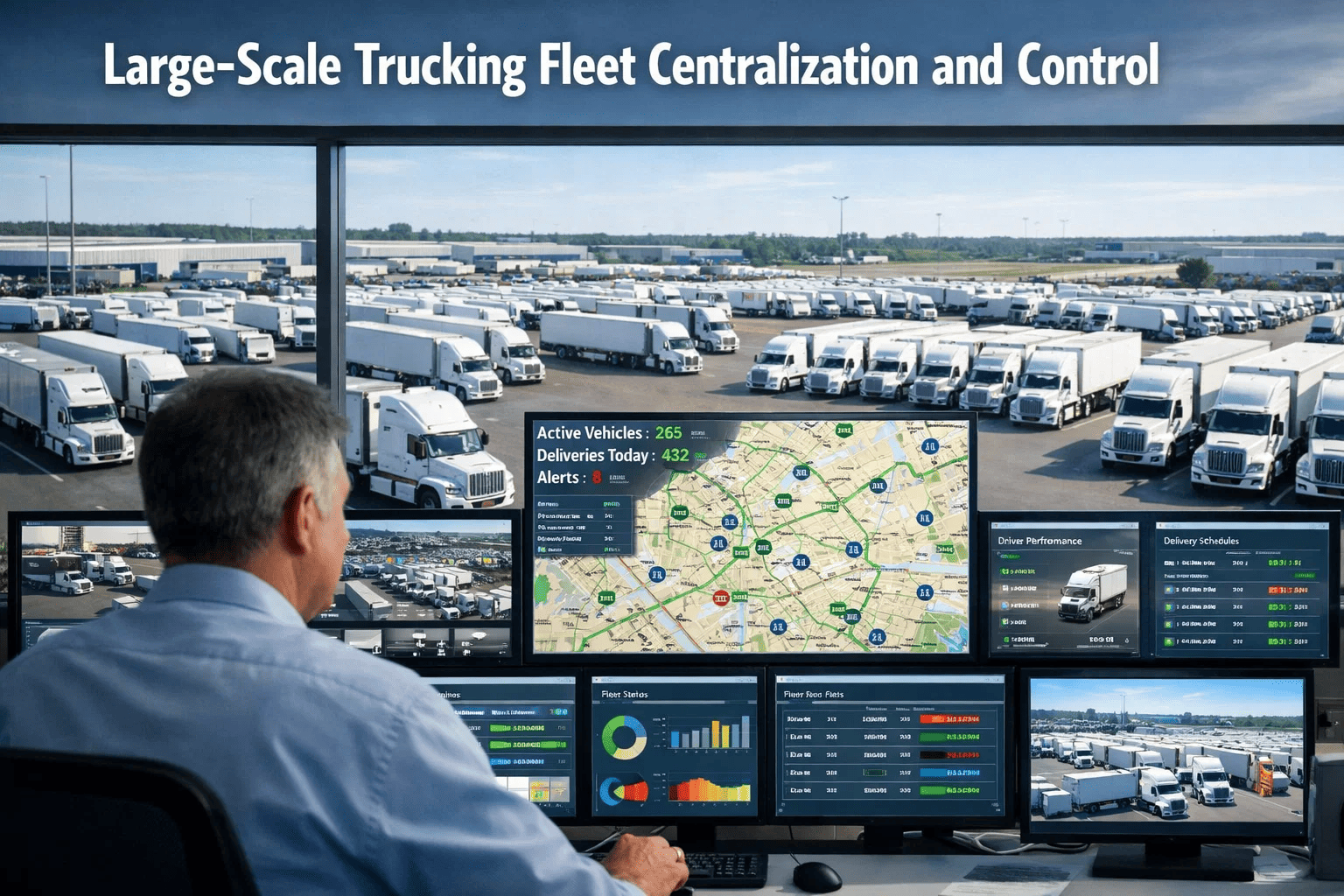
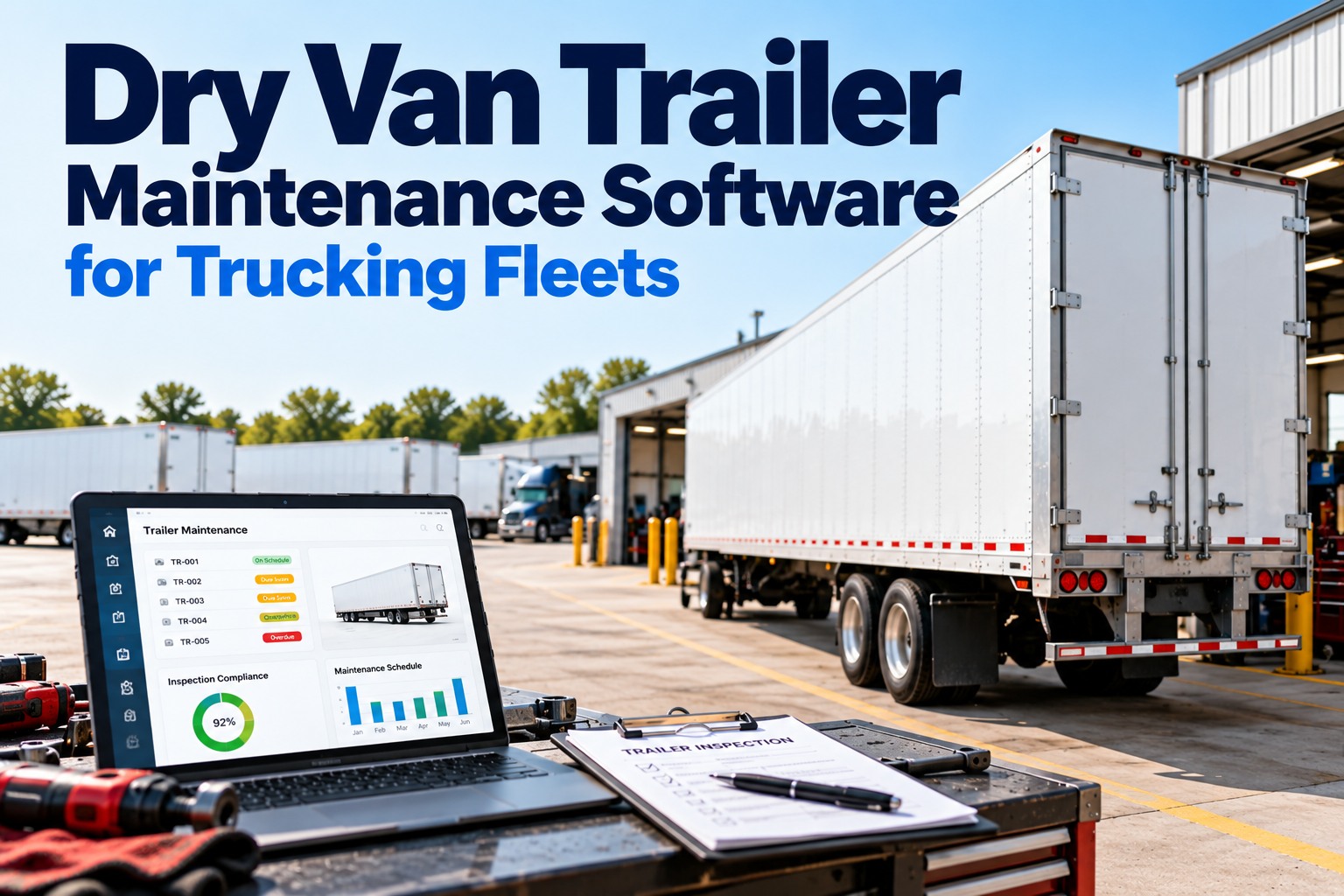
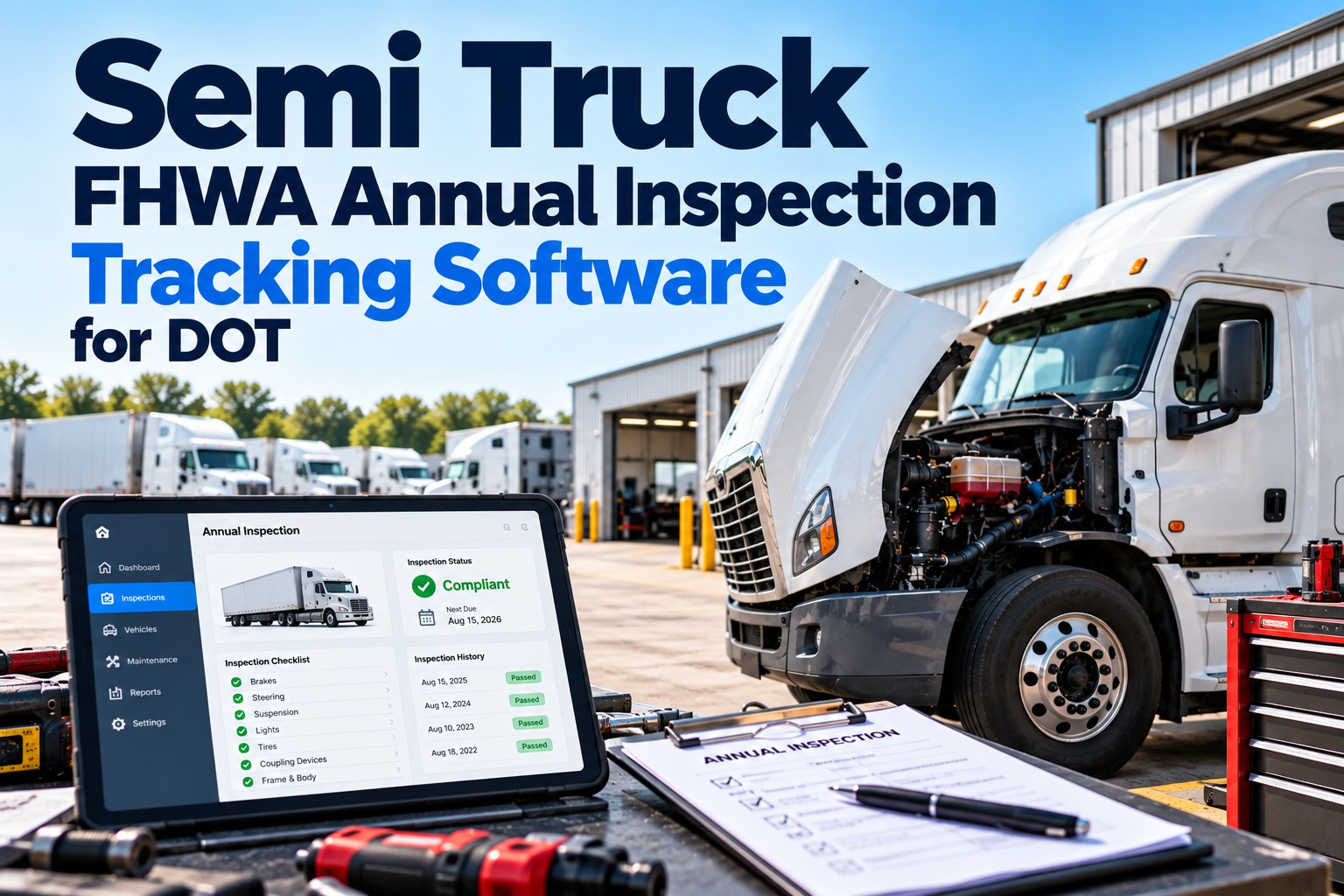
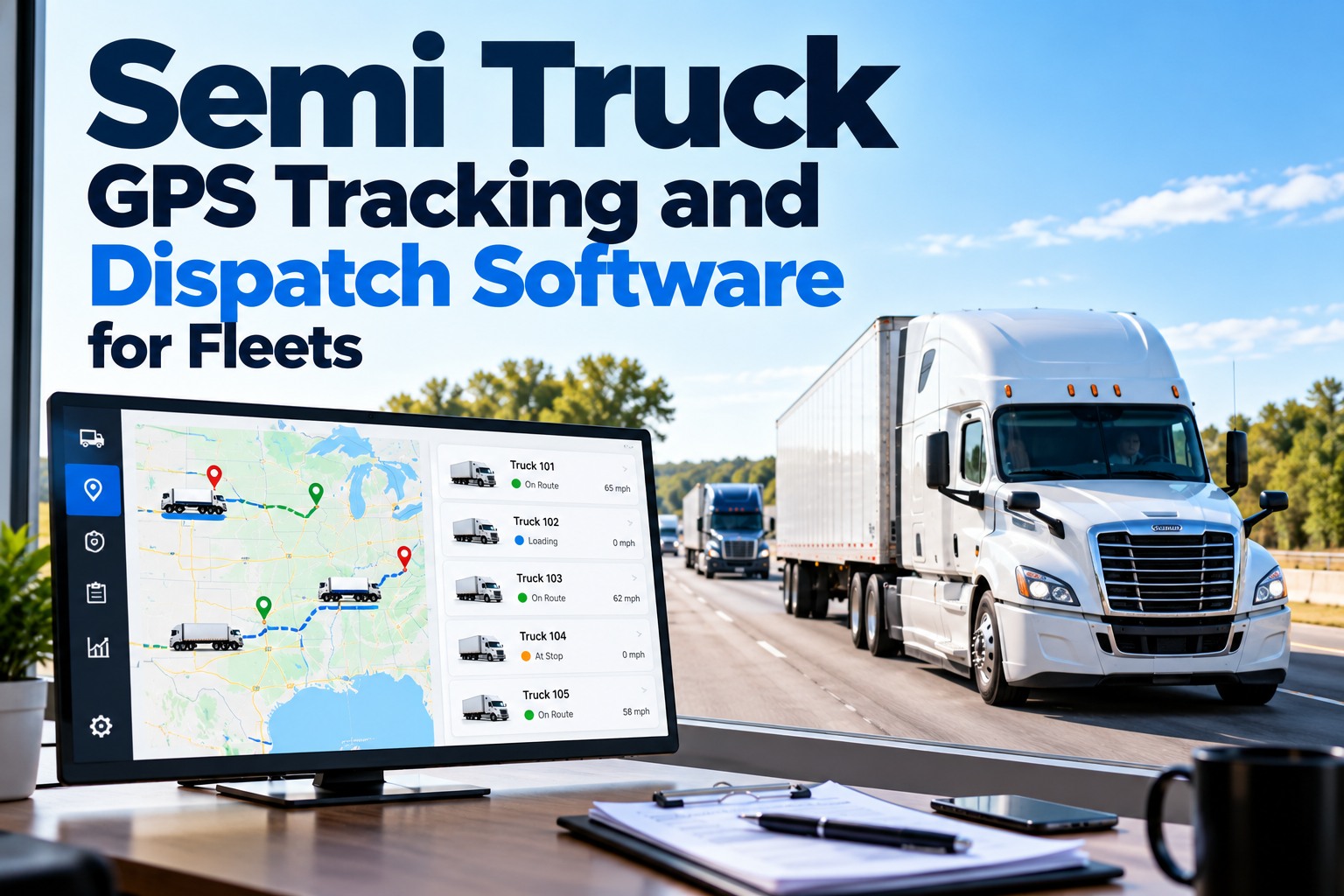
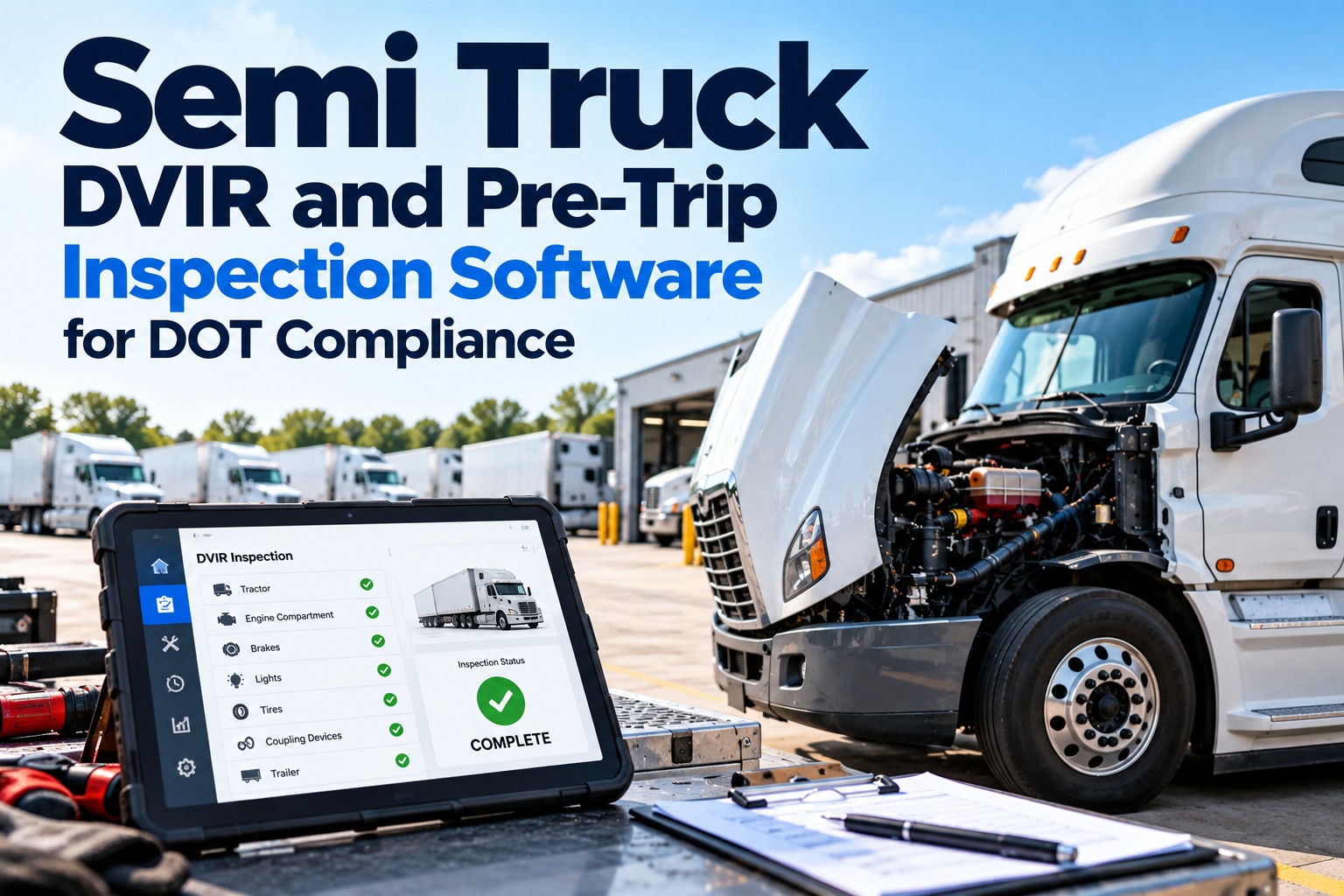
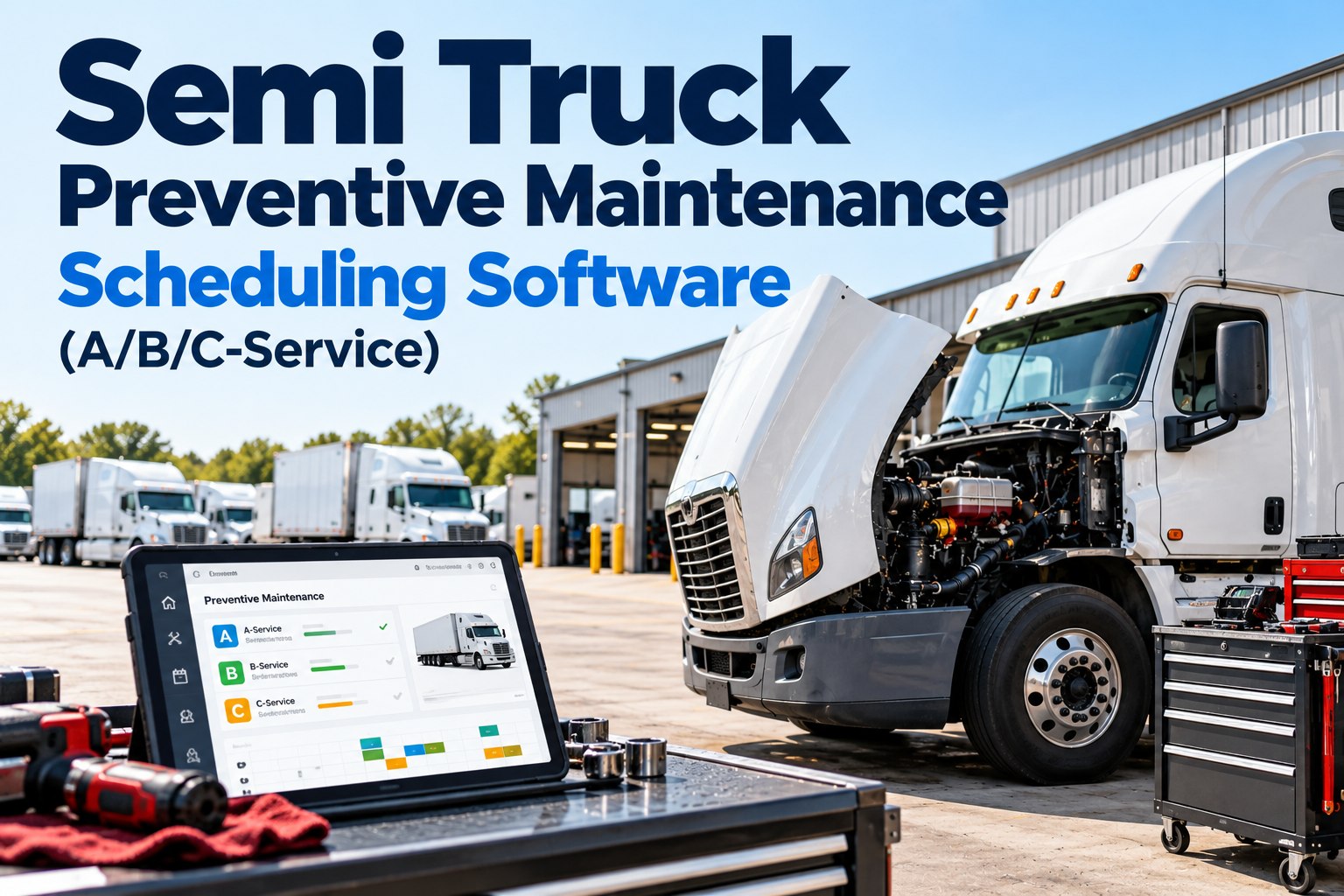
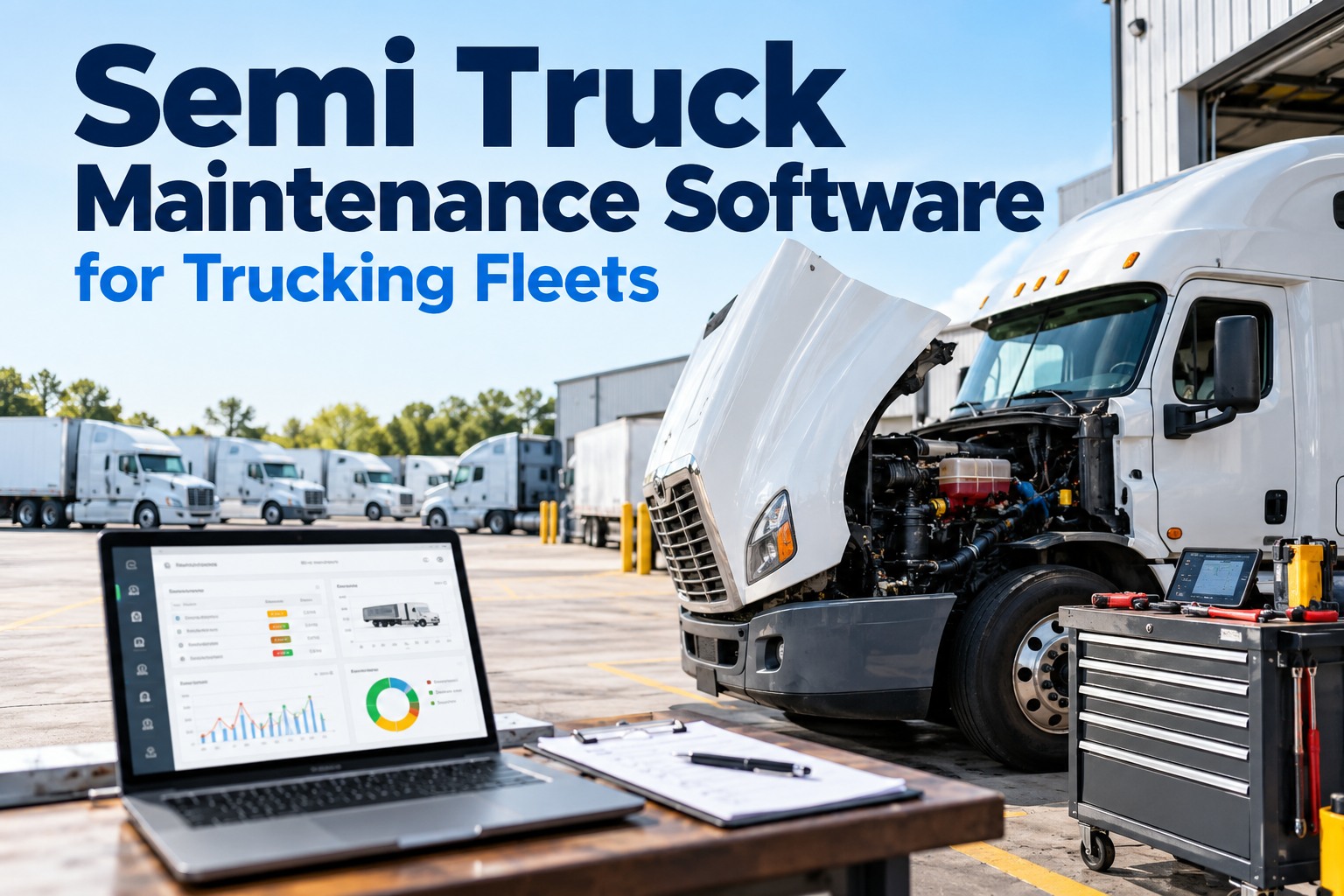
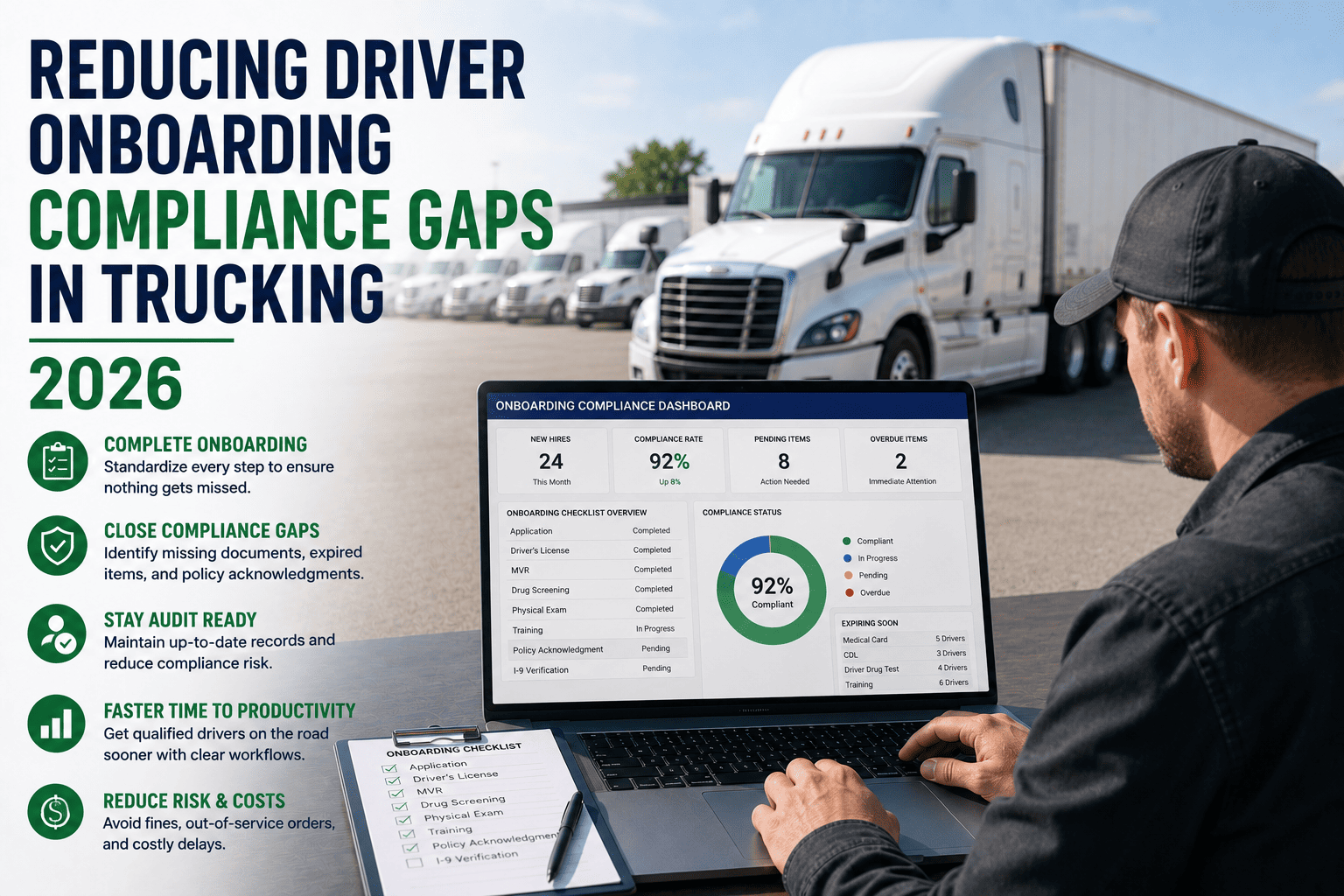
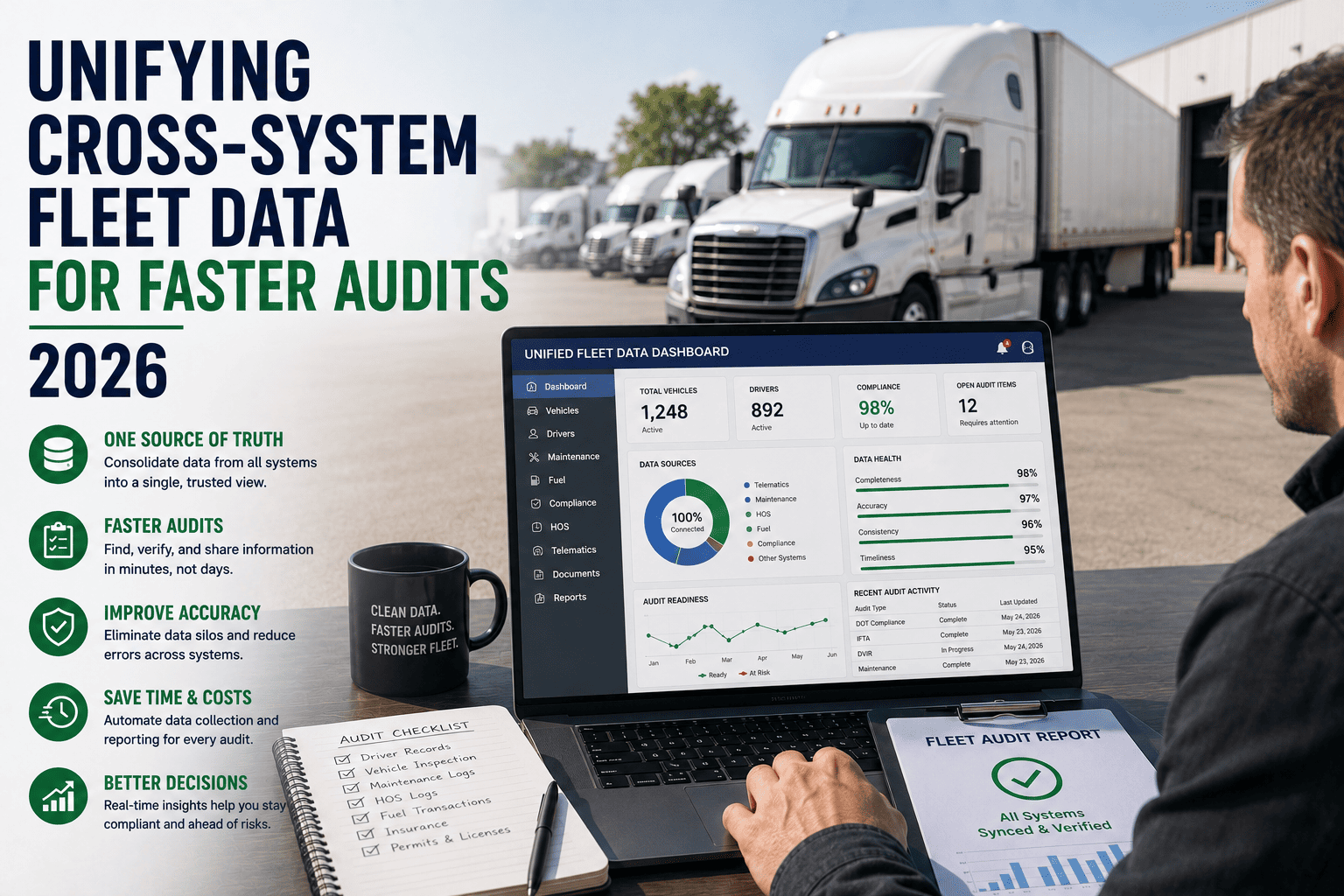
Managing a trucking fleet of 500 or more vehicles across multiple terminals, drivers, and routes without a centralized control system is one of the most operationally expensive inefficiencies in the transportation and logistics industry. Data fragments across terminals. Maintenance decisions are made locally without fleet-wide context. Compliance gaps go undetected until DOT audits surface them. Executives receive weekly paper summaries rather than real-time dashboards. FleetRabbit's large-scale fleet management platform solves the centralization problem — connecting every vehicle, every driver, every terminal, and every maintenance event into a unified operational intelligence system that fleet directors and transportation executives can act on in real time. Book a demo to see how FleetRabbit centralizes large-scale trucking fleet operations.
Enterprise Guide
|
Large-Scale Trucking Fleet Centralization and Control: How Fleet Directors and Transportation Executives Achieve Real-Time Visibility Across 500+ Vehicles
ENTERPRISE FLEET OPERATIONS — TRANSPORTATION & LOGISTICS
Centralized Fleet Command: From Fragmented Terminal Data to a Single Source of Operational Truth
When fleet data lives in terminal-level spreadsheets, disconnected maintenance systems, and supervisor phone calls, the cost of that fragmentation compounds silently across every operational decision. Fuel spend is invisible until monthly statements arrive. Maintenance failures accumulate in terminals that aren't meeting service schedules. Compliance gaps surface only at audit time. FleetRabbit eliminates operational fragmentation by consolidating every data stream from every terminal into one platform — giving fleet executives the real-time visibility to lead operations, not react to them.
$2.4M
Average annual cost savings documented by 500+ vehicle fleets fully deployed on FleetRabbit
94%
Fleet availability rate achieved by enterprise logistics operators using FleetRabbit predictive maintenance
72%
Reduction in compliance documentation time across multi-terminal fleets after FleetRabbit deployment
18 days
Average time from contract signature to full operational deployment across 500-vehicle enterprise fleet
Why Large Fleet Centralization Fails Without the Right Platform Architecture
Most large trucking operations attempt fleet centralization through a combination of enterprise ERP systems, standalone ELD platforms, separate maintenance management software, and custom reporting spreadsheets — each managed by different team members and reconciled manually at reporting intervals. This approach creates four structural problems that no amount of additional headcount can permanently resolve.
01
Data Latency Kills Decision Quality
When maintenance data arrives from terminals weekly, fuel spend is visible only through monthly statements, and driver compliance is reported quarterly, operational decisions are made on information that is days or weeks out of date. By the time leadership identifies a pattern — rising maintenance costs at a specific terminal, declining fuel efficiency in a fleet segment, driver compliance deterioration — the pattern has already caused significant financial impact.
02
Terminal-Level Optimization Creates Fleet-Level Inefficiency
Terminal managers optimizing for their local KPIs may make decisions that are rational locally but suboptimal fleet-wide. Spare parts inventory managed independently at each terminal results in simultaneous overstock at some locations and critical shortages at others. Driver allocation decisions made without cross-terminal visibility create scheduling inefficiencies that compound across the network.
03
Compliance Risk Concentrates in Reporting Gaps
DOT compliance obligations — HOS records, DVIR documentation, driver qualification files, vehicle inspection certifications — exist at the vehicle and driver level but must be demonstrated at the fleet level during audits. Fleets without centralized compliance documentation produce audit-ready records only by conducting emergency document assembly exercises every time a review is scheduled. This reactive compliance posture carries unnecessary liability exposure.
04
Executive Visibility Requires Manual Aggregation
Transportation executives managing large freight operations deserve real-time data to lead effectively. When fleet KPIs require a staff member to manually aggregate terminal reports, the leadership team is always operating on past data — unable to course-correct before business outcomes are impacted. Strategic decisions about fleet composition, terminal scaling, route investments, and equipment replacement require current data, not last week's summary.
The Five Pillars of FleetRabbit's Enterprise Fleet Control Architecture
1
Unified Multi-Terminal Fleet Dashboard
Every vehicle, driver, and maintenance event across all terminal locations visible in a single platform interface. Executives view fleet-wide performance. Terminal managers view their local operations within the same system. Regional directors see their assigned fleet segments. All views draw from the same real-time data — eliminating version conflicts and reconciliation work.
Fleet Impact: Eliminates 12–18 hours per week of manual cross-terminal reporting aggregation.
2
Enterprise Predictive Maintenance Scheduling
Maintenance data from all vehicles — vibration sensor readings, oil analysis results, mileage-based service intervals, DVIR findings — integrated into a fleet-wide predictive maintenance model. Fleet maintenance directors see a consolidated view of upcoming service requirements across all terminals. Parts procurement is coordinated at the enterprise level — reducing inventory carrying costs while ensuring availability.
Fleet Impact: 94% fleet availability rate, 43% reduction in emergency repair spend fleet-wide.
3
Centralized Driver Compliance and Qualification Management
Driver qualification files — CDL status, medical certificates, HOS records, safety training completion, insurance documentation — managed in FleetRabbit with automatic expiry alerts and compliance status dashboards. Fleet safety directors see every driver's compliance status across all terminals. Expiring credentials trigger 30-60-90 day alert sequences. Audit-ready documentation generated on demand — not assembled in crisis.
Fleet Impact: 72% reduction in compliance administrative time. Audit response time reduced from days to hours.
4
Fleet-Wide Fuel Intelligence and Cost Control
Real-time fuel efficiency data per vehicle, per route, per driver, and per terminal — with comparative benchmarking that identifies underperforming segments. Enterprise fuel card integration eliminates manual fuel data reconciliation. Fuel spend anomalies — efficiency drops, off-route fueling, idle-time patterns — flagged automatically. Fleet-wide fuel cost optimization achievable without manual data analysis.
Fleet Impact: Average 8–12% fuel cost reduction through efficiency monitoring and driver coaching data.
5
Executive Reporting and Strategic KPI Dashboards
Transportation executives need fleet data formatted for strategic decision-making, not operational detail. FleetRabbit's executive dashboard layer provides fleet availability trends, cost-per-mile by terminal and vehicle class, maintenance spend as a percentage of fleet value, driver safety score distributions, and CSA compliance trajectory — all updated in real time, formatted for board-level review.
Fleet Impact: Leadership decisions based on current data. No more "we'll know next week" operational management.
Ready to Centralize Your Enterprise Fleet Operations?
FleetRabbit deploys across 500+ vehicle fleets in an average of 18 days. Dedicated implementation team. No IT department required. Full operational deployment before your first monthly statement arrives.
FleetRabbit Enterprise ROI Model: What 500-Vehicle Fleet Operators Achieve
The financial case for enterprise fleet centralization through FleetRabbit is built across five distinct savings categories. Each category delivers measurable, documentable impact that compounds as platform adoption deepens across the fleet. The following model reflects actual average performance data from FleetRabbit enterprise deployments in the transportation and logistics sector.
Maintenance Cost Reduction
Shift from reactive emergency repair to predictive scheduled service; elimination of cascade damage events
$680,000 – $940,000
Fuel Efficiency Improvement
Real-time mpg monitoring, driver coaching data, route optimization, idle reduction reporting
$420,000 – $620,000
Compliance Risk Avoidance
Elimination of HOS violations, DVIR gaps, DOT out-of-service events, and driver qualification lapses
$180,000 – $340,000
Administrative Efficiency
Reduction in manual reporting, document assembly, data reconciliation, and cross-terminal coordination overhead
$240,000 – $380,000
Asset Life Extension
Condition-based maintenance extends average vehicle service life, deferring replacement capital expenditure
$820,000 – $1,200,000
Total Annual Value
Across maintenance, fuel, compliance, administrative, and asset lifecycle categories
$2,340,000 – $3,480,000
Enterprise Deployment Framework: How FleetRabbit Centralizes a 500+ Vehicle Fleet
Phase 1
Data Architecture and Integration — Days 1 to 5
FleetRabbit implementation team maps all existing data sources — telematics platforms, ELD systems, maintenance management tools, fuel card providers, and HR systems. Integration connectors are established for each source. All vehicle records, driver profiles, and historical maintenance data are imported. Terminal structure is configured with appropriate access controls for each user role across your organizational hierarchy.
Phase 2
Terminal Rollout and Training — Days 6 to 12
Terminal managers and dispatchers complete role-specific training on FleetRabbit workflows. Driver mobile app rollout configured for your existing driver communication infrastructure. DVIR checklists customized for each vehicle type in the fleet. HOS compliance dashboards activated at the terminal level. Local teams are operational independently while the enterprise view consolidates all terminal data automatically.
Phase 3
Executive Reporting Configuration — Days 13 to 18
Transportation executive KPI dashboards are configured to your specific reporting requirements — cost-per-mile targets, fleet availability benchmarks, compliance rate thresholds, and fuel efficiency goals. Automated weekly and monthly summary reports configured for leadership distribution. Real-time alert thresholds set for executive-level notification on critical events. Full operational deployment confirmed across all terminals.
Phase 4
Optimization and Continuous Improvement — Month 2 Onward
Predictive maintenance models become fleet-specific as historical data accumulates. Benchmark comparisons between terminals identify operational gaps and best practices for fleet-wide standardization. Quarterly business reviews with FleetRabbit customer success team quantify ROI achievement against initial targets. Platform capabilities expand as your team's operational sophistication grows.
How Different Roles Experience FleetRabbit Across Your Enterprise Fleet
Transportation VP / Director
What You See in FleetRabbit
Fleet-wide availability rate trending by week and month
Cost-per-mile by terminal, route class, and vehicle type
Maintenance spend as percentage of fleet book value
Safety score distribution across driver population
Compliance calendar — certifications, inspections, renewals
Capital expenditure forecasting based on vehicle condition data
Fleet Maintenance Director
What You See in FleetRabbit
All open maintenance work orders across all terminals
Predictive alerts ranked by urgency and projected failure timeline
Parts inventory levels per terminal and consolidated fleet
Planned vs. unplanned maintenance ratio fleet-wide
Shop capacity utilization across all service locations
Cost avoidance from predictive maintenance actions
Fleet Safety Director
What You See in FleetRabbit
All driver HOS compliance statuses across entire fleet
DVIR completion rates and defect trend tracking
Driver qualification file status with expiry forecasting
CSA score trajectory by carrier and terminal
Safety incident logging and investigation documentation
Audit-ready compliance reports generated on demand
Terminal Manager
What You See in FleetRabbit
All vehicles assigned to your terminal — location and status
Driver availability, HOS status, and dispatch readiness
Upcoming maintenance due for terminal vehicles
Fuel usage and efficiency trends for your fleet segment
DVIR submissions and open defect status for local trucks
Local compliance calendar and document expiry alerts
Frequently Asked Questions: Large-Scale Fleet Centralization With FleetRabbit
QHow does FleetRabbit handle fleets operating across multiple states and regulatory environments?
FleetRabbit's compliance framework is built for multi-state operations. IFTA fuel tax mileage tracking, state-specific weight and speed compliance alerts, and varying HOS exemption rules are all managed within the platform. The compliance dashboard distinguishes between FMCSA federal requirements and state-specific obligations. Fleets operating across 10+ states find the centralized compliance calendar eliminates the regulatory confusion that previously required dedicated compliance coordinators at each terminal.
QCan FleetRabbit integrate with our existing TMS and dispatch software?
Yes — FleetRabbit provides API integration with major Transportation Management Systems including McLeod Software, TMW Systems, MercuryGate, and Oracle Transportation Management. Dispatch data, load assignments, route data, and delivery confirmation records flow between systems. For fleets using custom TMS solutions, FleetRabbit's API layer supports custom integration development. The goal is to make FleetRabbit the operational intelligence layer that works alongside your dispatch infrastructure rather than replacing it.
QWhat does enterprise-level data security look like on the FleetRabbit platform?
FleetRabbit enterprise deployments include role-based access controls that restrict data visibility by terminal assignment, role classification, and geographic scope. Driver personal data, organizational financial data, and competitive route information are protected through end-to-end encryption and SOC 2 Type II compliant infrastructure. Fleet executives can configure data governance policies that comply with enterprise information security requirements. Single Sign-On (SSO) integration is available for enterprise identity management systems.
QHow does FleetRabbit manage the change management challenge of deploying across multiple terminals simultaneously?
FleetRabbit's enterprise implementation team uses a phased terminal rollout approach — typically beginning with two to three pilot terminals to build internal champions and refine configuration before full fleet rollout. Terminal managers receive role-specific training focused on their daily workflows rather than comprehensive platform training. Drivers receive app orientation targeted at the specific features they use — pre-trip inspections and HOS logging. Adoption rates consistently exceed 85% within 30 days of terminal activation.
QHow does FleetRabbit handle fleet acquisitions and additions of new terminals?
New terminals and acquired fleet assets are added to FleetRabbit through a structured onboarding workflow that can be completed in 3–5 days for a standard terminal addition. Vehicle data import, driver profile creation, and integration connection activation follow the same implementation pattern as the initial enterprise deployment. Acquired fleets moving from different fleet management systems receive dedicated data migration support to preserve historical maintenance and compliance records.
Operational Fragmentation Is a Leadership Problem. FleetRabbit Is the Solution.
Transportation executives managing large-scale trucking operations without a centralized control platform are making strategic decisions without current data, absorbing costs that systematic visibility would eliminate, and accepting compliance risk that a modern fleet management architecture removes entirely. FleetRabbit centralizes everything — maintenance, compliance, fuel, drivers, and executive reporting — into one platform built for the operational scale and complexity of enterprise freight operations.
Enterprise Fleet Management
Multi-Terminal Operations
Fleet Centralization
Executive Reporting
Predictive Maintenance at Scale
CSA Compliance
April 15, 2026
By Nathan Smith
All Posts