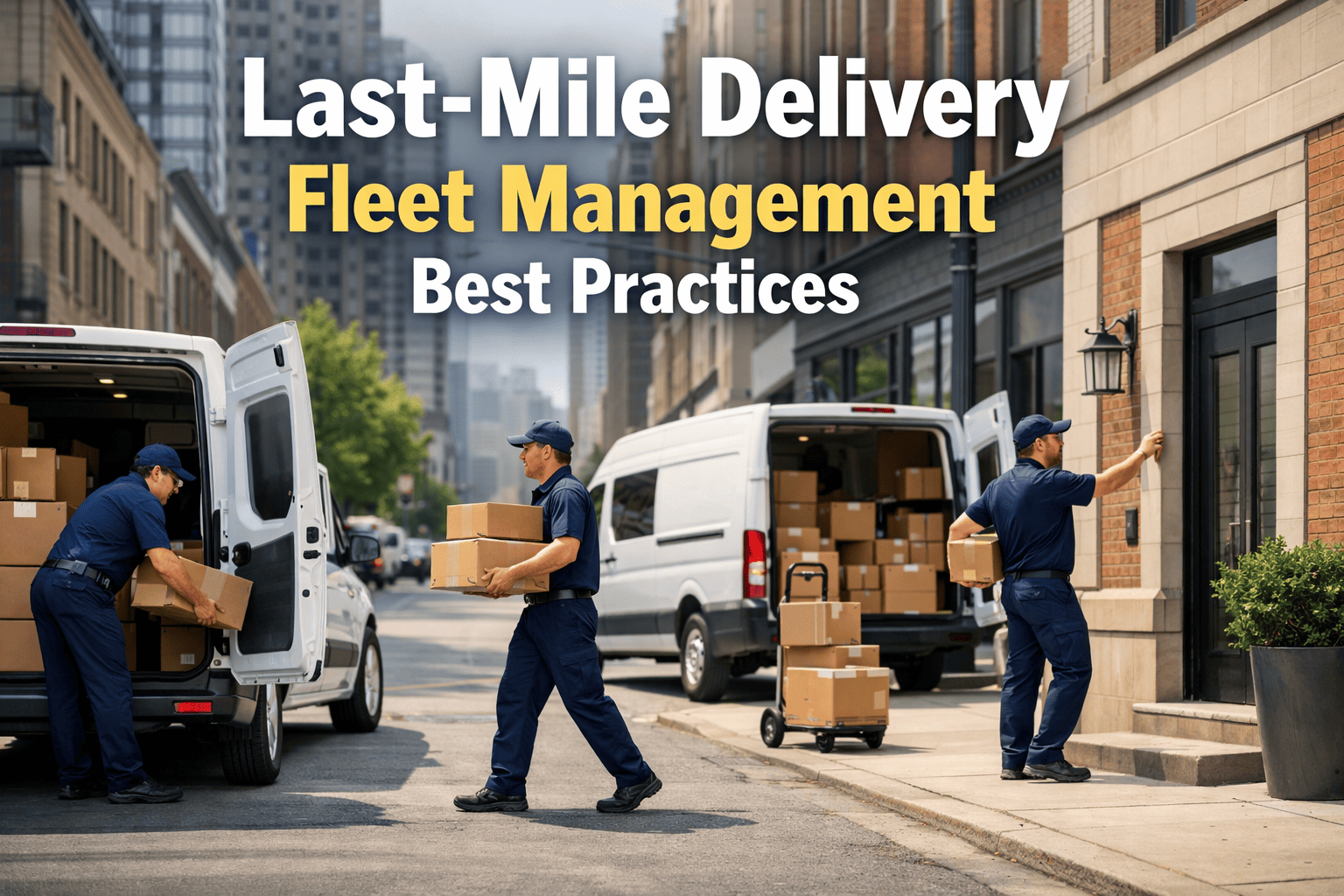
Last-Mile Delivery Fleet Management Best Practices
Last-mile delivery is the most operationally complex, cost-intensive, and customer-visible segment of the logistics supply chain. While it accounts for just the final leg of a shipment's journey, last-mile delivery represents 53% of total shipping cost and is the primary driver of customer satisfaction or dissatisfaction. Fleet managers running last-mile operations face a unique combination of challenges — high stop density, tight delivery windows, driver compliance requirements, real-time customer visibility demands, and the relentless pressure to reduce cost per delivery while increasing service quality. FleetRabbit's fleet management platform is purpose-built to address every dimension of this challenge. Book a demo to see FleetRabbit's last-mile delivery management in action.
Why Last-Mile Matters More Than Any Other Leg
Last-mile delivery accounts for 53% of total logistics cost, yet it is where the majority of customer experience decisions are made. A single failed delivery, missed window, or lack of tracking visibility can end a customer relationship. FleetRabbit gives fleet managers and operations executives the tools to optimize stop sequencing, enforce delivery compliance, provide real-time customer ETAs, manage driver performance, and reduce cost per delivery — across fleets of any size, urban or rural.
The Seven Biggest Challenges in Last-Mile Delivery Fleet Operations
Last-mile delivery failure doesn't typically stem from a single catastrophic event — it compounds from dozens of small operational inefficiencies that individually seem manageable but collectively destroy margin and customer trust. Understanding these failure modes is the first step to addressing them systematically.
Manual route planning generates time estimates that don't account for real-time traffic, driver pace variation, or stop complexity. When estimated arrival times are wrong, customers wait at home unnecessarily or miss deliveries entirely — creating failed delivery attempts that cost $12–$20 each to reattempt and drive customer churn at rates that dwarf the operational cost.
Customer Impact
Failed reattempts cost $12–$20 each. 35% of customers abandon brands after a single failed delivery.
02
Proof of Delivery Disputes — No Digital Evidence
Without photo documentation and GPS-verified delivery confirmation, every delivery dispute becomes a he-said-she-said resolution process. Chargebacks, replacement shipments, and customer service overhead from unverifiable deliveries create a significant hidden cost in high-volume last-mile operations, particularly for e-commerce and retail distribution fleets.
Financial Impact
Unverified delivery disputes average $45–$120 per incident in resolution cost.
03
Inefficient Stop Sequencing — Miles Wasted Daily
Drivers given a list of stops without optimized sequencing make route decisions on the fly — often based on familiarity rather than efficiency. A 20-stop route can yield dramatically different mileage outcomes depending on sequence. Unoptimized sequencing adds 15–25% unnecessary miles daily, directly inflating fuel costs and driver hour requirements.
Cost Impact
15–25% excess miles daily across the fleet translates to $40,000–$80,000 in annual waste for a 15-vehicle operation.
04
Driver Compliance and Safety Gaps
Last-mile drivers operating in dense urban environments face higher accident rates, more frequent stop-and-start driving patterns, and greater fatigue over high-stop-count days. Without real-time monitoring of speed, hard braking, and HOS compliance, safety violations and insurance incidents accumulate — particularly in high-pressure delivery windows where drivers may cut corners to meet commitments.
Safety Impact
Urban last-mile fleets have 3x higher accident rates than highway operations without monitoring.
05
Dispatcher Overload — Manual Problem Resolution
In a 20-vehicle last-mile operation, dispatchers may handle 50–80 driver contacts per shift — traffic questions, address clarifications, schedule changes, customer callbacks. Without automated rerouting, live ETA updates, and in-app driver guidance, dispatcher capacity becomes the operational bottleneck — adding overhead and creating response delays when problems arise mid-route.
Operational Impact
Dispatcher-to-truck ratios of 1:8 or worse when manual communication management is required throughout the shift.
FleetRabbit's Best Practices for Last-Mile Delivery Fleet Management
The following practices represent the operational standards FleetRabbit enables for high-performing last-mile delivery fleets — combining technology-enforced workflows, real-time data visibility, and driver-facing mobile tools that together reduce cost, improve service quality, and scale without proportional headcount growth.
Best Practice 1
AI Stop Sequence Optimization Before Every Dispatch
Never dispatch a last-mile driver with a manually assembled stop list. FleetRabbit's AI sequencing evaluates real-time traffic, delivery windows, vehicle capacity, and geographic clustering before every dispatch — generating optimized stop orders that reduce total daily miles by 15–20% while improving window compliance. Dispatchers review and approve AI sequences in under two minutes per route.
Automated Customer ETA Notifications at Every Stage
FleetRabbit generates and delivers real-time ETA notifications to customers at key delivery milestones — route departure, approaching delivery window, 30-minute arrival alert, and delivery confirmation. Customers with live tracking visibility are 68% less likely to contact customer service for status updates — reducing inbound call volume, improving satisfaction scores, and eliminating the dispatcher time spent relaying delivery status manually.
Outcome: 68% reduction in inbound status call volume
Best Practice 3
Digital Proof of Delivery — Photo, Signature, GPS
FleetRabbit's driver app captures GPS-verified delivery confirmation with optional photo documentation and customer signature collection at every stop. Digital POD is uploaded immediately to the fleet management system — creating an irrefutable delivery record accessible to dispatchers, billing teams, and customers within seconds of delivery. Delivery disputes resolved in minutes, not days.
Outcome: Delivery disputes resolved in <5 minutes with irrefutable digital evidence
Best Practice 4
Live Geofenced Stop Monitoring — No Manual Check-Ins
FleetRabbit's geofencing automatically detects when drivers arrive at and depart from each delivery stop — recording dwell time, flagging excessive stop duration, and updating the live dispatch board in real time. Dispatchers see route progress across all vehicles on a single map view without requiring drivers to manually check in. Detention time at customer locations is automatically logged for billing recovery.
Outcome: 100% stop visibility without driver communication overhead
Best Practice 5
Driver Performance Scoring — Identify and Coach Outliers
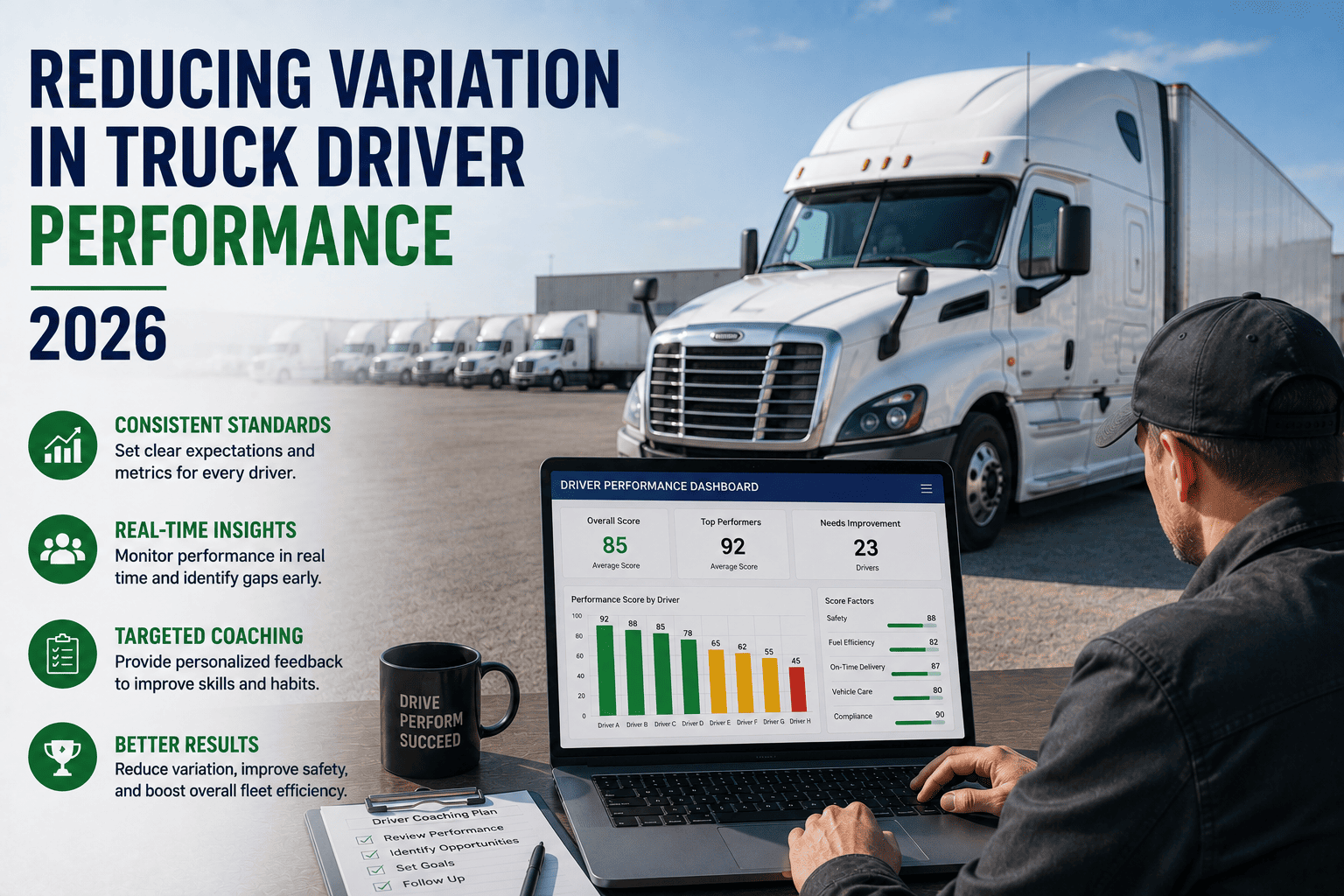
FleetRabbit generates individual driver performance scores across safety behavior (speed, braking, acceleration), route compliance (following assigned sequence, dwell time management), and delivery completion rate. Managers identify drivers operating below performance benchmarks before poor habits become costly incidents — enabling coaching conversations supported by specific, data-backed behavioral evidence rather than anecdotal observation.
Outcome: 42% reduction in safety incidents within 90 days of behavior monitoring
Best Practice 6
Dynamic Capacity Planning — Right Vehicle for Every Route
FleetRabbit's dispatch module matches vehicle capacity to load volume and delivery requirements before route assignment — preventing both overloaded vehicles (compliance risk) and under-utilized vehicles (profitability risk). Vehicle selection factors in payload capacity, compartment configuration, temperature requirements, and equipment certifications — ensuring every route runs in the most cost-efficient vehicle available.
Outcome: Fleet utilization increases to 88–92% from typical 70–75% baseline
How FleetRabbit Reduces Cost Per Delivery — The Numbers
19%
Reduction in cost per delivery
94%
On-time delivery completion rate
100%
Digital POD completion across routes
42%
Fewer safety incidents in 90 days
1:14
Dispatcher-to-driver ratio achievable
91%
Fleet utilization rate achieved
Last-Mile Delivery Intelligence
Every Stop. Every ETA. Every Delivery. Fully Optimized.
FleetRabbit gives last-mile fleet managers the tools to run higher stop counts per vehicle, improve customer delivery experience, reduce cost per delivery, and scale operations without proportional headcount growth.
AI Stop SequencingDigital PODLive Customer ETAsDriver ScoringGeofenced Monitoring
QHow does FleetRabbit handle delivery windows for residential vs. commercial stops on the same route?
FleetRabbit treats delivery windows as hard constraints in the optimization algorithm — the AI sequences stops around confirmed customer windows regardless of whether they are residential or commercial locations. Where windows conflict within a single vehicle's route capacity, the system flags the conflict before dispatch and presents the dispatcher with resolution options: adjust windows, split the load, or escalate priority designation. Mixed-stop routes are fully supported with customer-specific time parameters per stop.
QCan customers track their delivery in real time through FleetRabbit?
Yes. FleetRabbit supports customer-facing delivery tracking through automated notifications and shareable tracking links. Customers receive ETA updates at configured milestones — route start, approaching window, and final delivery confirmation. This eliminates inbound "where is my delivery" call volume and improves customer satisfaction scores without adding any operational overhead to driver or dispatcher workflows. See the customer tracking experience in a live demo.
QWhat happens when a driver cannot complete a delivery — wrong address, nobody home, access issue?
FleetRabbit's delivery exception workflow guides drivers through structured failure capture — documenting the exception type, adding photo evidence, and recording GPS location. Failed delivery exceptions are immediately visible to dispatch with the full documentation attached, enabling fast decision-making on reattempt scheduling, customer contact, or load rerouting. Exception data is stored with the delivery record for customer communication and billing dispute purposes.
QHow does FleetRabbit help manage high-volume seasonal delivery surges?
FleetRabbit's route optimization scales immediately to accommodate increased vehicle counts, stop volumes, and expanded geographic coverage during peak periods. The platform supports temporary driver onboarding with guided app training designed to get seasonal drivers operational within hours. Fleet managers can model capacity scenarios in the dashboard before committing to additional vehicles or contractors, ensuring surge resources are deployed where they create the most delivery throughput. Start your free trial to test surge capacity planning.
QDoes FleetRabbit integrate with e-commerce or order management platforms for automatic route generation?
FleetRabbit integrates with major order management systems and e-commerce platforms to import delivery orders automatically — eliminating manual stop data entry and enabling same-day route generation as orders are confirmed. Integration options include direct API connection, CSV import, and webhook-based real-time order receiving. Ask our implementation team about your specific platform in a demo session.
The Last Mile Is Where Customers Decide to Stay or Leave — Make It Exceptional.
FleetRabbit gives last-mile fleet managers the operational intelligence to deliver on time, every time — with lower cost per stop, better driver performance, and the real-time visibility customers now expect as standard.