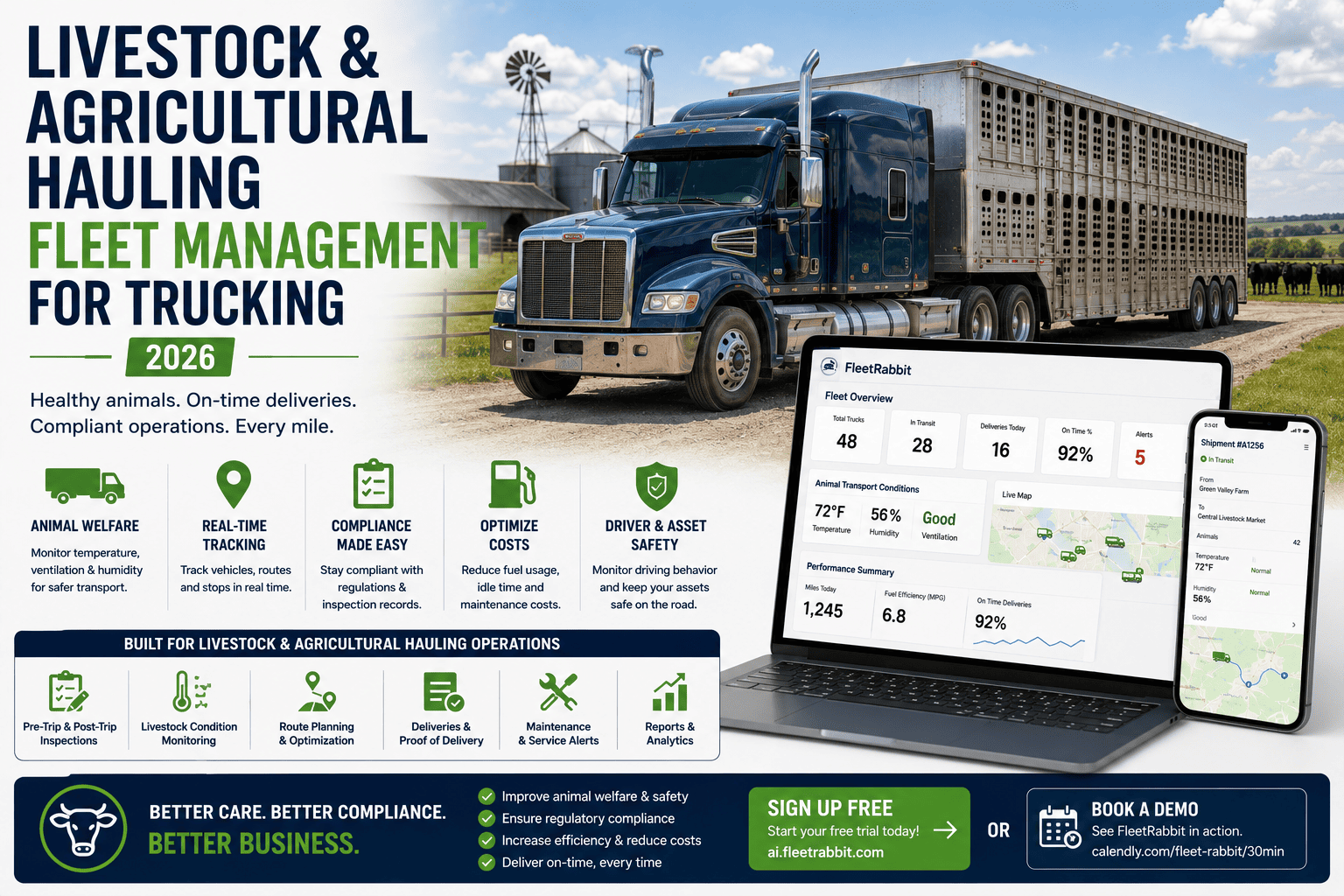
Livestock and agricultural haulers operate under one of the most unique regulatory frameworks in transportation. The 150 air-mile exemption, seasonal planting and harvesting rules, and livestock-specific hours-of-service provisions give ag fleets flexibility that general freight carriers don't have, but that flexibility comes with its own compliance traps. A driver who miscalculates the source point, crosses a state harvest-season boundary, or skips a livestock welfare check can trigger violations, animal loss, and costly downtime all at once. Managing an agricultural or livestock hauling fleet in 2026 means balancing regulatory nuance with the operational reality of live cargo, seasonal demand spikes, and specialized trailers that need their own maintenance rhythm.
Drivers hauling agricultural commodities and livestock within a 150 air-mile radius of the source are exempt from hours-of-service rules and ELD logging during state-determined planting and harvesting periods. Livestock haulers also carry an end-of-trip exemption covering the final 150 air miles to delivery. Outside these zones, standard HOS rules apply, and welfare checks, weight compliance, and trailer condition become the fleet's biggest operational risks.
Where the Agricultural Exemption Actually Applies
Under 49 CFR 395.1(k), drivers transporting agricultural commodities, including livestock, bees, horses, and fish raised for food, are exempt from hours-of-service regulations while operating entirely within a 150 air-mile radius of the source. The source is defined as the point where the commodity is loaded onto the vehicle, which is often a sale barn, feedlot, or farm rather than a processing facility. Once a driver crosses outside that radius, HOS rules and ELD requirements apply for the rest of the trip, until the vehicle comes back within 150 air miles of the delivery point, where the end-of-trip exemption for livestock takes over again.
The Middle Zone Is Where Fleets Get Exposed
The stretch of a trip that falls outside both the source-side and delivery-side exemption zones is where most compliance violations occur. Dispatchers who don't track exact air-mile distances risk sending drivers past their available hours without realizing the exemption has lapsed. Fleets that manually calculate these radii using paper maps or rough estimates consistently misjudge distances by 10 to 20 miles, enough to turn a compliant load into a logged violation.
Seasonal Determination Adds Another Layer
Planting and harvesting periods are set by each state, not by the federal government, so a fleet running loads across state lines has to track a different exemption calendar for every state it operates in. Missing a state's harvest window by even a few days removes the exemption entirely for that leg of the trip.
FleetRabbit maps every load against the 150 air-mile radius and state harvest calendars in real time, so dispatchers know exactly when a driver moves from exempt to regulated hours. Start your free trial and stop guessing at compliance boundaries.
Managing Live Cargo Adds Risk Beyond the Rulebook
Unlike a pallet of freight, livestock can't wait out a delay without consequence. Heat stress, dehydration, and injury risk climb the longer animals sit in a trailer during a breakdown or extended stop. A single overheated load can mean total loss of cargo value plus regulatory scrutiny under animal welfare transport rules. Agricultural fleets need visibility into trip duration, trailer temperature, and rest-stop planning that goes beyond what a standard freight dispatch board tracks.
Trip Planning Around Livestock Welfare
Experienced ag dispatchers build routes around known rest points with water access and shade, not just fuel stops. Building this into a digital routing system means every driver gets the same welfare-conscious plan instead of relying on individual experience.
Common Welfare Checkpoints
Fleets typically verify trailer ventilation, water access timing, and space-per-animal ratios before departure, then repeat visual checks at every planned stop to catch problems before they become losses.
| Compliance Area | Within 150 Air-Mile Zone | Outside Exemption Zone | Fleet Action Needed |
|---|---|---|---|
| Hours of Service | Fully exempt during state harvest and planting season | Standard 11-hour driving and 14-hour on-duty limits apply | Track exact mileage from source point in real time |
| ELD Logging | Not required, driver may use exempt status on device | Required unless another exemption applies | Configure exempt driver profiles correctly in ELD system |
| 30-Minute Break | Waived for livestock while animals are onboard | Waived for livestock while animals are onboard interstate | Document livestock status to justify the waiver |
| Welfare Monitoring | Recommended at every loading and unloading point | Critical during extended transit and weather events | Build rest stops with water and shade into route plans |
Seasonal Demand Creates a Different Kind of Fleet Pressure
Agricultural hauling isn't steady year-round work. Planting and harvest seasons compress months of demand into short, intense windows, and livestock movement follows sale barn calendars, weaning cycles, and weather. Fleets that size their operation for peak season sit with idle trucks the rest of the year, while fleets sized for the average season scramble for capacity, equipment, and qualified drivers when the rush hits.
Equipment Readiness Before the Rush
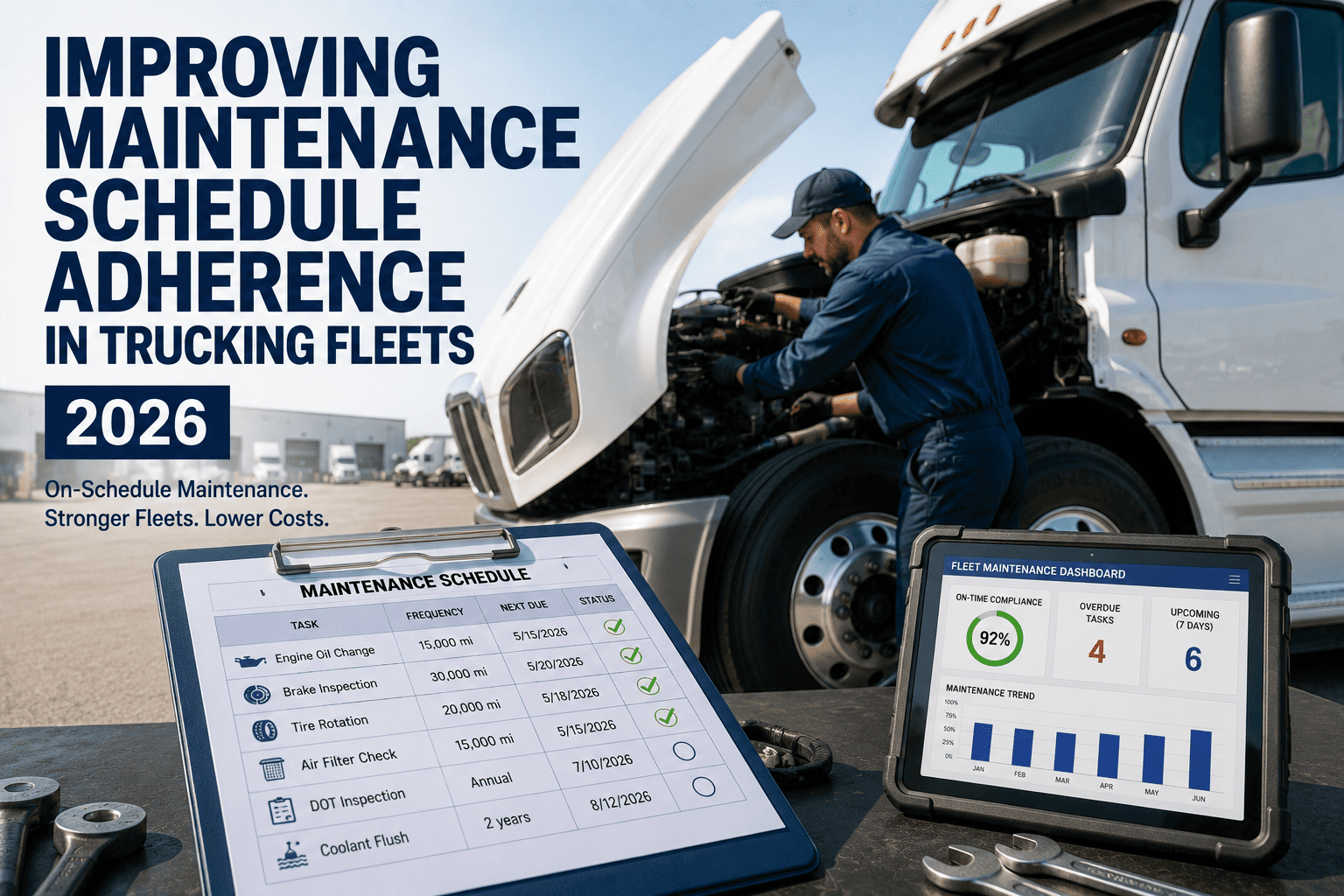
Trailers that sit unused for months develop problems that don't show up until they're loaded and on the road, corroded floors, worn ramp hinges, faulty ventilation fans. Running a full mechanical and welfare-equipment inspection 3 to 4 weeks before the expected season start catches issues while there's still time to repair them without cutting into hauling days.
Driver Availability During Peak Windows
Ag hauling often relies on a mix of dedicated drivers and seasonal or owner-operator capacity brought in during peak windows. Fleets that maintain relationships with backup drivers and pre-verify their qualifications ahead of season avoid the scramble that leads to compliance shortcuts under deadline pressure.
FleetRabbit schedules pre-season inspections, tracks trailer-specific maintenance history, and flags equipment that needs attention before planting or harvest begins. Book a demo to see how it fits your seasonal calendar.
Technology That Fits Agricultural Hauling
General freight fleet software often assumes fixed routes, standard trailers, and year-round volume, none of which match agricultural operations. Ag and livestock fleets need GPS tracking that flags air-mile exemption boundaries automatically, maintenance scheduling that adapts to seasonal idle periods, and inspection tools built around livestock trailers rather than dry vans.
GPS Tracking Tied to Exemption Zones
Rather than dispatchers manually measuring radius distances, modern tracking systems calculate air-mile distance from the source point continuously, alerting drivers and dispatch before a load crosses into regulated hours.
Maintenance Scheduling Around the Season
Ag fleets benefit from maintenance systems that track usage hours rather than calendar time, since a trailer might run hard for six weeks and then sit idle for months. Usage-based scheduling catches wear that calendar-based reminders would miss entirely.
Benchmarks for Agricultural Fleet Performance
Agricultural and livestock fleets should track a slightly different set of metrics than general freight operations. Load-to-delivery time within welfare thresholds matters as much as on-time delivery percentage. Trailer downtime during peak season carries a heavier cost than downtime in the off-season, since there's no slack capacity to absorb it. Fleets typically target under 5 percent unplanned downtime during active planting or harvest windows, compared to a looser 8 to 10 percent tolerance in the off-season. Compliance violation rates related to the 150 air-mile exemption should trend toward zero with proper GPS-based tracking, since these violations are almost entirely preventable with the right tools.
Building an Agricultural Fleet That Handles the Season Without Surprises
Agricultural and livestock hauling rewards fleets that treat compliance and equipment readiness as connected problems rather than separate checklists. Getting the 150 air-mile exemption right protects drivers from unnecessary violations. Getting trailer maintenance right protects the animals and cargo that make the trip worth running. The fleets that handle peak season without breakdowns or compliance gaps are the ones that started preparing weeks before the rush, not the day it arrived.
FleetRabbit combines exemption-zone tracking, seasonal maintenance scheduling, and livestock-ready inspections in one platform built for the way agricultural fleets actually operate. Start your free trial with no credit card required, or book a walkthrough to see it against your own routes and equipment.