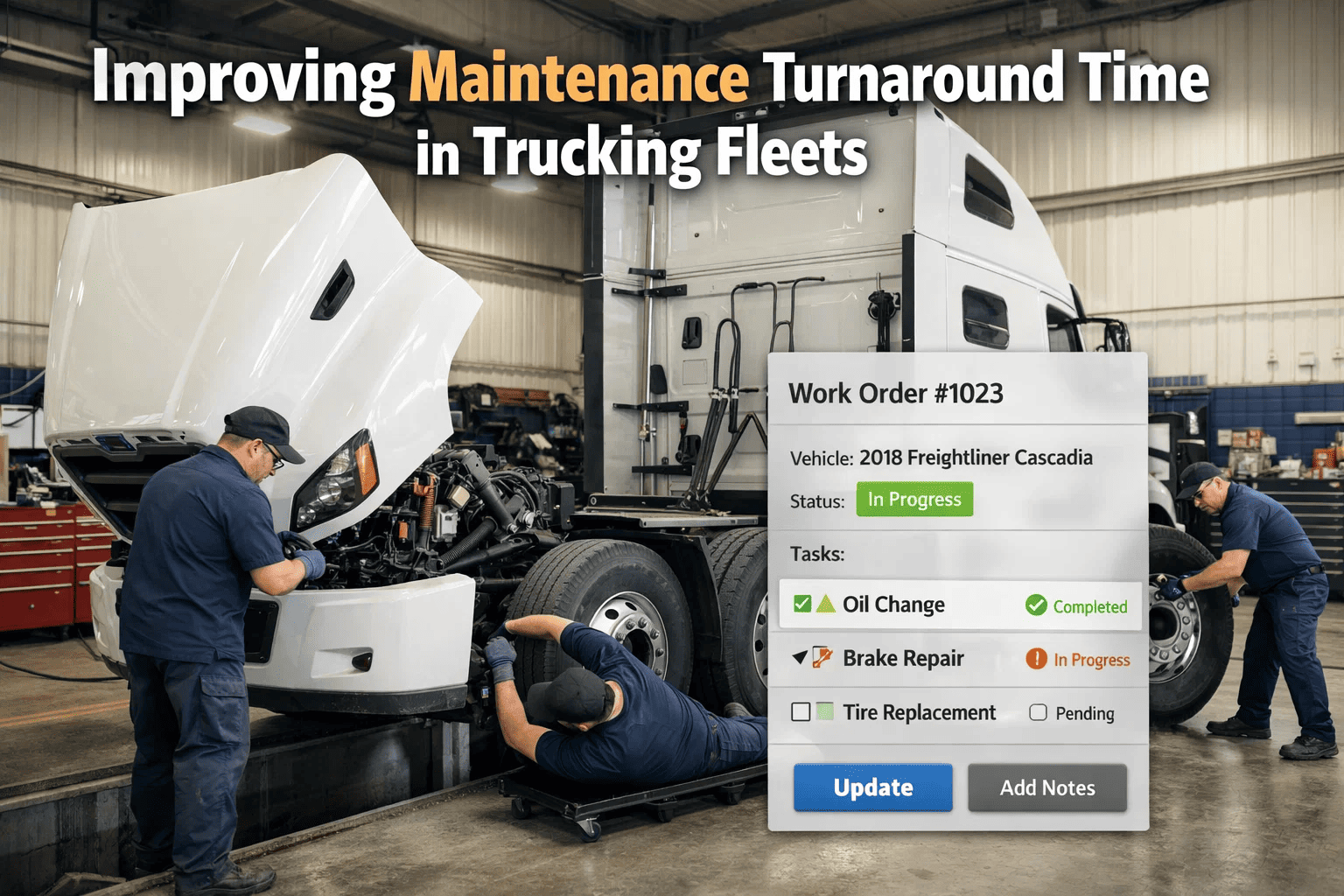
Every hour a truck sits in the shop waiting for a parts approval, a technician to become available, or a work order to be manually created is revenue that never gets recovered. For a carrier running 50 vehicles at $2,800 per truck per day in revenue, a fleet-wide average repair cycle that's 4 hours longer than it should be costs $280,000–$420,000 per year in lost productive capacity. Most fleet maintenance departments don't measure this cost precisely — because the data to calculate it lives in disconnected spreadsheets, paper work orders, and the memory of individual shop supervisors. FleetRabbit's maintenance management system digitizes and automates the entire repair cycle — from the moment a driver flags a defect or a PM interval triggers, to the moment a technician closes the work order and the vehicle returns to active service. The result: faster turnarounds, fewer unplanned breakdowns, lower repair costs, and a maintenance operation that runs on data instead of institutional memory. Book a demo to see maintenance automation applied to your fleet operation.
Quick Answer
FleetRabbit improves maintenance turnaround time by automating work order creation from driver DVIR defect reports, triggering preventive maintenance schedules from real-time odometer data, checking parts inventory before technician assignment, and providing supervisors with live repair queue visibility — eliminating the manual handoffs and communication delays that inflate repair cycle times. Fleets using FleetRabbit report a 40% reduction in average maintenance cycle time, 28% fewer unplanned breakdowns, and 22% lower annual maintenance cost per vehicle.
Where Maintenance Turnaround Time Gets Lost — The Hidden Cycle Killers
Fleet maintenance managers often focus on technician efficiency as the primary variable in repair cycle time. In practice, technician wrench time is rarely the bottleneck. The real cycle killers are the delays, waiting periods, and communication gaps that happen before and around the actual repair work.
Defect Discovery to Work Order Creation
A driver flags a defect on a paper inspection form. The form sits in the cab or on a desk until the dispatcher or fleet manager manually enters it into a maintenance system — or calls the shop to verbally communicate the issue. In many operations, this handoff doesn't happen until the next shift. The maintenance shop has no visibility into an incoming repair requirement until hours after it was identified.
Parts Availability Unknown Until Repair Begins
The technician arrives at the vehicle, diagnoses the problem, and only then discovers that the required part is out of stock. The repair is paused while parts are ordered or sourced from an external supplier. The vehicle sits in the shop bay for 24–48 hours waiting for parts that could have been ordered the moment the defect was first reported — if the work order system were connected to parts inventory.
Technician Assignment Done Manually
Maintenance supervisors manually review incoming work orders, assess technician availability, match skill sets to repair requirements, and make assignment decisions — often verbally, without a documented trail. When a supervisor is unavailable, work orders stack up unassigned. Without visibility into the full repair queue, technicians may prioritize based on what's visible in the shop rather than what's operationally urgent for the fleet.
Missed Preventive Maintenance — Emergency Repair Instead
A PM interval tracked in a spreadsheet was missed because the odometer data wasn't updated from the GPS system. The brake pads that should have been replaced at 90,000 miles were still in service at 104,000 — until the driver reported brake fade on a delivery route. An emergency repair during active operations costs 3–4x more and takes 4–6x longer than a scheduled PM performed in the shop during planned downtime.
Return-to-Service Process Unclear
After the repair is completed, the technician may verbally inform the dispatcher or leave a note on the vehicle. The dispatcher doesn't have a clear signal that the vehicle is cleared for dispatch, the fleet manager doesn't have a documented repair record, and the next driver doesn't have confirmation that the reported defect was resolved. The vehicle may sit in the yard — available but unknowingly so — while the dispatcher uses a different unit.
No Maintenance Data for Fleet Executives
Fleet operations leaders need to see cost-per-repair by vehicle, maintenance spend vs. budget, average repair cycle time, and breakdown frequency trends — but this data is buried in paper work orders or spread across disconnected systems. Without consolidated maintenance analytics, executives cannot identify which assets are consuming disproportionate maintenance resources or benchmark improvement initiatives against objective metrics.
How FleetRabbit Systematically Eliminates Each Delay
FleetRabbit addresses every bottleneck in the maintenance cycle with connected automation — so that work flows from defect detection through repair completion without manual intervention, handoff delays, or communication gaps.
1
Automated Trigger — DVIR Defect or PM Interval Alert
Work orders are created automatically from two sources: (1) Driver DVIR defect reports submitted via mobile app — routed to maintenance within seconds of submission. (2) Preventive maintenance schedules triggered by real-time odometer data from connected telematics — no manual tracking required. Both sources create fully pre-populated work orders without administrative intervention.
PM Alert: Unit #77 — Oil change due in 340 miles. Work order auto-created. Estimated arrival at service interval: 2 days. Scheduled for off-peak shop slot Thursday 06:00 AM. Parts: 6 qts 10W-40, filter — in stock.
2
Instant Parts Inventory Cross-Check
When a work order is created, FleetRabbit automatically checks parts inventory against the repair or PM requirement. If required parts are in stock, the work order proceeds to assignment. If parts are below required quantity, an automatic purchase order or parts request is generated — giving purchasing personnel lead time to source parts before the vehicle arrives for service, eliminating mid-repair delays.
Brake Pads: 4 Sets In StockCaliper Bolts: Low — Reorder Alert Sent
3
Skill-Matched Technician Assignment
Maintenance supervisor assigns work orders from a prioritized digital queue — with repair type, defect severity, estimated completion time, and parts availability all visible from one screen. For recurring repair types, assignment rules can be pre-configured to auto-assign to the appropriate technician category. Mobile push notification delivers work order details to the technician instantly.
Assigned: Tech M. PatelEst Duration: 90 minPriority: High
4
Technician Mobile Work Order Execution
Technician accesses the complete work order on mobile — including vehicle history, prior inspection photos, defect description, and pre-approved repair procedure. Repair actions, parts consumed, labor time, and any additional findings are documented during the repair via mobile — eliminating paper work tickets and preventing data loss. Additional findings can trigger supplementary work orders without stopping the primary repair.
Work Order: In ProgressStarted: 08:14 AM
5
Repair Completion & Instant Return-to-Service Signal
Technician closes the work order on mobile — documenting completion time, parts used, and repair certification. Vehicle status updates instantly across all connected modules: dispatch sees the vehicle as available, fleet manager receives repair completion notification, dispatch hold is released. No phone calls, no manual status updates required. The return-to-service signal reaches the dispatcher within seconds of repair completion.
Work Order Closed — 09:47 AMUnit #77 — Dispatch Available
6
Maintenance Analytics — Cost, Cycle Time & Asset Performance
Every work order feeds real-time analytics covering repair cycle time by vehicle and repair type, maintenance cost per mile, technician productivity, PM completion rate, unplanned vs. planned repair ratio, and parts spend tracking. Fleet executives see a live maintenance performance dashboard — enabling data-driven decisions on asset utilization, replacement timing, and vendor performance.
Maintenance Dashboard — Month to Date: Avg repair cycle time 3.2 hrs (▼ 38% vs prior period). PM completion rate: 97%. Unplanned repair ratio: 18% (target: <20%). Highest maintenance cost asset: Unit #31 — recommend asset review. Parts spend: $12,400 (▼ 14% vs budget).
Automated Maintenance Management
From Defect Flag to Repair Completion — Without Manual Delays
FleetRabbit automates every handoff in the maintenance cycle — eliminating the communication gaps, parts surprises, and untracked delays that inflate your repair cycle time and increase total maintenance cost.
40%
Faster Maintenance Cycle Time
28%
Fewer Unplanned Breakdowns
Preventive Maintenance — From Missed Intervals to Automated Scheduling
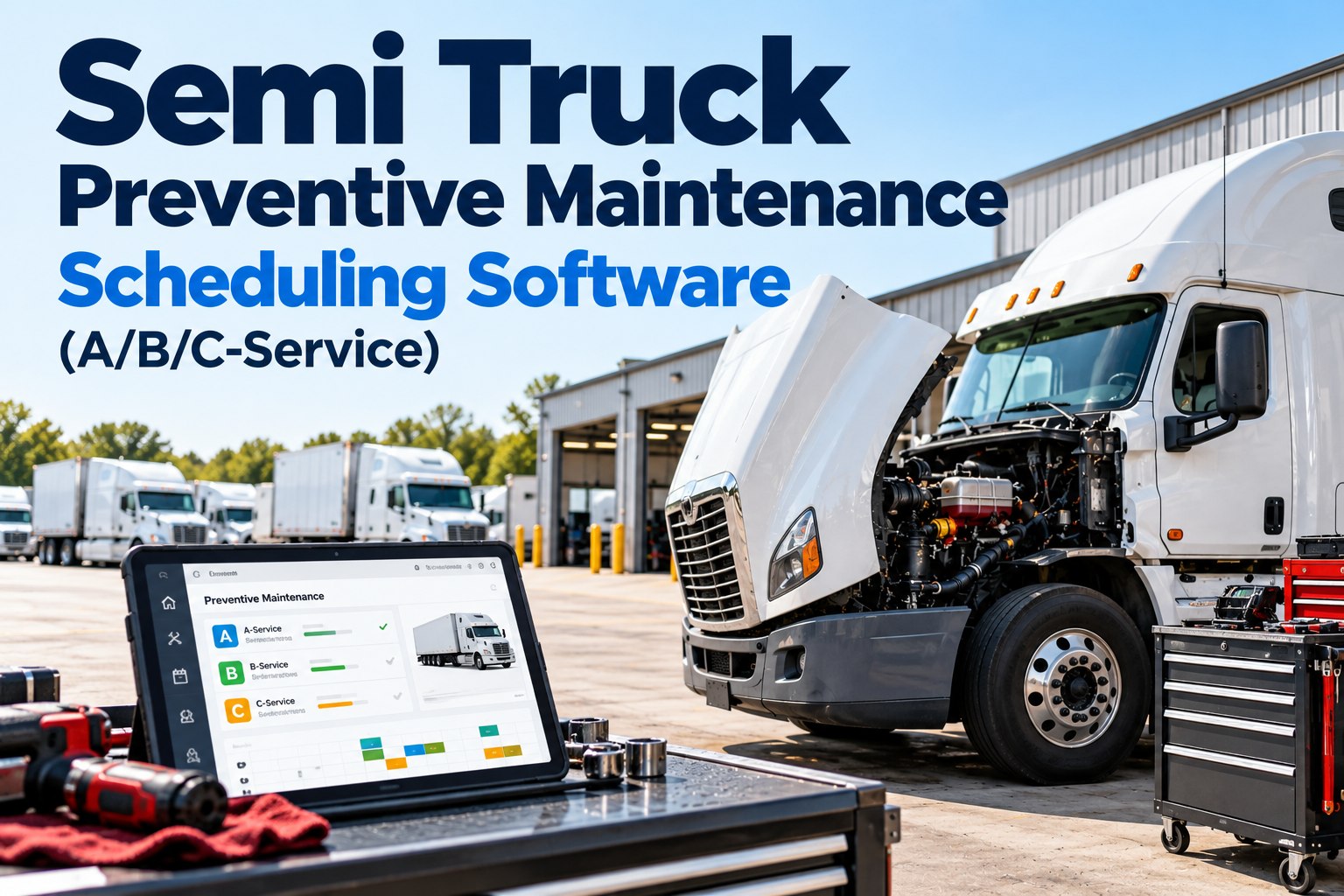
Unplanned breakdowns cost 3–4x more to repair than the same issue addressed during a scheduled preventive maintenance service. FleetRabbit's PM scheduling system ensures that every vehicle receives service before the interval lapses — not after it fails on a delivery route.
Mileage-Based PM
Real Odometer Data — Not Estimates
PM intervals triggered from real-time odometer data pulled from connected telematics — not from driver estimates or manual entry. PM alerts generate automatically at your configured lead distance (e.g., 500 miles before the interval) — giving the shop advance notice to schedule the service without disrupting active routes. No manual tracking, no missed intervals due to data lag.
PM Alert: Unit #41 — Transmission service due at 120,000 miles. Current mileage: 119,340. Alert issued. Estimated interval reach: 3 days. Shop slot reserved.
Calendar-Based PM
Time-Dependent Services — Never Forgotten
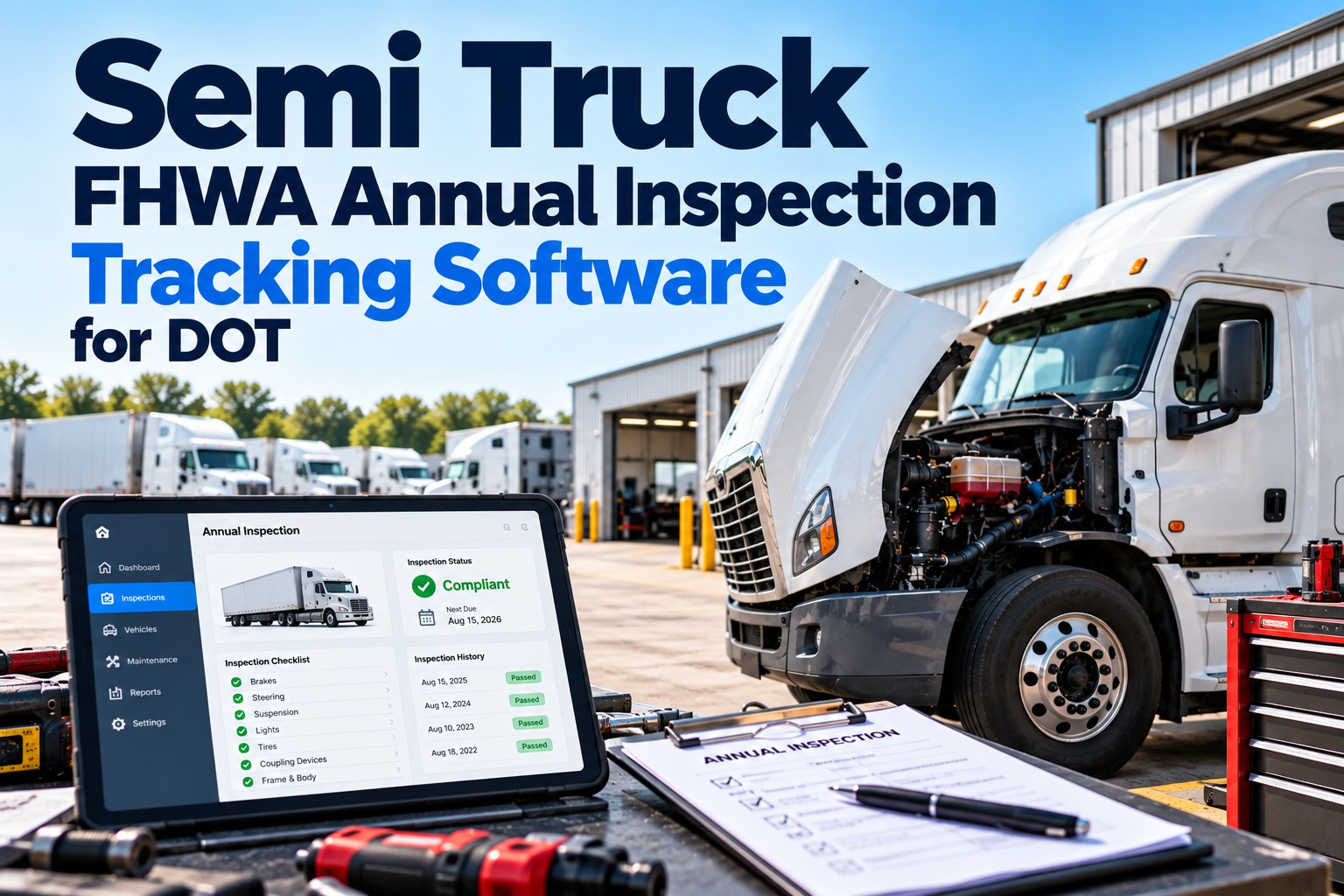
Services with calendar-based intervals — annual inspections, seasonal tire changes, regulatory inspection dates, brake certification timelines — scheduled and tracked automatically. Alerts sent to maintenance supervisors and fleet managers at configurable lead times. Integration with compliance module ensures regulatory inspection deadlines are linked to maintenance scheduling.
Annual federal inspection due: Unit #03 — 45 days. Alert sent to fleet manager and compliance officer. Inspection slot scheduled with DOT-certified inspector.
DTC Code Integration
Engine Fault Codes — Automatic Work Order Creation
FleetRabbit integrates with vehicle telematics to receive engine diagnostic trouble codes (DTC). When an engine fault code triggers, an automatic maintenance work order is created — pre-populated with the fault code, affected system, vehicle history, and suggested diagnostic procedure. Fleet managers are notified before drivers are even aware of the underlying issue in many cases.
DTC Received: Unit #92 — P0299 (Turbocharger underboost). Work order auto-created. Maintenance supervisor notified. Vehicle status: monitor until next shop window.
Maintenance Performance Results Across FleetRabbit Fleets
40%
Reduction in Avg Repair Cycle Time
28%
Fewer Unplanned Breakdown Events
22%
Lower Annual Maintenance Cost Per Vehicle
97%
PM Interval Completion Rate
$1,800
Avg Cost Saving Per Prevented Breakdown
18%
Unplanned vs. Planned Repair Ratio (Target <20%)
Fleet Maintenance Visibility for Every Stakeholder
FleetRabbit's maintenance module provides each team member with exactly the information they need — without information overload or the need to manually request status updates from other departments.
Maintenance Supervisor
Live repair queue with priority ranking, technician assignments, parts availability status, and work order aging. No phone calls needed to check repair progress — all status updates flow automatically from technician mobile completions. Identify bottlenecks before they cause schedule delays.
Fleet Manager
Real-time alerts for high-priority repairs, PM compliance rate monitoring, vehicle availability status, and upcoming maintenance calendar. Know which vehicles are in the shop, why, and when they'll be available — without calling the shop.
Dispatcher
Vehicle dispatch status updated in real time as maintenance work orders open and close. Never assign a vehicle with an active repair in progress. Instant notification when a maintained vehicle returns to service and becomes available for load assignment.
Fleet Executive / VP
Maintenance spend vs. budget dashboards, cost-per-vehicle trending, unplanned breakdown frequency, average repair cycle time, and PM compliance rate — all updated in real time. Make asset replacement and procurement decisions from complete maintenance cost data.
Fleet Maintenance Intelligence
Stop Losing Hours to Manual Handoffs — Automate Your Maintenance Cycle
FleetRabbit automates the entire maintenance workflow from defect detection through return-to-service — eliminating the delays, communication gaps, and parts surprises that inflate your repair costs and reduce fleet availability.
22%
Lower Maintenance Cost/Vehicle
From the Field
"Our average repair cycle time before FleetRabbit was 6–7 hours per vehicle — and half of that was waiting: waiting for a work order to be manually created, waiting to find out if we had parts, waiting for the dispatcher to know the truck was ready. With FleetRabbit, the work order is created before the driver pulls into the yard. Parts are confirmed before the tech touches the truck. And the dispatcher knows the vehicle is available the second the work order closes. We've cut our average cycle to under 3.5 hours and our PM completion rate went from 78% to 97% in the first six months. The unplanned breakdown cost reduction alone paid for the software within the first year."
Director of Maintenance
Regional Trucking Fleet — 110 Vehicles — Southeast USA
Frequently Asked Questions
QHow does FleetRabbit automatically trigger PM intervals from odometer data?
FleetRabbit connects to your fleet's GPS telematics or ELD platform via API integration — pulling live odometer readings for each vehicle on a continuous basis. When a vehicle's mileage reaches a preconfigured alert threshold (e.g., 500 miles before the scheduled PM interval), FleetRabbit automatically generates a maintenance alert and creates a pre-populated work order in the maintenance queue. No manual odometer entry required.
See telematics integration in a demo.
QCan we track parts inventory and automate reorder alerts in FleetRabbit?
Yes. FleetRabbit's maintenance module includes parts inventory tracking with configurable minimum stock levels and reorder alerts. When a work order is created, the system checks parts availability and flags any shortfalls — triggering reorder notifications before the repair is scheduled. Parts consumption is automatically tracked against work orders, keeping your inventory records current without manual counting.
QDoes FleetRabbit support multiple shop locations with separate maintenance teams?
Yes. FleetRabbit supports multi-location maintenance operations with separate shop queues, technician assignments, and parts inventories per location — all visible to fleet managers and executives from a centralized dashboard. Work orders are routed to the appropriate shop based on vehicle location, and cross-location visibility ensures managers can identify capacity imbalances and reassign resources when needed.
QWhat compliance documentation does FleetRabbit produce from maintenance records?
FleetRabbit maintains a complete, timestamped record of every maintenance work order — including repair type, parts used, technician ID, labor hours, and completion certification. For FMCSA compliance purposes, inspection and repair records are linked end-to-end — from DVIR defect identification through repair completion and driver return-to-service acknowledgment. This complete documentation chain is retrievable on demand for DOT audits and roadside inspections.
QHow does FleetRabbit handle warranty tracking and vendor repair records?
FleetRabbit tracks warranty expiry dates per vehicle and component — flagging warranty-eligible repairs before out-of-warranty costs are incurred. Vendor repair records from external shops can be imported or manually entered into the system — maintaining a complete repair history for each vehicle regardless of where the service was performed. Warranty claim documentation is accessible alongside internal maintenance records.
Start your free trial to explore maintenance management features.
Cut Maintenance Cycle Time by 40% — Prevent Breakdowns Before They Happen.
FleetRabbit automates your entire maintenance workflow — from real-time PM triggers and automatic work order creation, to parts inventory checks and instant return-to-service signals — eliminating the manual delays that inflate repair costs and reduce fleet availability.
Auto PM Scheduling
Parts Inventory Tracking
Mobile Work Orders
DTC Code Integration
Maintenance Analytics Dashboard
April 9, 2026
By Nathan Smith
All Posts