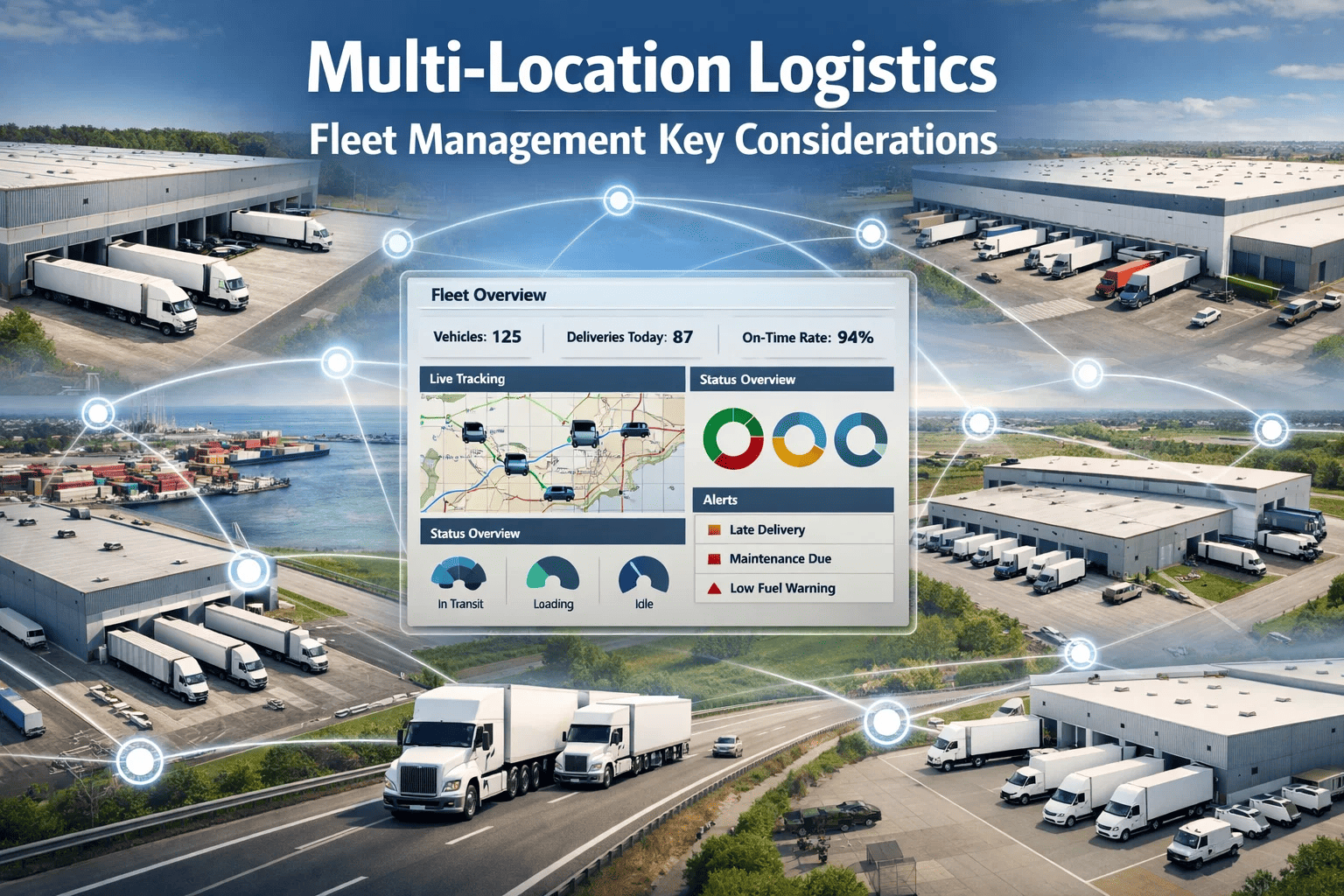
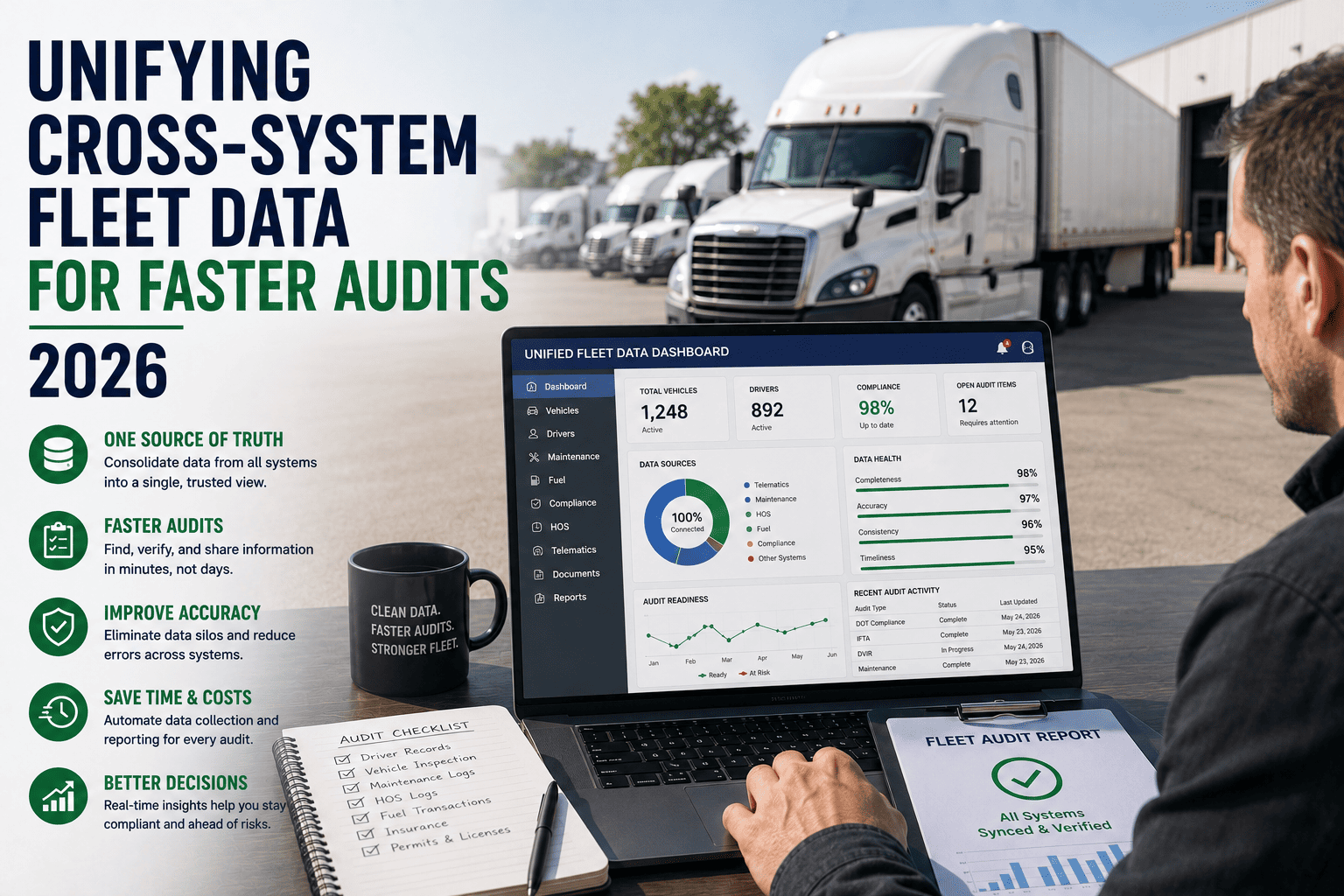
A logistics fleet operating across three depot locations with different maintenance teams, local compliance requirements, varying driver documentation standards, and separate tracking spreadsheets for each site is not one fleet — it is three separate fleets running in parallel, each with its own blind spots, its own inefficiencies, and its own compliance gaps. Fleet executives managing multi-location operations report spending 40–60% of their weekly management time simply reconciling information across sites — gathering status updates from regional managers, manually consolidating maintenance reports, and trying to achieve a coherent picture of company-wide fleet performance from data that was never designed to work together. FleetRabbit provides the centralized fleet management infrastructure that multi-location logistics operations need — giving corporate leadership a unified view of every depot's vehicle, driver, maintenance, and compliance status from one platform, while giving each regional team the operational tools to run their location efficiently. Book a demo to see multi-location fleet management applied to your operation.
Quick Answer
FleetRabbit enables multi-location logistics fleet management through a single platform that centralizes vehicle records, maintenance schedules, driver compliance documents, inspection history, and performance analytics across every depot and division — while giving regional teams location-specific operational dashboards. Fleet executives gain real-time cross-location visibility without manual reporting. Regional managers retain the operational control needed to run their location effectively. And compliance standards remain consistent across the entire fleet regardless of where a vehicle is based.
The Multi-Location Management Gap — Why Standard Fleet Tools Fail at Scale
Single-location fleet management tools are designed for one depot, one team, and one data silo. When logistics organizations grow to two, five, or ten locations, those tools create compounding management challenges that become more severe with every new location added.
01
No Cross-Location Asset Visibility
Fleet executives cannot see which vehicles across all locations are operational, in maintenance, or idle without calling each depot manager separately. High-value assets — refrigerated trailers, specialized equipment, low-mileage units — may be sitting idle at one location while another location runs short-handed. Without centralized visibility, reallocation decisions happen too slowly or not at all.
Operational impact: 8–15% asset underutilization across multi-location fleets from invisible idle capacity
02
Inconsistent Compliance Standards by Location
When each depot manages its own DVIR process, maintenance documentation, and driver qualification records independently, compliance standards inevitably diverge. One location may achieve 98% inspection completion while another runs at 71%. During a DOT audit that covers multiple locations, the weakest site determines your safety rating outcome — regardless of how well other locations perform.
Each depot's maintenance history lives in a separate system or spreadsheet. Fleet executives cannot compare maintenance cost-per-mile across locations, identify which depots are running the most cost-inefficient vehicles, or understand maintenance spend vs. budget at the company level. Asset replacement decisions are made with incomplete information because total lifecycle cost data spans multiple disconnected systems.
Cost impact: Delayed asset replacement decisions add $4,000–$8,000 in excess maintenance cost per vehicle per year
04
Driver Records Fragmented Across Depots
Drivers who operate across multiple locations, or who transfer between depots, have qualification records managed by whoever last handled their paperwork. CDL expiry alerts configured at depot A may not follow the driver to depot B. Medical certificate renewal reminders set up in one location's system disappear when the driver transfers. Compliance gaps form at the transition points between locations.
Compliance impact: Out-of-service driver events most common at fleet transfer points — $800–$1,500 per incident in recovery costs
05
Manual Executive Reporting Across All Locations
Fleet executives request weekly or monthly reports from each depot manager — who each produce data in different formats, at different levels of detail, and on different timelines. Consolidating this into a coherent enterprise view requires hours of reconciliation and produces a snapshot that is already 1–2 weeks out of date by the time leadership reviews it. Real-time decisions become impossible when data is always retrospective.
Leadership impact: 6–10 hours per week of executive time consumed by manual data reconciliation across locations
06
No Scalable Infrastructure for New Location Onboarding
Adding a new depot or regional operation requires replicating the same disconnected tool configuration at each new location — building new spreadsheets, configuring separate systems, establishing new data silos. Growth becomes progressively more complex to manage rather than progressively more streamlined. The management overhead of each new location is nearly as large as the first location.
Growth impact: Each new location onboarding adds 40–80 hours of manual setup and repeat configuration time
How FleetRabbit Centralizes Multi-Location Fleet Operations
FleetRabbit's multi-location architecture provides centralized policy governance and company-wide visibility at the executive level — with location-specific operational dashboards at the regional level — from a single platform that scales as your footprint grows.
1
Unified Fleet Registry — Every Vehicle, Every Location, One Record
Every vehicle in your fleet — regardless of home depot, operating region, or assignment — maintained in a single centralized registry with full profile data: registration, insurance, inspection history, maintenance records, compliance status, and real-time GPS location. Fleet executives see the complete fleet picture. Regional managers filter to their location. A vehicle that transfers between depots carries its complete history with it.
Enterprise Fleet View: 247 vehicles across 6 locations. 211 operational, 23 in maintenance, 13 idle. Dallas hub: 3 refrigerated trailers available for reallocation — Atlanta hub currently short 2 reefer units. Reallocation flagged for logistics coordinator review.
2
Centralized Compliance Policy — Consistent Standards Across All Locations
Fleet executives configure compliance standards, DVIR requirements, maintenance intervals, driver qualification alert timelines, and documentation requirements at the enterprise level — applied automatically to every location. Regional managers operate within the centrally defined framework. Compliance performance is measured consistently across all locations, enabling meaningful comparison and corrective action where standards slip.
Regional Operational Dashboards — Location-Level Control
Each depot manager and regional fleet team sees a filtered dashboard showing only their location's vehicles, maintenance queue, driver roster, and compliance status — with the company-wide context needed to understand their performance relative to other locations. Regional managers retain full operational control within their depot while operating within centrally configured standards.
Atlanta Hub: 41 Vehicles ActiveCompliance Rate: 97%Maintenance Queue: 3 Open WOs
4
Cross-Location Maintenance — Tracking Assets Across Depots
Vehicles are maintained according to centrally configured PM schedules regardless of which depot they're currently operating from. When a vehicle is temporarily assigned to a different location, its maintenance history and upcoming PM schedule travel with it — and the receiving location's maintenance team sees the full context needed to service it correctly. Parts inventory can be viewed across all locations to identify reallocation opportunities before ordering new stock.
Unit #118 — Transferred to Phoenix HubPM History Visible to Phoenix TeamNext PM: 1,200 miles
5
Driver Records — Follow the Driver, Not the Location
Every driver's qualification record — CDL status, medical certificate, HOS history, training completion, violation record — is maintained at the enterprise level and accessible to any authorized manager regardless of location. Driver transfers between depots are seamless — all compliance records follow the driver. Automated alert timelines for expiring credentials activate regardless of which location the driver is currently assigned to.
Driver M. Torres — Records Available: All LocationsCDL Renewal: 47 Days
6
Enterprise Analytics — Real-Time Performance Across All Locations
Fleet executives access live performance dashboards comparing fleet utilization, maintenance cost per mile, compliance rate, driver performance scoring, and unplanned downtime rate across every location — updated in real time from connected operational data. Location performance benchmarking, trend analysis, and cost variance alerts enable proactive management decisions without waiting for manual reports from regional managers.
Executive Fleet Dashboard — Live: Total fleet utilization: 88.4% (▲ 3.1% vs Q3). Highest maintenance cost per mile: Houston Hub — Unit cluster 40–55 (recommend asset review). Lowest compliance rate: Phoenix Hub (89%) — regional manager flagged for action. Cost variance alert: Atlanta fuel spend 12% above fleet average.
Multi-Location Fleet Intelligence
One Platform for Every Location — Enterprise Control With Regional Flexibility
FleetRabbit gives logistics executives real-time visibility across every depot and division — with centralized compliance standards, unified vehicle records, and cross-location performance analytics that eliminate the manual reconciliation work of multi-site management.
Key Considerations for Multi-Location Fleet Management Success
Choosing and implementing a multi-location fleet management platform involves more than software selection. These are the strategic and operational considerations that determine whether centralization delivers its intended benefits — and how FleetRabbit addresses each one.
Governance vs. Autonomy Balance
The right multi-location architecture enforces non-negotiable compliance standards centrally while giving regional managers authority over day-to-day operational decisions. FleetRabbit's role-based access control and location-specific dashboards deliver this balance — executives configure policy, regional managers execute operations, drivers complete their workflows — each with the appropriate level of system access.
Data Standardization Across Locations
Multi-location comparisons are only meaningful when data is collected consistently. If Houston records maintenance cost differently than Atlanta, or Chicago uses different inspection checklists than Dallas, cross-location analysis produces misleading comparisons. FleetRabbit standardizes data collection across all locations — same inspection forms, same maintenance categories, same cost tracking — enabling genuine apples-to-apples performance comparison.
State and Regional Regulatory Variation
Multi-location operations often cross state lines with varying registration requirements, weight limits, annual inspection mandates, and operating permit conditions. FleetRabbit's compliance module supports location-specific regulatory tracking — ensuring each depot manages the compliance requirements specific to its operating jurisdiction while executive leadership maintains visibility across all regulatory standings.
Cross-Location Team Access & Permissions
Different team members need different levels of access to different location data. A corporate compliance officer needs read access to all locations. A regional maintenance supervisor needs write access to their depot's work orders but not others. A driver needs access only to their own vehicle and route information. FleetRabbit's granular role-based permissions ensure each user sees exactly what they need — and nothing they shouldn't.
API Integration with Existing Location Tools
When adding centralized fleet management to an existing multi-depot operation, some locations may already use specific telematics hardware, fuel card systems, or accounting software. FleetRabbit's API integration layer connects with leading GPS and ELD providers, fuel card programs, and accounting platforms — allowing existing location-level tools to feed data into the centralized FleetRabbit platform without complete system replacement at each site.
Scalable Onboarding for New Locations
When your logistics operation expands to a new depot, FleetRabbit enables that location to be onboarded to the same centralized platform in days — not months. Corporate compliance standards, vehicle record formats, inspection templates, and reporting frameworks are already configured. The new location inherits the entire operational infrastructure, reducing new location setup time from weeks of manual configuration to a structured onboarding process.
Multi-location fleet management success depends on giving every leadership level the right information in the right format. Here is how FleetRabbit serves each management layer in a logistics fleet organization.
VP Fleet Operations / CEO
Enterprise Command View
Real-time dashboards comparing fleet utilization, maintenance cost, compliance rate, and operational efficiency across all locations. Cost variance alerts when any location departs from company benchmarks. Asset reallocation recommendations when underutilization is detected. Complete fleet data for board-level reporting — generated automatically from live operational data.
Location-specific vehicle dashboard, maintenance queue, driver compliance roster, and dispatch status — with context of how the location's performance measures against company-wide standards. Alerts for compliance deadlines, maintenance backlogs, and driver credential expirations specific to their depot.
Compliance rate tracking across all locations, DVIR completion performance, driver qualification status for entire driver roster, upcoming regulatory deadlines by location, and DOT audit preparation across any location — from one centralized compliance interface without contacting individual depot managers.
Enterprise compliance dashboardCross-location audit readinessDriver credential tracking all depots
Enterprise Fleet Platform
Scale Your Logistics Operation Without Scaling Your Management Complexity
FleetRabbit's multi-location architecture gives logistics executives the centralized visibility they need while giving regional teams the operational tools to run their location efficiently — all connected in one platform that grows with your fleet.
"We were running four depots with four separate tracking systems, four different maintenance spreadsheets, and four regional managers each producing their own weekly reports in different formats. Every Monday I spent three hours trying to reconcile those reports into something coherent enough to present to ownership. After moving everything to FleetRabbit, I open the executive dashboard and have a real-time view of all 186 vehicles, all four locations, all compliance standings — before my first coffee. We identified that our Nashville depot was sitting on nine underutilized trailers while our Memphis operation was renting equipment from outside vendors. That reallocation alone saved us $34,000 in the first quarter. The platform paid for itself in month two."
QCan different depot locations have separate user access levels in FleetRabbit?
Yes. FleetRabbit's role-based access control allows fleet administrators to configure precisely which data each user role can view and modify. Corporate executives can see all location data. Regional managers access their depot's data with company-wide performance context. Dispatchers see operational data relevant to their location. Drivers access only their assigned vehicles and routes. Permissions are configurable at a granular level without custom development. Discuss your access control requirements in a demo.
QHow does FleetRabbit handle vehicles that operate across multiple depot territories?
Vehicles can be assigned to a home depot while remaining visible to any authorized manager across the enterprise. When a vehicle operates in or is temporarily assigned to a different location, the receiving location's team gains appropriate access to the vehicle's records, upcoming maintenance schedule, and current status. Maintenance work performed at any location is recorded in the vehicle's central history — accessible to all authorized team members regardless of location.
QHow quickly can a new depot location be added to FleetRabbit?
New locations can typically be onboarded in 3–7 business days. The process includes adding the location to the enterprise account, configuring location-specific settings, importing vehicle and driver records, and training the regional management team on the platform. Because FleetRabbit's core configuration — compliance policies, inspection templates, maintenance categories — is already established at the enterprise level, new location setup focuses on location-specific customization rather than starting from scratch.
QCan FleetRabbit generate enterprise-level reports that span all locations?
Yes. FleetRabbit's reporting module generates cross-location reports covering fleet utilization, maintenance cost per mile, compliance rate, driver performance, and unplanned downtime — consolidated across all locations into a single report. Reports update automatically from live operational data — eliminating the need to request, receive, and manually reconcile data from individual location managers. Custom report builders allow fleet executives to configure company-specific KPIs and reporting formats.
QHow does FleetRabbit support FMCSA audits that cover multiple depot locations?
FleetRabbit maintains a compliant inspection and maintenance record archive for every vehicle and driver across all locations — accessible from a central dashboard. When an FMCSA audit covers multiple depot locations, compliance officers can generate complete audit packages for any combination of vehicles, drivers, and locations from one interface — without contacting individual depot managers or retrieving physical records from multiple sites. Start your free trial to explore multi-location compliance features.
Manage Every Depot From One Platform — Without Manual Reconciliation or Reporting Delays.
FleetRabbit's multi-location fleet management platform gives logistics executives real-time visibility across every depot, centralized compliance standards that travel with every vehicle, and enterprise analytics that eliminate the hours spent manually consolidating location reports — all from one connected platform that scales as your fleet grows.